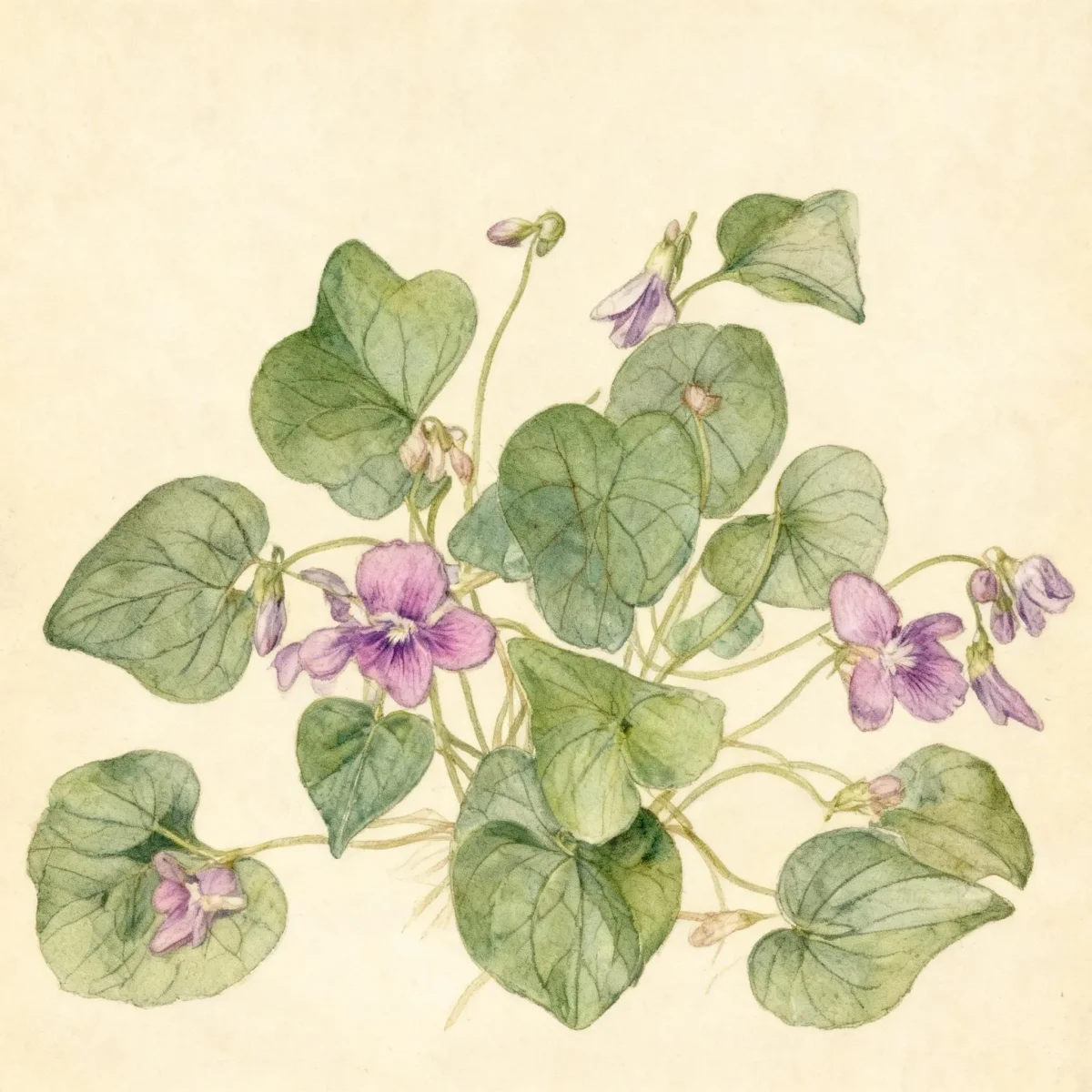
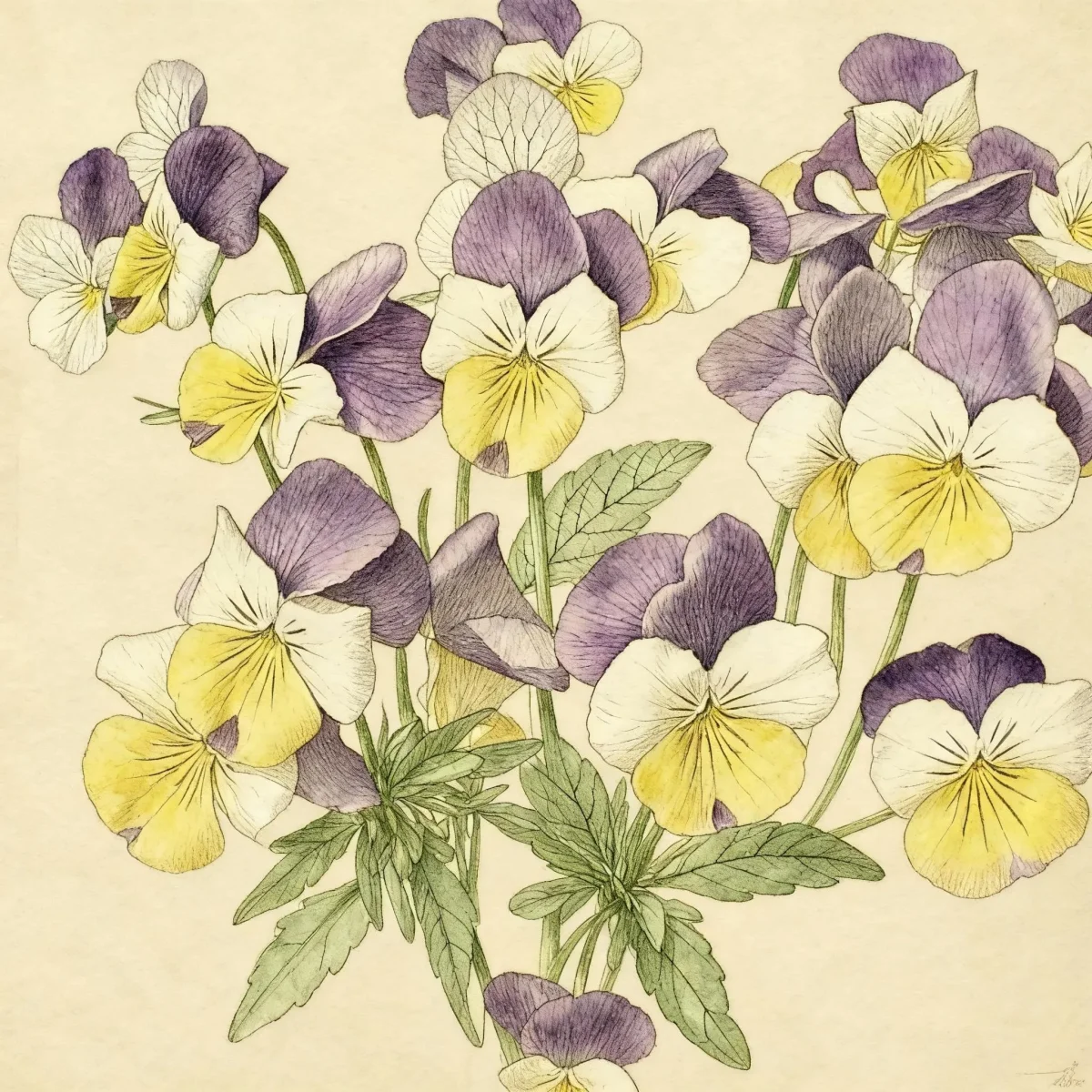
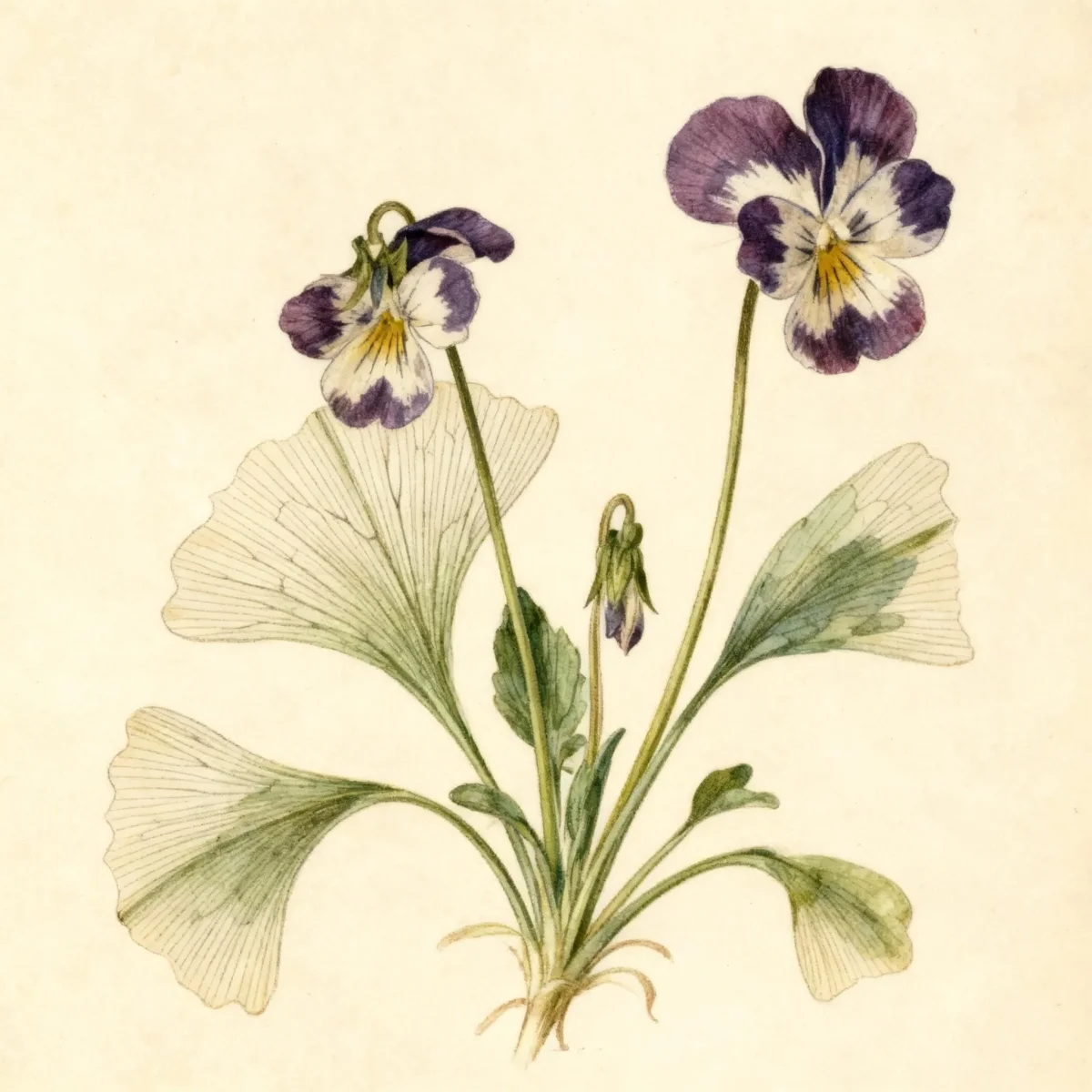
Common blue violet (Viola sororia)
Viola sororia, the Common blue violet, thrives in Eastern North America from zones 3-7, offering spring color as a low-growing perennial ground cover.
Scroll down to discover growing tips, care requirements, companion plants, and more

Complete Plant Information
Overview
The Common blue violet, Viola sororia, is a cherished native perennial celebrated for its early spring flowers and vigorous ground-covering habit. This low-growing plant establishes soft carpets of foliage, punctuated by charming blue or white blooms, making it a valuable addition to woodland gardens and naturalized landscapes. As a resilient species native to Eastern North America, Viola sororia adapts well to a range of conditions once established. Gardeners appreciate its year-round texture and its ability to thrive where turf struggles, providing ecological benefits alongside aesthetic appeal throughout the growing season.
Fast Facts
- Plant Family: Violaceae
- Plant Type: Herbaceous perennial
- Native Range: Eastern North America
- Hardiness Zones: USDA Zones 3-7
- Size at Maturity:
- Height: 0.5-0.75 ft
- Spread: 0.5-0.75 ft
- Bloom Time: April to August
- Bloom Description: White, blue
- Sun Exposure: Full sun to part shade
- Water Needs: Medium
- Maintenance Level: Medium
How to Grow
Plant Viola sororia in spring or fall when soil conditions are moist. Select sites offering full sun to partial shade, though these violets appreciate dappled light best during hot afternoons. The ideal medium is humus-rich, moisture-retentive, and well-drained. While adaptable, avoid overly dry or poor soils for best performance.
Routine care involves maintaining consistent soil moisture, especially during dry spells, as the Common blue violet requires medium water input. Fertilization is rarely necessary if the soil is adequately rich in organic matter. Be mindful that Viola sororia readily self-seeds; if you prefer a contained patch, consider diligent deadheading after flowering finishes.
Seasonal management primarily involves cleaning up old foliage in early spring, although the plant remains relatively neat. In hotter, drier summer periods, the foliage may begin to look worn; this is normal senescence, and the plant typically perks up again with cooler, wetter autumn weather.
Landscape Uses
Viola sororia excels as a naturalizer, forming colonies that effectively cover difficult or shaded areas under deciduous trees and shrubs. Mass planting is highly recommended, allowing the Common blue violet to suppress weeds and create a soft, textured ground plane ideal for wildflower, native plant, or woodland gardens. Its low stature makes it perfect for edging walkways or framing larger perennials without obstructing views.
Because it spreads easily, use it strategically where you desire density. It pairs beautifully with spring ephemerals like wild ginger or emerging hostas. The visual impact of drifts of blue or white flowers across the spring landscape establishes the season wonderfully.
Standout Features
Flower Qualities
- Showy
Noteworthy Characteristics
Viola sororia, commonly called woolly blue violet, is a common Missouri native wildflower which occurs in woods, thickets and streambanks throughout the State. A stemless, rhizomatous, low-growing perennial (3-8” tall) which features downy, basal, wide-heart-shaped leaves and large blue-violet flowers (sometimes white with purple veining). Genus name comes from the Latin name for various sweet-scented flowers.
Tolerances
- Deer
- Clay Soil
- Black Walnut
Potential Problems
Viola sororia generally exhibits excellent pest and disease resistance, making it a low-worry choice for the gardener. The main cultural note concerns summer performance; foliage can tend to depreciate or thin out as summer heat intensifies. To manage this, ensure the soil remains consistently moist, or consider planting them in locations that receive morning sun followed by afternoon shade. Avoid excessive fertilization, as rich feeding can sometimes encourage excessive, weedy self-seeding.
Frequently Asked Questions
What hardiness zones is Common blue violet suitable for?
The Common blue violet is well-suited for planting across USDA Zones 3 through 7.
When does Viola sororia bloom?
This perennial typically features blooms from April through August, displaying lovely colors such as white and blue.
How large does Viola sororia grow?
This species is very low-growing, reaching a mature height between 0.5 and 0.75 feet, with a similar spread.
What sun exposure does Common blue violet need?
Viola sororia prefers conditions ranging from full sun to partial shade for optimal growth.
Conclusion
The Viola sororia, or Common blue violet, offers superb aesthetic value combined with robust native resilience, particularly as a ground cover for woodland settings. Its ability to handle tough spots, including clay soil and black walnut root competition, makes the Common blue violet a highly practical selection. Before planting, confirm that your garden falls within USDA zones 3-7 and plan for medium moisture levels to ensure continuous success.
Companion Planting
When integrating Viola sororia into a garden design, think about plants that complement its spring bloom time and require similar moisture and shade conditions. Excellent companions include native ferns, which echo the woodland feel, and various woodland phlox (Phlox divaricata). Groups of Virginia Bluebells (Mertensia virginica) offer a taller vertical element that shares the preference for humus-rich, moist soil, creating a cohesive display before summer heat sets in hard.
Propagation Tips
The primary method for propagating Viola sororia is via seed, as it freely self-seeds in ideal conditions. If you wish to control spread or divide existing clumps, dormancy is the best time, although division can be done anytime the plant is actively growing. Since this species is rhizomatous, gently separating the root structures in early spring or late fall allows you to establish new colonies quickly. Ensure each division retains healthy roots and crown tissue for successful rooting in their new location.