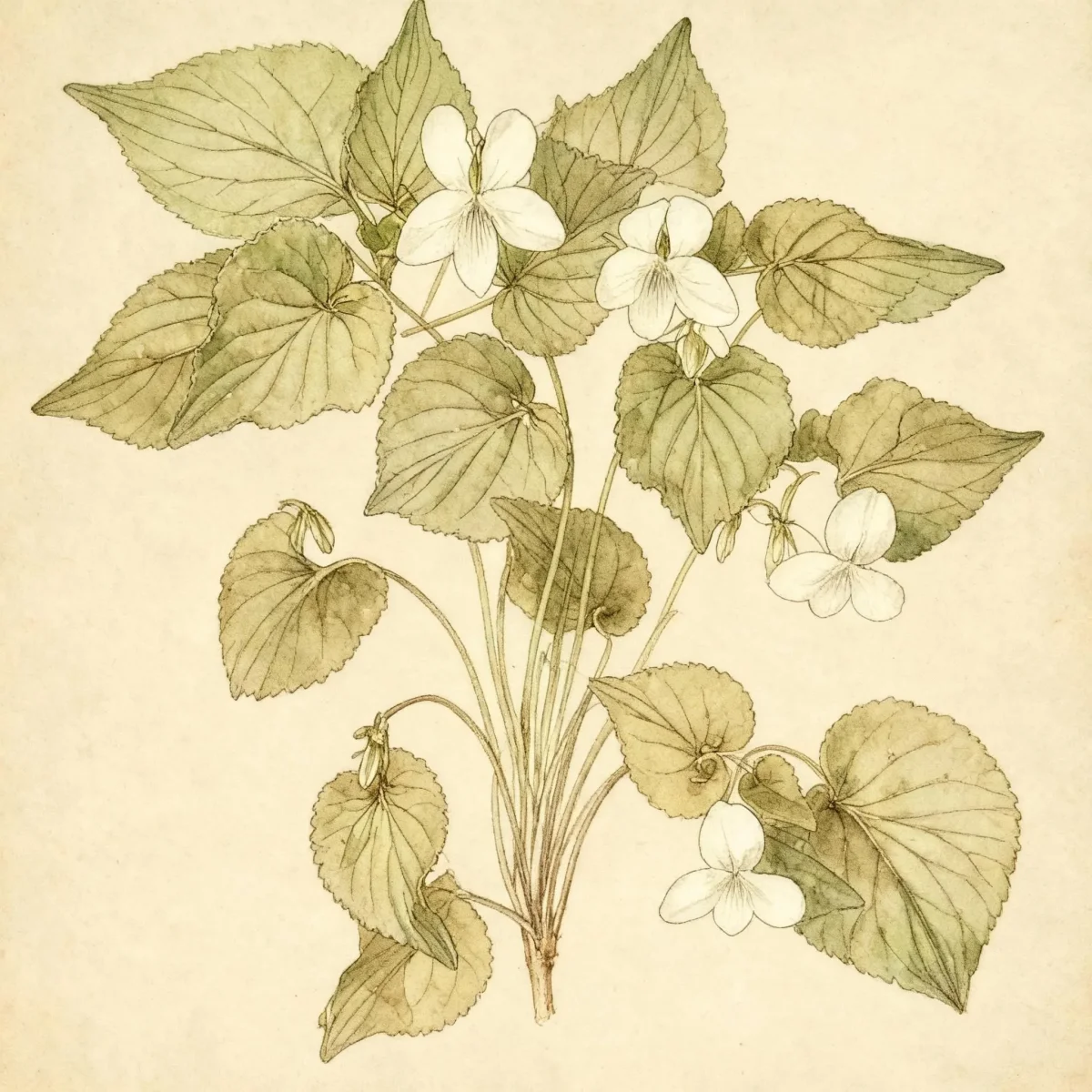
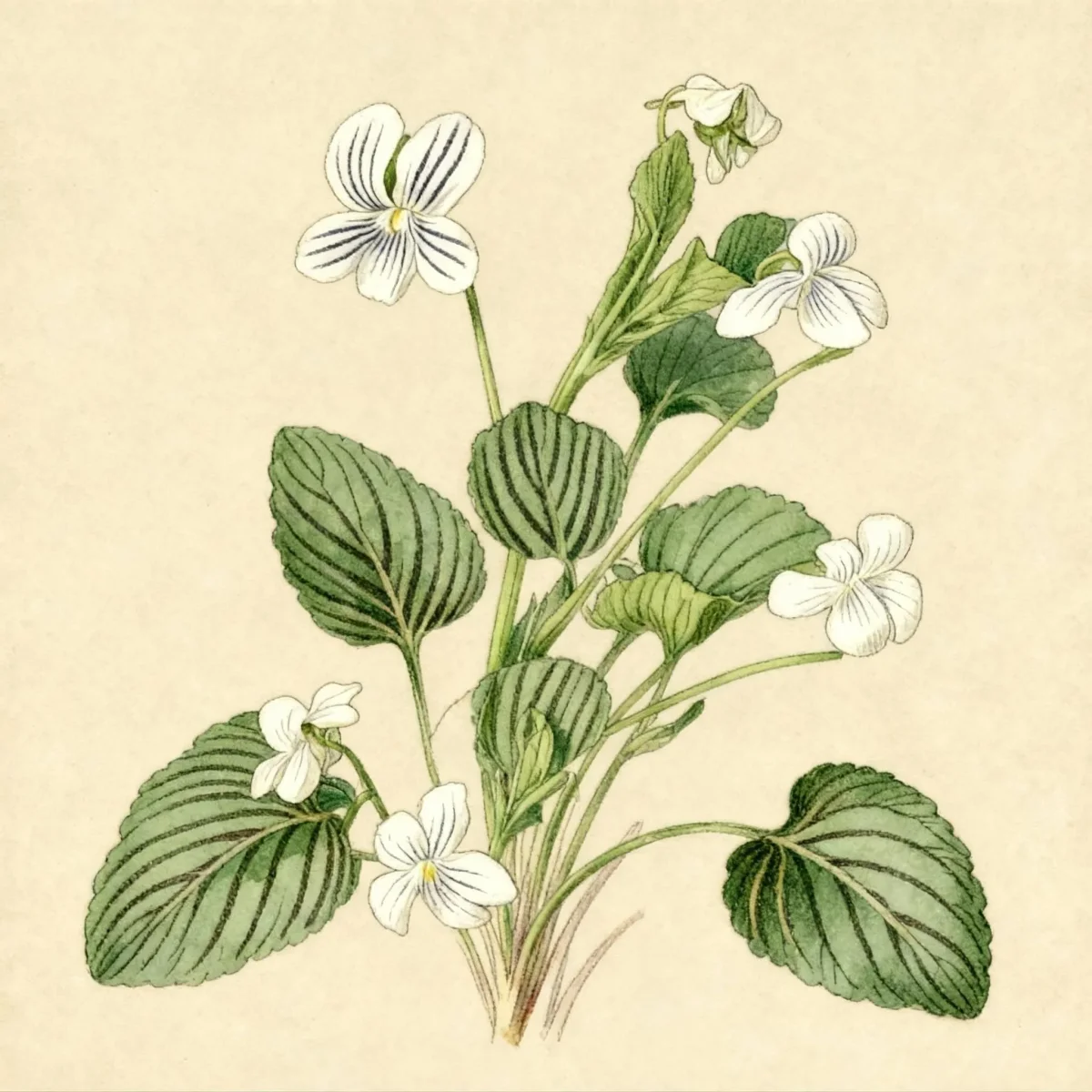
Striped cream violet (Viola striata)
Discover Viola striata, the Striped cream violet. This native perennial offers creamy white, veined flowers in spring for woodland gardens. Hardy in zones 4-7.
Scroll down to discover growing tips, care requirements, companion plants, and more
Complete Plant Information
Overview
Viola striata, known widely as the Striped cream violet, is a charming native wildflower valuable for its delicate spring color in shaded landscapes. This herbaceous perennial provides a fine, low-growing ground cover composed of dark green, heart-shaped leaves. It is a beautiful, subtle addition to any ecologically focused garden design.
This species thrives, creating fresh texture and blooms, particularly favoring moist woodland environments throughout Eastern North America. The standout feature is its creamy white flowers, distinguished by distinctive purple veining on the lower petal, lending it the common name Striped cream violet.
Viola striata is exceptionally low-maintenance once established, reproducing easily via self-seeding, which allows it to naturalize beautifully across shaded slopes or woodland floors. Gardeners appreciate its resilience against pests and its ability to form dense mats, suppressing weeds naturally.
Fast Facts
- Plant Family: Violaceae
- Plant Type: Herbaceous perennial
- Native Range: Eastern North America
- Hardiness Zones: USDA Zones 4-7
- Size at Maturity:
- Height: 0.75-1 ft
- Spread: 0.75-1 ft
- Bloom Time: April to June
- Bloom Description: Pale violet/white
- Sun Exposure: Part shade
- Water Needs: Medium to wet
- Maintenance Level: Medium
How to Grow
The Striped cream violet performs best when planted in the spring or fall, avoiding the stresses of summer heat. Select a location that offers part shade, mimicking its natural habitat in rich, moist woods. Viola striata dictates a need for average, medium to wet, well-drained soils, preferring conditions that are consistently humusy and damp.
Watering for this plant should be consistent, ensuring the soil remains moist but never waterlogged, especially during dry spells in the summer. Fertilization is generally unnecessary; rich, organic soils native to woodlands usually supply sufficient nutrients. Pruning is minimal, usually only requiring the removal of old foliage in early spring before new growth emerges.
A key consideration for Viola striata is its tendency to self-seed freely. While this behavior is desirable for naturalizing, gardeners must be aware that profuse self-seeding can lead to a weedy appearance in highly formalized plantings, requiring minimal thinning periodically.
This native violet establishes a dense mat, making it an excellent solution for difficult, shaded spots where turf grass struggles to survive. Its ease of growth and robust nature make Viola striata a favorite among native plant enthusiasts.
Landscape Uses
The suggested uses for this plant center heavily around creating naturalistic displays in partially shaded spaces. Its suitability as a ground cover makes Viola striata perfect for mass plantings beneath larger trees or along the edges of woodland paths. Use it to naturalize slopes or borders where a low, textural carpet is desired, blending seamlessly with other spring ephemerals.
In native plant gardens, the Striped cream violet offers early-season interest, preceding many taller woodland perennials. Consider companion planting it with ferns, wild ginger (Asarum), or small spring bulbs like trilliums or bloodroot, all of which share similar moisture and shade requirements.
For naturalizing projects, allow the Viola striata room to spread and colonize. It works exceptionally well in buffered areas of the landscape, such as stream banks (where moisture is reliably high) or deep shade zones, acting as a living mulch.
Standout Features
Flower Qualities
- Showy
Noteworthy Characteristics
Viola striata, commonly called pale violet, cream violet or striped violet, is a native Missouri wildflower which occurs in rich, moist woods, valleys, bottomlands and streambanks in the Ozark region of the State. Features creamy white flowers with a purple-veined lower petal. Flowers appear in spring (April-June in St. Louis) rising from the leaf axils of leafy stems growing 6-12” tall. Dark green, heart-shaped leaves with deeply cut stipules form a thick ground cover. Genus name comes from the Latin name for various sweet-scented flowers, and the specific epithet means lined or striped in reference to the lower flower petal veining.
Tolerances
- Deer
Potential Problems
This species is generally robust, exhibiting no serious insect or disease problems, which contributes significantly to its low-maintenance profile. The primary management concern for Viola striata is its prolific self-seeding habit. While this is excellent for creating a lush, natural tapestry, in highly controlled or formal garden settings, this vigorous reproduction borders on being weedy. If uncontrolled spread is unwanted, deadhead the flowers immediately after bloom time to prevent excessive seed set.
Frequently Asked Questions
What hardiness zones is Striped cream violet suitable for?
Viola striata is suitable for USDA Hardiness Zones 4 through 7.
How large does Viola striata grow?
This plant typically reaches a mature height between 0.75 and 1 foot tall, spreading to a similar width of 0.75 to 1 foot.
When does Striped cream violet bloom?
The Striped cream violet blooms quite early, typically from April to June, displaying distinctive pale violet/white flowers.
What sun exposure does Viola striata need?
Viola striata requires part shade conditions to flourish optimally in the garden.
Conclusion
The Viola striata, or Striped cream violet, offers native beauty, reliable ground coverage, and exceptional pest resistance, making it an indispensable choice for shaded, moist areas. By incorporating this plant into woodland or native gardens, you guarantee early-season visual interest and structural texture. Ensure your site matches its medium-to-wet soil and part shade needs before planting this spring.
Companion Planting
Because Viola striata prefers consistent moisture and dappled light, good companion plants are those that share similar cultural requirements. Consider pairing it with shade-loving ferns, such as Ostrich Fern (Matteuccia struthiopteris), which offer contrasting vertical texture without overwhelming the low-growing violets. Hostas, especially smaller, shade-tolerant varieties, also create an appealing textural contrast beneath deciduous trees.
For a wildflower meadow understory, combine the Striped cream violet with other spring bloomers like Wild Geranium (Geranium maculatum) or native wild ginger. These companions help extend the season of interest and contribute to a layered, naturalistic look that celebrates Eastern North American flora.
Propagation Tips
While the easiest propagation method for Viola striata is allowing it to self-seed, gardeners wishing to intentionally cultivate new patches can employ light harvesting practices. Carefully collect the seed capsules just as they begin to dry but before they explosively shatter their seeds. These seeds require stratification to germinate successfully, mimicking winter conditions. Sow the seeds thinly in containers filled with moist, sterile potting mix and place them outdoors in a cold frame or protected area for winter exposure.
Alternatively, division can be performed in early spring or fall when the plant is actively growing slowly. Gently lift clumps of the established Viola striata and divide them into smaller sections, ensuring each division has several healthy roots attached. Replant these divisions immediately into the prepared medium to minimize transplant shock, watering well afterward.