Freycinetia (Freycinetia cumingiana)
Discover Freycinetia cumingiana, an evergreen tropical vine from the Philippines, prized for showy winter blooms and glossy leaves.
Scroll down to discover growing tips, care requirements, companion plants, and more
Complete Plant Information
Overview
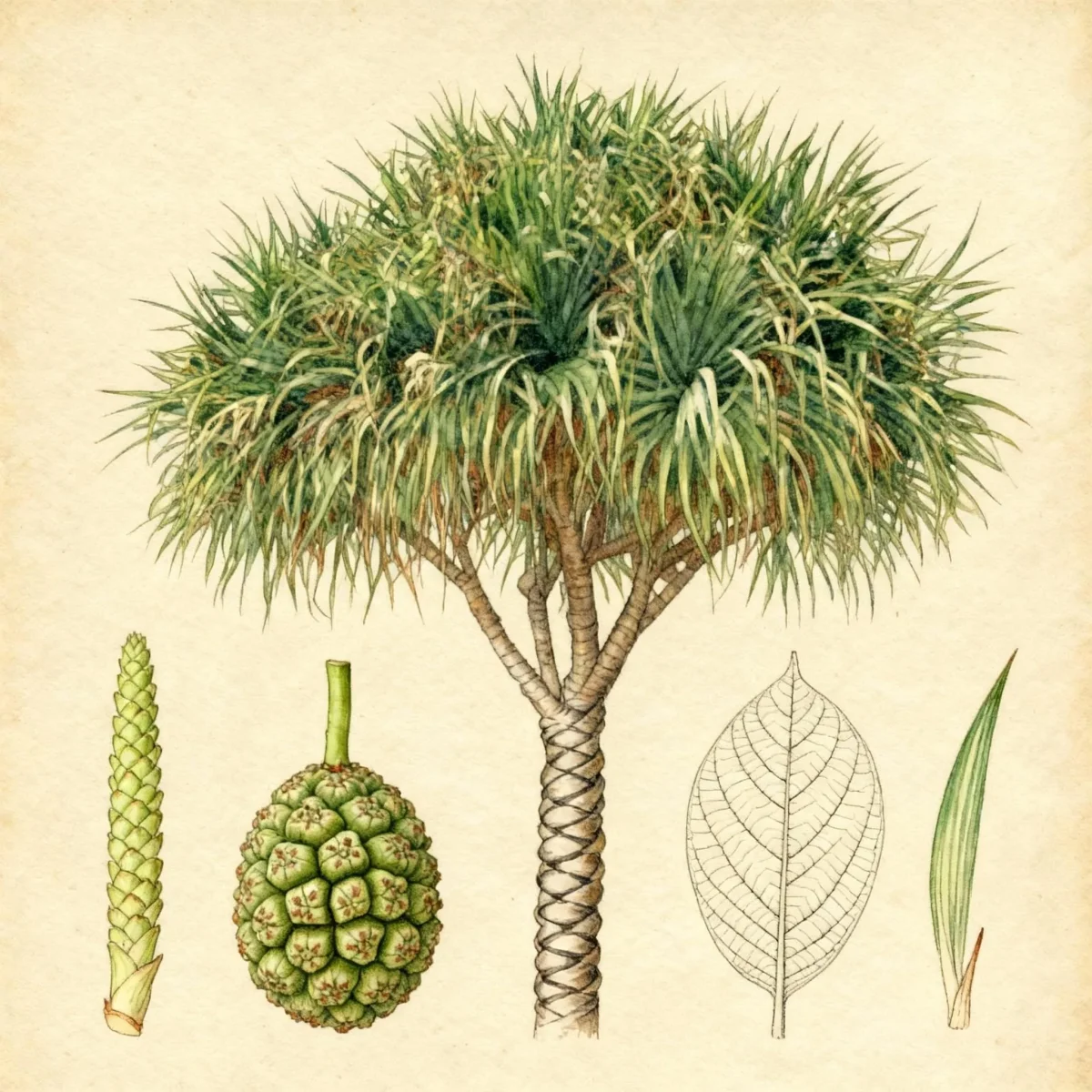
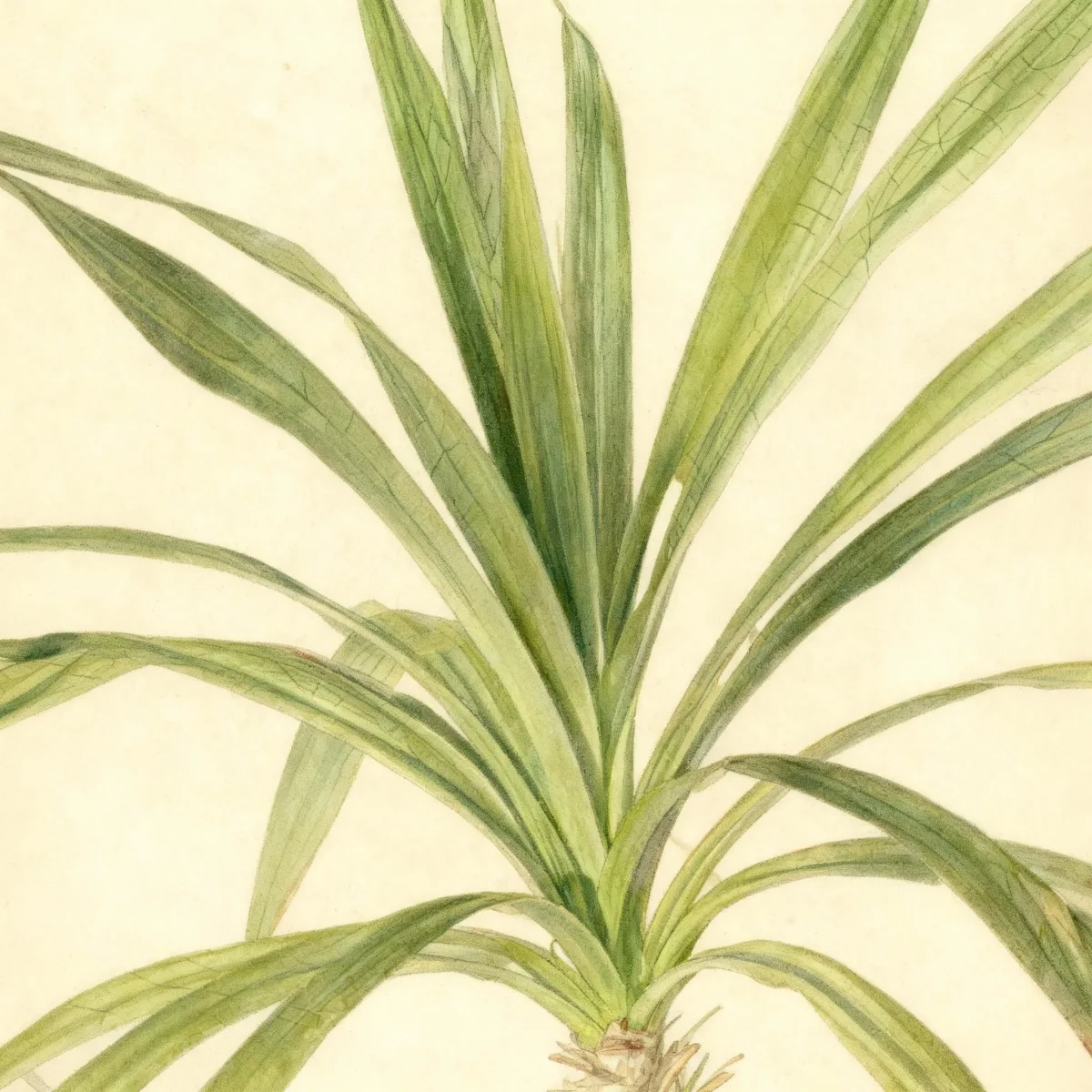
Freycinetia cumingiana, often known as climbing freycinetia, is a striking broadleaf evergreen native to the rainforests of the Philippine Islands. This plant is valued in tropical landscaping for its dense, dark green, leathery foliage and its unique winter flowering display, created by showy orange bracts. As a scrambling shrub or woody vine, it adds dramatic vertical interest to warm climates.
This species of Freycinetia reaches moderate heights, typically between 3 and 6 feet, though it can climb much higher if given support via its aerial roots. It thrives in the consistent warmth and moisture of USDA Zones 11 and 12, making it a superb choice for subtropical gardens or as a dedicated houseplant elsewhere. Gardeners appreciate the low-drama care required for this tropical gem once established in suitable low-light conditions.
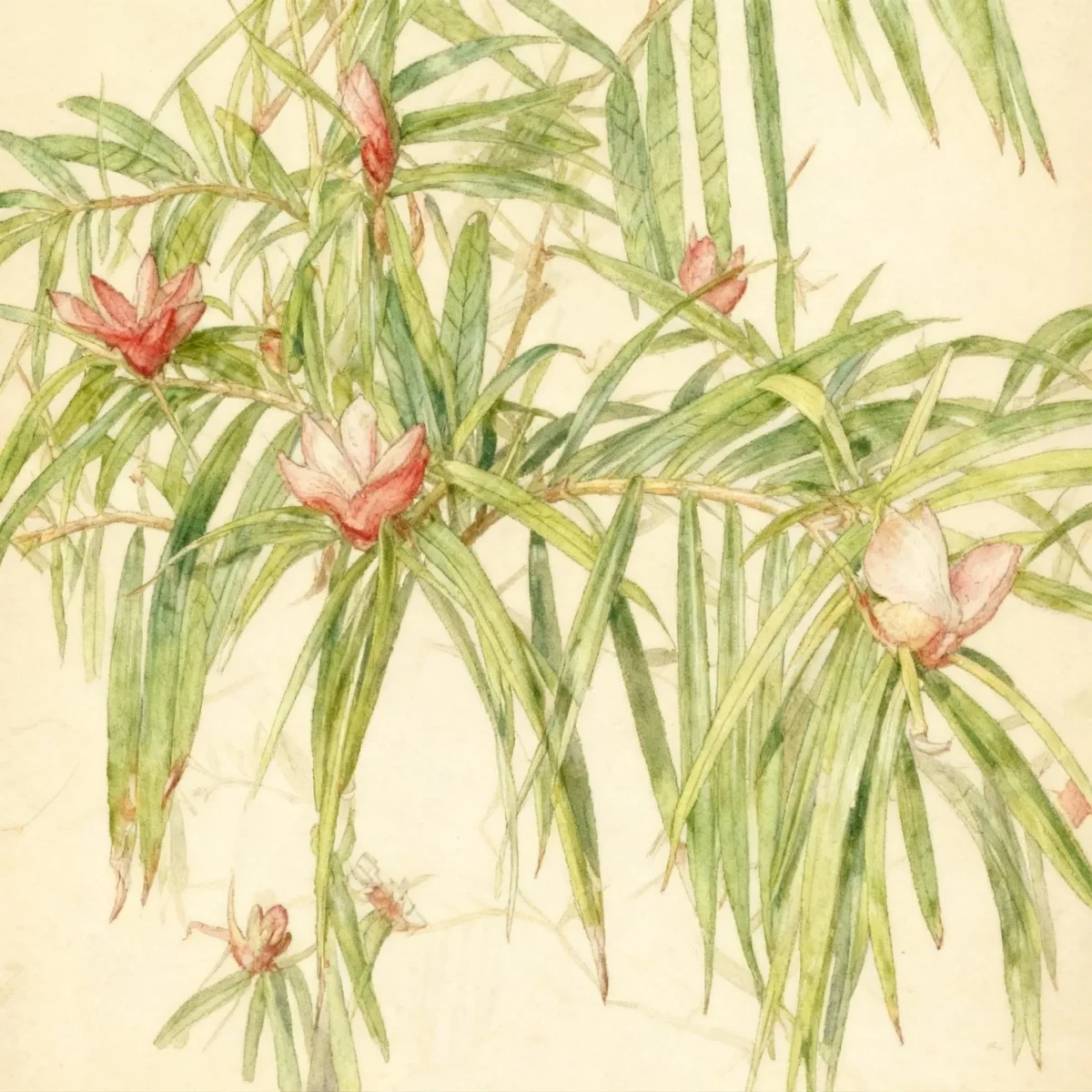
The ornamental appeal of Freycinetia cumingiana centers around its unique bloom period between winter and spring, featuring large, brightly colored spathes that serve as the show. Whether scrambling up a tree trunk or contained in a large urn, this climbing pandanus offers year-round deep green texture complemented by seasonal bursts of color from those distinctive orange structures.
Fast Facts
- Plant Family: Pandanaceae
- Plant Type: Broadleaf evergreen
- Native Range: Philippines
- Hardiness Zones: USDA Zones 11-12
- Size at Maturity:
- Height: 3-6 ft
- Spread: 3-6 ft
- Bloom Time: December to April
- Bloom Description: Orange bracts
- Sun Exposure: Part shade to full shade
- Water Needs: Medium
- Maintenance Level: Medium
How to Grow
Plant Freycinetia cumingiana outdoors in its minimum zone hardiness area where the goal is evenly moist, yet well-drained soils. Location selection is crucial; this plant prefers part shade outdoors, away from intense afternoon sun which can scorch the leaves. Ideal planting time mirrors the onset of its growing season, although potted specimens can be established almost any time if conditions are controlled.
Ongoing cultivation requires consistent moisture management; allow the soil to dry out slightly between deep waterings to prevent root issues. Freycinetia species also benefit significantly from medium to high ambient humidity, which is easily maintained in tropical settings or via regular misting or pebble trays when grown indoors. Fertilization is generally light, focusing on balanced liquid feeds during active growth periods.
If growing Freycinetia as a houseplant, position it where it receives curtain-filtered light—eastern, western, or northern exposures are preferable, providing part shade to bright full shade. Indoor temperatures should ideally remain between 65 and 85 degrees F daily. Propagation can be achieved through seeds from female plants, stem cuttings, or air layering, as plants have a tendency to sucker from the base.
Landscape Uses
As a tropical plant winter hardy primarily in USDA Zone 11, Freycinetia cumingiana excels in settings where its climbing, vining habit can be utilized. It is excellent for softening concrete walls, adorning trellises, or wrapping around mature tree trunks to provide vertical texture in shaded yard corners or woodland gardens. The upright nature of this growth habit, reaching up to 6 feet tall as a shrub or higher as a vine, makes it an effective screening element when planted densely.
When container grown, the Freycinetia makes an excellent specimen plant for shaded patios or lanais. Ensure containers are robust enough to handle its eventual size and that potting medium drains exceptionally well. In containers, these plants may be placed in curtain-filtered windows indoors, requiring part shade to bright full shade environments to mimic their native understory habitat.
Standout Features
Flower Qualities
- Showy
Fruit Qualities
- Showy
Noteworthy Characteristics
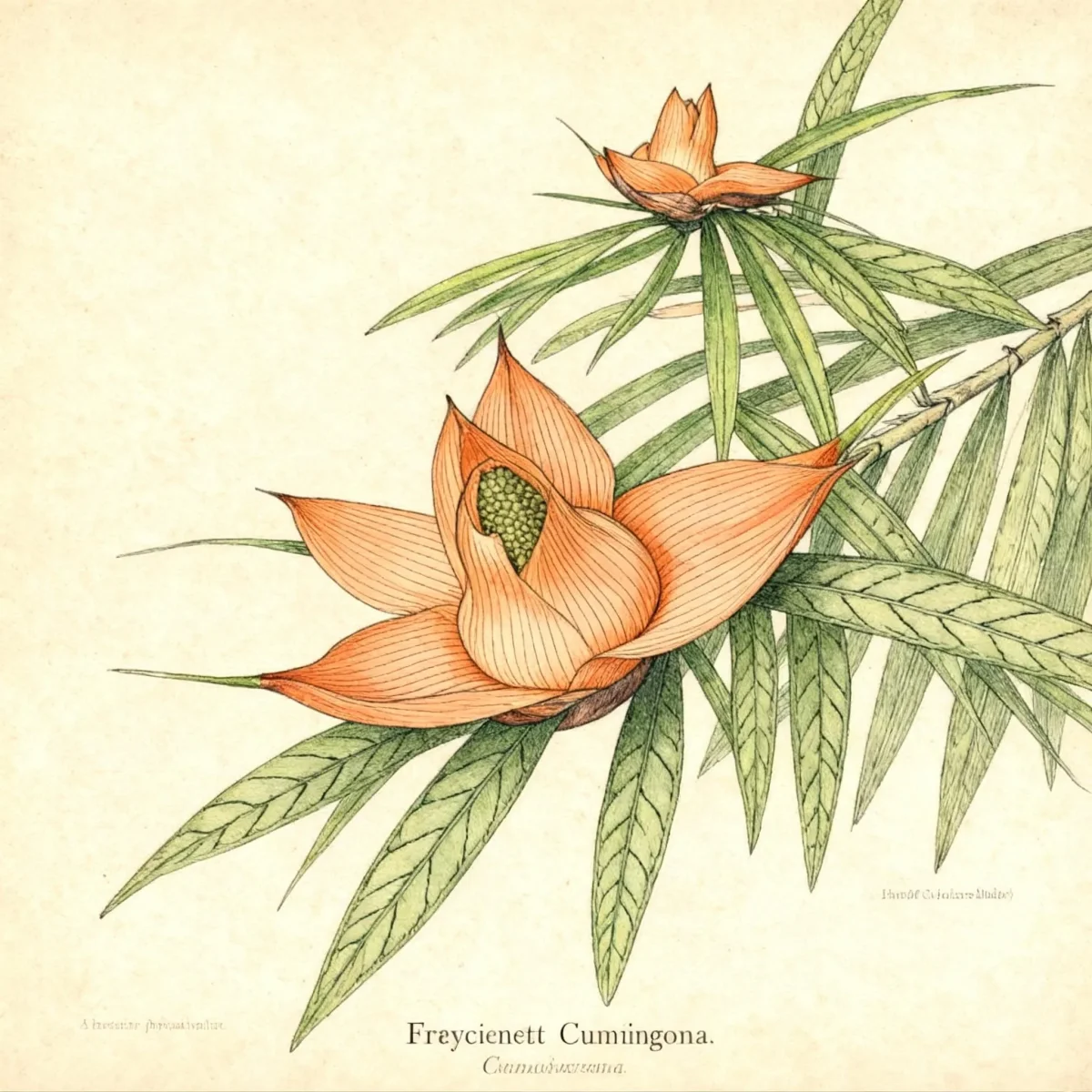
Freycinetia cumingiana, commonly called climbing freycinetia or climbing pandanus, is an evergreen tropical climbing vine or scrambling shrub of the screw pine family, native to Philippine rainforests. It functions as a low-growing shrub unsupported (around 3 feet) but utilizes slender aerial roots to scale structures, potentially reaching 7 feet or more. The display is famous for the cluster of large, showy orange to pink-orange bracts subtending the flower spikes, which bloom dramatically between December and April.
Tolerances
- Nothing Listed
Potential Problems
This plant enjoys a favorable profile regarding pests and diseases, with no known serious issues regularly reported. Occasionally, gardeners may encounter mealybugs, particularly when the plant is stressed or kept in overly stagnant indoor air conditions. Monitor leaf axils and stem joints closely for these small, white, cottony pests. Management typically involves isolating the plant and treating localized infestations by wiping them away with an alcohol-dampened swab or applying insecticidal soap as directed.
Frequently Asked Questions
What hardiness zones is Freycinetia cumingiana suitable for?
Freycinetia cumingiana is generally winter hardy only to USDA Zones 11 and 12, requiring consistently warm conditions year-round for outdoor survival.
How large does Freycinetia grow?
This species typically matures to a height between 3 and 6 feet, with a similar spread, though its vining habit allows it to climb much taller if given support.
What sun exposure does Freycinetia need?
Freycinetia requires part shade to full shade conditions; direct, strong sunlight should be avoided, especially when grown as a houseplant.
When does Freycinetia cumingiana bloom?
The unique flower display, created by orange bracts, occurs seasonally between December and April in ideal growing conditions.
Conclusion
The Freycinetia cumingiana offers gardeners a unique texture and an unexpected winter floral show dominated by stunning orange bracts, making it an excellent focal point in shaded, warm settings. Successful cultivation hinges on providing consistent moisture and protection from intense midday sun, whether planted outdoors in Zones 11-12 or kept as a humidity-loving houseplant. Plan your placement thoughtfully to allow this Freycinetia cultivar to climb or scramble, maximizing its dramatic vertical appeal.
Propagation Tips
Propagation relies on several methods appropriate for a climbing vine. Female plants can produce seeds, which can be collected and sown directly, though this is often the most time-consuming method. For faster results, gardeners should take stem cuttings during the active growing season. These cuttings should possess several nodes and be rooted in a warm, moist medium under high humidity until sufficient aerial roots develop.
Another effective technique for Freycinetia cumingiana is air layering. Select healthy, mature stems that are starting to show aerial root development, induce rooting where desired using moss wrapped around the stem section, and sever the rooted branch once established. This method bypasses the need for dormancy and often results in a more robust, immediate transplant.
Companion Planting
Because Freycinetia cumingiana demands consistently moist, well-drained soil and prefers shade or filtered light, it pairs beautifully with other tropical or subtropical understory plants. Consider grouping this Freycinetia with ferns, such as large Boston Ferns or Maidenhair Ferns, which share similar air and soil moisture requirements. Hostas, while typically temperate, can often thrive alongside it in shaded, subtropical environments, offering contrasting leaf texture.
When using it as a vertical element, select companions for the base that won’t aggressively compete for root space. Shade-loving foliage plants like Aspidistra (Cast Iron Plant) or various low-growing peace lilies (Spathiphyllum) provide a dense, green skirt that complements the dark, leathery leaves of the climbing pandanus. Ensure all companions also appreciate the part shade to full shade provided by the overhead canopy or structure.