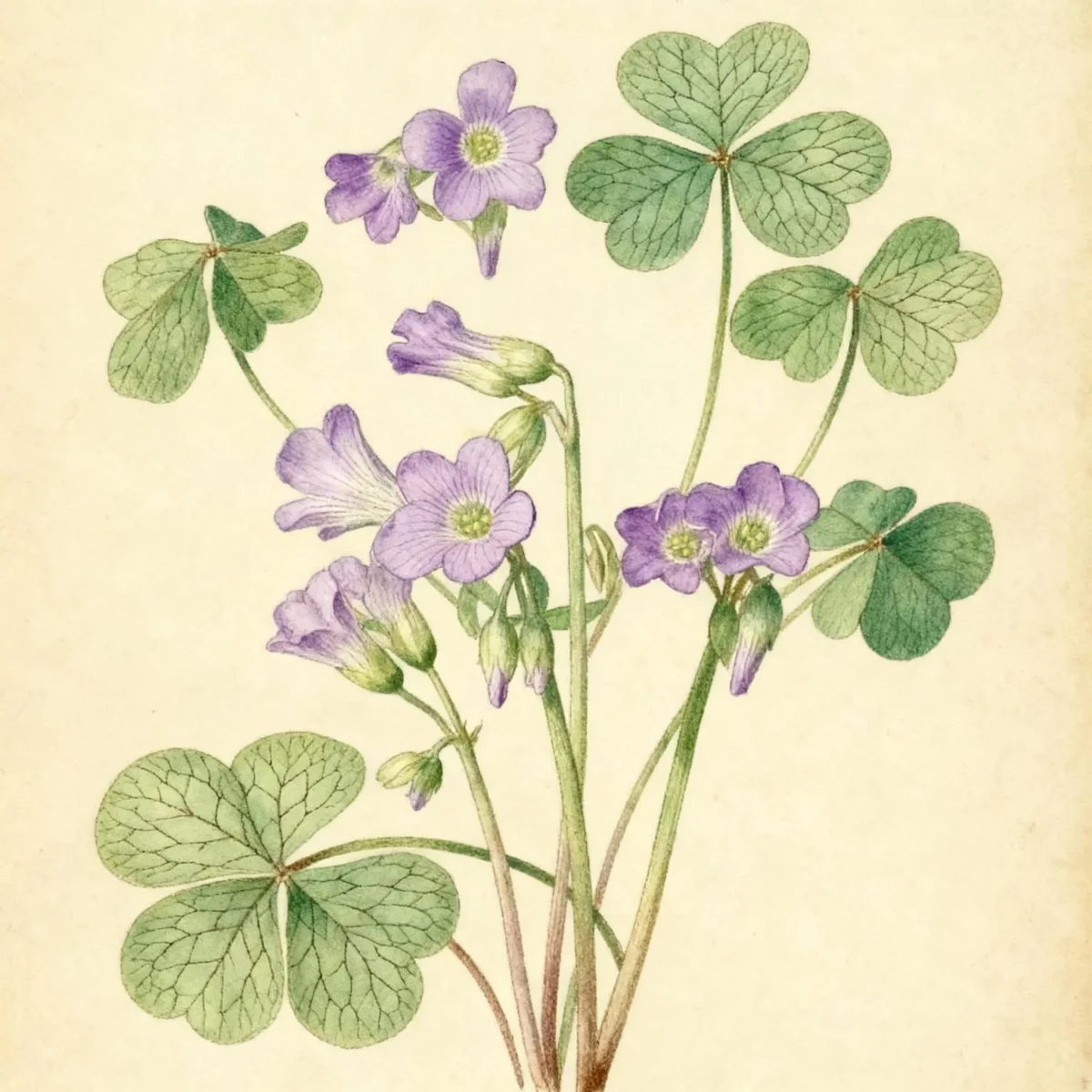
Shamrock (Oxalis triangularis subsp. triangularis)
Discover the striking Shamrock (Oxalis triangularis subsp. triangularis), featuring deep purple, triangular foliage and pale pink spring blooms.
Scroll down to discover growing tips, care requirements, companion plants, and more
Complete Plant Information
Overview
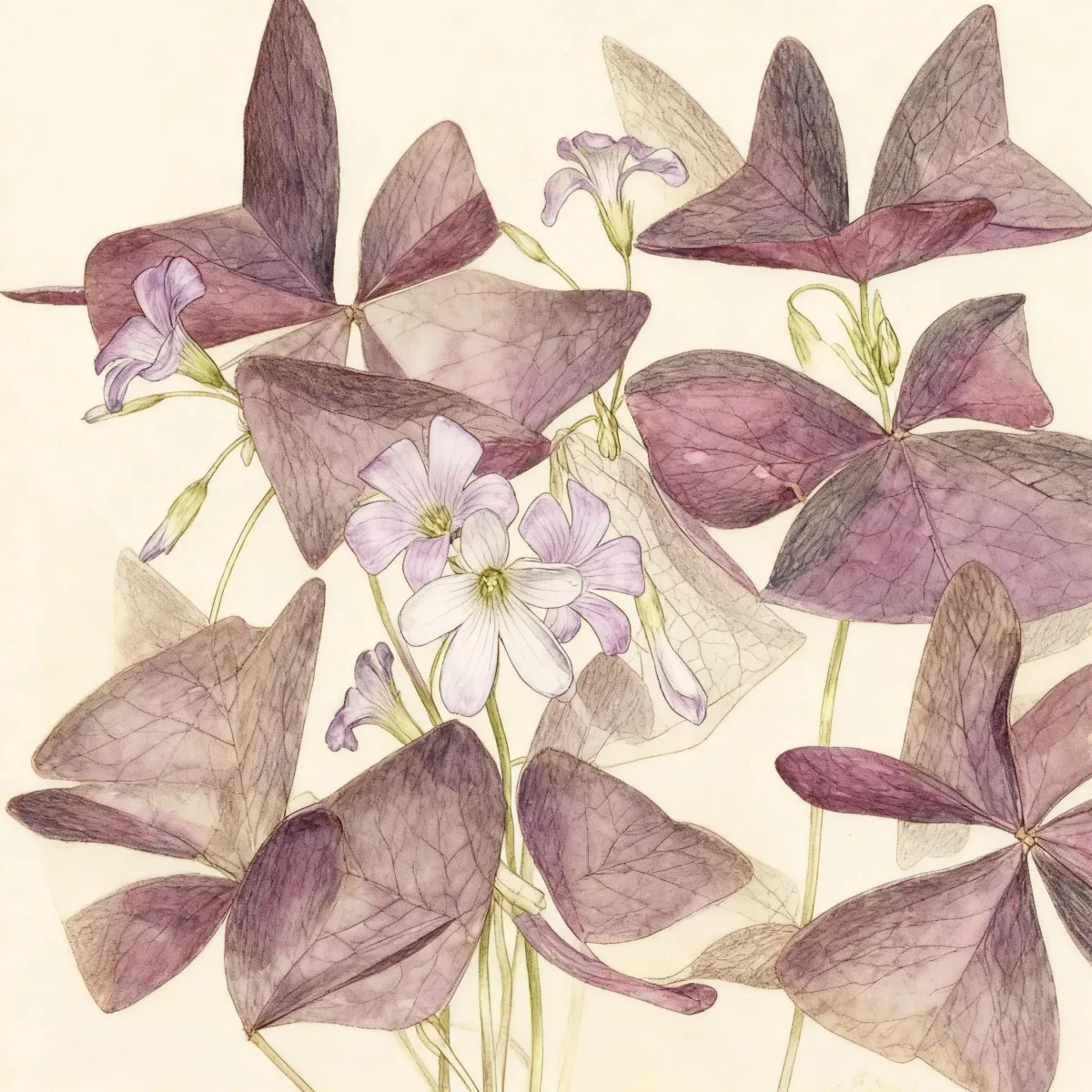
The striking Oxalis triangularis subsp. triangularis, frequently known by the common name Shamrock or Purple Shamrock for its deep purple foliage, offers immediate visual impact in any garden setting. This herbaceous perennial, growing from substantial underground corms, is instantly recognizable by its distinctive, trifoliate leaves composed of three triangular leaflets. Gardeners value this species for its unique color contrast, which provides a lush, cool tone under brighter plantings.
Growing readily in hardiness zones 8 through 11, this easy-going plant maintains a modest stature, reaching between half a foot and a foot and a half tall. Beyond its primary spring display of pale pink to white, funnel-shaped flowers, the primary appeal of Oxalis triangularis subsp. Triangularis lies in its foliage, which demonstrates nyctinasty by folding its leaflets closed at night or when touched.
This versatile plant, sometimes called false shamrock, fits seamlessly into various landscape roles, from mass plantings where it can naturalize beautifully, to container arrangements in cooler climates where it is grown as an annual. Its low maintenance requirements make it an excellent choice for gardeners seeking high impact with minimal effort.
Fast Facts
- Plant Family: Oxalidaceae
- Plant Type: Bulb
- Native Range: Brazil, Paraguay
- Hardiness Zones: USDA Zones 8-11
- Size at Maturity:
- Height: 0.5-1.5 ft
- Spread: 1-2 ft
- Bloom Time: Seasonal bloomer
- Bloom Description: Pale pink to white
- Sun Exposure: Full sun to part shade
- Water Needs: Medium
- Maintenance Level: Low
How to Grow
Begin cultivating your Shamrock by planting the fleshy corms directly into the ground once the danger of frost has passed in spring. Ideal locations offer a position receiving full sun to light afternoon shade, protected from the most intense midday heat, especially in hotter zones. While adaptable, this plant thrives in well-draining soil that doesn’t remain soggy, though medium water consistency is required to maintain its foliage quality.
Ongoing care for Oxalis triangularis subsp. triangularis is simple. Aim for consistent moisture; allow the top inch of soil to dry slightly between waterings, but avoid drought stress. Fertilization is generally unnecessary if planted in fertile ground, but a balanced liquid fertilizer applied sparingly during the active growing season can encourage more prolific blooming. Pruning mainly involves removing spent flower stalks or any foliage showing signs of distress.
As a bulbous perennial in marginally hardy zones (7 and below), plan for overwintering by lifting the corms after the foliage dies back in the fall. Store them in a cool, dry, dark location until spring planting time. In zones 9-11, they may persist year-round, though the foliage may go dormant through hot, dry summers.
This plant’s preference for consistent moderate moisture makes companion selection important; avoid planting it directly alongside extremely drought-tolerant species. The interesting behavior of the folding leaves also makes it a fantastic curiosity plant for areas where people might regularly interact with the garden.
Landscape Uses
Oxalis triangularis subsp. triangularis excels when allowed to naturalize, creating carpets of dark purple under taller shrubs or trees where the light is somewhat dappled. Its compact height makes it perfect for edging paths or softening the front of mixed borders where its color can pop against lighter greens or flowering companions.
It is highly recommended for rock gardens, utilizing its cormous habit and low, spreading habit to fill smaller pockets of space. Furthermore, because it is often grown as a feature houseplant in colder regions, container plantings are an excellent use, allowing gardeners to easily move the plant indoors before winter or to use it as seasonal patio color.
When designing, consider pairing the deep purple foliage of the Shamrock with plants offering bright yellow or lime-green foliage to maximize contrast, or use soft pink annuals nearby to complement its subtle blooms.
Standout Features
Flower Qualities
- Showy
Noteworthy Characteristics
The genus name Oxalis comes from the Greek word oxys meaning “acid”, “sour” or “sharp”, in reference to the taste of the leaves. The specific epithet tirangularis means “triangular” in reference to the shape of the leaflets. The common names of this species refer to the color of the foliage and the superficial resemblance between this species and other trifoliate species such as shamrocks (Trifolium).
Tolerances
- Rabbit
- Deer
Potential Problems
The primary fungal issue associated with this plant is Oxalis rust, which manifests as yellow or orange pustules, usually on the undersides of the leaflets. If rust appears, promptly prune and remove all diseased foliage to prevent further spread within the clump. Fortunately, this species is largely ignored by common garden pests, as deer and rabbits tend to avoid the foliage, likely due to its slightly sour taste derived from oxalic acid content.
Frequently Asked Questions
What hardiness zones is Shamrock suitable for?
Oxalis triangularis subsp. triangularis is suitably hardy in USDA Zones 8 through 11.
How large does Oxalis triangularis subsp. triangularis grow?
Mature plants typically reach a height range of 0.5 to 1.5 feet, spreading to about 1 to 2 feet wide.
When does Shamrock bloom?
This species is a seasonal bloomer, typically showing clusters of pale pink to white flowers during the spring months, with repeat blooming possible as the weather cools in the fall.
What sun exposure does Shamrock need?
It performs best when situated in locations offering full sun to partial shade conditions.
Conclusion
The vibrant purple foliage and unique leaf movement ensure that Oxalis triangularis subsp. triangularis remains a captivating addition to containers, borders, and naturalized areas. Its low-maintenance needs and respectable tolerance for common garden herbivores make the Shamrock an easy choice for textural and color interest. Check your local climate to determine if you can grow this bulb outdoors year-round or plan on overwintering the corms indoors.
Companion Planting
Selecting appropriate companions enhances the visual appeal and cultural symmetry of your landscape beds. Pair Oxalis triangularis subsp. triangularis with plants that share its medium water needs and thrive in semi-shaded conditions. Consider light-colored annuals or perennials such as white Impatiens or variegated Hostas, whose bright colors will vividly contrast against the dark purple leaves of the Shamrock.
For a textural contrast, try pairing it with finely textured ferns or mosses in shady garden corners, leveraging the native range similarities for robust growth. Since the Oxalis triangularis subsp. Triangularis emerges relatively early and provides dense ground cover, use taller, later-blooming perennials nearby to ensure continuous visual interest throughout the season.
Propagation Tips
Propagation of this striking plant is straightforward, relying primarily on its underground corms or rhizomes. As a bulbous perennial, division is the simplest method; gently lift the clump in the autumn or early spring before active growth begins. Carefully separate the corms, ensuring each viable piece has at least one eye or bud attached before replanting immediately.
If growing from seed, note that the resulting seedlings may take time to establish the characteristic dark purple foliage of the parent Oxalis triangularis subsp. triangularis. Collect seed pods once mature; they often burst open upon drying, scattering seed widely, which explains how it can naturalize easily when conditions are favorable. This method is best reserved for gardeners wishing to increase stock rapidly or experiment with potential natural variations.