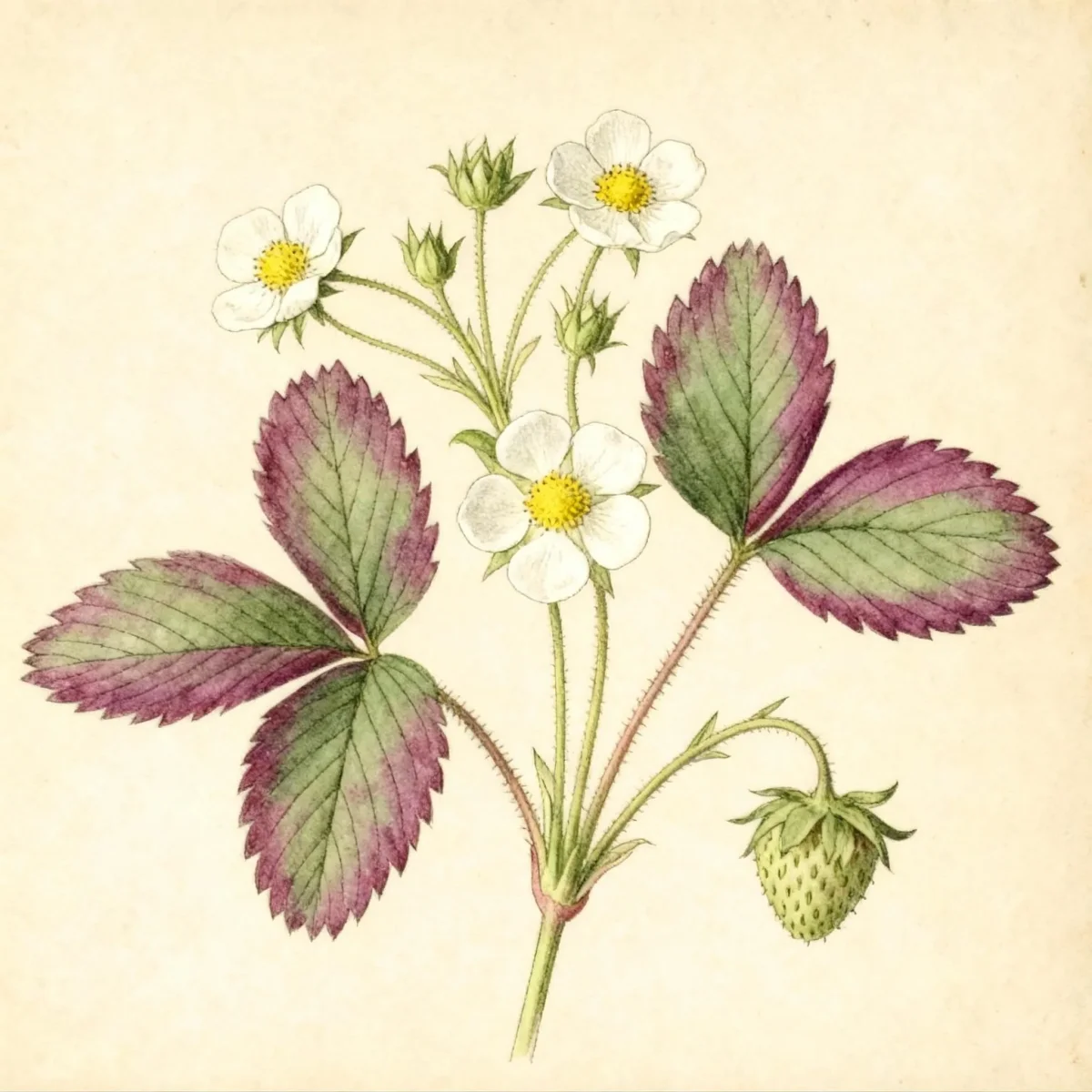
Scarlet strawberry (Fragaria virginiana)
Discover Fragaria virginiana, the Scarlet strawberry. A charming, low-growing perennial perfect for ground cover with edible spring fruit.
Scroll down to discover growing tips, care requirements, companion plants, and more
Complete Plant Information
Overview
The Scarlet strawberry, scientifically known as Fragaria virginiana, offers gardeners a delightful glimpse into North American native flora. This charming herbaceous perennial is highly valued for its vigorous mat-forming habit, quickly blanketing areas with attractive green foliage. It is a foundational species in many native landscapes, providing early spring blooms followed by small but intensely flavorful red fruits.
Fragaria virginiana thrives as a vigorous ground cover, spreading via runners just as reliably as its common name, wild strawberry, suggests. Beyond its aesthetic appeal, the sweet-tart berries provide a genuine harvest, linking modern gardens back to historical foraging traditions. Its resilience allows it to colonize areas where other ground covers struggle, making it an excellent choice for naturalizing.
These plants are cool-season performers, putting on their best display in the spring and fall before potentially slowing during peak summer heat. Successfully integrating the Scarlet strawberry into your garden means embracing its spreading nature while enjoying the brief but beautiful flush of white flowers in early spring.
Fast Facts
- Plant Family: Rosaceae
- Plant Type: Herbaceous perennial
- Native Range: Eastern North America
- Hardiness Zones: USDA Zones 5-9
- Size at Maturity:
- Height: 0.25-0.75 ft
- Spread: 1-2 ft
- Bloom Time: April to May
- Bloom Description: White
- Sun Exposure: Full sun to part shade
- Water Needs: Medium
- Maintenance Level: Medium
How to Grow
Fragaria virginiana establishes best when planted in the spring or early fall, utilizing its cool-season vigor. Aim for locations offering fertile, moist to dry-mesic, well-drained soils. While it tolerates part shade, full sun exposure generally results in better flowering and fruit production for this native species. It particularly prefers organically rich, sandy loam compositions.
Routine watering should keep the soil consistently moist, especially during establishment and fruit development. Once established, the Scarlet strawberry exhibits good drought tolerance, a key benefit derived from its native prairie and woodland edge environment. Fertilization is usually unnecessary in rich soils; over-fertilizing can encourage excessive foliage at the expense of flowers.
Since this cool-season perennial slows down or may go dormant during hot summer months, management focuses on cleanup after fruiting. Plants spread via runners (stolons) that root readily as they sprawl. To propagate or maintain density, encourage these runners to root or actively transplant rooted sections. Avoid planting in areas subject to high summer heat, humidity, or strong drying winds where performance may suffer.
Landscape Uses
The spreading habit of the Scarlet strawberry makes it an outstanding choice for ground cover or to naturalize large open areas quickly. Its low stature ensures it integrates beautifully into borders without obstructing views of taller surrounding plants. Furthermore, due to its fibrous root system, Fragaria virginiana is highly effective when used for minor erosion control on gentle slopes.
Consider using this native gem in woodland gardens where dappled sunlight filters through the canopy, mimicking its natural habitat near woodland openings. While the fruits are very small compared to commercial varieties, they are delightfully tasty and can be gathered fresh off the vine or utilized in jams and pies. Design masses of Fragaria virginiana to create a living mulch that suppresses weeds effectively amidst native grasses or smaller spring ephemerals.
Standout Features
Flower Qualities
- Showy
Fruit Qualities
- Showy
- Edible
Noteworthy Characteristics
Fragaria virginiana, commonly called wild strawberry, is a ground-hugging herbaceous perennial that typically grows to 4-7” tall but spreads indefinitely by runners (stolons) which root to form new plants as they sprawl along the ground, often forming large colonies over time. It is native to woodland openings, meadows, prairies, limestone glades and cleared areas including roadsides from Newfoundland to Alberta south to Georgia, Tennessee, and Oklahoma. Cultivated strawberries found in stores are hybrid crosses between F. Virginiana (native to North America) and F. Chiloensis (native to western coastal South America including Chile) which combine the excellent taste of the former with the larger fruit size of the latter.
Tolerances
- Deer
- Drought
- Erosion
Potential Problems
Strawberries, including Fragaria virginiana, are susceptible to a large number of potential diseases, including foliage issues like leaf spot and scorch, and root rots such as red stele or black root rot. Fruit rots, including anthracnose and leather rot, are major concerns, especially during humid bloom/fruiting periods, often accompanied by gray mold. Management involves ensuring excellent air circulation (avoiding overcrowding) and selecting disease-free propagation stock, as viruses can significantly impact long-term productivity.
Occasional insect pests requiring monitoring include tarnished plant bugs, spider mites, aphids, leafrollers, slugs, nematodes, and strawberry weevils. Address slug and snail populations early, as they readily prey on the developing flowers and small fruits of the Scarlet strawberry. Integrated Pest Management (IPM) techniques are best employed before chemical reliance becomes necessary.
Frequently Asked Questions
What hardiness zones is Scarlet strawberry suitable for?
Fragaria virginiana is reliably hardy in USDA Zones 5 through 9.
How large does Scarlet strawberry grow?
This plant achieves a small stature, generally reaching a height between 0.25 and 0.75 feet, while spreading outward to a width of 1 to 2 feet through runners.
What sun exposure does Scarlet strawberry need?
It performs best in full sun but tolerates light shade, thriving where it receives exposure throughout the day.
When does Scarlet strawberry bloom?
The showy white flowers appear reliably in the transition period between spring and early summer, typically blooming from April into May.
Conclusion
The Fragaria virginiana, or Scarlet strawberry, provides significant ecological and aesthetic value through its dense ground cover capabilities and the sweet reward of its edible fruit in spring. Its native hardiness and moderate maintenance requirements make it an excellent addition for gardeners seeking functional, low-growing specimens. Check your local USDA zone compatibility before planting this spring or autumn to ensure the best establishment for your new patch of wild strawberry.
Companion Planting
When designing a native planting scheme around the Scarlet strawberry, select companions that share similar cultural needs regarding sun and soil moisture. Plants that enjoy the bright, open conditions of meadows or woodland edges pair well. Consider species like Aquilegia canadensis (Columbine) or various native sedges (Carex species) which offer contrasting textures without competing aggressively for shallow root space.
Ensure companion plants do not cast dense afternoon shade, as Fragaria virginiana requires significant sunlight to maximize its spring fruit set. Ground covers like spring beauty (Claytonia virginica) can transition beautifully as the strawberries begin to enter summer dormancy, maintaining visual interest throughout the season.
Propagation and Spread Management
The primary method for multiplying Fragaria virginiana is through its runners, or stolons. These specialized stems creep along the soil surface and develop new plantlets at their nodes, which then form roots. This natural runners mechanism is how it forms large colonies over time.
To propagate intentionally, allow runners to root naturally and then snip the connecting stem to the mother plant once the new plant has established a healthy root system. Alternatively, you can carefully sever runners and transplant rooted plantlets immediately. Managing spread in formal areas requires diligent pruning of runners during the growing season to prevent the low-growing perennial from overtaking adjacent ornamental beds.