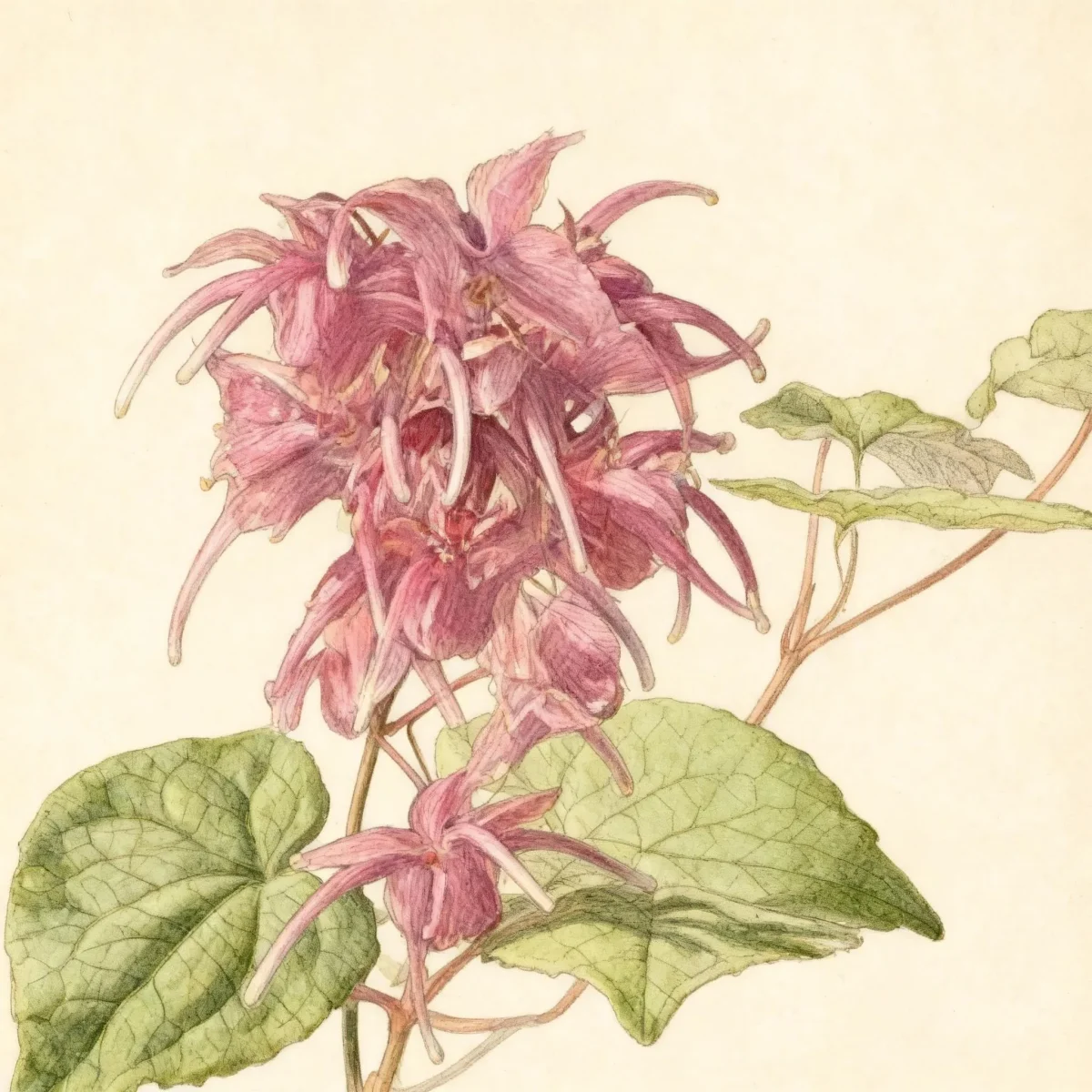
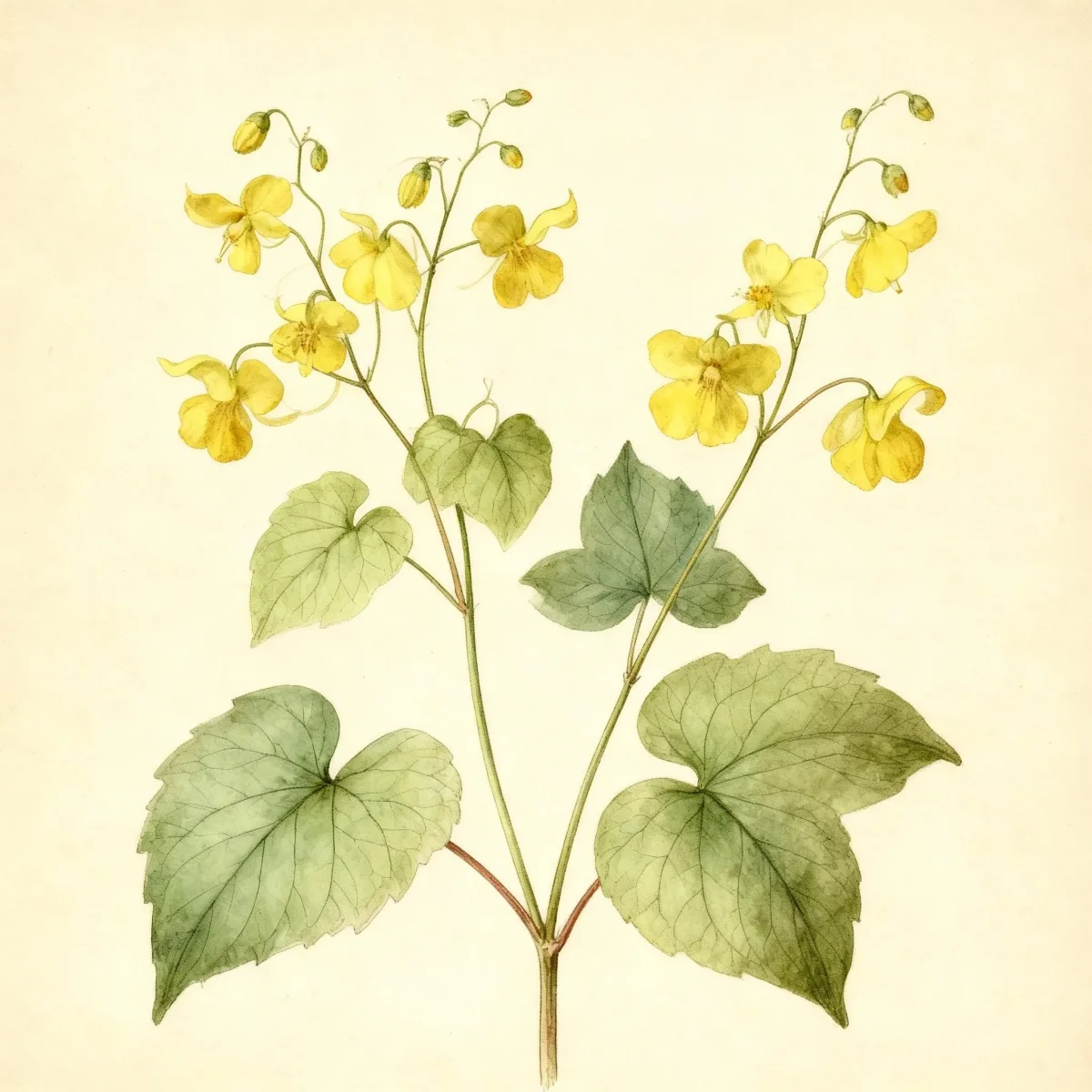
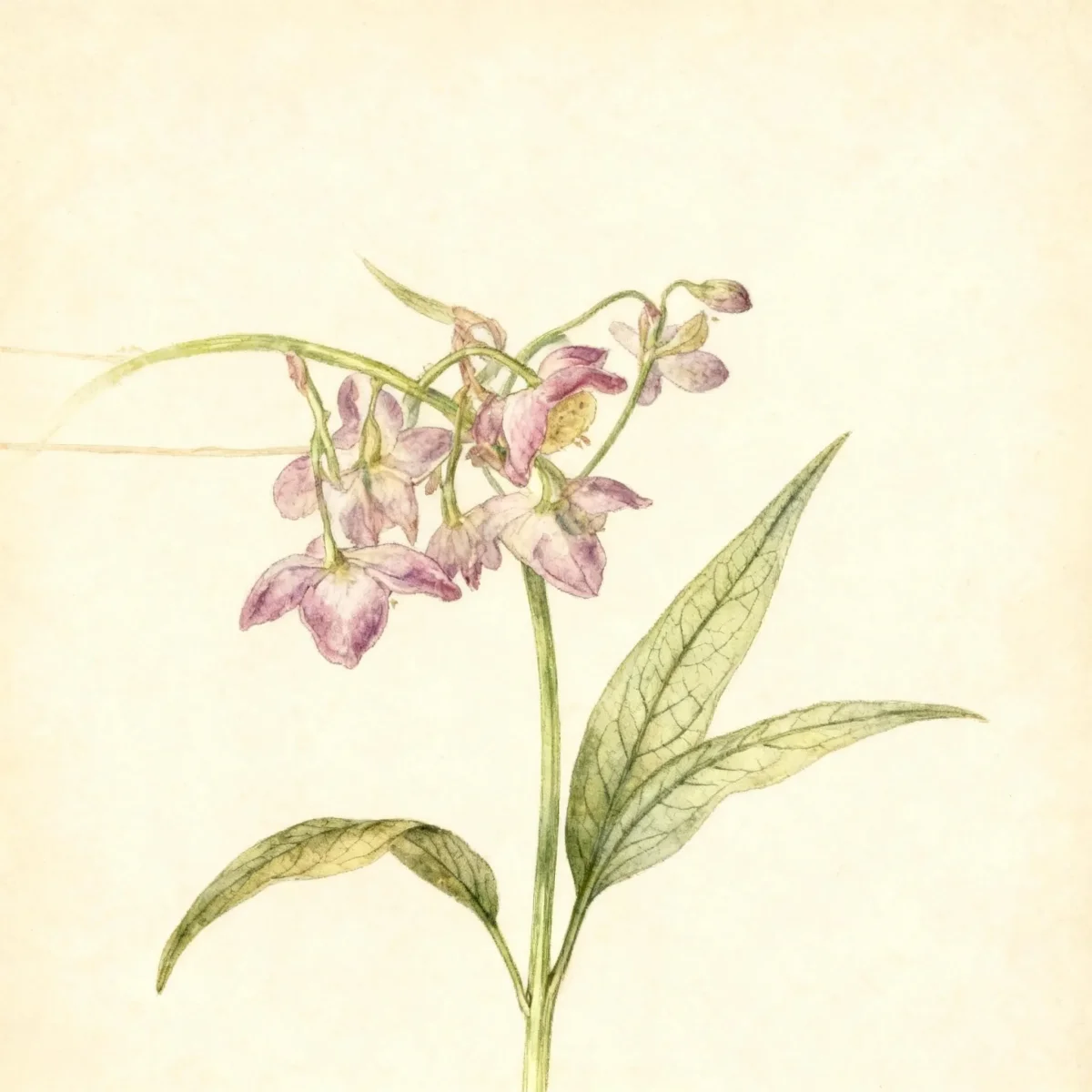
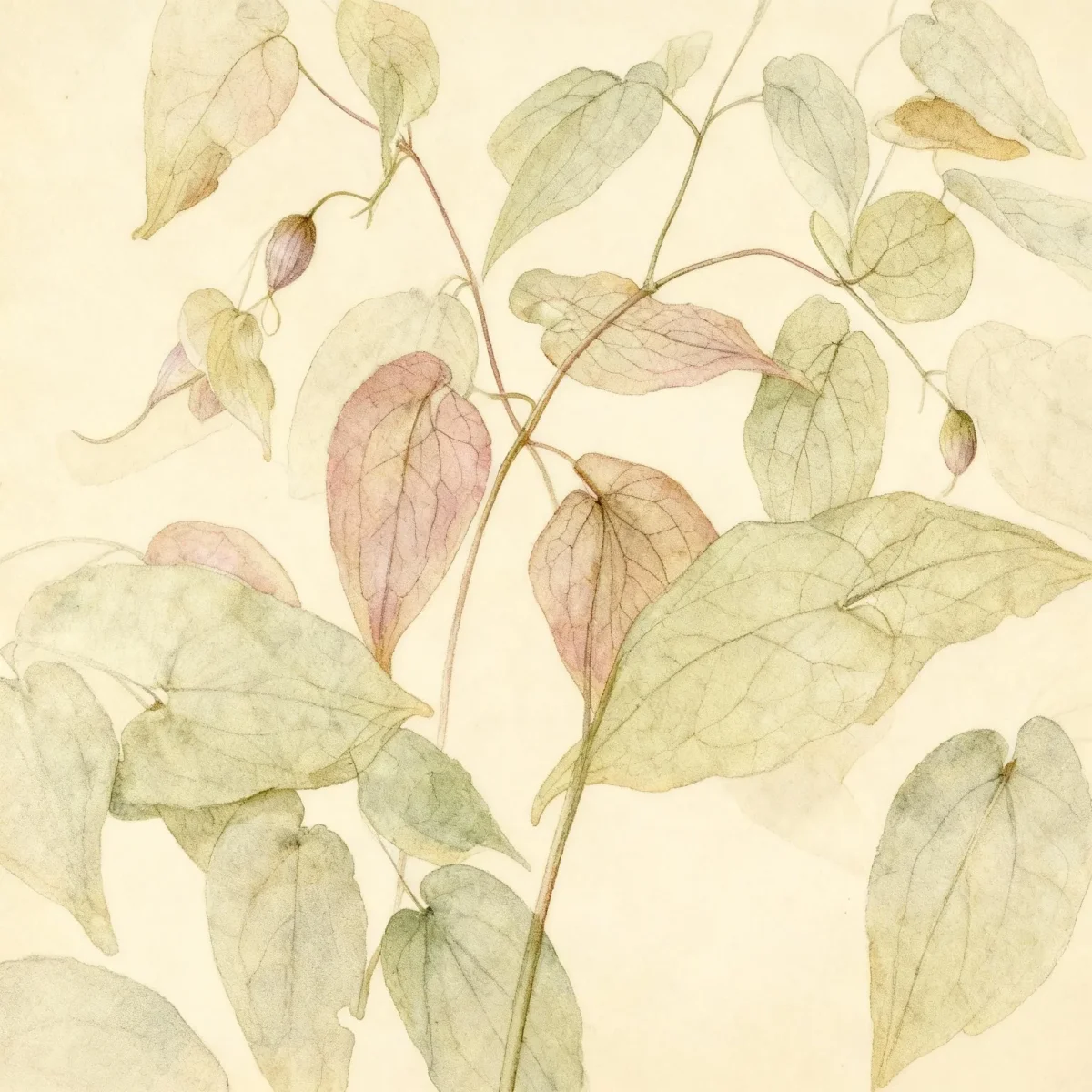
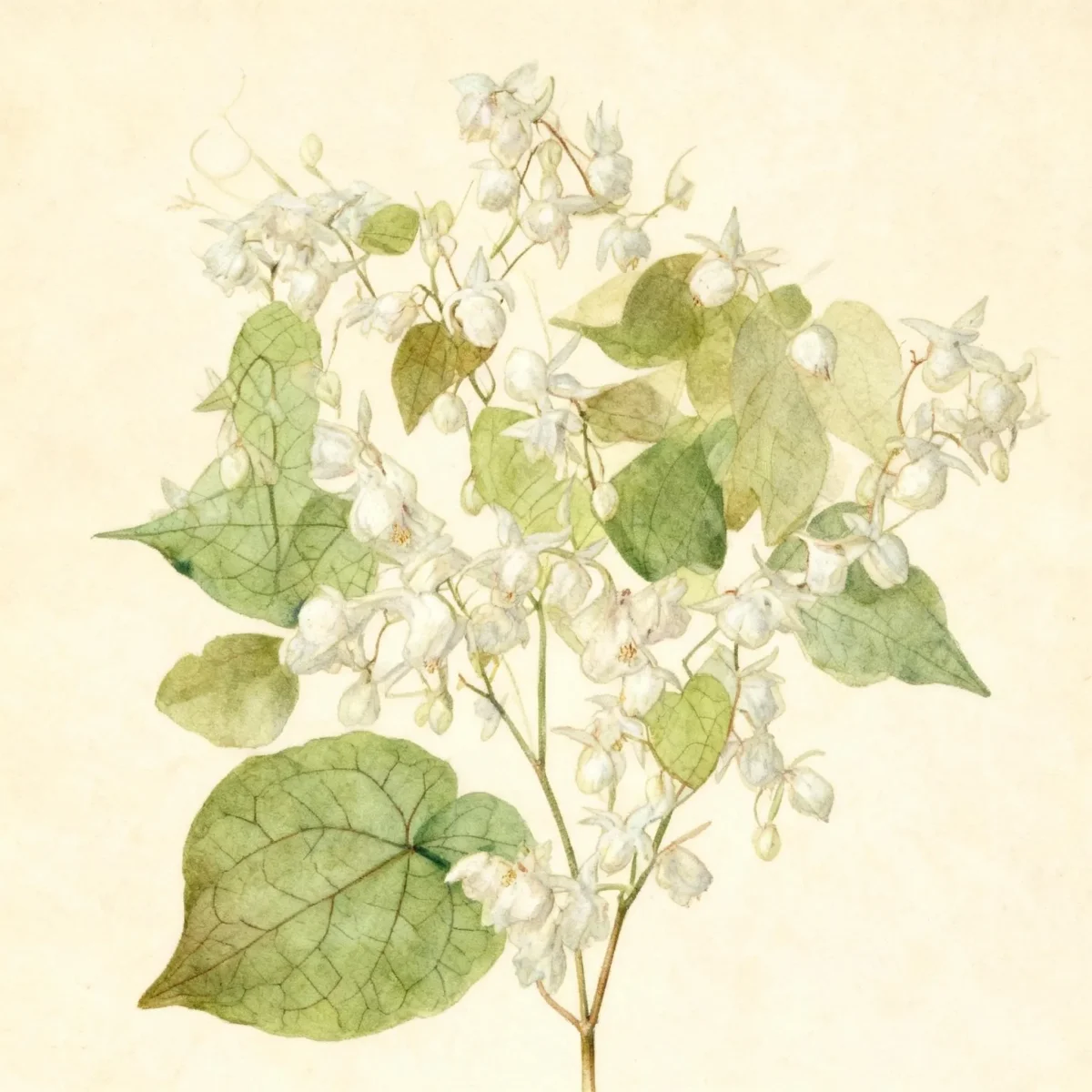
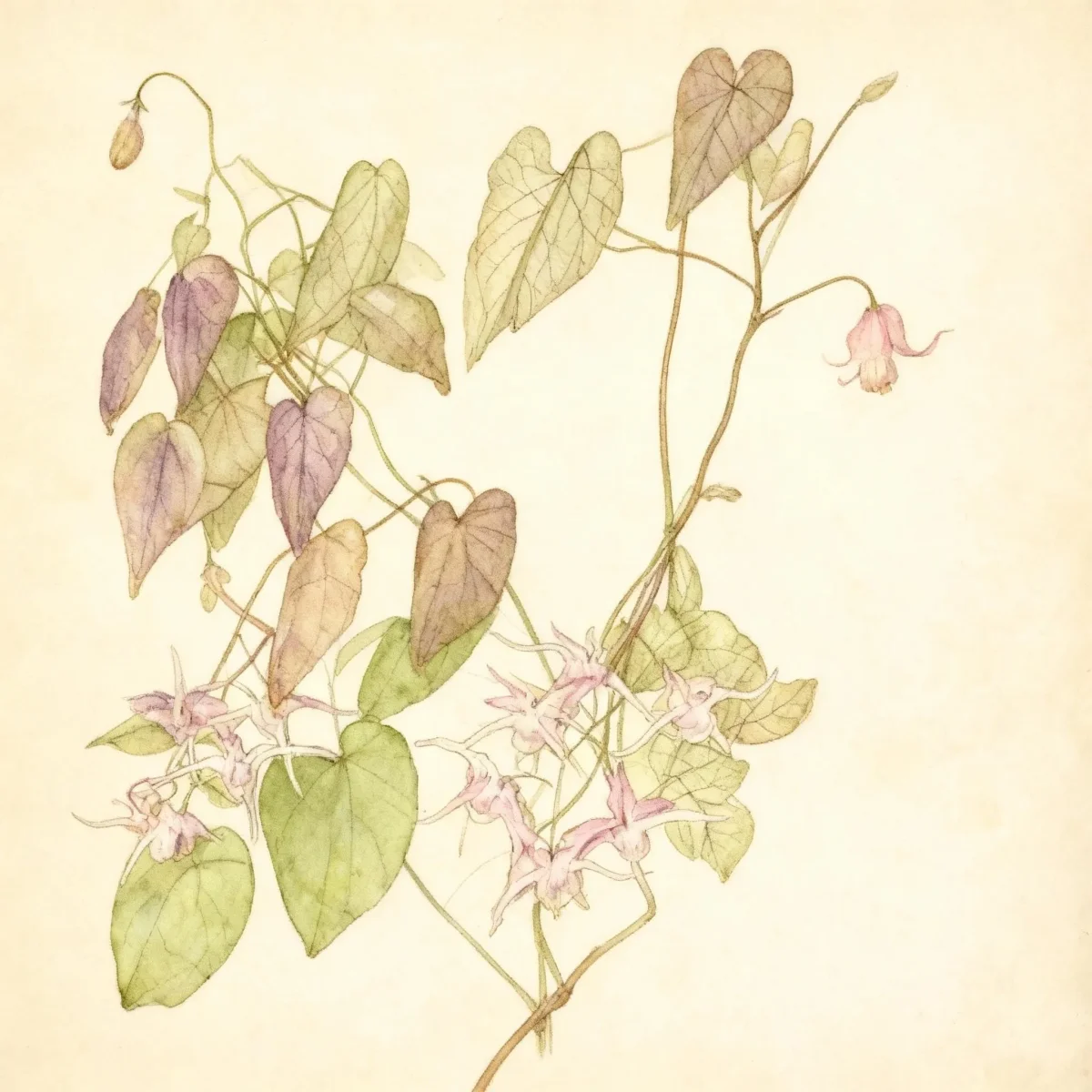
Bishop's hat (Epimedium lishihchenii)
Epimedium lishihchenii, or Bishop's hat, is a low-maintenance evergreen perennial ideal for dry shade.
Scroll down to discover growing tips, care requirements, companion plants, and more
Complete Plant Information
Overview
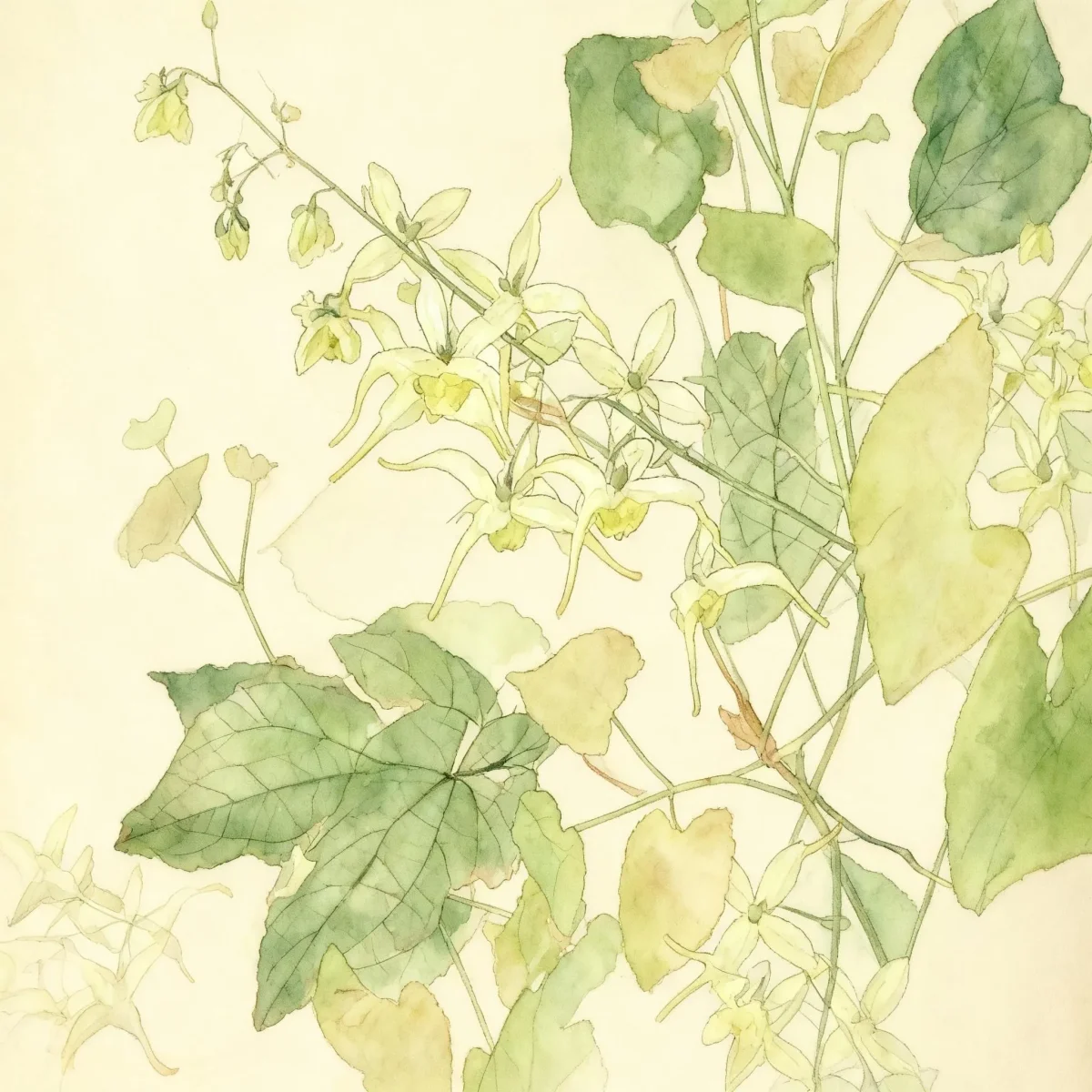
Epimedium lishihchenii, commonly known as Bishop’s hat, provides exceptional structure and seasonal interest in challenging shady settings. This rhizomatous perennial features glossy, evergreen foliage that emerges with attractive bronze-red tones in the spring, contrasting beautifully with its nodding yellow flowers. Its ability to thrive where many other garden plants fail makes the cultivation of Epimedium lishihchenii a valuable strategy for woodland gardening.
This valuable groundcover forms slowly spreading colonies via creeping rhizomes, eventually creating dense, attractive mounds of foliage. It is especially prized for its low maintenance requirements once established, thriving happily in dry shade conditions unsuitable for turf or traditional border plants. Gardeners appreciate Bishop’s hat for its reliability and robust nature in the woodland understory.
The distinctive yellow blooms appear reliably in mid to late spring, rising just above the developing leaf mounds. Epimedium lishihchenii offers multi-season appeal, moving from bronze-tinged new growth and bright flowers, through summer green, to often persistent winter foliage, securing its place as a foundation plant for shade gardens.
Fast Facts
- Plant Family: Berberidaceae
- Plant Type: Herbaceous perennial
- Native Range: China
- Hardiness Zones: USDA Zones 4-8
- Size at Maturity:
- Height: 1-1.5 ft
- Spread: 1-1.5 ft
- Bloom Time: April to May
- Bloom Description: Yellow
- Sun Exposure: Part shade to full shade
- Water Needs: Dry to medium
- Maintenance Level: Low
How to Grow
To successfully establish Epimedium lishihchenii, plant in the dormant season or early spring into average, acidic, well-drained soils. While it prefers loose, organically rich loams with consistent moisture during initial establishment, it becomes notably drought-tolerant once its rhizomes are established. Ensure planting locations receive part shade, ideally dappled light or morning sun exposure, as foliage burns easily in harsh afternoon sun.
Once established, this Bishop’s hat requires very little supplemental water, tolerating dry shade thanks to its rhizomes storing moisture. Fertilizing is rarely necessary; focus instead on amending the soil with compost periodically to maintain organic matter. Pruning should be minimal; however, cut back any remaining old foliage in late winter just before the new growth emerges to keep the display clean and fresh.
Epimedium lishihchenii spreads somewhat slowly by its creeping rhizomes, forming colonies over several years, which is ideal for groundcover needs. Propagation is easily achieved through division, best performed in early spring or fall when the plants are actively growing or preparing for dormancy. Remember that plants can lose their foliage if winter temperatures drop below zero, but foliage usually persists well above 10 degrees F.
Landscape Uses
Epimedium lishihchenii is perfectly suited for naturalizing in large drifts, creating excellent ground cover beneath mature, established trees where root competition limits other plantings. It excels as a subtle edger for shady paths and walkways, offering clean, evergreen structure year-round. Consider massing this Bishop’s hat in wild gardens or woodland settings to achieve a carpet-like effect.
The species adapts well to partially shaded rock gardens or softening the front of shaded borders where its texture adds contrast to larger shade perennials. Its tolerance for dry shade means it reliably fills tough spots often left bare by deciduous tree canopies. Avoid planting in alkaline soils, as this is one of the few cultural needs the plant consistently rejects.
Standout Features
Flower Qualities
- Showy
Noteworthy Characteristics
Epimedium lishihchenii is a rhizomatous evergreen perennial that typically grows on wiry stems to form a foliage clump rising to 12” tall. It features large, long-spurred, nodding, spider-type, yellow flowers (1 3/4” across) which bloom in spring (April-May) atop flowering stems which rise above the foliage mound to 16” tall. Leathery, glossy, evergreen, ovate to lanceolate leaflets emerge salmon-red in spring before maturing to medium/dark green, forming attractive foliage mounds.
Tolerances
- Rabbit
- Deer
- Drought
- Heavy Shade
- Erosion
- Dry Soil
- Shallow-Rocky Soil
Potential Problems
This plant generally does not suffer from serious insect or disease problems, contributing to its low maintenance reputation. The primary disease concern is Mosaic virus, which is transmitted via aphids, though outbreaks are uncommon in healthy plantings. Proper air circulation and avoiding high-stress environments can minimize pest issues, ensuring vigorous growth for your Epimedium lishihchenii.
Frequently Asked Questions
What hardiness zones is Bishop’s hat suitable for?
This robust perennial fares well in USDA Zones 4 through 8, offering good cold tolerance for many temperate climates.
How large does Epimedium lishihchenii grow?
The mature height typically ranges between 1 to 1.5 feet tall, with a similar spread, forming neat, dense clumps.
What sun exposure does Bishop’s hat need?
Epimedium lishihchenii thrives best in part shade to full shade; midday or afternoon sun will scorch the evergreen leaves.
When does Bishop’s hat bloom?
The distinctive yellow flowers of Epimedium lishihchenii appear reliably during the bloom time of April to May.
Conclusion
The resilience and year-round beauty provided by Epimedium lishihchenii make it an indispensable plant for shaded, dry garden areas. Its low maintenance profile and attractive features confirm why this Bishop’s hat variety is so highly recommended for woodland and textural planting schemes. Before planting, confirm your site conditions match its preference for acidic, well-drained soil, and plant during the cooler seasons for best establishment.
Companion Planting
When designing beds around Epimedium lishihchenii, pair it with other shade-loving, moderate-to-low water plants to maintain a consistent cultural environment. Good companions include Hosta varieties that tolerate partial sun, Ferns such as Japanese Painted Ferns (Athyrium niponicum) for contrasting light-colored foliage, or Solomon’s Seal (Polygonatum species) for height variation. These companions share the preference for well-drained, organically amended soil found by this Bishop’s hat.
Seasonal Care Calendar
Spring is critical for appearance renewal; divide existing clumps or plant new ones after the threat of hard frost passes. In late winter, conduct your primary cleanup by cutting back old foliage before new salmon-red leaves emerge. Summer care requires minimal attention unless unseasonably dry weather persists, in which case supplemental, deep watering benefits the developing rhizomes. Winter preparation is simple; the evergreen foliage mostly handles itself, though mulch applied around the crown can buffer exceptionally harsh temperature swings near 0°F.