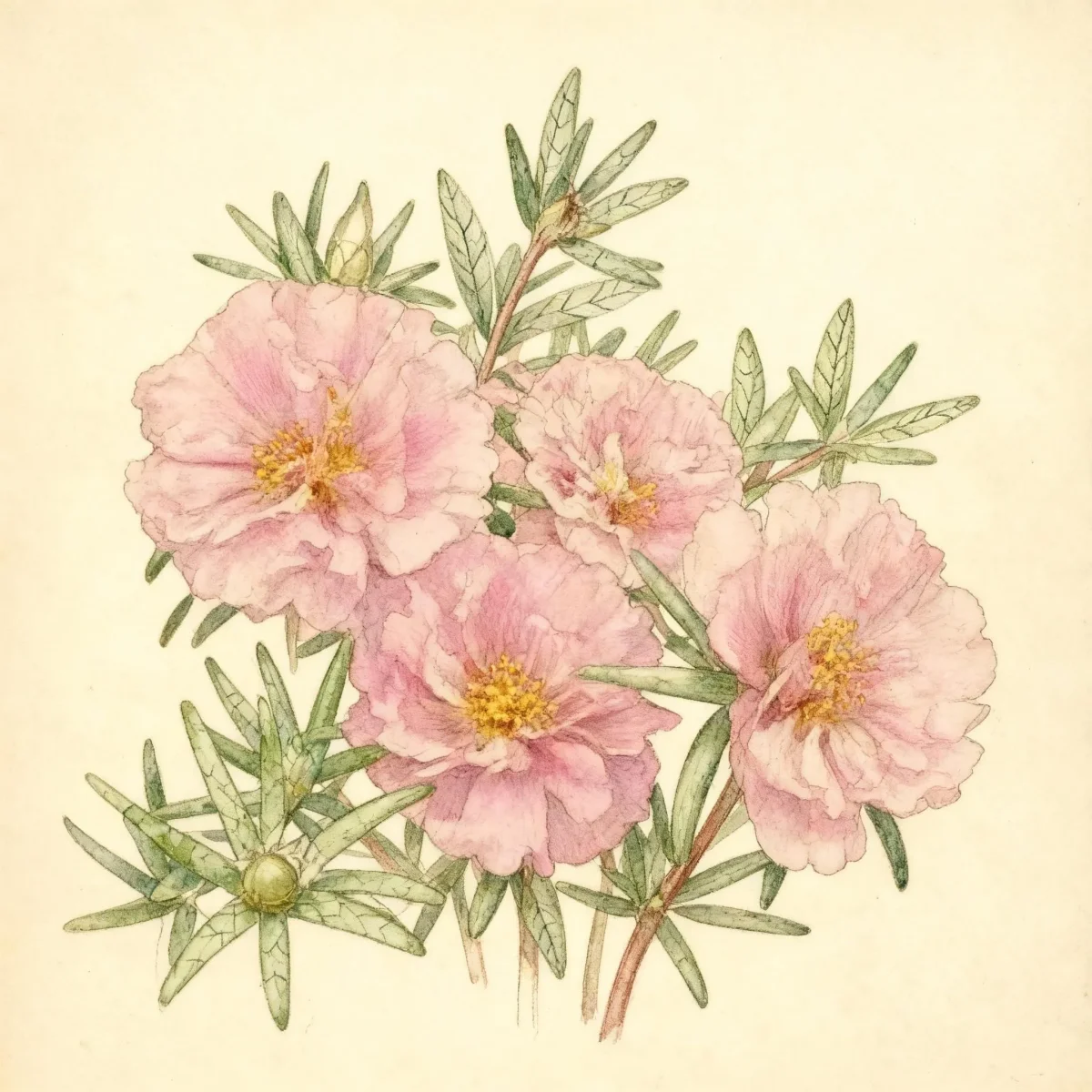
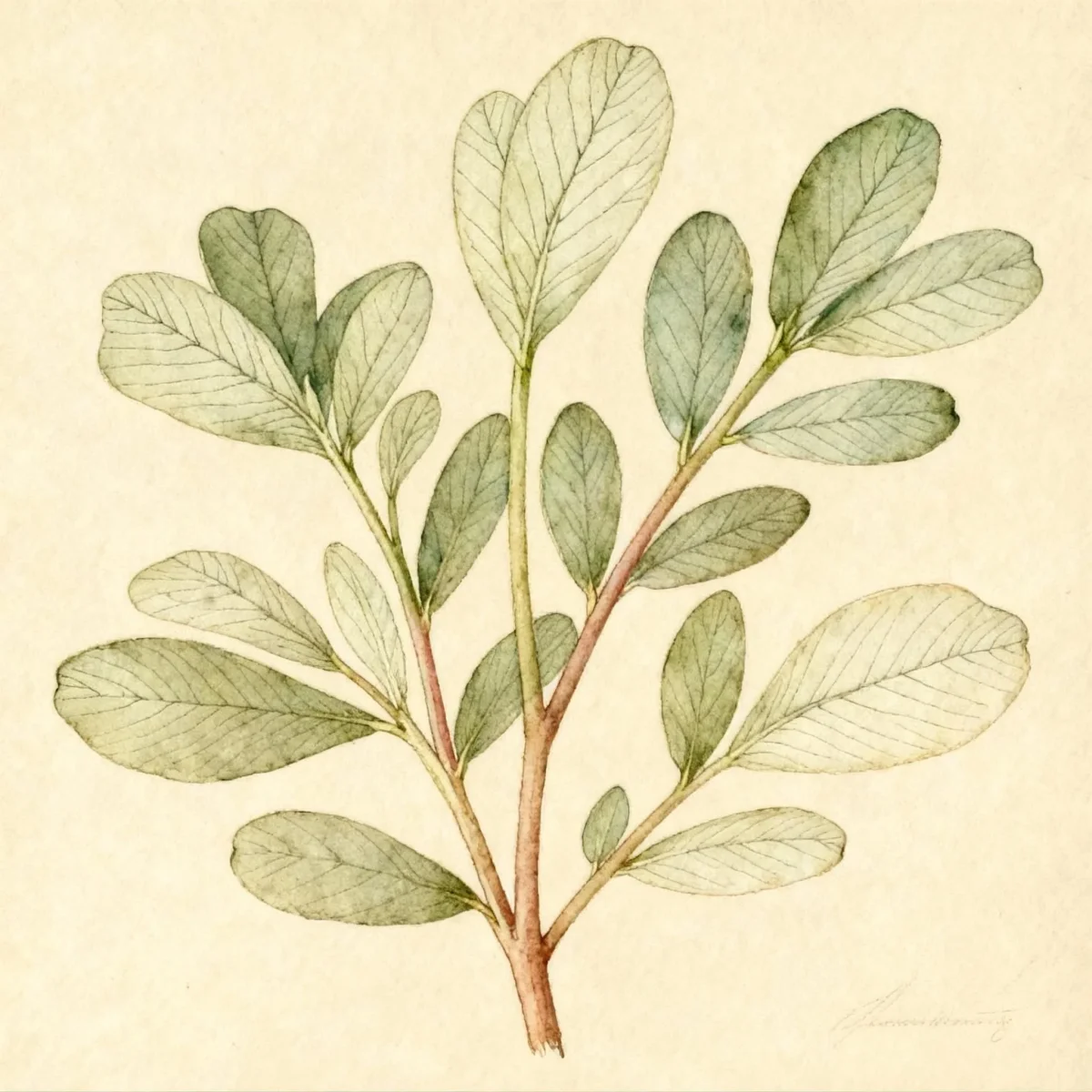
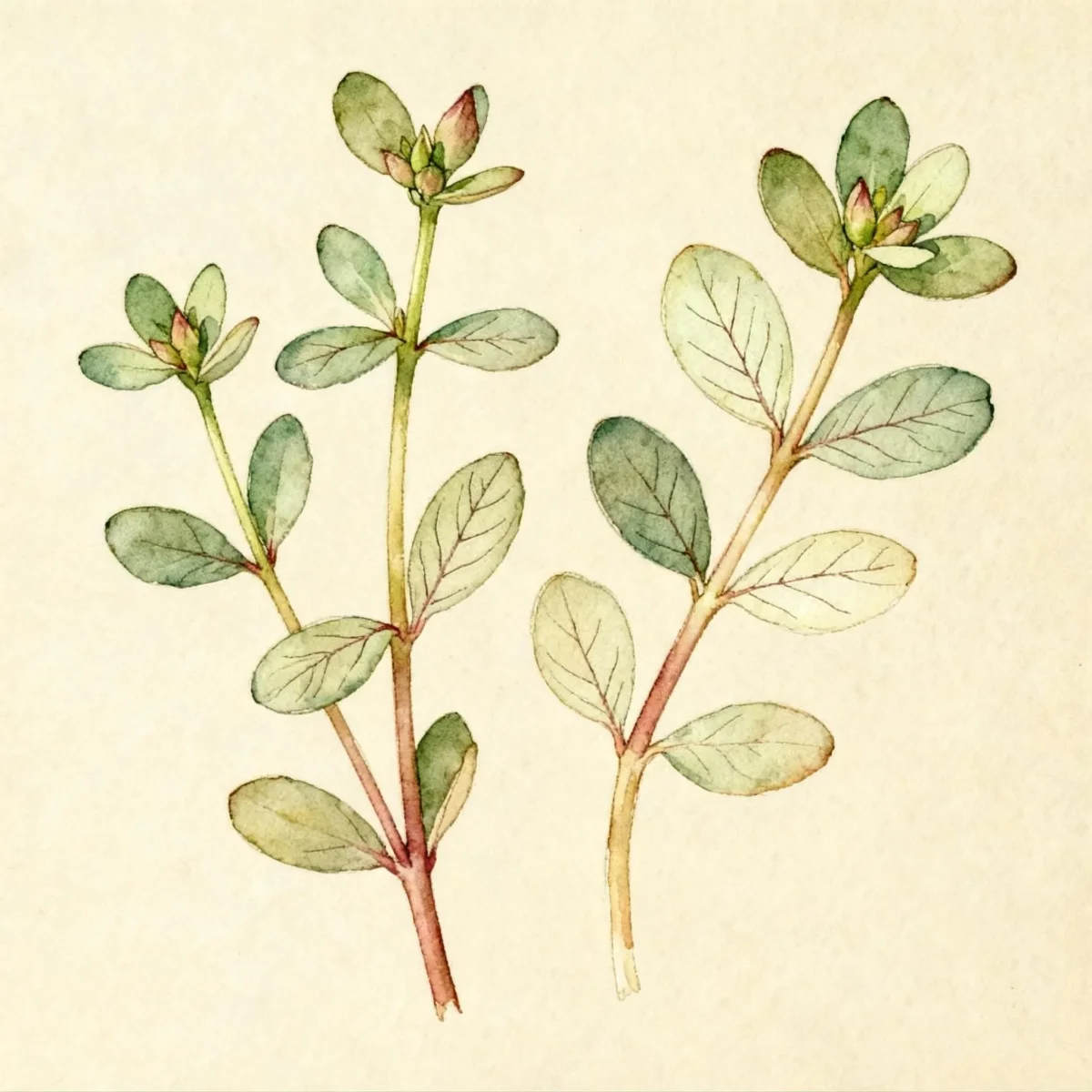
Purslane (Portulaca oleracea subsp. sativa)
Portulaca oleracea subsp. sativa, or Purslane, is a low-growing annual vegetable prized for its thick, succulent edible leaves and low maintenance needs.
Scroll down to discover growing tips, care requirements, companion plants, and more
Complete Plant Information
Overview
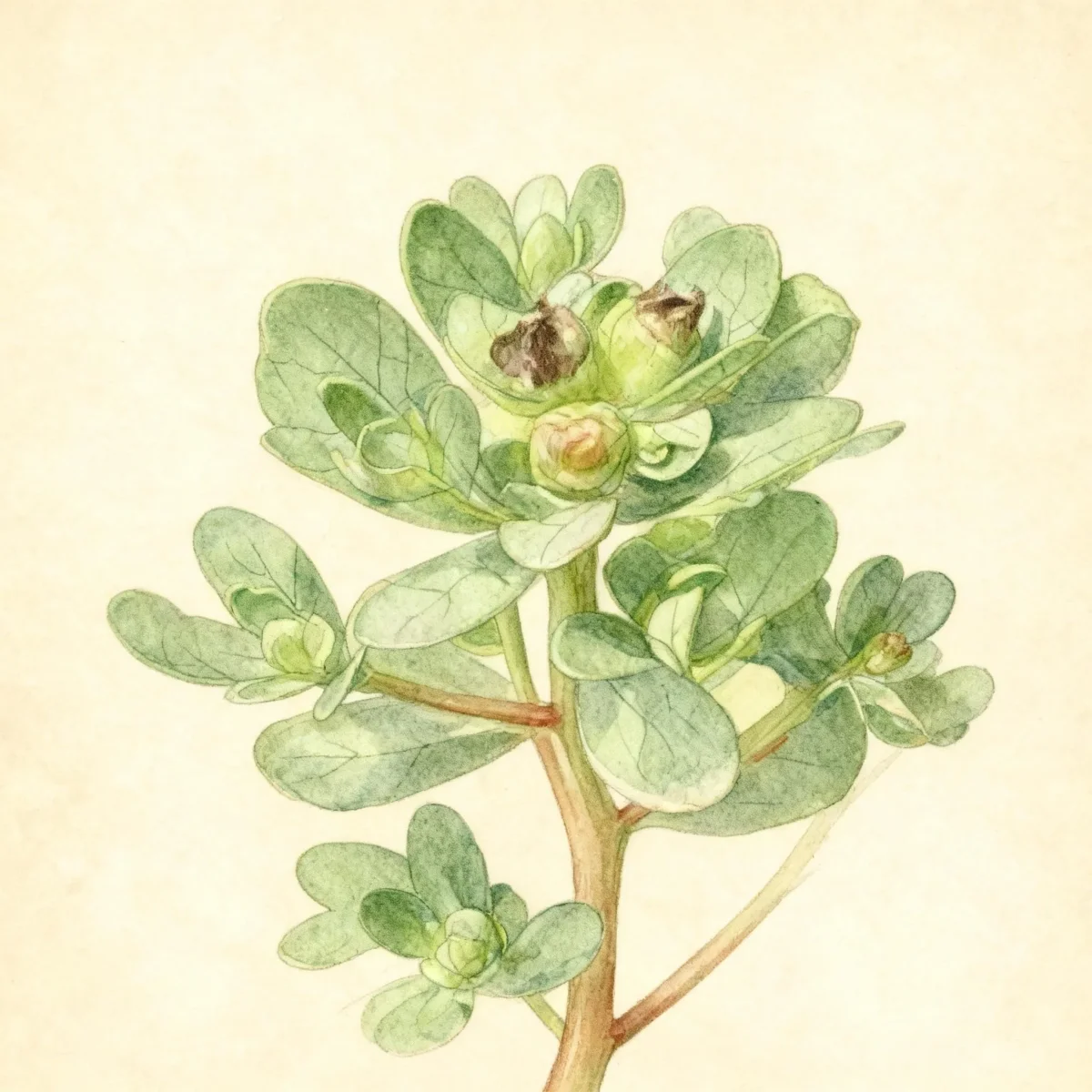
Portulaca oleracea subsp. Sativa, commonly known as Purslane, is a highly valuable, ancient annual cherished globally for its use as a nutritious green vegetable. This low-growing plant offers thick, oval green leaves resting on distinctive reddish, fleshy stems, making it attractive both in the garden and on the plate. As a cultivated variety, Portulaca oleracea subsp. sativa requires minimal effort once established, thriving even in hot, dry conditions gardeners often struggle with. Its utility extends beyond simple consumption; it also functions beautifully as a ground cover, adding textural interest with its succulent growth habit.
Cultivated for over 4,000 years, Purslane is recognized worldwide, referred to by names such as verdolaga in Mexico and pourpier in France, attesting to its long culinary history. Gardeners appreciate its rapid growth and the continuous harvest potential it offers throughout the warm season. Despite its weedy reputation in other botanical forms, careful cultivation ensures this subspecies remains a beneficial and productive addition to any sunny vegetable patch or border.
Fast Facts
- Plant Family: Portulacaceae
- Plant Type: Annual
- Native Range: India
- Hardiness Zones: USDA Zones 2-11
- Size at Maturity:
- Height: 0.5-1 ft
- Spread: 1-2.5 ft
- Bloom Time: Flowers not showy
- Sun Exposure: Full sun
- Water Needs: Dry to medium
- Maintenance Level: Low
How to Grow
Sow seeds of Portulaca oleracea subsp. sativa only after all danger of frost has passed, planting directly into fertile, well-drained soil situated in full sun. Plant seeds about 1/2 to 1 inch apart, setting them 12 inches between rows, and cover lightly with about 1/4 inch of soil. Generous watering is necessary initially to facilitate successful germination, after which you should thin the established seedlings to stand 4 to 6 inches apart.
Once established, Purslane displays remarkable resilience, tolerating severe drought conditions with ease, though it benefits from consistent dry to medium moisture levels. Fertilization is rarely required due to its vigorous nature. Harvesting can begin early; plantlets are ready when they develop four to five leaves, usually within 20 days. Continue harvesting throughout the season by pinching the tops back to within 2 inches of the base to encourage rapid, bushy regrowth.
Before the first frost arrives, allow a few plants to mature fully so they can produce seeds. Collect these seeds from ripened seed capsules; this practice ensures a fresh supply of Portulaca oleracea subsp. sativa for planting the following year, as this annual typically reseeds readily if left unchecked.
Landscape Uses
While highly valued in the kitchen, Purslane also excels as an ornamental ground cover, particularly when allowed to spread naturally in sunny, well-drained locations. The combination of bright green leaves, stems that often blush red, and tiny sunshine-yellow flowers provides surprising textural appeal through the summer heat. Use it along pathways or rock gardens where its sprawling habit prevents weed competition underneath.
Because of its drought tolerance and low stature, Portulaca oleracea subsp. Sativa serves as an excellent living mulch or spiller component in mixed containers where neighboring plants require similar high-light conditions. Although it can become a persistent self-seeder if allowed to fully mature and drop seed universally, this characteristic is manageable through diligence in harvesting or early frost removal of seed heads.
Standout Features
Flower Qualities
- Showy
Noteworthy Characteristics
Portulaca oleracea subsp. Sativa, commonly called purslane is an annual, low growing plant with up to a 2-foot spread, with thick green oval leaves 1/2 to 3/4” long and thick reddish fleshy stems. Flowers are yellow. Probably originating in the region from the western Himalayas to southern Russia and Greece, today it is distributed over the hot temperate zones of a great part of the world. The French call it pourpier and the Mexicans call it verdolaga, and both cultures use it in salads, soups, stews, tomato sauces, and even with scrambled eggs.
Tolerances
- Drought
Potential Problems
Purslane generally experiences no serious insect or disease problems, reflecting its hardiness in hot weather. However, gardeners should watch for common pests such as aphids, gnats, snails, and slugs, especially when plants are young or water levels are inconsistent. The greatest threat to Portulaca oleracea subsp. sativa comes from cultural issues; stem and root rot are significant risks if the soil remains overly moist or poorly drained. Ensure excellent drainage and avoid overhead watering after establishment to maintain healthy, succulent growth.
Frequently Asked Questions
What hardiness zones is Purslane suitable for?
Purslane (Portulaca oleracea subsp. sativa) is highly adaptable, succeeding in USDA Zones 2 through 11, making it effective as a summer annual almost anywhere.
How large does Purslane grow?
When mature, this annual typically reaches a height between 0.5 to 1 foot tall, spreading out to cover an area between 1 and 2.5 feet wide.
What sun exposure does Purslane need?
Portulaca oleracea subsp. Sativa requires full sun exposure to thrive, ensuring robust growth and the best flavor for this culinary green.
When does Purslane bloom?
The blooms of this plant are described as not being showy; they consist of small, bright yellow flowers appearing throughout the growing season.
Conclusion
Purslane is an exceptionally beneficial plant for the practical gardener, providing highly nutritious greens with remarkably low maintenance needs, even thriving under drought stress. Whether used as a ground cover or as a featured ingredient, Portulaca oleracea subsp. Sativa offers excellent returns on minimal investment. Before planting, ensure your chosen location offers consistent full sun and verify that your soil drains well to prevent moisture-related issues.
Companion Planting
Since Purslane thrives in full sun and prefers dry to medium conditions, it pairs excellently with other heat-tolerant, sun-loving vegetables and herbs that do not require constant deep watering. Consider planting it near Mediterranean herbs like rosemary or thyme, which share similar cultural preferences and enjoy slightly leaner soils. In the vegetable garden, it benefits from the open structure provided by taller, bushier crops, ensuring it receives ample light without being overshadowed early in the season.
Propagation Tips
The primary and easiest method for propagating Portulaca oleracea subsp. Sativa is through direct seeding, as detailed in the growing instructions, immediately after the threat of frost disappears. For continuity, allow a few healthy plants to fully mature toward the end of the season; collect the seeds from the dried capsules after they rupture. These seeds remain viable for subsequent seasons, offering reliable self-sowing potential, though direct sowing from collected seed is often preferred for better initial control over spacing.