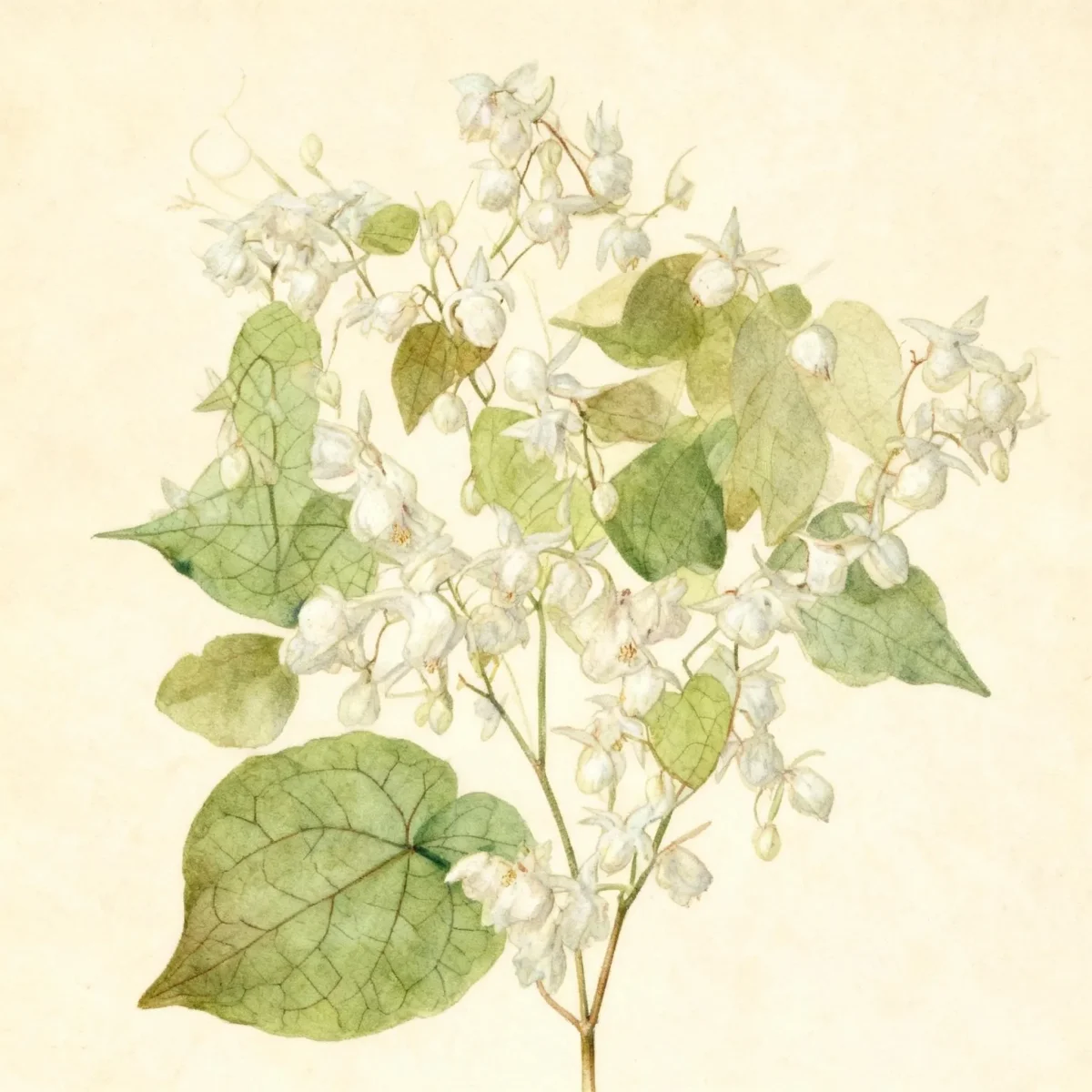
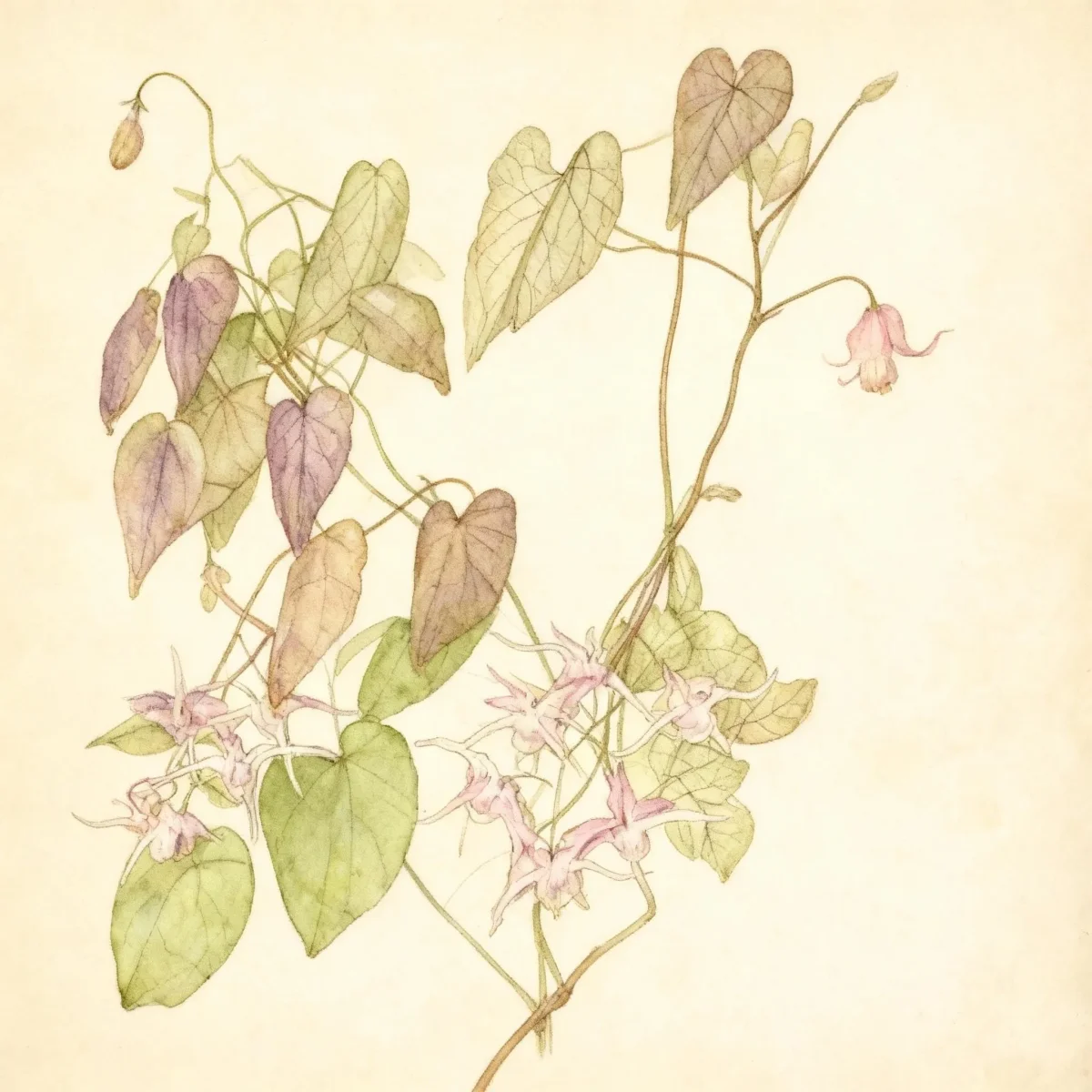
Bishop's hat (Epimedium latisepalum)
Epimedium latisepalum (Bishop's hat) offers delicate white spring blooms. Low maintenance, drought-tolerant ground cover perfect for dry shade.
Scroll down to discover growing tips, care requirements, companion plants, and more
Complete Plant Information
Overview
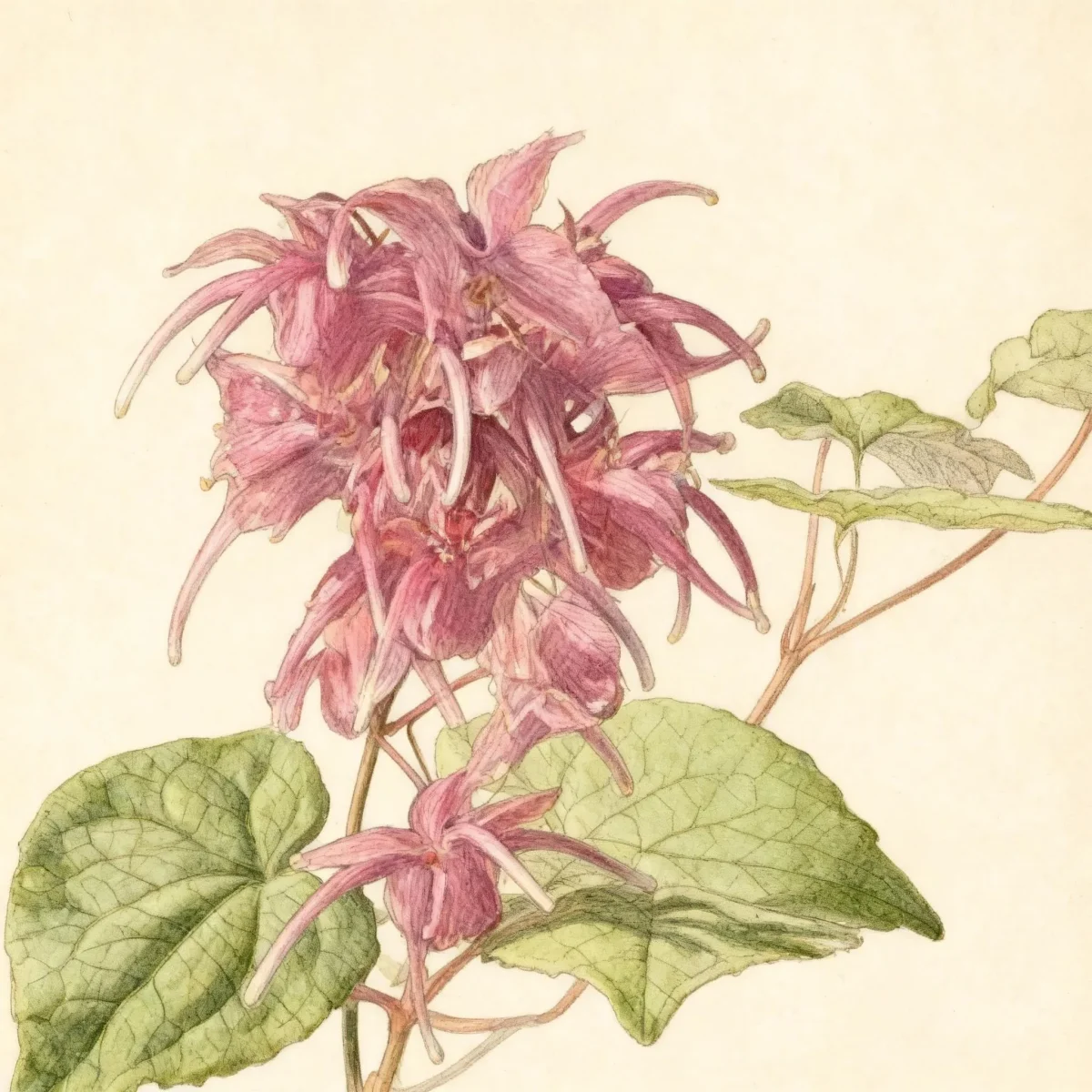
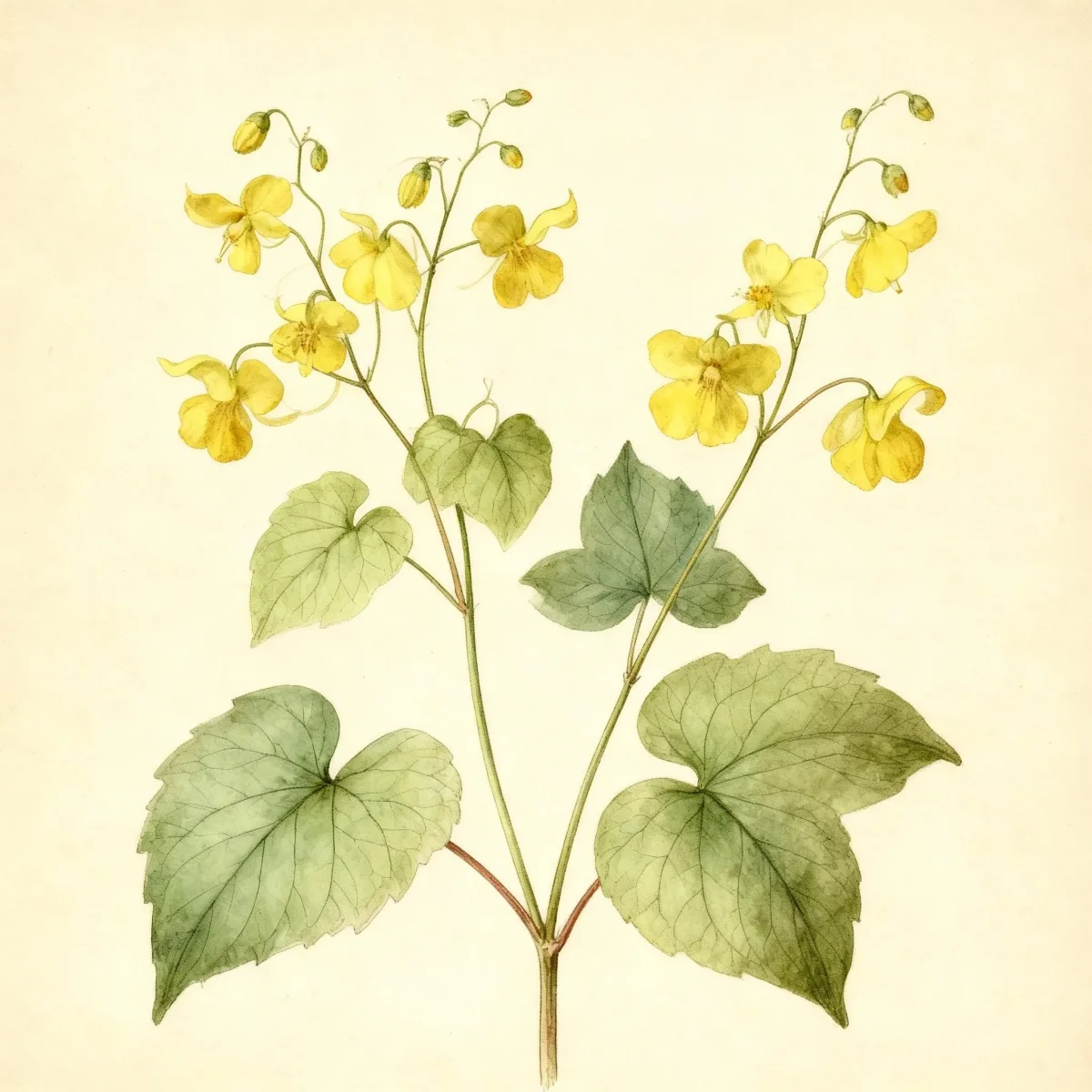
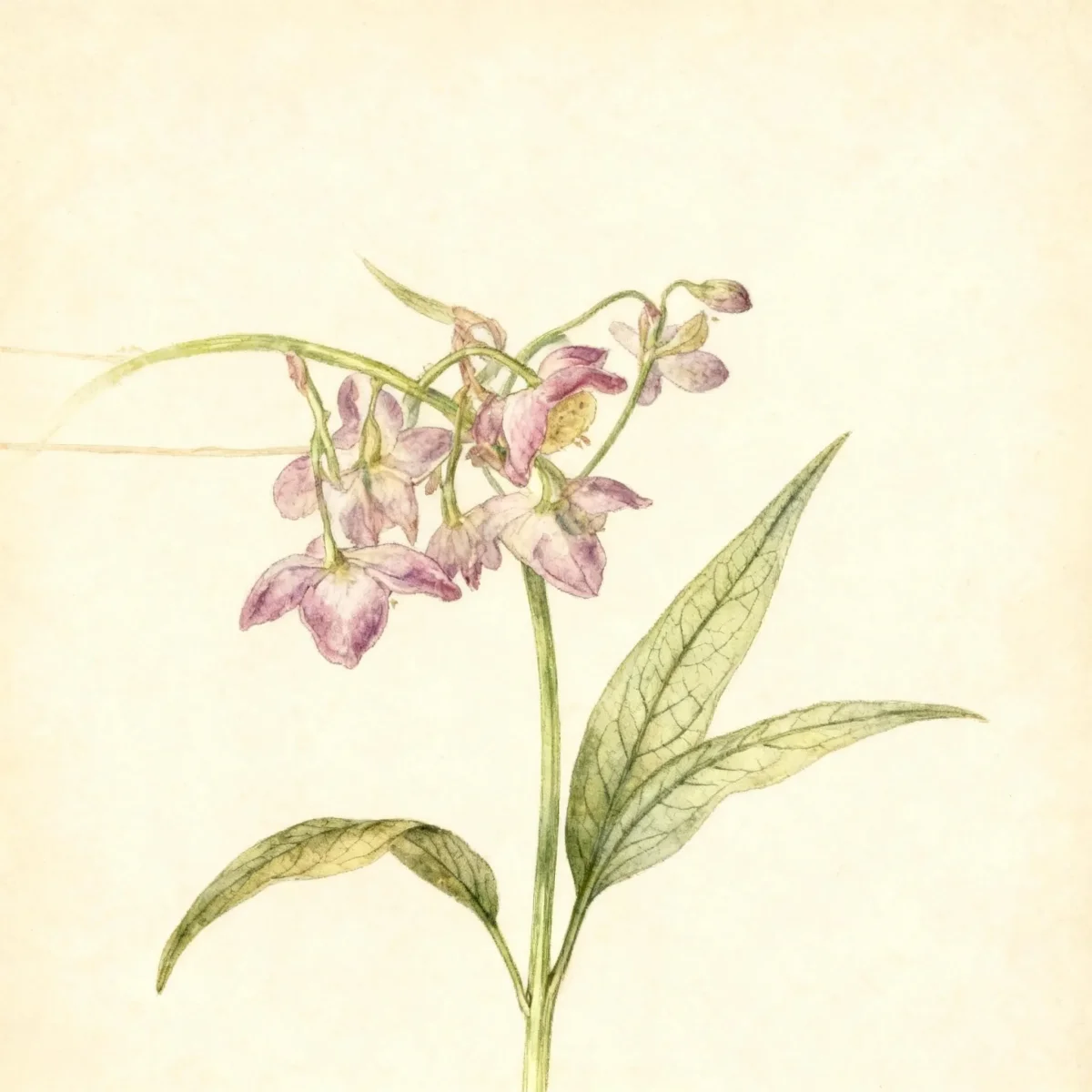
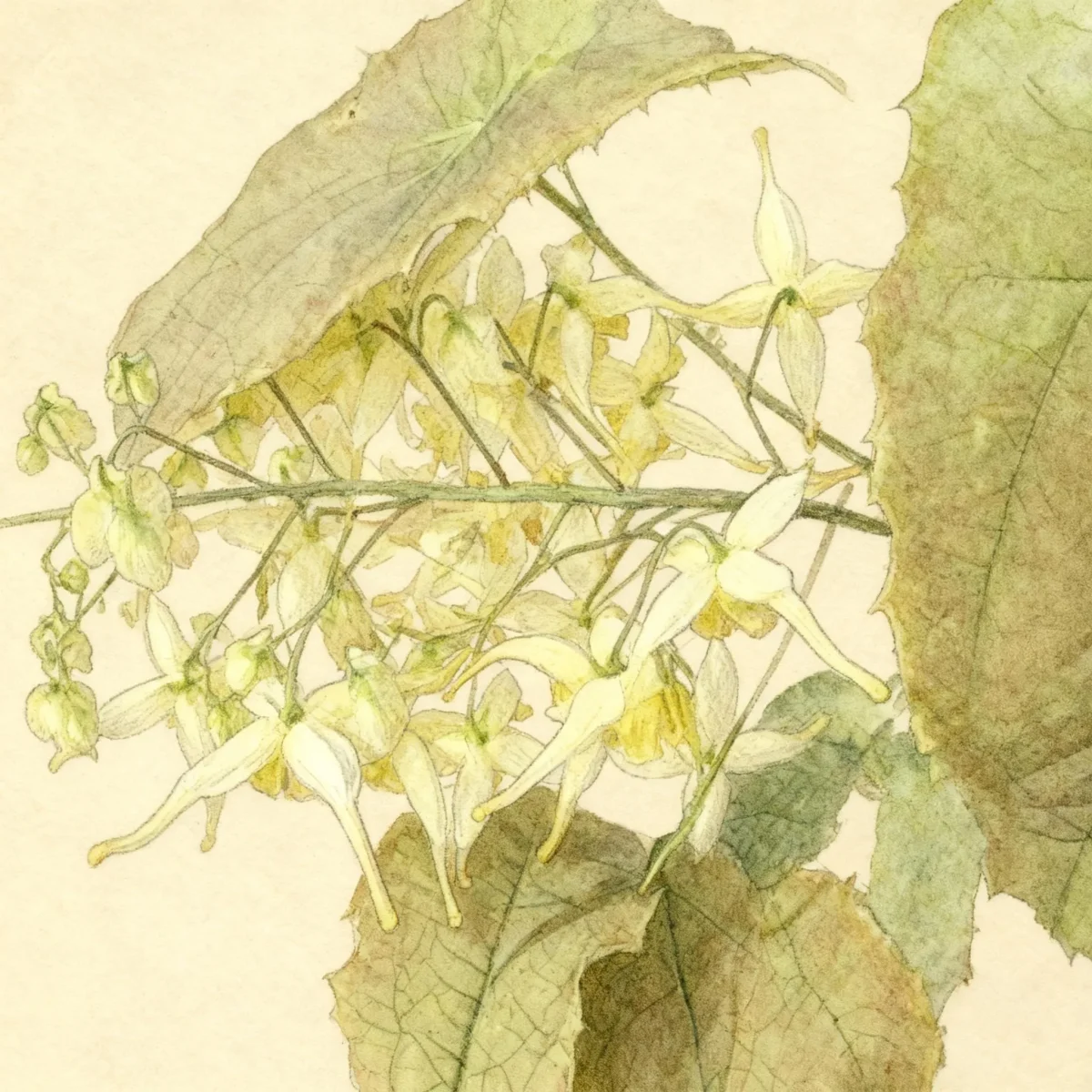
Epimedium latisepalum, commonly known as Bishop’s hat, is a highly valued, rhizomatous perennial prized for its resilience in difficult environments. This plant brings a delicate touch to shaded areas where many others struggle, utilizing its deeply lobed foliage as an attractive textural element throughout the season. The large, nodding, spurred white flowers that appear in spring are particularly noteworthy, lending charm to woodland and shade gardens.
Valued for its low maintenance requirements, Epimedium latisepalum spreads slowly to form dense, attractive colonies using creeping rhizomes. It exhibits remarkable toughness, tolerating dry shade once established, although it benefits from improved soil conditions. Gardeners looking for reliable coverage beneath established trees or in deep shade will find this species exceptional.
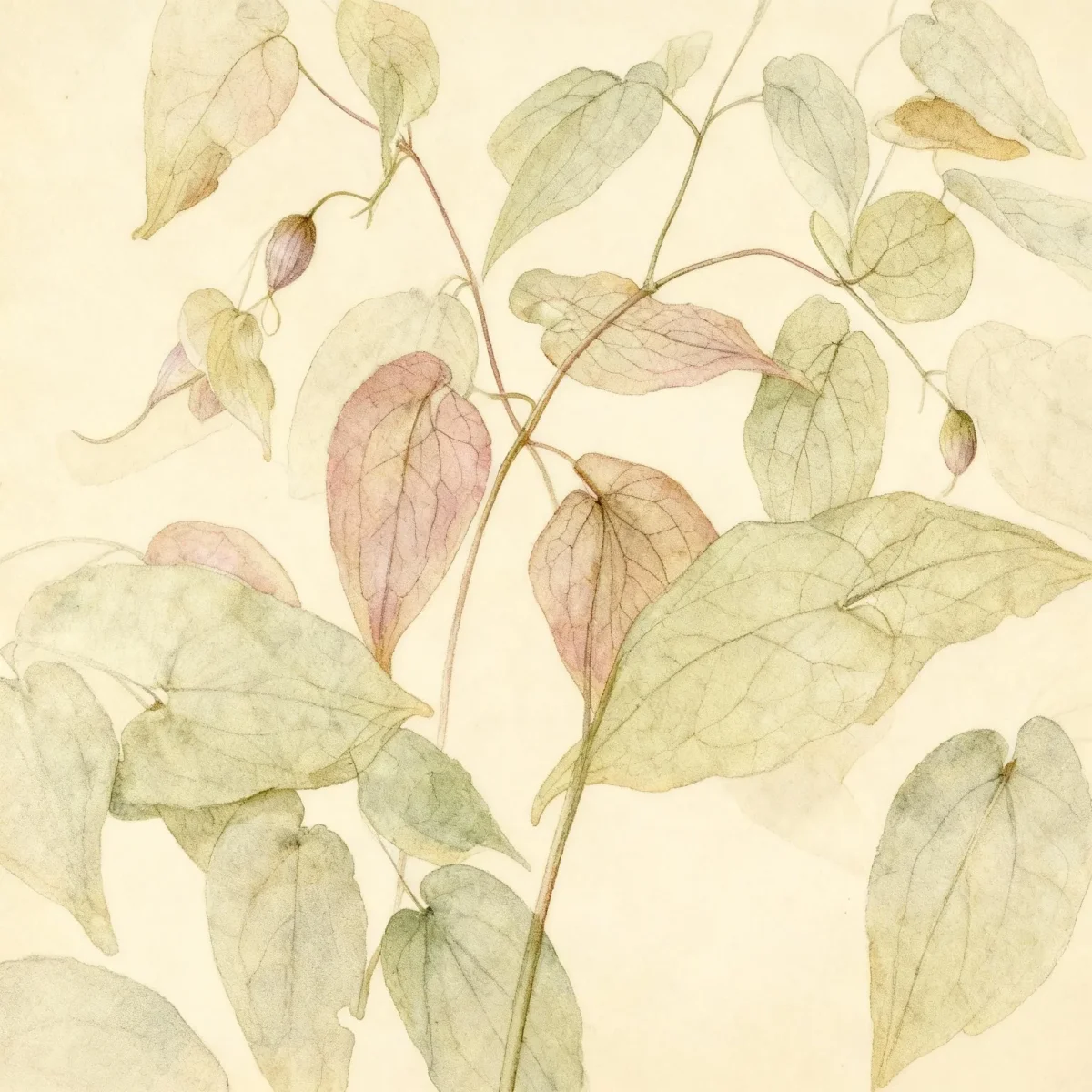
The foliage of this particular Epimedium latisepalum features narrow, leathery leaflets that are often evergreen below Zone 7, providing year-round interest. Its specific epithet, latisepalum, refers to the broad inner sepals of its creamy white flowers, which contrast nicely with the purple-tinged bases.
Fast Facts
- Plant Family: Berberidaceae
- Plant Type: Herbaceous perennial
- Native Range: China
- Hardiness Zones: USDA Zones 5-8
- Size at Maturity:
- Height: 1-1.5 ft
- Spread: 1-1.5 ft
- Bloom Time: April to May
- Bloom Description: White with purple tinged bases
- Sun Exposure: Part shade to full shade
- Water Needs: Dry to medium
- Maintenance Level: Low
How to Grow
Plant Epimedium latisepalum in average, well-drained soils that tend toward acidic pH. While it prefers loose, organically rich loams with consistent moisture when young or if sited in part shade, this plant is surprisingly adaptable. Site it where it receives protection from the harsh afternoon sun, which can scorch the foliage.
Once fully established, Bishop’s hat is highly tolerant of drought and dry shade, thanks to its moisture-retaining rhizomes. Avoid planting in areas where soil remains wet or where alkalinity is high, as it is intolerant of those conditions. Periodic, light watering is necessary for establishment, but mature plants require infrequent attention in medium-moisture settings.
Maintenance for this ground cover is minimal. There is generally no need for fertilization unless soil quality is extremely poor. In late winter, just before new growth emerges, cut back any remaining old, tattered foliage from the previous season. Propagation is easily achieved by dividing the clumps in early spring or fall when the plant is dormant or semi-dormant.
Landscape Uses
Epimedium latisepalum excels as a dependable ground cover, slowly knitting together shady areas to suppress weeds and provide lasting texture. Its suitability for naturalizing makes it perfect for mass planting beneath mature deciduous trees where lawn grasses struggle to thrive. Use it generously in woodland settings, wild gardens, or on slopes where its rhizomes help stabilize the soil against erosion.
This perennial’s moderate height (up to 1.5 feet) makes it an excellent edger for winding paths and walkways, providing a neat, low border that remains attractive year-round in warmer zones. In shaded rock gardens, the delicate flowers of Bishop’s hat offer a welcome contrast to larger, bolder foliage plants.
Standout Features
Flower Qualities
- Showy
Noteworthy Characteristics
Epimedium latisepalum is noted for its large, nodding, spurred, white flowers and narrow evergreen leaflets. These showy, creamy white flowers bloom atop flowering stems rising above the foliage in spring, creating a lovely display. Its leathery, ovate leaflets are deep green, often emerging with reddish-brown spotting before maturing.
Tolerances
- Rabbit
- Deer
- Drought
- Heavy Shade
- Erosion
- Dry Soil
- Shallow-Rocky Soil
Potential Problems
Epimedium latisepalum is generally quite resistant to serious insect or disease problems, enhancing its low-maintenance appeal. The primary disease concern is Mosaic Virus, an issue transmitted via aphids, though this is relatively uncommon. Gardeners should ensure excellent airflow if planting densely to help discourage potential fungal issues. If you find this specific Bishop’s hat difficult to source, remember that its rarity in the wild may sometimes translate to limited commercial availability.
Frequently Asked Questions
What hardiness zones is Bishop’s hat suitable for?
Epimedium latisepalum is reliably hardy in USDA Zones 5 through 8.
How large does Epimedium latisepalum grow?
This herbaceous perennial typically reaches a height between 1 and 1.5 feet and spreads to a similar width of 1 to 1.5 feet.
What sun exposure does Bishop’s hat need?
This plant thrives best in part shade to full shade conditions; afternoon sun should be avoided as it risks burning the foliage.
When does Epimedium latisepalum bloom?
Bishop’s hat typically blooms from April into May, showcasing delicate white flowers with distinctive purple tinged bases.
Conclusion
As a resilient, low-maintenance perennial, Epimedium latisepalum provides essential texture and spring flowers to difficult, shady garden locations. Its tolerance for dry soil and deer resistance make Bishop’s hat a powerhouse beneath trees. Before installation, confirm your site matches the USDA Zone 5-8 range and provides protection from the hottest afternoon sun.
Companion Planting
When selecting companions for Epimedium latisepalum, focus on plants that share a preference for dappled light and dry to medium moisture conditions. Hostas with blue or yellow foliage create a wonderful contrast against the deep green leaves of the Bishop’s hat. Ferns, especially those tolerant of drier shade like Polystichum acrostichoides (Christmas fern), pair beautifully with the fine texture of the Epimedium. Consider using woodland bulbs such as snowdrops or miniature daffodils to provide early color before the Epimedium latisepalum truly fills in its ground cover role.
Seasonal Care Calendar
Late Winter/Early Spring: Perform annual cleanup by cutting back any remaining drab, old foliage just before the new growth begins to emerge. This tidying maximizes the impact of the emerging flowers.
Late Spring/Early Summer: Monitor moisture levels, especially during the first year of establishment. Water deeply but allow the soil to dry slightly between irrigation, reflecting the plant’s tolerance for dry conditions.
Fall: This is an excellent time to divide overgrown clumps of Epimedium latisepalum. Spread the divisions into new locations, disturbing the soil as little as possible to maximize successful transplanting.