Hardy impatiens (Impatiens omeiana)
Hardy impatiens spreads through moist shade with striped foliage and yellow fall flowers. Learn where its colony-forming habit helps—and where it does not.
Complete Plant Information
Interactive Detour
Keep exploring with a quick garden quiz
Hardy impatiens is easier to remember when you mix reading with a quick challenge. Try a related quiz, then jump back into the care guide.
The Brilliant Hibiscus Quiz
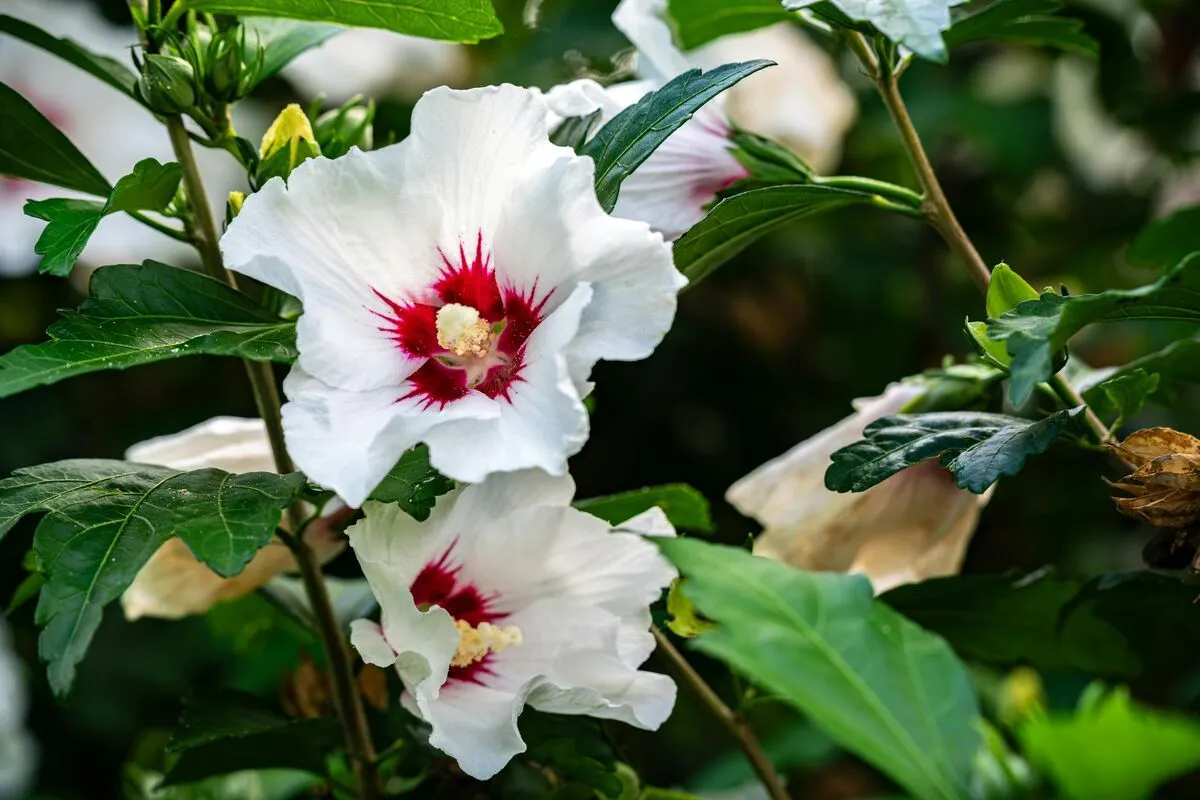
Think you know hibiscus? Take this quiz to find out if you're a true hibiscus expert or just getting started.
Start quiz
Can You Identify These Common Garden Plants? Test Your Plant Knowledge
Think you know your roses from your peonies? Test your plant identification skills with our comprehensive garden plant quiz featuring 10 challenging questions.
Start quizBrowse the full quizzes section
Explore plant identification, zone strategy, and seasonal gardening challenges.
View all quizzesField Guide Continues
Ready for care notes, companion picks, and planting tips?
The map is just the start. The full guide below covers growth habits, seasonal performance, and landscape uses.
A Foliage Ground Cover That Flowers Late
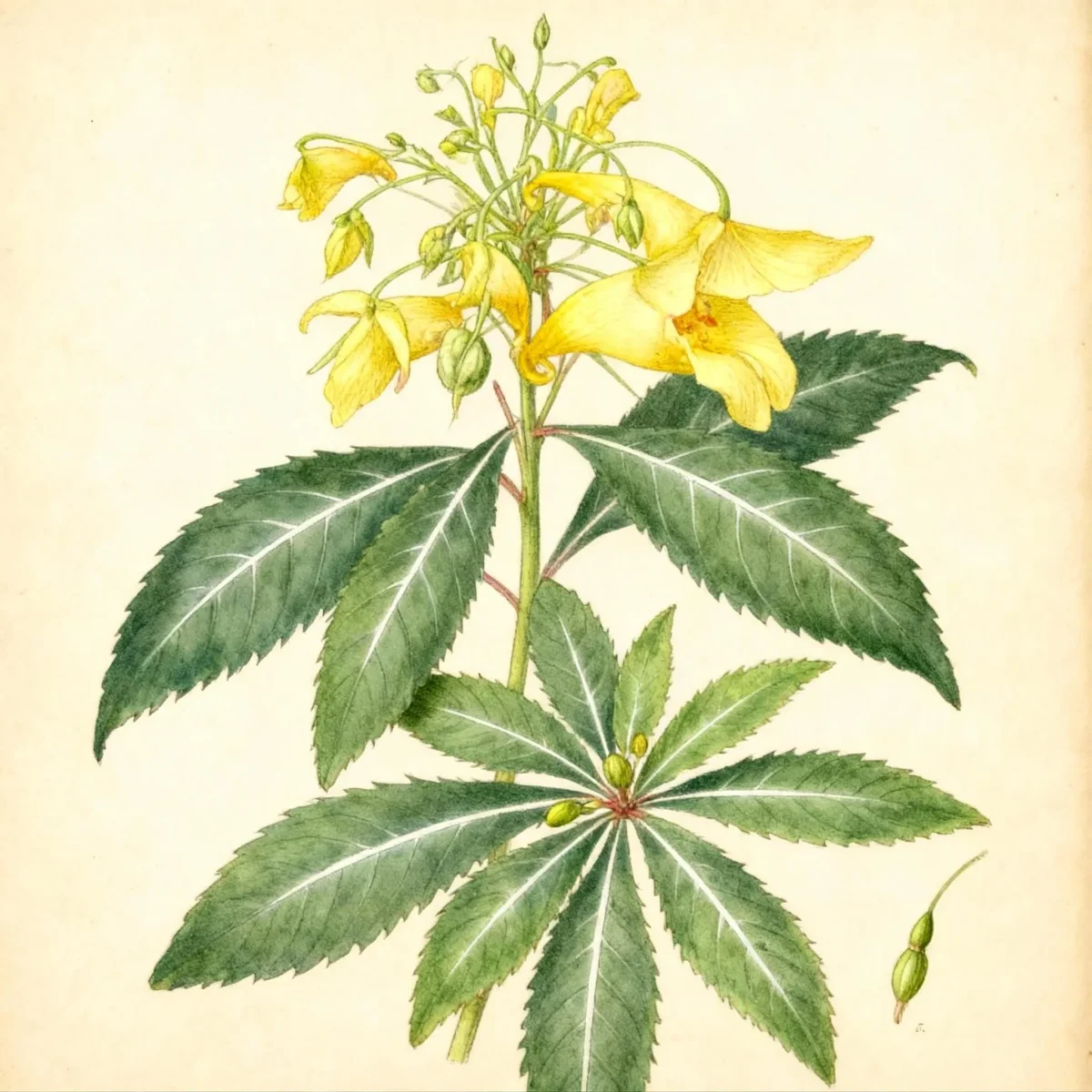
Hardy impatiens (Impatiens omeiana) is a perennial species, not the tender bedding impatiens commonly replaced each spring. Narrow dark-green leaves marked by a pale stripe along the midrib form low colonies in shade. Yellow flowers arrive in September and October, when many woodland plants have finished.
The striped foliage is the main display for most of the season. Plants stand about 9 to 18 inches high and spread by stolons. That habit can solve a bare patch in a moist shade garden, but it also means this is not a polite single specimen for a tiny bed. Give it an area where a colony can widen, and edge or divide it when it moves beyond that boundary.
The Difference Between Shade and Dry Shade
Hardy impatiens tolerates part shade to full shade, but it still needs consistent moisture. The soil beneath mature trees may look ideal because it is shady, yet dense roots and a leafy canopy can make it extremely dry. Check the soil during summer before assuming the plant has enough water.
Choose humus-rich, well-drained ground that stays evenly moist without becoming waterlogged. Plant in spring, setting the crown at its previous depth. Water through the first growing season and during later dry spells. A layer of leaf mold or fine mulch helps conserve moisture and suits a woodland setting; keep it from burying new shoots.
The listed climate range is USDA Zones 6–9. Use the hardiness zone map to check winter range. At the colder edge, a sheltered site and protective winter mulch may help, but mulch should be pulled back as growth resumes.
Let the Colony Do the Design Work
Use hardy impatiens along a shaded path, on a protected woodland edge, or between larger shade perennials. Its low striped leaves contrast well with fern fronds and broad hosta leaves. Japanese painted fern repeats the silver tones in a finer texture, while ‘Honeybells’ hosta offers a bolder leaf shape and taller summer flowers.
Do not combine it with very small, slow woodland treasures that could be covered by advancing stolons. A simple path edge or buried barrier can make the patch easier to manage, though regular observation is still needed.
Late yellow flowers are easiest to appreciate near a route you use in autumn. Place the colony against dark foliage or leaf litter rather than at the distant back of a border, where the small blooms can disappear.
Seasonal Care and Containment
Old stems die after frost and can be removed in late fall or early spring. Mark the patch so early cleanup does not damage dormant crowns. Fertilizer is rarely needed in soil enriched with organic matter; excessive feeding can encourage soft growth and faster spread.
To reduce the colony, lift rooted runners in spring and replant or discard them responsibly. Division is also the simplest way to propagate the plant. Ripe impatiens pods open suddenly and scatter seed, so remove pods before they mature if seedlings appear where they are not wanted.
Slugs and snails can damage tender shoots. Good drainage helps prevent crown and root problems, while even spacing and watering at soil level reduce leaf disease. A plant that wilts repeatedly in shade is more likely short of water than short of light.
Quick Answers
Will hardy impatiens survive frost?
The top dies back, but established roots can return in spring within the plant’s hardiness range.
Can it grow in a container?
Yes, if the pot stays shaded, evenly moist, and protected according to your winter climate. Containers dry and freeze faster than garden soil.
Is it the same as New Guinea impatiens?
No. SunPatiens and New Guinea impatiens hybrids have different habits, light tolerances, and winter survival.
Browse the plant collection for additional shade plants matched to your soil moisture and zone.