Spreading aster (Symphyotrichum patens)
The Spreading aster (Symphyotrichum patens) offers late-season color with blue-violet blooms. Needs low maintenance.
Scroll down to discover growing tips, care requirements, companion plants, and more
Complete Plant Information
Overview
The Spreading aster, scientifically known as Symphyotrichum patens, is a highly valued native perennial prized for its reliable late-season floral display. As summer transitions into fall, this aster provides essential color when many other perennials fade, featuring charming daisy-like flowers. Symphyotrichum patens is exceptionally low-maintenance once established, thriving in dryer conditions that challenge less adaptable species. Gardeners appreciate its ability to attract late-season pollinators, making the Spreading aster a cornerstone for sustainable and wildlife-friendly landscape designs.
This herbaceous perennial typically reaches heights between two and three feet, spreading slightly to form a modest clump. It is native to the southeastern United States, indicating its preference for conditions mimicking rocky or sandy open woods. Its inherent toughness, coupled with drought tolerance, means gardeners can focus less on intervention and more on enjoying the late summer bloom of this Spreading aster.
Fast Facts
- Plant Family: Asteraceae
- Plant Type: Herbaceous perennial
- Native Range: Southeastern United States
- Hardiness Zones: USDA Zones 4-8
- Size at Maturity:
- Height: 2-3 ft
- Spread: 1.5-2 ft
- Bloom Time: August to October
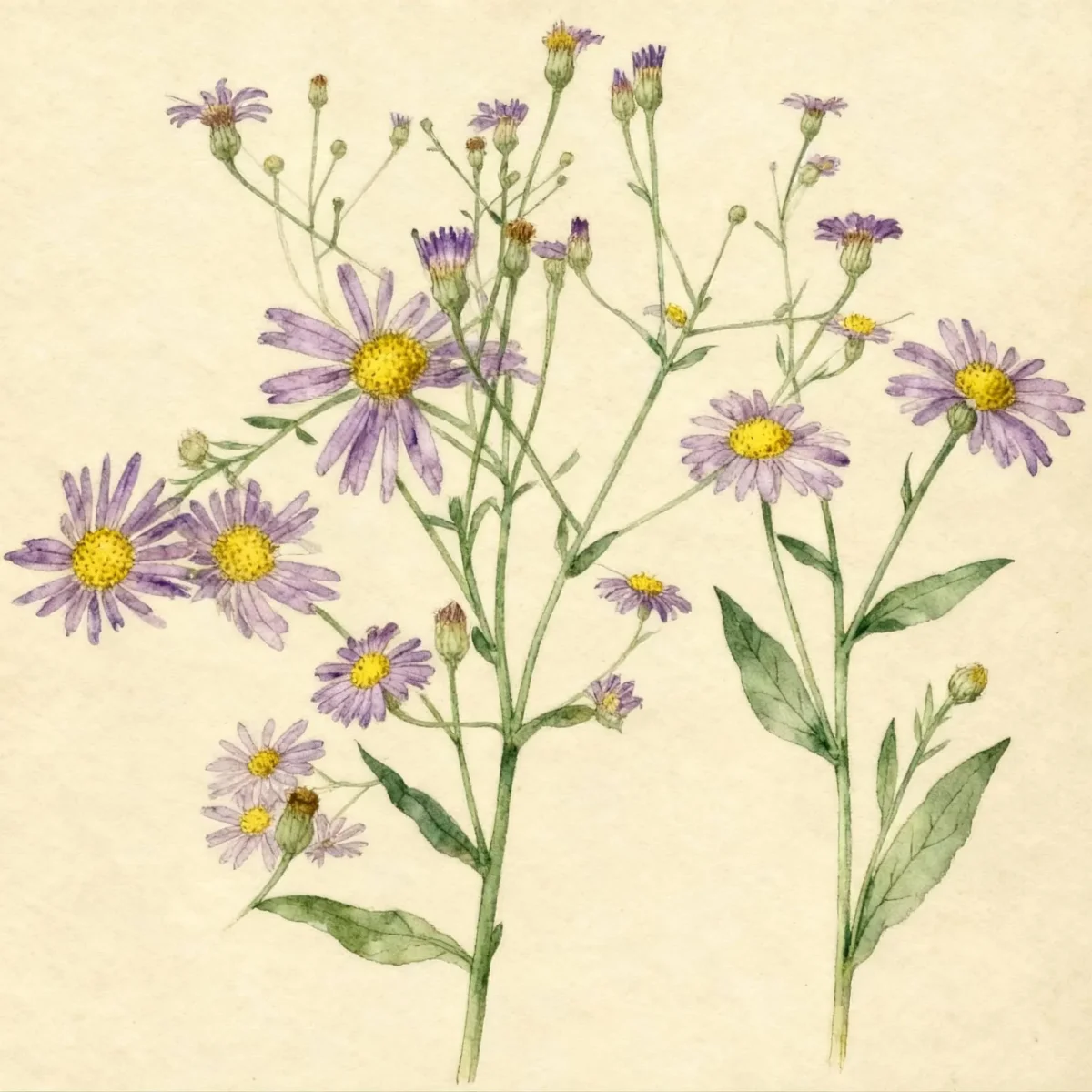
- Bloom Description: Blue to violet rays with yellow centers
- Sun Exposure: Full sun to part shade
- Water Needs: Dry to medium
- Maintenance Level: Low
How to Grow
Plant Symphyotrichum patens in the spring or fall, ensuring it anchors well before extreme seasonal shifts. This plant prefers average, well-drained soil; it absolutely requires drainage and will struggle in heavy, constantly wet clay. Optimal placement receives full sun, though it will tolerate partial shade, potentially leading to slightly fewer blooms.
Care for the Spreading aster is minimal. Water deeply but infrequently, especially once the plant is established, as it handles drought quite well. Fertilization is generally unnecessary, as rich soil may lead to weak, flopping stems. Good air circulation is essential to prevent common aster issues like powdery mildew, so avoid overly crowded plantings.
If necessary, conduct light pruning in early spring to shape the plant before new growth emerges. Deadheading is usually not required, as the plant naturally provides a long bloom phase. Minimal winter preparation is needed; simply leave the dried stems standing until spring cleanup to provide winter structure and cover.
Landscape Uses
The low-maintenance nature and prairie aesthetic of Symphyotrichum patens make it ideal for native plant gardens and naturalized settings. Because this Spreading aster naturally occurs in rocky or sandy soils, it serves beautifully at the periphery of a rock garden or along dry slopes where other plants struggle. Its height (up to 30 inches) suits the middle to back of a mixed border.
Consider pairing this aster with other late-season bloomers that appreciate similar dry, sunny conditions, such as Rudbeckia species or various ornamental grasses. The blue-violet tones of the Spreading aster complement yellows and oranges, creating a vibrant autumnal tapestry. Its value is greatly enhanced in cottage gardens or specialized butterfly gardens, where its late nectar supply is crucial.
Standout Features
Flower Qualities
- Showy
Noteworthy Characteristics
Symphyotrichum patens is a Missouri native aster which occurs in rocky or sandy open woods, thickets and glade margins in the Ozark region of the State. It is an upright plant that typically grows to 2.5’ tall on slender, hairy, brittle stems featuring daisy-like asters with blue to violet rays and yellow centers from late summer into fall. Flowers appear singly at the ends of slender stems, and the untoothed, rough-textured leaves are notable features. Flowers are attractive to butterflies, adding significant ecological value to the garden space.
Tolerances
- Drought
- Dry Soil
Potential Problems
This plant generally avoids serious insect or disease problems under ideal cultural conditions. However, a key consideration for all asters, including Symphyotrichum patens, is susceptibility to powdery mildew, especially in humid areas with poor air circulation. To mitigate this, ensure adequate spacing when planting. Aster wilt is another potential issue, usually triggered when plants are forced into heavy, poorly-drained clay soils without proper amendments. Proper soil preparation mitigates these risks significantly.
Frequently Asked Questions
What hardiness zones is Spreading aster suitable for?
The Spreading aster (Symphyotrichum patens) is hardy and adaptable across USDA Zones 4 through 8.
How large does Symphyotrichum patens grow?
This plant typically matures to a height of 2 to 3 feet tall, with a spread ranging from 1.5 to 2 feet wide.
What sun exposure does Spreading aster need?
Symphyotrichum patens thrives best in full sun, although it can successfully tolerate partial shade conditions in the garden.
When does Spreading aster bloom?
You can expect the daisy-like flowers of the Spreading aster to appear reliably from August all the way through October, showcasing blue to violet rays with bright yellow centers.
Conclusion
The Symphyotrichum patens offers gardeners a robust, low-fuss perennial that delivers critical late-season color and supports local wildlife ecology. For those seeking reliable blooms in dry spots, the Spreading aster is an excellent choice derived from Southeastern native habitats. Check that your growing site offers full sun and good drainage before planning your purchase this autumn.
Companion Planting
When selecting companions for Symphyotrichum patens, focus on plants that share its need for well-drained, drier soil and its late-season bloom window. Grasses provide excellent textural contrast; consider native varieties like Little Bluestem (Schizachyrium scoparium) or Prairie Dropseed (Sporobolus heterolepis). These grasses echo the habitat where the Spreading aster naturally occurs.
Another category offering great synergy is sturdy, sun-loving perennials like various Sedums (especially upright stonecrops) or tough coneflowers (Echinacea). Placing these companions near the Symphyotrichum patens ensures that the entire area remains attractive from summer through the first frost, requiring minimal supplemental watering for the whole planting scheme.
Wildlife Benefits
The flowers of the Spreading aster are particularly important because they bloom late in the season, offering vital nectar resources for migrating or overwintering pollinators. Butterflies, including Monarchs and various Fritillaries, readily visit the blue-violet flower heads throughout the fall months. Planting this aster directly supports local butterfly populations during their critical feeding periods.
Beyond nectar, the spent flower heads provide structure that can shelter beneficial insects over winter, especially if the gardener practices light winter cleanup. Incorporating this native plant into your butterfly or pollinator garden significantly increases the biological diversity and season-long interest of the area.