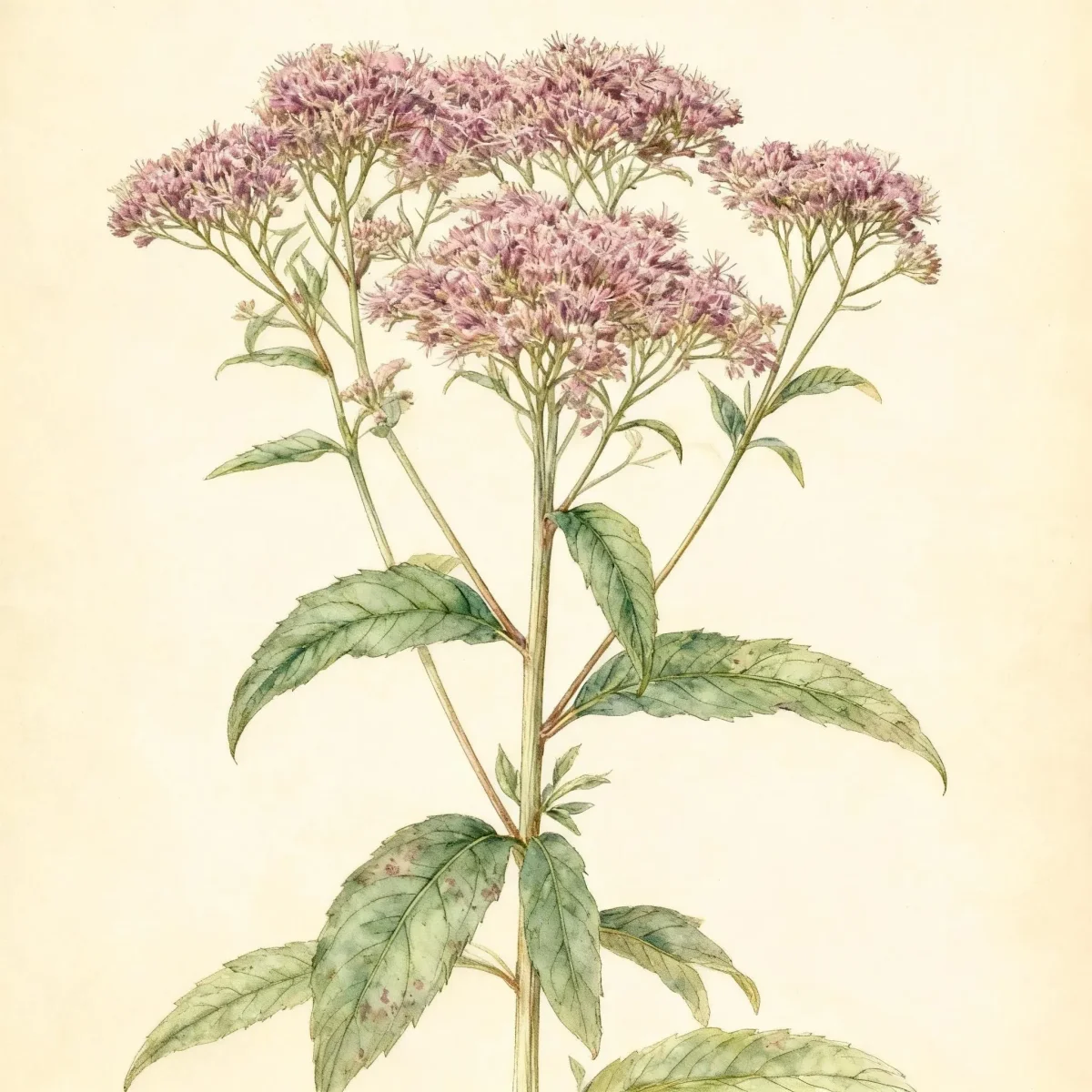
Joe Pye weed (Eutrochium maculatum)
Joe Pye weed (Eutrochium maculatum) is a showy, fragrant perennial perfect for wet gardens, reaching 4-7 ft tall with purple-pink blooms.
Scroll down to discover growing tips, care requirements, companion plants, and more
Complete Plant Information
Overview
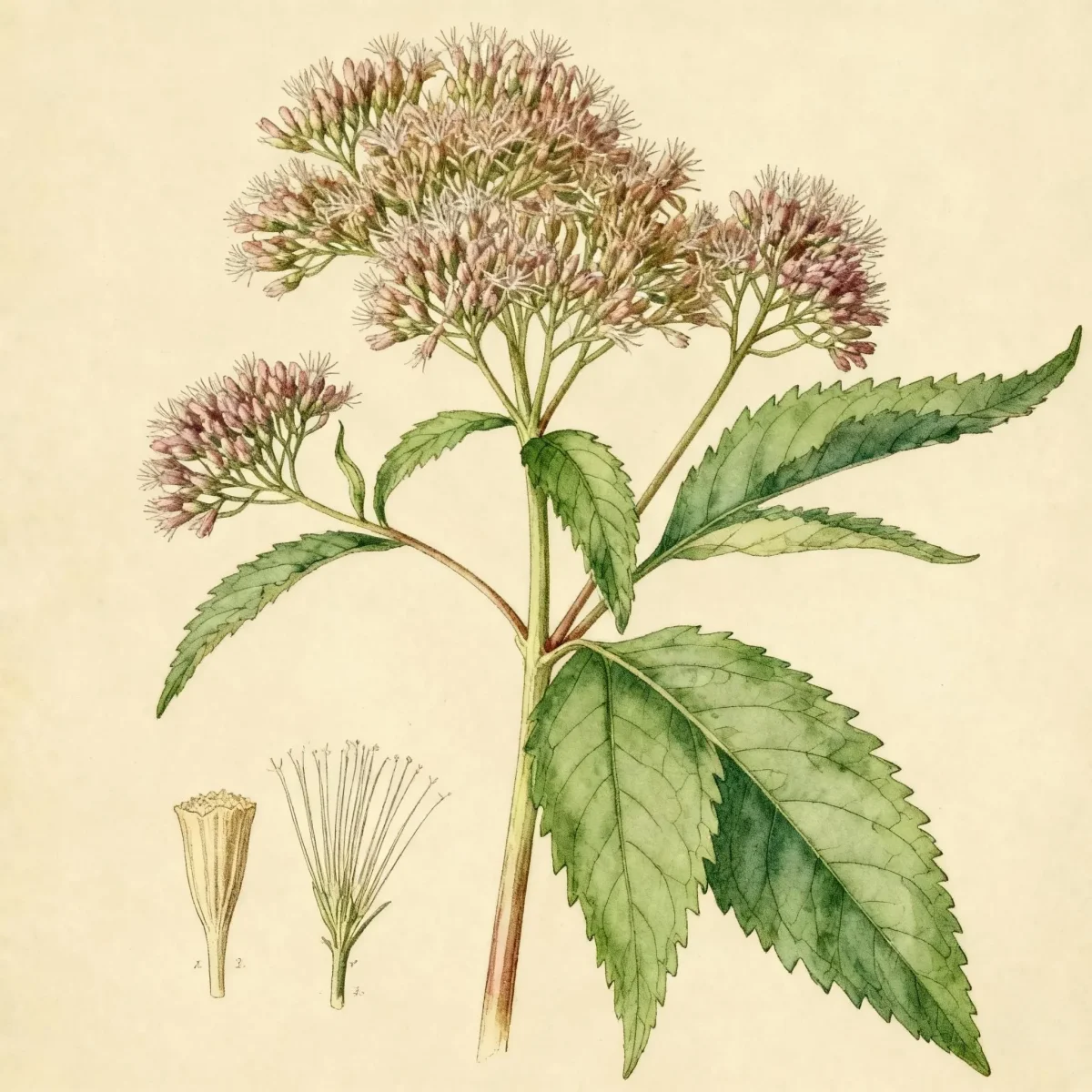
Eutrochium maculatum, widely known as Joe Pye weed, is an indispensable native perennial for gardeners seeking dramatic late-season color and structure. This towering plant features robust, purple-speckled stems topped by substantial, fluffy clusters of purple-pink flowers that are highly attractive to pollinators late in the growing season. Its grandeur makes it a superb architectural element in the landscape.
Joe Pye weed thrives in moist conditions, making it an excellent choice for consistently damp areas where many other perennials struggle. As a low-maintenance plant, it requires minimal intervention once established, offering significant visual rewards for very little effort. Its height, often reaching 4 to 7 feet, commands attention, particularly in meadow settings or mixed borders alongside other moisture-loving companions.
The value of Eutrochium maculatum extends beyond mere aesthetics; it supports local ecosystems by providing essential nectar when summer blooms wane. For gardeners maintaining rain gardens or seeking naturalized habitats, this substantial perennial is a cornerstone species. Planting Joe Pye weed ensures a resilient, vibrant display from mid-summer straight through fall.
Fast Facts
- Plant Family: Asteraceae
- Plant Type: Herbaceous perennial
- Native Range: North America
- Hardiness Zones: USDA Zones 4-8
- Size at Maturity:
- Height: 4-7 ft
- Spread: 3-4 ft
- Bloom Time: July to September
- Bloom Description: Purple-pink
- Sun Exposure: Full sun
- Water Needs: Medium to wet
- Maintenance Level: Low
How to Grow
For best establishment, plant Eutrochium maculatum in spring or fall in a location receiving full sun. While it tolerates partial afternoon shade in very hot summers, maximum flowering and stem strength are achieved in bright light. This species absolutely prefers moist, fertile, humusy soils that do not dry out between waterings, which is crucial for plant health.
Watering is straightforward; aim for consistently medium to wet conditions typical of its native damp meadows. Fertilizing is generally unnecessary if the soil is reasonably fertile. If planting occurs in poorer, drier sites, amend the soil deeply with compost prior to planting to help retain necessary moisture throughout the bloom period.
Maintenance for Joe Pye weed is very low once established. The only required annual task is cutting the plants back to the ground in late winter, well before new growth initiates. Pruning spent flowers in the fall is optional; leaving them can provide winter interest, though this may result in slight spring cleanup.
A crucial cultural note involves ensuring adequate water. If soils are allowed to dry out severely, especially during hot spells, the large leaves of Eutrochium maculatum may experience scorching, signaling stress. Consistent moisture management is the key to preventing this potential problem.
Landscape Uses
Joe Pye weed is ideally suited for functional landscape installations that manage moderate to high levels of moisture. Its recommended uses highlight its affinity for damp areas, making it a star component for rain gardens where it can absorb excess runoff effectively. Furthermore, its impressive height allows it to anchor the rear of perennial borders, providing a robust vertical element that structures seasonal garden design.
For cottage gardens or native plant gardens, Eutrochium maculatum blends beautifully with other tall wetland enthusiasts like various irises, swamp milkweed, or blue mistflower. When integrating Joe Pye weed into wild or naturalized areas, its presence creates significant habitat value, drawing in a wide array of beneficial insects. Plant it near water margins or stream banks where its need for moisture can be easily met.
Its bold stature means it functions well when used as an informal backdrop against fences or structures, providing texture and color contrast with its deep green foliage and airy purple-pink flower heads. Remember that its mature size requires thoughtful placement to avoid overpowering smaller neighbors.
Standout Features
Flower Qualities
- Showy
- Fragrant
Noteworthy Characteristics
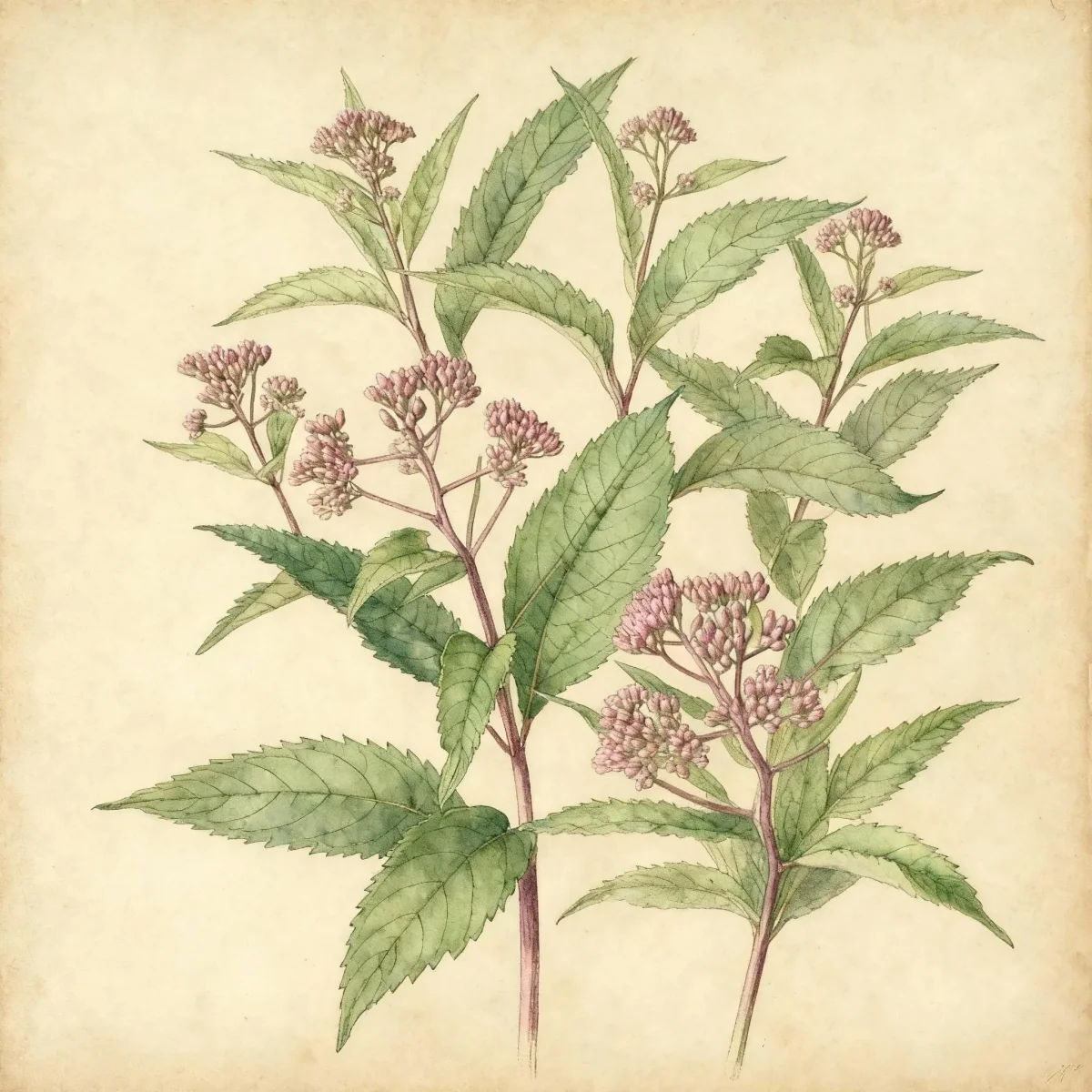
Eutrochium maculatum, commonly known as Joe Pye weed, is native to damp meadows, thickets and coastal areas in eastern North America. Plants typically grow 4-7’ tall on branched, purple-speckled stems clad with serrate, lance-shaped, medium green leaves (to 8” long) that typically appear in whorls of 3-6. Tiny, light to deep purple flowers in compound inflorescences bloom from mid-summer to early fall.
Tolerances
- Deer
- Clay Soil
- Wet Soil
Potential Problems
Fortunately, Eutrochium maculatum generally suffers from no serious insect or disease problems, confirming its status as a reliable low-maintenance perennial. The most common cultural issue arises from inadequate moisture supply: leaves may scorch if soils are allowed to dry out, especially as the plant reaches its full summer height. Management involves diligent watering during establishment and drought periods. Slugs and snails might occasionally bother young, tender growth, which can be managed with standard organic baits or barriers if necessary.
Frequently Asked Questions
What hardiness zones is Joe Pye weed suitable for?
Eutrochium maculatum is reliably hardy in USDA Zones 4 through 8.
How large does Joe Pye weed grow?
This species typically achieves heights between 4 and 7 feet, spreading 3 to 4 feet wide at maturity.
What sun exposure does Eutrochium maculatum need?
Eutrochium maculatum requires full sun for the best growth, though some light afternoon shade is tolerated, particularly in very hot climates.
When does Joe Pye weed bloom?
This perennial creates a late-season display, with its characteristic purple-pink blooms appearing from July well into September.
Conclusion
The spectacular height, low maintenance needs, and exceptional moisture tolerance make Joe Pye weed an essential component for late-season structure in wet gardens. Integrating Eutrochium maculatum into your landscape ensures reliable color and robust wildlife support through the end of summer. Always plan placement carefully based on its height and confirm that your site can provide the medium to wet soil moisture it demands for success.
Companion Planting
When designing planting schemes around Joe Pye weed, focus on other moisture-loving plants that complement its stately habit. Good companions that share the need for medium to wet soil include native cardinal flower (Lobelia cardinalis) for its bright red contrast, astilbes (if soil is more average than truly wet), or globe flowers (Trollius). Pairing it with taller grasses that tolerate dampness, such as switchgrass (Panicum virgatum) in its moister cultivars, helps create a dynamic meadow aesthetic that moves beautifully in the breeze. Avoid planting near true desert-lovers or rock garden specimens, as their water needs are fundamentally incompatible with this plant.
Design Ideas for Tall Perennials
Utilizing tall plants like Eutrochium maculatum effectively involves strategic placement to maximize impact without overwhelming sightlines. Plant Joe Pye weed in masses of three or more for a naturalized drift effect rather than as a single specimen. In large borders, position it directly behind shorter perennials that bloom earlier in the season, allowing the foliage of the Joe Pye weed to fill in the gap left when the spring bloomers fade. Because it is a rain garden specialist, consider using it as screening or a backdrop along the edge of a retention pond or natural swale where water collects, using its bold structure to soften hard edges where water meets land.