Miagos bush (Osmoxylon lineare)
Discover the Miagos bush (Osmoxylon lineare), a low-maintenance evergreen shrub known for its striking, linear foliage and summer white blooms.
Scroll down to discover growing tips, care requirements, companion plants, and more
Complete Plant Information
Overview
The Miagos bush (Osmoxylon lineare) is a visually distinctive broadleaf evergreen shrub native to the Philippines, valued for its unusual, highly segmented foliage. This plant offers an architectural presence in tropical and subtropical landscapes, boasting upright branches topped with glossy leaves that mimic a palmately compound structure but remain entirely linear. As a low-maintenance addition, Osmoxylon lineare is suitable for gardeners seeking texture and moderate screening capability without demanding heavy upkeep.
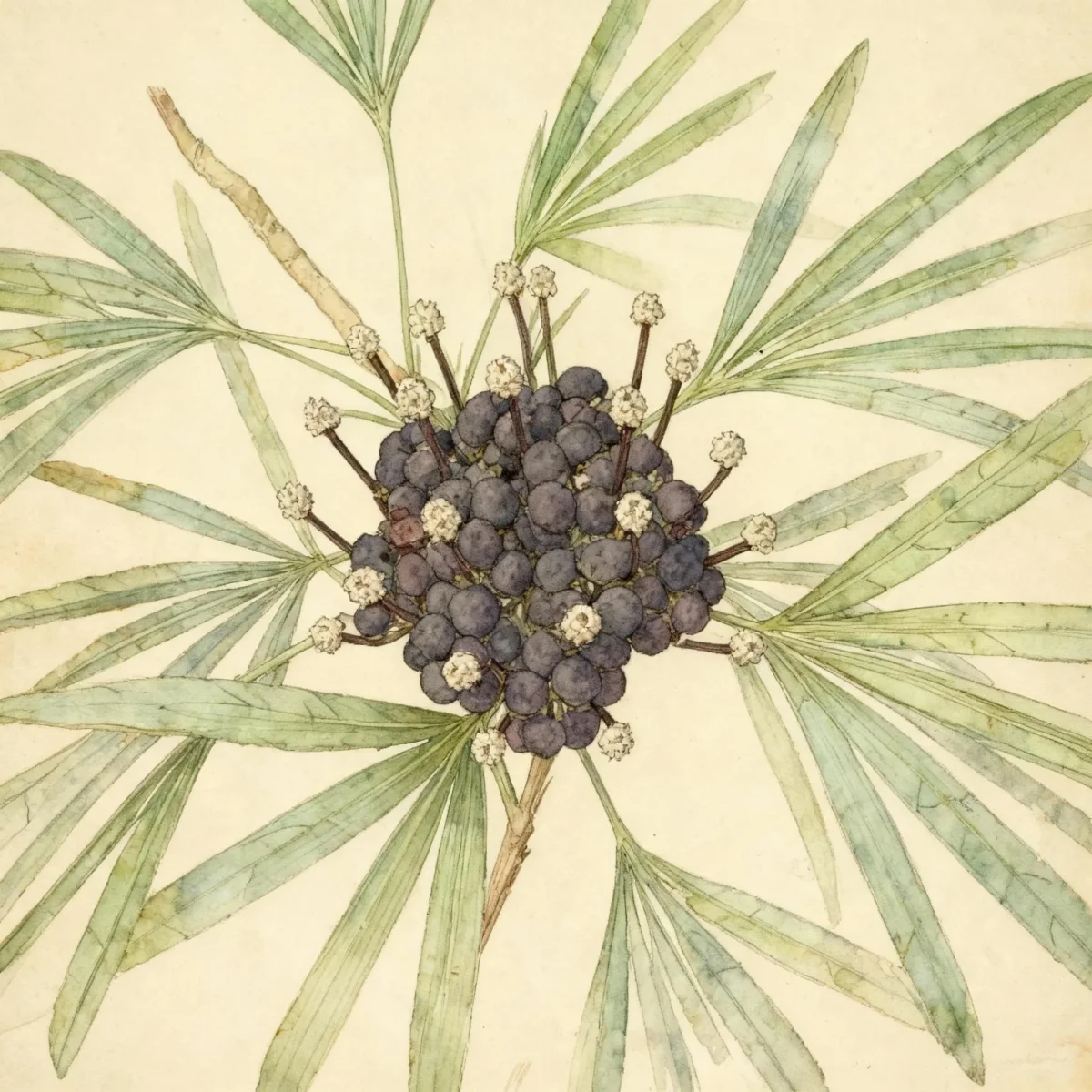
Reaching mature dimensions of 6 to 10 feet high and wide, the Miagos bush provides reliable four-season interest. Beyond its architectural leaves, it produces terminal clusters of small, white flowers during the summer months, followed by showy, contrasting black fruits that attract local birdlife. This makes Osmoxylon lineare a functional yet aesthetically appealing choice for tropical border plantings.
Gardeners in warm climates will appreciate the resilience of this species. Requiring only medium water inputs once established and tolerating a range of light conditions from full sun to partial shade, the Miagos bush is remarkably adaptable, provided its soil foundation offers excellent drainage.
Fast Facts
- Plant Family: Araliaceae
- Plant Type: Broadleaf evergreen
- Native Range: Philippines
- Hardiness Zones: USDA Zones 10-11
- Size at Maturity:
- Height: 6-10 ft
- Spread: 6-10 ft
- Bloom Time: June to September
- Bloom Description: White
- Sun Exposure: Full sun to part shade
- Water Needs: Medium
- Maintenance Level: Low
How to Grow
The ideal time to establish Osmoxylon lineare is during the warm season appropriate for your Zone 10 or 11 location, ensuring the roots have ample time to settle before any potential cool fronts. Planting success hinges on soil preparation; the Miagos bush demands loamy, well-draining soil. Avoid heavy, water-retentive clay soils, as poor drainage is the primary threat to this, and many tropical species. Ensure the planting site allows for its full spread of up to 10 feet.
Care requirements for the Miagos bush are straightforward. Maintain an evenly moist soil profile, particularly during the first year of establishment, using a medium watering schedule. Fertilization is rarely necessary if the native soil is moderately fertile, but a slow-release balanced fertilizer applied in spring can support vigorous growth. Pruning should be light, focusing only on shaping or removing damaged wood, as the natural upright habit is highly desirable.
A key cultural note for Osmoxylon lineare is its strong tolerance for varied conditions; although it enjoys adequate moisture, it manages drought stress surprisingly well, a trait distinguishing it from fussier tropical plants. Since it is not frost hardy, winter protection is irrelevant; gardeners must focus solely on ensuring the best drainage possible during the wet seasons to prevent waterlogging.
Landscape Uses
While cataloged with the usage type ‘Annual’ (likely reflecting its use in cooler regions where it is grown as a container specimen that must be brought indoors), in its native and designated hardiness zones (10-11), the Miagos bush functions superbly as a permanent structural element. Its dense, upright growth makes Osmoxylon lineare highly suitable for use as a formal screen or a standalone specimen plant where its unusual dark green foliage can be appreciated up close.
For design purposes, utilize the Miagos bush to create vertical accents against lighter-colored walls or in mixed borders. Because its foliage provides year-round texture, pair it with plants that offer strong seasonal color contrast, such as flowering tropical perennials or bromeliads that occupy the lower canopy layers. Its requirement for full sun to part shade means it pairs well with many smaller palms or understory shrubs common throughout the subtropics.
The low maintenance needs of this shrub mean it integrates seamlessly into low-fuss landscape designs. Consider planting several Osmoxylon lineare in a row, spaced appropriately, to establish a living, textured privacy hedge that requires minimal shearing once established.
Standout Features
Fruit Qualities
- Showy
Noteworthy Characteristics
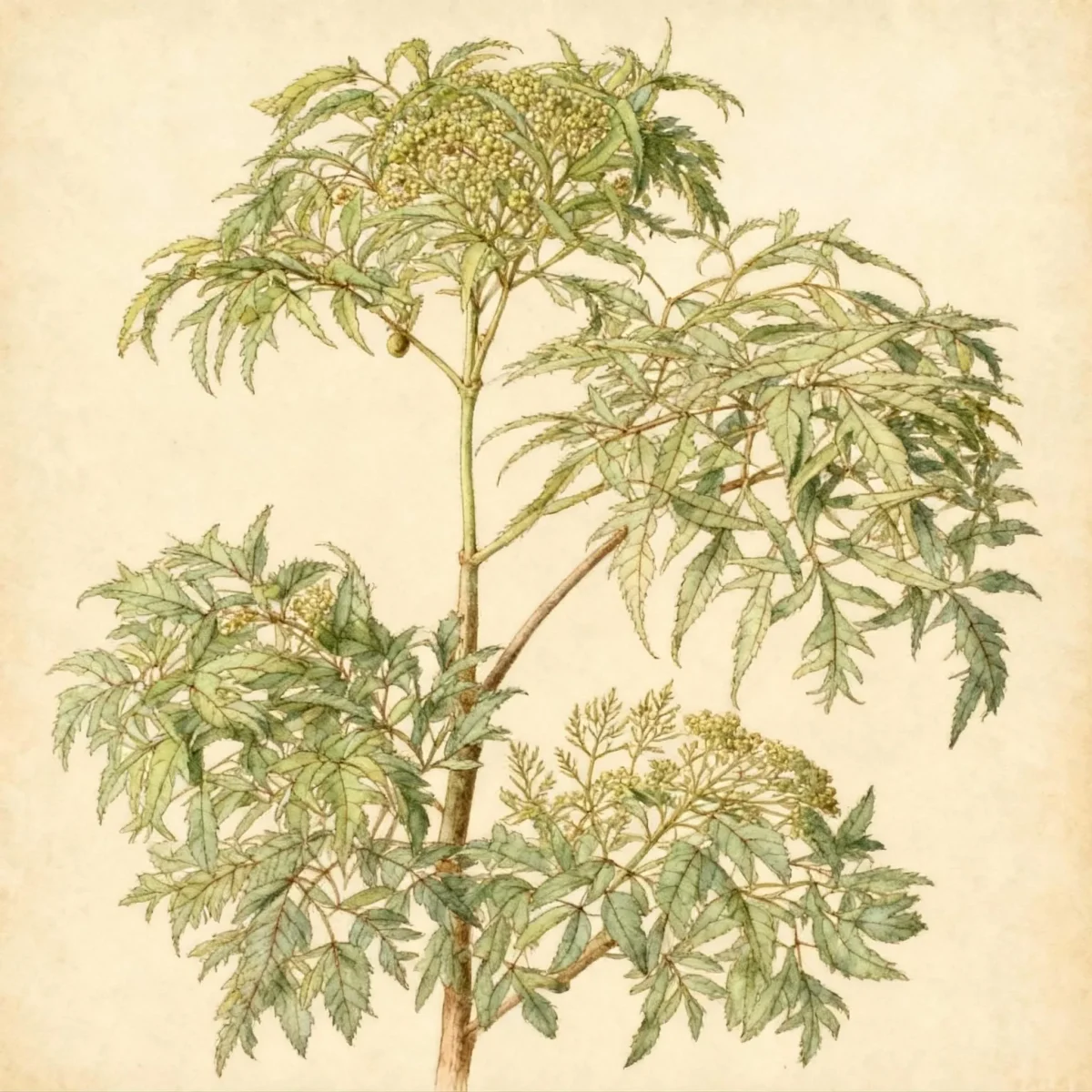
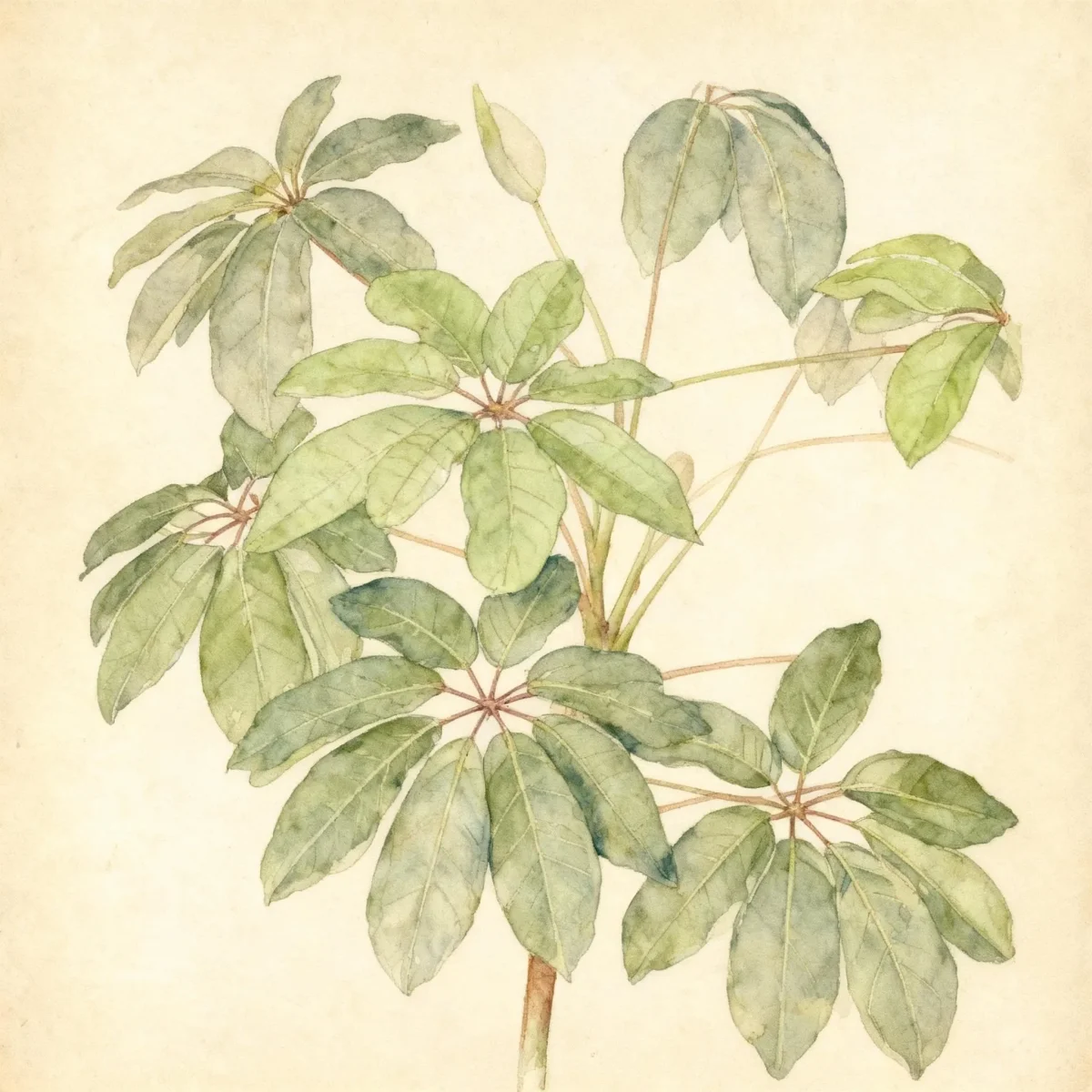
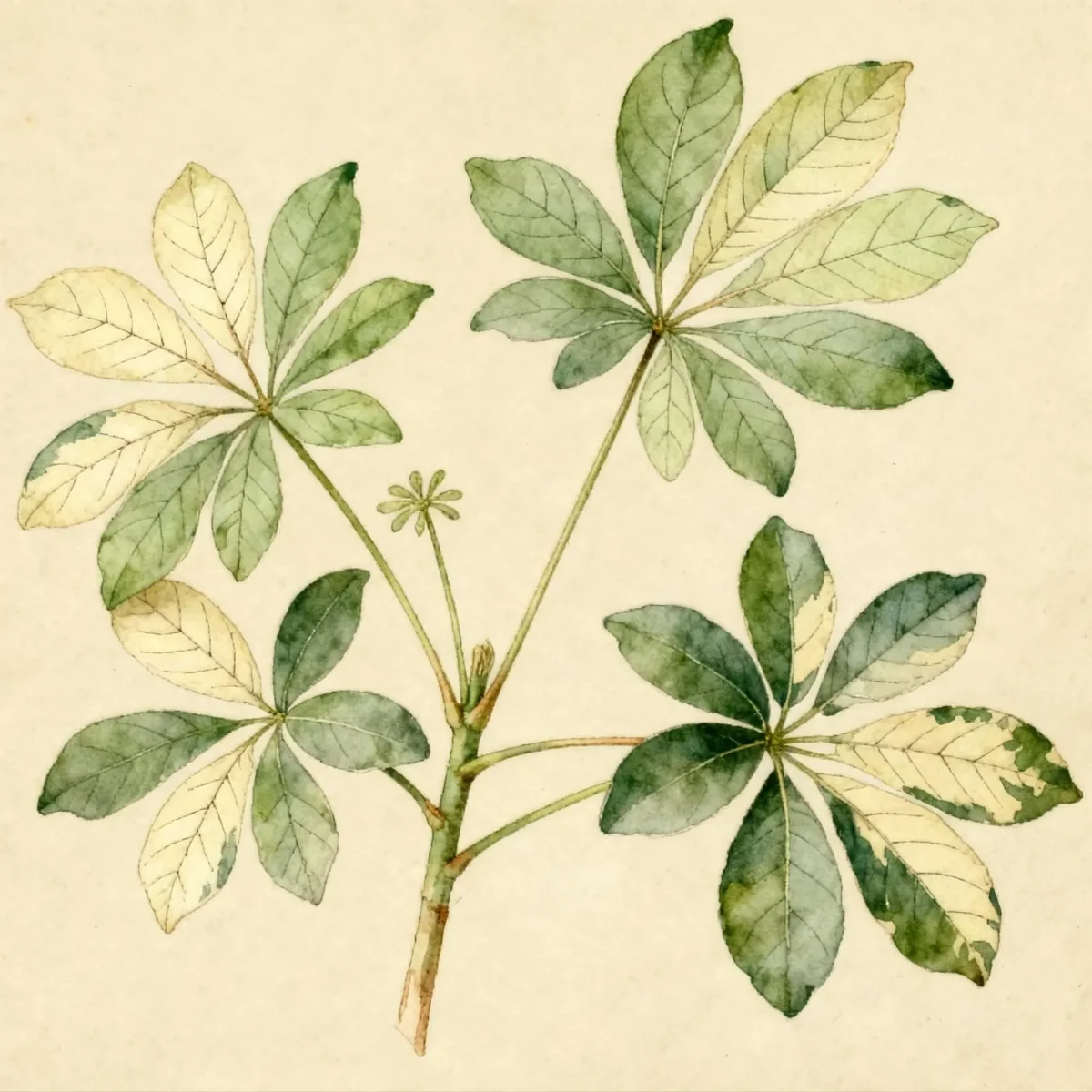
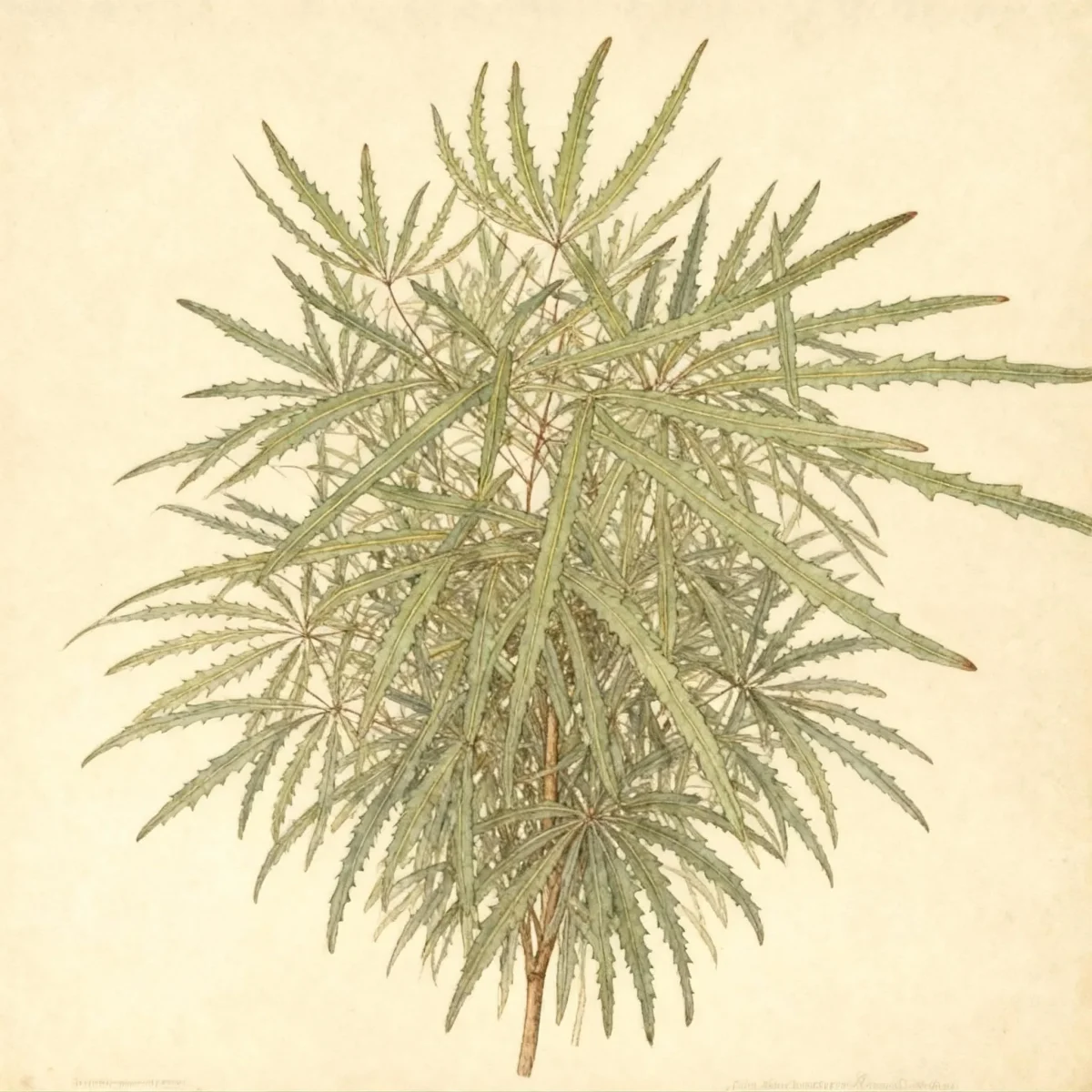
Osmoxylon lineare, commonly called miagos bush or green aralia, is an evergreen shrub endemic to the Philippines but can be found in cultivation throughout the tropics and subtropics. Mature stands can reach up to 10’ tall with a similar spread. The upright branches are topped with clusters of glossy, deeply cut foliage. The leaves appear to be palmately compound but are in fact entire, made up of four to six narrow, linear segments that can reach 8” long and 0.5” wide. Terminal, compound umbels of small, white flowers bloom mostly in summer and are followed by contrasting round, black fruits. The fruits are attractive to birds. The genus name Osmoxylon comes from the Greek roots osmo meaning “fragrant” and xylon meaning “wood”, possibly in reference to the odor of the wood of some members of this genus. The specific epithet lineare means “linear” and refers to the shape of the foliar segments of this species. The origins of the common names of this species are disputed.
Tolerances
- Drought
Potential Problems
One of the major advantages of incorporating the Miagos bush into your landscape design is its excellent pest and disease resistance profile. Gardeners typically report no major pest or disease problems when Osmoxylon lineare is grown under appropriate conditions.
The key to prevention lies entirely within cultural management. Always adhere strictly to the requirement for well-draining soil. Root rot, the most common affliction for shrubs experiencing cultural stress in the tropics, is almost always related to excess water retention in heavy soils rather than bacterial or fungal pathogens attacking a healthy plant. Ensure good air circulation around mature specimens.
Frequently Asked Questions
What hardiness zones is Miagos bush suitable for?
The Miagos bush (Osmoxylon lineare) is hardy in USDA Zones 10 through 11, thriving where winter temperatures remain reliably above freezing.
How large does Miagos bush grow?
When fully mature, this shrub typically reaches a height between 6 and 10 feet, with a spread that matches its height, covering an area between 6 and 10 feet wide.
When does Miagos bush bloom?
Osmoxylon lineare produces its ornamental display of small, white flowers seasonally, generally blooming from June through September.
What sun exposure does Osmoxylon lineare need?
This plant adapts well, performing best when situated in locations receiving full sun to light part shade, though protection from intense, relentless afternoon sun is beneficial in the hottest regions.
Wildlife Benefits
The ornamental display of Osmoxylon lineare extends beyond its unique foliage and summer flowers into the autumn and winter months due to its fruit production. The small, round, black fruits that follow the white blooms are noted for being highly attractive to various species of local, native birds.
Planting the Miagos bush near a patio or window can provide excellent viewing opportunities as fruit-eating birds visit the shrub. This secondary benefit enhances the value of using Osmoxylon lineare as a specimen planting, turning it into a functional feeder during times when other food sources may become scarce. Its dense structure also provides excellent cover for smaller species seeking shelter.
Propagation Tips
Although Osmoxylon lineare is generally propagated commercially through cuttings, home gardeners can attempt propagation via seed, provided they can harvest the viable black fruits after the flowers fade. Seeds should be extracted carefully from the fleshy fruit—a process similar to cleaning other drupes—and sown immediately in a light, moist potting medium.
For faster establishment, semi-hardwood cuttings are recommended if you have access to mature stock. Take cuttings from terminal growth that is firm but not woody. Treating the base of the cutting with a rooting hormone and placing it under mist or in a consistently humid environment greatly increases the success rate for establishing new Miagos bush plants.
Conclusion
The Miagos bush (Osmoxylon lineare) offers tropical gardeners striking textural interest through its linear, glossy foliage and adds wildlife value with its showy summer fruit. Its low maintenance profile and tolerance for varied sun exposure make it an excellent asset for screening or specimen planting in USDA Zones 10-11. Plan your planting in the warmer part of the growing season to capitalize on its established growth habits.