Blackberry lily (Iris domestica)
Discover Blackberry lily (Iris domestica), a low-maintenance perennial with striking orange, red-spotted flowers and unique fruit.
Scroll down to discover growing tips, care requirements, companion plants, and more
Complete Plant Information
Overview
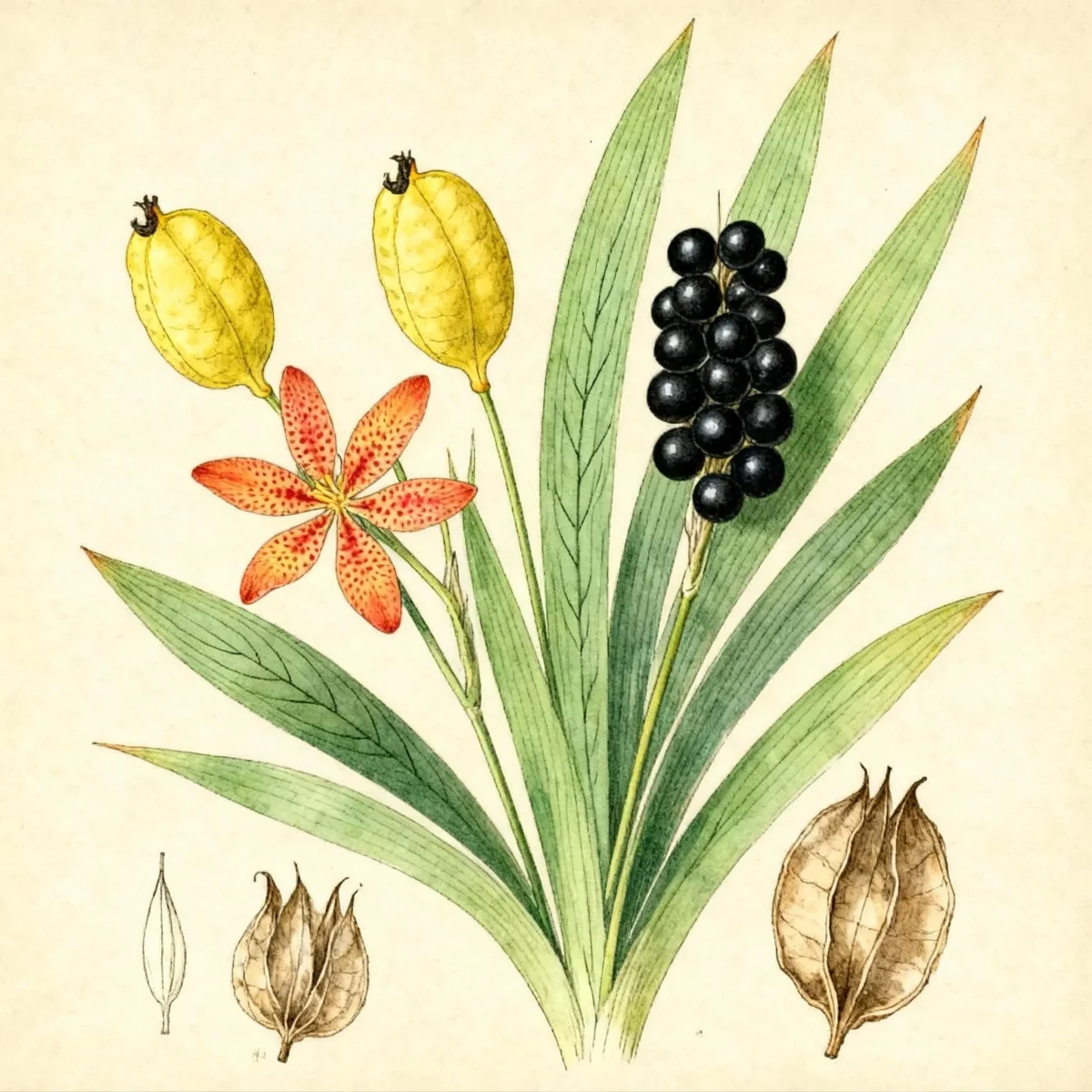
The Blackberry lily, scientifically known as Iris domestica, offers significant textural and seasonal interest, making it a valuable addition to mixed borders. This herbaceous perennial is treasured particularly for its late-season display, where its unique seed pods resemble clusters of dark, ripe blackberries, providing excellent winter structure. While it produces attractive flowers, the lasting appeal of Iris domestica often centers on these persistent fruits and its tidy, iris-like basal foliage.
This plant is renowned for being relatively tough and adaptable, thriving in full sun conditions where many other perennials might struggle with excessive heat. Clumps of Iris domestica expand slowly via creeping rhizomes, forming dense stands that require minimal coddling once established. Gardeners appreciate its reliable performance and low maintenance requirements, confirming its status as a resilient, stylish choice for sunny garden areas.
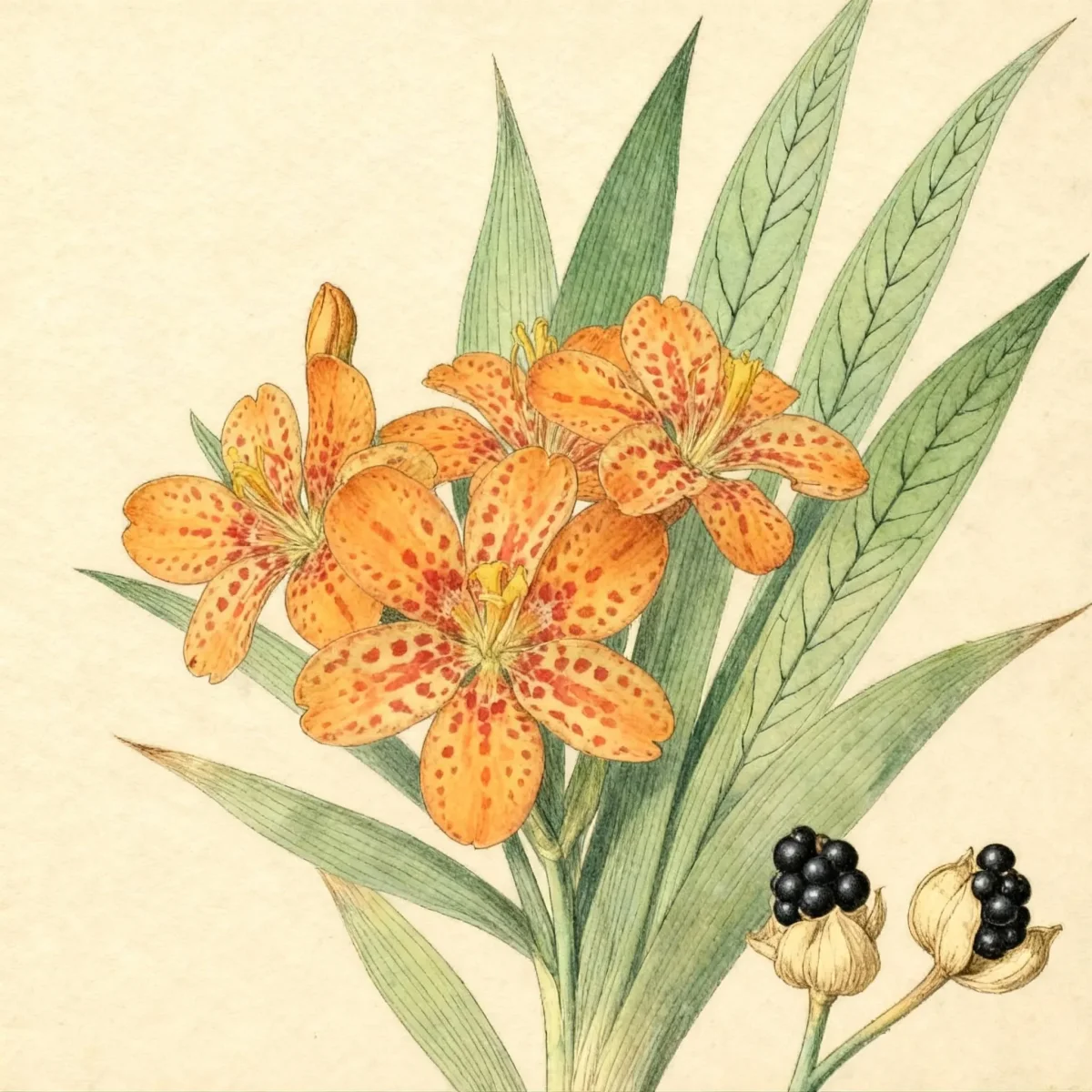
The common names reflect its visual appeal: Leopard lily references the spots on the flowers, while Blackberry lily refers to the seed clusters. If you are looking for a mid-summer bloomer that transitions seamlessly into an interesting fall and winter silhouette, Iris domestica is an excellent selection providing continuous garden value.
Fast Facts
- Plant Family: Iridaceae
- Plant Type: Herbaceous perennial
- Native Range: Southern and eastern Asia
- Hardiness Zones: USDA Zones 5-10
- Size at Maturity:
- Height: 2-3 ft
- Spread: 0.75-2 ft
- Bloom Time: July to August
- Bloom Description: Orange dotted with red
- Sun Exposure: Full sun
- Water Needs: Medium
- Maintenance Level: Low
How to Grow
The Blackberry lily establishes best when planted in spring or early autumn. Select a location that receives full sun exposure throughout the day, as insufficient light can lead to sparse flowering. Iris domestica performs well in average, well-drained soils. While it prefers medium moisture, be exceptionally cautious about soil drainage, especially during the winter months, as poorly-drained conditions can quickly be fatal to the rhizomes.
Maintenance for this plant is generally low. Water regularly to keep the soil adequately moist, particularly during dry spells, but avoid creating saturated conditions. Fertilization is rarely necessary; rich soil can sometimes encourage excessive foliage at the expense of flowers. Deadheading spent blooms is optional but can tidy the look before the seed pods fully develop.
Deer and rabbits typically show little interest in Iris domestica. Clumps expand slowly via creeping rhizomes. If the plant begins to look crowded or the center dies out after several years, you can divide the clumps in early spring or early fall. Self-seeding is possible in ideal climates, which can help perpetuate this somewhat short-lived perennial.
Landscape Uses
The upright, linear habit of Iris domestica makes it perfect for defining the middle to back row of perennial borders. The sword-shaped, iris-like leaves provide consistent green structure even when the plant is not actively flowering. Its medium height works well when paired with shorter groundcovers in the foreground or taller grasses behind it.
Due to its moderate spread and tolerance for various conditions, the Blackberry lily is also an excellent choice for edging walkways or mass planting in sunny beds. It pairs beautifully with other drought-tolerant perennials that bloom later in the season, extending visual interest past the August bloom time. The contrast between its vibrant, spotted flowers and the deep green foliage is a design asset.
Standout Features
Flower Qualities
- Showy
Fruit Qualities
- Showy
Noteworthy Characteristics
Iris domestica, commonly called blackberry lily or leopard lily, is an erect, rhizomatous perennial which typically grows 2-3’ tall. Lily-like, deep orange flowers (to 2” across), heavily spotted with red dots, have 6 petal-like perianth segments. Flowers appear in early to-mid summer in sprays above the foliage on wiry, naked stems typically rising to 3’ (less frequently to 4’) tall. The seed heads are persistent and can provide winter interest, giving rise to the common name blackberry lily.
Tolerances
- No serious insect or disease problems.
Potential Problems
Generally, Iris domestica is highly resistant to serious pests and diseases. The primary concern lies in cultural conditions rather than biological threats, specifically wet, poorly draining soil in winter, which is fatal. Occasionally, iris borers may attack the rhizomes. If borers are present, inspect the base of the clumps in early spring or late fall and treat the rhizome area if necessary to protect the structure of your Blackberry lily.
Frequently Asked Questions
What hardiness zones is Blackberry lily suitable for?
Iris domestica is reliably hardy in USDA Zones 5 through 10.
How large does Blackberry lily grow?
This plant typically reaches a height between 2 and 3 feet and spreads between 0.75 and 2 feet wide.
What sun exposure does Iris domestica need?
Iris domestica requires full sun exposure to perform best in the garden.
When does Blackberry lily bloom?
The flowers appear from July to August, displaying a distinct orange color heavily dotted with red markings.
Conclusion
The Blackberry lily (Iris domestica) offers reliable, low-maintenance structure complemented by unique, spotted flowers and wonderful winter interest from persistent seed heads. This distinctive plant proves that great garden impact doesn’t require constant attention. Check your local USDA zone compatibility and plan to incorporate this fascinating perennial into your next full-sun border design.
Companion Planting
When selecting companions for Iris domestica, prioritize plants that appreciate similar full sun conditions and medium soil moisture. Plants that contrast well in texture are ideal; consider soft ornamental grasses like Prairie Dropseed (Sporobolus heterolepis) or fine-textured perennials such as Catmint (Nepeta spp.). In the same early summer bloom window, pair it with plants whose foliage is vastly different, like the broad leaves of Hostas (if situated slightly further back where they can handle the sun) or the soft texture of Lamb’s Ears (Stachys byzantina).
Propagation Tips
Propagation for the Blackberry lily is easily achieved through division or by collecting the fascinating seeds. To divide, carefully dig up the clumps in early spring or fall after the foliage has died back somewhat. Use a clean, sharp spade to separate the rhizomes, ensuring each division has a healthy chunk of root and several fan-like leaf clusters attached. Plant divisions immediately at the same depth they were previously growing.
Alternatively, allow the attractive, pear-shaped seed pods to mature fully on the stem until they split open in late summer, revealing the shiny black “berries.” Collect these seeds promptly, as they disperse easily. Seeds can be sown directly outdoors in the fall for spring germination, or stratified indoors for earlier starting. Established plants may also readily self-seed in the garden bed.