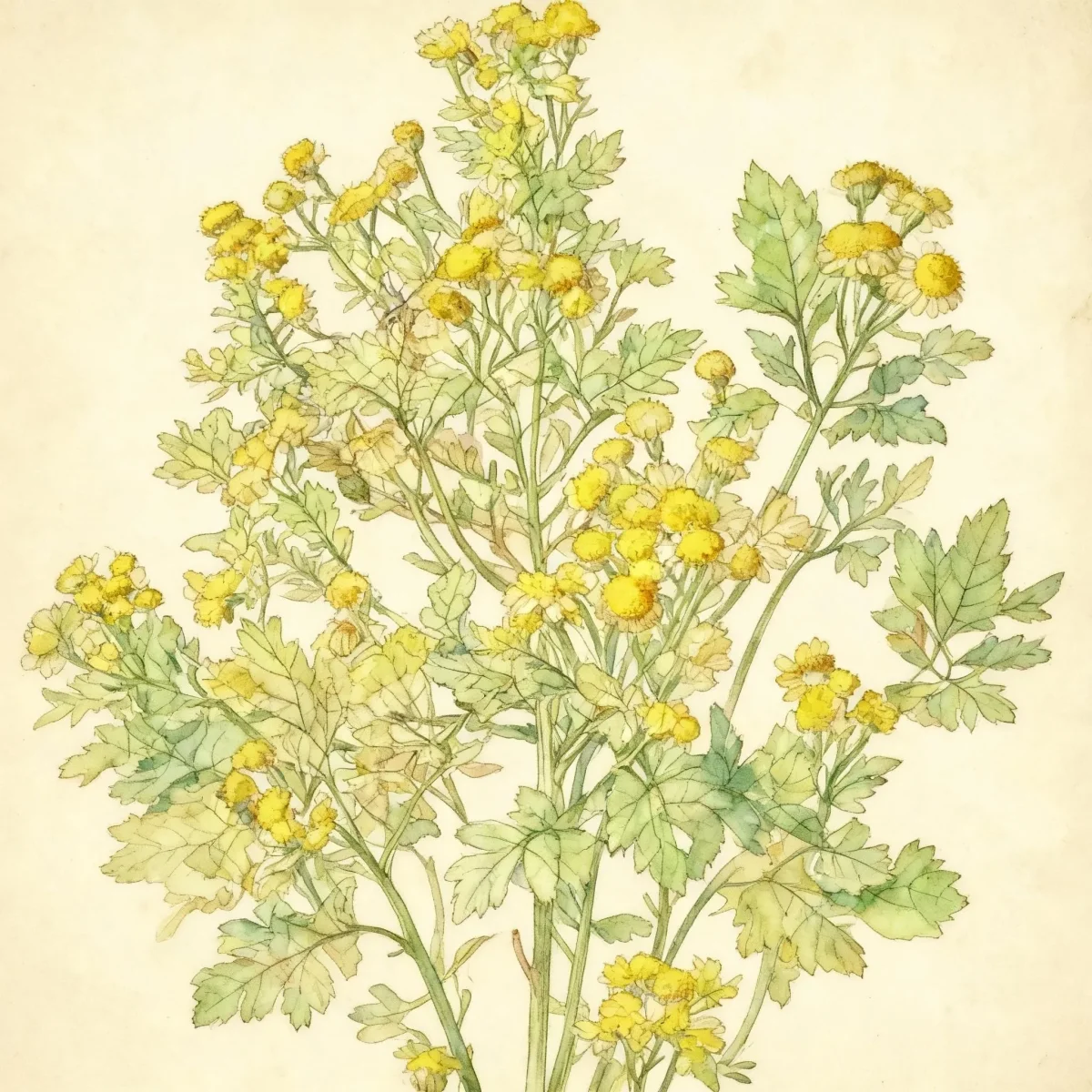
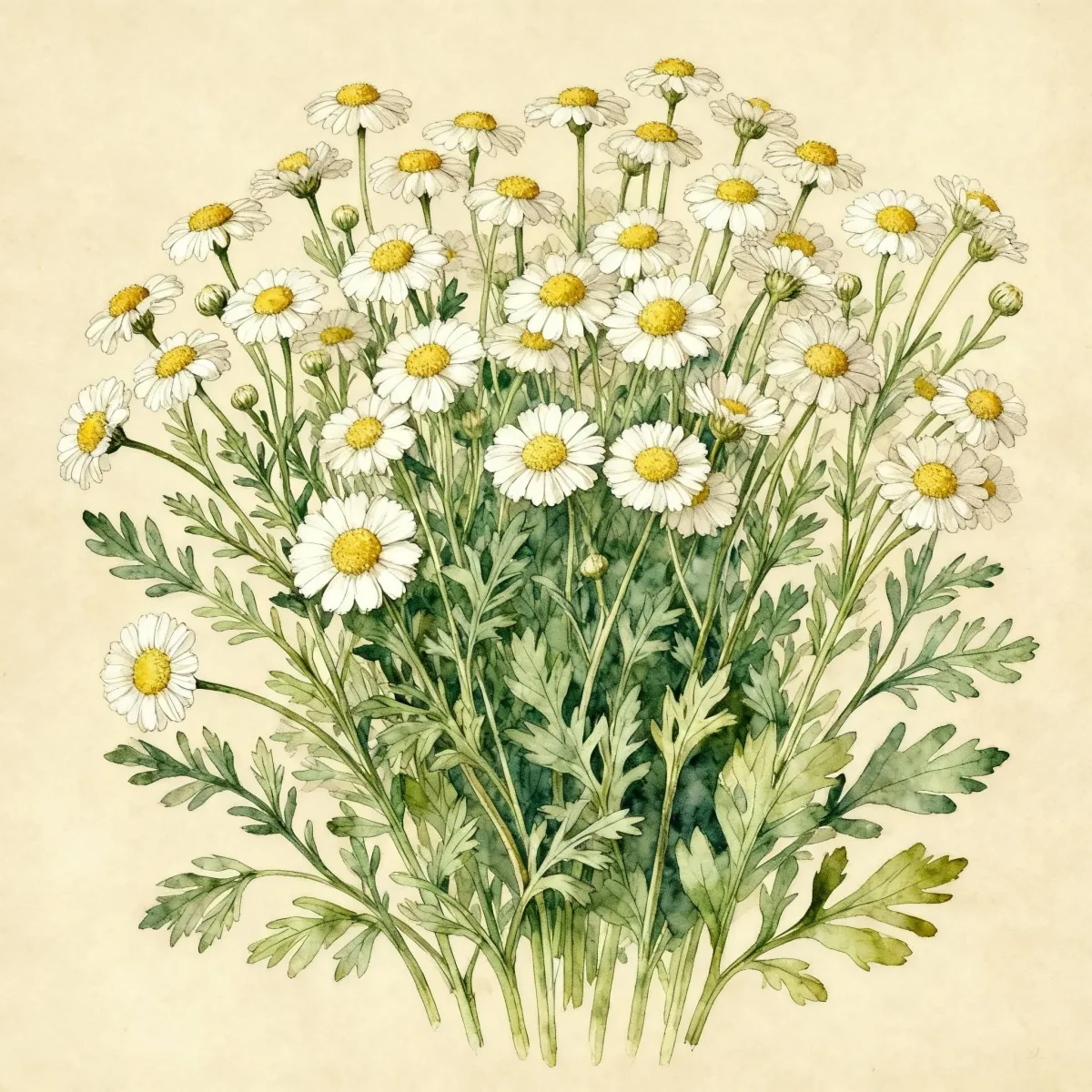
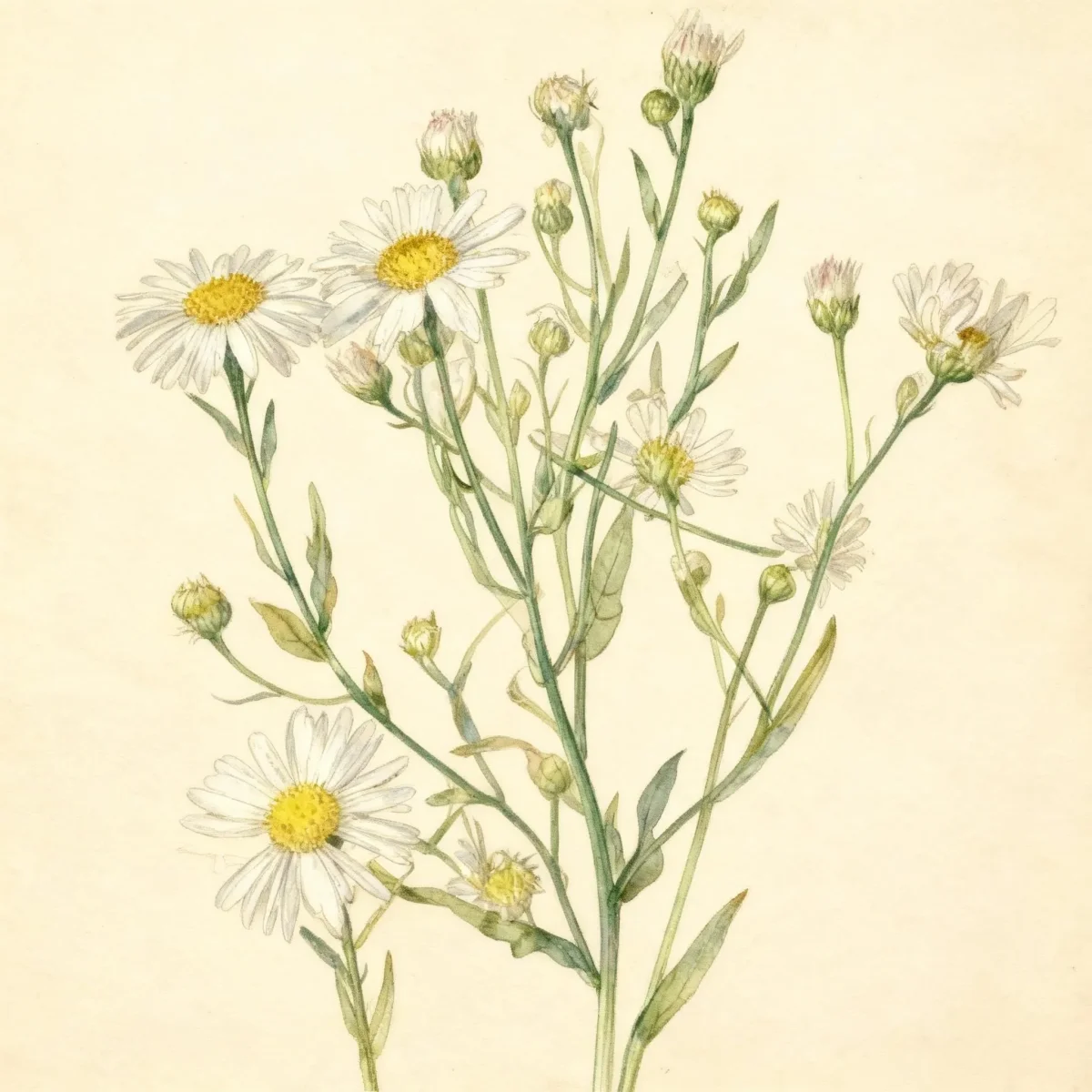
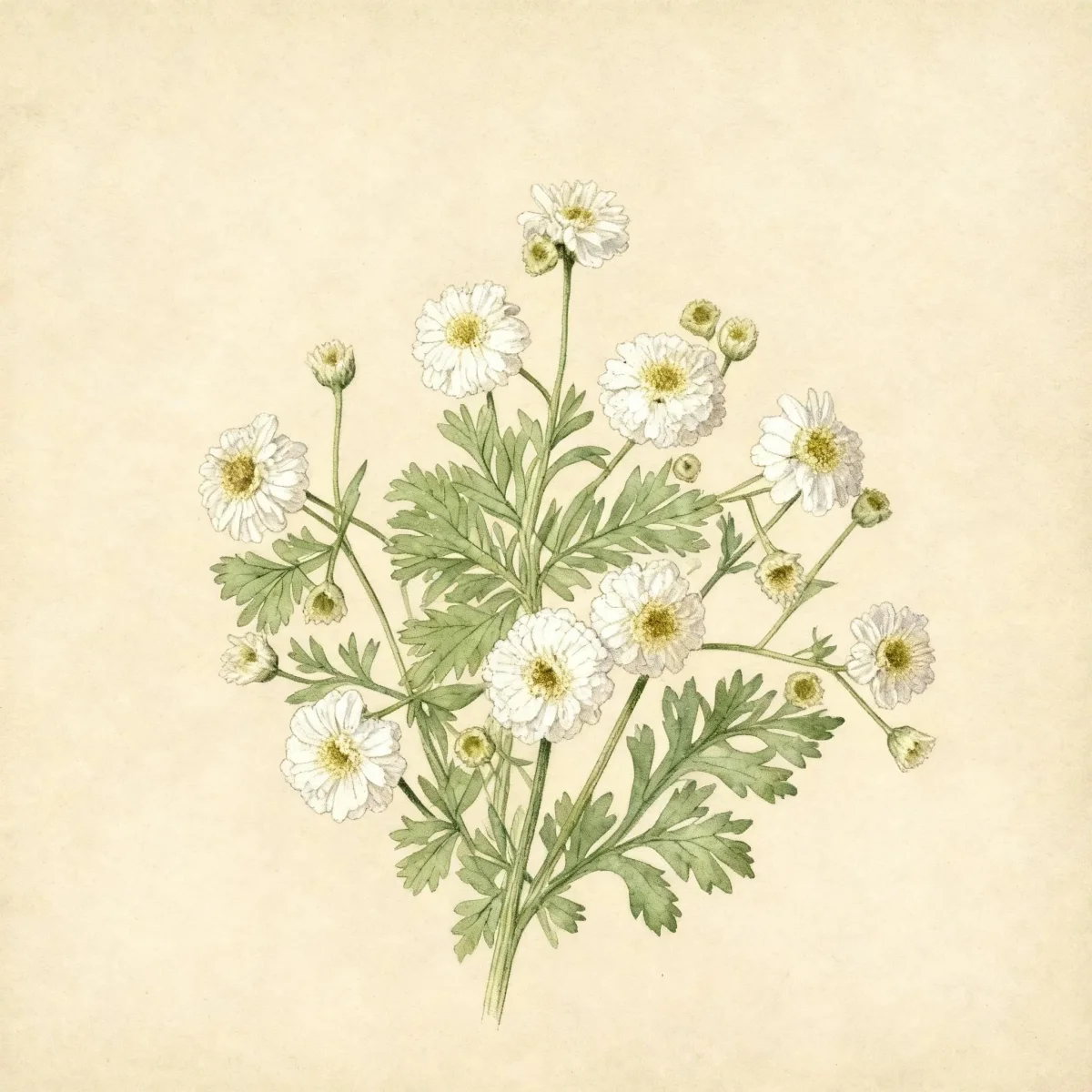
Feverfew (Tanacetum parthenium 'White Pompon')
Tanacetum parthenium 'White Pompon' (Feverfew) offers charming pompon blooms from June to September in sunny spots. Hardy in Zones 5-8.
Scroll down to discover growing tips, care requirements, companion plants, and more
Complete Plant Information
Overview
Tanacetum parthenium ‘White Pompon’ is a highly appealing, bushy, aromatic herbaceous perennial prized for its unique, double flower form. Unlike the standard species, this cultivar, commonly known as Feverfew, produces dense, tiny pompon-like white blooms throughout the summer months. This mounding plant brings texture and consistent, if brief, color to cottage gardens and borders while maintaining the traditional hardy characteristics of Feverfew.
A significant feature for gardeners is its self-seeding habit, which, while sometimes aggressive, ensures the plant returns year after year if conditions are optimal. Growing between 1 to 3 feet tall, it establishes itself quickly, making it an excellent choice for filling gaps in mixed borders. The strongly scented foliage, often utilized in historical remedies, adds another dimension to its value.
While generally robust, gardeners should know that this population of Tanacetum parthenium ‘White Pompon’ can struggle in intense heat and high humidity, often burning out in the deepest South. However, where conditions suit its medium water and full sun needs, it provides reliable, charming summer interest.
Fast Facts
- Plant Family: Asteraceae
- Plant Type: Herbaceous perennial
- Hardiness Zones: USDA Zones 5-8
- Size at Maturity:
- Height: 1-3 ft
- Spread: 1-2 ft
- Bloom Time: June to September
- Bloom Description: White
- Sun Exposure: Full sun
- Water Needs: Medium
- Maintenance Level: Medium
How to Grow
For optimal establishment, plant Tanacetum parthenium ‘White Pompon’ in spring after the danger of frost has passed. This Feverfew prefers full sun exposure, requiring at least six hours of direct sunlight daily for the best flowering performance. It thrives best in average, medium moisture, well-drained soils, ideally those that are humusy and rich.
Consistent moisture is key; the soil for Tanacetum parthenium ‘White Pompon’ must not be allowed to dry out completely, especially during peak bloom. While established drought tolerance exists, adequate water enhances its vigor. Fertilization is generally not required if the base soil is rich, as overfeeding can lead to floppier, less resilient growth.
Maintenance centers around managing its spread. Because this plant readily self-seeds—sometimes aggressively in perfect conditions—it is crucial to shear off spent flowers immediately after they fade. This deadheading controls unwanted reseeding and encourages a longer bloom period into September. While usually short-lived, the plants often persist due to this natural reseeding process.
Landscape Uses
Tanacetum parthenium ‘White Pompon’ shines in informal settings where its rambling nature can be appreciated. It is perfectly suited for naturalized areas, cottage gardens, or mixed herbaceous borders where it can be allowed to self-seed freely, creating a charmingly informal tapestry of white pompons each season.
Use this Feverfew variety along border fronts or in rock gardens, provided you are diligent about deadheading promptly to keep scattered seedlings contained. Its sturdy, mounded habit also makes it a useful edger plant along pathways. Though listed as an annual in some regions or situations, its vigorous self-seeding often allows it to function as a perennial, ensuring reliable return of the Tanacetum parthenium ‘White Pompon’ display.
Standout Features
Flower Qualities
- Showy
Noteworthy Characteristics
Tanacetum parthenium, commonly known as feverfew, is a weedy, bushy, aromatic, herbaceous perennial native to the Balkans and Caucasus, which has naturalized widely across Europe and North America. This mounded, clump-forming species boasts a lengthy summer bloom, featuring small, daisy-like flowers with white petals and button-like yellow center disks, though the cultivar ‘White Pompon’ specifically produces tiny, double pompon-like flowers. The deeply lobed, strongly scented foliage is a secondary feature often associated with historical medicinal uses for ailments like headaches and fever.
Tolerances
- Drought
Potential Problems
Tanacetum parthenium ‘White Pompon’ rarely suffers from major insect or disease issues, making it a generally trouble-free addition to the garden. However, susceptible varieties may occasionally attract spider mites, particularly when conditions are dry or hot. The most common cultural issue is declining vigor during intensely hot and humid summers, especially noted in areas further south, where the plant may appear to “burn out.” Ensure proper soil drainage and consistent moisture during heat waves to mitigate stress.
Frequently Asked Questions
What hardiness zones is Feverfew suitable for?
Tanacetum parthenium ‘White Pompon’ is suitable for USDA Hardiness Zones 5 through 8.
How large does Feverfew grow?
This herbaceous perennial typically reaches a height between 1 and 3 feet, with a corresponding spread of 1 to 2 feet, forming a compact mound.
When does Tanacetum parthenium ‘White Pompon’ bloom?
The bloom time for this cultivar is generally from June extending through September, displaying its distinctive white, rounded flowers.
What sun exposure does Tanacetum parthenium ‘White Pompon’ need?
For the best display, Feverfew requires full sun exposure throughout the growing season.
Conclusion
The charming, double flowers and aromatic foliage establish Tanacetum parthenium ‘White Pompon’ as a worthwhile addition to informal gardens. Its resilience, especially in cooler zones where it thrives, makes this Feverfew cultivar a reliable texture provider. Before planting, confirm your location falls within USDA Zones 5-8 and plan for consistent moisture to ensure the best bloom performance this summer.
Companion Planting
When planting Feverfew, consider its need for medium moisture and full sun. Pairing Tanacetum parthenium ‘White Pompon’ with plants that share similar cultural requirements ensures an easy-care environment. Good companions include hardy Geraniums, which offer ground cover or contrasting texture beneath the mid-sized Feverfew. Hardy Lavender varieties also work well, as they both prefer well-drained soil and enjoy similar heat exposure once established.
Propagation Tips
While this variety is known for easy self-seeding, gardeners wishing to manage quality or placement benefit from controlled division or cuttings. Herbaceous perennials like Feverfew can be divided in early spring as new growth emerges. Carefully dig up the clump, separate it into sections ensuring each division has healthy roots and shoots, and replant immediately into prepared soil. This process revitalizes older clumps and spreads the beloved Tanacetum parthenium ‘White Pompon’ reliably.