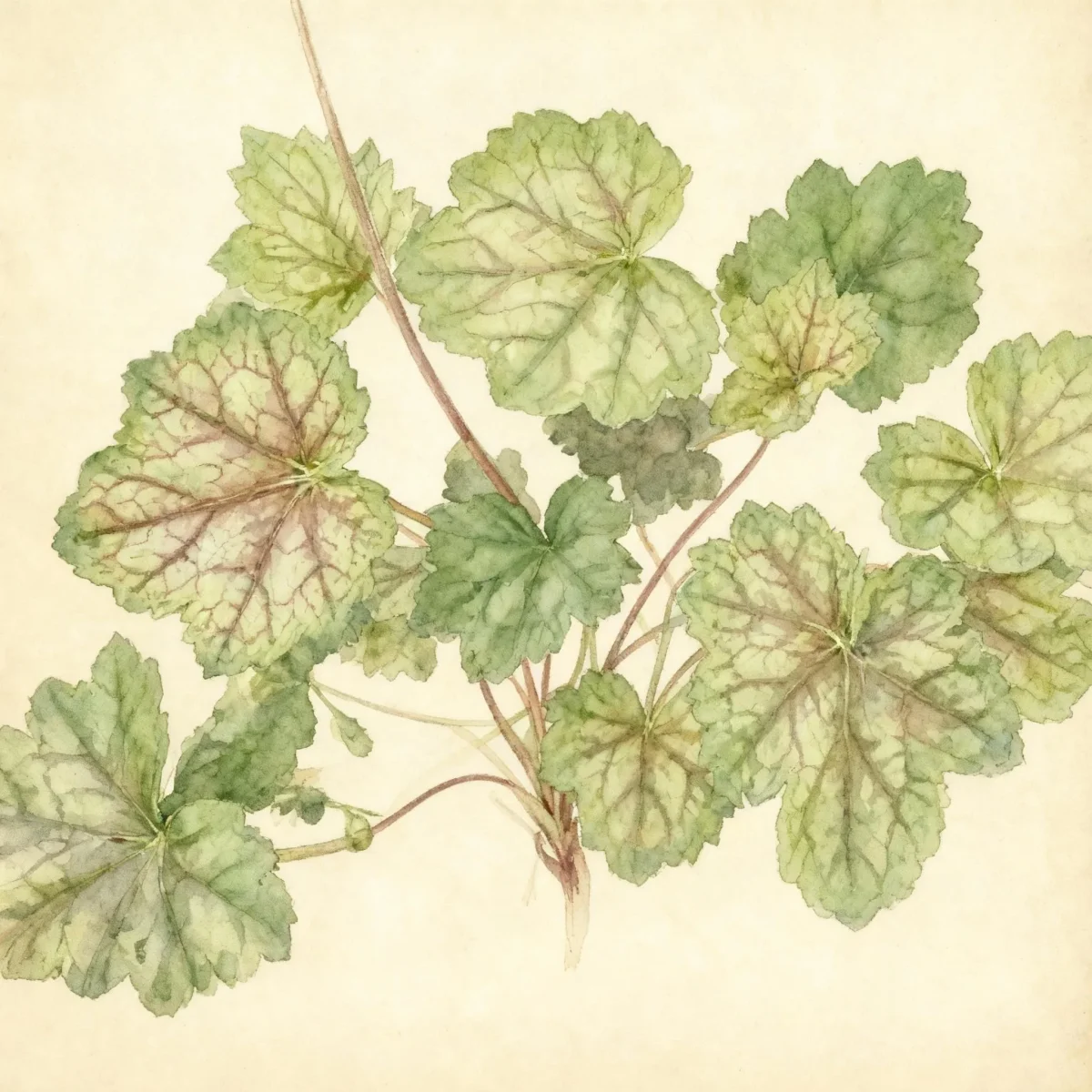
Coral bells (Heuchera 'Inheuredfu' DOLCE CINNAMON CURLS)
Discover Heuchera 'Inheuredfu' DOLCE CINNAMON CURLS Coral bells, valued for its striking cinnamon-toned, ruffled foliage thriving in zones 4-9.
Scroll down to discover growing tips, care requirements, companion plants, and more
Complete Plant Information
Overview
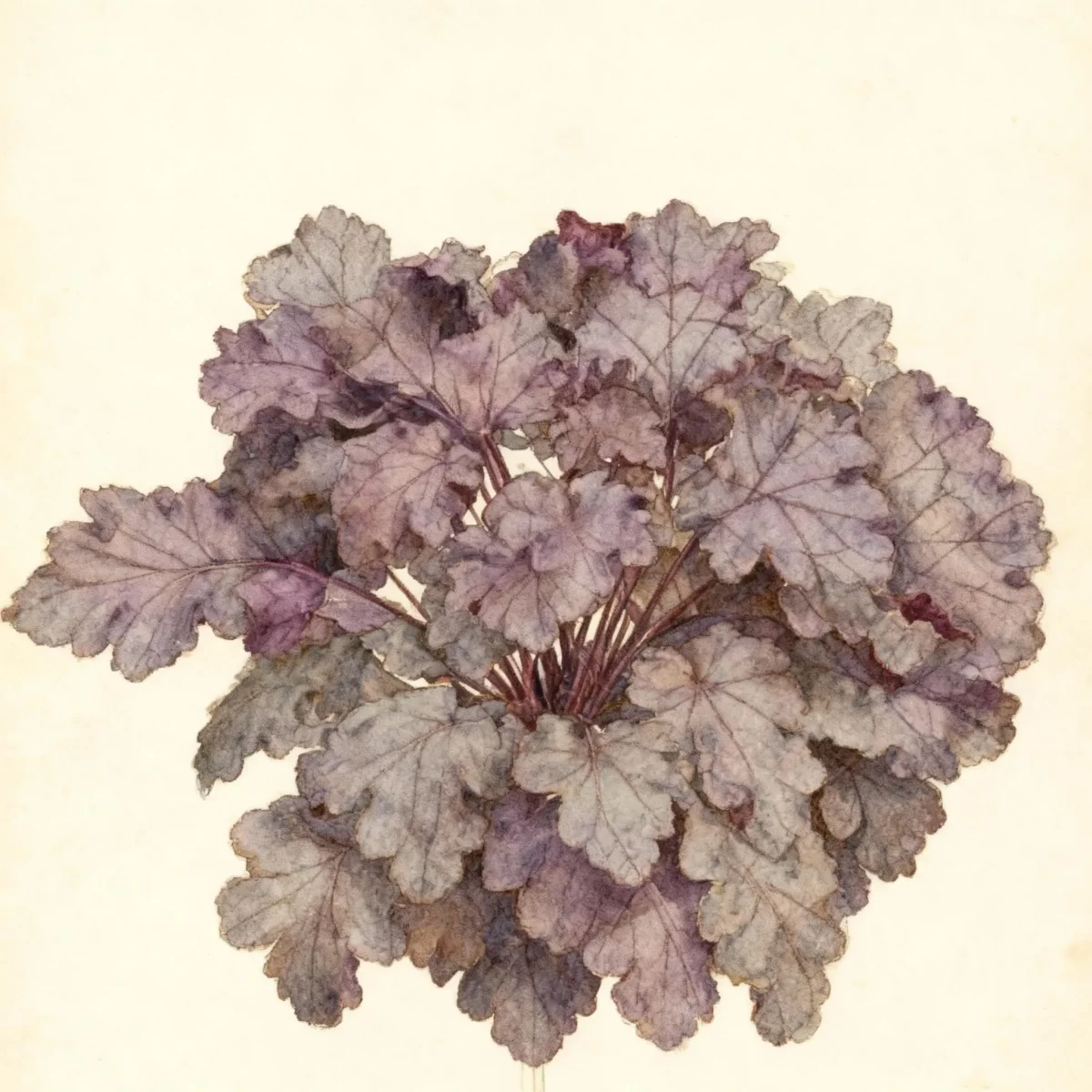
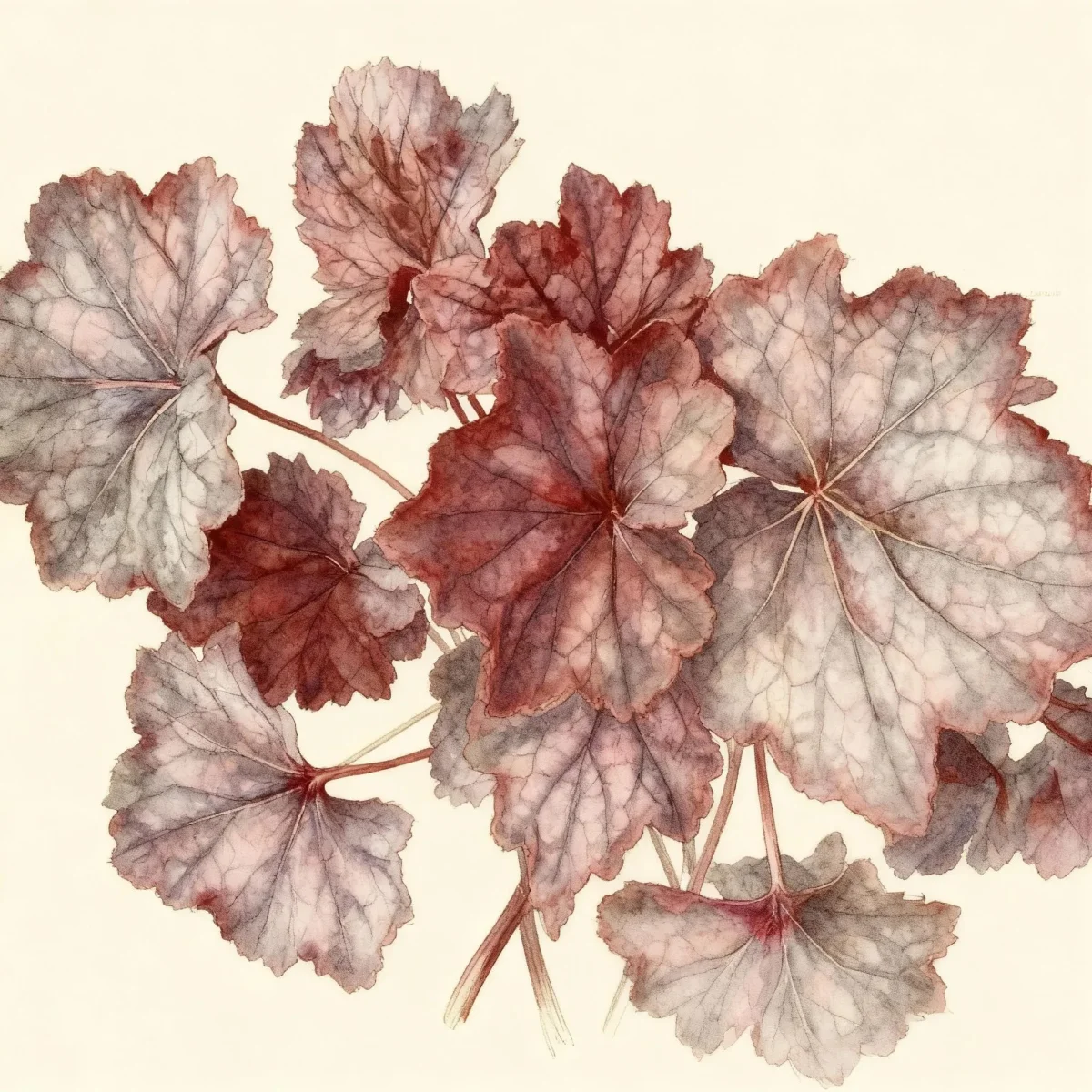
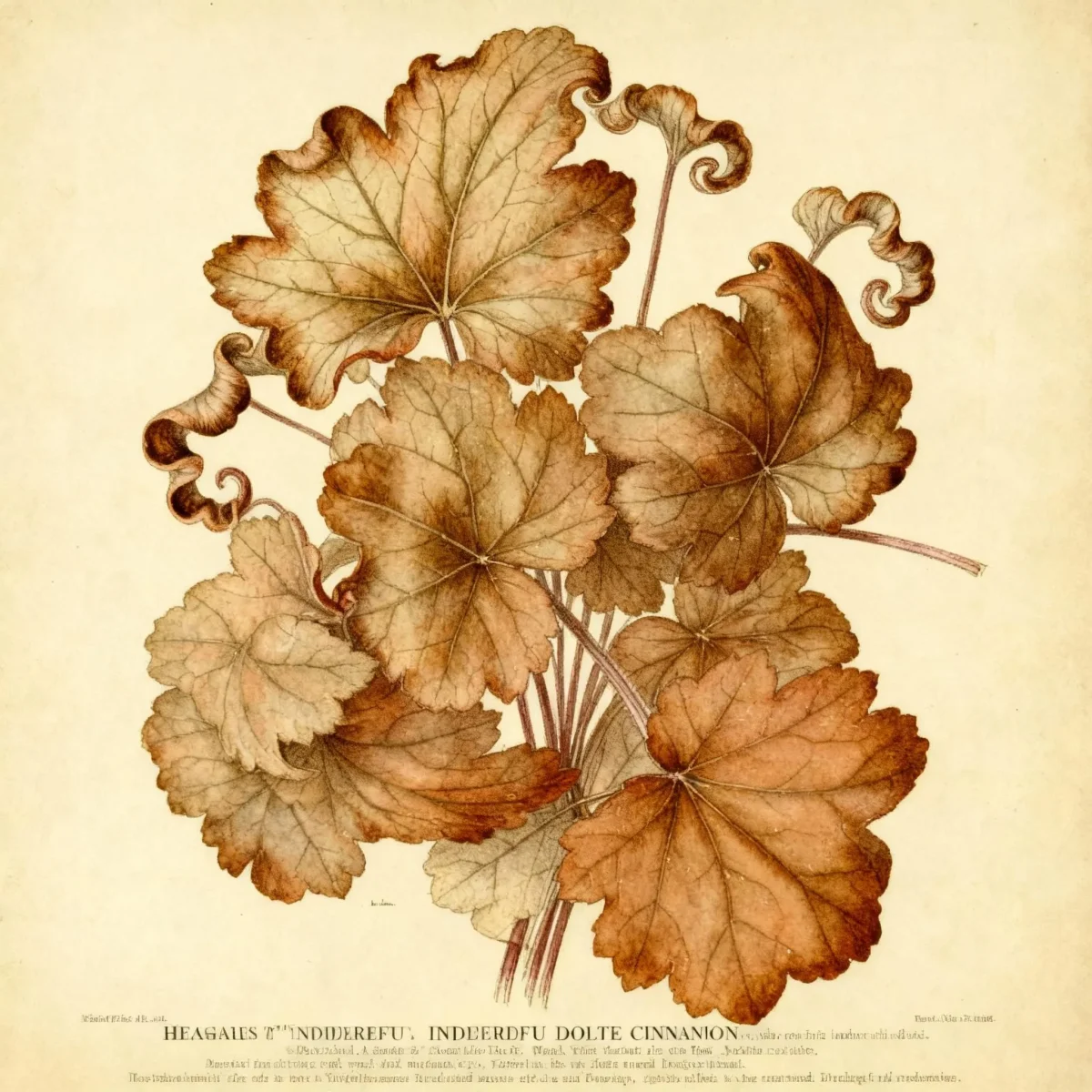
Heuchera ‘Inheuredfu’ DOLCE CINNAMON CURLS, commonly known as Coral bells, is prized almost entirely for its outstanding foliage display rather than its blooms. This cultivar produces a dense mound of glossy, dissected leaves featuring highly ruffled edges saturated with colors ranging from burnt sienna and orange to deep red and purple—blending to a warm cinnamon hue from a distance. As an herbaceous perennial, it provides exceptional texture and continuous seasonal interest in the garden, making it a staple for year-round structure.
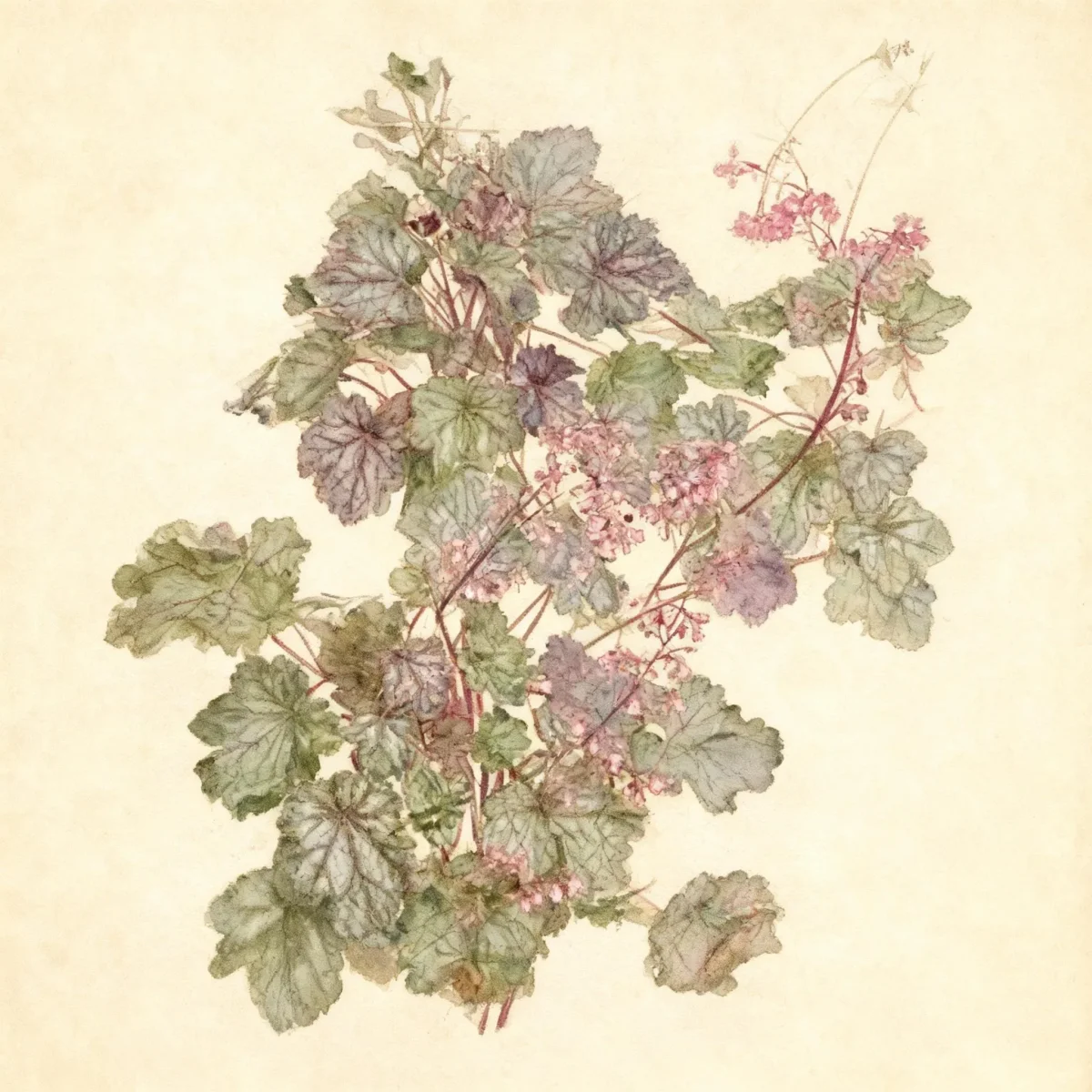
This specific hybrid, part of the DOLCE Series, offers substantial visual impact. While the tiny white flowers that appear in early summer are pleasant, garden performance relies heavily on the colorful, durable leaves. Proper siting is key, as consistent moisture and appropriate light exposure—often filtered shade in hotter climates—will ensure the foliage remains pristine throughout the growing season.
Growing Coral bells like Heuchera ‘Inheuredfu’ DOLCE CINNAMON CURLS allows gardeners to introduce vibrant, non-green tones to shaded borders or woodland settings. Its suitability across a wide range of hardiness zones (4 to 9) ensures its popularity, provided the cultural demands for rich, well-drained soil are met.
Fast Facts
- Plant Family: Saxifragaceae
- Plant Type: Herbaceous perennial
- Hardiness Zones: USDA Zones 4-9
- Size at Maturity:
- Height: 1-2 ft
- Spread: 1-1.5 ft
- Bloom Time: June to July
- Bloom Description: White
- Sun Exposure: Full sun to part shade
- Water Needs: Medium
- Maintenance Level: Medium
How to Grow
Planting Coral bells is best accomplished in spring or fall, ensuring the organic matter-rich, humusy soil is medium-moist and exceedingly well-drained. Proper drainage is crucial, as these plants cannot tolerate wet feet, especially in winter. While parentage dictates exact sun needs, most hybrids, including Heuchera ‘Inheuredfu’ DOLCE CINNAMON CURLS, perform best with some afternoon shade, particularly in southern locations where intense heat can scorch the foliage.
Consistent moisture is vital, especially if cultivating in full sun where soil is allowed to dry out quickly. Watering deeply but allowing the top inch or two of soil to dry slightly between sessions prevents both scorch and root rot. Fertilizing is rarely necessary if the soil is already fertile; focus instead on amending with compost annually.
After the white bloom clusters fade between June and July, remove the spent flower stems to neaten the appearance and potentially encourage minor repeat blooming. In cold winter climates, apply a compost mulch after the ground freezes to mitigate damage from freeze-thaw cycles, which can cause root heaving. Divide established clumps every three to four years in the spring to maintain vigor.
Landscape Uses
Coral bells bring unparalleled color contrast to garden designs where overhead canopy limits sunlight. The dramatic, richly colored foliage of Heuchera ‘Inheuredfu’ DOLCE CINNAMON CURLS makes it highly effective when used as an edging plant along stone paths, clearly defining walkways. They excel when massed together, creating broad swaths of warm cinnamon tones beneath taller shrubs or deciduous trees.
These plants integrate seamlessly into rock gardens, providing necessary softness and color among hardscaping elements. In woodland gardens, they serve as excellent groundcovers or companions to ferns, hostas, and astilbes, which share similar moisture and light preferences. Their compact, mounding habit ensures they do not overpower neighboring, less dramatic perennials.
Standout Features
Flower Qualities
- Showy
Noteworthy Characteristics
Heuchera, commonly called coral bells or alumroot, is a genus of about 55 evergreen to semi-evergreen North American native herbaceous perennials found in diverse habitats from woodlands to rocky cliffs. Hybrid varieties, like Heuchera ‘Inheuredfu’ DOLCE CINNAMON CURLS, boast an expanded spectrum of leaf colors far beyond what species plants offer, frequently displaying mottling or streaking. The standout quality of this specific cultivar is its foliage, which presents glossy, dissected leaves with highly ruffled edges displaying tones of burnt sienna, orange, red, and purple, creating a unique cinnamon effect.
Tolerances
No specific tolerances were provided for this cultivar.
Potential Problems
Frost heaving of roots is a common issue when winter temperatures fluctuate rapidly; applying a winter mulch after the ground freezes helps stabilize the soil temperature and prevent this. Gardeners should watch for potential fungal issues like powdery mildew and rust, which thrive in high humidity or poor air circulation. Bacterial leaf spot can also occur. To manage insect threats, particularly weevils and foliar nematodes, maintain good garden hygiene and ensure the planting area drains very efficiently.
Frequently Asked Questions
What hardiness zones is Coral bells suitable for?
Heuchera ‘Inheuredfu’ DOLCE CINNAMON CURLS is notably adaptable, thriving in USDA Zones 4 through 9.
How large does Coral bells grow?
This herbaceous perennial typically reaches a mature height between 1 and 2 feet tall, with a spread ranging from 1 to 1.5 feet wide.
What sun exposure does Heuchera ‘Inheuredfu’ DOLCE CINNAMON CURLS need?
It performs best in partial shade, though it can tolerate full sun, especially in cooler northern climates, provided moisture levels are kept consistently medium.
When does Coral bells bloom?
This variety produces its small white flowers atop scapes from June through July.
Conclusion
Heuchera ‘Inheuredfu’ DOLCE CINNAMON CURLS offers exceptional year-round value primarily through its intensely colored, ruffled foliage, providing necessary warmth through the garden season. This Coral bells cultivar excels in mixed borders and shaded plantings where its unique cinnamon hues truly stand out. Assess your site conditions, ensuring you can provide rich, medium-moisture soil, and incorporate this stunning perennial into your landscape plans for enduring color interest.
Companion Planting
When designing a space for Heuchera ‘Inheuredfu’ DOLCE CINNAMON CURLS, group it with plants that share similar needs for medium moisture and protection from harsh afternoon sun. Hostas offer broad leaves in various shades of blue and green that contrast beautifully with the fine texture and warm tones of the Coral bells. Shade-loving ferns, such as Japanese Painted Ferns, provide an airy backdrop that complements the dense mound of the Heuchera.
Consider pairing this cultivar with woodland ephemerals that die back once the Heuchera mound is fully established, allowing the DOLCE CINNAMON CURLS to dominate the late spring and summer show. By choosing companions with contrasting leaf colors—such as deep, cool purples or bright silvers—you can maximize the visual pop of the cinnamon-toned leaves.
Propagation Tips
While Heuchera species plants can sometimes be grown successfully from seed, the modern hybrids like Heuchera ‘Inheuredfu’ DOLCE CINNAMON CURLS are almost exclusively propagated via division in the garden setting. This process should ideally be performed early in the spring every three to four years to keep the clumps vigorous and dense.
To divide, use a clean, sharp spade or knife to carefully separate the root ball into smaller sections, ensuring each division has a healthy grouping of crown tissue and roots attached. Replant these divisions immediately into prepared, well-draining soil amendments, and water thoroughly to help them reestablish before the heat of summer sets in.