Stokes' aster (Stokesia laevis 'Mel's Blue')
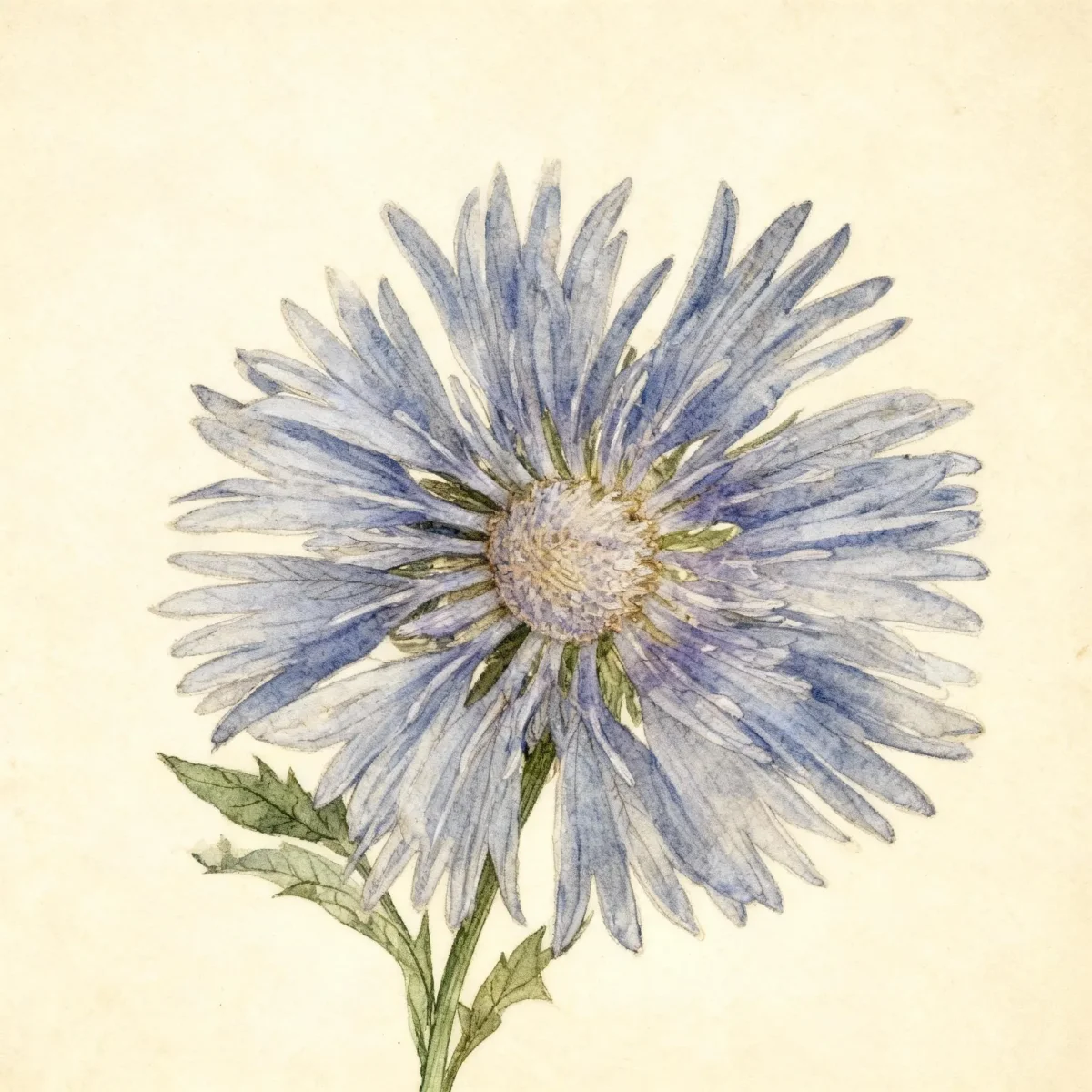
Stokes' aster, Stokesia laevis 'Mel's Blue' offers showy, periwinkle blue flowers from June through September, thriving in full sun.
Scroll down to discover growing tips, care requirements, companion plants, and more
Complete Plant Information
Overview
Stokesia laevis ‘Mel’s Blue’ is a highly valued herbaceous perennial known for its vibrant, long-lasting bloom display, often referred to as Stokes’ aster. This cultivar brightens the summer landscape with showy blossoms in a sought-after periwinkle blue hue, making it a favorite centerpiece for perennial borders. It combines the classic structure of Stokes’ aster with a robust growth habit, offering gardeners reliable performance in sunny locations.
Its cultural requirements are relatively straightforward; it thrives in average, well-drained soil that receives full sun throughout the day. Despite its native origins in wetter regions, the specialized cultivar Stokesia laevis ‘Mel’s Blue’ offers surprising drought tolerance once established. Low maintenance and the ability to provide excellent cut flowers contribute to its popularity in modern garden design.
The compact size and consistent color of Stokesia laevis ‘Mel’s Blue’ ensure it integrates beautifully into smaller gardens or cottage-style plantings. Gardeners appreciate its extended bloom time, which bridges the gap between early summer and early fall color, often rewarding attentive deadheading with sporadic rebloom activity.
Fast Facts
- Plant Family: Asteraceae
- Plant Type: Herbaceous perennial
- Hardiness Zones: USDA Zones 5-9
- Size at Maturity:
- Height: 1-1.5 ft
- Spread: 0.5-1 ft
- Bloom Time: June to September
- Bloom Description: Periwinkle blue
- Sun Exposure: Full sun
- Water Needs: Medium
- Maintenance Level: Low
How to Grow
Plant Stokesia laevis ‘Mel’s Blue’ in the spring or fall, ensuring the chosen site offers full sun exposure for the best flower production. Drainage is the single most critical factor for the long-term success of Stokes’ aster; the plant strongly resents wet feet, especially during the winter months. Incorporate organic matter into average soil to enhance texture, though excessive fertility is unnecessary.
Watering should be consistent during the establishment phase, maintaining medium moisture levels. Once mature, Stokesia laevis ‘Mel’s Blue’ demonstrates good drought tolerance, though supplemental watering during extended dry spells will keep the foliage lush and encourage further blooming. Avoid overhead watering if possible, directing moisture to the base of the plant.
Maintenance is generally low. To maximize the display of this beautiful Stokes’ aster, proactively deadhead individual spent flowers as they fade, and remove entire spent flowering stems periodically. This pruning technique encourages the plant to produce successive late-season blooms. In colder regions (Zone 5), applying a light winter mulch around the base offers added protection against freeze/thaw cycles.
For winter cleanup, plants can be cut back to the basal foliage mound once the season is definitively over, though leaving some structure can provide visual interest. The evergreen nature of the leaves in warmer climates means minimal winter tidying is required overall for Stokesia laevis ‘Mel’s Blue’.
Landscape Uses
Stokes’ aster excels when used near the front of a border where its fine texture and clear blue flowers can be easily appreciated. Its compact stature, reaching only 1 to 1.5 feet tall, makes it perfect for edging pathways or defining the transition between lawn and taller shrubs. The strong stems and deep green foliage of Stokesia laevis ‘Mel’s Blue’ provide excellent structure.
Consider mass plantings for a dramatic sweep of periwinkle blue throughout mid-summer. Alternatively, plant ‘Mel’s Blue’ in small groupings alongside silver-leafed plants, white Phlox, or fine-textured ornamental grasses that appreciate similar sun and moisture conditions. Its historical connection to damp areas means it also performs beautifully when used near the edges of naturalized ponds or streams, provided the soil remains well-drained even when moist.
This perennial also works wonderfully in cottage gardens where a layered, informal look is desired. Its excellent quality as a cut flower means placing it near the kitchen door allows for easy harvesting of those showy, cornflower-like blooms.
Standout Features
Flower Qualities
- Showy
- Good Cut
Noteworthy Characteristics
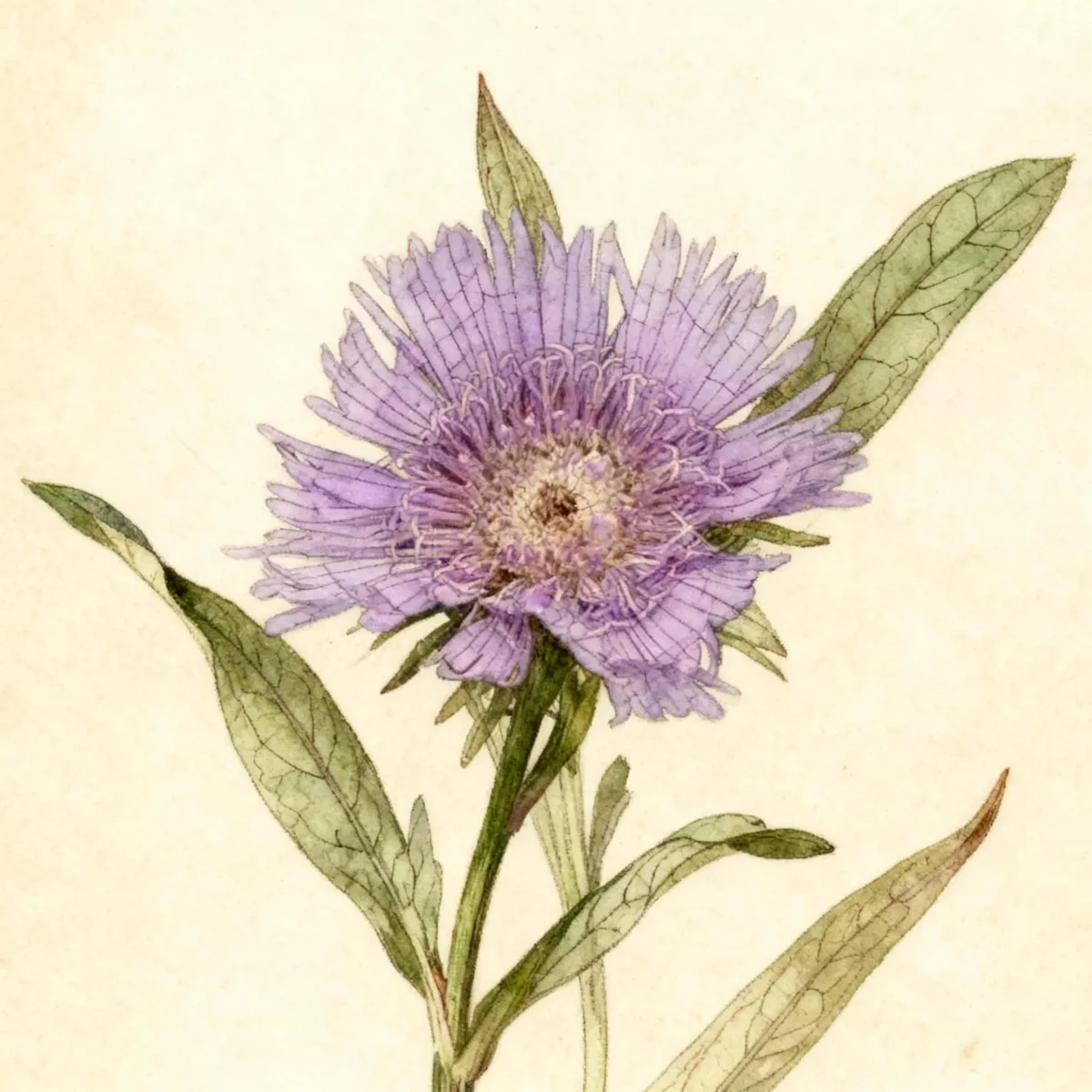
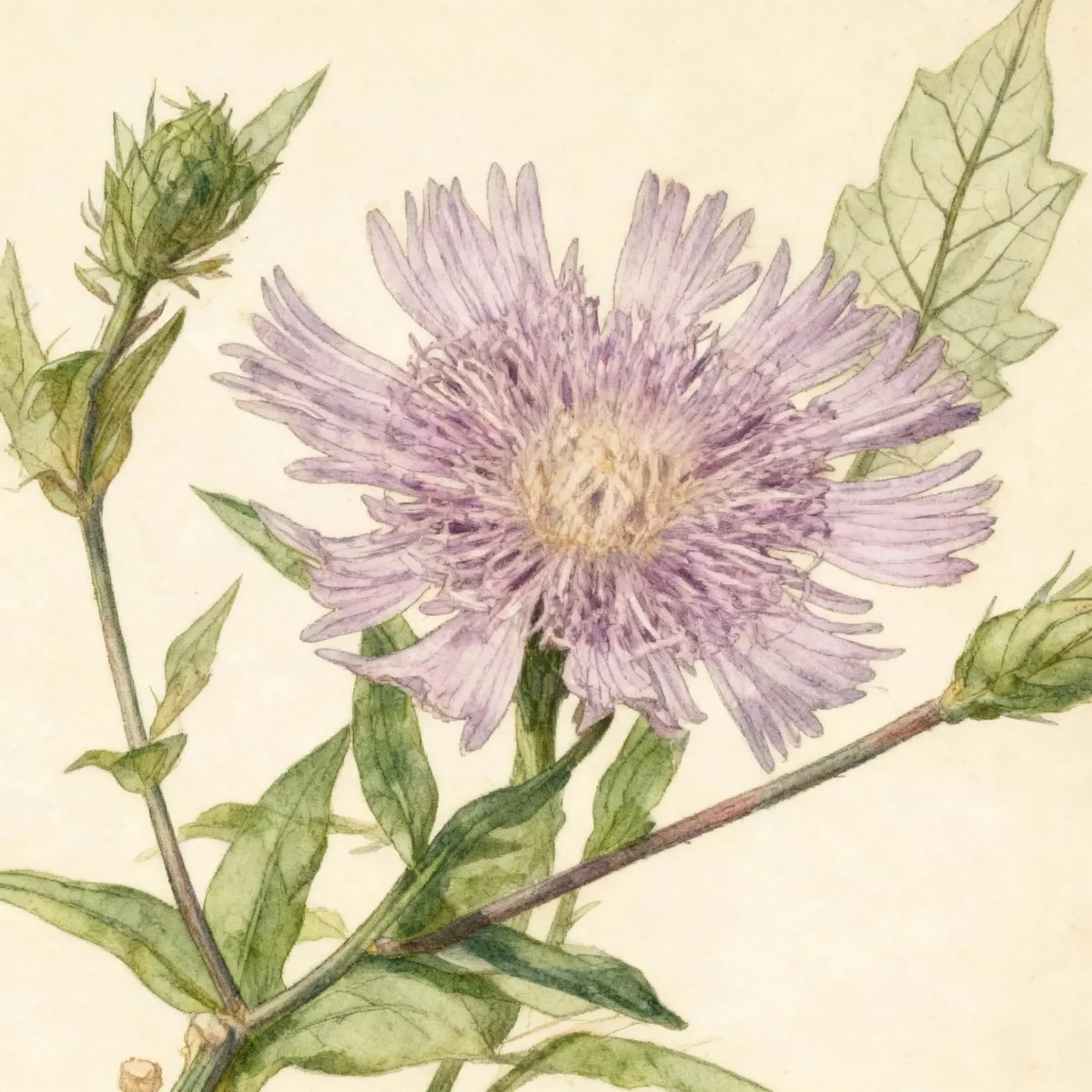
Stokesia laevis, commonly known as Stokes’ aster, is native to wetlands, bottomlands, wet pinewoods, savannas and ditches mostly along the coastal plain from North Carolina to Florida to Louisiana. It is an evergreen perennial that typically grows to 1-2’ tall. It features fluffy, cornflower-like, violet blue flowers (to 2 1/2” across), each with notched rays surrounding a pincushion center of feathery disk florets. ‘Mel’s Blue’ was discovered in 2007 and possesses strong stems with deep grass green, strap-like foliage, producing 4-inch wide, periwinkle blue flowers, growing reliably to 1 to 1.5 ft. tall.
Tolerances
- Rabbit
- Drought
Potential Problems
Stokesia laevis ‘Mel’s Blue’ is generally robust, showing no serious insect or disease problems under proper cultivation. Gardeners should remain vigilant for the occasional presence of caterpillars, which can be handpicked or treated with targeted organic controls like Bt. The primary cultural challenge involves stem integrity; the flower stems have a tendency to flop, especially if they become waterlogged or subjected to heavy wind or rainstorms. Ensuring soil drainage is excellent and deadheading promptly will mitigate weak, floppy stems.
Frequently Asked Questions
What hardiness zones is Stokes’ aster suitable for?
Stokesia laevis ‘Mel’s Blue’ is hardy across a wide range, thriving in USDA Zones 5 through 9.
How large does Stokes’ aster grow?
Stokesia laevis ‘Mel’s Blue’ typically reaches a mature height between 1 and 1.5 feet tall, with an equal spread of 0.5 to 1 foot wide.
What sun exposure does Stokes’ aster need?
This perennial demands full sun exposure for the most vigorous growth and abundant blooming, though it may tolerate very light filtered sunlight.
When does Stokes’ aster bloom?
You can expect beautiful periwinkle blue blooms on your Stokes’ aster from June through September, with potential for rebloom if spent flowers are removed.
Conclusion
The reliable, vibrant color and excellent drought tolerance establish Stokesia laevis ‘Mel’s Blue’ as a staple for gardeners seeking low-maintenance summer interest. Ensuring sharp drainage remains the key to successfully growing this beautiful Stokes’ aster. Check your local USDA hardiness zone compatibility and plan to incorporate this exceptional true blue into your sunny borders this coming planting season.
Companion Planting for Stokes’ Aster
When designing beds featuring Stokes’ aster, select companions that appreciate similar full sun conditions and well-drained soil but offer textural contrast. Consider planting alongside fine-textured plants such as low-growing ornamental grasses like Blue Fescue (Festuca glauca) or contrasting foliage colors like silver German Iris (Iris germanica). For complementary summer blooms, pairing Stokesia laevis ‘Mel’s Blue’ with plants that fade as it hits its peak, such as Salvia nemorosa cultivars or shorter varieties of Echinacea, creates a seamless transition of color.
Seasonal Color Progression
To ensure continuous color from spring through fall, plan your plantings around the mid-summer peak of Stokes’ aster. Start the season with early bloomers like Alliums or early-blooming Peonies near the base of your existing clumps of Stokesia laevis ‘Mel’s Blue’. As foliage fills in around the plant, the blue flowers provide depth. In late summer, allow neighboring plants like Sedum ‘Autumn Joy’ to mature, whose domes will eventually contrast beautifully with the airy texture of any remaining blue blooms on the Stokes’ aster.