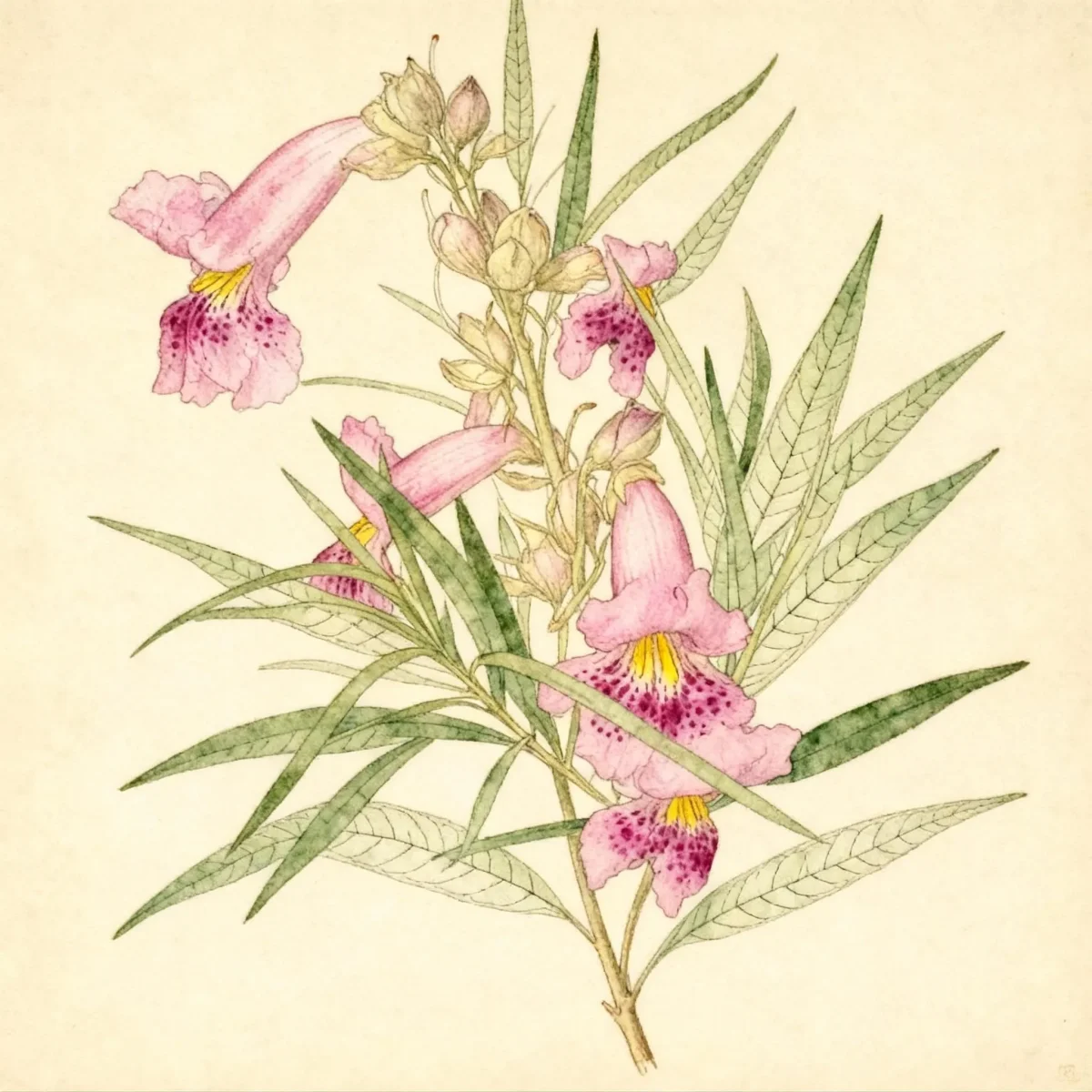
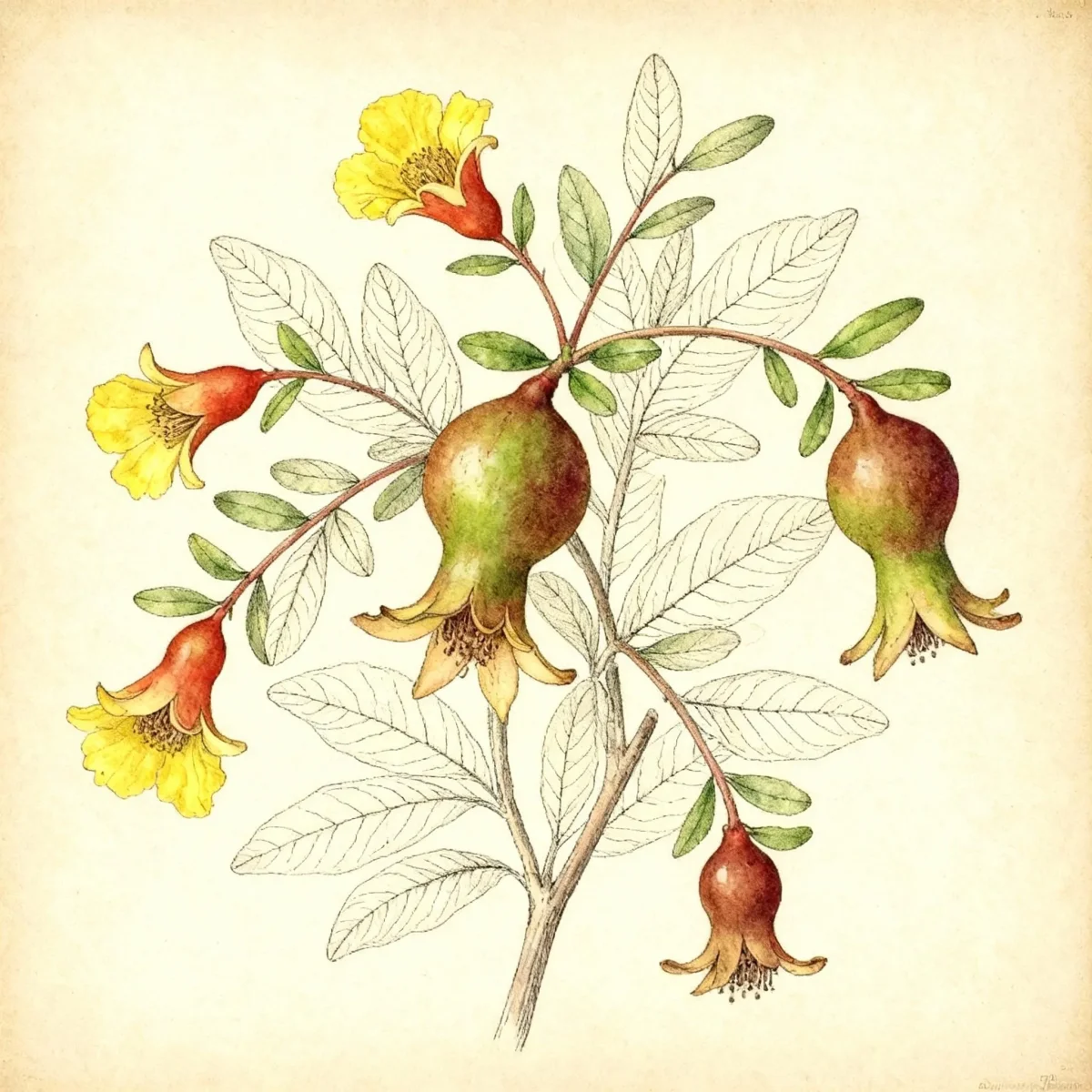
Desert willow (Chilopsis linearis LUCRETIA HAMILTON)
The Desert willow (Chilopsis linearis LUCRETIA HAMILTON) offers showy, fragrant fuchsia blooms ideal for xeriscaping. This low-maintenance tree thrives in heat and drought.
Scroll down to discover growing tips, care requirements, companion plants, and more

Complete Plant Information
Overview
The Desert willow, scientifically known as Chilopsis linearis LUCRETIA HAMILTON, is a highly valued addition to arid and hot landscapes. This plant provides a striking visual contrast to typical desert flora with its vigorous growth habit and abundant, trumpet-shaped flowers. It serves as an excellent specimen plant, drawing the eye while adapting readily to harsh environmental conditions.
Chilopsis linearis LUCRETIA HAMILTON features narrow, lance-shaped leaves, giving it a willow-like appearance despite its closer relation to the catalpa. The cultivar LUCRETIA HAMILTON is particularly attractive, offering bright fuchsia blooms that attract hummingbirds and butterflies throughout the season. This deciduous shrub or small tree offers significant aesthetic value with minimal maintenance input.
Primarily found naturally along desert stream banks and washes in the Southwest, this tough ornamental thrives in full sun. Its low water requirements post-establishment make the Desert willow an essential choice for sustainable gardening and xeriscaping projects where water conservation is paramount.
Fast Facts
- Plant Family: Bignoniaceae
- Plant Type: Deciduous shrub
- Hardiness Zones: USDA Zones 6-9
- Size at Maturity:
- Height: 12-18 ft
- Spread: 12-18 ft
- Bloom Time: May to June
- Bloom Description: Fuchsia
- Sun Exposure: Full sun
- Water Needs: Dry to medium
- Maintenance Level: Low
How to Grow
Planting should ideally occur when the plant is dormant, typically from late winter to early spring, allowing it time to establish before summer heat arrives. Chilopsis linearis LUCRETIA HAMILTON prefers well-draining soils that are slightly alkaline. Ensure the planting site receives consistent full sun exposure for optimal flowering performance.
Maintenance is generally low once established. Though these plants tolerate true drought conditions, providing occasional supplemental water during the hottest summer months will encourage better rebloom. Pruning should be minimal and performed only when the tree is dormant in late winter or early spring.
For gardeners in the colder end of its range (Zone 6), take precautions. While LUCRETIA HAMILTON shows increased cold hardiness over the species, the root zone of your Chilopsis linearis LUCRETIA HAMILTON may need winter protection to prevent moderate to severe dieback.
Landscape Uses
The Desert willow excels in locations demanding heat and drought tolerance, making it a star in desert gardens and xeriscaping. Its upright, open branching structure renders it perfect for use as an accent plant, breaking up horizontal lines in large, arid landscapes. Consider planting it where its seasonal color can be viewed from windows or patios.
This plant integrates seamlessly into rock gardens or naturalized settings, mimicking its native habitat near washes. Due to its pollinator-attracting blooms, incorporate the Desert willow near areas where you wish to maximize butterfly and hummingbird activity. It also works well as a loose screen or specimen tree where larger shade trees are impractical due to water restrictions.
Standout Features
Flower Qualities
- Showy
- Fragrant
Noteworthy Characteristics
Chilopsis linearis, commonly called desert willow, is a small deciduous tree or large shrub with a single trunk, upright, open branching structure, and vigorous growth habit; its natural range covers desert stream banks throughout the southwestern United States and north-central Mexico. The narrow, lance-shaped leaves contrast beautifully with the showy, trumpet-shaped flowers which bloom from May through June, often reblooming after summer rains. The cultivar LUCRETIA HAMILTON is celebrated for its compact size, reaching only about 18 feet, and its vibrant fuchsia blooms featuring lighter interiors.
Tolerances
- Drought
- Dry Soil
- Shallow-Rocky Soil
Potential Problems
This plant is highly valued because it generally exhibits no major pest or disease problems, making it a resilient choice for challenging environments. Routine vigilance, however, is always recommended regarding water stress. Over-watering, especially in heavy, poorly draining soil, is the quickest way to invite root issues, even though the Chilopsis linearis LUCRETIA HAMILTON is noted for its hardiness.
Frequently Asked Questions
What hardiness zones is Desert willow suitable for?
The Chilopsis linearis LUCRETIA HAMILTON variety is hardy across USDA Zones 6 through 9, though Zone 6 gardeners must protect the root zone.
How large does Desert willow grow?
This compact selection, LUCRETIA HAMILTON, typically matures to a height and spread between 12 and 18 feet tall and wide.
What sun exposure does Desert willow need?
The Desert willow reliably performs best when situated in full sun locations.
When does Desert willow bloom?
Expect beautiful fuchsia flowers to appear starting in May and continuing through June, often reappearing sporadically later in the summer following rain events.
Conclusion
The striking floral display and superior drought tolerance make the Desert willow (Chilopsis linearis LUCRETIA HAMILTON) an indispensable plant for hot, dry gardens. Its low maintenance profile ensures beauty without demanding intensive resources. Evaluate your local USDA zone compatibility to ensure successful establishment of this exceptional flowering tree.
Companion Planting
Selecting companions that share similar low-water demands is crucial for maximizing health and minimizing water competition for your Chilopsis linearis LUCRETIA HAMILTON. Pair it with other robust natives like various penstemons, sages (Salvia species), or Yarrow (Achillea). These selections complement the Desert willow’s structure while thriving in the same well-drained, sunny conditions.
Ensure companions are placed far enough away so as not to interfere with the open branching habit of the tree, allowing air circulation which aids in preventing any potential fungal issues, though these are rare for this species. Low-growing succulents or gravel mulches can effectively suppress weeds near the base without requiring extra irrigation.
Wildlife Benefits
The vibrant funnel-shaped flowers of the Desert willow are powerful attractants for native fauna. The nectar-rich blooms strongly appeal to hummingbirds, which are frequent visitors seeking sustenance throughout the long blooming period. Butterflies and various insect pollinators also rely on these flowers during the warm growing season.
Planting Chilopsis linearis LUCRETIA HAMILTON contributes positively to local biodiversity, especially in urban desert environments where native forage may be scarce. Its structure also offers light perching opportunities, though it is not typically utilized as dense nesting cover.