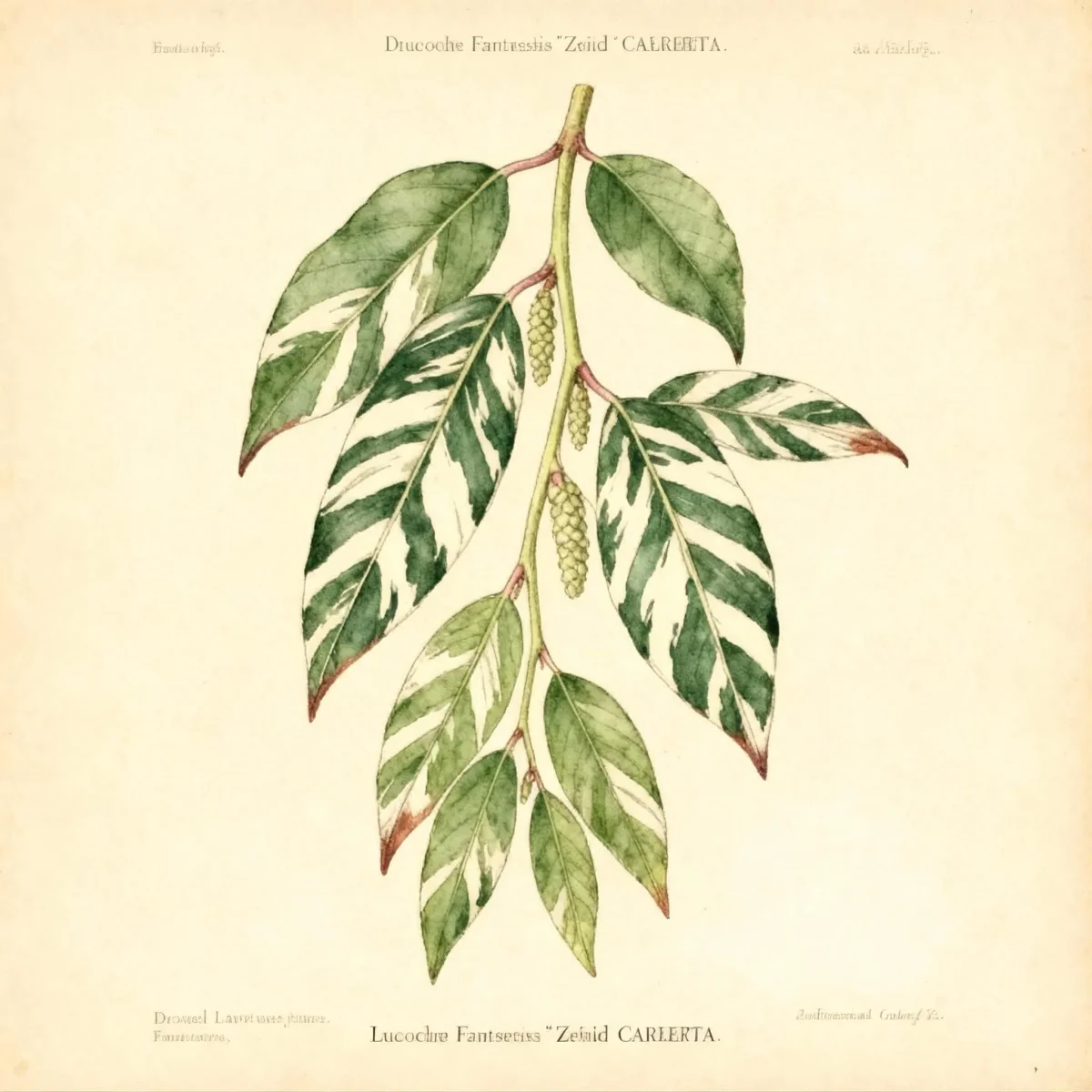
Drooping laurel (Leucothoe fontanesiana 'Zeblid' SCARLETTA)
Leucothoe fontanesiana 'Zeblid' SCARLETTA, or Drooping laurel, offers splendid year-round color and low maintenance for shady gardens.
Scroll down to discover growing tips, care requirements, companion plants, and more
Complete Plant Information
Overview
Leucothoe fontanesiana ‘Zeblid’ SCARLETTA, known commercially as ‘SCARLETTA’, stands out as a superior broadleaf evergreen tailored for deeply shaded garden areas. This cultivar of Drooping laurel provides exceptional seasonal interest, transitioning from spring green to brilliant scarlet new growth, and finally holding rich burgundy tones through the winter months. It embodies the desirable traits of its parent species while maintaining a reliably dense, symmetrical, and compact form ideal for defined spaces.
As a low-maintenance shrub, this variety thrives where many ornamental plants struggle, particularly in moist, acidic soils under the canopy of trees. Its arching branches create an attractive, natural mounding habit, offering year-round structure and vibrant color contrast against lighter evergreens or woodland backdrops. Gardeners value the tough nature of Drooping laurel combined with the refined appearance of the ‘Zeblid’ selection.
The plant produces delicate, pendulous spikes of waxy white flowers in late spring, adding subtle charm to the landscape before summer begins. Given its adaptability to heavy shade and its effectiveness in stabilizing slopes, Leucothoe fontanesiana ‘Zeblid’ SCARLETTA is a functional as well as ornamental choice for woodland and foundation plantings. Its reliability ensures excellent performance with minimal intervention once established.
Fast Facts
- Plant Family: Ericaceae
- Plant Type: Broadleaf evergreen
- Hardiness Zones: USDA Zones 5-8
- Size at Maturity:
- Height: 2-3 ft
- Spread: 2-3 ft
- Bloom Time: May
- Bloom Description: White
- Sun Exposure: Part shade to full shade
- Water Needs: Medium
- Maintenance Level: Low
How to Grow
The optimal placement for Leucothoe fontanesiana ‘Zeblid’ SCARLETTA is in locations receiving part shade to full shade, mirroring its native habitat beneath forest canopies. Planting should occur when the soil is workable, allowing the roots to establish before summer heat. Soil preparation is crucial: this Drooping laurel prefers moist, organically rich, well-drained loams that are slightly acidic. While it tolerates clay, ensuring good drainage prevents root issues.
Consistent moisture is key to success; water medium needs are essential, especially during establishment or if planted in slightly sunnier spots where moisture evaporates faster. Although ‘Zeblid’ is hardy into Zone 5, gardeners in colder regions should protect the shrub, particularly from winter winds, and apply a good winter mulch to buffer against freeze-thaw cycles common in areas like St. Louis.
Maintenance for Leucothoe fontanesiana ‘Zeblid’ SCARLETTA is generally low. Avoid allowing the plant to experience drought, as it does not tolerate dry conditions well. Little pruning is usually required due to its naturally symmetrical, compact habit, which rarely exceeds three feet tall and wide. Over time, plants may sucker, gradually forming attractive, dense colonies suitable for filling woodland borders.
Landscape Uses
Leucothoe fontanesiana ‘Zeblid’ SCARLETTA excels in woodland and shade gardens where its year-round foliage provides consistent texture and color interest. Its ability to sucker and form colonies naturally enhances its use in naturalized areas or as a textured ground cover beneath taller deciduous trees. For sloped sites, this plant is an excellent choice for stabilizing banks due to its fibrous root system.
When used formally, this Drooping laurel functions well as a low, dense hedge, offering seasonal color improvement over standard foundation evergreens. Consider pairing it with plants that share its moisture and shade requirements, such as Hellebores, Astilbe, or various hosta varieties, allowing the scarlet new growth of the Leucothoe to truly pop against cooler green and blue foliage companions.
Standout Features
Flower Qualities
- Showy
Noteworthy Characteristics
Leucothoe fontanesiana, commonly called drooping laurel, is a suckering, multi-stemmed, broadleaf evergreen shrub with arching branches that is native to moist forested mountain areas, dense thickets, stream banks and ravines from New York south to Alabama and Georgia, primarily in the Appalachian Mountains. Drooping spikes of waxy, urn-shaped, creamy white flowers droop from the leaf axils in spring (May). ‘Zeblid’, sold in commerce under the trade name of SCARLETTA, is a denser, slower growing, more compact, and more symmetrical shrub than the species, noted particularly for its excellent year-round foliage: bright scarlet new growth emerges from deep green clumps, followed by glossy deep green summer leaves, and finally burgundy red fall color extending through winter as bronze to purplish red.
Tolerances
- Heavy Shade
- Erosion
Potential Problems
This shrub is generally recognized for having no serious insect or disease problems, contributing to its low-maintenance appeal. However, potential issues primarily stem from poor environmental conditions rather than endemic pests. If the planting site lacks adequate air circulation, foliage can be more susceptible to fungal issues like leaf spot. To manage this, ensure proper spacing between plants; good airflow is essential for a healthy Leucothoe fontanesiana ‘Zeblid’ SCARLETTA. Avoid overhead watering late in the day to keep foliage dry overnight.
Frequently Asked Questions
What hardiness zones is Drooping laurel suitable for?
This evergreen shrub is suitable for USDA Hardiness Zones 5 through 8, though colder Zone 5 plantings benefit from protection and winter mulching.
How large does Leucothoe fontanesiana ‘Zeblid’ SCARLETTA grow?
This specific cultivar reaches a mature height between 2 to 3 feet tall and spreads to a similar width of 2 to 3 feet, maintaining a compact mound shape.
What sun exposure does Leucothoe fontanesiana ‘Zeblid’ SCARLETTA need?
It performs best in part shade to full shade conditions, though it can manage full sun if provided with consistently moist soil conditions throughout the growing season.
When does Drooping laurel bloom?
The plant produces its white, urn-shaped flowers in drooping spikes during the month of May.
Conclusion
The Leucothoe fontanesiana ‘Zeblid’ SCARLETTA provides gardeners with an invaluable piece of year-round structure and shifting color, especially effective beneath the dense canopy where few other plants thrive. Its low maintenance profile and robust tolerance for shade make this Drooping laurel a wise choice for difficult spots. Before planting, confirm your site matches the requirement for consistently moist, acidic soil and plan to incorporate it thoughtfully into your shady borders or erosion-prone slopes.
Companion Planting
Selecting companions for Leucothoe fontanesiana ‘Zeblid’ SCARLETTA focuses on species that enjoy similar moisture and acidity levels while offering contrasting textures or bloom times. Ferns provide an excellent textural counterpoint to the evergreen, leathery foliage of the Drooping laurel; species like Japanese Painted Fern or Autumn Fern thrive alongside it. Contrast the burgundy winter tones of the ‘Zeblid’ by interplanting spring ephemerals or shade-loving perennials such as woodland phlox or bleeding hearts.
For year-round ground cover underneath this or similar shade shrubs, consider low-growing Ajuga or Pachysandra terminalis. These companions help retain soil moisture around the base of the Leucothoe, further reducing maintenance needs and creating a lush, layered woodland effect typical of Appalachian landscapes. Ensure that companions do not aggressively compete for surface nutrients, respecting the feeding habits of this Ericaceae family member.
Seasonal Care Calendar
Spring is the ideal time to refresh the soil beneath your Leucothoe fontanesiana ‘Zeblid’ SCARLETTA with a light dressing of compost or an acidifying fertilizer, coinciding with the emergence of its bright scarlet new foliage. Monitor watering carefully as temperatures rise, as medium water demands become non-negotiable during dry spells to prevent drought stress. Summer heat requires diligent checking of soil moisture, especially if the canopy overhead is thinning out.
As fall approaches, the foliage will transition into its deep burgundy and purplish red winter hues. This is the best time to apply a fresh layer of organic mulch around the base of the shrub, extending the mulch layer out to the drip line. This winterizing mulch insulates the root zone, mitigating freeze and thaw damage that can stress the Drooping laurel in USDA Zone 5 gardens. No significant cleanup is needed beyond removing any fallen debris from surrounding deciduous trees.