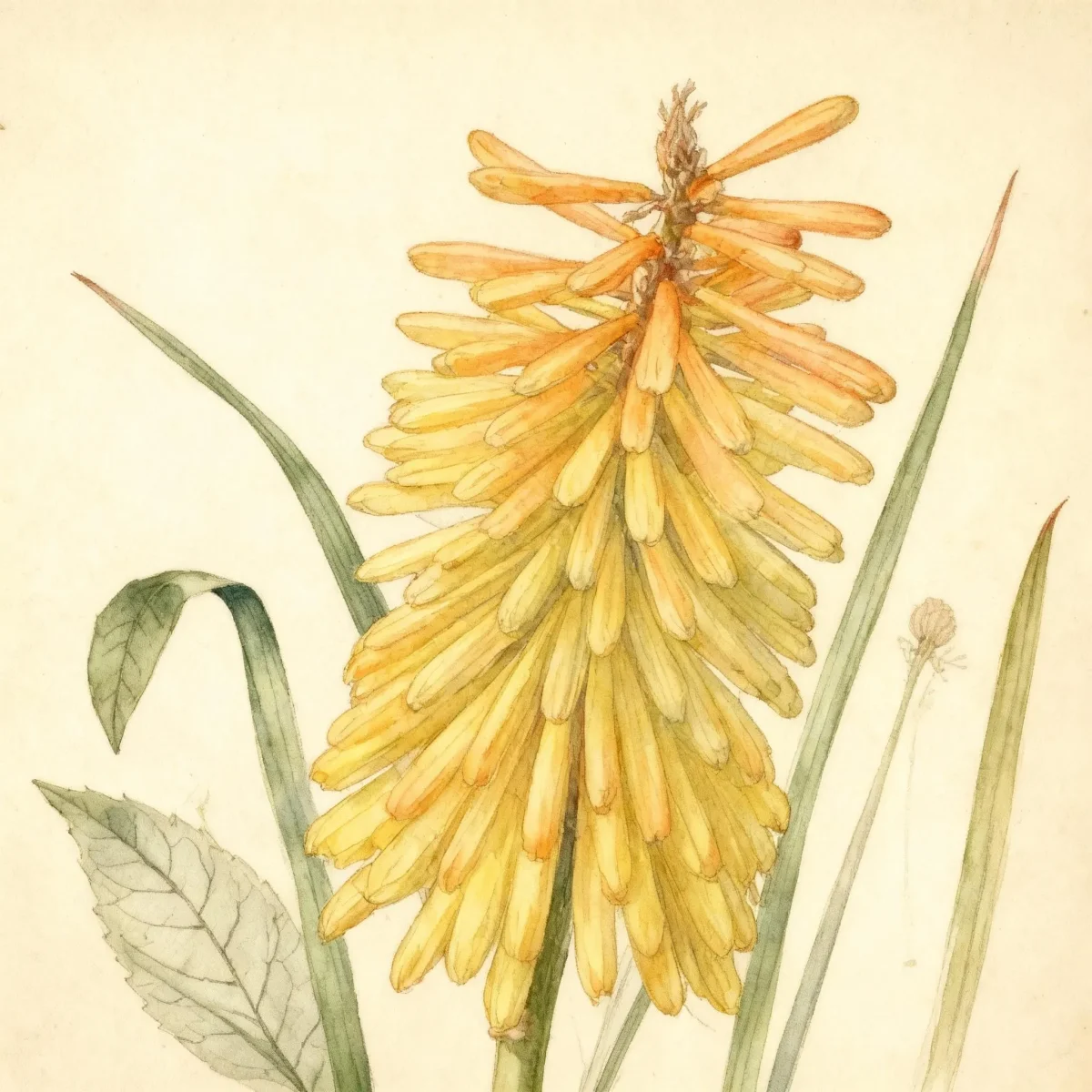
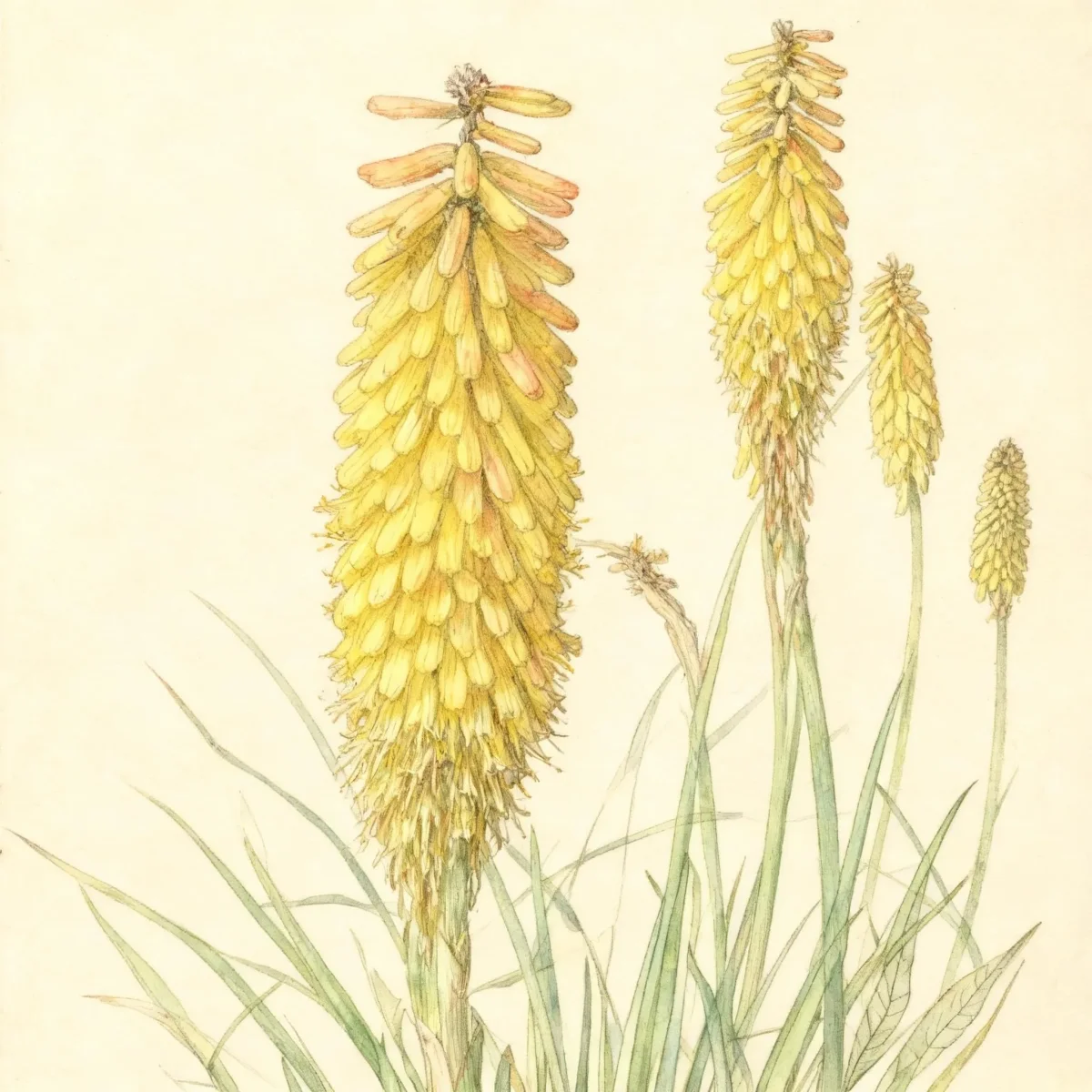
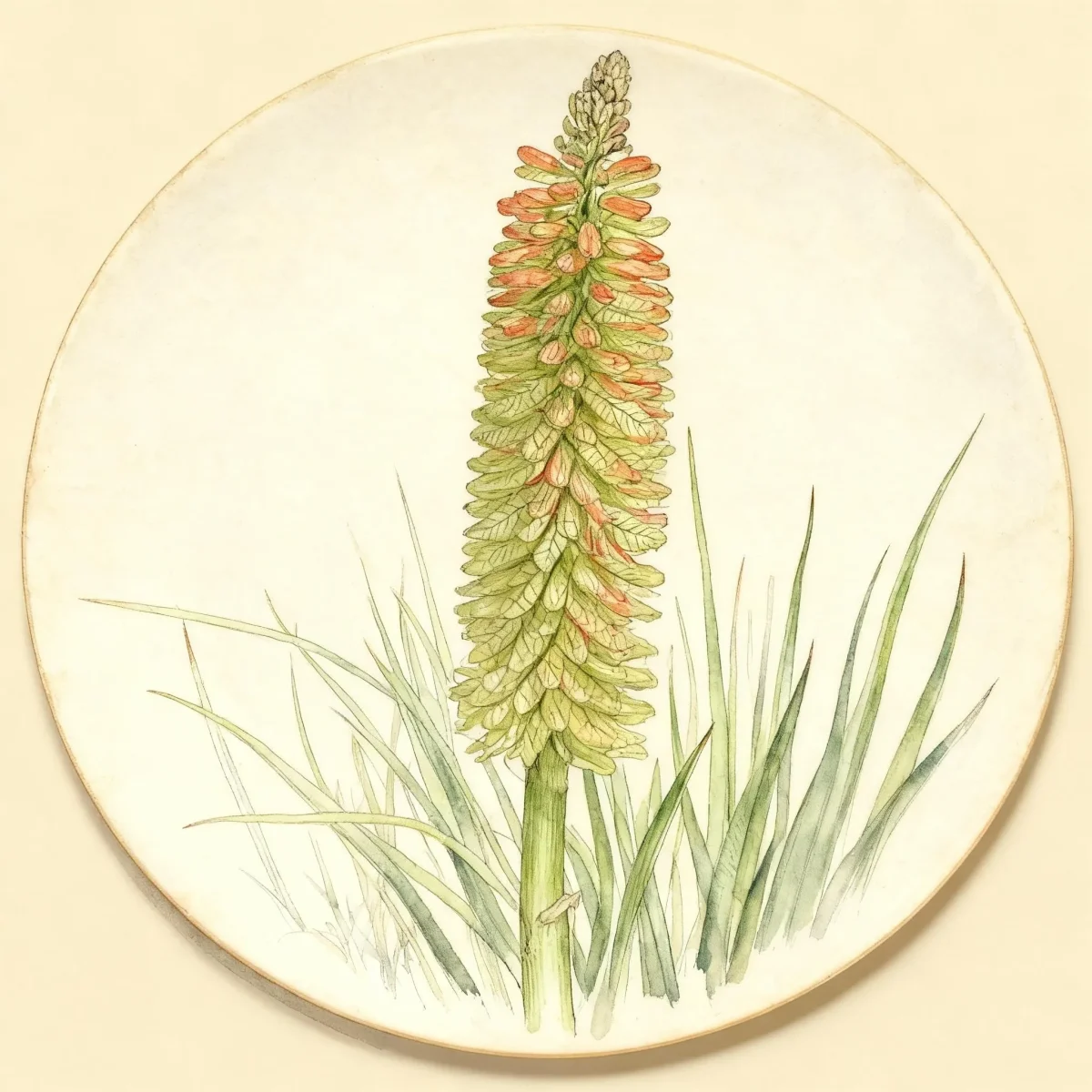
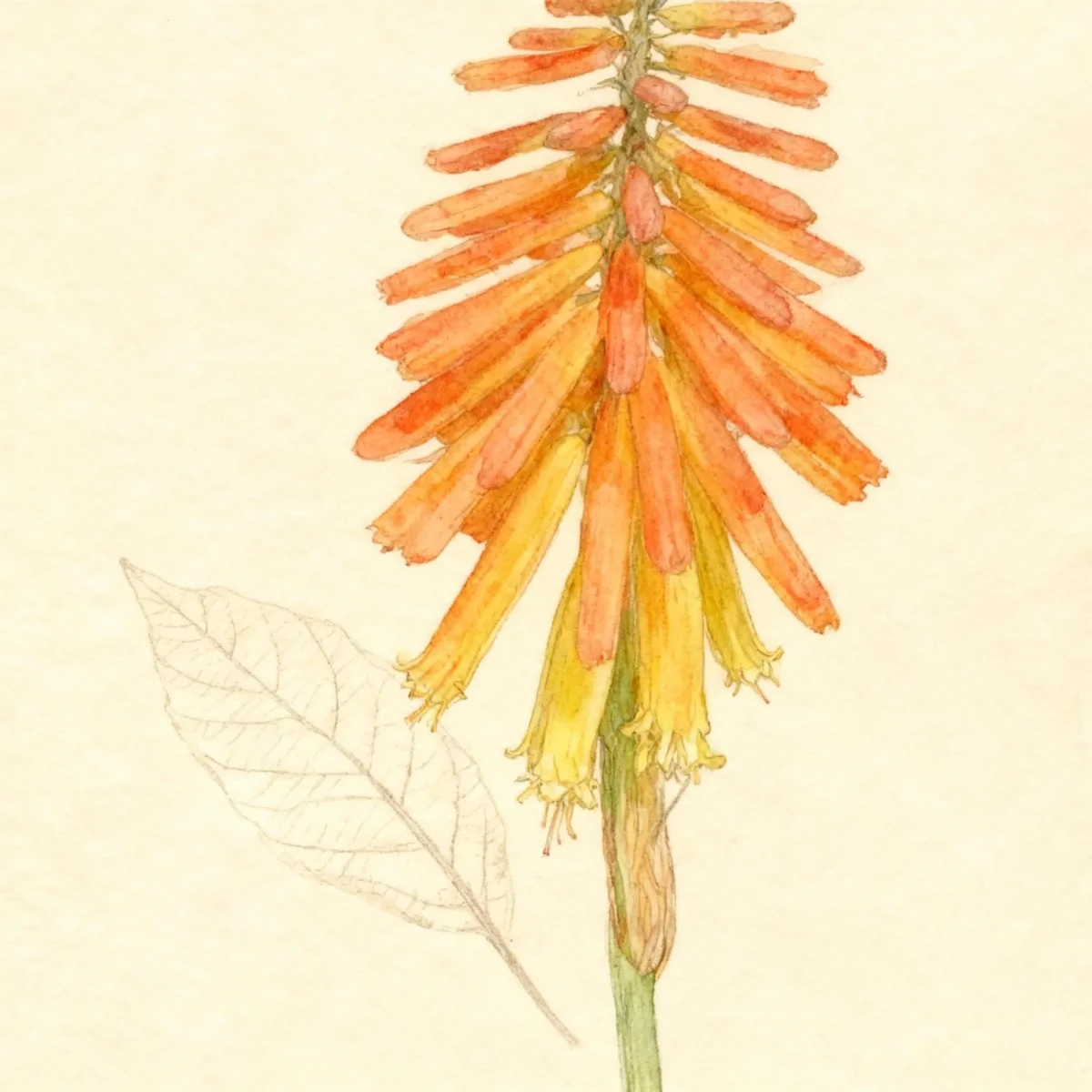
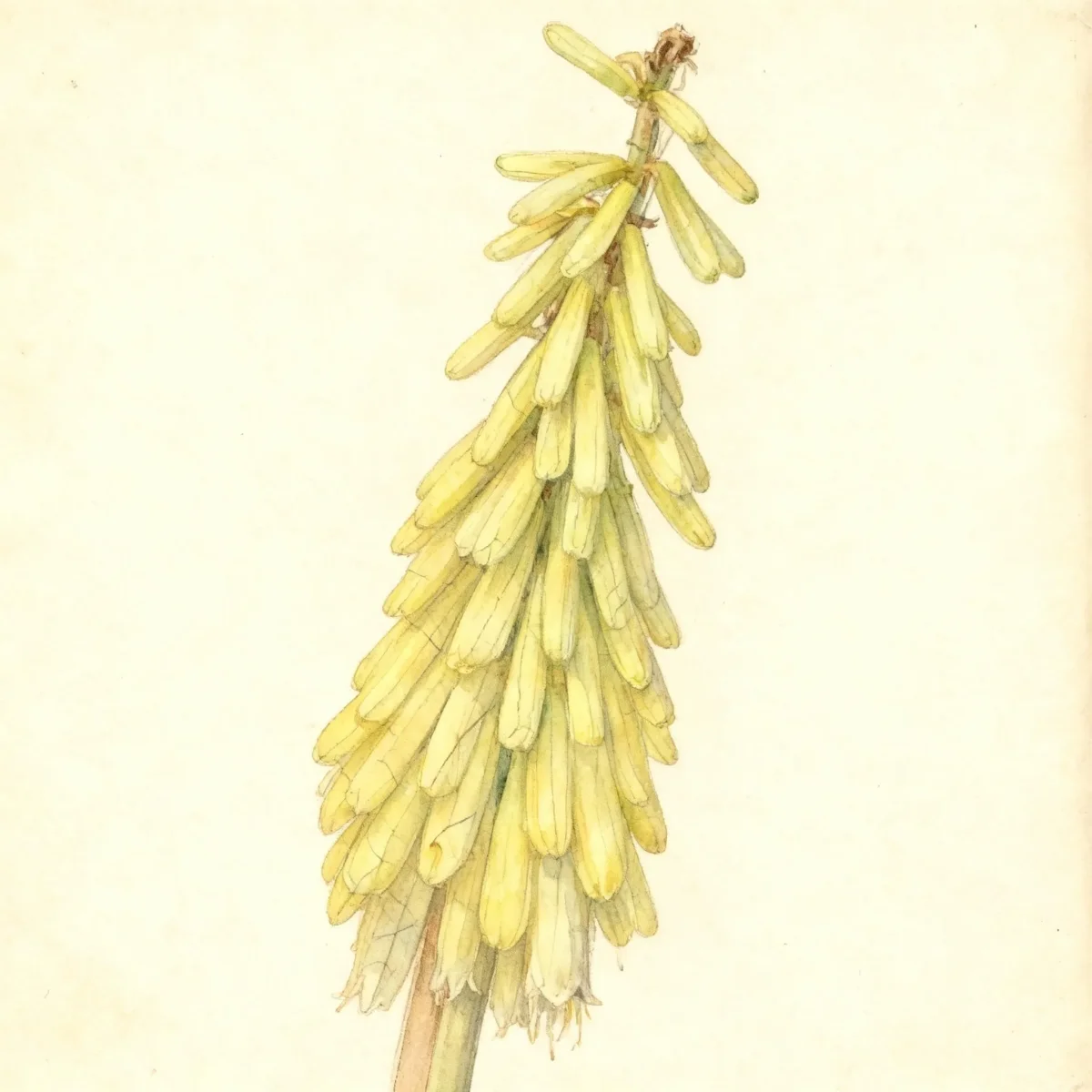
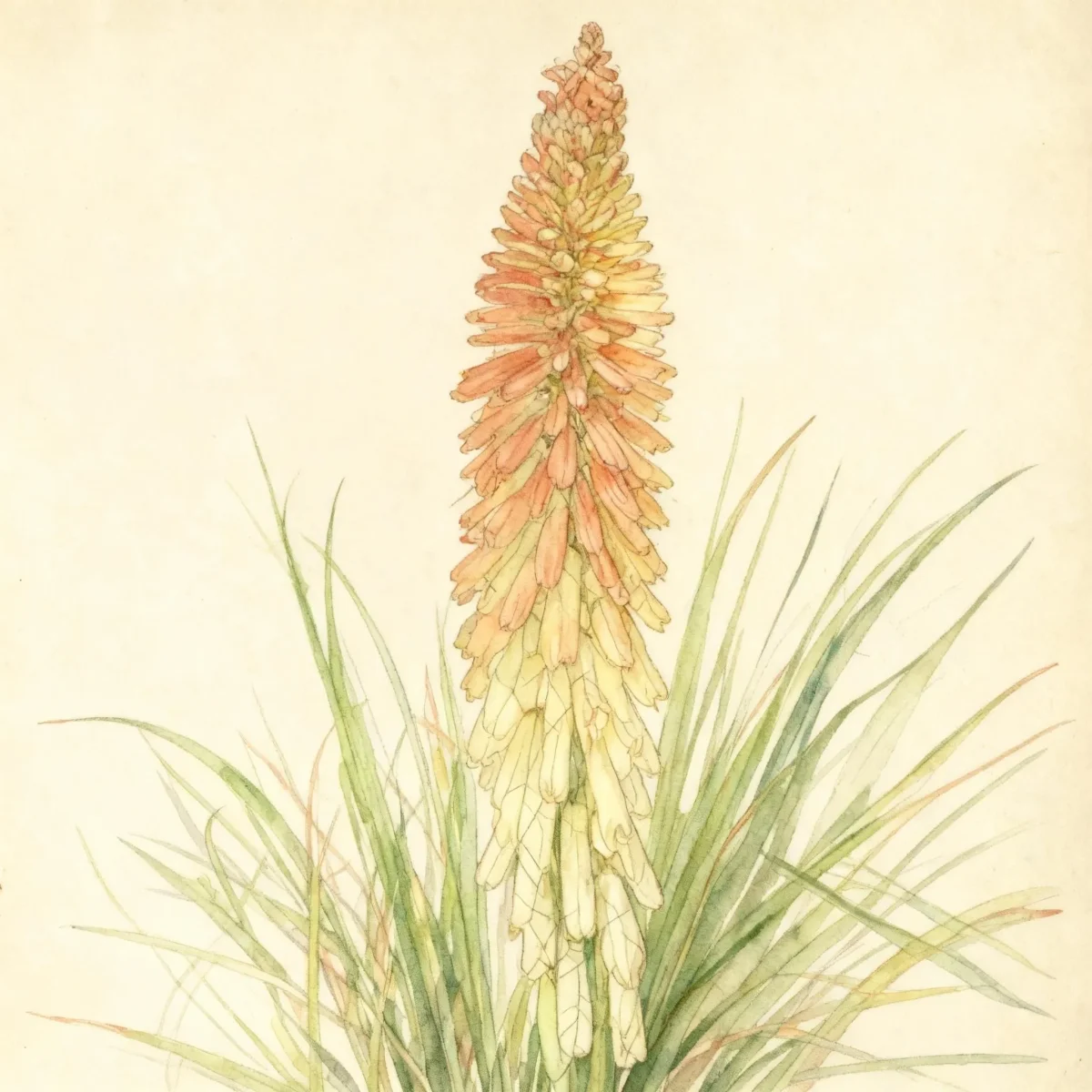
Red hot poker (Kniphofia 'Elvira')
Kniphofia 'Elvira' is a striking Red hot poker cultivar providing 2-3ft spikes of hot orange. Thrives in full sun and drought conditions.
Scroll down to discover growing tips, care requirements, companion plants, and more
Complete Plant Information
Overview
Kniphofia ‘Elvira’ is a sensational herbaceous perennial, commonly known as Red hot poker, valued for its intensely bright, torch-like flower spikes. This hybrid cultivar delivers a vertical accent with masses of hot orange blooms, adding brilliant, late-spring to early-fall color to the garden landscape. As a clump-forming rhizomatous perennial, the foliage creates a neat basal mound from which the showy flower scapes rise strikingly high.
The structure of the bloom—broad at the top and tapered at the base—gives the Red hot poker its descriptive common name. This particular variety, Kniphofia ‘Elvira’, is appreciated for its ornamental impact and its relative tolerance once established in dry conditions. It stands as a reliable structure plant, demanding relatively medium maintenance for its spectacular seasonal performance.
Gardeners seek out Kniphofia ‘Elvira’ primarily for its dynamic flower spikes, which bloom sequentially over an extended period. Integrating this plant ensures strong architectural interest, providing a dramatic focal point in mixed borders or as a singular specimen planting.
Fast Facts
- Plant Family: Asphodelaceae
- Plant Type: Herbaceous perennial
- Hardiness Zones: USDA Zones 6-9
- Size at Maturity:
- Height: 2-3 ft
- Spread: 1.5-2 ft
- Bloom Time: June to July
- Bloom Description: Orange
- Sun Exposure: Full sun
- Water Needs: Dry to medium
- Maintenance Level: Medium
How to Grow
For optimal growth, plant Kniphofia ‘Elvira’ where it receives full sun throughout the day, although it will tolerate light afternoon shade in very hot summer climates. The soil must be humus-rich, well-drained, and evenly moist when establishing. Critically, this plant develops root rot easily in wet, heavy soils, so sharp drainage is essential, especially during winter dormancy.
Water established plants when the soil is dry to medium moisture; drought tolerance is good once the root system is firm. No specific fertilization needs are mentioned, but standard care for perennials applies. Always remove spent flower spikes promptly to encourage continuous blooming throughout the long season of interest.
Winter preparation is important, particularly in the cooler end of its hardiness range (Zones 6 and 5). In late fall, tie the coarse, strap-shaped leaves together to form a protective canopy over the crown, preventing moisture and freezing water from settling there. Applying a root mulch in winter also adds insurance against harsh freezes.
As spring awakens, cut the foliage back to about 3 inches above the ground before new growth emerges. Established clumps of this Red hot poker should generally be left undisturbed. If division is necessary due to overcrowding, carefully sever offsets from the edges to minimize disturbing the established rhizomes.
Landscape Uses
Kniphofia ‘Elvira’ excels as an outstanding vertical accent in the garden design, drawing the eye upward with its fiery orange torches. Its strong vertical lines contrast beautifully with mounding or spreading perennials, making it an effective specimen plant when placed strategically.
Use this Red hot poker in small groups for greater visual impact within a mixed perennial border, providing rhythm and height variation. Its robust structure makes it suitable for the middle or back third of the border, depending on the height of adjacent plantings. Consider pairing it with late-summer bloomers that share similar sun and water needs for continuous texture contrast.
Because it handles dry conditions well once mature, Kniphofia ‘Elvira’ is excellent for use in xeriscaping or in gravel gardens where drainage is naturally excellent. Its bold color ensures it remains a dynamic element even when other foliage begins to fade late in the season.
Standout Features
Flower Qualities
- Showy
Noteworthy Characteristics
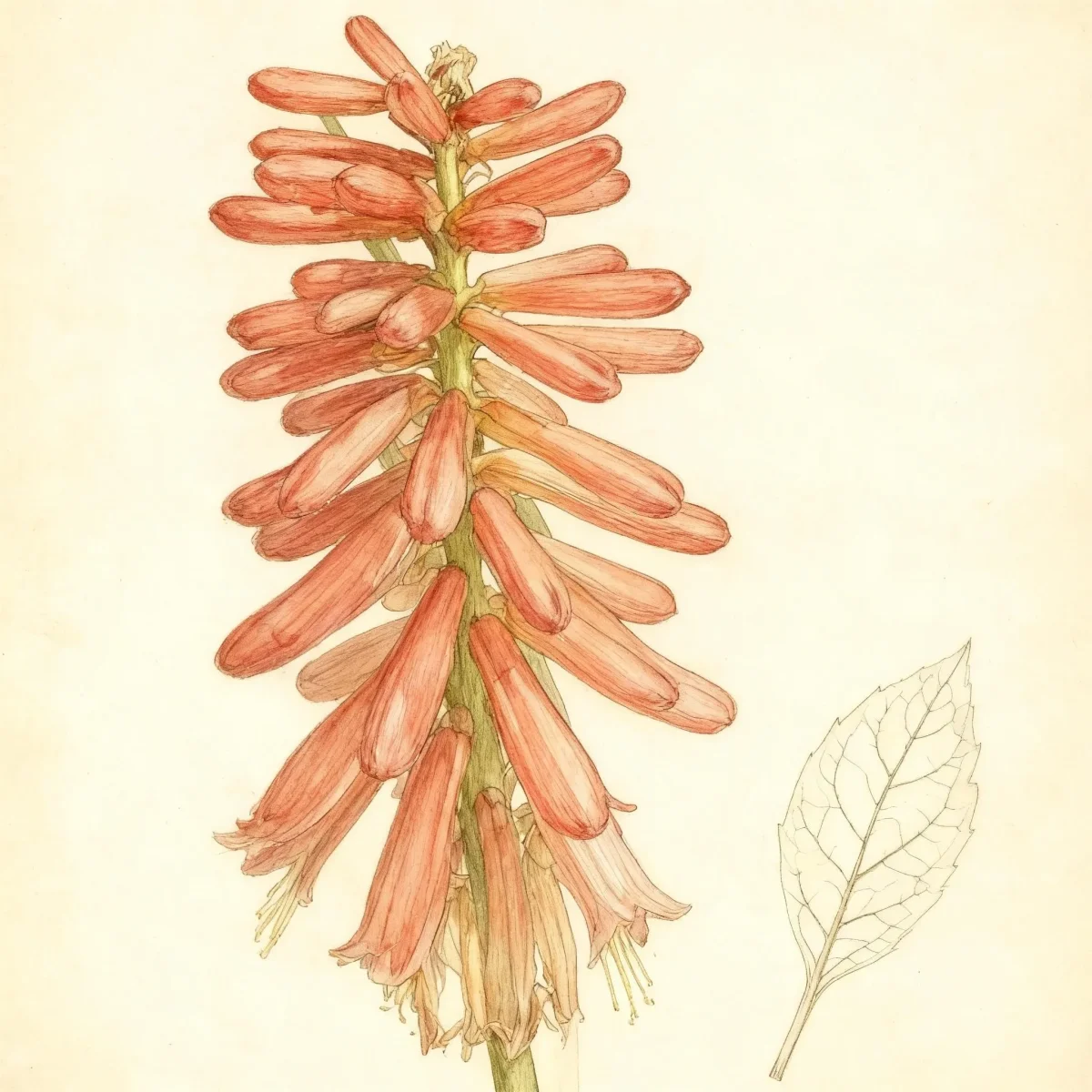
Kniphofia is a genus known for its clump-forming, rhizomatous perennials featuring linear, strap-shaped basal leaves topped by bottlebrush-like flower spikes. The signature appearance of the Red hot poker, often tapered at the base, describes the look of these ornamental spikes. Kniphofia ‘Elvira’ specifically produces notably impressive hot orange racemes, densely packed with flowers, rising well above the foliage clump. This specific cultivar is a patented hybrid, meaning it must be propagated vegetatively, as viable seed production is not expected.
Tolerances
- Rabbit
- Deer
- Drought
- Dry Soil
Potential Problems
This Red hot poker is generally quite tough, exhibiting no significant insect or disease problems under appropriate cultural conditions. The primary threat to Kniphofia ‘Elvira’ is root rot, which occurs when soils are too wet or poorly drained, especially throughout the winter months. Address this immediately by improving soil structure with grit or compost to enhance drainage. Occasionally, thrips may appear in some areas, but major infestation is rare. Fortunately, deer and rabbits show little interest in consuming this foliage or flowers.
Frequently Asked Questions
What hardiness zones is Red hot poker suitable for?
Kniphofia ‘Elvira’ is suitable for USDA Zones 6-9, though extra winter protection is advised in Zone 6.
How large does Kniphofia ‘Elvira’ grow?
This variety typically achieves a height between 2 and 3 feet, with a spread ranging from 1.5 to 2 feet wide.
What sun exposure does Kniphofia ‘Elvira’ need?
This plant requires full sun exposure for the best performance and flower production.
When does Red hot poker bloom?
The primary bloom time for this plant is from June to July, featuring striking orange flowers.
Conclusion
Kniphofia ‘Elvira’ offers magnificent vertical structure and unparalleled orange hues, making it a must-have for dramatic, low-water perennial plantings. This tough Red hot poker cultivar successfully combines aesthetic appeal with surprising drought tolerance once established. Before planting, confirm your site offers the required full sun and guarantees excellent soil drainage to ensure your Kniphofia ‘Elvira’ thrives for many seasons.
Companion Planting
Selecting good companions ensures your Red hot poker plants look their best throughout the season while sharing similar needs. Plants that thrive in full sun and tolerate dry, well-drained conditions are best suited. Consider pairing Kniphofia ‘Elvira’ with late-summer flowering alliums or Russian Sage (Perovskia atriplicifolia) to offer contrasting textures that bloom when the poker flowers are winding down.
Grasses, such as Feather Reed Grass (Calamagrostis), provide a soft, airy screen behind the sturdy spikes of the Red hot poker, creating an excellent movement contrast. Avoid areas where water tends to pool, as this will jeopardize the health of the Kniphofia crown.
Propagation Tips
Since Kniphofia ‘Elvira’ is a patented hybrid, propagation via seed is unreliably fruitless; therefore, division is the recommended method for increasing your stock. Established clumps can become overcrowded after several years, necessitating a refresh.
Divide the plant in early spring or early fall when temperatures are moderate. Use a sharp spade to carefully sever a section, ensuring that each new division contains a healthy cluster of basal leaves and sufficient rhizomatous root material. Plant these divisions immediately into their new locations, watering well to help them reestablish before summer heat or winter cold arrives.