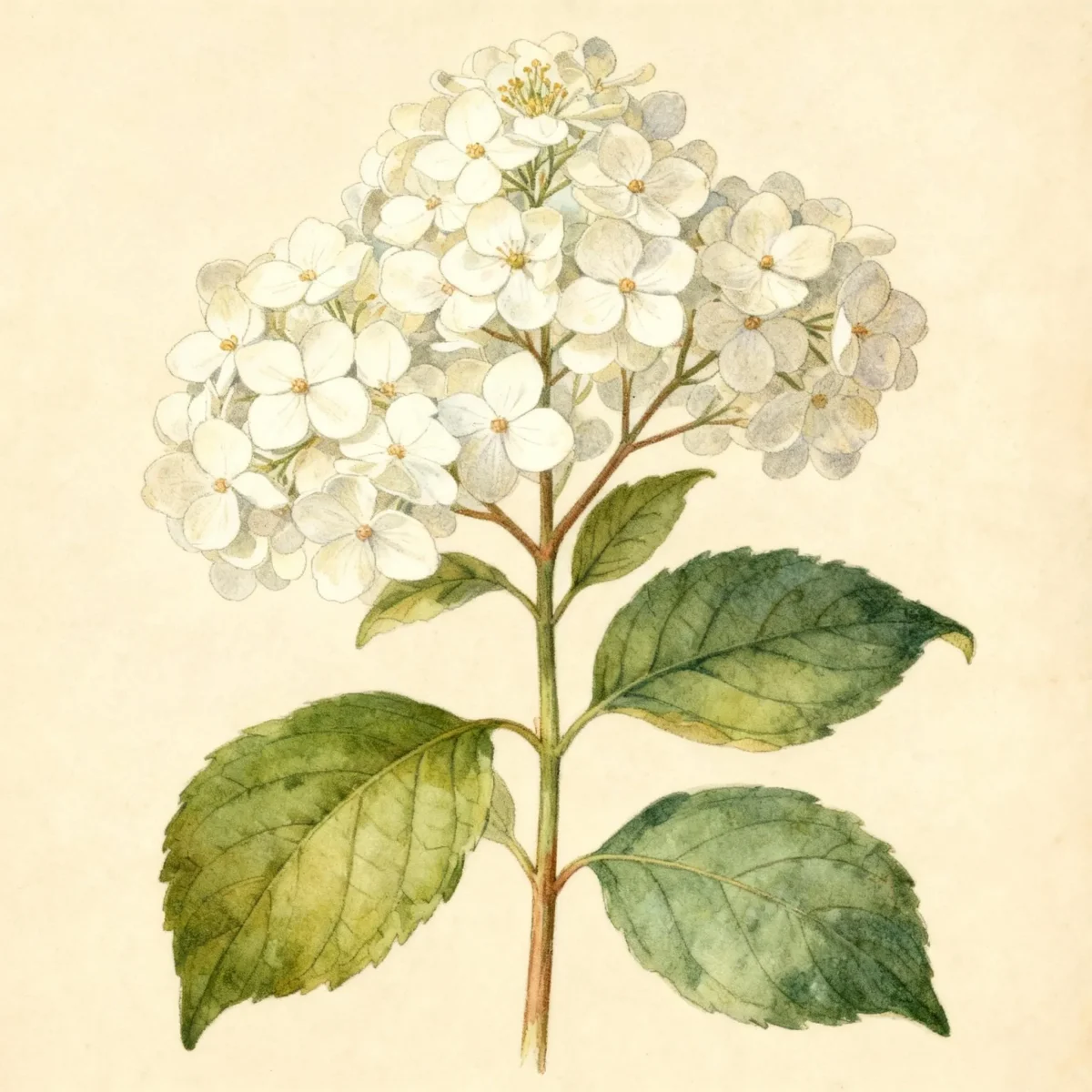
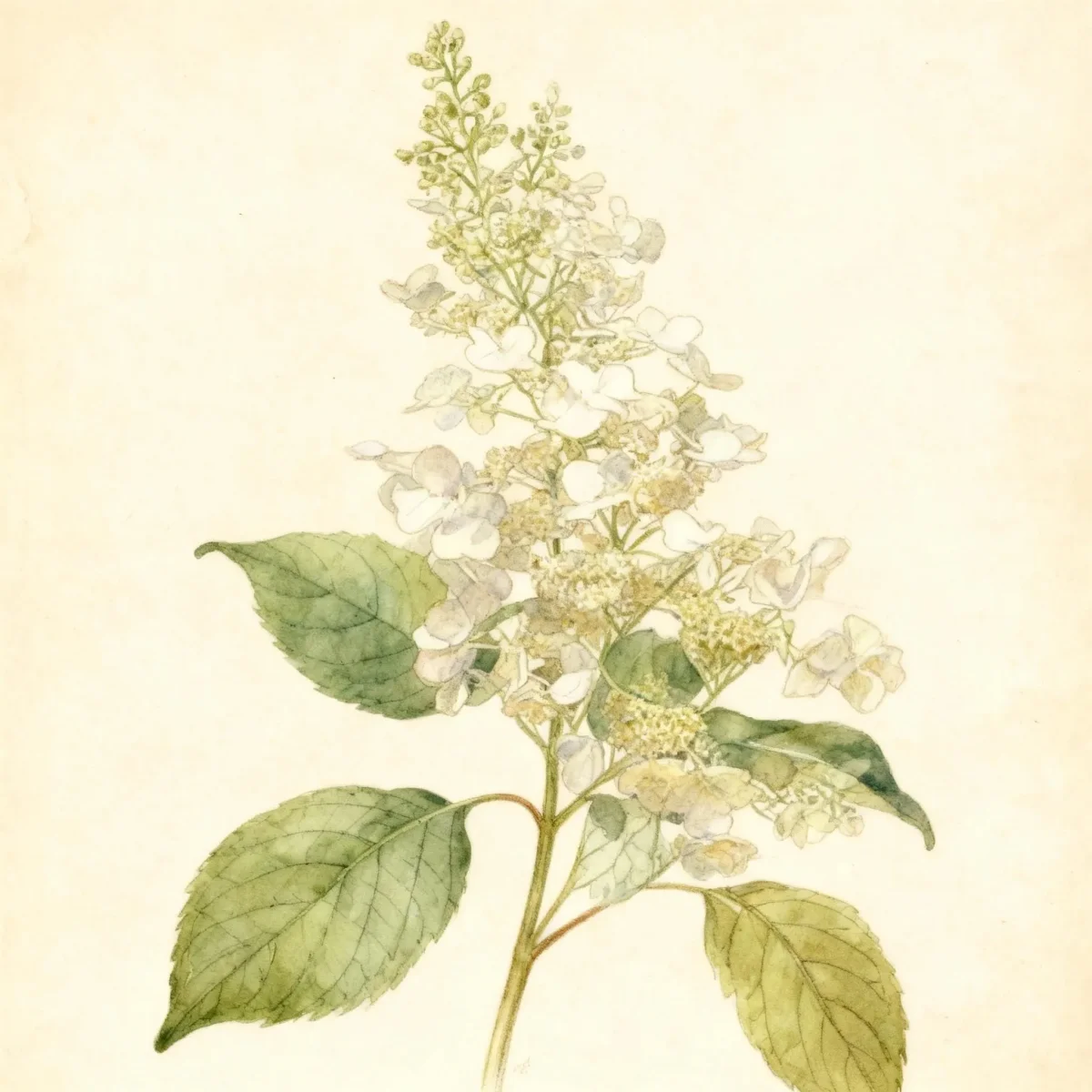
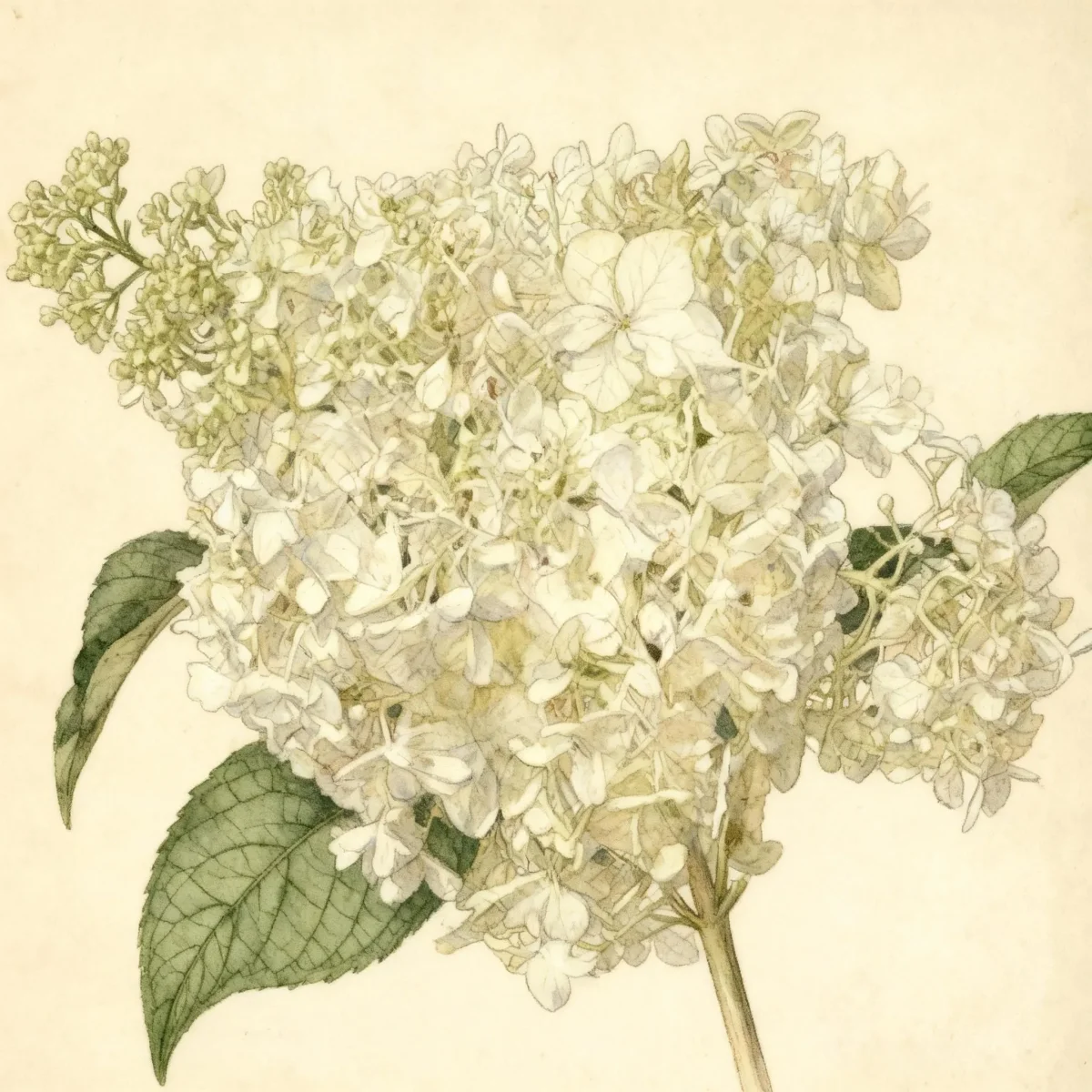
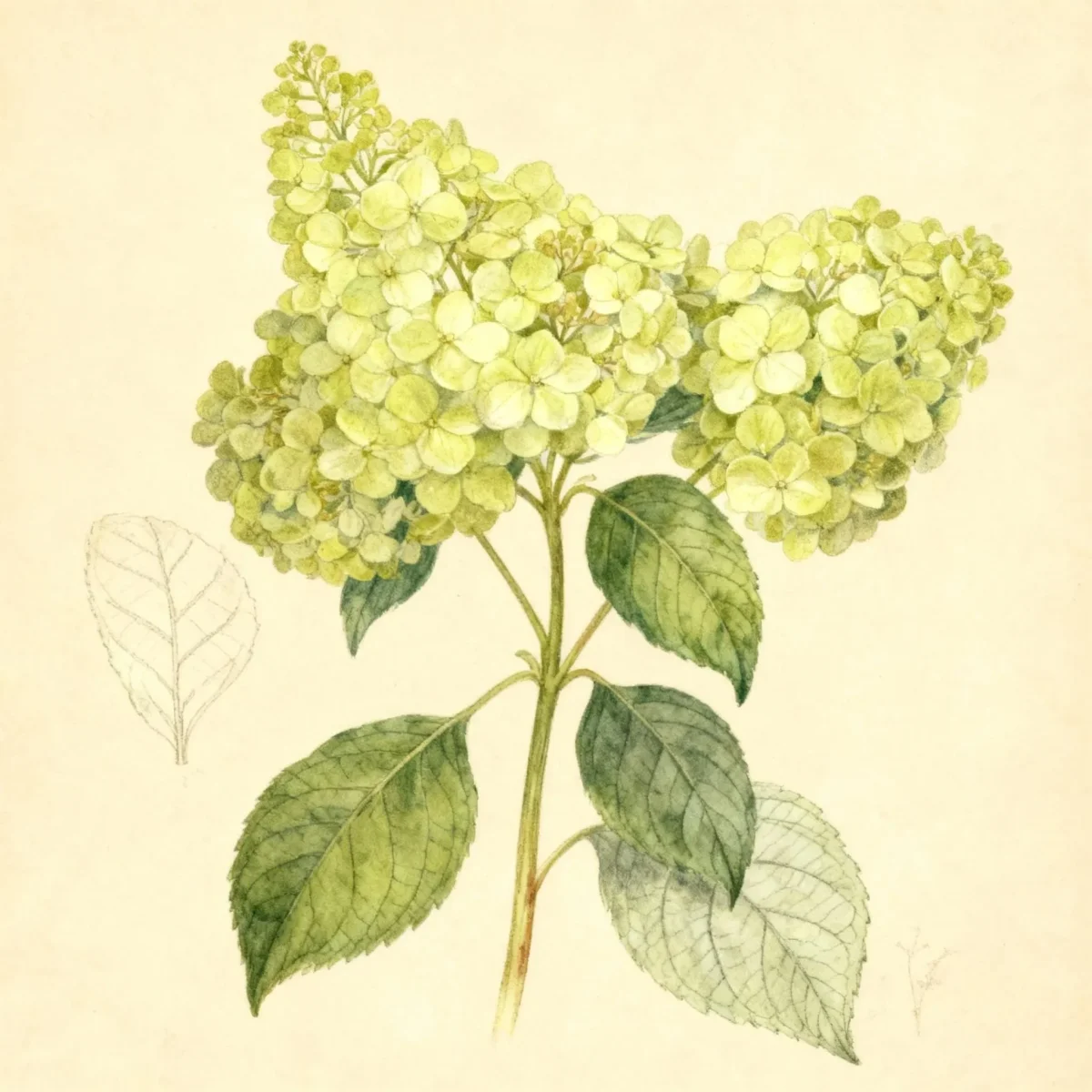
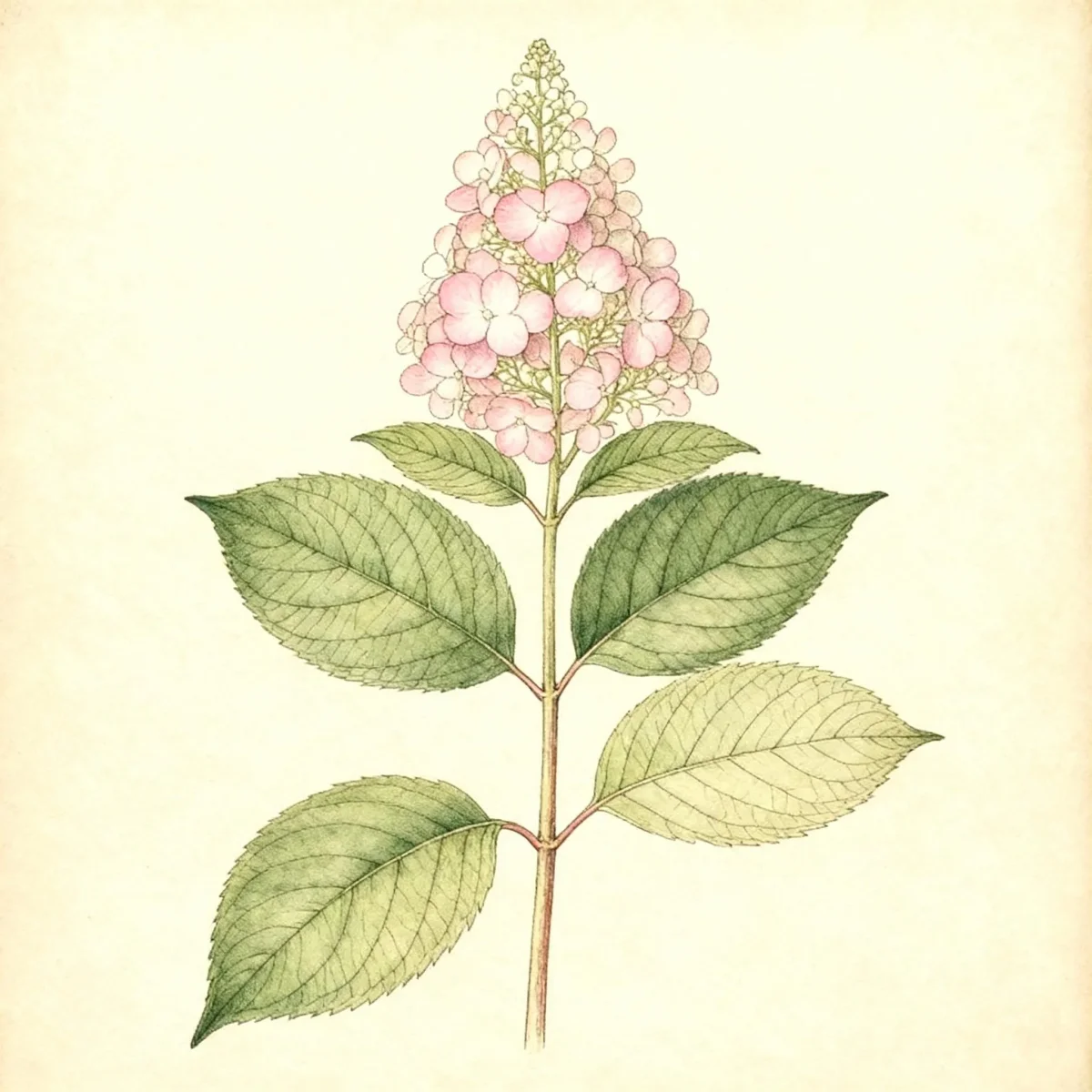
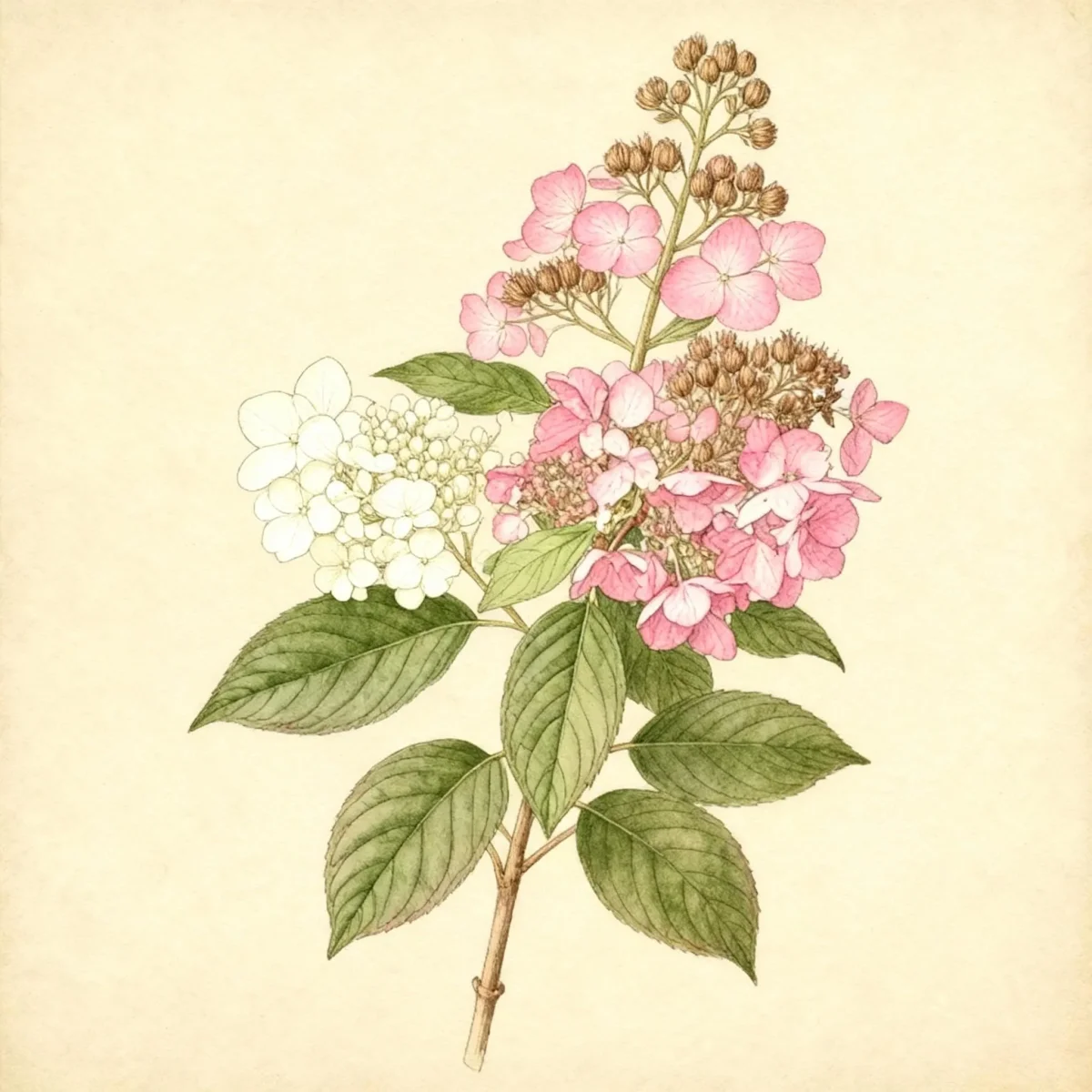
Panicle hydrangea (Hydrangea paniculata 'Rensun' STRAWBERRY SUNDAE)
Discover Hydrangea paniculata 'Rensun' STRAWBERRY SUNDAE, a compact Panicle hydrangea known for its show stopping white-to-strawberry-red blooms from mid-summer to fall.
Scroll down to discover growing tips, care requirements, companion plants, and more
Complete Plant Information
Overview
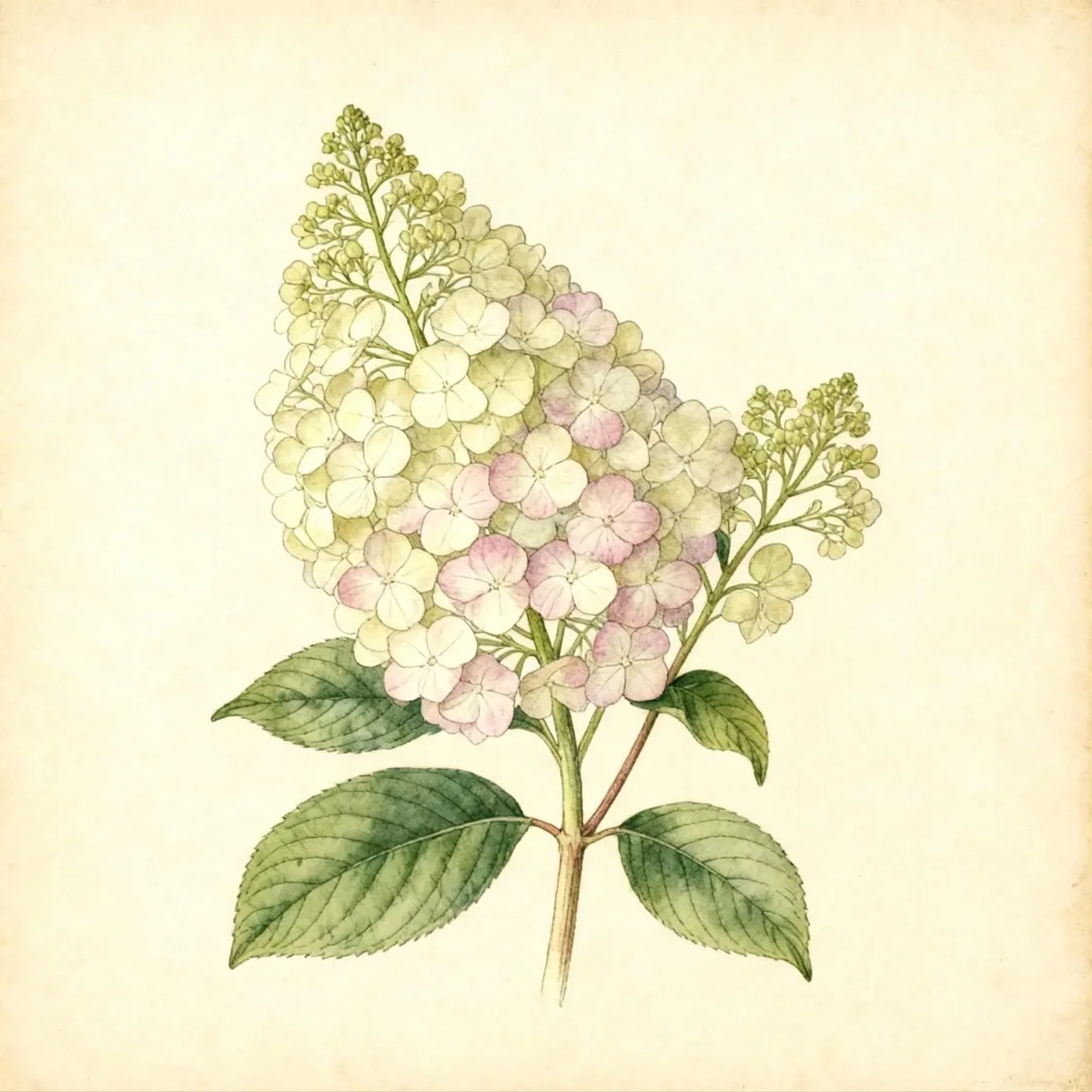
Hydrangea paniculata ‘Rensun’ STRAWBERRY SUNDAE, commonly known as Panicle hydrangea, offers reliable late-season color in a highly manageable size. This cultivar is prized for its stunning, cone-shaped flower heads that transition beautifully from creamy white to a deep strawberry red as summer progresses. It stands out as one of the most winter-hardy hydrangeas available, making it an excellent choice for gardeners facing cold climates.
This deciduous shrub thrives when given full sun to partial afternoon shade, ensuring excellent flower production. Its vigorous yet compact growth habit, topping out around 4 to 5 feet tall, makes the Hydrangea paniculata ‘Rensun’ STRAWBERRY SUNDAE versatile for foundational plantings or defined hedges where space is a consideration. It provides consistent texture and long-lasting blooms when many other garden shrubs have finished their display.
A major benefit of this Panicle hydrangea is its bloom time, which extends from mid-summer well into the fall, offering weeks of multi-toned interest. Its ability to handle urban conditions and its hardiness mean gardeners can consistently rely on the beautiful coloration of Hydrangea paniculata ‘Rensun’ STRAWBERRY SUNDAE year after year.
Fast Facts
- Plant Family: Hydrangeaceae
- Plant Type: Deciduous shrub
- Hardiness Zones: USDA Zones 3-8
- Size at Maturity:
- Height: 4-5 ft
- Spread: 3-4 ft
- Bloom Time: July to September
- Bloom Description: White maturing to strawberry red
- Sun Exposure: Full sun to part shade
- Water Needs: Medium
- Maintenance Level: Medium
How to Grow
The ideal location for Hydrangea paniculata ‘Rensun’ STRAWBERRY SUNDAE is where it receives full sun, particularly morning sun, though it appreciates afternoon shade in hotter climates. Best results are achieved when planted in organically rich, well-drained soil with medium moisture levels consistently maintained throughout the growing season.
Routine care involves consistent watering, especially during establishment and periods of drought, as this Panicle hydrangea requires medium water inputs. Since blooms occur on current season’s growth, the proper time for pruning is late winter or early spring before new leaf buds break. For a fuller shrub with larger flower panicles, thin the plant back to 5 to 10 primary shoots during this dormant pruning window.
This cultivar is notable for its exceptional winter hardiness, thriving across USDA Zones 3 through 8. Because of its structure, be aware that in full bloom, the attractive flower panicles may cause branches to arch slightly downward, a characteristic feature of many large-flowered hydrangeas. This shrub also thrives exceptionally well in typical urban settings.
Landscape Uses
The compact nature and upright habit of Hydrangea paniculata ‘Rensun’ STRAWBERRY SUNDAE make it an outstanding choice for mass plantings or grouping within a mixed border, providing substantial late-season impact. It functions perfectly as a defined low hedge along walkways or property lines, thanks to its manageable 3 to 4-foot spread.
Consider using this Panicle hydrangea as an accent plant near entryways or as a specimen in a lawn setting where its unique flower progression (white to red) can be closely admired. It pairs well visually with contrasting textures, such as fine-textured evergreens or deciduous perennials that bloom earlier in the season. Its reliability ensures continuous flow from summer landscapes into the cooler days of autumn.
Standout Features
Flower Qualities
- Showy
Noteworthy Characteristics
Hydrangea paniculata, commonly called panicle hydrangea, is a vigorous, upright, rapid-growing, somewhat coarsely textured, deciduous shrub that is native to China and Japan. The specific epithet paniculata refers to the arrangement of the flowers in panicles. ‘Rensun’, commonly sold under the trade name of STRAWBERRY SUNDAE, typically grows to only 5’ tall and to 3-4’ wide. Flower panicles (7” by 5”) feature showy sterile flowers which bloom on new growth from mid-summer to fall, emerging white, changing to pink, and finally maturing to strawberry red.
Tolerances
- Air Pollution
Potential Problems
Gardeners should be aware that this Panicle hydrangea exhibits some susceptibility to common fungal issues, including leaf spot, rust, and powdery mildew. Bacterial wilt and bud blight are also occasional concerns, although the sheer hardiness of Hydrangea paniculata ‘Rensun’ STRAWBERRY SUNDAE often minimizes severe outbreaks. Standard treatment involves ensuring good air circulation through proper spacing and pruning, and treating infections promptly using appropriate fungicidal applications if necessary. Aphids and spider mites are occasional insect visitors that can usually be managed using horticultural oils or insecticidal soaps.
Frequently Asked Questions
What hardiness zones is Panicle hydrangea suitable for?
Hydrangea paniculata ‘Rensun’ STRAWBERRY SUNDAE is one of the most winter hardy hydrangeas, suitable for USDA Zones 3 through 8.
How large does Hydrangea paniculata ‘Rensun’ STRAWBERRY SUNDAE grow?
This compact cultivar typically reaches a mature height between 4 and 5 feet tall, with a spread ranging from 3 to 4 feet wide.
When does Panicle hydrangea bloom?
This variety provides consistent color from July through September, featuring blooms that start white before maturing to a characteristic strawberry red.
What sun exposure does Panicle hydrangea need?
It performs best when exposed to full sun to light, part shade conditions.
Conclusion
For gardeners seeking dependable, late-season floral displays in a manageable shrub size, Hydrangea paniculata ‘Rensun’ STRAWBERRY SUNDAE is an exceptional choice. Its transition of bloom color from white to deep strawberry red offers continuous visual interest throughout the warmer months. Before incorporating this resilient Panicle hydrangea into your landscape, confirm that your USDA hardiness zone falls between 3 and 8 for best performance.
Companion Planting Ideas
When designing borders around Hydrangea paniculata ‘Rensun’ STRAWBERRY SUNDAE, focus on plants that thrive in similar bright light conditions and appreciate rich, medium-moisture soils. Groundcovers that stay low, like creeping phlox or hardy geraniums, work well beneath the arching stems, preventing soil splash onto the lower foliage. Consider pairing it with late-blooming perennials such as Asters or Sedum ‘Autumn Joy’ to create a continuous tapestry of fall color that complements the maturing red hues of the hydrangea blooms.
Pruning and Shaping Hydrangea paniculata ‘Rensun’ STRAWBERRY SUNDAE
Since this cultivar blooms on wood grown during the current season (new wood), its maintenance pruning is straightforward and occurs at the ideal time for shaping. Prune any dead or crossing wood out in very early spring before swelling buds appear. To encourage a very dense, robust shrub form that can better support the weight of the large flower panicles, gardeners should consider yearly thinning, removing up to one-third of the oldest stems. This technique promotes strong new growth capable of carrying the season’s bloom load.