Mustard greens (Brassica juncea 'Japanese Giant Red')
Grow Brassica juncea 'Japanese Giant Red' for sharp, pungent Mustard greens. This annual thrives in full sun and requires low maintenance.
Scroll down to discover growing tips, care requirements, companion plants, and more
Complete Plant Information
Overview
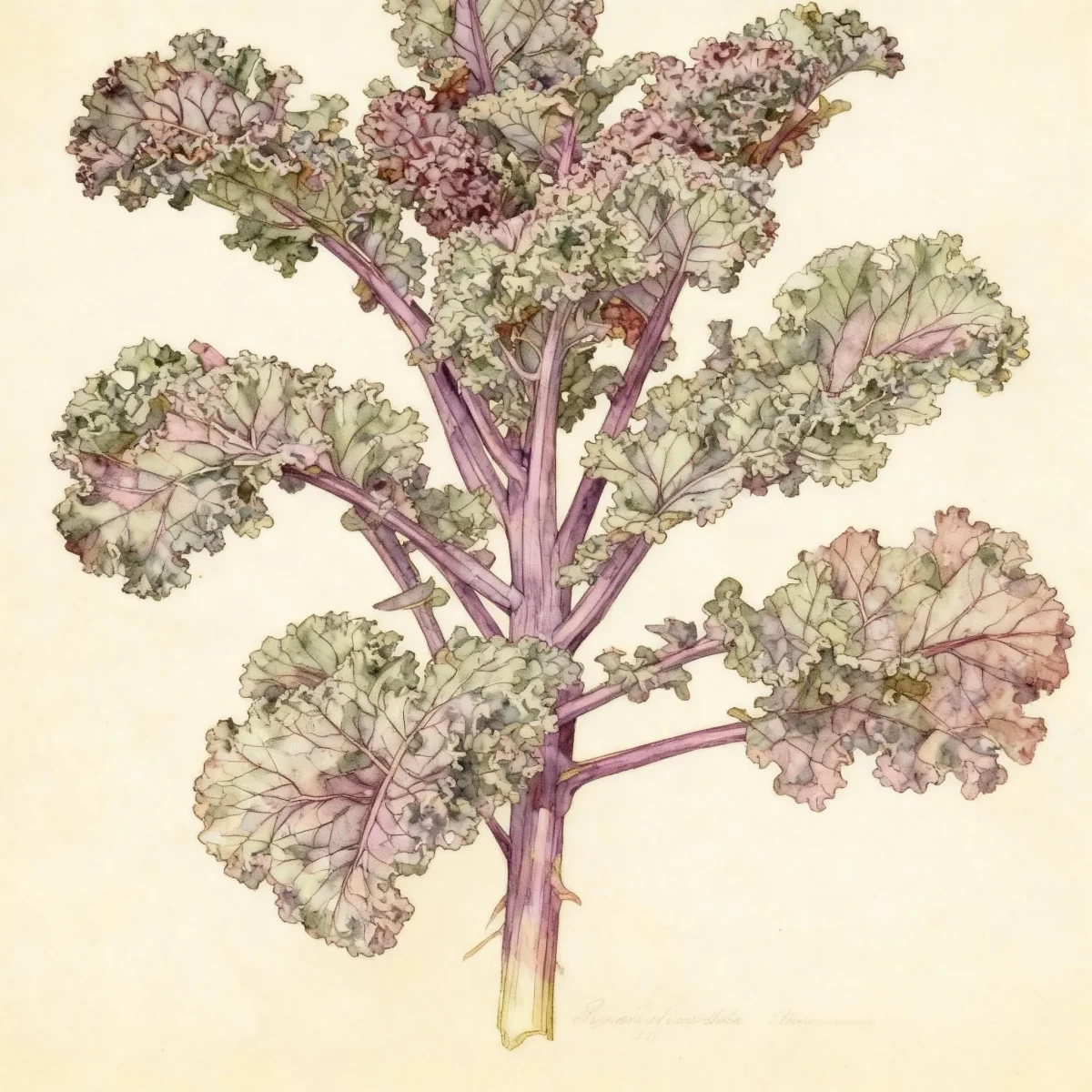
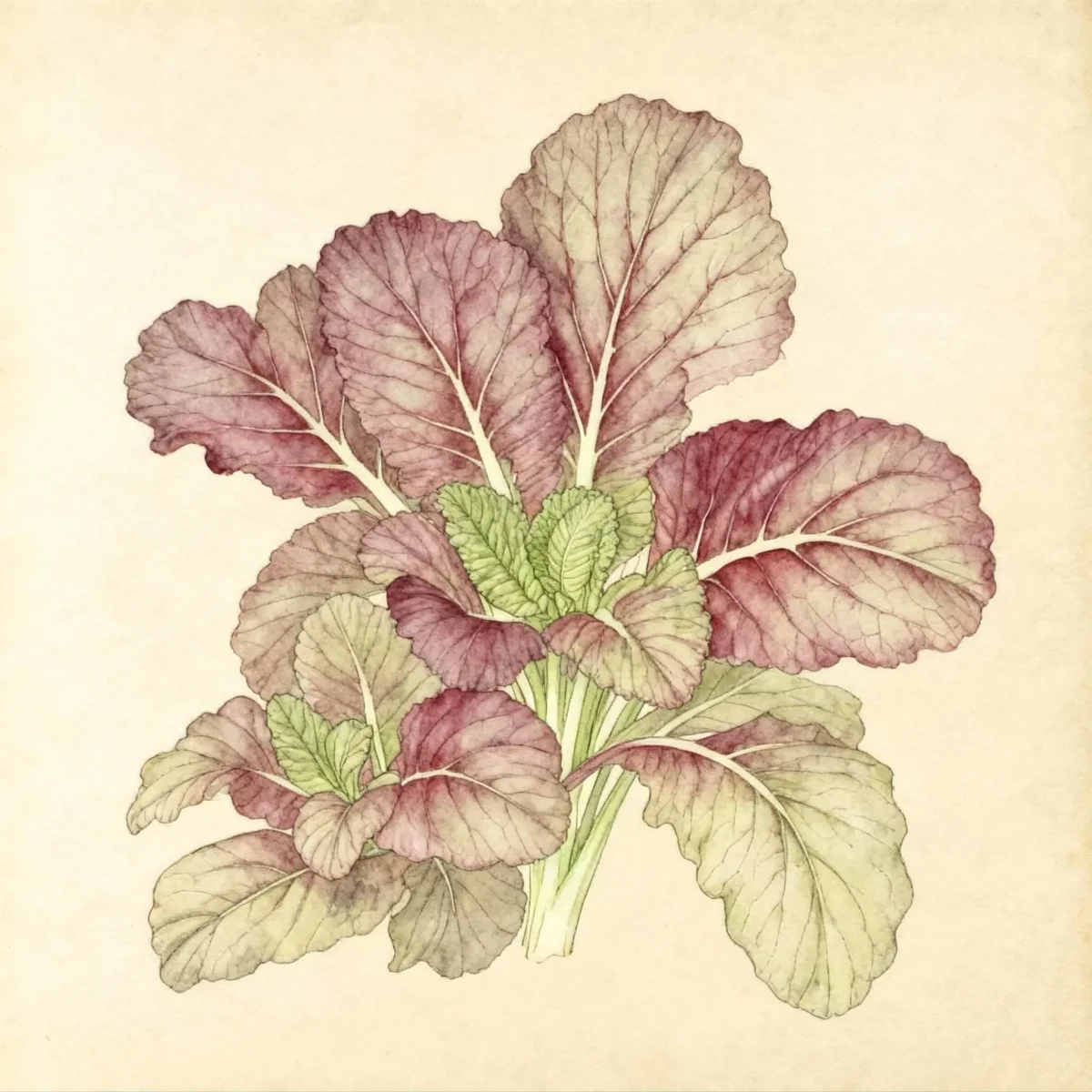
Brassica juncea ‘Japanese Giant Red’ is a highly valued annual vegetable celebrated for producing abundant, pungent Mustard greens. This selection offers distinctive purple-red foliage coupled with a sharp, delicious flavor often noted as almost garlic-like. Gardeners appreciate this plant for its rapid growth cycle, offering edible harvests quickly when planted in spring.
As a robust member of the Brassicaceae family, this variety of mustard greens grows efficiently, reaching heights and spreads of about 1 to 1.5 feet. It requires simple care, generally needing full sun and consistent moisture to produce tender leaves favored both raw in salads and cooked. The primary appeal of Brassica juncea ‘Japanese Giant Red’ lies in its dual purpose: providing colorful visual interest alongside highly flavorful culinary ingredients.
Fast Facts
- Plant Family: Brassicaceae
- Plant Type: Annual
- Hardiness Zones: USDA Zones 2-11
- Size at Maturity:
- Height: 1-1.5 ft
- Spread: 1-1.5 ft
- Bloom Time: Flowers not showy
- Bloom Description: Flowers not showy
- Sun Exposure: Full sun
- Water Needs: Medium
- Maintenance Level: Low
How to Grow
Sow seeds directly into the garden in early spring for the earliest harvest of Mustard greens. Plant seeds shallowly, about 3/4” to 1” apart, maintaining 2 feet between rows for good airflow, especially important since Brassica juncea ‘Japanese Giant Red’ can be susceptible to fungal issues. Once seedlings establish, thin them to stand 4 to 6 inches apart to allow adequate room for mature leaf expansion.
Provide consistently moist but well-drained soil rich in organic matter; this plant performs best in full sun but tolerates light afternoon shade. Water thoroughly early in the day so the foliage has time to dry completely before nightfall, which significantly reduces the risk of attracting fungal diseases. Floating row covers offer excellent protection against common pests like flea beetles during early growth stages.
Harvesting begins around 40 to 50 days after planting. Younger, smaller leaves of Brassica juncea ‘Japanese Giant Red’ offer a milder flavor profile compared to larger, mature leaves. Be aware that as the plant begins to bolt (transition to flowering), the developing leaves will develop a much stronger, more pungent flavor.
Landscape Uses
Though primarily grown as a vegetable, the colorful foliage of Brassica juncea ‘Japanese Giant Red’ lends itself well to ornamental applications, particularly in cool seasons. Use these robust, purple-red plants as unique, textural border edgers in vegetable, herb, or cutting gardens. They also offer a brilliant, temporary accent when incorporated into container arrangements alongside shorter, mounding annuals.
For continuous harvest, practice successional planting by sowing small batches of seeds every few weeks until mid-summer heat sets in. When siting Brassica juncea ‘Japanese Giant Red’ in the garden, remember its need for consistent moisture mirrors that of many leafy greens and root vegetables, making it an ideal companion for lettuces or radishes.
Standout Features
Flower Qualities
- Insignificant
Noteworthy Characteristics
Brassica juncea, commonly known as Chinese mustard, brown mustard, Indian mustard, or leaf mustard, refers to an annual herb native to southern and eastern Asia cultivated for centuries for its leaves and pungent seeds. This specific selection, ‘Japanese Giant Red’, is recognized for its robust nature, growing up to 1.5 feet tall and featuring deep purple-red leaves with a sharp, delicious flavor. While the small yellow flowers are not showy, the foliage provides excellent color and culinary value, though the plant is occasionally noted as invasive in warmer climates.
Tolerances
- Tolerates light shade
Potential Problems
Flea beetles are perhaps the most frequent threat to young Mustard greens, creating numerous small, circular holes in the leaves. Caterpillars, aphids, snails, and slugs also pose risks to this annual vegetable.
To manage pests effectively, apply floating row covers immediately after sowing seeds to exclude flea beetles entirely until plants are established. Inspect the undersides of leaves regularly for signs of aphids or developing caterpillars, physically removing pests or applying an insecticidal soap if infestation becomes severe. Ensuring dry foliage at night, as advised during irrigation, helps indirectly by discouraging slug and snail activity.
Frequently Asked Questions
What hardiness zones is Mustard greens suitable for?
Brassica juncea ‘Japanese Giant Red’ is highly adaptable, thriving in USDA Zones 2 through 11.
How large does Brassica juncea ‘Japanese Giant Red’ grow?
This variety typically reaches a height between 1 to 1.5 feet, with a spread of 1 to 1.5 feet at maturity.
What sun exposure does Mustard greens need?
For optimal growth and flavor development, Brassica juncea ‘Japanese Giant Red’ requires full sun exposure.
When does Mustard greens bloom?
The flowers produced by this mustard green variety are not showy.
Conclusion
The ‘Japanese Giant Red’ selection offers gardeners a fast-maturing annual that reliably provides richly flavored, colorful Mustard greens for the kitchen. Its low maintenance needs and adaptation across a wide range of hardiness zones make Brassica juncea ‘Japanese Giant Red’ an excellent choice for vegetable beds. Plan your spring sowing carefully to maximize mild flavor, or plant later in the season to enjoy the intense pungency of more mature leaves.
Companion Planting
When planning your cool-season garden layout, consider planting Brassica juncea ‘Japanese Giant Red’ near root vegetables like carrots or radishes. These companions benefit from similar medium water requirements and do not compete heavily for above-ground space. Avoid planting too closely to other members of the Brassica family, such as cabbage or broccoli, as they share susceptibility to the same pests and nutrient needs, which can encourage disease buildup.
Design Ideas
Utilize the deep burgundy color of Brassica juncea ‘Japanese Giant Red’ to establish strong contrast in mixed plantings. Place it against lighter greens, silvery herbs like culinary sage, or in front of darker evergreen structures for dramatic effect. Because it only reaches 1.5 feet tall, it functions beautifully as a mid-border element, leading the eye towards taller edible crops or ornamental specimens.