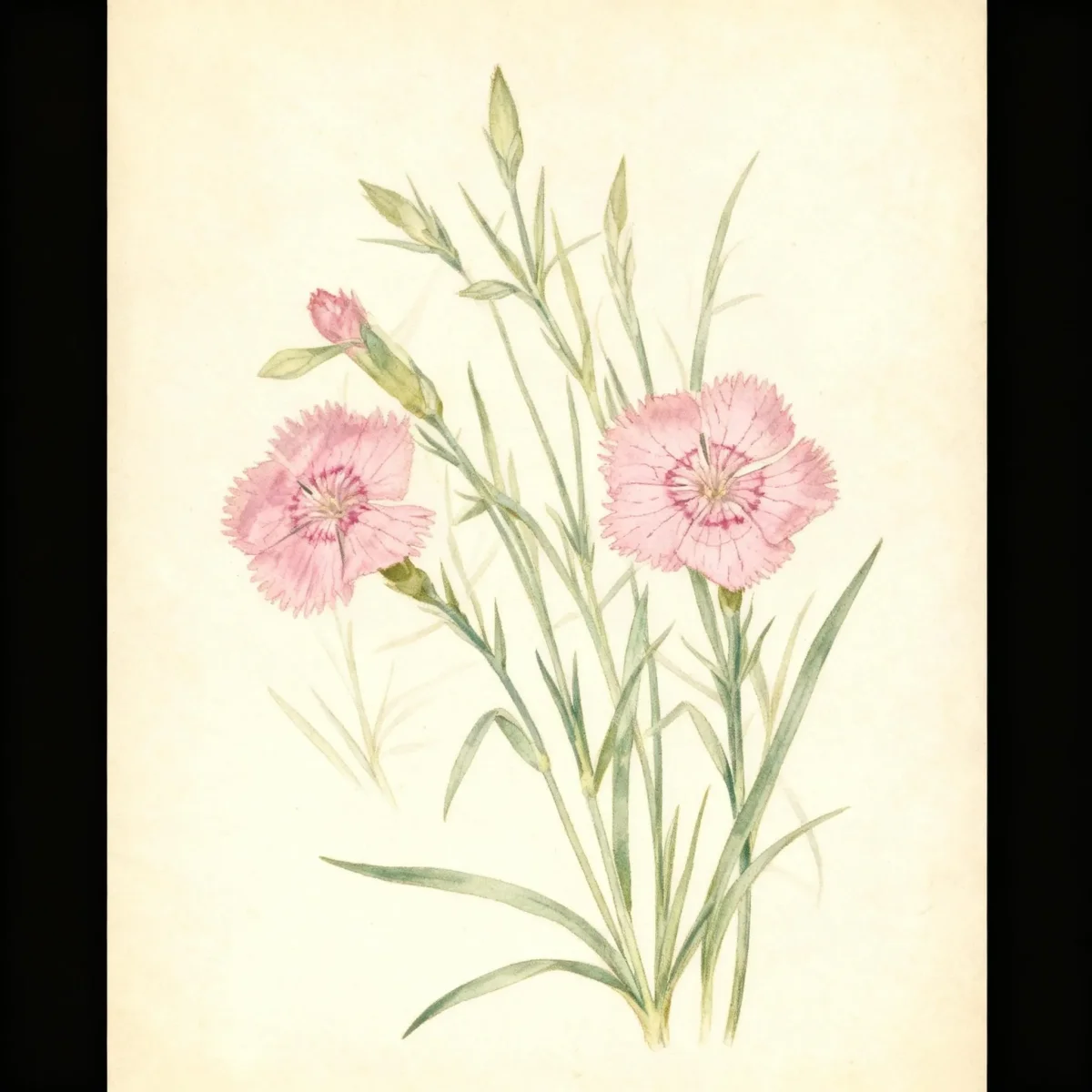
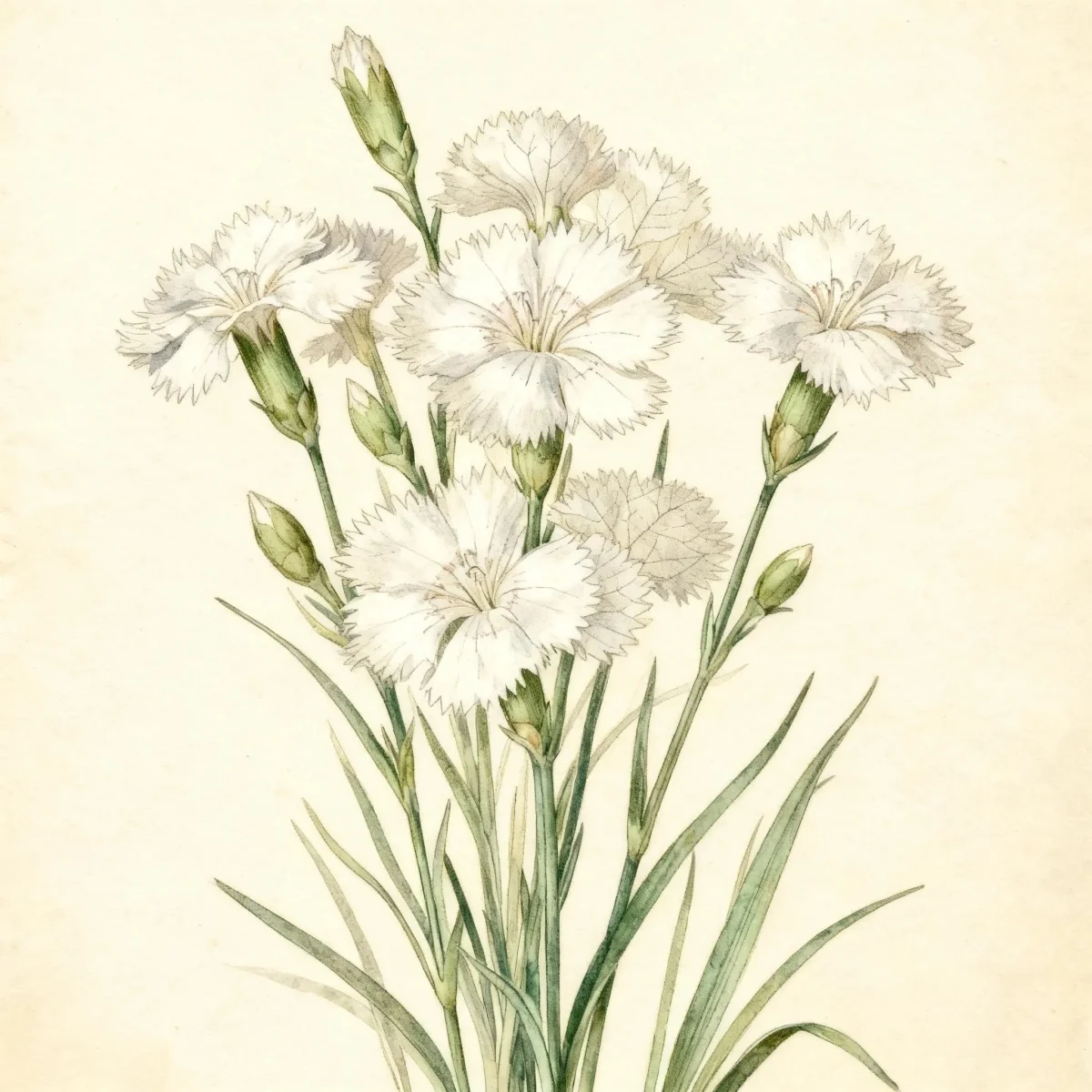
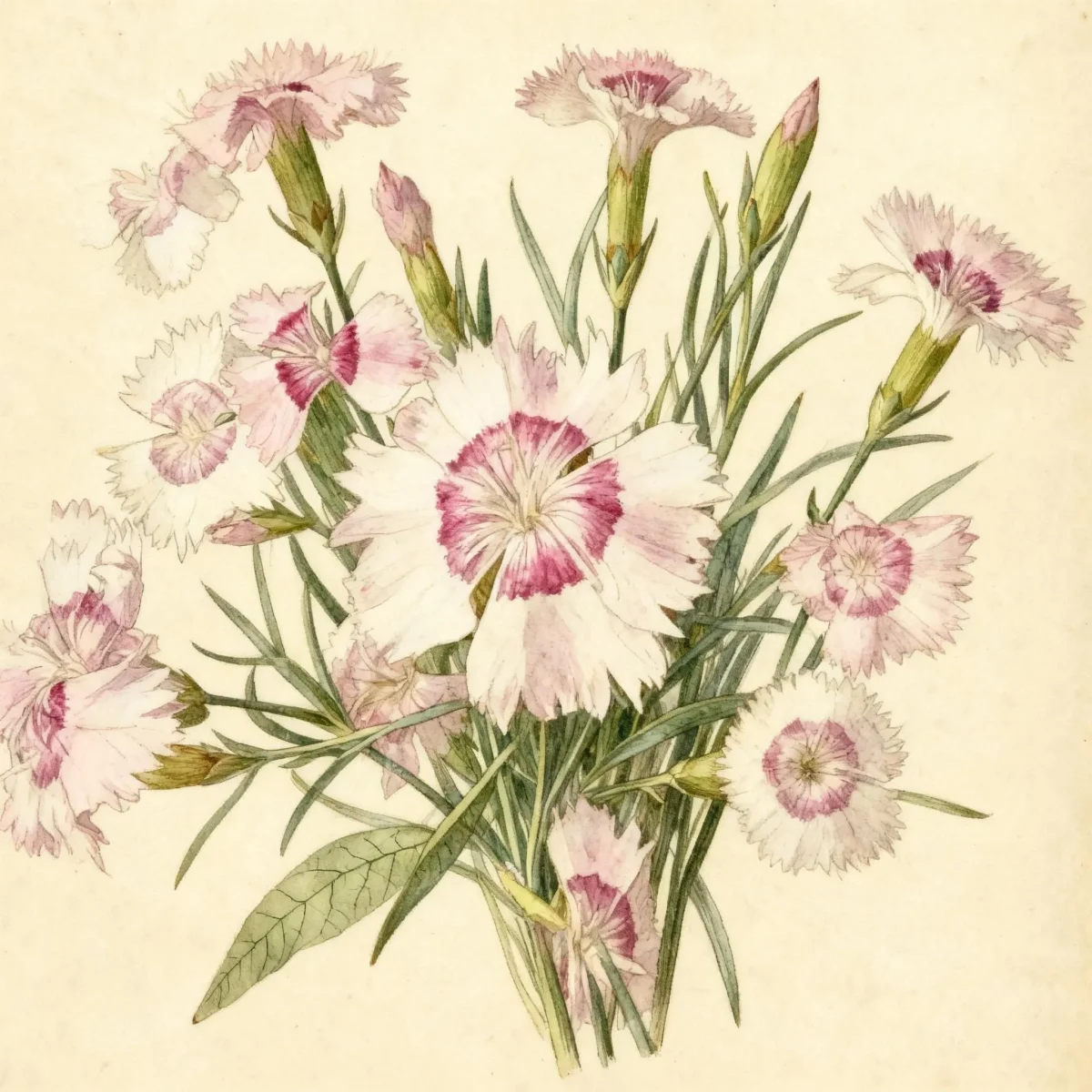
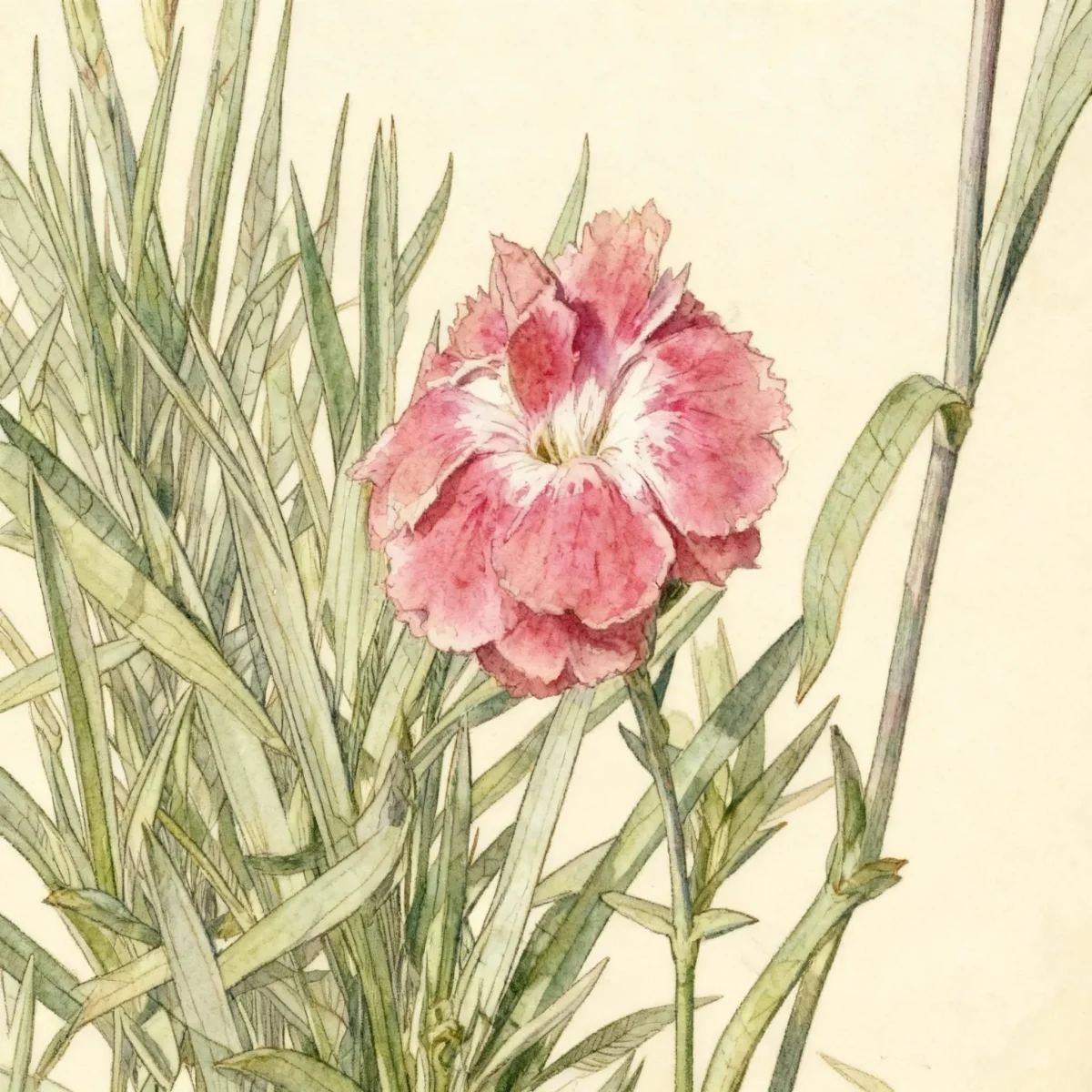
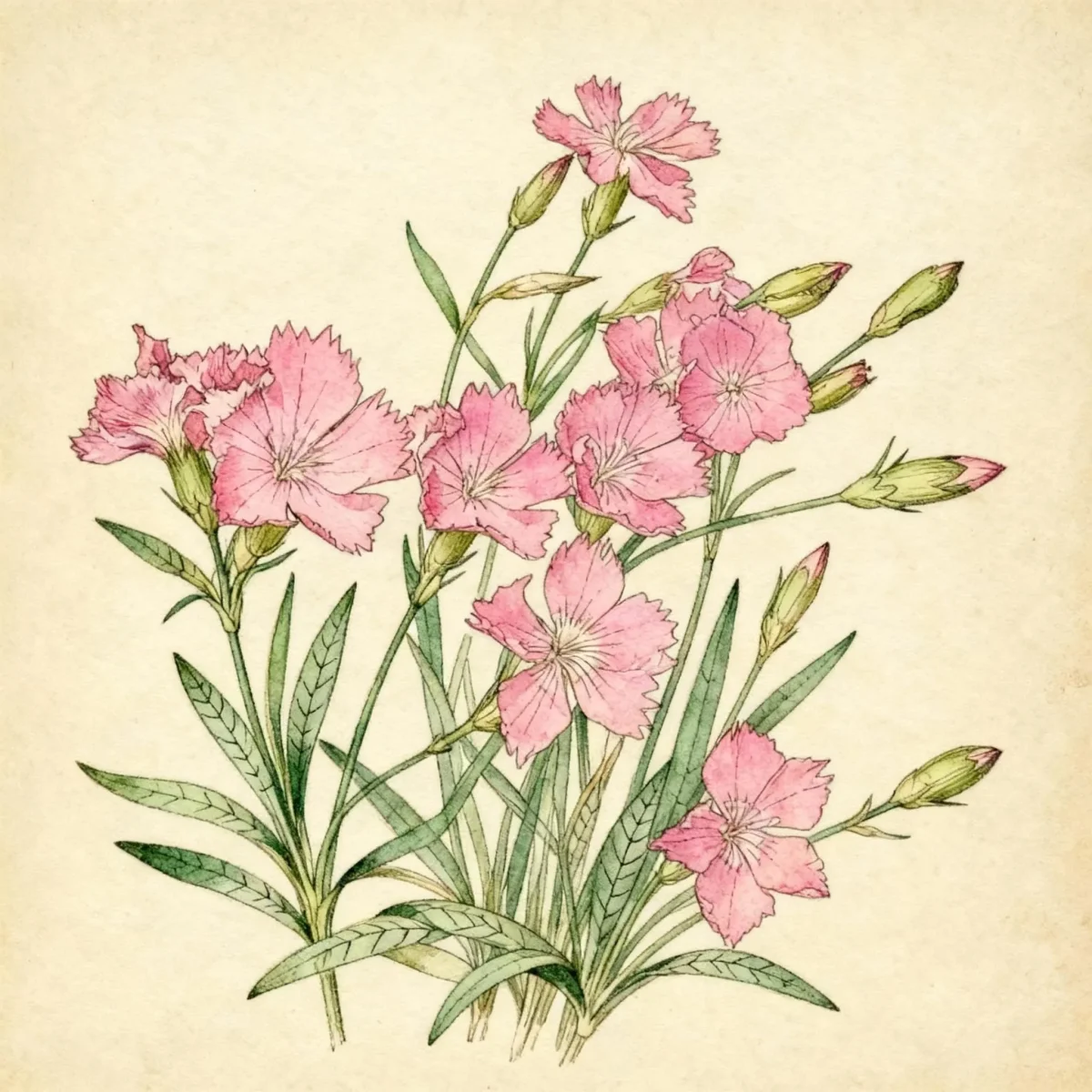
Pink (Dianthus × allwoodii 'Frosty Fire')
The vibrant Dianthus × allwoodii 'Frosty Fire' (Pink) offers showy, fragrant red blooms from May-July in USDA Zones 3-8.
Scroll down to discover growing tips, care requirements, companion plants, and more
Complete Plant Information
Overview
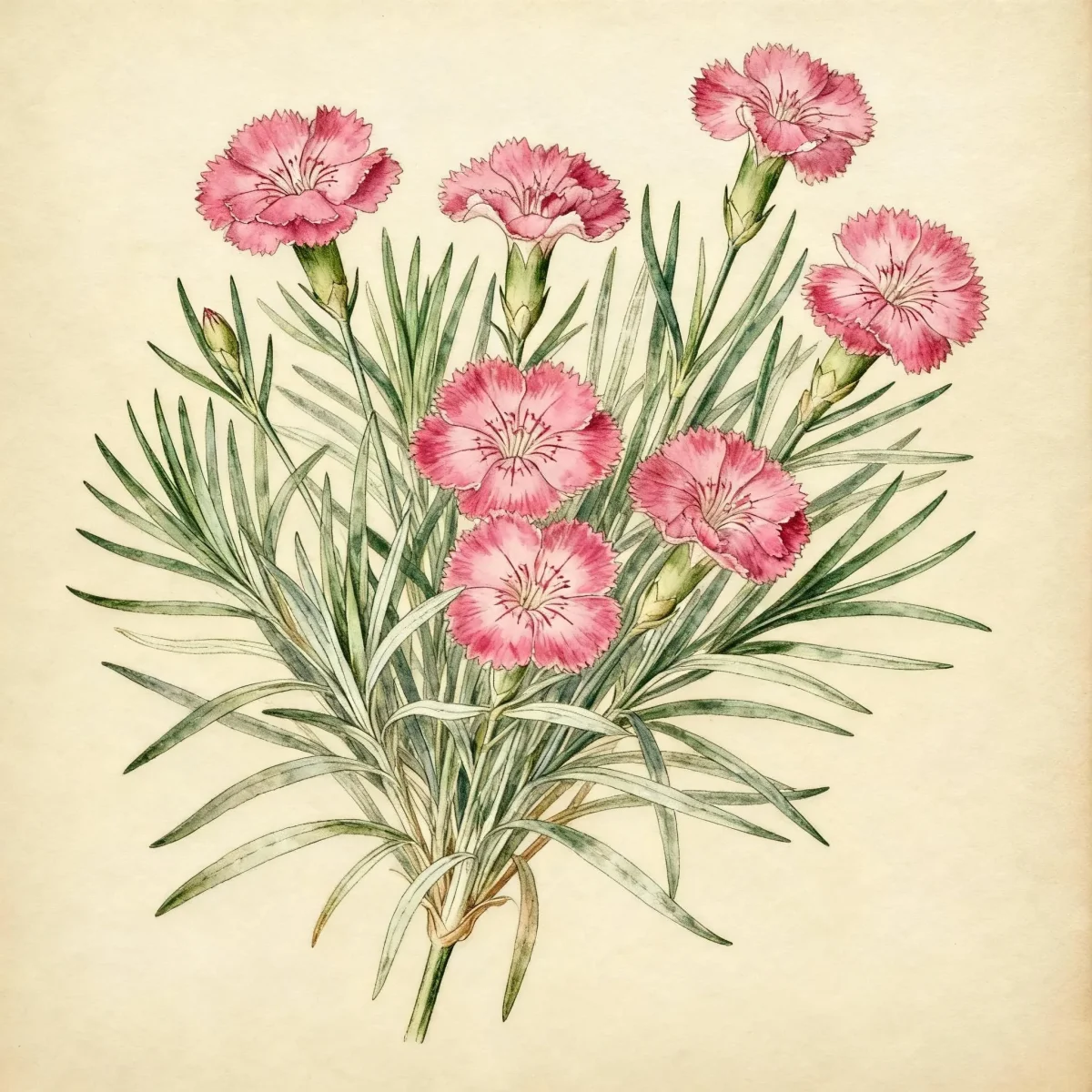
Dianthus × allwoodii ‘Frosty Fire’, commonly known as Pink, is a highly valued herbaceous perennial known for its compact form and dazzling floral display. This hybrid dianthus combines the vigor of crossing Cottage Pinks with the structure of the Carnation, resulting in plants noted for their narrow, attractive blue-green foliage. Gardeners prize the Dianthus × allwoodii ‘Frosty Fire’ for its prolific bloom period spanning late spring into summer, offering bright red, frilly flowers that emit a delightful fragrance.
These vigorous, clump-forming plants stay relatively short, creating tidy mats ideal for edging and ground cover applications. While generally easy to manage, they thrive best when provided with full sun and well-drained, fertile soil that is slightly alkaline. Achieving consistent performance from your Pink requires attention to air circulation and moisture, especially preventing the overly humid conditions that can lead to common issues.
The aesthetic impact of Dianthus × allwoodii ‘Frosty Fire’ makes it a cornerstone for rockeries and borders. Beyond their visual appeal, the fragrant nature of these flowers often attracts beneficial visitors like butterflies, enhancing the garden’s dynamic ecosystem. Planning its placement carefully to meet its full sun needs ensures a reliable showing of color throughout the prime bedding months.
Fast Facts
- Plant Family: Caryophyllaceae
- Plant Type: Herbaceous perennial
- Hardiness Zones: USDA Zones 3-8
- Size at Maturity:
- Height: 0.5-0.75 ft
- Spread: 0.75-1 ft
- Bloom Time: May to July
- Bloom Description: Red
- Sun Exposure: Full sun
- Water Needs: Medium
- Maintenance Level: Medium
How to Grow
The ideal time to establish Dianthus × allwoodii ‘Frosty Fire’ is when conditions are mild. Always plant in full sun to ensure maximum flowering; however, in extremely hot climates, providing some light afternoon shade can prevent scorching. Cultivation requires average, well-drained soil with medium moisture, leaning toward fertile and slightly alkaline compositions for best results. Proper spacing of 9–12 inches is crucial to promote good air circulation, which is vital for disease prevention.
Routine care involves deadheading spent flowers throughout the season; removing these quickly will significantly prolong the bloom period of your Pink, encouraging reblooming into early fall. Water sparingly but consistently, allowing the soil to dry slightly between waterings, as saturated, poorly-drained soil is a primary cause of crown rot. Fertilization should be light, focusing on balanced, slow-release food in early spring if the native soil is poor.
Maintenance generally involves light tidying and regular deadheading. To maintain vigor and prevent overcrowding, plan to divide the clumps of Dianthus × allwoodii ‘Frosty Fire’ every two to three years. It is important to note that this Pink variety generally struggles with the high heat and humidity often found in the deep South, making hardiness zone verification essential for success. Propagation is easily achieved through division or taking cuttings.
Landscape Uses
Dianthus × allwoodii ‘Frosty Fire’ excels in specialized locations where its low, compact mat of foliage and vibrant blooms can be fully appreciated. It is an outstanding choice for the front of borders, providing a colorful, durable edge that frames taller plantings effectively. Its tidy habit also makes it perfect for softening the hard edges of pathways or the starkness of retaining walls.
This variety performs exceptionally well in rock gardens, tucked between stones where its drainage needs are naturally met. Furthermore, the low profile of the Pink makes it an excellent ground cover for small banks and slopes, stabilizing the soil while offering season-long color. For container designs, plant Dianthus × allwoodii ‘Frosty Fire’ near the rim so its flowers spill slightly over the edge, complementing upright annuals or perennials in the center.
Standout Features
Flower Qualities
- Showy
- Fragrant
Noteworthy Characteristics
Dianthus × allwoodii is a hybrid dianthus bred in the 1920’s by English nurseryman Montague Allwood in which he crossed D. Plumarius (cottage pink) and D. Caryophylus (carnation). Vigorous, clump-forming plants are noted for gray-green foliage and fragrant solitary flowers often patterned or zoned with many fringed petals. ‘Frosty Fire’ specifically features narrow, blue-green foliage forming a low, compact mat and frilly, double flowers that are bright red with white spots, attracting butterflies with its fragrance.
Tolerances
- Deer
Potential Problems
Leaf spots are a potential cosmetic issue, especially in overly humid garden environments where plants are situated too closely together. Prevent this by ensuring sufficient spacing for air movement, as advised during planting. Crown rot is the most serious threat, occurring when the soil retains too much water; amend heavy clay soils liberally with grit or compost to improve drainage before planting. Garden pests like snails and slugs may also target the tender young growth, requiring routine monitoring and deterrents.
Frequently Asked Questions
What hardiness zones is Pink suitable for?
Dianthus × allwoodii ‘Frosty Fire’ is suitable for gardeners in USDA Hardiness Zones 3 through 8.
How large does Dianthus × allwoodii ‘Frosty Fire’ grow?
This variety typically reaches a height between 0.5 to 0.75 feet tall and generally spreads between 0.75 to 1 foot wide.
When does Pink bloom?
This Pink variety generally blooms from May through July, featuring bright red flowers, and may rebloom lightly if deadheaded.
What sun exposure does Dianthus × allwoodii ‘Frosty Fire’ need?
This plant requires full sun exposure for the most vigorous growth and best flowering performance.
Conclusion
The Dianthus × allwoodii ‘Frosty Fire’ is an indispensable addition for gardeners seeking low-growing color and delightful fragrance. Whether utilized as a border accent or as tough ground cover, the reliable performance of this Pink ensures vibrant interest mid-season. Before planting, verify your local USDA zone compatibility and ensure your chosen spot provides ample sunlight and excellent drainage for many years of enjoyment.
Companion Planting
When selecting neighbors for Dianthus × allwoodii ‘Frosty Fire’, prioritize plants that share similar cultural requirements, specifically full sun and well-drained, slightly alkaline soil. Low-mounding Silver Mound Artemisia or other gray-foliaged plants offer a beautiful textural contrast to the fine leaves of the Pink. Excellent partners include creeping Thyme varieties or low-growing Sedums, as these drought-tolerant options do not compete for moisture and thrive in the same sunny conditions that Dianthus × allwoodii ‘Frosty Fire’ demands.
Propagation Tips
One effective way to increase your stock of this vigorous cultivar is through division, ideally performed every 2 to 3 years in the early spring before new growth fully takes off. Gently lift the clump and tease apart the root structure, ensuring each section has a healthy mass of roots and shoots. Alternatively, Dianthus × allwoodii ‘Frosty Fire’ propagates reliably from stem cuttings taken from current season’s growth. Dip the cuttings in rooting hormone and place them in a sandy, well-drained medium under mist or high humidity until roots develop, providing a source of new, non-flowering plants.