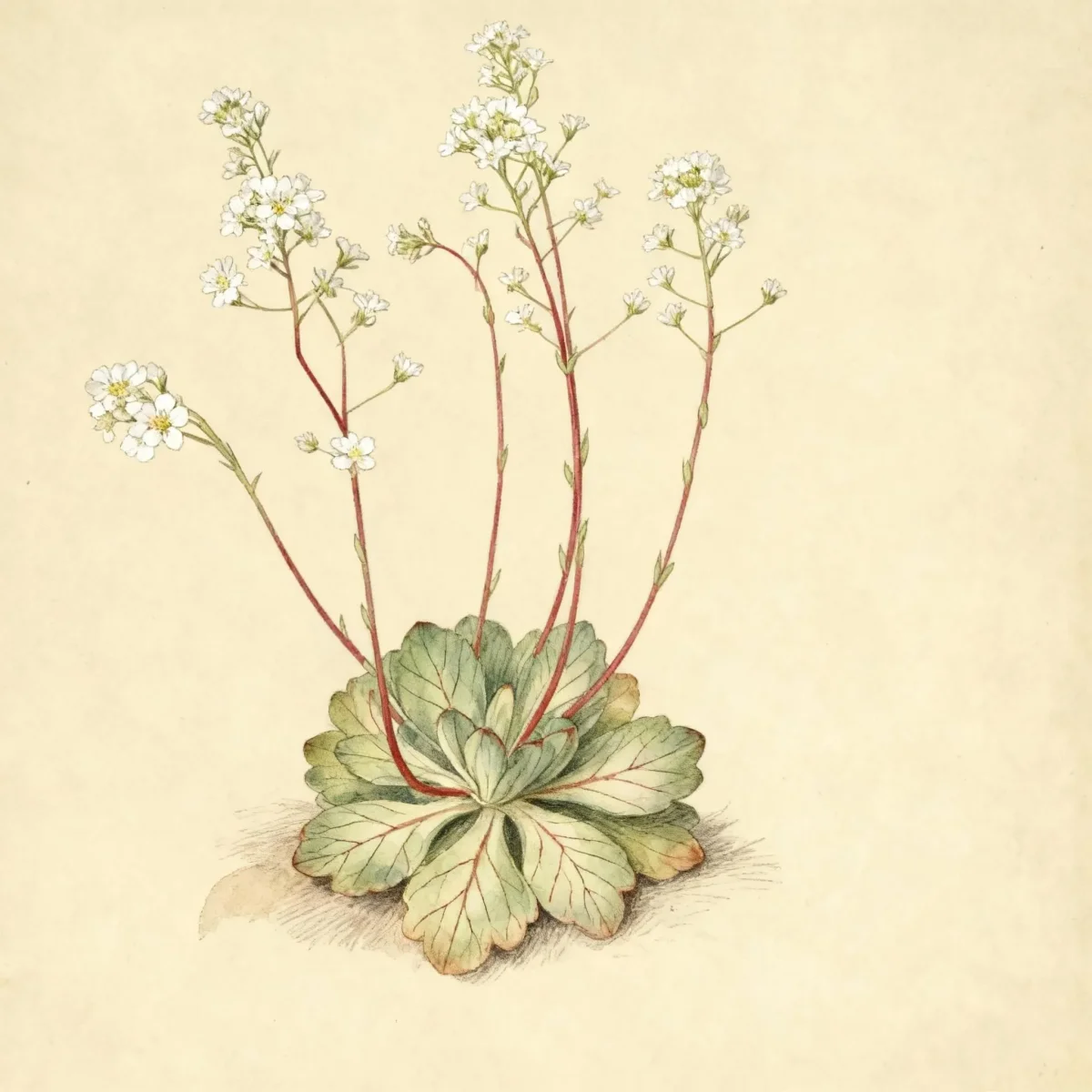
Saxifrage (Saxifraga crustata)
Saxifraga crustata, the Crusted-leaved saxifrage, is an evergreen alpine perennial ideal for rock gardens due to its silvery rosettes and yellow-white blooms.
Scroll down to discover growing tips, care requirements, companion plants, and more
Complete Plant Information
Overview
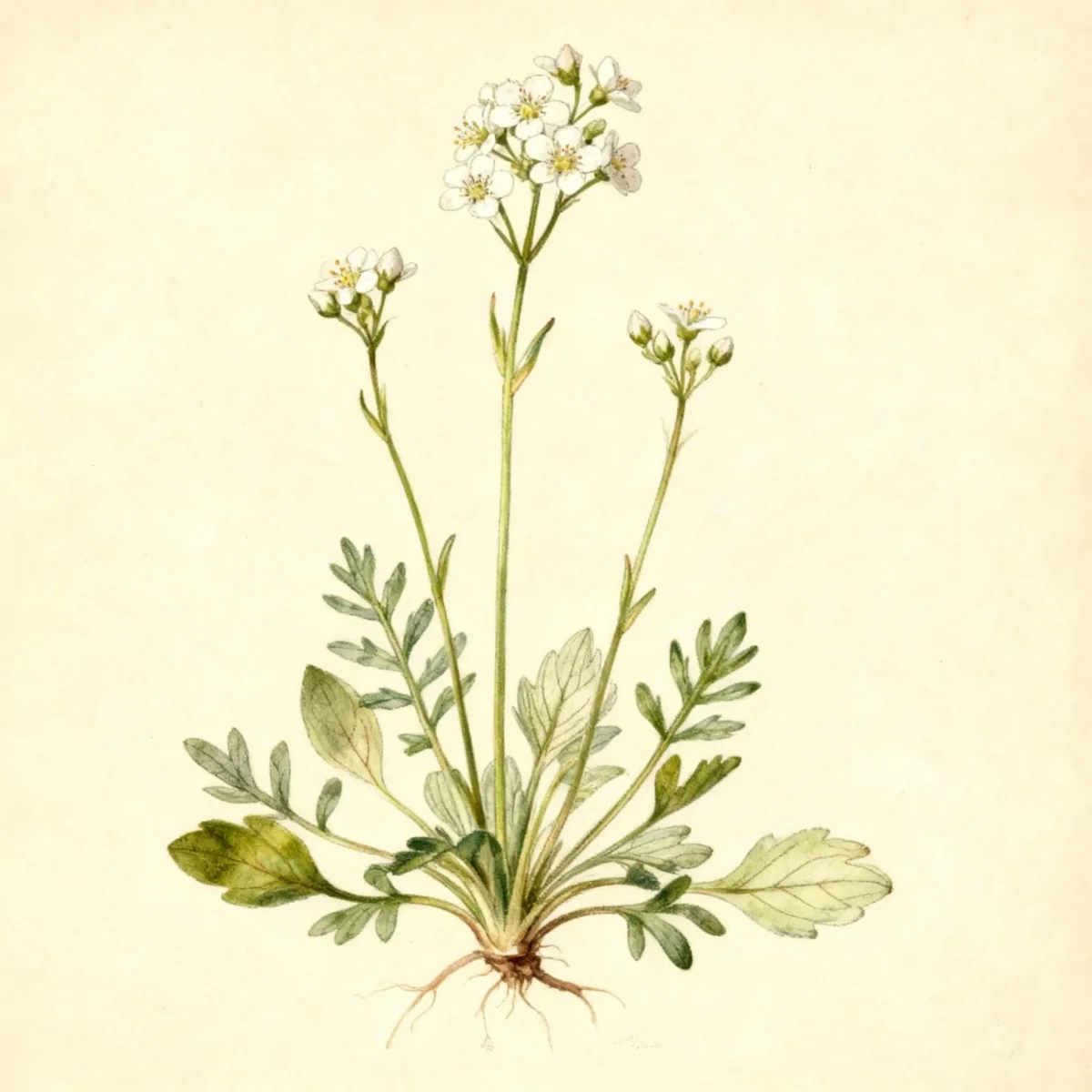
Saxifraga crustata, often known as encrusted saxifrage, is a standout alpine perennial valued for its dense, evergreen foliage mats that provide interest year-round. This Saxifrage forms tight rosettes of narrow, silvery-green leaves, whose margins feature lime-secreting pores that give the plant its distinctive, encrusted appearance. It is a superb choice for specialized rock gardens or alpine troughs where its low-growing habit complements larger stone features.
Blooming in mid-summer, the crusted-leaved saxifrage sends up slender, leafless stems bearing clusters of subtle yellow-white flowers. Native to the dolomitic outcroppings of the European Alps, this plant thrives when imitated in sharp, well-drained soil conditions reflective of its rocky origins. Successful cultivation of Saxifraga crustata ensures year-round texture and reliable seasonal color.
Fast Facts
- Plant Family: Saxifragaceae
- Plant Type: Broadleaf evergreen
- Native Range: Europe E-Alps Austria Croatia Slovenia Italy
- Hardiness Zones: USDA Zones 5-8
- Size at Maturity:
- Height: 0.5-1 ft
- Spread: 1-2 ft
- Bloom Time: July to August
- Bloom Description: Yellow-white
- Sun Exposure: Part shade
- Water Needs: Medium
- Maintenance Level: Medium
How to Grow
The ideal location for Saxifraga crustata is in part shade, mimicking the filtered light it receives under mountain cliffs. Planting should occur when the soil is moist, ensuring the substrate is sharp, gritty, and preferably neutral to alkaline. Good drainage is non-negotiable; soggy conditions, especially in summer heat, will cause the center of the Saxifrage mat to rot out.
Maintain medium water needs by keeping the soil consistently moist but never waterlogged. While Saxifraga crustata tolerates significant shade, in hot, southern climates, consistent moisture is critical if planted in sunnier spots, though deep shade is generally preferred for longevity. Avoid dry soils entirely, as the plant struggles when dehydrated.
Propagation is relatively straightforward, allowing gardeners to easily increase their stock of this striking Saxifrage. Divide established clumps easily, or use softwood cuttings taken during the growing season, though seed can also be used. In cooler climates, these plants require minimal winter protection, but gardeners in the deep South should take extra care to ensure excellent air circulation and sharp drainage to prevent summer decline.
Landscape Uses
The primary role of Saxifraga crustata in the garden is as an exceptional ground cover and an essential component of architectural plantings. Plants form attractive, spreading mats that beautifully hug the ground, perfect for tucking between large rocks, filling narrow crevices, or gently arching over the edge of rock walls. These characteristics make the perennial ideal for specialized rock gardens and established alpine areas.
Use this low-growing Saxifrage along border fronts where its evergreen, silver-tinged foliage can contrast sharply with darker neighbors. It naturalizes well in appropriate settings, creating a durable, colorful tapestry layer. Consider pairing Saxifraga crustata with other woodland or alpine species that share similar shade and sharp drainage requirements, such as small ferns or creeping thyme varieties.
Standout Features
Flower Qualities
- Showy
Noteworthy Characteristics
Saxifraga crustata, commonly called silver saxifrage, is an evergreen alpine perennial which features rosettes of narrow silvery green leaves (each to 1 5/8” long) forming mats of foliage typically rising to 8” tall. Leaf margins have lime-secreting pores which give the plant its silvery appearance, hence the common name. Red leafless stems rise from the foliage to 10-12” tall in summer bearing terminal branched panicles of dull yellow-white flowers. This plant is native to certain areas of the European Alps primarily in dolomitic outcroppings in the Dolomite Mountain Range in northeastern Italy and from Austria and Slovenia south to Montenegro and Serbia.Genus name comes from the Latin words saxum meaning rock and frangere meaning to break in reference to habit of some Saxifrage plants to take up residence in the fissures of rocks resulting over time in a further eroding or crumbling (breaking away) of the rock.Specific epithet comes from the Latin word crustatus meaning encrusted in reference to the lime-encrusted leaf margins of this plant. An additional common name for this plant is encrusted saxifrage.
Tolerances
- Rabbit
- Deer
Potential Problems
This resilient Saxifrage rarely succumbs to serious insect or disease problems when sited correctly. The primary risk is cultural, particularly overheating and excessive moisture, which leads to crown rot in humid summers, especially in the Southeast US. Ensure planting beds are amended heavily with grit or small gravel to promote drainage and prevent the plant from sitting in damp soil over winter dormancy.
Frequently Asked Questions
What hardiness zones is Saxifraga crustata suitable for?
This plant is rated for USDA Zones 5 through 8, making it adaptable across many temperate gardening climates.
How large does Saxifrage grow?
At maturity, this Saxifrage typically reaches only 0.5 to 1 foot in height, spreading between 1 and 2 feet wide to form dense mats.
When does Saxifrage bloom?
Saxifraga crustata flowers appear between July and August, offering clusters of yellow-white blooms above the silvery foliage.
What sun exposure does Saxifraga crustata need?
This species prefers part shade but can surprisingly tolerate sunny conditions provided that soil moisture remains consistent throughout the growing season.
Conclusion
The crusted-leaved saxifrage is an invaluable addition for gardeners seeking low-maintenance, textural ground cover, especially in challenging rocky or alpine settings. Its striking, silvery evergreen foliage ensures that this Saxifrage provides visual interest even when not in bloom. Before planting, confirm your site offers sharp drainage and part shade to give your Saxifraga crustata the best chance to thrive for years to come.
Companion Planting
When integrating Saxifraga crustata into a rock garden design, select companions that share its preference for sharp drainage and neutral to alkaline soil pH. Companion plants should ideally be short or medium in height so as not to shade out the low-growing Saxifrage. Excellent neighbors include various small, slow-growing sempervivums (Hens and Chicks), Sedums that prefer grit, or low-mounding varieties of Dianthus.
For areas with consistently moist, cool conditions where the Saxifrage is thriving, consider pairing it with small native ferns or moisture-loving mosses that colonize similar rocky slopes in the wild. Avoid aggressive spreading perennials that might choke out the tight rosettes of the crusted-leaved saxifrage, as physical overcrowding can impede air circulation and lead to moisture retention issues near the crown.
Propagation Tips
Division is often the easiest way to expand your collection of Saxifraga crustata. This can be performed at almost any time the ground is workable, though spring or early fall are ideal. Gently lift a section of the mat, ensuring the separated piece has several healthy rosettes attached to a section of root tissue, and immediately replant it in the prepared gritty mix.
Softwood cuttings are another effective method, particularly useful for propagating rare or desirable color forms. Take non-flowering stem cuttings in late spring or early summer, dip the ends in rooting hormone (optional), and place them directly into a sharp, sandy propagation mix. Keep the cuttings consistently moist and shaded until roots develop, usually within several weeks.