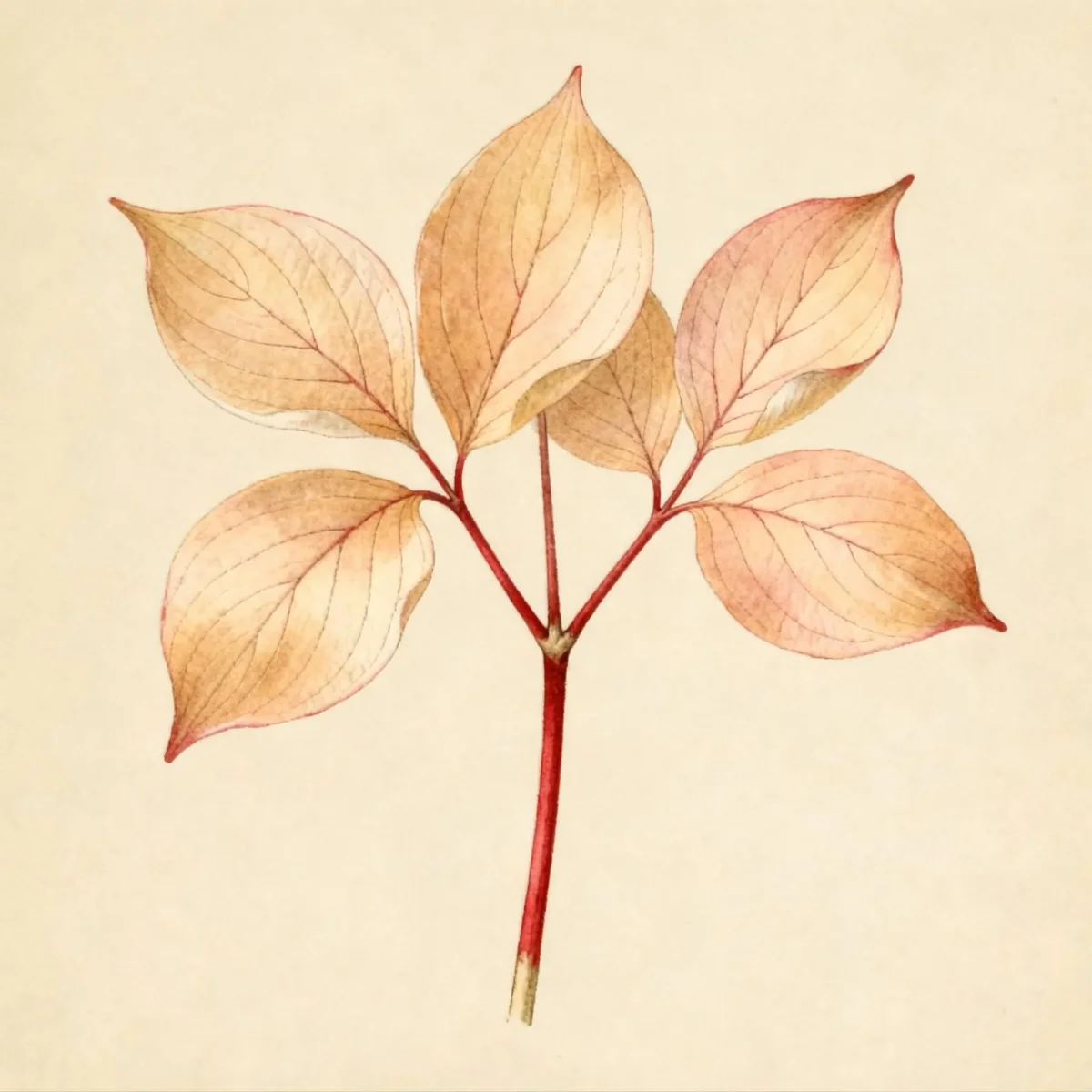
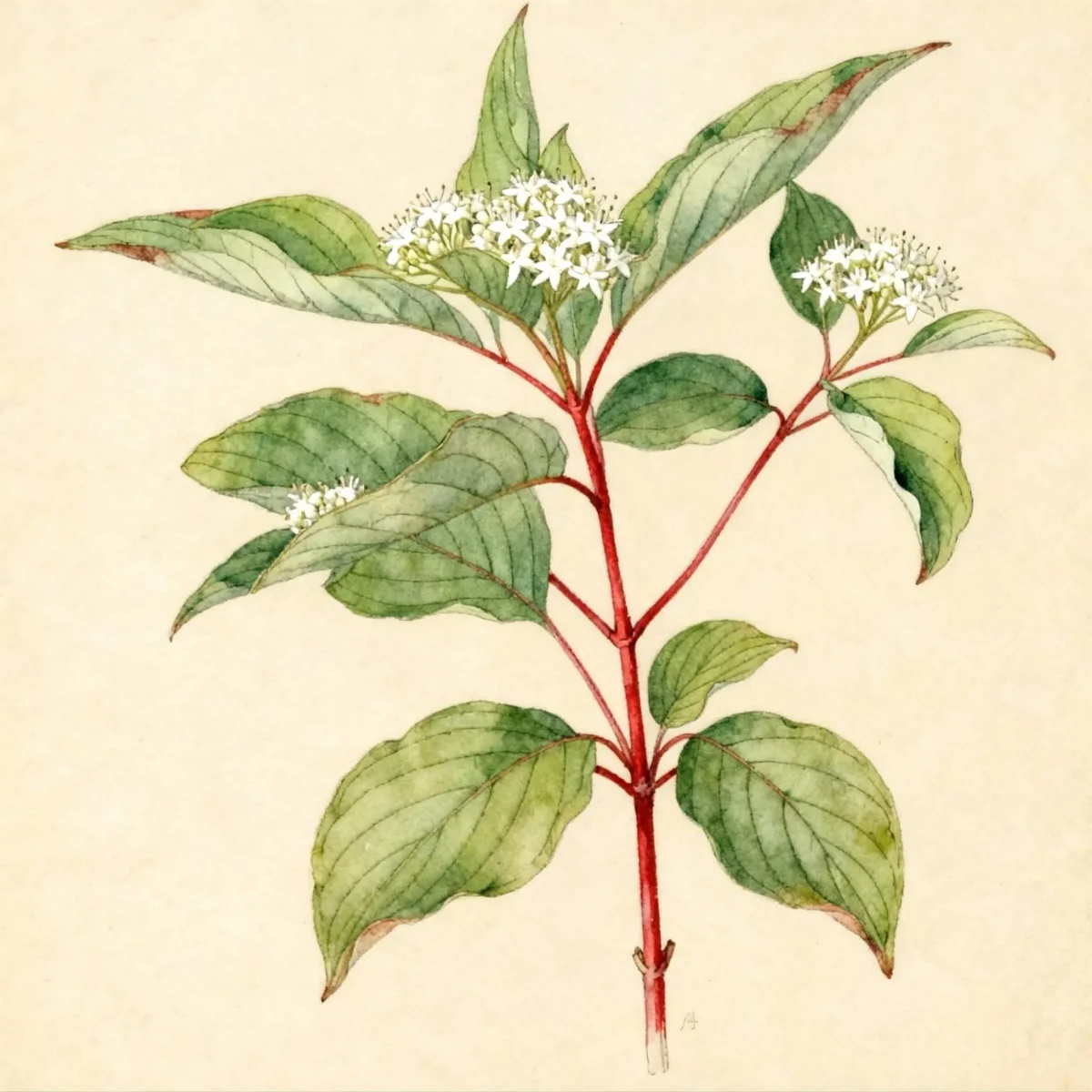
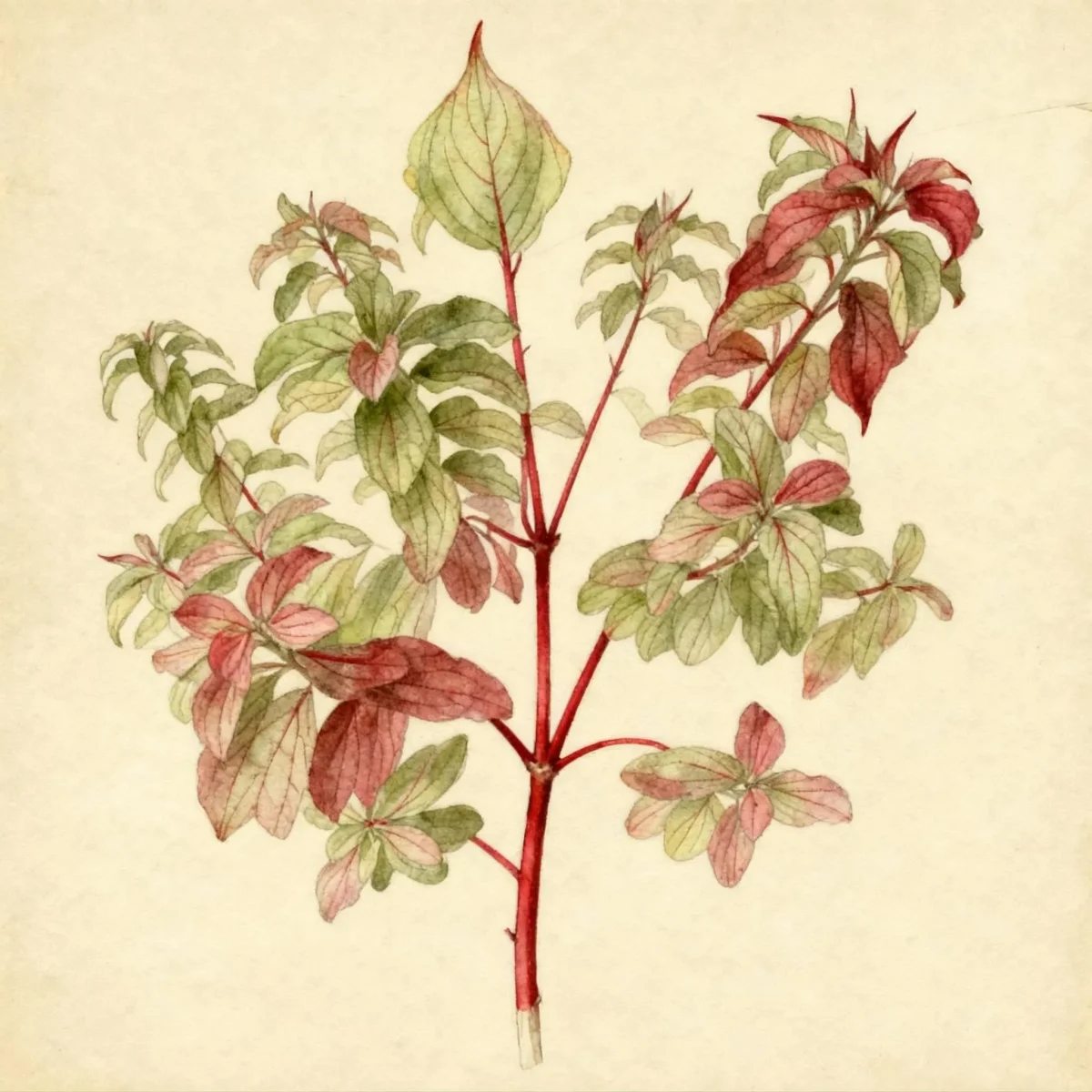
Red twig dogwood (Cornus sericea 'Neil Z' PUCKER UP)
Compact Cornus sericea 'Neil Z' PUCKER UP provides brilliant red winter stems, puckered foliage, and thrives in wet sites. USDA Zones 3-7.
Scroll down to discover growing tips, care requirements, companion plants, and more
Complete Plant Information
Overview
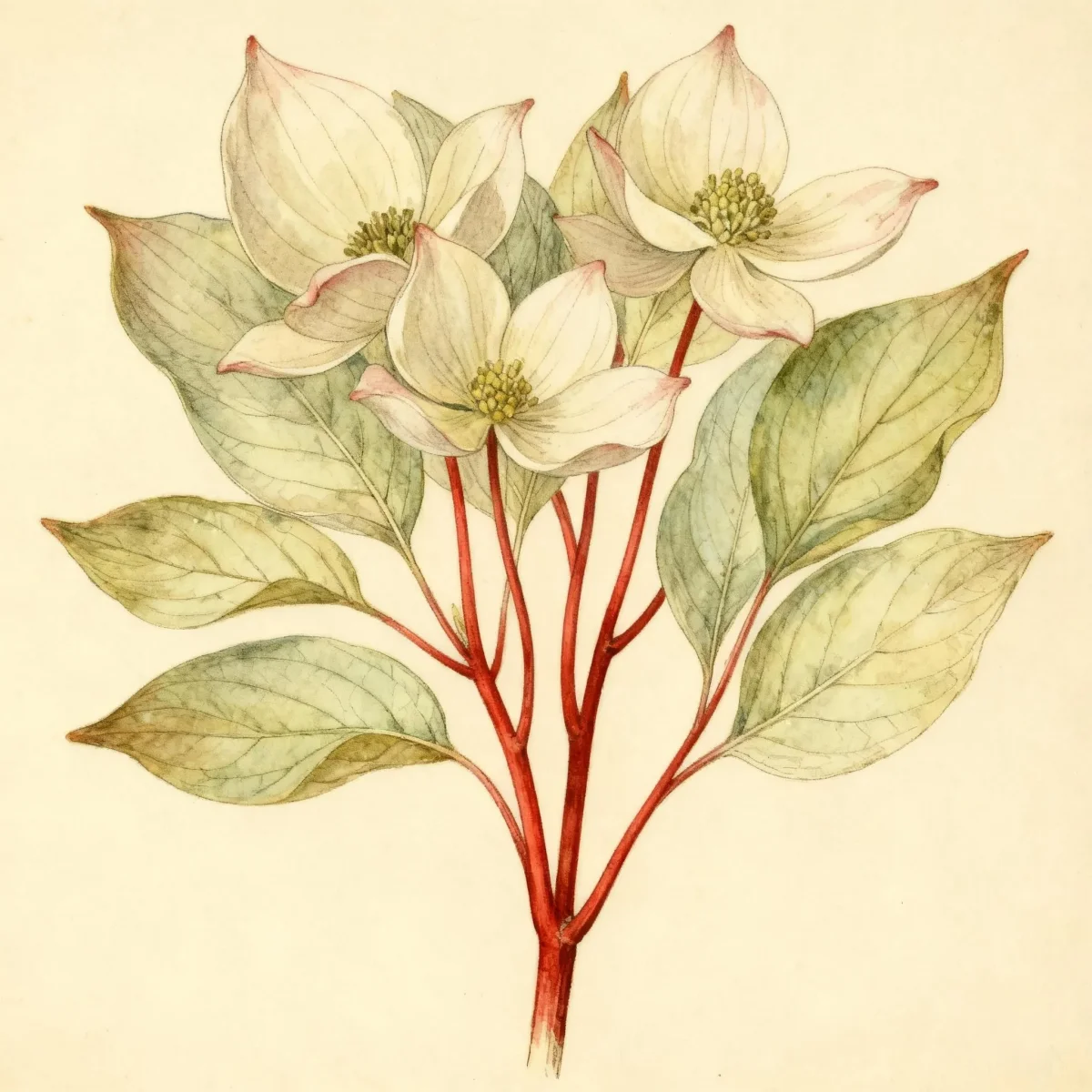
Cornus sericea ‘Neil Z’ PUCKER UP, or Red twig dogwood, is a valuable, compact shrub, perfect for adding three-season interest to the landscape. This cultivar is highly prized not only for its reliably bright red winter stems, a hallmark of the species, but also for its unique, noticeably puckered (rugose) green foliage during the growing season. Growing only 3 to 4 feet tall and wide, it offers the visual impact of larger red dogwoods in a more restrained form.
This cultivar flourishes where many plants struggle, thriving in medium to wet soils, making it an excellent choice for rain gardens or moist borders. While the native Red twig dogwood can reach 9 feet, this selection maintains a tidy, upright habit, requiring minimal space. The white spring flowers and subsequent summer berries provide subtle ornamentation, but the primary aesthetic draw remains the vibrant twig coloration against snow.
Gardeners seeking reliable winter color should prioritize Cornus sericea ‘Neil Z’ PUCKER UP. Its tolerance for various soil conditions, including poor clay and wet areas, adds to its versatility. By managing its growth through selective pruning, you ensure the densest population of brightly colored new wood, maximizing the visual return on this exceptional plant selection.
Fast Facts
- Plant Family: Cornaceae
- Plant Type: Tree
- Hardiness Zones: USDA Zones 3-7
- Size at Maturity:
- Height: 3-4 ft
- Spread: 3-4 ft
- Bloom Time: May to June
- Bloom Description: White
- Sun Exposure: Full sun to part shade
- Water Needs: Medium to wet
- Maintenance Level: Medium
How to Grow
Cornus sericea ‘Neil Z’ PUCKER UP should be planted in spring or fall in a location that receives full sun to partial shade. Due to its preference for moisture, this Red twig dogwood performs best in organically rich, fertile soils that remain consistently moist. It demonstrates remarkable tolerance for swampy or boggy conditions, which is a significant advantage when planting in low spots near water features.
Watering should be regular, especially while establishing, ensuring the soil never dries out completely; aim for consistently moist to wet conditions. Fertilization is rarely necessary if planted in rich soil. If colonial spread via root suckering is undesired, root pruning with a spade or promptly removing suckers is required to maintain a singular clump.
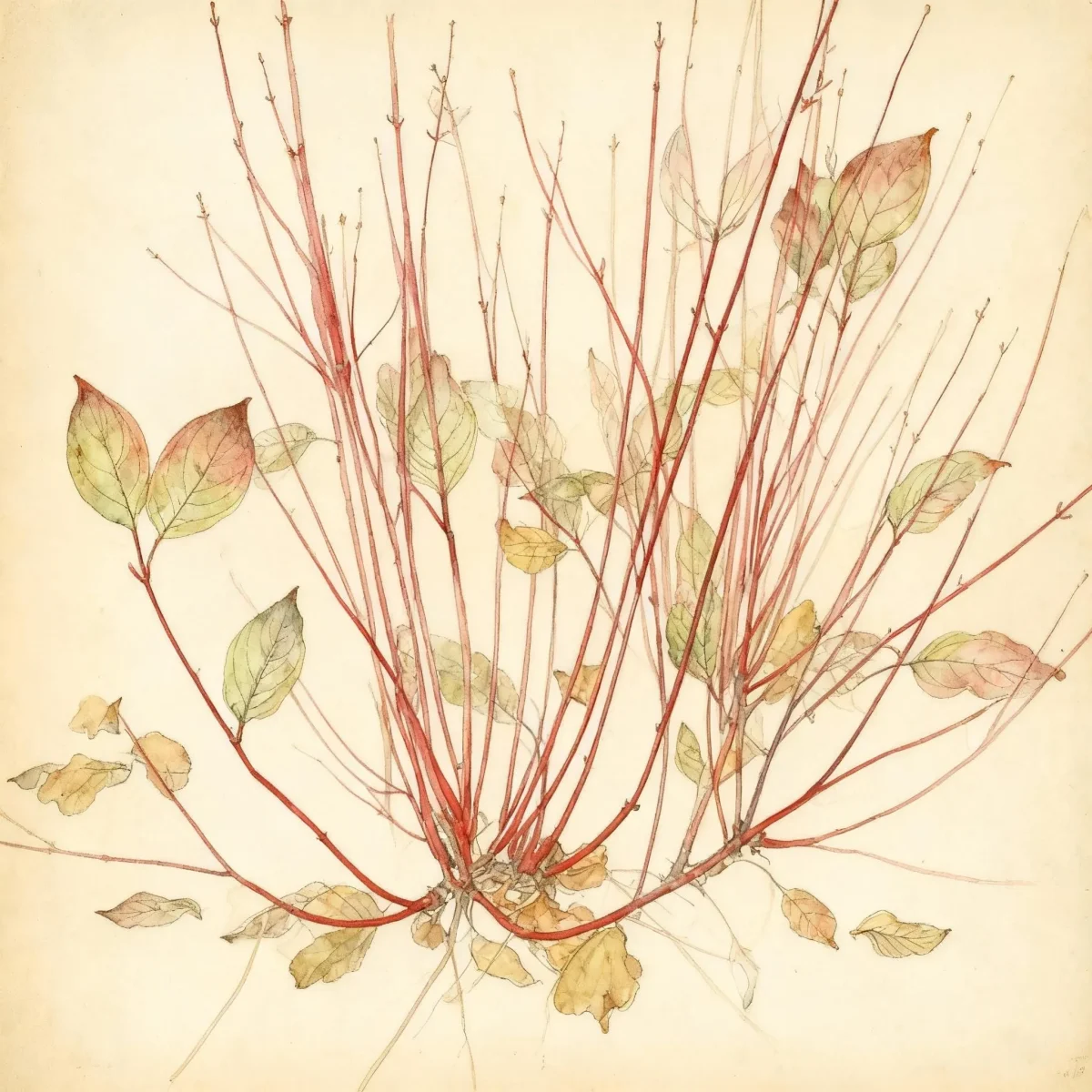
Pruning is the key to maximizing the ornamental appeal of Cornus sericea ‘Neil Z’ PUCKER UP. While not strictly required, removing 20-25% of the oldest stems each early spring encourages the vigorous growth of new shoots, which display the most intense, showy red winter color. Alternatively, coppice all stems close to the ground (about 8 inches high) every 2 to 3 years for a complete renewal. Be aware that heavy pruning done early in spring will sacrifice the current year’s light flower display.
Landscape Uses
The compact nature of Cornus sericea ‘Neil Z’ PUCKER UP makes it incredibly useful for structure in smaller garden spaces. It shines when massed to create a striking, low-maintenance hedge where its bright red stems offer contrast throughout the winter months. Combining this Red twig dogwood with dark green evergreens is a classic design move to make the winter color pop.
Its tolerance for wet feet means it excels in naturalistic plantings, particularly along the margins of ponds, streams, or in dedicated rain gardens. Here, you can allow it to spread naturally, utilizing its root system to help stabilize moist soil and combat erosion. For property lines or screening, planting drifts of this dogwood creates an effective, colorful border.
Standout Features
Flower Qualities
- Showy
Fruit Qualities
- Showy
Noteworthy Characteristics
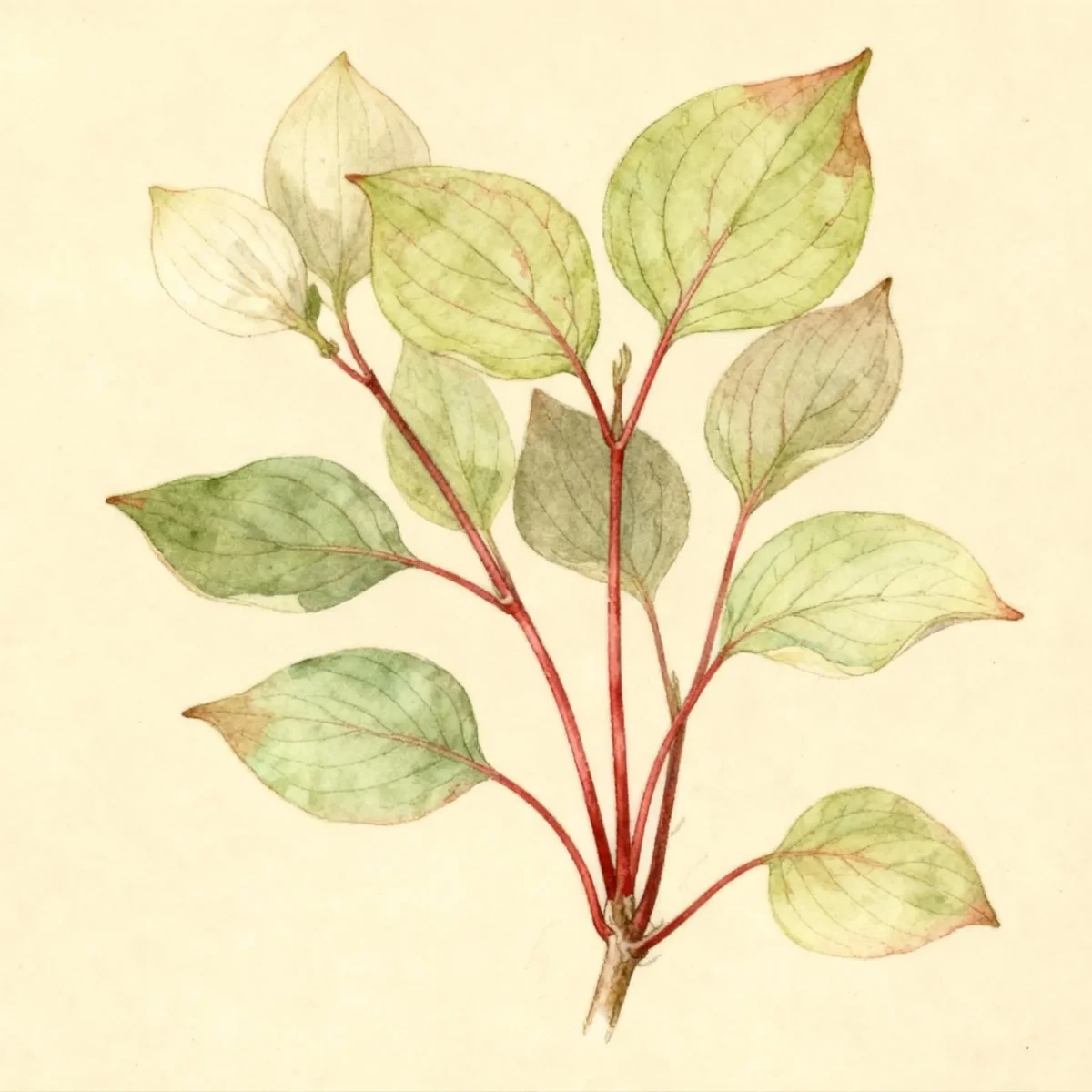
The cultivar ‘Neil Z’, sold as PUCKER UP, is distinguished by its rugose, noticeably puckered green leaves and its compact size, typically maturing at only 3-4 feet tall. It is a naturally occurring branch mutation selected for these features, offering glossy, thicker foliage compared to the larger species plants. Its primary ornamental feature, the showy bright red winter stems, is best displayed when older wood is pruned out annually.
Tolerances
- Deer
- Erosion
- Clay Soil
- Wet Soil
Potential Problems
Cornus sericea ‘Neil Z’ PUCKER UP is susceptible to several common fungal issues, including leaf and twig blights, leaf spots, and canker, particularly when stressed. Insect pests like scale, leaf miners, and bagworms may occasionally appear, requiring targeted treatment. To prevent stress that invites disease, ensure optimal moisture levels and avoid planting in overly hot, humid locations south of USDA Zone 7, where the plant can decline rapidly.
Frequently Asked Questions
What hardiness zones is Red twig dogwood suitable for?
This specific cultivar, Cornus sericea ‘Neil Z’ PUCKER UP, is suitable for USDA Zones 3 through 7.
How large does Cornus sericea ‘Neil Z’ PUCKER UP grow?
It maintains a compact size, typically reaching a mature height between 3 and 4 feet, with a spread of 3 to 4 feet.
What sun exposure does Red twig dogwood need?
For best performance and the most vibrant stem color, plant this shrub in full sun to partial shade exposure.
When does Cornus sericea ‘Neil Z’ PUCKER UP bloom?
The small, white flowers appear reliably from May into June.
Conclusion
Cornus sericea ‘Neil Z’ PUCKER UP is an exceptional native shrub, offering dense structure, unique puckered texture, and unparalleled winter interest thanks to its brilliant red stems. Whether integrating this Red twig dogwood into a wet border or using it as a specimen, its compact nature simplifies placement. Before adding it to your garden, confirm your location falls within USDA Zones 3-7 and plan for spring pruning to guarantee maximum winter color.
Companion Planting
When selecting companions for Cornus sericea ‘Neil Z’ PUCKER UP, focus on plants that share similar moisture requirements, such as ferns, irises, or various sedges planted in the perennial layer. For effective textural contrast, pair it with fine-needled evergreens like dwarf Alberta spruce or plants that maintain vertical height to offset the dogwood’s mounding shape. If you desire an alternative winter stem color, consider planting cultivars of Cornus sericea that display yellow or deep purple stems nearby for a dynamic seasonal display.
Design Ideas for Winter Interest
Maximizing the impact of the red stems on Cornus sericea ‘Neil Z’ PUCKER UP requires careful spatial planning during the summer. Plant this shrub where it can be viewed from windows or outdoor seating areas during the dormant season. Grouping three or more shrubs together will create a more substantial block of color than planting single specimens intermittently throughout the garden. Furthermore, using a dark backdrop, such as a tall evergreen hedge or a dark fence, significantly amplifies the intense scarlet hue of the stems against the snow.