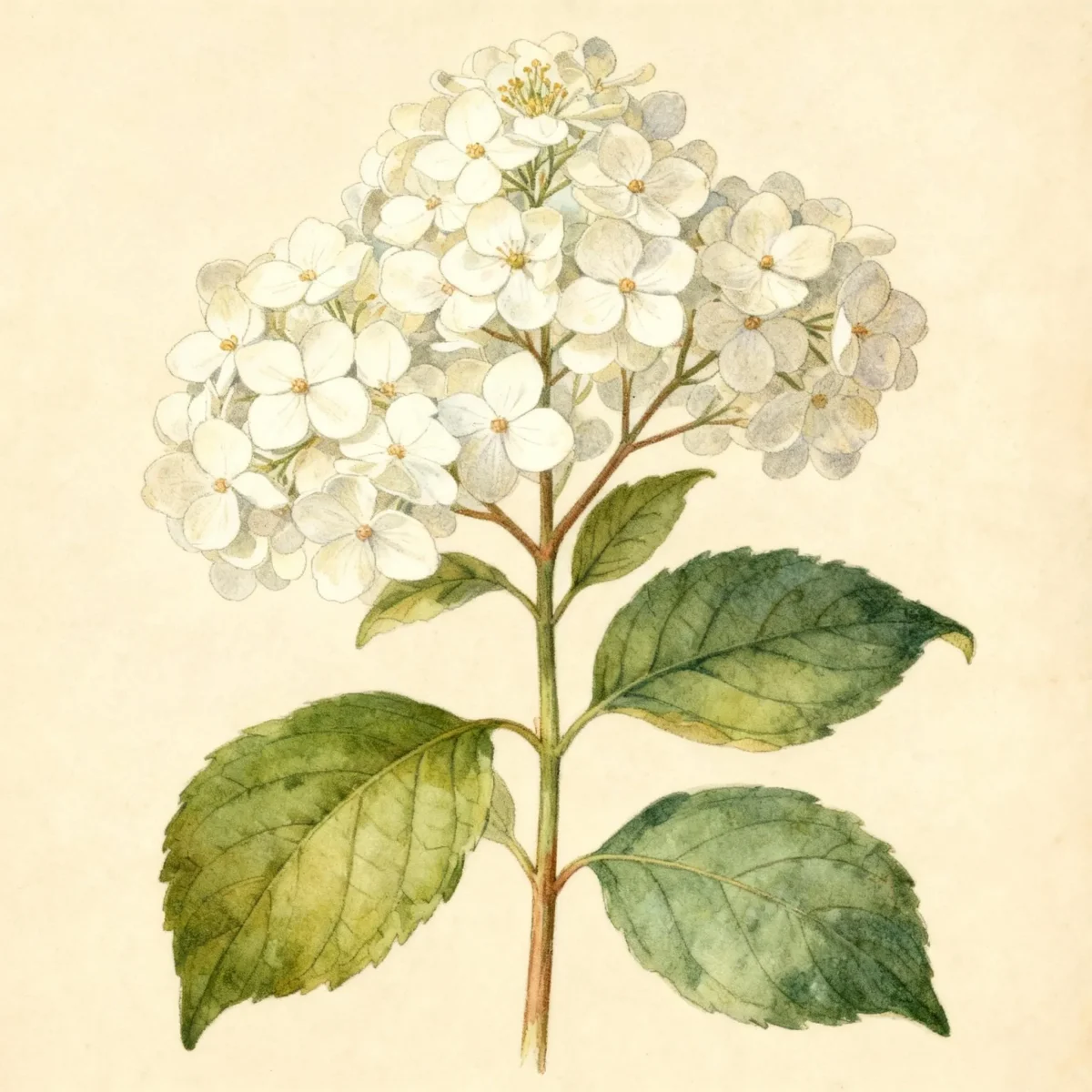
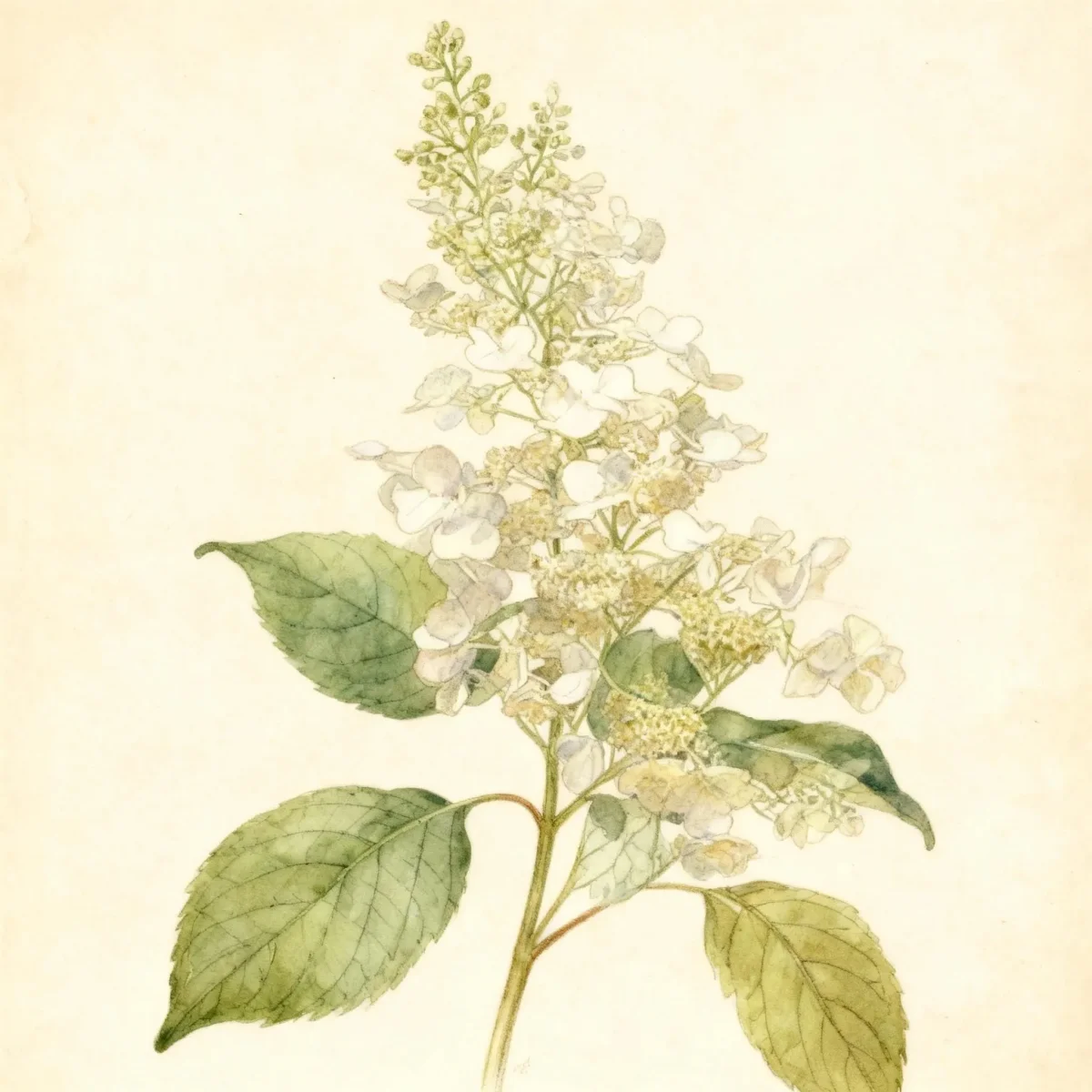
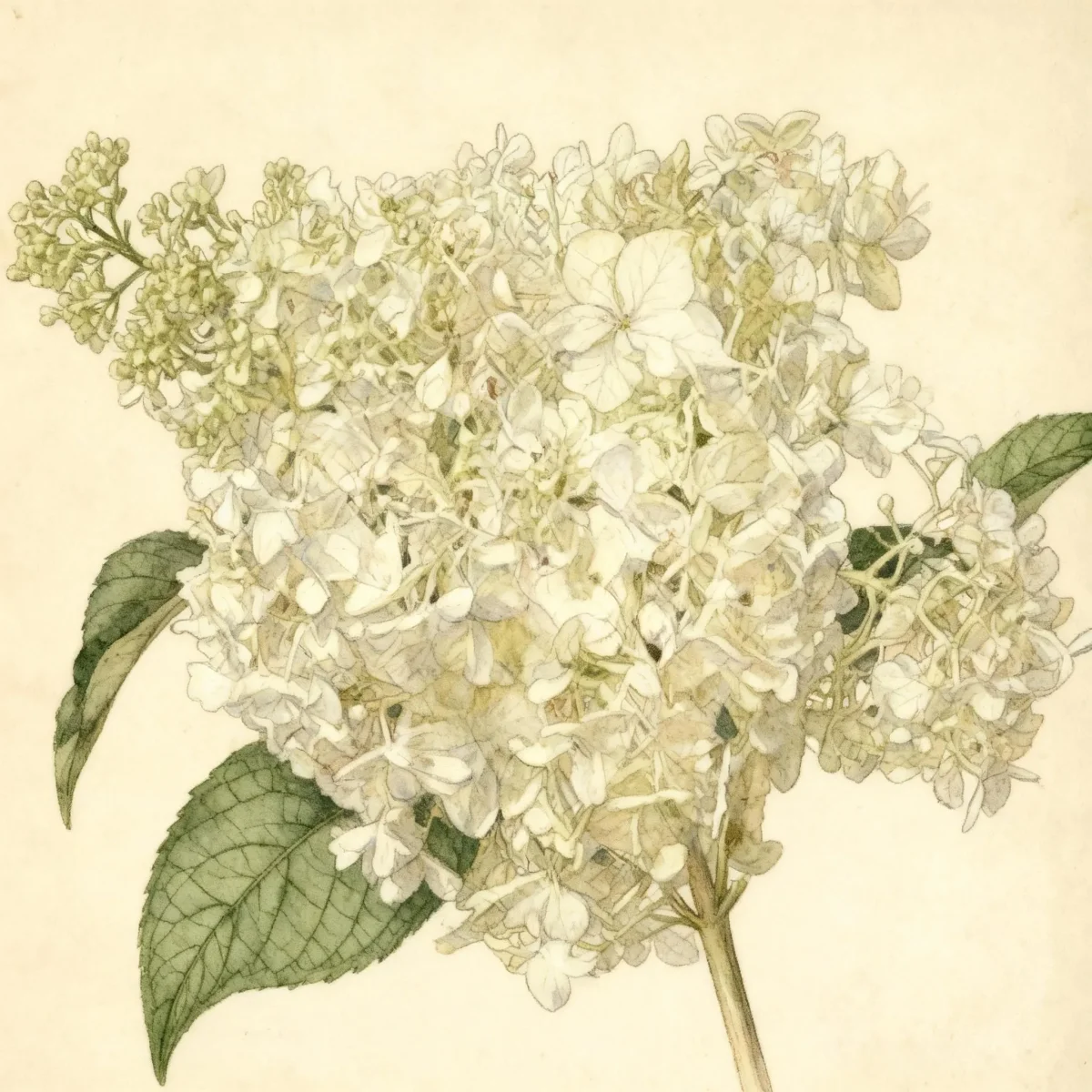
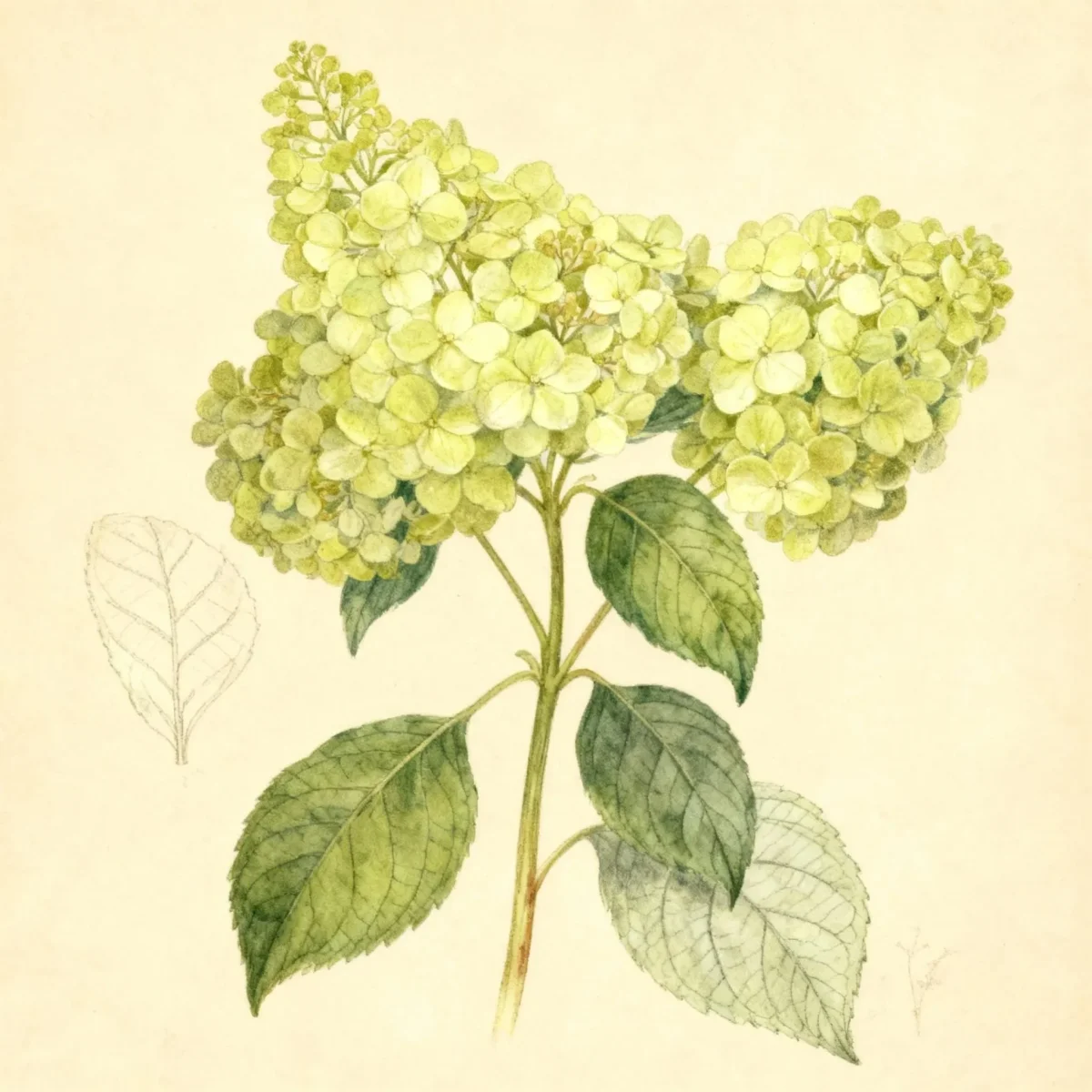
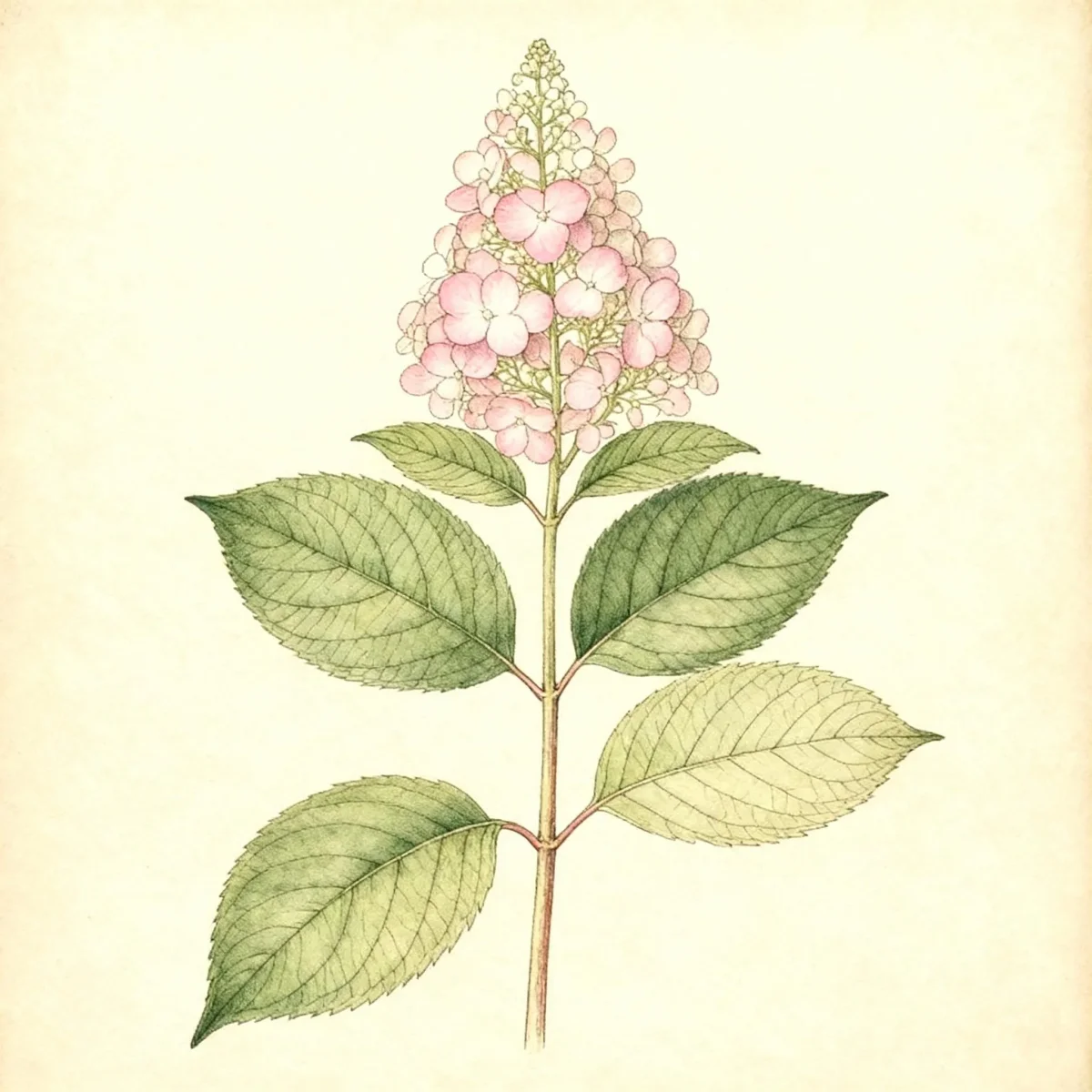
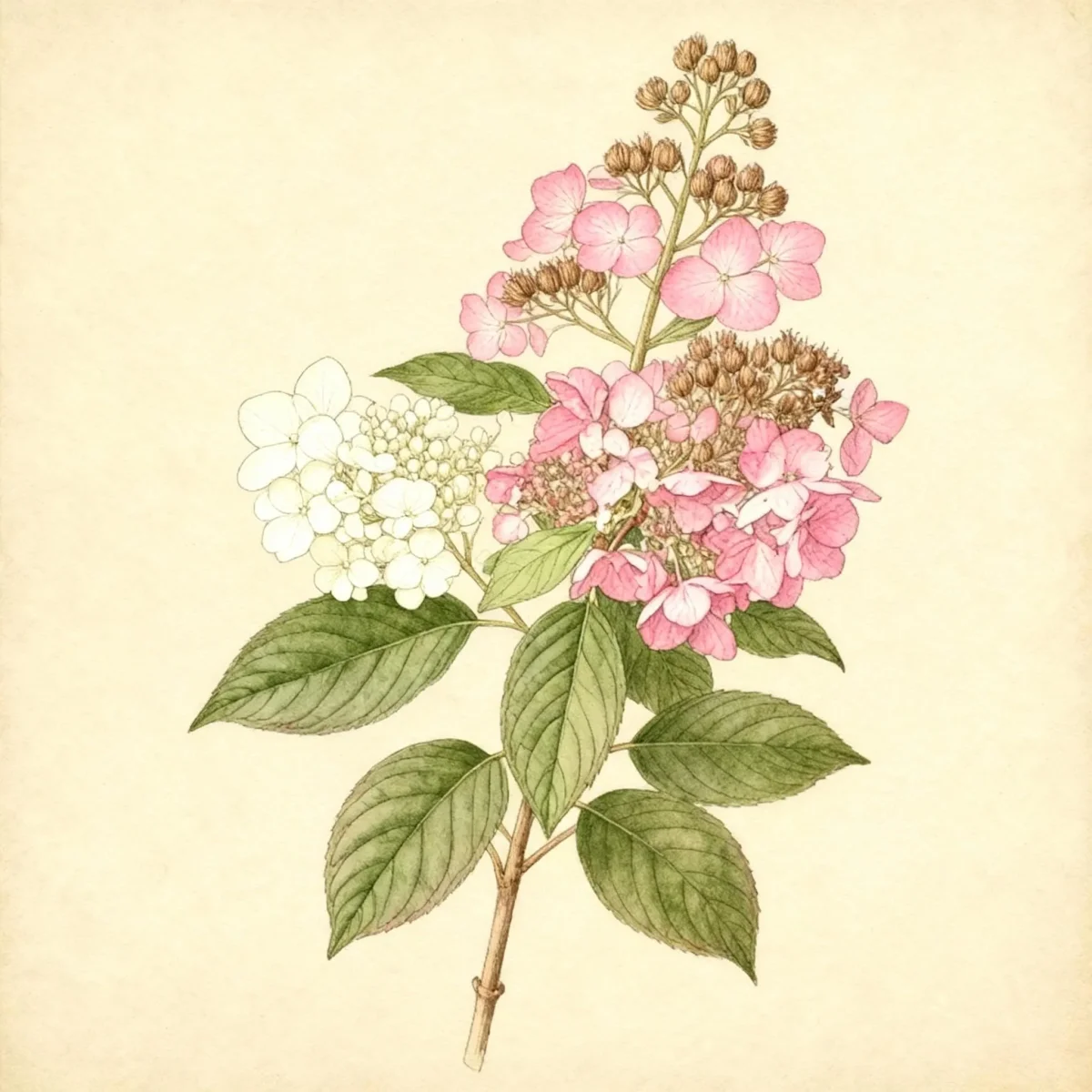
Panicle hydrangea (Hydrangea paniculata 'SMHPLQF' LITTLE QUICK FIRE)
Discover Hydrangea paniculata 'SMHPLQF' LITTLE QUICK FIRE, a compact Panicle hydrangea blooming white to reddish-purple in early summer.
Scroll down to discover growing tips, care requirements, companion plants, and more
Complete Plant Information
Overview
Hydrangea paniculata ‘SMHPLQF’ LITTLE QUICK FIRE, commonly known as Panicle hydrangea, offers gardeners exceptional performance in a refined, compact package. This cultivar is highly valued for its early blooming habit, often flowering a full month before other panicle hydrangeas, providing reliable summer color. It thrives in a variety of conditions, making it a robust choice for modern landscapes.
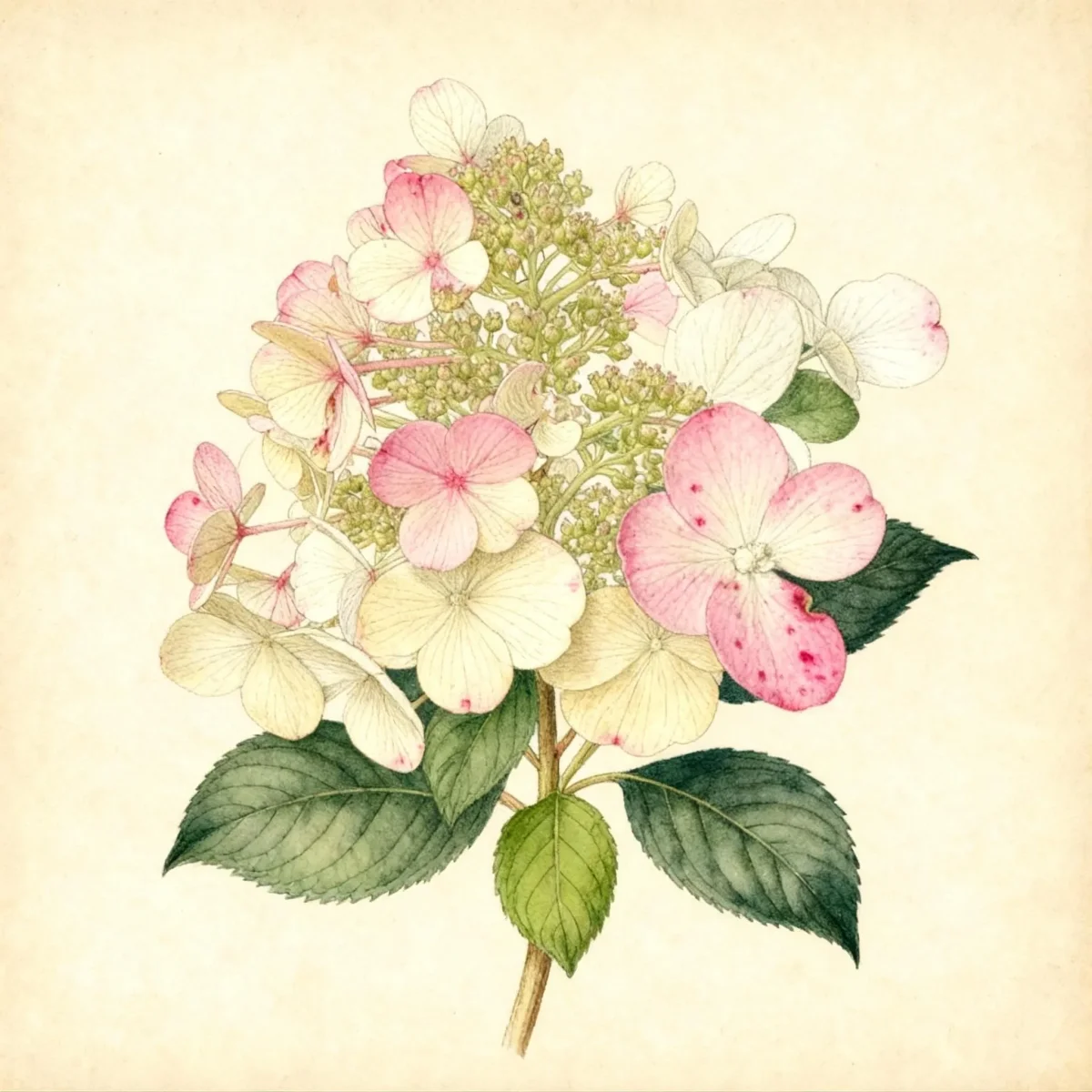
This deciduous shrub is known to be one of the most winter-hardy hydrangeas available, extending its reliable performance across USDA zones 3 through 8. It matures to a manageable size of 3 to 5 feet tall and 2 to 4 feet wide, perfect for borders or smaller garden spaces where traditional hydrangeas would overwhelm. The upright flower panicles transition beautifully from pristine white to deep reddish-purple over the season.
The versatility of Hydrangea paniculata ‘SMHPLQF’ LITTLE QUICK FIRE is another major asset; it performs well even in urban settings with higher levels of air pollution. Whether utilized as a neat hedge or allowed to develop into a specimen accent, this Panicle hydrangea provides continuous interest from June through August on new wood.
Fast Facts
- Plant Family: Hydrangeaceae
- Plant Type: Deciduous shrub
- Hardiness Zones: USDA Zones 3-8
- Size at Maturity:
- Height: 3-5 ft
- Spread: 2-4 ft
- Bloom Time: June to August
- Bloom Description: White maturing to reddish-purple
- Sun Exposure: Full sun to part shade
- Water Needs: Medium
- Maintenance Level: Medium
How to Grow
For optimal results with Hydrangea paniculata ‘SMHPLQF’ LITTLE QUICK FIRE, plant in the spring or fall in a location receiving full sun to partial afternoon shade. This Panicle hydrangea demands organically rich, medium-moisture soil that is well-drained. Proper soil preparation is crucial, as hydrangeas dislike sitting in soggy conditions.
Watering should be consistent (“Medium” needs) throughout the growing season, especially while establishing or during periods of intense sun and heat. While maintenance is rated medium overall, regular pruning can enhance its structure. Prune as needed in late winter to early spring, as blooming occurs on the current season’s growth.
To encourage larger flower panicles on your Hydrangea paniculata ‘SMHPLQF’ LITTLE QUICK FIRE, thin the shrub during pruning to just 5 to 10 primary shoots. Note that in full bloom, the weight of the flower heads may cause branches to arch downward gracefully. This variety exhibits excellent winter hardiness, making winter preparation minimal outside of standard protection for very young plants.
Landscape Uses
The compact nature of this cultivar makes Hydrangea paniculata ‘SMHPLQF’ LITTLE QUICK FIRE an excellent choice for formal hedging where size control is essential. Its reliable summer bloom—long after many spring bloomers fade—makes it a dependable structure plant in mixed borders. Use it massed for continuous color or as an architectural accent on the lawn.
As a Panicle hydrangea, it pairs well visually with contrasting foliage textures, such as fine-textured evergreens or broad-leafed hostas planted in the dappled shade it can tolerate. Its upright conical flowers make it an effective screen or backdrop plant in open woodland garden settings or mixed shrub plantings designed to provide late summer structure.
Standout Features
Flower Qualities
- Showy
Noteworthy Characteristics
Hydrangea paniculata, commonly called panicle hydrangea, is a vigorous, upright, rapid-growing, somewhat coarsely textured, deciduous shrub that is native to China and Japan. The specific epithet paniculata refers to the arrangement of the flowers in panicles. ‘SMHPLQF’, commonly sold under the trade name of LITTLE QUICK FIRE, typically grows to only 3-5’ tall and to 2-4’ wide, noted for its early summer bloom of flowers in upright panicles. Each panicle contains abundant showy sterile florets which emerge white but change to pink and finally reddish-purple as the summer progresses.
Tolerances
- Air Pollution
Potential Problems
Panicle hydrangeas like Hydrangea paniculata ‘SMHPLQF’ LITTLE QUICK FIRE can occasionally suffer from common fungal issues, including bud blight, leaf spot, rust, and mildew. Monitor closely for these issues, ensuring good air circulation through proper pruning to minimize humidity buildup around the leaves. Occasional insect nuisances include aphids and mites, which can usually be managed effectively with horticultural oils or insecticidal soap if infestations become severe.
Frequently Asked Questions
What hardiness zones is Panicle hydrangea suitable for?
Hydrangea paniculata ‘SMHPLQF’ LITTLE QUICK FIRE is very adaptable, thriving across USDA Hardiness Zones 3 through 8.
How large does Hydrangea paniculata ‘SMHPLQF’ LITTLE QUICK FIRE grow?
This compact Panicle hydrangea typically reaches a mature height between 3 and 5 feet, with a spread of 2 to 4 feet wide.
What sun exposure does Hydrangea paniculata ‘SMHPLQF’ LITTLE QUICK FIRE need?
It performs best when situated in an area that receives full sun, though it tolerates part shade well, especially in hotter afternoon climates.
When does Panicle hydrangea bloom?
This standout variety begins blooming in early summer, usually starting in June and continuing the display through August with flowers that age from white to reddish-purple.
Conclusion
The Hydrangea paniculata ‘SMHPLQF’ LITTLE QUICK FIRE delivers dependable, compact structure and an extended bloom season, making it an invaluable addition to nearly any garden space. Its hardiness and evolving flower color ensure that this Panicle hydrangea remains a focal point from early summer onward. Always check your local USDA zone compatibility before planting this reliable, beautiful shrub.
Companion Planting
When integrating this Panicle hydrangea into your design, consider companions that appreciate similar soil and moisture conditions. Planting lower-growing groundcovers like creeping phlox or spreading sedums can help shade the soil, keeping the root zone of the Hydrangea paniculata ‘SMHPLQF’ LITTLE QUICK FIRE cooler during warm spells. For vertical interest, pair it with taller, later-blooming ornamental grasses whose upright habit contrasts nicely with the hydrangea’s mounding form.
Seasonal Care Calendar
Spring is the critical time for pruning this shrub; focus efforts in late winter or early spring before new growth starts to ensure maximum flower development on the season’s wood. Summer care centers on consistent, medium watering, perhaps requiring supplemental irrigation if rainfall is scarce, especially as the heavy flower panicles draw moisture. In late fall, after the foliage has dropped, there is little required maintenance, showcasing the plant’s high winter hardiness.