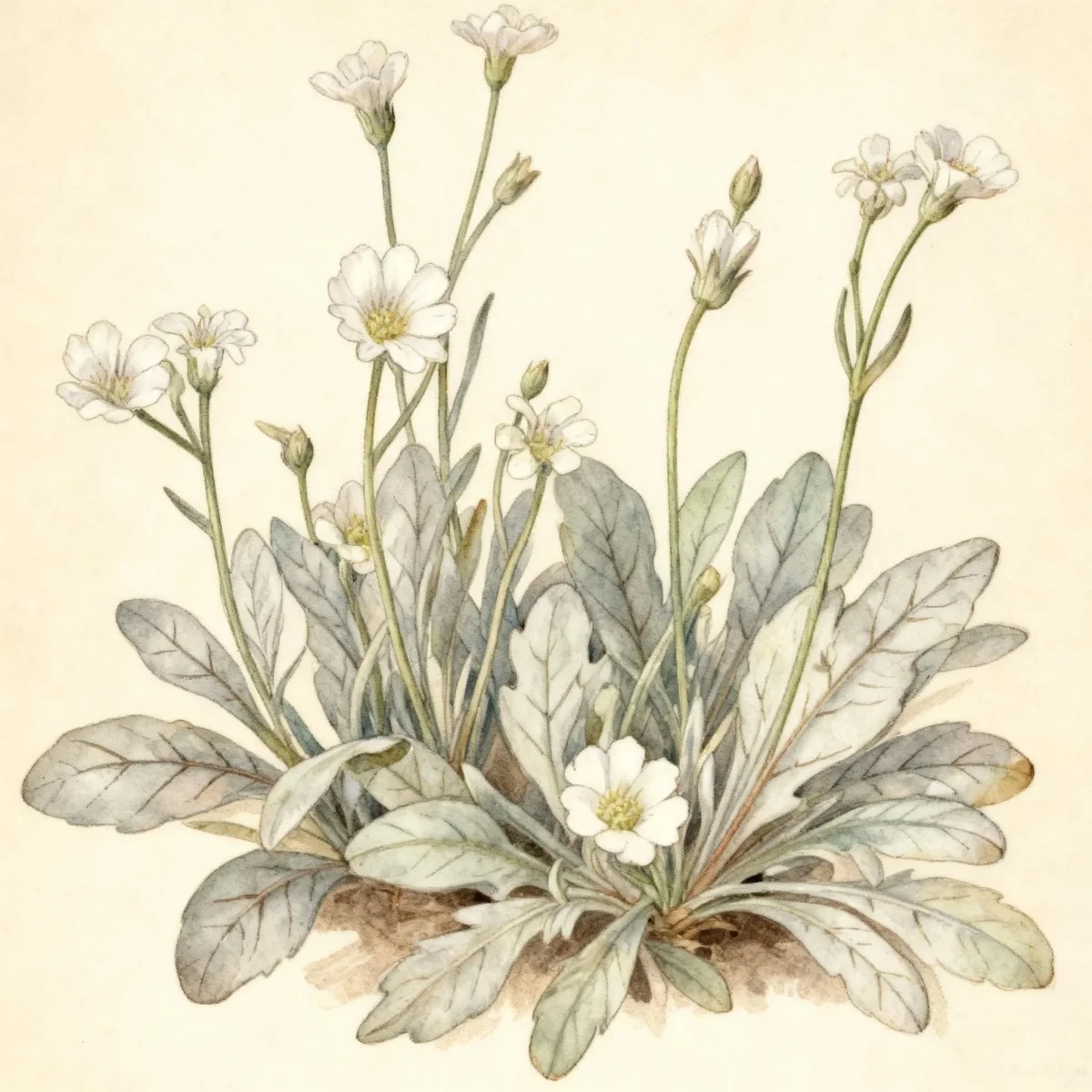
Mouse-ear chickweed (Cerastium arvense subsp. glandulosum)
Low-maintenance perennial Mouse-ear chickweed (Cerastium arvense subsp. glandulosum) offers white summer blooms and excels as drought-tolerant ground cover.
Scroll down to discover growing tips, care requirements, companion plants, and more
Complete Plant Information
Overview
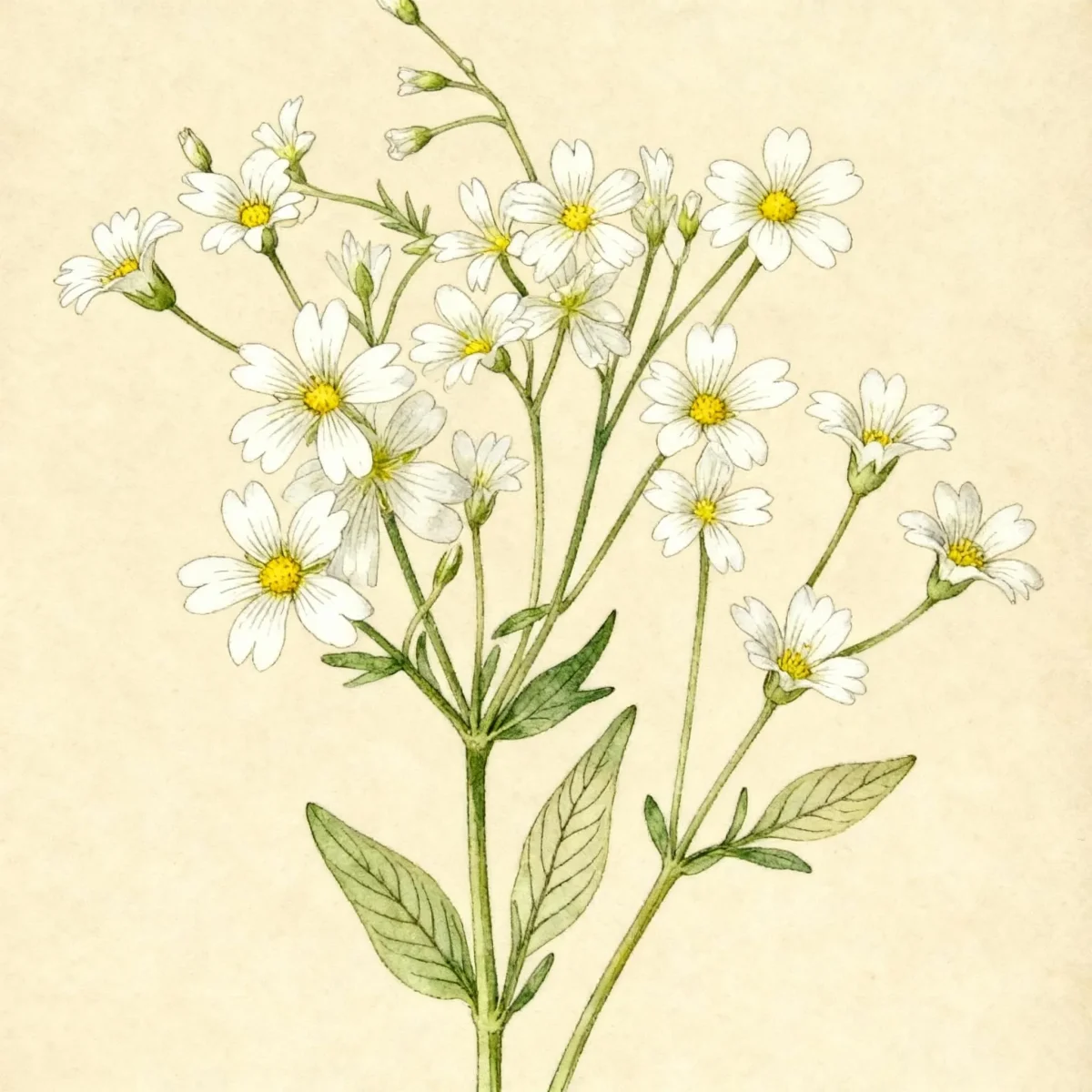
Mouse-ear chickweed, scientifically known as Cerastium arvense subsp. glandulosum, provides excellent coverage in sunny, dry garden spaces. This low-maintenance herbaceous perennial forms dense mats of foliage, making it a functional and visually appealing ground cover option for many gardeners. Its small, showy white flowers bloom consistently from spring through mid-summer.
While valuable for rapid coverage, gardeners should note that Cerastium arvense subsp. Glandulosum spreads vigorously, often requiring management to keep it contained. It thrives where many other plants struggle—in harsh, dry conditions typical of the open field habitats where this chickweed naturally occurs.
For those seeking tough, drought-tolerant plants for informal settings, Cerastium arvense subsp. glandulosum is an excellent choice. Its rapid spread makes it ideal for filling bare patches quickly, though this trait often leads some to view the plant more as a weed than a perennial in lawns.
Fast Facts
- Plant Family: Caryophyllaceae
- Plant Type: Herbaceous perennial
- Native Range: Temperate northern hemisphere
- Hardiness Zones: USDA Zones 3-8
- Size at Maturity:
- Height: 0.5-1.5 ft
- Spread: 1-3 ft
- Bloom Time: April to August
- Bloom Description: White
- Sun Exposure: Full sun
- Water Needs: Dry
- Maintenance Level: Low
How to Grow
Cerastium arvense subsp. glandulosum is best established in dry, sandy, well-drained soils, placed where it receives consistent full sun exposure throughout the day. This plant tolerates a relatively wide variety of soils, but its intolerance for poor drainage means root rot is a significant risk if the ground stays soggy. It performs particularly well in cooler summer climates and struggles in high heat and humidity, such as the deep South.
Watering should be minimal once established, as this chickweed prefers dry conditions and is highly drought-tolerant. Avoid amending heavy soil heavily with organic material that retains too much moisture. Fertilization is generally unnecessary, aligning with its low maintenance profile.
To manage its vigorous nature, best practice involves shearing the flower stems immediately after the main bloom period ends in August. This practice prevents rapid self-seeding, helps neaten the low foliage mat, and reduces subsequent decline in the foliage layer. If the mat becomes too dense or large, it can be judiciously divided annually to maintain a desired, compact size. Planting starter specimens about 9-12 inches apart allows for quick coverage.
Landscape Uses
The use of Mouse-ear chickweed as a ground cover is perhaps its most practical application, especially in informal sunny areas where robust spreading is desired. Its resilience against drought makes it perfect for xeriscaping or covering steep, dry slopes where maintenance access is limited.
Consider Cerastium arvense subsp. glandulosum for cottage gardens or as an informal edging material where its sprawling habit can be somewhat contained by adjacent hardscaping or less competitive plants. It works well as a living mulch or bulb cover, softening the edges of beds devoted to spring bulbs.
For better integration into garden design, utilize its mat-forming ability in small areas within rock gardens. Ensure companion plants selected for these sunny, dry zones share similar drought tolerance to prevent overheating or overwatering the chickweed.
Standout Features
Flower Qualities
- Showy
Noteworthy Characteristics
Cerastium arvense, commonly known as field chickweed, meadow chickweed or field mouse-ear, is a multi-stemmed herbaceous perennial. It grows in a variety of different forms, ranging from (1) strongly rhizomatous (taproot absent), long-creeping, mat-forming plants to (2) tap-rooted (sometimes shortly rhizomatous), clumping, and more upright plants. Height ranges from 2-18” tall. Field chickweed is endemic to North America, Europe and some areas of South America. It typically thrives in open sunny habitats at elevations ranging from sea level to 12,000 feet. The appearance of Cerastium arvense subsp. glandulosum is highly variable across its wide distribution. The genus name Cerastium comes from the Greek word keras meaning horn, a reference to the seed capsule shape found in some species.
Tolerances
- Drought
- Dry Soil
Potential Problems
This perennial generally exhibits excellent resistance to serious insect pests and diseases. The primary concerns revolve around environmental mismanagement, particularly excessive moisture. Damping off can occur if the plant is situated in climates characterized by high humidity, or if planted in locations that receive too much shade, impeding foliage drying. Root rot presents a serious risk if Mouse-ear chickweed is placed in poorly-drained soils or areas where the soil remains wet for extended periods. Furthermore, due to its vigorous creeping habit, it frequently establishes itself as a difficult-to-control lawn weed, spreading easily throughout the landscape if not managed.
Frequently Asked Questions
What hardiness zones is Mouse-ear chickweed suitable for?
Cerastium arvense subsp. glandulosum is suitable for USDA Zones 3 through 8, indicating high cold tolerance.
How large does Mouse-ear chickweed grow?
This perennial typically reaches a mature height between 0.5 and 1.5 feet, with a spread ranging from 1 to 3 feet wide.
What sun exposure does Mouse-ear chickweed need?
Cerastium arvense subsp. Glandulosum requires full sun exposure to thrive and maintain its dense mat structure.
When does Mouse-ear chickweed bloom?
This plant produces clusters of white flowers continuously from April well into August.
Conclusion
Cerastium arvense subsp. glandulosum proves its value to the garden through its low-maintenance requirement and excellent tolerance for dry, sun-drenched locations. Providing nearly season-long white blooms and rapid coverage, Mouse-ear chickweed is a workhorse groundcover. Always confirm your local conditions align with USDA Zones 3-8 before planning your planting scheme this spring.
Companion Planting
When integrating Cerastium arvense subsp. glandulosum into a border, select companions that also require similar low moisture and full sun exposure. Pairing it with drought-tolerant stonecrop varieties (Sedum) or creeping thyme (Thymus serpyllum) helps maintain a consistent aesthetic and watering schedule in dry beds. Avoid planting near moisture-loving perennials, as overwatering the companions will quickly lead to root rot issues in the chickweed. Blue-flowering plants contrast beautifully against the white blooms of Mouse-ear chickweed during the summer months.
Design Ideas
This perennial shines best when used where its spreading habit is an asset rather than a liability. It excels as a spiller over the edge of retaining walls made of stone or gravel, mimicking its natural rocky habitat. In large sunny meadows or naturalized areas, Cerastium arvense subsp. Glandulosum can form a consistent green carpet, requiring minimal weed control once established. For cottage gardens, use it strategically near paths needing softening, but be prepared to trim it back from formal planting beds annually.