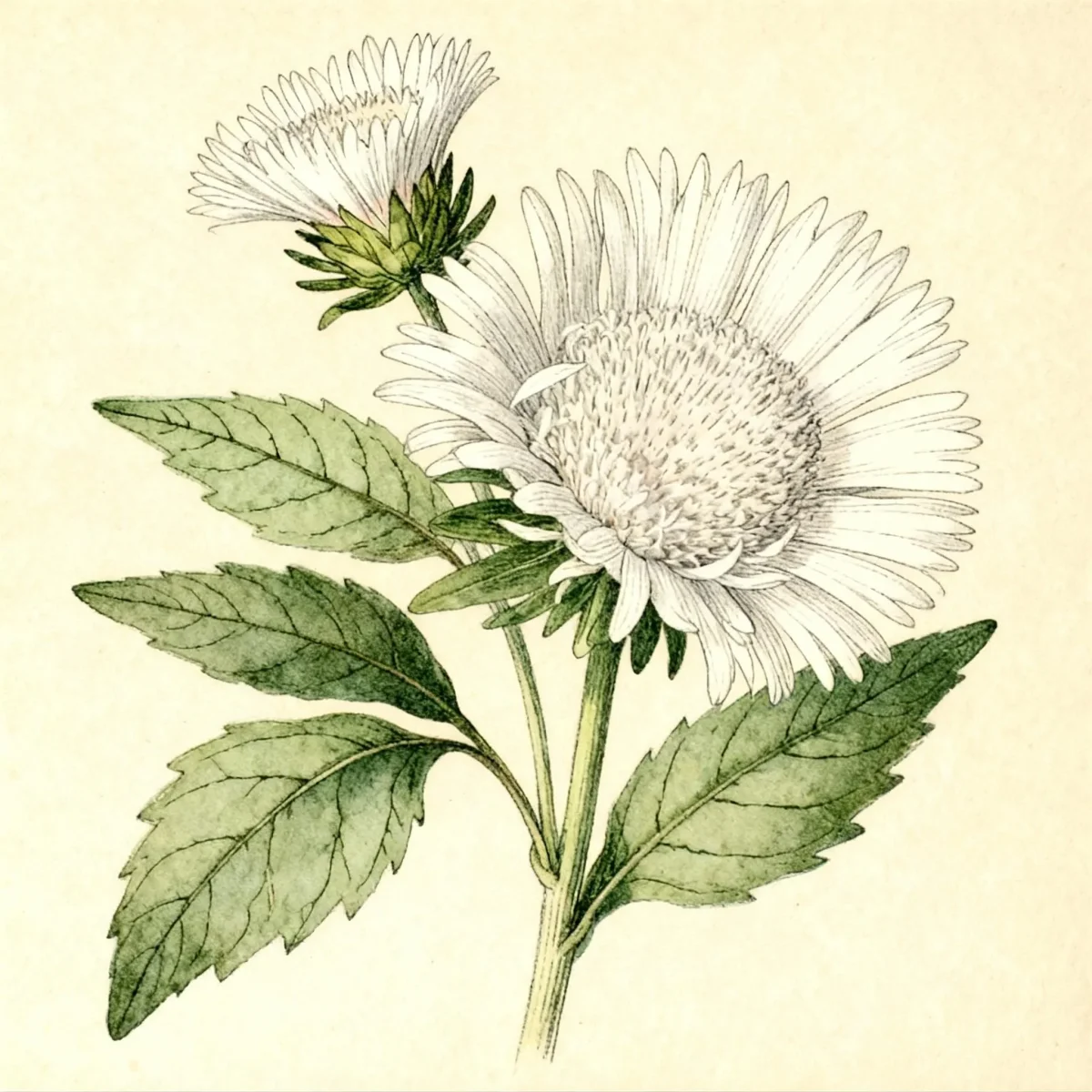
Stokes' aster (Stokesia laevis 'Divinity')
Stokes' aster 'Divinity' offers long-lasting, large white flowers, low maintenance, and excellent drought tolerance in sunny spots.
Scroll down to discover growing tips, care requirements, companion plants, and more
Complete Plant Information
Overview
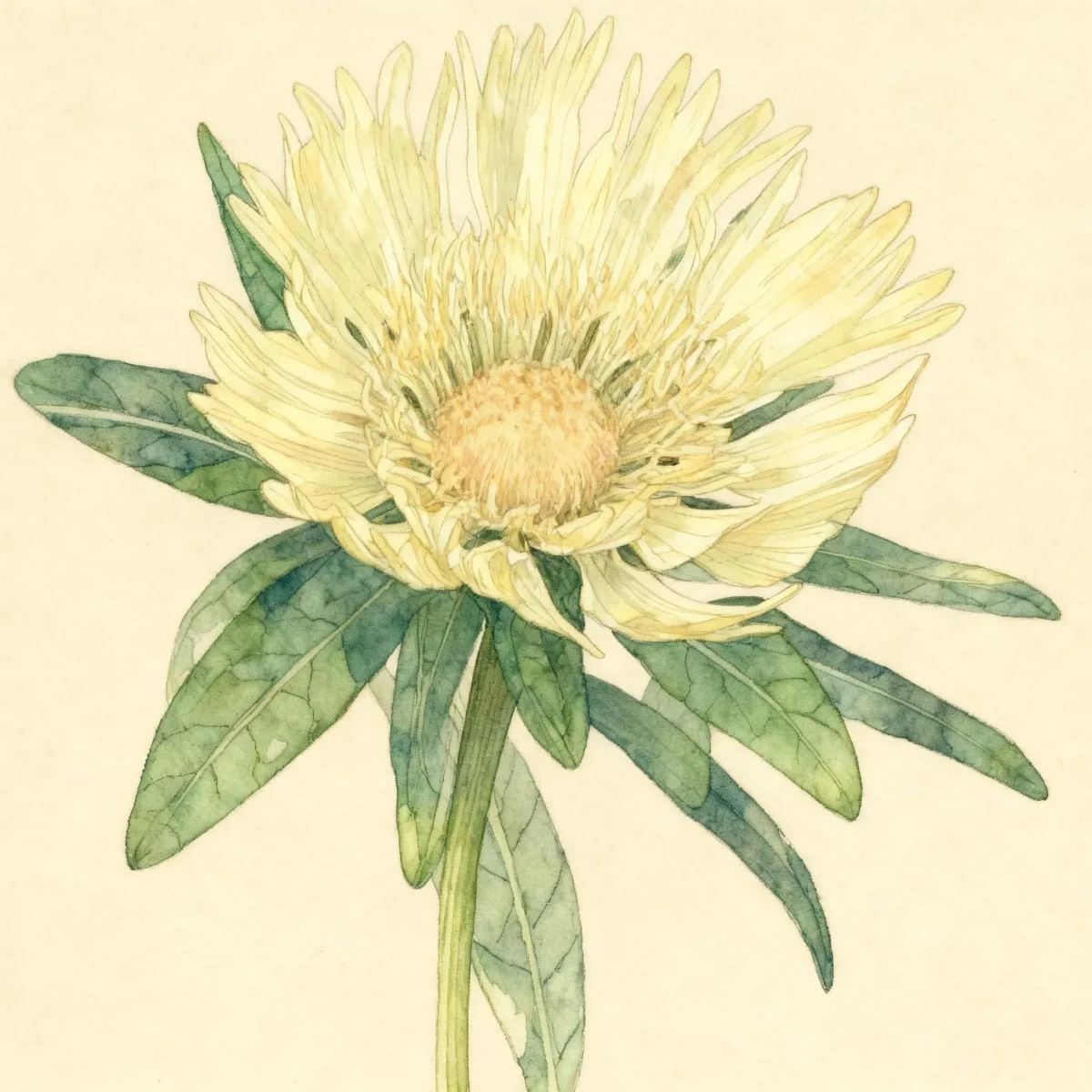
Stokesia laevis ‘Divinity’, commonly known as Stokes’ aster, brings substantial luminosity to the summer garden with its large, fluffy white blooms. This specific cultivar is valued for its vigorous, compact growth habit, setting it apart from others in the genus. It reliably flowers from early summer into August, providing extended color well into the hot season.
As an evergreen perennial in warmer regions, Stokesia laevis ‘Divinity’ offers consistent structure even when not in bloom. While native to moist coastal plains, this cultivar exhibits surprising drought and heat tolerance once established, provided it receives adequate drainage. Its low maintenance requirements make Stokes’ aster a favorite for busy gardeners seeking reliable performance.
The striking white coloration of Stokesia laevis ‘Divinity’ contrasts beautifully with darker foliage or hotter-colored blooms nearby. Plant this perennial where its exceptional flowers can be easily admired, ensuring it receives the full sun required for the best flowering display and air circulation.
Fast Facts
- Plant Family: Asteraceae
- Plant Type: Herbaceous perennial
- Hardiness Zones: USDA Zones 5-9
- Size at Maturity:
- Height: 1-1.5 ft
- Spread: 1-1.5 ft
- Bloom Time: June to August
- Bloom Description: White
- Sun Exposure: Full sun
- Water Needs: Medium
- Maintenance Level: Low
How to Grow
Plant Stokes’ aster in the spring or fall after the danger of hard frost has passed. The absolute most critical requirement for success is excellent drainage, as wet soil, especially during winter dormancy, is the leading cause of plant death. Incorporate plenty of organic matter to improve drainage, even if the native soil is sandy.
Water deeply but infrequently once established, reflecting its medium water needs; while it prefers moist sites, excellent drought tolerance is noted. Fertilizing is rarely necessary; excess fertility can lead to floppy stems, which is a known issue for this species. Sun exposure should be full sun for the best performance, although some filtered light is tolerated.
Maintenance is minimal, which is a great benefit of growing Stokesia laevis ‘Divinity’. Be sure to deadhead spent individual flowers to encourage a richer bloom display through mid-summer. Removing entire spent flowering stems encourages secondary flushes of color. In colder zones (USDA Zone 5), applying winter mulch around the base will protect the roots during harsh freezes.
Landscape Uses
Stokes’ aster is perfectly suited for the front of mixed perennial borders, adding bright texture that catches the eye. Its manageable height (1 to 1.5 feet) allows it to blend seamlessly without overshadowing shorter companions. Consider using Stokesia laevis ‘Divinity’ in traditional cottage gardens where continuous bloom and soft, clear colors are desired.
Because of its origins near water features, this plant thrives in seasonally moist areas, making it an exceptional choice for edging around pondsides, streams, or rain gardens, provided the winter soil does not become waterlogged. For a cohesive look, plant Stokes’ aster in small, repeating groupings rather than as single specimens to maximize the visual impact of the white blooms.
Standout Features
Flower Qualities
- Showy
Noteworthy Characteristics
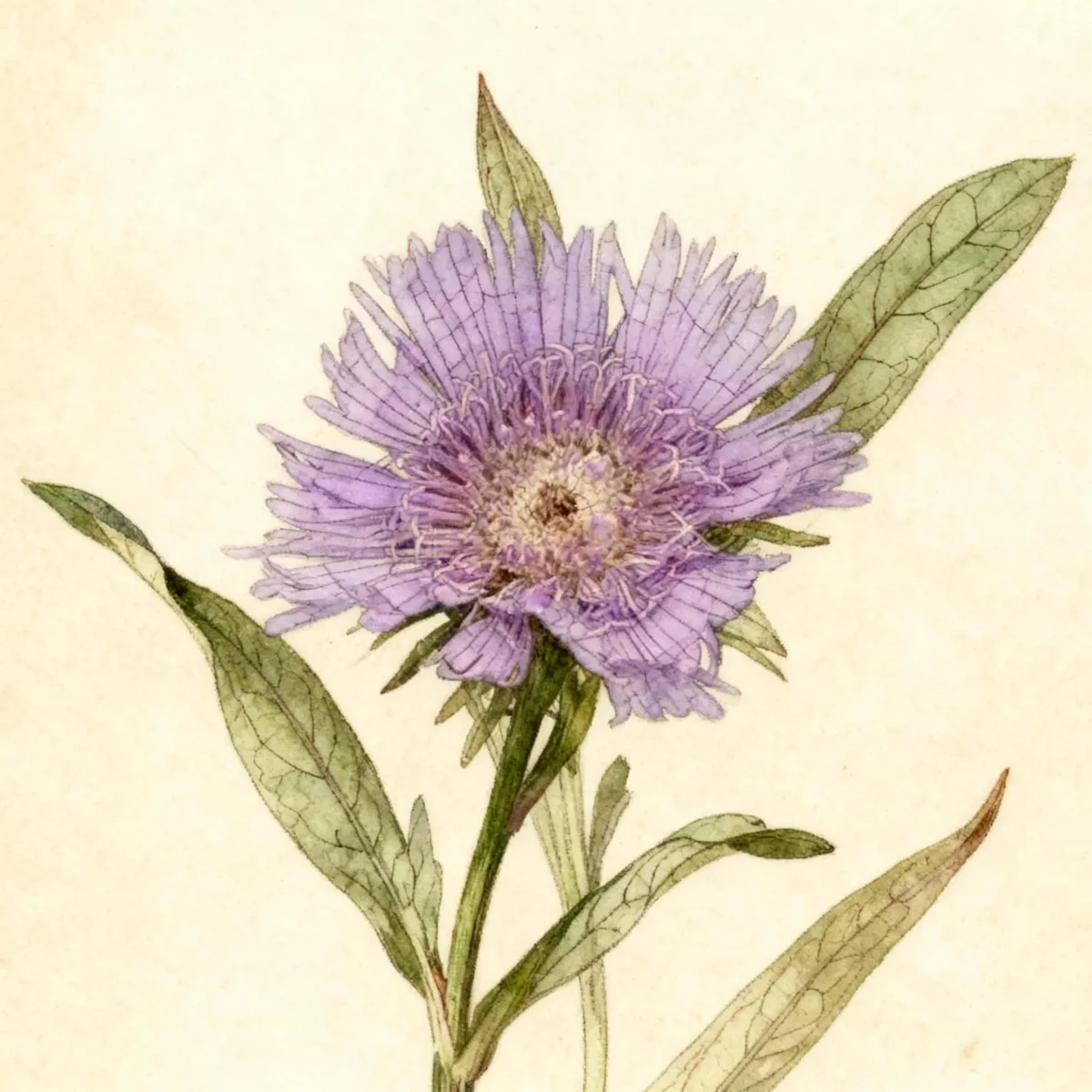
Stokesia laevis, commonly known as Stokes’ aster, is native to wetlands, bottomlands, wet pinewoods, savannas and ditches mostly along the coastal plain from North Carolina to Florida to Louisiana. It is an evergreen perennial that typically grows to 1-2’ tall, featuring fluffy, cornflower-like flowers with notched rays surrounding a pincushion center. The cultivar ‘Divinity’ is particularly noted for its vigorous, compact habit and numerous, long-lasting large white flowers that mature to pure white, often exhibiting a hint of yellow deep in the center.
Tolerances
- Rabbit
- Deer
Potential Problems
Stokesia laevis ‘Divinity’ is generally robust, presenting no serious insect or disease issues under normal conditions. Gardeners should monitor for caterpillars that might feed on the foliage. The most common cultural challenge is stem flopping, particularly after receiving heavy rainfall or strong thunderstorms.
To mitigate flopping, ensure the best soil drainage possible, avoid high-nitrogen fertilizers, and consider staking early in the season if you anticipate heavy weather. Deadheading spent blooms promptly also helps keep the plant tidy and directs energy toward root health rather than seed production.
Frequently Asked Questions
What hardiness zones is Stokes’ aster suitable for?
Stokesia laevis ‘Divinity’ is reliably hardy in USDA Zones 5 through 9.
How large does Stokesia laevis ‘Divinity’ grow?
This cultivar typically reaches a height between 1 and 1.5 feet and spreads between 1 and 1.5 feet, maintaining a compact form.
What sun exposure does Stokes’ aster need?
Full sun is the preferred condition for optimal blooming, though Stokes’ aster can manage exposure to filtered sunlight.
When does Stokes’ aster bloom?
Stokesia laevis ‘Divinity’ displays its large white flowers primarily from June to August.
Conclusion
The striking yet understated beauty of Stokesia laevis ‘Divinity’ makes it an outstanding addition to any sunny perennial garden, known for its low maintenance and impressive bloom duration. By ensuring excellent drainage, you can successfully cultivate this lovely Stokes’ aster for years of enjoyment. Check your local hardiness zone compatibility and plan to plant in spring for best establishment.
Companion Planting
Stokes’ aster thrives alongside plants that enjoy similar sunny, well-drained conditions during the summer months. Consider pairing Stokesia laevis ‘Divinity’ with plants that bloom later in the season to extend continuous interest, such as Rudbeckia (Black-eyed Susan) or ornamental grasses. Its white flower heads provide excellent contrast against the deep blues of Baptisia or the purples of Salvia. Given its native history near wet areas, it tolerates conditions slightly moister than arid plants, grouping well with hardy Geraniums or Siberian Iris if the soil remains adequately drained.
Design Ideas for White Perennials
Incorporating pure white flowers like Stokesia laevis ‘Divinity’ into a design creates immediate contrast and brightens shady corners, even in full sun. Use mass plantings of this cultivar to simulate large drifts of snow during mid-summer, offering a cooling visual effect. In formal or cottage garden settings, use its tidy habit to line pathways where the white blooms will pop visually against darker mulch or stone. For a modern, monochromatic garden, combine Stokes’ aster with white varieties of Phlox, Echinacea, or white ornamental grasses to create textural depth using a single color palette.