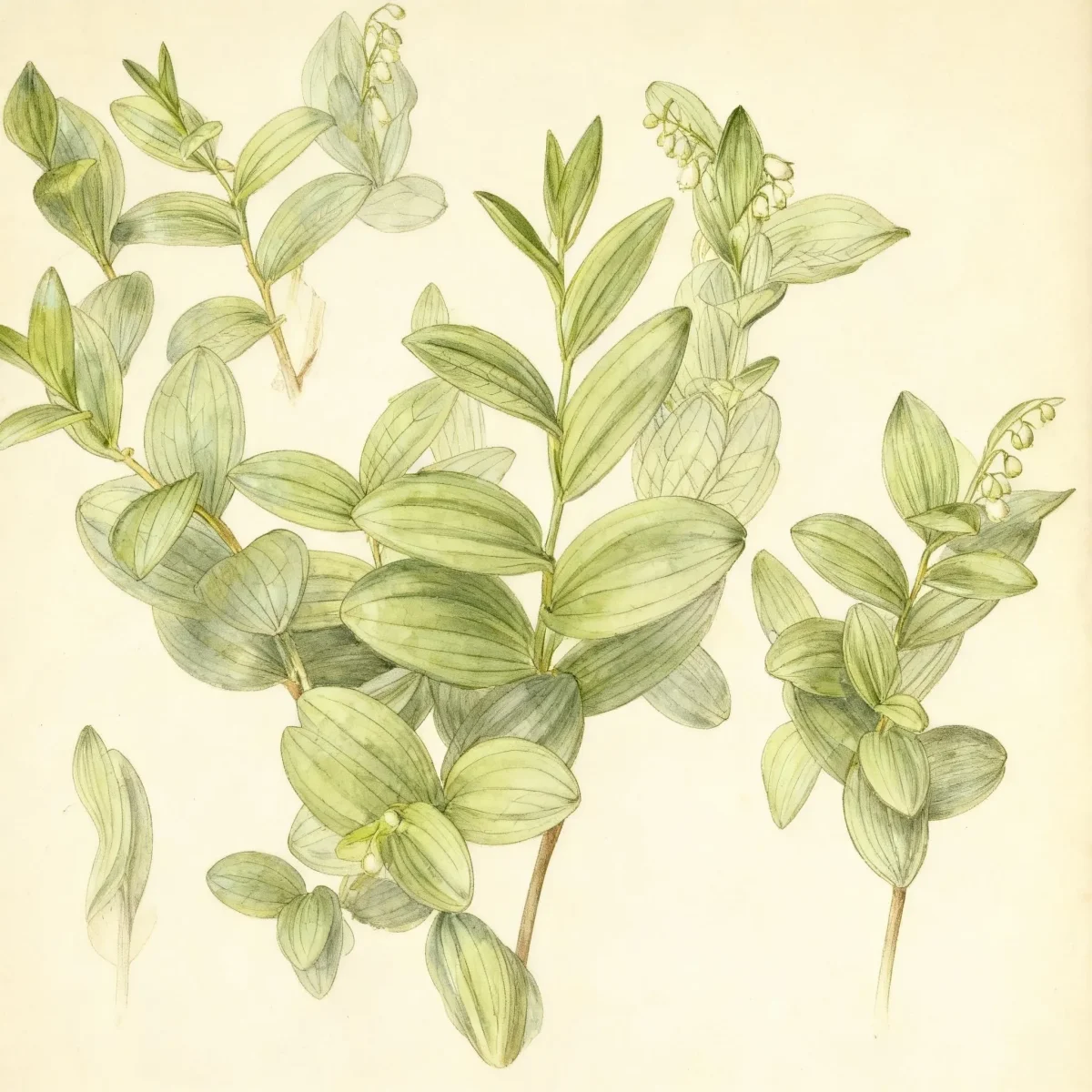
Solomon's seal (Polygonatum 'Prince Charming')
Discover Polygonatum 'Prince Charming', a low-maintenance Solomon's seal ideal for deep shade, offering delicate blooms and blue-black berries.
Scroll down to discover growing tips, care requirements, companion plants, and more
Complete Plant Information
Overview
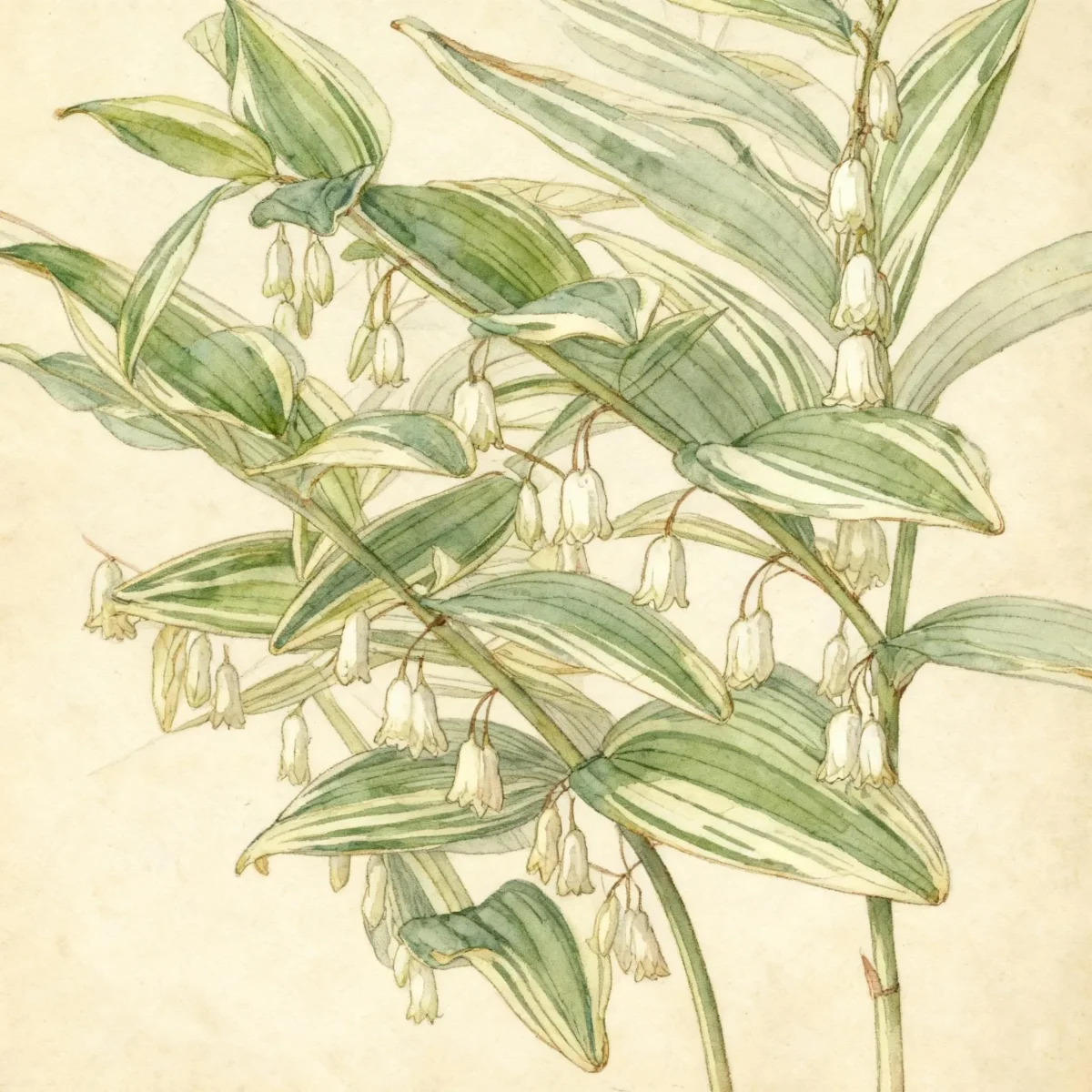
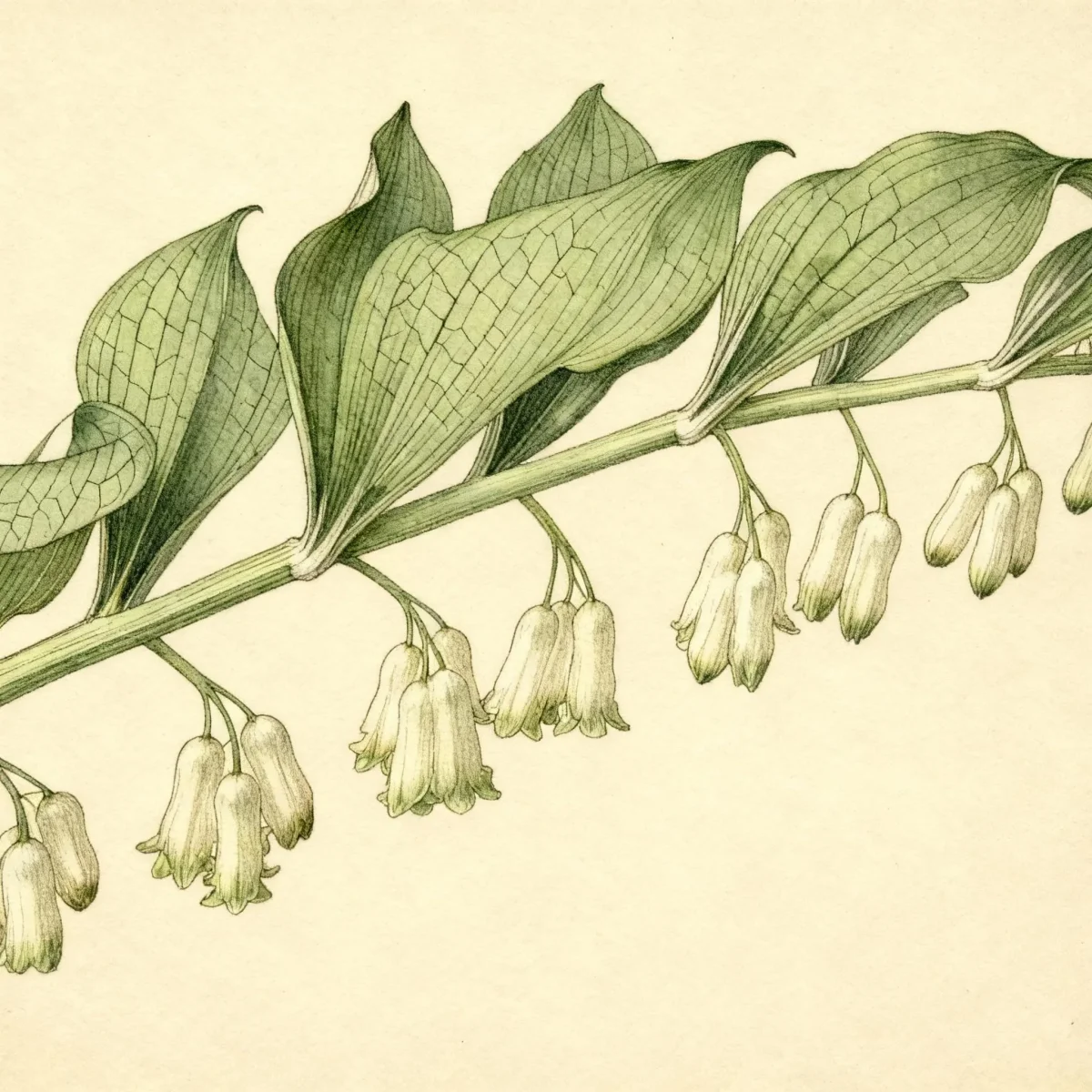
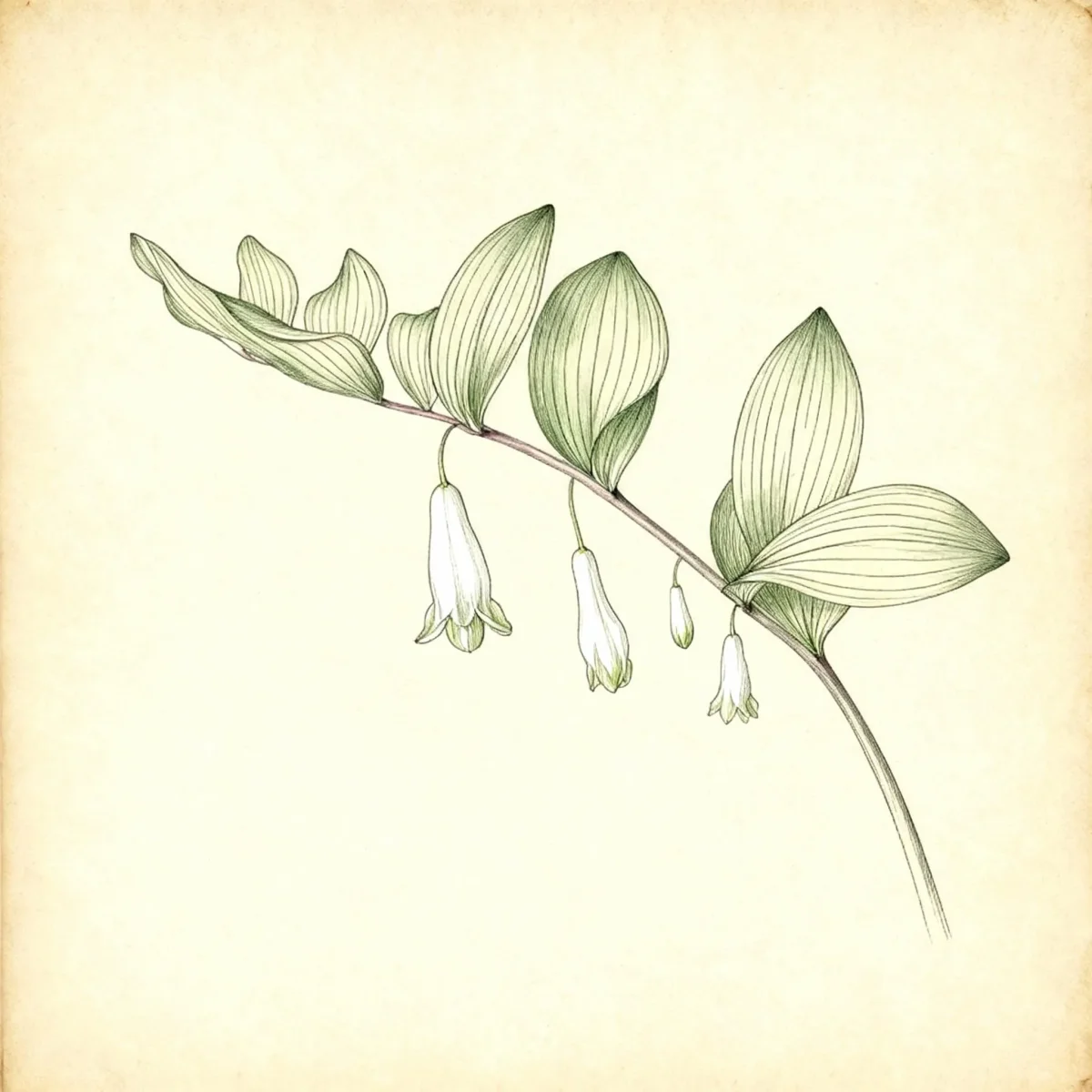
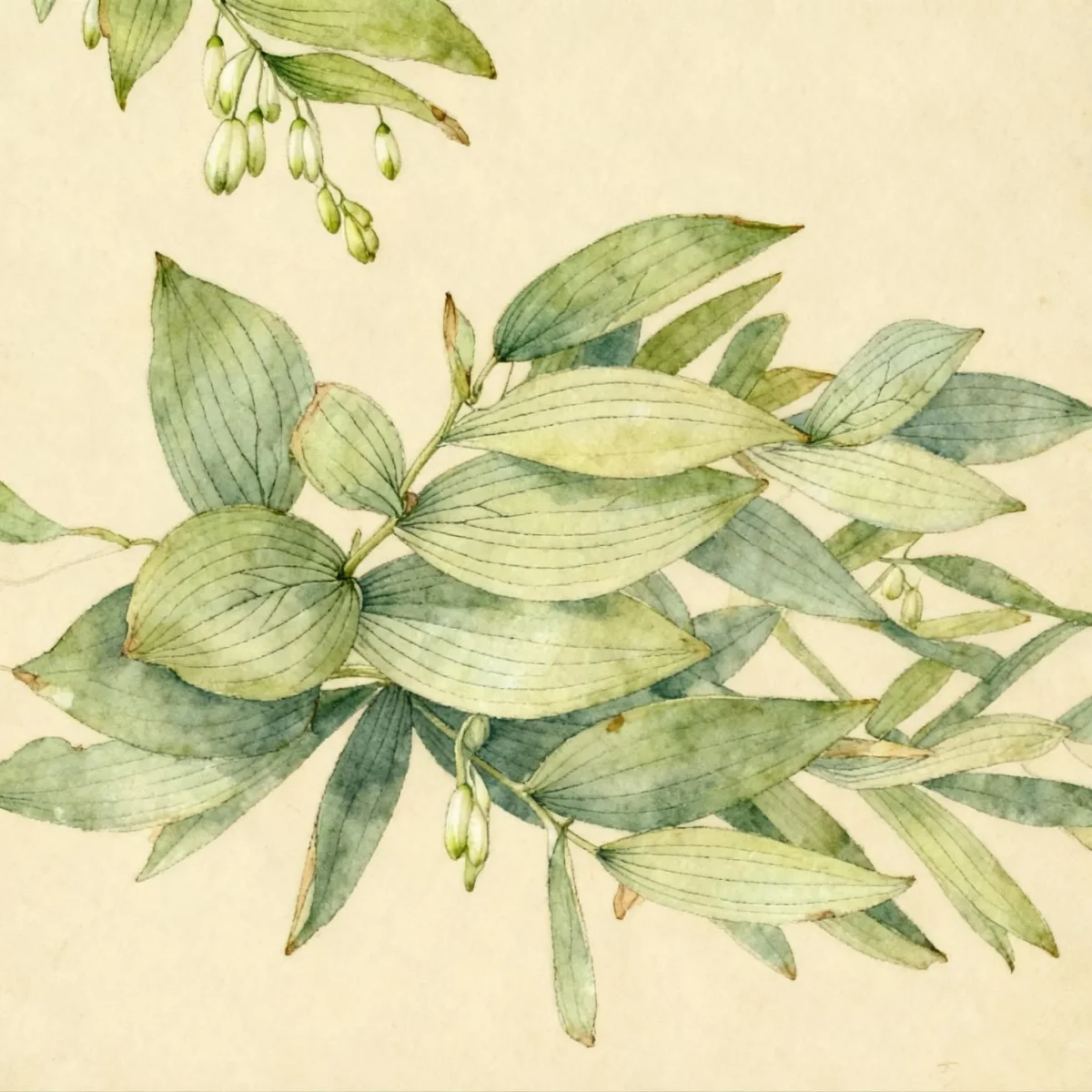
Polygonatum ‘Prince Charming’, a celebrated hybrid of Solomon’s seal, is highly valued for its resilience and graceful structure in shaded landscapes. This herbaceous perennial forms slowly spreading colonies via rhizomes, making it an excellent, low-effort solution for covering challenging woodland floors. Gardeners appreciate the arching stems adorned with blue-green leaves that contrast beautifully with the delicate, pendant, greenish-white spring flowers of this Polygonatum ‘Prince Charming’.
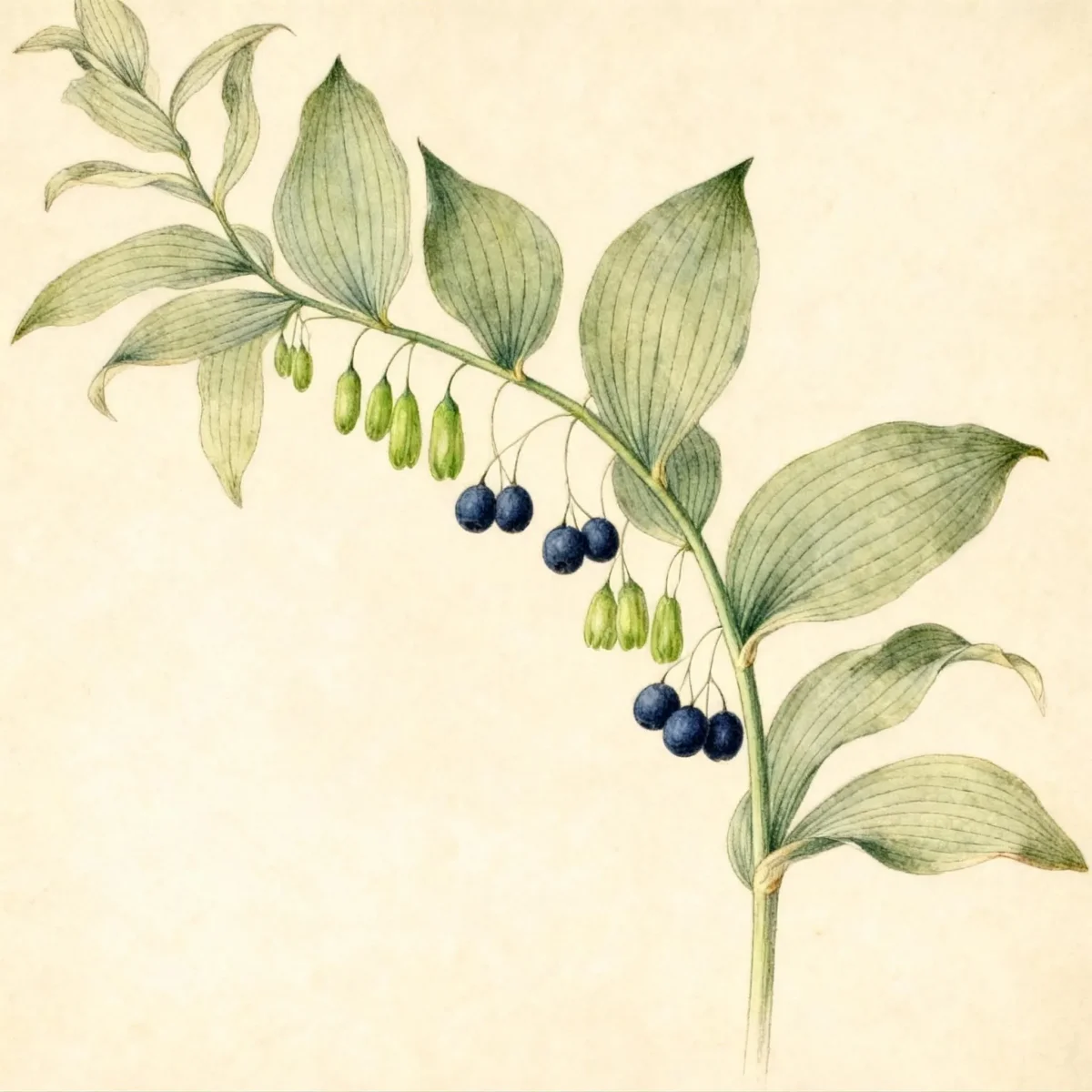
Distinguished by its compact stature, reaching only about 1 foot tall, this cultivar provides textural interest throughout the growing season. Following the bloom, it offers attractive blue-black berries, which are further highlighted as the foliage matures to a golden yellow in the autumn. For gardeners seeking reliable, shade-tolerant ground cover, Polygonatum ‘Prince Charming’ offers consistent performance with minimal fuss.
Fast Facts
- Plant Family: Asparagaceae
- Plant Type: Herbaceous perennial
- Hardiness Zones: USDA Zones 4-7
- Size at Maturity:
- Height: 0.5-1 ft
- Spread: 2-3 ft
- Bloom Time: May to June
- Bloom Description: Greenish-white
- Sun Exposure: Part shade to full shade
- Water Needs: Medium to wet
- Maintenance Level: Low
How to Grow
Start establishing Polygonatum ‘Prince Charming’ in spring or fall, ensuring the planting site mimics its woodland origins. It thrives when planted in cool, moist, humusy, moderately fertile, and well-drained soils. While it tolerates full shade, the best flowering and foliage performance are typically achieved in part shade conditions.
Maintenance for this Solomon’s seal is delightfully low once established. Water regularly during dry spells to maintain medium to wet soil conditions, especially during the first growing season. Fertilization is generally not required if the soil is rich in organic matter; abundant humus naturally supports this rhizomatous perennial.
As a spring-blooming favorite, allow the foliage to remain on the clumps until it naturally yellows in the fall. This dying back process allows the plant to store energy for next year’s display of flowers and eventual blue-black berries. Pruning is rarely necessary, save for cutting back any damaged stems in early spring before new growth begins.
Landscape Uses
Polygonatum ‘Prince Charming’ excels where few other plants thrive: beneath dense tree canopies or along shady borders. Its spreading habit makes it an ideal, sophisticated ground cover, quickly forming dense mats that suppress competing weeds as it naturalizes in optimal settings. Utilize it in woodland gardens to bring light structure to dark corners.
Consider planting this Solomon’s seal along the front of a shady border, where its relatively short stature (under 1 foot) won’t obscure taller companions. It pairs beautifully with other shade-lovers like hostas, ferns, and bleeding hearts, which appreciate similar cool, moist soil requirements. The gentle arch of the stems contrasts nicely with upright woodland blooms.
Standout Features
Flower Qualities
- Showy
Fruit Qualities
- Showy
Noteworthy Characteristics
Polygonatum is a versatile genus, but ‘Prince Charming’ stands out as a creeping, rhizomatous hybrid noted for its compact height and vigorous spreading capability. This cultivar displays an interesting progression: upright-arching blue-green stems arise, bearing conspicuous, veined leaves, followed by dangling, greenish-white tubular flowers in mid-spring. The resulting green berries mature to a striking blue-black later in the season, perfectly complementing the golden yellow fall foliage color of this Polygonatum ‘Prince Charming’.
Tolerances
- Rabbit
- Heavy Shade
Potential Problems
This low-maintenance Solomon’s seal rarely encounters serious pest or disease issues when grown in its preferred shady, moist environment. The primary concern gardeners face is damage from slugs, which are attracted to the tender new growth in early spring. Addressing slugs promptly with baits or cultural controls can protect the developing stems. It is vital to remember that all plant parts are considered toxic if accidentally ingested by pets or children.
Frequently Asked Questions
What hardiness zones is Solomon’s seal suitable for?
Polygonatum ‘Prince Charming’ is reliably hardy in USDA Zones 4 through 7.
How large does Solomon’s seal grow?
This specific cultivar typically reaches a height between 0.5 and 1 foot tall, spreading outwards from its rhizomes to create a 2-3 foot wide colony.
What sun exposure does Polygonatum ‘Prince Charming’ need?
It prefers part shade but adapts well to full shade, making it an excellent choice for deep woodland areas.
When does Solomon’s seal bloom?
The delicate, greenish-white flowers of Polygonatum ‘Prince Charming’ appear reliably from May into June.
Conclusion
Polygonatum ‘Prince Charming’ offers gardeners an elegant, low-maintenance solution for difficult shaded areas, characterized by graceful stems, attractive spring flowers, and vibrant fall color. Ensure your site offers consistent moisture and protection from high afternoon sun to maximize the performance of this robust Solomon’s seal. Check your local hardiness rating against Zones 4-7 before planning your planting installation this season.
Companion Planting
Selecting appropriate companions for Polygonatum ‘Prince Charming’ is crucial, as they all share a need for cool, relatively moist, organically rich soil and limited light. Consider pairing it with broad-leaved plants, such as various species of Hosta, particularly those with chartreuse or variegated foliage to maximize light contrast in deep shade. Ferns, such as Japanese Painted Fern (Athyrium niponicum) or Ostrich Fern (Matteuccia struthiopteris), provide excellent vertical and textural contrast to the airy arches of the Solomon’s seal.
Another effective pairing involves spring ephemerals that emerge and die back before the Polygonatum reaches its full summer canopy width. Species like Spring Beauty (Claytonia virginica) or Dutchman’s Breeches (Dicentra cucullaria) bloom profusely early in the season and will happily vanish as the dense leaf cover of Polygonatum ‘Prince Charming’ develops, ensuring the area looks full year-round.
Propagation Tips
The primary method for increasing healthy clumps of Solomon’s seal is division, capitalizing on its spreading rhizomatous root system. Division should occur in early spring just as new growth emerges, or in the fall after the foliage has yellowed. Carefully lift the clump with a garden fork, minimizing damage to the thick, jointed rhizomes. Separate larger divisions ensuring each resulting piece has several healthy growth buds attached; replant immediately at the same depth.
If allowing the plant to naturalize, be patient, as the rhizomes spread slowly over several years to form colonies. While Polygonatum ‘Prince Charming’ produces berries, collecting seeds and attempting stratification is generally less efficient for gardeners than root division. Division provides immediate, genetically identical plants ready to establish quickly in similar moist environments.