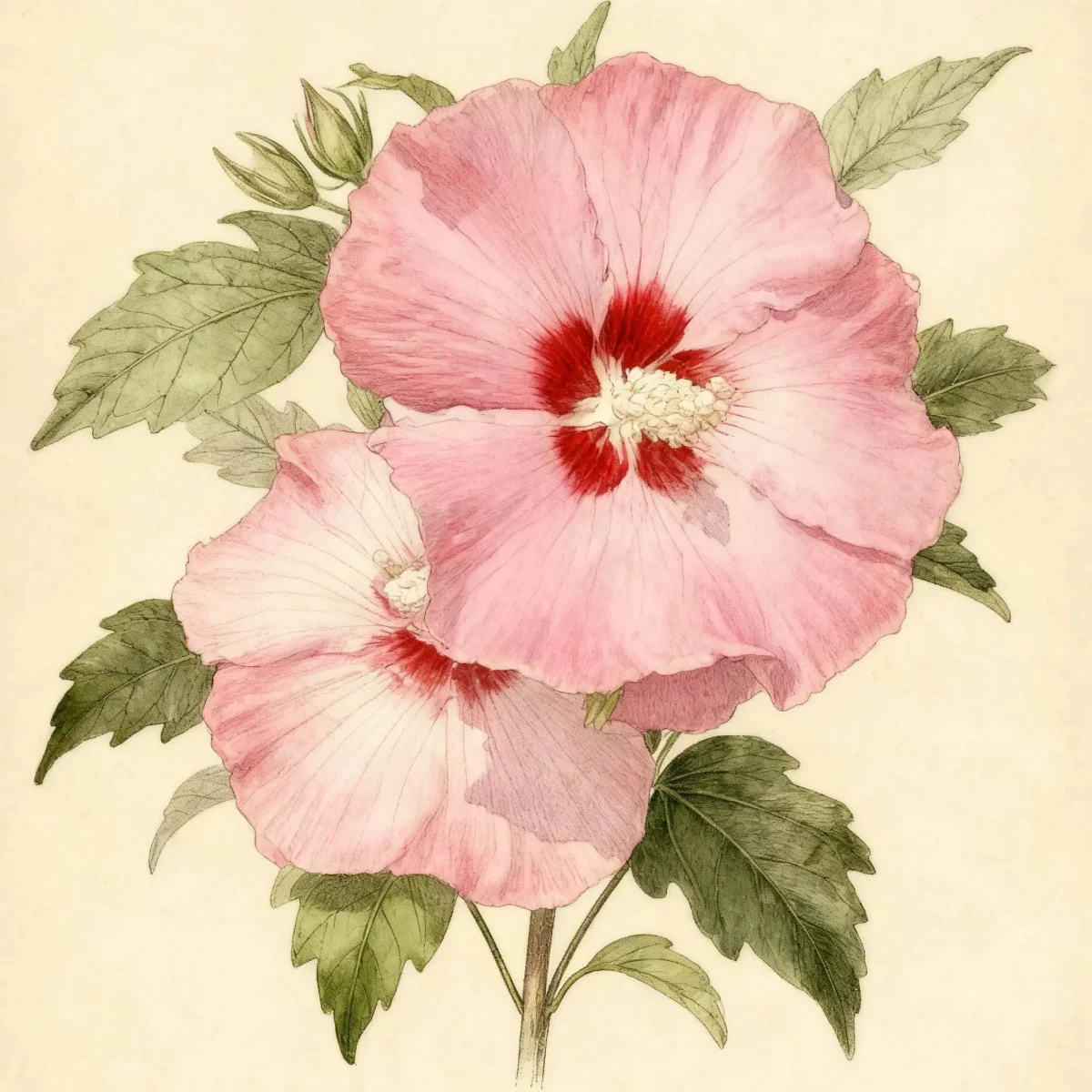
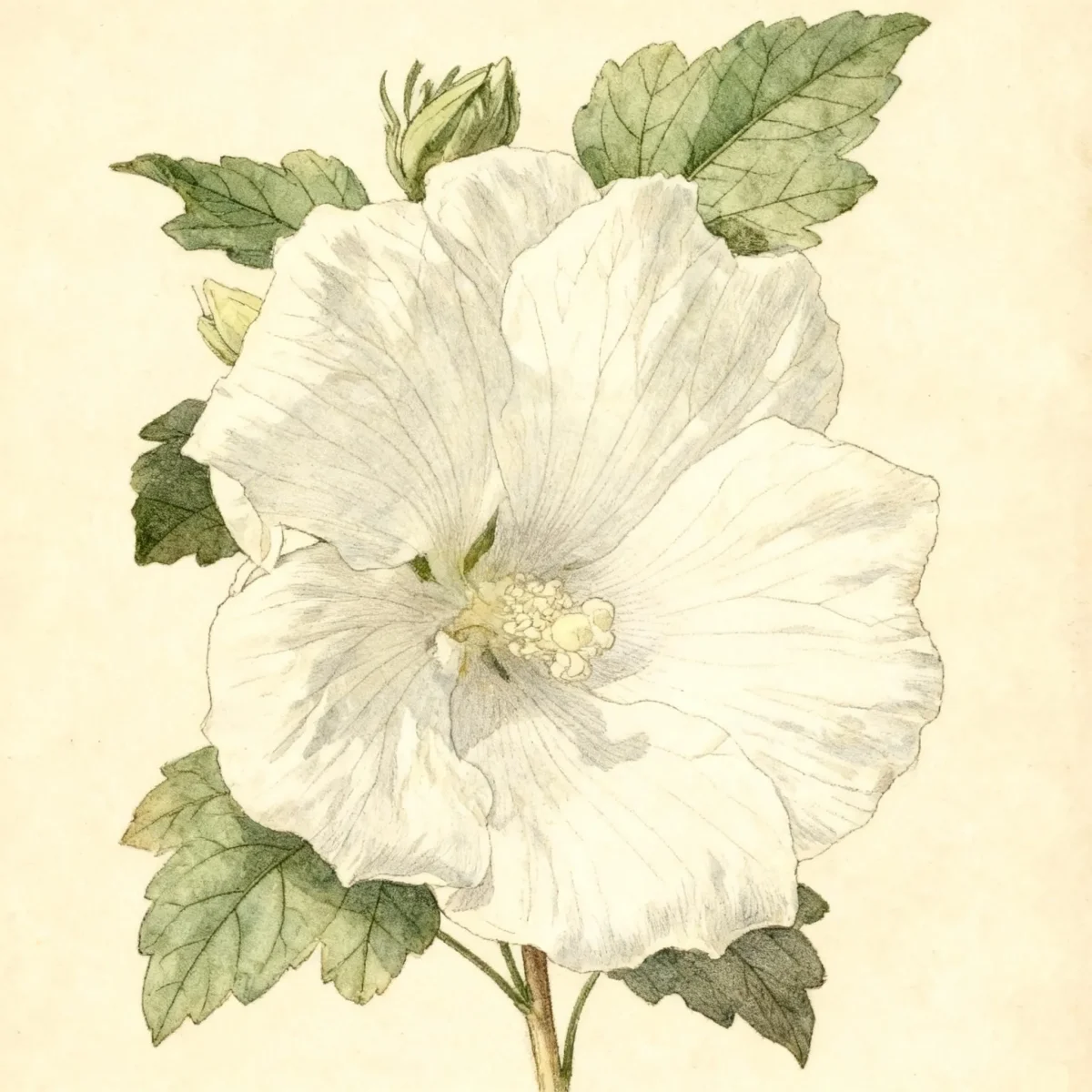
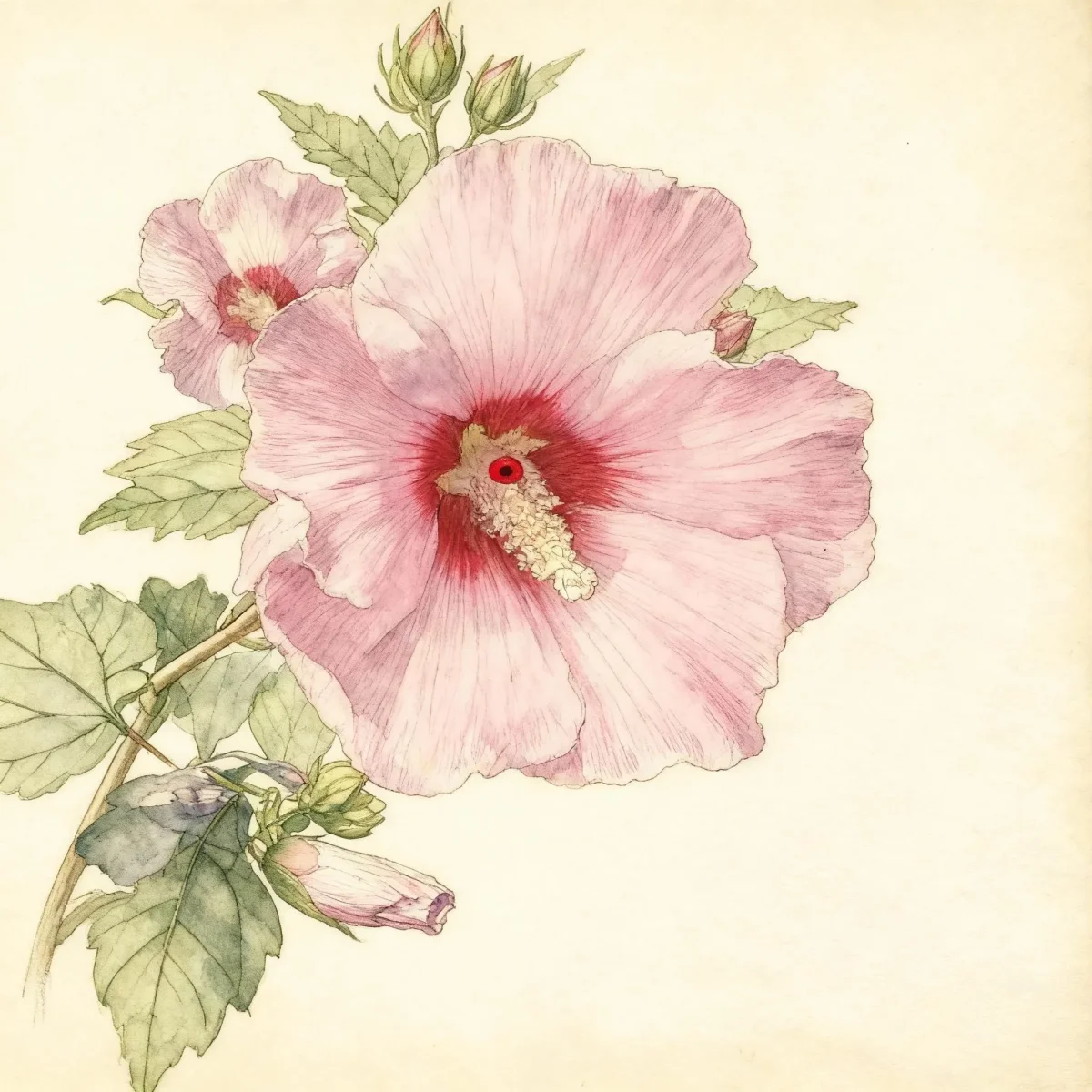
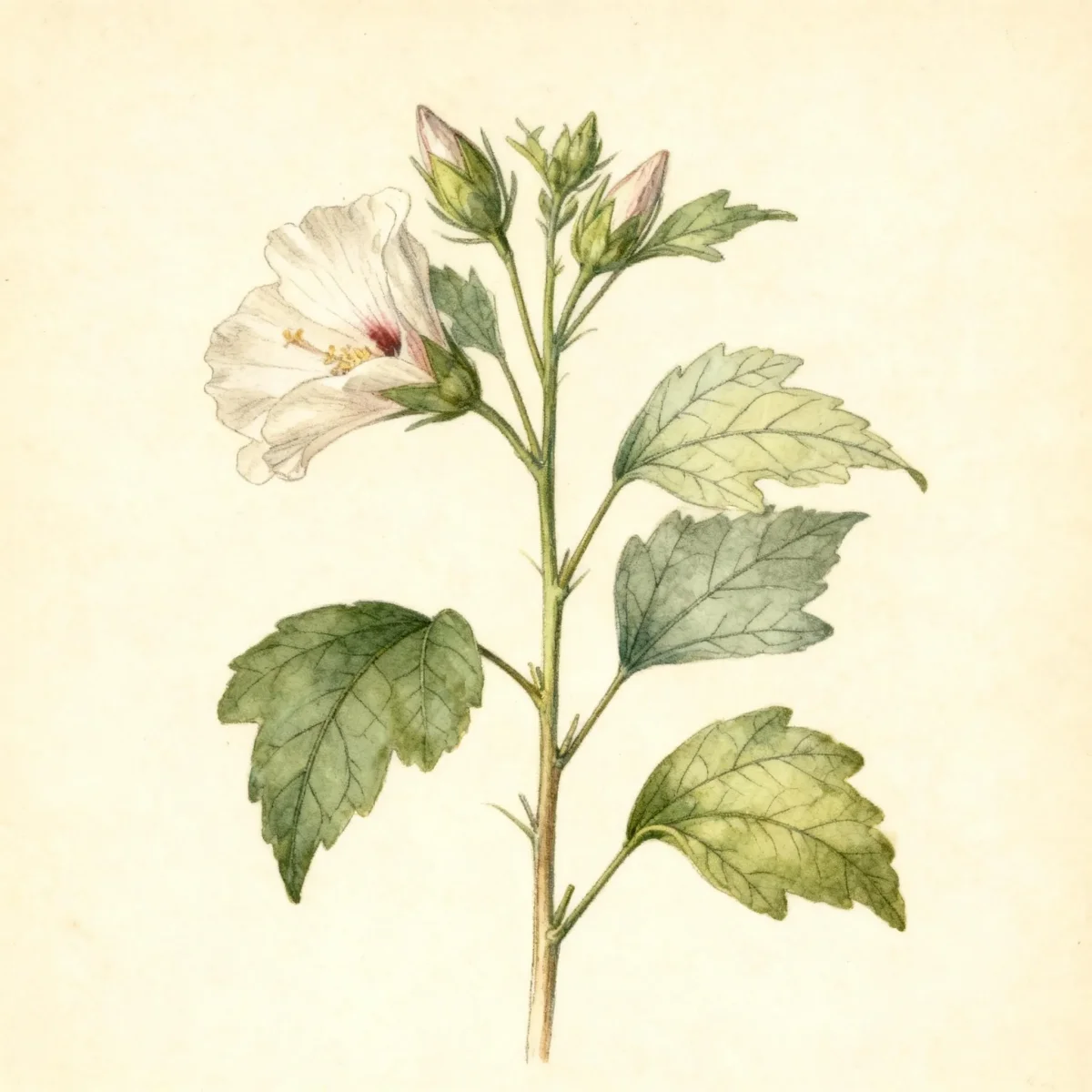
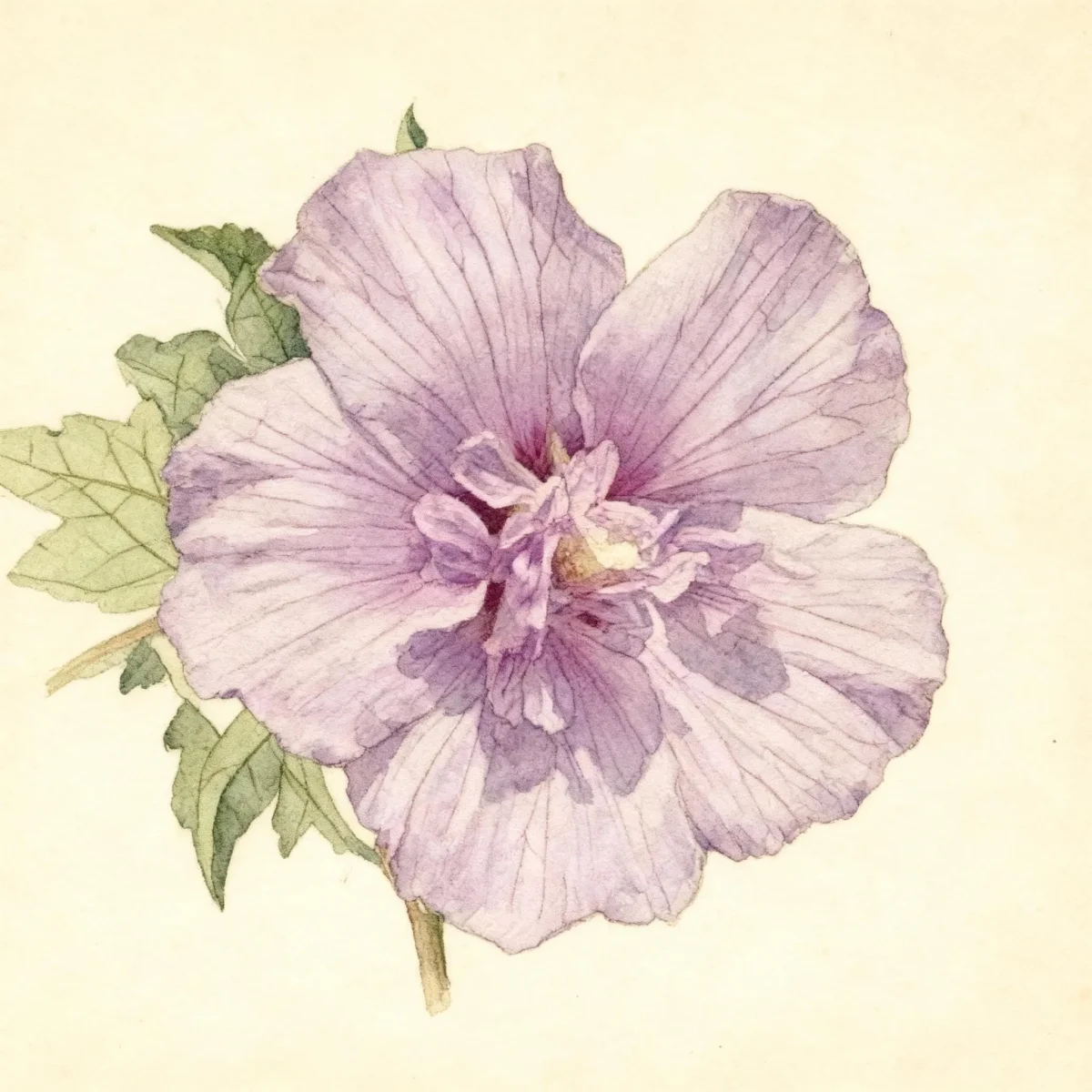
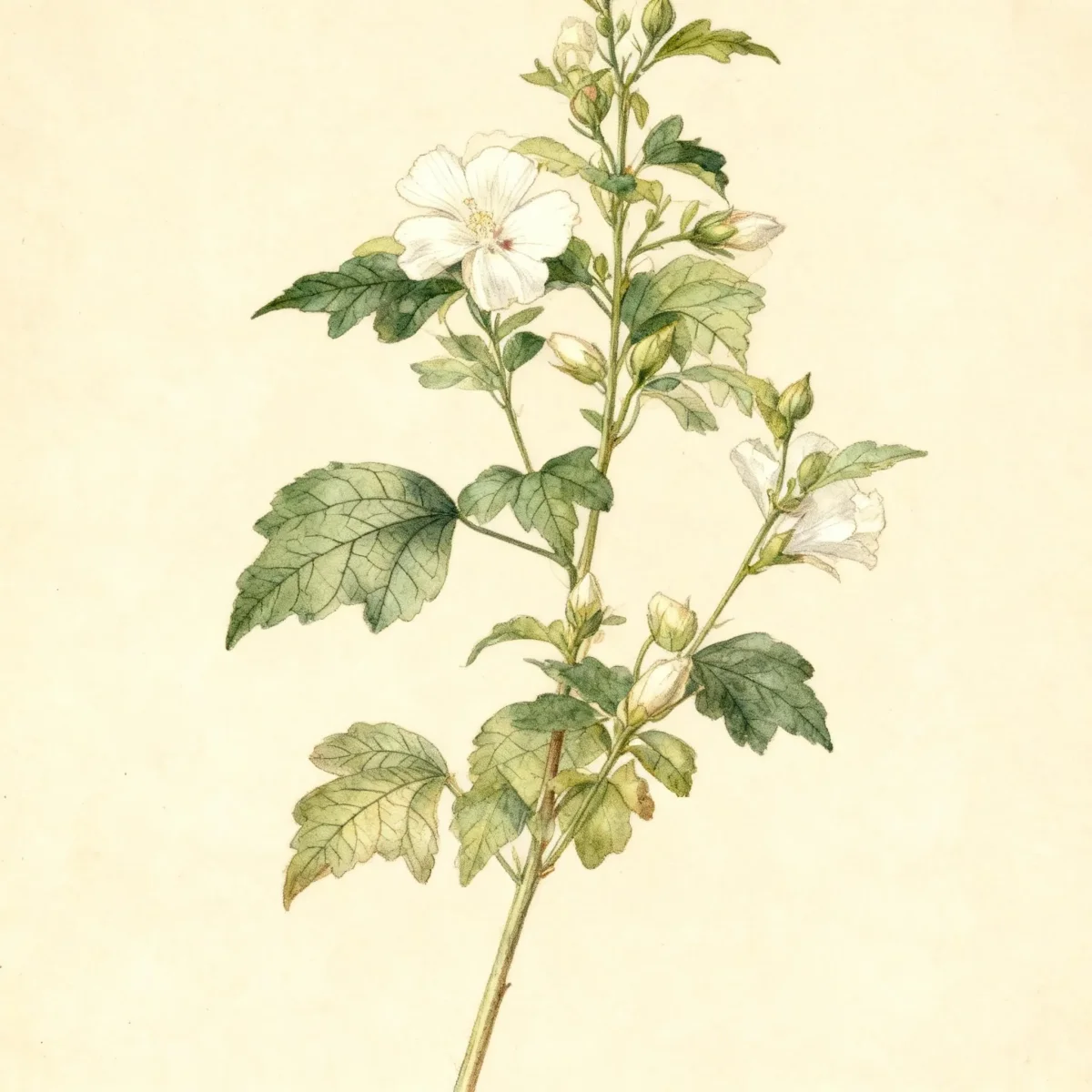
Rose of Sharon (Hibiscus syriacus 'Minfren' FIRST EDITIONS BALI)
Discover Hibiscus syriacus 'Minfren' FIRST EDITIONS BALI, a low-maintenance Rose of Sharon shrub featuring showy white and purple flowers from June through October.
Scroll down to discover growing tips, care requirements, companion plants, and more
Complete Plant Information
Overview
The Rose of Sharon, specifically the cultivar Hibiscus syriacus ‘Minfren’ FIRST EDITIONS BALI, provides exceptional late-season color when many other shrubs have finished blooming. This hardy deciduous shrub is valued for its upright, vase shape and long performance throughout the summer and into fall. Its vigorous nature makes it a dependable choice for structure in the garden.
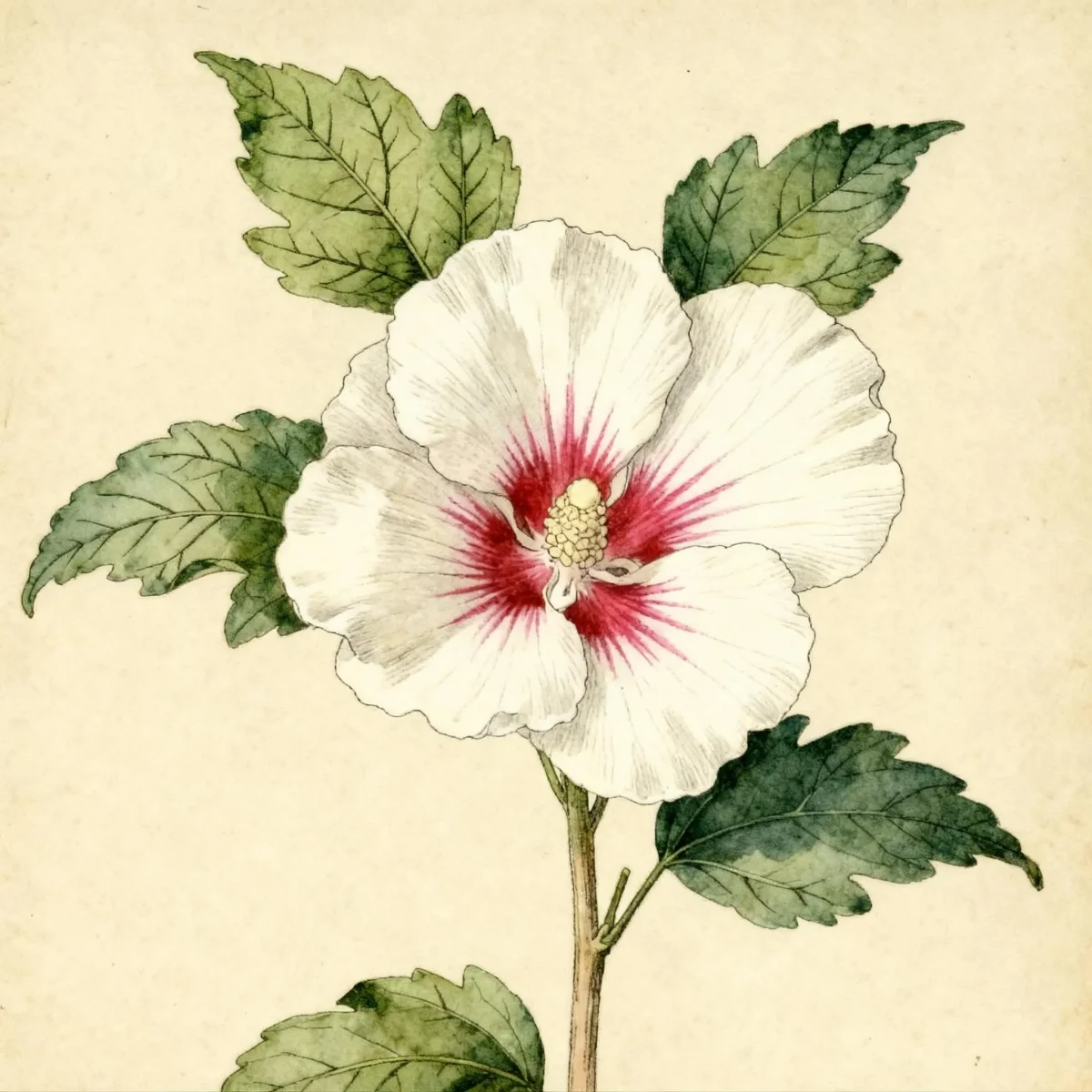
Hibiscus syriacus ‘Minfren’ FIRST EDITIONS BALI offers semi-double, pure white flowers, each displaying an attractive purple-red center, drawing the eye immediately. Being tolerant of heat, humidity, and urban pollution, this variety—often sold as FIRST EDITIONS® BALI™—is a workhorse in diverse landscape settings. It requires relatively low maintenance, rewarding attentive gardeners with abundant blooms from June through October.
For gardeners seeking reliable height and long-lasting summer interest, the Rose of Sharon is an excellent selection. It serves well as a specimen plant, screen, or informal hedge, fulfilling functional roles while providing excellent sustained floral appeal.
Fast Facts
- Plant Family: Malvaceae
- Plant Type: Deciduous shrub
- Hardiness Zones: USDA Zones 5-8
- Size at Maturity:
- Height: 5-8 ft
- Spread: 4-7 ft
- Bloom Time: June to October
- Bloom Description: White with a purple-red center
- Sun Exposure: Full sun to part shade
- Water Needs: Medium
- Maintenance Level: Low
How to Grow
Planting Hibiscus syriacus ‘Minfren’ FIRST EDITIONS BALI is best managed in spring after the danger of frost has passed, allowing the roots to establish before summer heat. Ensure location selection prioritizes full sun for the absolute best flowering performance, though it adapts well to part shade. This plant is adaptable, thriving in average, medium-moisture, well-drained soils but notably tolerates poor soils and drought once established.
Care for your Rose of Sharon is generally straightforward, fitting into a low-maintenance regimen. While it prefers moist, organically rich soil, supplemental watering is usually only necessary during extended dry periods, thanks to its drought tolerance. Fertilizing is rarely required; excessive richness can encourage foliage growth over profuse blooming.
Pruning focuses on shaping during early spring before new growth begins. Removing crossing or damaged branches maintains the desirable upright, vase-shaped habit. For significantly larger blooms on your Hibiscus syriacus ‘Minfren’ FIRST EDITIONS BALI, you may choose a harder prune, cutting branches back to just 2-3 buds in late winter.
Landscape Uses
The versatility of Rose of Sharon makes it invaluable in landscape design. Its upright structure lends itself perfectly to use as a specimen where its late-season flowers can be fully appreciated, or it excels when massed or planted in groups for screening purposes. Consider using this cultivar in shrub borders or even along property lines where a formal hedge is desired but significant winter structure is not required.
Because the Hibiscus syriacus ‘Minfren’ FIRST EDITIONS BALI is very tolerant of heat and humidity, it harmonizes well with other warm-climate performers like Coneflowers (Echinacea) or upright ornamental grasses that peak in the late summer. Its adaptation to urban environments means it can successfully anchor foundation plantings, provided adequate air circulation is maintained.
Its ability to withstand clay soil and drought also opens up use in naturalized borders or areas where irrigation is sparse. Grouping several of these shrubs creates an impressive screen that delivers reliable visual interest late in the growing season.
Standout Features
Flower Qualities
- Showy
Noteworthy Characteristics
This vigorous, upright, vase-shaped, multi-stemmed, deciduous shrub is known commonly as rose of Sharon or shrub althea. Showy, hollyhock-like, 5-petaled flowers appear over a long, early-summer to fall bloom period, each featuring a prominent central staminal column. ‘Minfren’, part of the First Editions® series and sold as FIRST EDITIONS® BALI™, exhibits semi-double, pure white, 3 to 4 in. diameter flowers with a deep purple-red center. This specific variety maintains a manageable size, typically growing 5 to 8 ft. tall and 4 to 7 ft. wide.
Tolerances
- Deer
- Drought
- Clay Soil
- Black Walnut
Potential Problems
While generally robust, the Rose of Sharon can occasionally be susceptible to common fungal issues such as leaf spots, blights, rusts, and cankers, usually manifesting in humid, densely planted areas. Proper air circulation, achieved through good spacing and light pruning, mitigates these risks significantly.
Insect pests are generally minor, though Japanese beetles, whiteflies, and aphids are sometimes observed feeding on the foliage. If Japanese beetles appear, immediate hand removal or targeted insecticide application may be necessary, as unchecked feeding can severely defoliate the Hibiscus syriacus ‘Minfren’ FIRST EDITIONS BALI quickly.
Frequently Asked Questions
What hardiness zones is Rose of Sharon suitable for?
The Hibiscus syriacus ‘Minfren’ FIRST EDITIONS BALI is reliably hardy in USDA Zones 5 through 8.
How large does Rose of Sharon grow?
This specific cultivar reaches mature heights between 5 and 8 feet, spreading to a width of 4 to 7 feet, maintaining an upright, vase-like shape.
When does Rose of Sharon bloom?
Bloom time for this variety is extensive, running from June straight through October, showcasing flowers that are white with a distinctive purple-red center.
What sun exposure does Rose of Sharon need?
For best results, plant Hibiscus syriacus ‘Minfren’ FIRST EDITIONS BALI in full sun, although it will tolerate partial shade, with flowering being slightly reduced in shadier spots.
Conclusion
The Hibiscus syriacus ‘Minfren’ FIRST EDITIONS BALI offers gardeners a reliable, low-maintenance shrub that excels at delivering dazzling, extended bloom time deep into the season. This superb Rose of Sharon cultivar provides structural elegance and beautiful white, red-centered flowers throughout summer heat. Check your local USDA zone compatibility before planning your purchase and ensure a location that offers adequate spring planting time for strong establishment.
Design Ideas for Late Summer Color
To maximize the impact of the late-season flowers produced by Hibiscus syriacus ‘Minfren’ FIRST EDITIONS BALI, pair it with plants that either bloom early or offer strong contrasting foliage texture. Consider planting groupings of Astilbe or Peonies in front for early season interest, which will fade as the Rose of Sharon comes into full glory. Because this plant tolerates clay soil, durable plants like Russian Sage (Perovskia atriplicifolia) or sturdy ornamental grasses work well as companions that share similar hardiness and tolerance levels.
Use this shrub’s strong vertical structure to define garden rooms or create natural property boundaries. Even though it is often utilized as a hedge or screen, allow individual specimens of Hibiscus syriacus ‘Minfren’ FIRST EDITIONS BALI room to develop their natural vase shape rather than shearing them into tight hedges, which can inhibit air flow and bloom production.
Seasonal Care Calendar
For optimal health, focus major efforts on spring pruning and watering during dry spells. In early spring, apply a balanced, slow-release fertilizer if your soil is poor, but avoid over-fertilizing, which promotes lush leaves at the expense of flowers. Summer care involves monitoring for the potential pest issues mentioned previously, especially Japanese beetles, and intervening promptly, while keeping watering consistent during peak heat.
Winter preparation for the Rose of Sharon is minimal; it is quite cold-tolerant in zones 5-8. After leaf drop, you can clean up any fallen debris around the base, although the plant rarely needs elaborate winter mulching once established unless planted in the colder edges of its zone range. A hard pruning back to 2-3 buds in late winter or early spring is beneficial for bloom size.