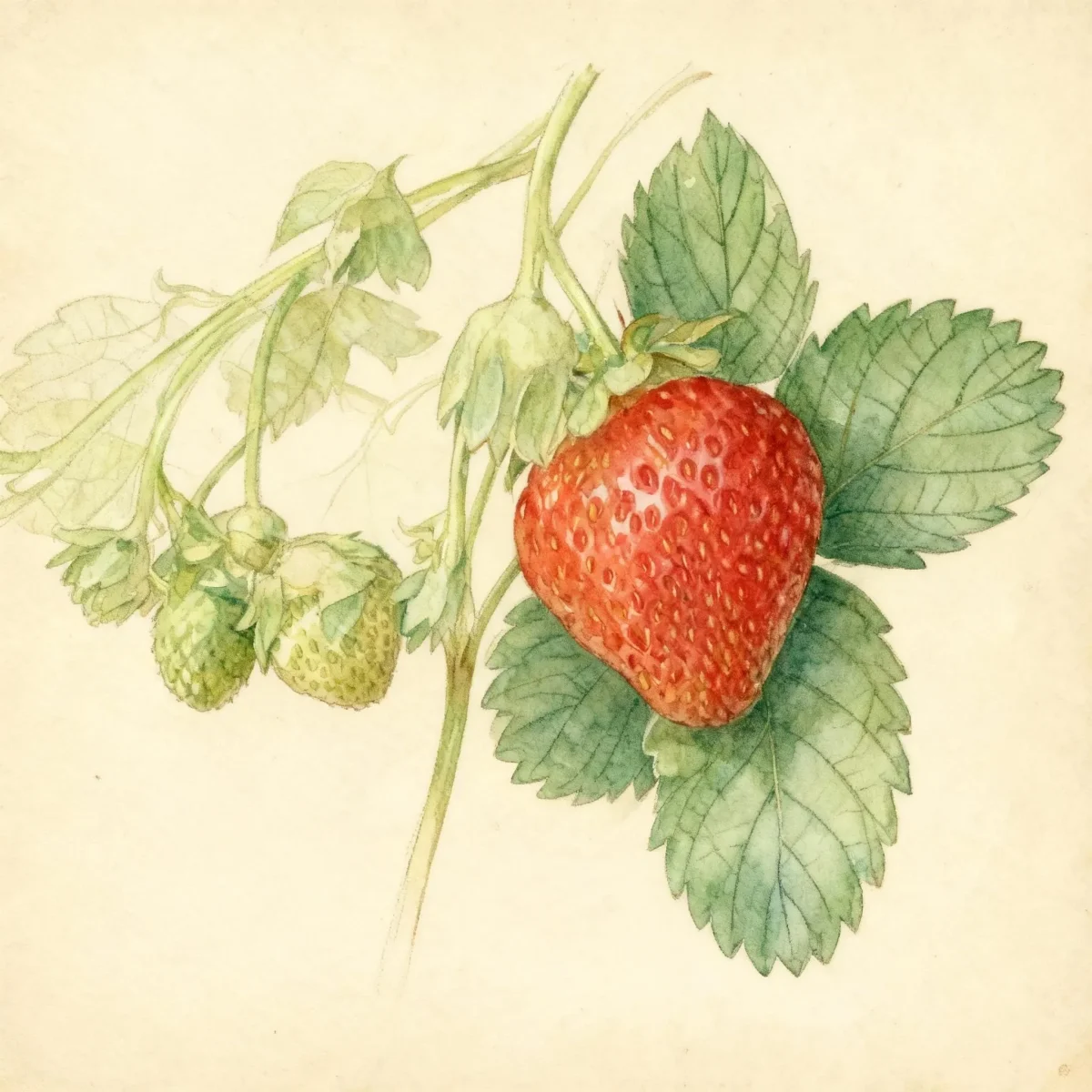
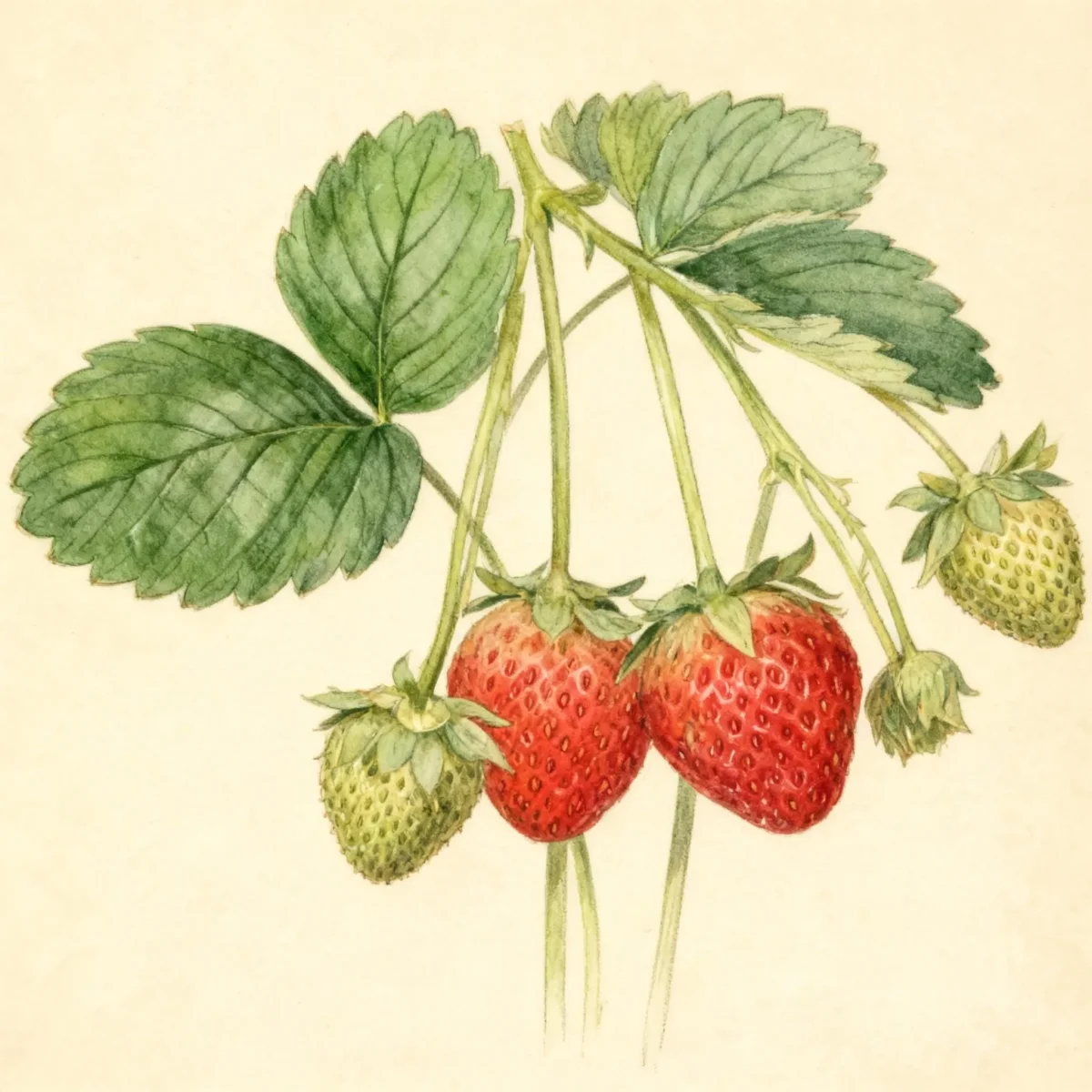
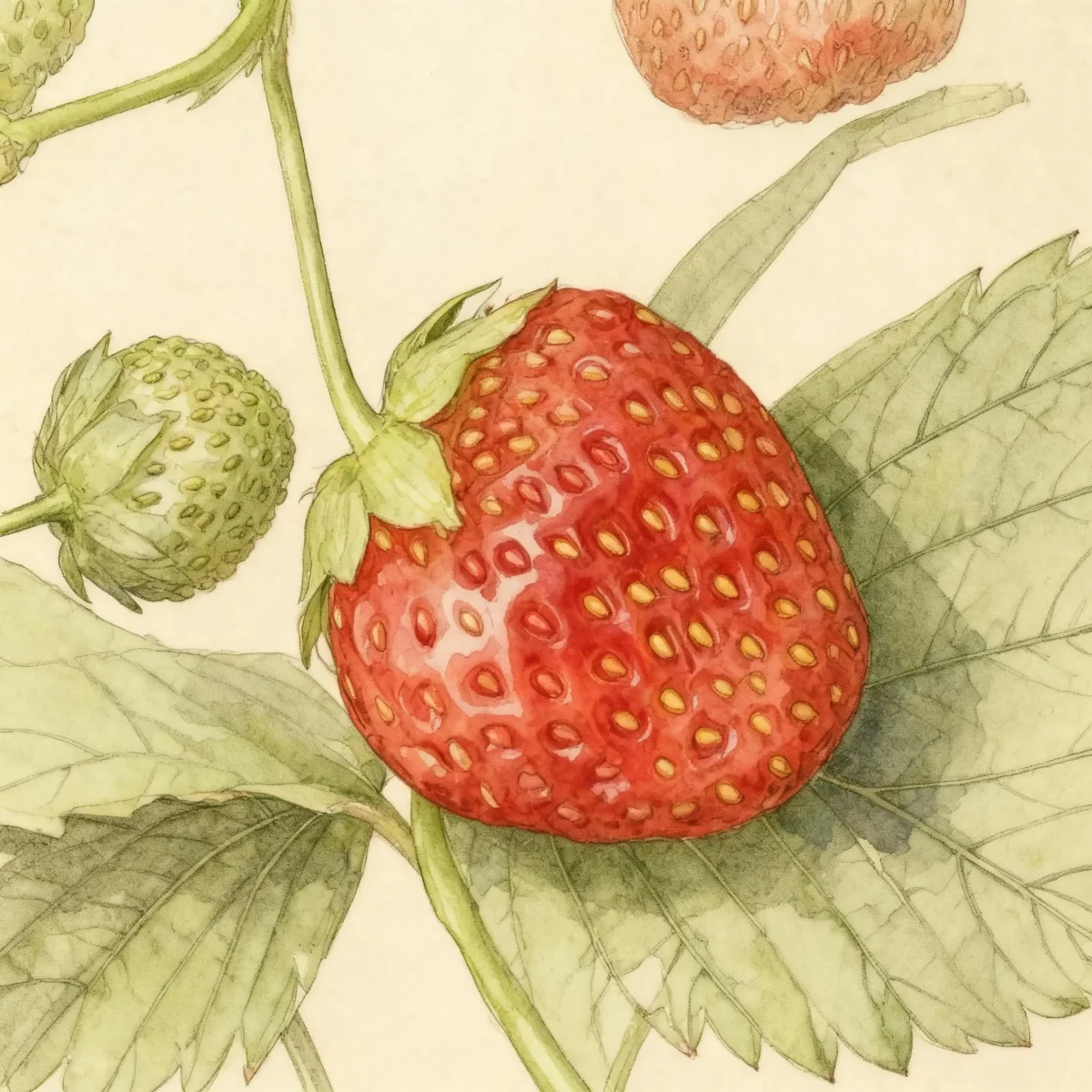
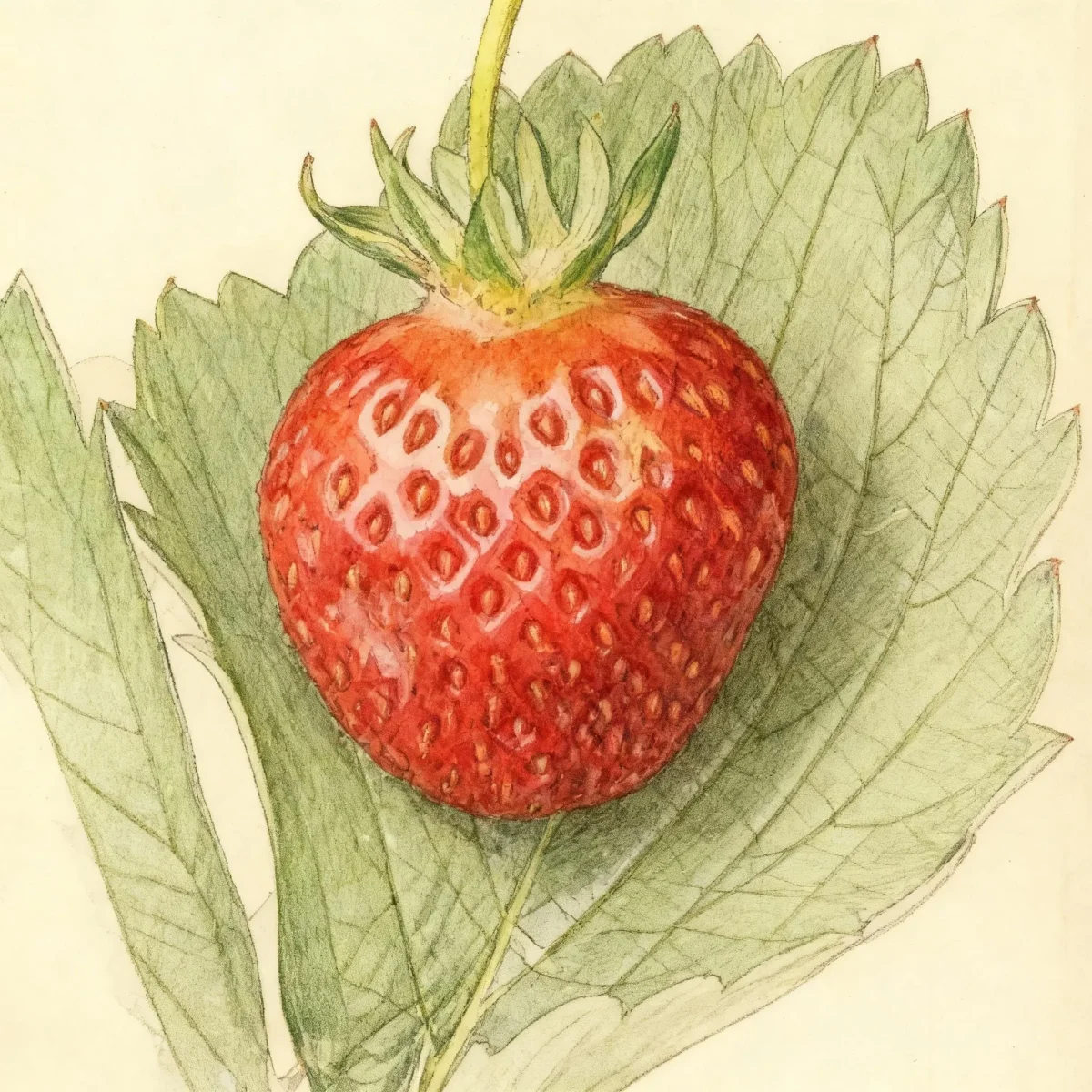
Pineberry (Fragaria WONDERFUL PINEBERRY)
Discover the unique Pineberry (Fragaria WONDERFUL PINEBERRY), an everbearing hybrid offering strawberry flavor with a hint of pineapple.
Scroll down to discover growing tips, care requirements, companion plants, and more

Complete Plant Information
Overview
The Pineberry, scientifically known as Fragaria WONDERFUL PINEBERRY, is a captivating fruit hybrid prized for its unusual flavor profile—resembling strawberry with notes of pineapple. This everbearing variety provides a continuous harvest, setting it apart from standard Junebearers. Gardeners value the Fragaria WONDERFUL PINEBERRY for its aesthetic appeal, featuring soft white berries contrasted by tiny red seeds.
Cultivating the Pineberry requires dedication, as it is rated as a high-maintenance crop needing consistent care throughout the growing season. These low-growing herbaceous perennials spread readily via runners, creating a dense ground cover effect suitable for naturalizing small areas. While the fruit is highly edible and sought after, gardeners must provide optimal conditions to ensure a robust yield of Fragaria WONDERFUL PINEBERRY.
This unique strawberry relative thrives in full sun and prefers consistently moist, well-drained soil enriched with organic matter. For those willing to invest the time, the reward is a supply of delicious, fragrant fruit from spring until frost, making the Pineberry a fascinating addition to the edible landscape near decks or patios.
Fast Facts
- Plant Family: Rosaceae
- Plant Type: Fruit
- Hardiness Zones: USDA Zones 5-8
- Size at Maturity:
- Height: 0.5-1 ft
- Spread: 0.5-1.5 ft
- Bloom Time: May to September
- Bloom Description: White with yellow centers
- Sun Exposure: Full sun
- Water Needs: Medium
- Maintenance Level: High
How to Grow
Planting Pineberries should ideally occur in spring after the danger of hard frost has passed, ensuring plants establish roots before summer heat arrives. Choose a location providing full sun exposure and focus on preparing the soil: Pineberries thrive in average, medium moisture, well-drained soils that are organically rich, preferably sandy loams. Always ensure you start with certified disease-resistant cultivars, as this Fragaria WONDERFUL PINEBERRY hybrid cannot be grown successfully from seed.
As a medium-water-use fruit, maintain consistent moisture levels, especially during fruiting periods, but avoid sogginess which promotes root diseases. Due to the high maintenance requirement, regular monitoring for pests and diseases is crucial. Everbearing types like the Pineberry may slow production during intense summer heat, so adequate watering helps mitigate stress.
These plants spread perpetually via runners that root as they sprawl. While this aids in naturalizing or filling beds, runners should be managed if you prefer discrete clumps. Overwintering is necessary in colder zones; protect established Pineberry plants by applying a deep protective layer of mulch, such as straw or grass clippings, before the ground freezes hard.
Landscape Uses
While primarily grown for their edible harvest, the ornamental nature of Fragaria WONDERFUL PINEBERRY fruit makes them suitable for foreground plantings near entertaining spaces. Use them in beds or containers positioned close to patios where their unique white fruits can be easily observed. Because they spread naturally, Pineberries function well as a low-growing ground cover or edging plant along walkways.
Consider incorporating the Pineberry into mixed vegetable or herb borders where their cultural needs—full sun and consistent moisture—align with neighboring edibles. Their structure lends itself well to tower or vertical gardening systems when grown in containers, maximizing yield in small footprints. Enjoying the fresh Fragaria WONDERFUL PINEBERRY fruit right off the vine is one of the highest pleasures this plant offers.
Standout Features
Flower Qualities
- Showy
Fruit Qualities
- Showy
- Edible
Noteworthy Characteristics
Fragaria encompasses various low-growing, stoloniferous herbaceous perennials commonly known as strawberries; the Pineberry is an everbearing hybrid derived from crosses including Fragaria virginiana and Fragaria chiloensis. While typical strawberries produce large red berries, this variety yields smaller, soft white fruits often tinged with pale pink or orange, distinguished by their contrasting red seeds. The name reflects a reported flavor profile tasting like strawberry tinged with pineapple essence.
Tolerances
- Deer
Potential Problems
Pineberries are susceptible to a wide array of fungal and bacterial issues common to strawberries, including gray mold, anthracnose fruit rot, and root rots like red stele. Proactive management focuses on ensuring excellent air circulation by managing runners and providing well-drained soil to mitigate moisture-related diseases. Insect pests can include spider mites, aphids, slugs, and strawberry weevils, requiring regular scouting. Because the ripe fruit is very soft, harvest frequently and handle the Fragaria WONDERFUL PINEBERRY harvest gently to prevent bruising, which can invite rot.
Frequently Asked Questions
What hardiness zones is Pineberry suitable for?
The Pineberry, or Fragaria WONDERFUL PINEBERRY, is winter hardy across USDA Zones 5 through 8.
How large does Fragaria WONDERFUL PINEBERRY grow?
This everbearing hybrid typically reaches a height between 0.5 and 1 foot, with a spread ranging from 0.5 to 1.5 feet wide as it sends out runners.
What sun exposure does Pineberry need?
For optimal flowering and fruit production, the Pineberry requires consistent full sun exposure throughout the growing season.
When does Pineberry bloom?
Fragaria WONDERFUL PINEBERRY produces flowers, which are white with yellow centers, reliably from May all the way through September.
Conclusion
The Fragaria WONDERFUL PINEBERRY offers adventurous gardeners a truly exceptional fruit experience, combining the familiar structure of a strawberry with the exotic hint of pineapple flavor. While this plant demands high maintenance due to its susceptibility to pests and diseases, its everbearing habit rewards diligent care. Before planting your own Pineberry patch, verify that your growing region falls within USDA Zones 5-8 and plan for the necessary cultural management required for this unique hybrid.
Propagation Tips
The primary and recommended method for increasing your stock of Fragaria WONDERFUL PINEBERRY is through the runners the plants naturally produce. These stolons sprawl along the ground and, if left undisturbed, will root to form new, viable daughter plants. To propagate, carefully sever rooted runners from the mother plant in spring or early summer and transplant them to their new location, ensuring the crown remains at soil level.
Since this variety is a hybrid, attempting to grow new plants from gathered seeds is futile; this hybrid cannot be grown from seed. Managing runners is key to plant health—too many runners can deplete the energy reserves needed for fruit production, so thinning them out, especially the oldest runners, is part of the plant’s high maintenance requirements.
Seasonal Care Calendar
Spring preparation is essential for maximizing your Pineberry harvest. Once winter mulch is removed, gently incorporate balanced, organically rich fertilizer into the top layer of soil before the massive flush of new spring growth begins. Monitor closely for the first appearance of white flowers, which signals the coming harvest window starting in May.
Summer care centers on consistent hydration; medium watering needs must be met without allowing the soil to become waterlogged, especially when the heat peaks. The everbearing Fragaria WONDERFUL PINEBERRY may slow production during extreme heat over 85°F, so providing partial afternoon shade in the hottest climates can help reduce stress. Continue to manage runners throughout this period.
As autumn approaches, the final harvests should be collected, and preparation for winter dormancy begins. Apply a protective layer of straw or shredded grass clippings in late fall once temperatures consistently drop, insulating the crowns and roots against freezing winter conditions common in Zones 5 through 8.