Wild potato vine (Ipomoea pandurata)
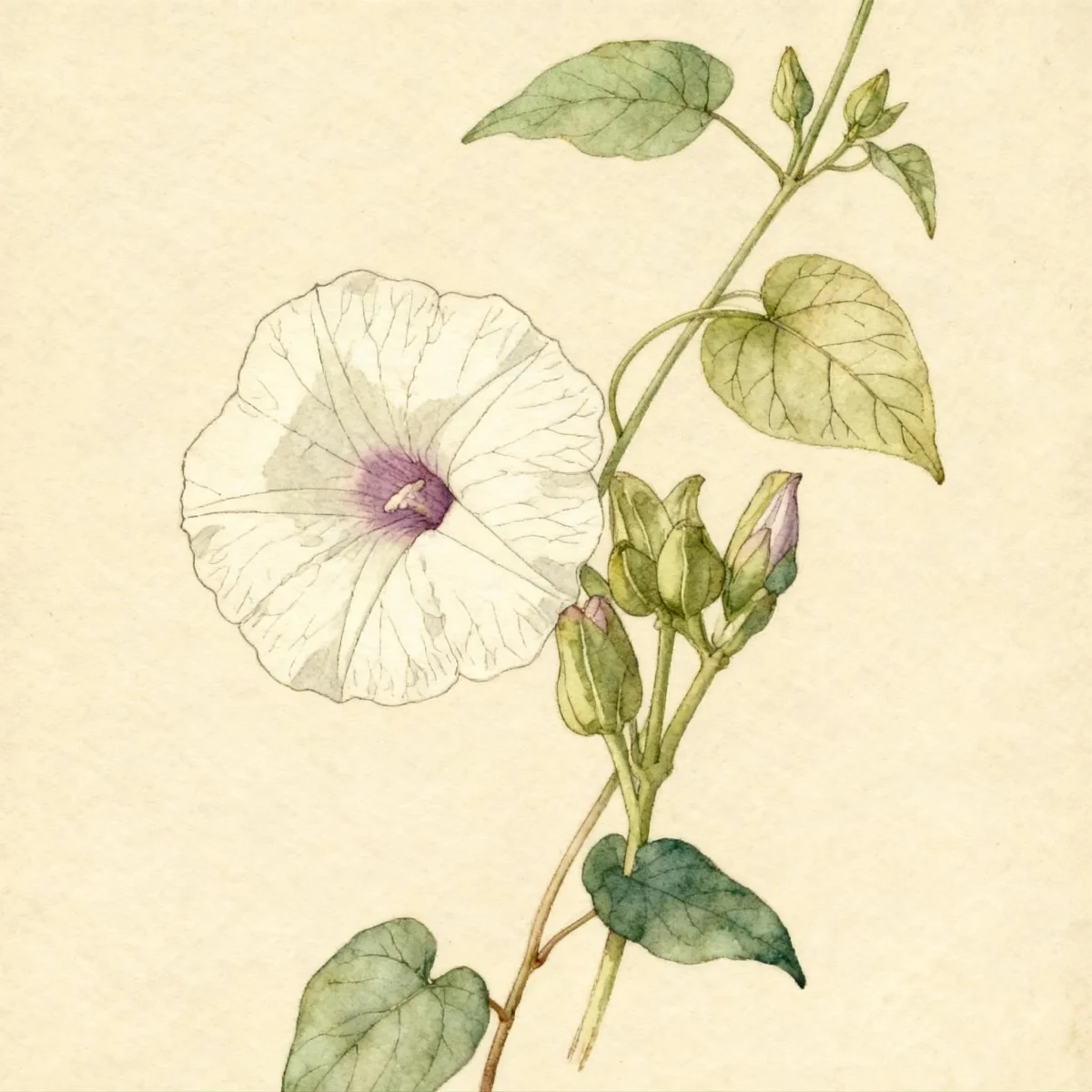
Vigorous Wild potato vine (Ipomoea pandurata), a twining perennial with showy white blooms. Thrives in full sun and average soils.
Scroll down to discover growing tips, care requirements, companion plants, and more
Complete Plant Information
Overview
The Wild potato vine (Ipomoea pandurata) is a vigorous, twining perennial celebrated for its rapid growth and large, striking flowers. This member of the morning glory family offers significant ornamental coverage, quickly scaling structures or sprawling as a dense groundcover. Its extensive, starchy root system speaks to its resilience once established, making it a powerful presence in the landscape.
Valued for its aesthetic appeal, the vine produces funnel-shaped, white flowers accented by distinct reddish-purple eyes throughout the summer months. While it requires medium maintenance, its native status in North America and its ability to establish quickly make it popular for covering less manicured areas. Gardeners should respect the aggressive nature of Ipomoea pandurata due to its deep roots.
This plant provides an excellent vertical accent when given support, showcasing its polymorphic leaves and showy blooms from late spring well into autumn. For those looking for robust growth combined with attractive summer flowering, the Wild potato vine proves to be a dynamic and historically significant choice.
Fast Facts
- Plant Family: Convolvulaceae
- Plant Type: Vine
- Native Range: North America
- Hardiness Zones: USDA Zones 6-8
- Size at Maturity:
- Height: 15-30 ft
- Spread: 3-6 ft
- Bloom Time: May to September
- Bloom Description: White flowers with reddish purple eyes
- Sun Exposure: Full sun to part shade
- Water Needs: Medium
- Maintenance Level: Medium
How to Grow
Planting the Wild potato vine is best done in spring after the danger of frost has passed, allowing it time to establish its formidable root system during the growing season. Choose a location providing average, well-drained soil, though it tolerates average moisture well. While it thrives in full sun, it adapts to part shade, though blooming may be reduced.
Water needs are best described as medium; it prefers consistently moist soil, especially when young. Established plants exhibit drought tolerance due to their deep roots, but supplemental watering during extreme dry spells will ensure vigorous growth. Fertilizing is generally unnecessary for Ipomoea pandurata unless the soil is severely depleted.
Pruning is mainly cultural advice rather than strict necessity, though deadheading spent flowers can help limit self-seeding and potential unwanted spread. Be aware that the plant’s extensive root system means it can become weedy; plan its location carefully to prevent it from overtaking desirable plants. In fall, cut back the spent vine material after frost kills the foliage.
Landscape Uses
The Wild potato vine excels where you need rapid vertical coverage and robust density. It is perfect for screening unsightly utility boxes, covering chain-link fences, or providing shade over pergolas and decks. Due to its aggressive trailing habit, it also functions admirably as a dense, aesthetic groundcover on slopes or in open areas where its spread is welcomed.
For a cottage garden style, allow Ipomoea pandurata to climb natural supports like sturdy shrubs or dead trees, where its large white blooms offer a dramatic contrast against greener foliage. When grown in containers, ensure the pot is large enough to accommodate a significant root mass and provide a substantial trellis, as it will quickly dry out otherwise. Its sheer size makes it unsuitable for small borders.
Standout Features
Flower Qualities
- Showy
Noteworthy Characteristics
Ipomoea pandurata, commonly called wild potato vine, man-of-the-earth, man root and Indian potato, is a vigorous, twining or trailing perennial vine of the morning glory family that grows to 15-30’ long on smooth to slightly pubescent, sometimes purplish stems rising from a vertical, starchy root system that matures over time to as much as 4’ long with a weigh of 25-30 pounds. This vine is native to moist to somewhat dry habitats including fallow and cultivated fields, roadsides, dry slopes, railroad right-of-ways, and along streams in Eastern North America from Connecticut to Ontario to Michigan and Iowa south to Texas and Florida. The vine is noted for its large, funnel-shaped, white flowers (2-3” across) with reddish purple eyes, blooming from late May to September.
Tolerances
- Drought
Potential Problems
Ipomoea pandurata is generally free from serious insect or disease issues, which contributes to its vigorous nature. The primary concern for gardeners is its potential for aggressive spreading via its deep, tuberous root system; placement selection is crucial to avoid eradication issues later. It can occasionally serve as a host for the sweet potato weevil, so monitor closely, especially if growing sweet potatoes nearby. Should the vine become too aggressive, physical removal of the extensive root mass is required, which can be a very demanding task.
Frequently Asked Questions
What hardiness zones is Wild potato vine suitable for?
The Wild potato vine (Ipomoea pandurata) is generally suitable for USDA Zones 6 through 8.
How large does Ipomoea pandurata grow?
This vine can reach impressive heights between 15 to 30 feet, with a spread typically ranging from 3 to 6 feet wide as it spreads along the ground.
When does Wild potato vine bloom?
It blooms abundantly from May to September, displaying white flowers that feature distinct reddish purple eyes during the peak summer heat.
What sun exposure does Ipomoea pandurata need?
The ideal light condition for healthy growth and prolific blooming of the Ipomoea pandurata is full sun, though it tolerates light afternoon shade.
Conclusion
The powerful growth and dramatic summer blooms make the Wild potato vine an unmatched choice for covering large, supportive structures quickly. Remember that this plant’s hardiness in USDA Zones 6-8 is matched by its need for management due to aggressive rooting. Before planting, assess your landscape to ensure this vigorous Ipomoea pandurata has room to roam or a sturdy system to climb.
Companion Planting
When integrating the Wild potato vine into the garden, pairing it with plants that appreciate similar sun and water conditions is ideal. Since it covers ground quickly, utilize it near robust, deep-rooted perennials that can handle the competition or place it where rapid coverage is needed, such as stabilizing a bank. Consider pairing it with plants that die back reliably in winter, as this allows easier seasonal pruning of the vine’s woody base.
Because the vine can sometimes become weedy, avoid planting it directly adjacent to rare or slow-growing specimens that might be smothered by its vigorous reach over the season. Its high growth pattern naturally suits structures where lower-growing, sun-loving species can thrive beneath its canopy near the base where the soil is slightly cooler.
Design Ideas for Coverage
The scale of the Wild potato vine lends itself to architectural elements that need softening or screening. Use it specifically on open pergolas or arbors where the sprawling habit can be trained upwards, creating a dense, leafy ceiling that offers dappled shade during summer afternoons. Its large leaves and big flowers draw attention, so place it where it functions as a focal point.
In large yards or acreage where aggressive groundcover is prized over pristine lawn maintenance, allow the plant to trail unchecked. This provides excellent erosion control and rapid green coverage for hard-to-mow areas. Just ensure that any fence or trellis intended to support the Ipomoea pandurata is sturdy, as the mature vine—bolstered by its thick roots—can exert surprising weight.