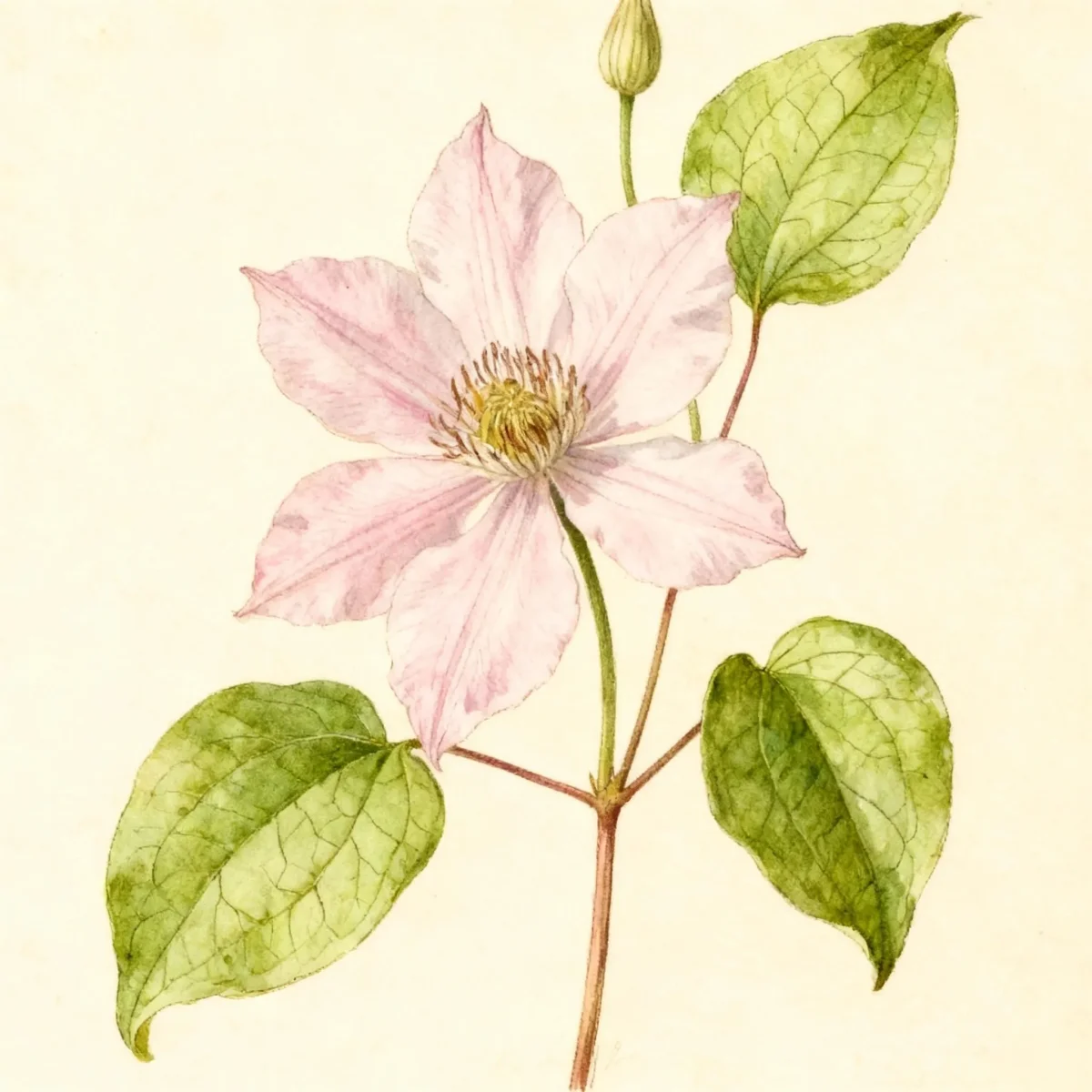
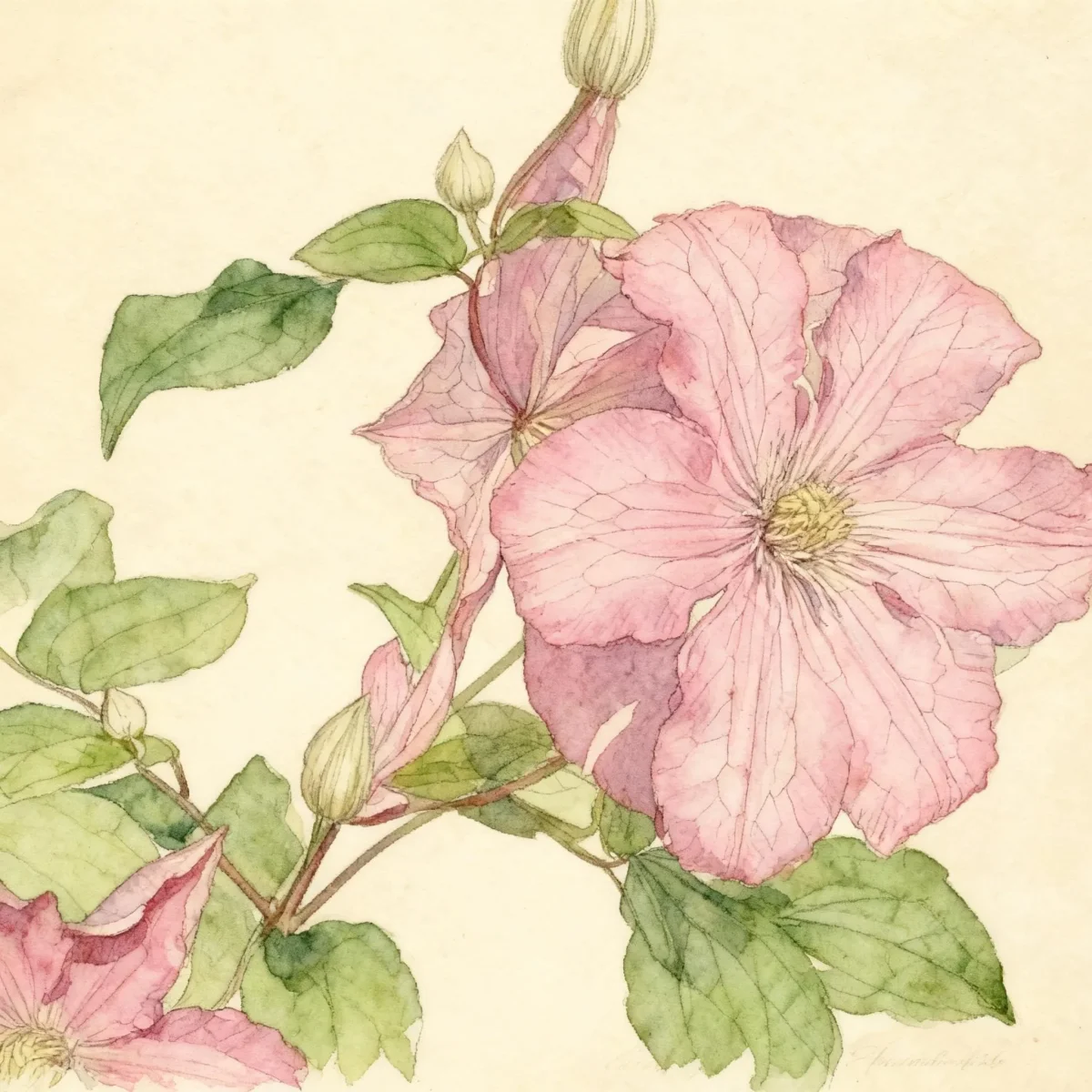
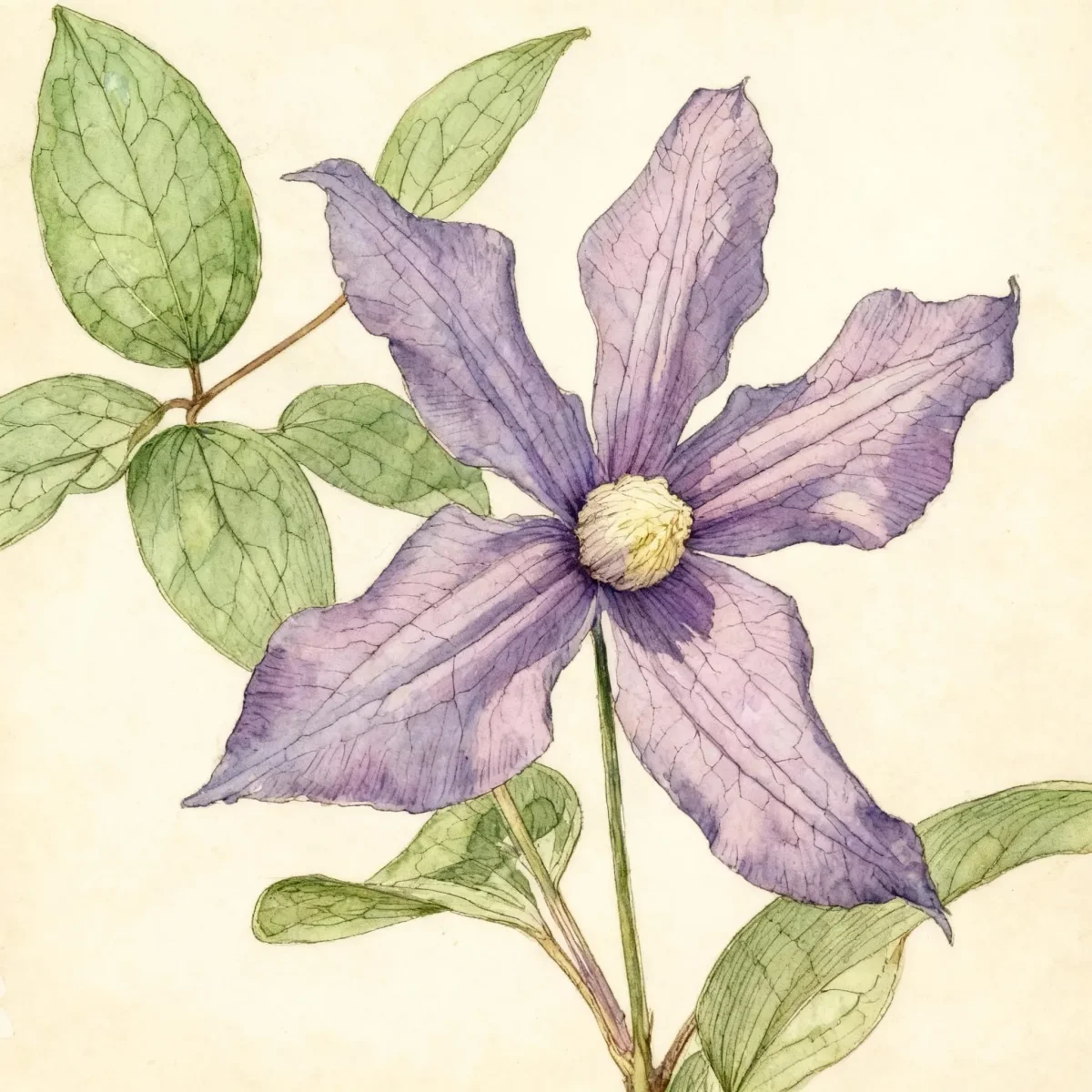
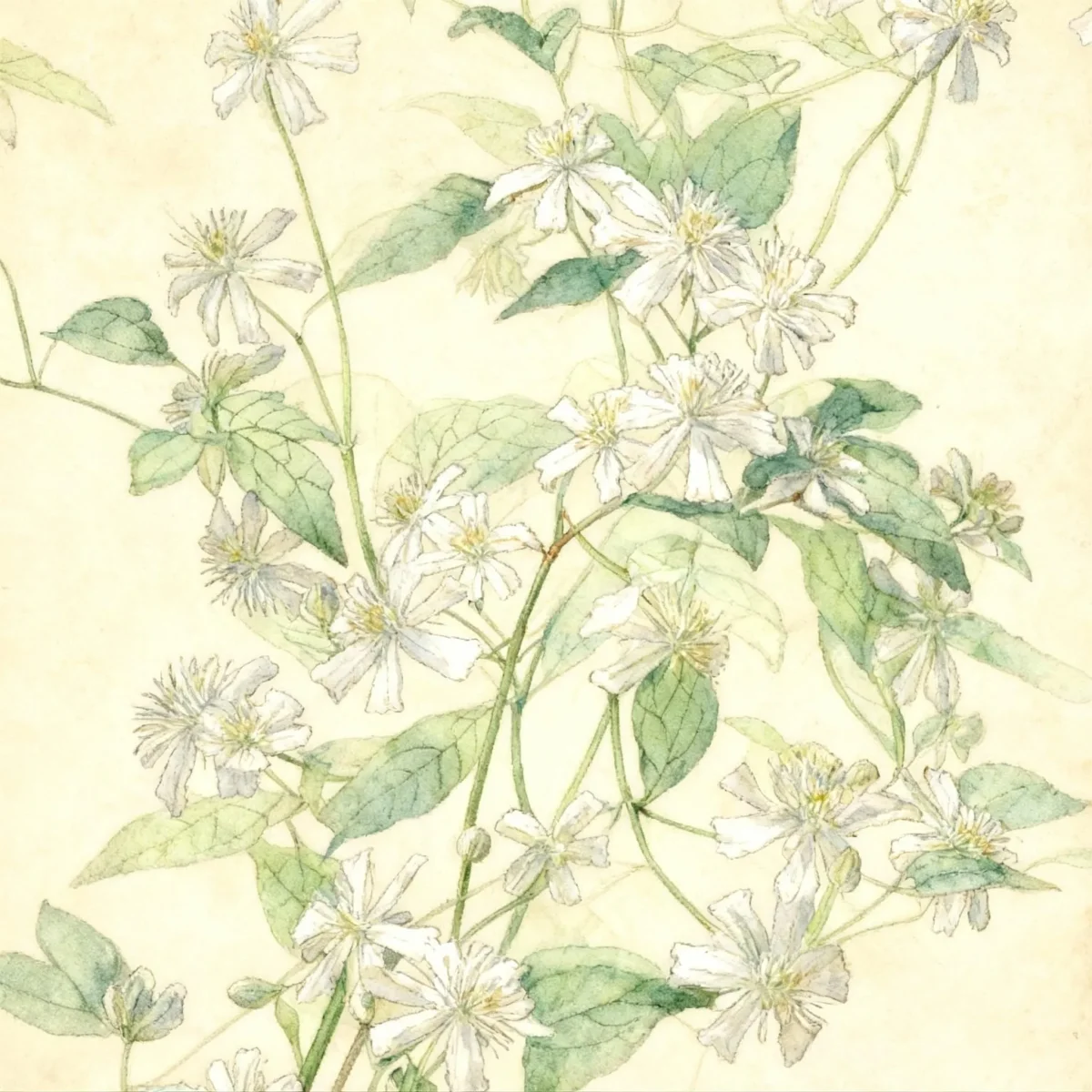
Clematis (Clematis 'Rooguchi')
Discover Clematis 'Rooguchi', a stunning mid-sized vine featuring nodding plum-purple flowers from May to frost in zones 4-8.
Scroll down to discover growing tips, care requirements, companion plants, and more
Complete Plant Information
Overview
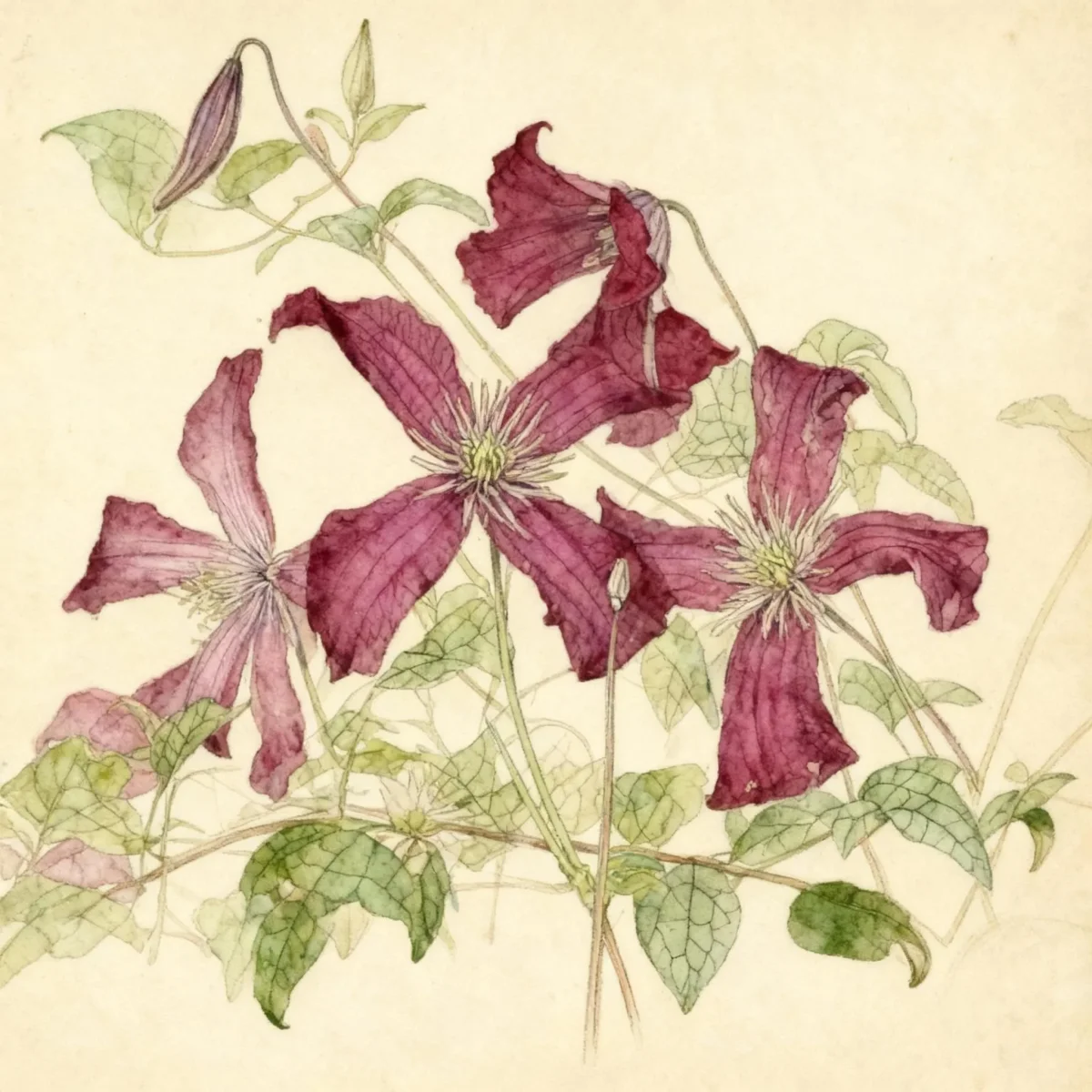
Clematis ‘Rooguchi’ is a highly adaptable and rewarding flowering vine cherished for its uniquely colored, nodding, bell-shaped blooms. This hybrid, often called solitary clematis, blooms prolifically from late spring straight through to the first frost, offering gardeners a long season of deep plum-purple color. Unlike many large-flowered Clematis, this variety features an easier, medium maintenance requirement, though it does need careful siting and support to thrive.
Developed in Japan, Clematis ‘Rooguchi’ offers a growth habit that is slightly less aggressive than traditional twining vines, often thriving as a multi-stemmed herbaceous perennial that scrambles attractively. It delivers excellent structural height and wonderful architectural interest when given a trellis or allowed to weave through supportive shrubs. Offering excellent bloom quality, this Clematis adds a unique texture and color accent to any vertical garden space.
Fast Facts
- Plant Family: Ranunculaceae
- Plant Type: Vine
- Hardiness Zones: USDA Zones 4-8
- Size at Maturity:
- Height: 6-8 ft
- Spread: 3-4 ft
- Bloom Time: May to frost
- Bloom Description: Plum-purple
- Sun Exposure: Full sun to part shade
- Water Needs: Medium
- Maintenance Level: Medium
How to Grow
For optimal performance, plant Clematis ‘Rooguchi’ in fertile, well-drained soil that receives full sun or shifting light to partial shade. A critical consideration for all Clematis is keeping the roots cool; site these vines where the flowering portions receive appropriate light, but ensure the root base stays shaded. This can be achieved by planting shade-loving perennials or small shrubs closer to the base of the vine.
These vines require consistent support, such as a trellis, arbor, or fence, to achieve their full potential height of up to 8 feet. Watering should be regular to maintain medium soil moisture; never allow the soil around the roots of your Clematis to dry out completely, especially during hot weather. A thick layer of root mulch is highly beneficial for maintaining consistent soil moisture and temperature moderation.
Clematis ‘Rooguchi’ is classified as a Group 3 pruning subject. This means that flowering occurs only on the current season’s new wood. Therefore, you can prune this vigorous grower back hard, either in late fall or early spring, cutting stems down close to the ground. This aggressive pruning promotes strong new growth and ensures abundant blooms throughout the long season.
Landscape Uses
The versatile nature of Clematis ‘Rooguchi’ makes it an excellent choice for various garden designs, particularly where vertical elements are desired. They are superb trained neatly up a trellis, enhancing a fence line, or softening the hard lines of an arbor or porch structure. Due to their ability to scramble, they are also fantastic weaving through the branches of established, sturdy shrubs, allowing the shrub structure to provide necessary support.
For gardeners focused on achieving sophisticated color palettes, the rich plum-purple of this variety pairs beautifully with silver foliage, pale pink roses, or deep blue companion plants. Furthermore, this species performs admirably in large containers, provided generous support is offered for upward growth. Consider underplanting containers with shorter, mounding annuals to shade the roots.
Standout Features
Flower Qualities
- Showy
- Good Cut
Noteworthy Characteristics
Clematis is a genus of over 250 species, most of which are woody to semi-woody deciduous vines climbing by twining leaf stalks or in some cases trailing over support, but in a few cases grow as freestanding or sprawling herbaceous perennials and small deciduous or evergreen shrubs. Captivating Clematis ‘Rooguchi’ is a non-vining, multi-stemmed cultivar known for its solitary, nodding, bell-shaped flowers that droop from showy, black pedicels. Following blooming, the flowers fade into attractive, plumose, silvery green seed heads, adding textural interest long after the purple color has passed.
Tolerances
- Rabbit
- Deer
- Black Walnut
Potential Problems
While Clematis ‘Rooguchi’ demonstrates good reported resistance to the common issue of clematis wilt, gardeners should remain vigilant against other potential diseases and pests. Susceptibility includes fungal issues like powdery mildew and leaf spots, as well as stem rot which can be fatal if left unchecked. Insect monitoring should focus on common garden nuisances such as aphids, slugs, and spider mites.
Prevention centers on proper cultural care. Always ensure excellent drainage, as wet roots invite stem rot. Avoid overhead watering late in the day to reduce humidity, which can encourage mildew. If pests appear, promptly address aphids with insecticidal soap or treat snails and slugs with appropriate baits, ensuring the well-being of your flowering vine.
Frequently Asked Questions
What hardiness zones is Clematis ‘Rooguchi’ suitable for?
This beautiful Clematis cultivar thrives in a moderately wide range, suitable for USDA Hardiness Zones 4 through 8.
How large does Clematis ‘Rooguchi’ grow?
When provided with support, Clematis ‘Rooguchi’ typically reaches a mature height of 6 to 8 feet, with a spread often ranging between 3 to 4 feet wide.
When does Clematis ‘Rooguchi’ bloom?
This variety offers an extended blooming period, producing its distinctive plum-purple flowers starting in May and continuing reliably until the first frost arrives.
What sun exposure does Clematis ‘Rooguchi’ need?
Clematis ‘Rooguchi’ performs best when situated to receive full sun for part of the day, though it benefits from part shade, particularly in very hot, humid climates.
Conclusion
Clematis ‘Rooguchi’ is a superb choice for gardeners seeking reliable, extended color and unique, nodding flower forms without excessive coddling. The deep plum-purple blooms and good pest resistance make this Clematis a standout performer year after year. Before planting, ensure you have a suitable support structure ready and plan how you will shade the root zone, securing a beautiful vertical display with this versatile vine.
Companion Planting
Selecting good partners for Clematis ‘Rooguchi’ involves choosing plants that share similar cultural needs, specifically requiring medium moisture and benefiting from shaded roots. Low-growing perennials with dense foliage are ideal companions, as they fulfill the vital need to keep the base of the Clematis cool and moist. Good structural mates include spring-flowering bulbs like Alliums, or mid-season bloomers like Hostas or Peonies, whose canopy provides that necessary dappled shade over the soil line.
Avoid companions that may compete heavily for nutrients or water retention, especially during establishment. Also, be cautious of very aggressive ground covers that could potentially choke out the growing crown of the Clematis. The goal is mutual support: the companions shade the soil, and the Clematis offers dramatic height and long-season color above them.
Seasonal Care Calendar
Spring maintenance is critical for this Group 3 Clematis. As new growth emerges, apply a balanced, slow-release fertilizer formulated for flowering vines to promote strong vegetative growth and bud development. This is the prime time to execute the annual hard pruning, cutting all stems back to about one foot above the ground before active growth begins.
Summer care focuses primarily on consistent moisture management and deadheading (if desired, though not strictly necessary for deadheading seed heads). Monitor actively growing stems to ensure they are properly tied to their support structure; do not wait until the vine flops over. If temperatures are high, refresh mulch around the root zone to combat heat stress effectively.
Design Ideas for the Herbaceous Clematis
Because Clematis ‘Rooguchi’ lacks the tight twining habits of its vining cousins, it excels when integrated into shrub borders or naturalized settings. Use it to climb up the interior of large, established evergreen shrubs, allowing the dark green, dense foliage of the shrub to provide a high-contrast backdrop for the dangling indigo-violet flowers. This setting mimics the plant’s natural tendency to scramble over supports.
Consider using this variety in a mixed perennial border where the lower portions are already dense. Plant it near tall ornamental grasses or hardy structural perennials like Joe Pye Weed (Eutrochium) that can softly weave with the Clematis stems without suffocating them. When sited near a pathway or arbor entrance, the nodding nature of the blooms invites closer inspection.
Pruning Specifics for Group 3
Clematis ‘Rooguchi’ must be pruned according to the Group 3 guidelines because it blooms exclusively on wood produced in the current growing season. This requires an aggressive annual trim, which can seem daunting but is key to healthy flowering. Prune hard either in late winter or very early spring before new shoots begin to swell and emerge from the base.
Execution involves cutting nearly all the previous year’s growth down to a pair of strong buds located just a few inches above the soil line. Do not fear cutting back hard; this rejuvenation triggers robust, vigorous new stems that will carry the main flush of flowers from May onward. This pruning group avoids the complex decision-making associated with Group 1 or Group 2 Clematis.