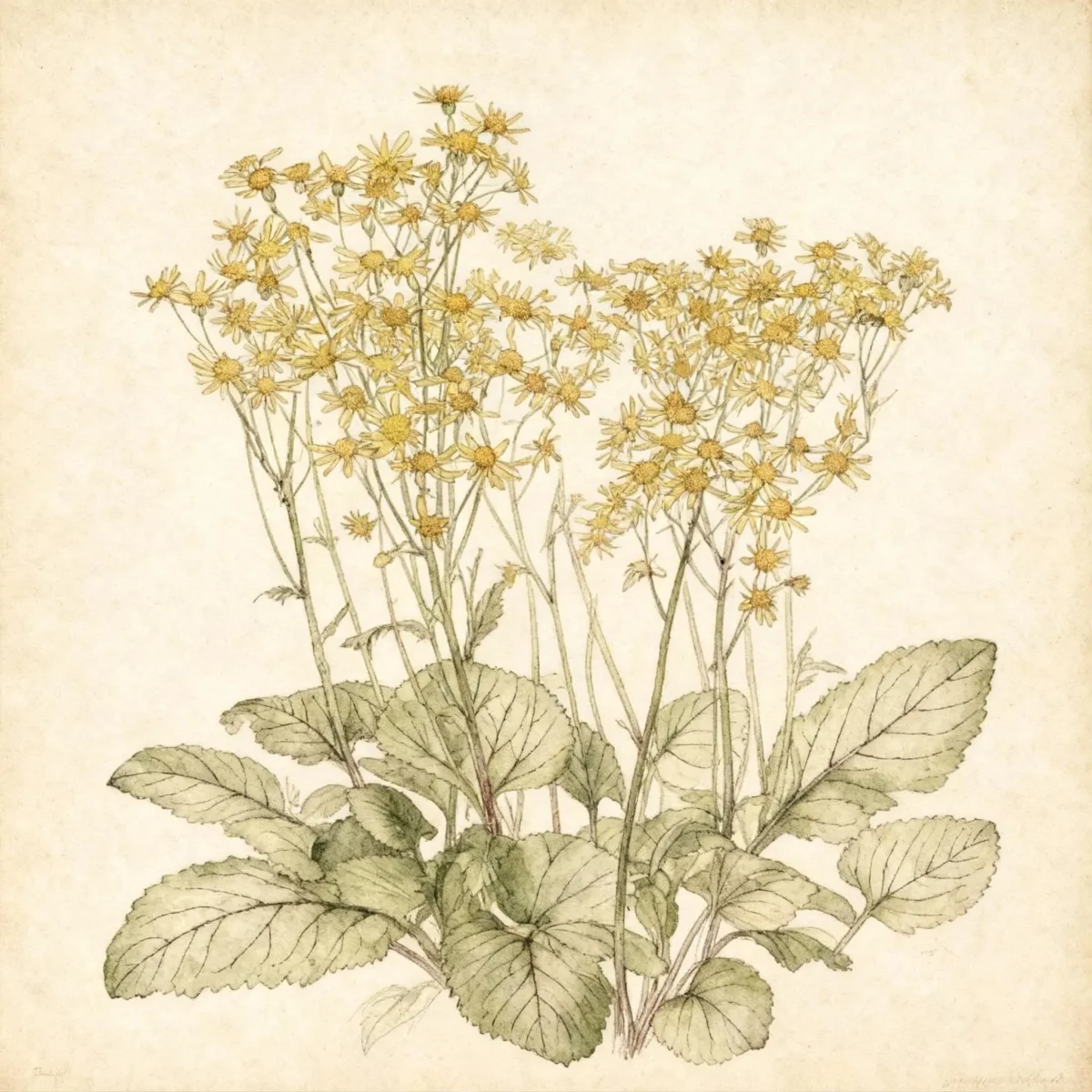
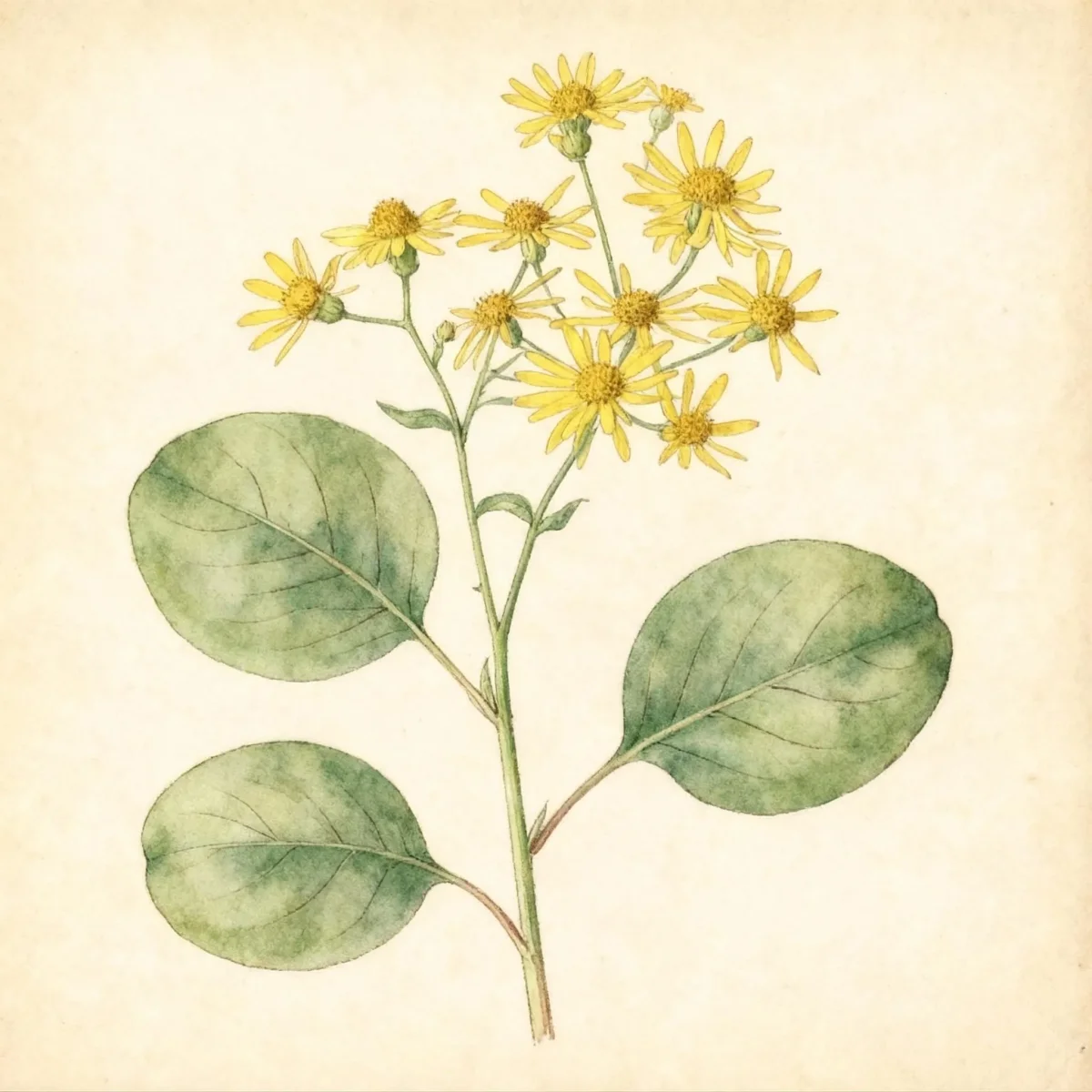
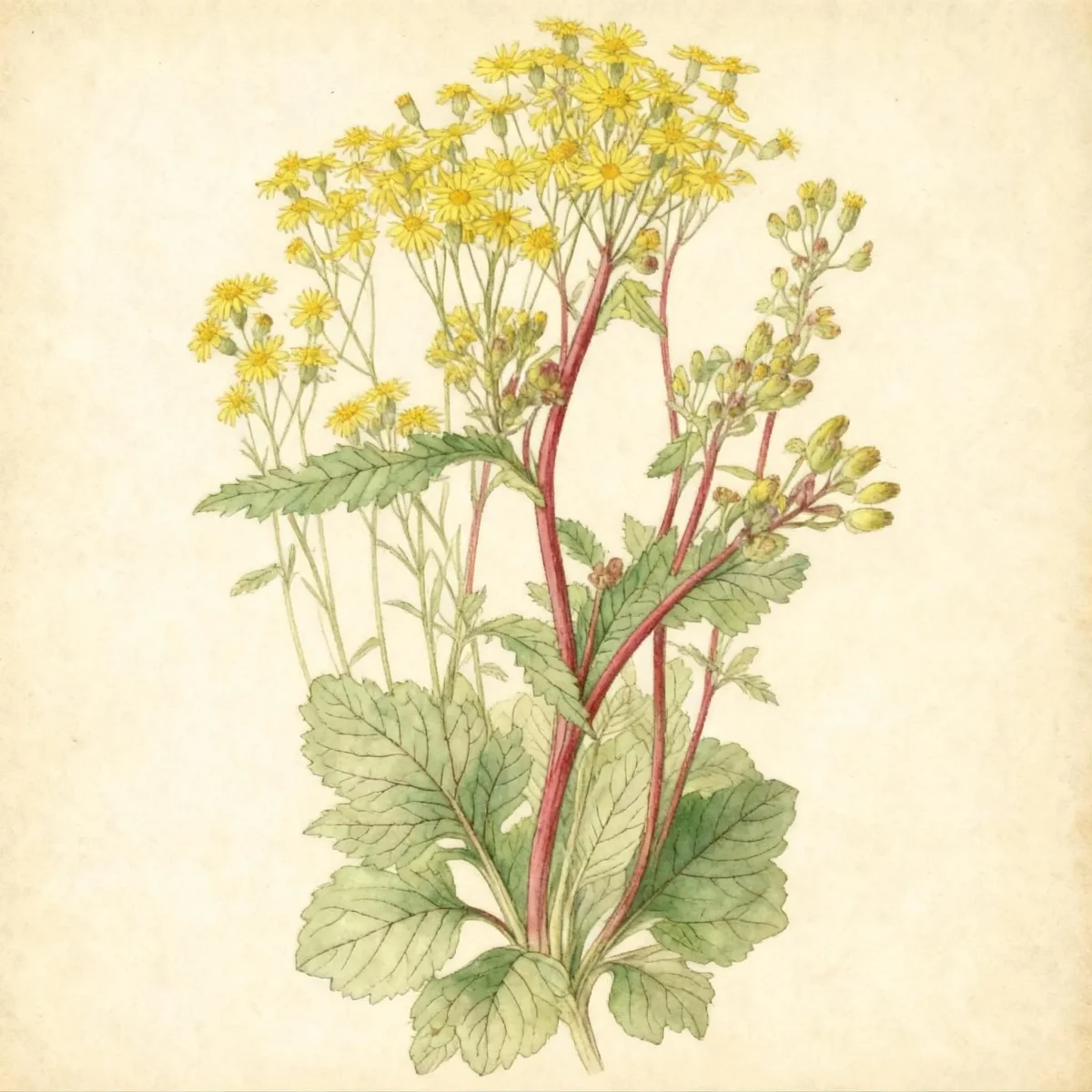
Golden ragwort (Packera aurea 'Dark Shadows')
Packera aurea 'Dark Shadows' (Golden ragwort) offers early bright yellow blooms and distinct deep-toned foliage, thriving in moist soils.
Scroll down to discover growing tips, care requirements, companion plants, and more
Complete Plant Information
Overview
Packera aurea ‘Dark Shadows’ is a striking cultivar of Golden ragwort valued for its early spring color and unique, dark-tinged foliage. This herbaceous perennial spreads via rhizomes, quickly forming dense colonies perfect for suppressing weeds in damp locations. The plant offers reliable performance across USDA zones 3 through 8, providing much-needed brightness when few other plants are showing color.
The primary appeal of the ‘Dark Shadows’ cultivar is the deep purple coloration visible on the newly emerging spring leaves and flower buds. While the blooms are the signature bright yellow daisy-like flowers, the basal foliage offers significant year-round interest, often remaining semi-evergreen in warmer climates. This rhizomatous habit means gardeners must provide consistent moisture to keep the basal foliage attractive throughout the season.
Beyond its aesthetic appeal, Packera aurea ‘Dark Shadows’ is a functional native plant supporting local ecosystems, including acting as a larval food source for the northern metalmark butterfly. Its ability to handle medium to wet soils makes it an exceptional choice for specialized landscape niches where other perennials might struggle.
Fast Facts
- Plant Family: Asteraceae
- Plant Type: Herbaceous perennial
- Hardiness Zones: USDA Zones 3-8
- Size at Maturity:
- Height: 1-2 ft
- Spread: 0.5-1.5 ft
- Bloom Time: April
- Bloom Description: Bright yellow
- Sun Exposure: Full sun to part shade
- Water Needs: Medium to wet
- Maintenance Level: Medium
How to Grow
Plant Packera aurea ‘Dark Shadows’ in spring or fall, selecting a location that receives full sun to partial shade. This golden ragwort excels in average soils, provided they remain consistently moist; avoid letting the root zone dry out completely, especially during the growing season. Due to its spreading nature, ensure adequate room is allowed for its naturalization habit, or plan for routine division if containment is necessary.
Watering is crucial for maintaining the dense basal foliage that defines this cultivar. While established plants manage medium moisture well, those situated in brighter sun or hotter spots will require more frequent irrigation to prevent wilting. Fertilization is rarely necessary; rich, damp soil is usually sufficient for robust growth.
Garden maintenance centers on managing its prolific spreading. After the bright yellow flowers finish blooming in spring, remove the flowering stems to prevent unwanted self-seeding. A critical note for this cultivar: it may not come true from seed, so promptly remove any basal foliage emerging without the distinctive dark coloration to preserve the integrity of the ‘Dark Shadows’ planting.
Landscape Uses
Packera aurea ‘Dark Shadows’ excels as a vigorous ground cover, particularly effective in moist, partially shaded areas where turf struggles. It is highly recommended for large naturalized settings, such as woodland gardens, creating spectacular drifts of deep foliage punctuated by cheerful yellow blooms in early spring. Its water needs make it a perfect fit for rain gardens or alongside natural water features like bog gardens, streams, or ponds.
When used in formal designs, consider planting this golden ragwort along borders or within cottage gardens, ensuring its spreading nature is managed or appreciated near pathways. It pairs beautifully with later-blooming shade perennials, providing early structure and color. Its dark leaves create excellent contrast against lighter-colored spring bulbs or ferns.
Standout Features
Flower Qualities
- Showy
Noteworthy Characteristics
Packera aurea, commonly called golden ragwort or golden groundsel, is a rhizomatous, spreading, herbaceous perennial native to moist woods, meadows, gravel bars, and stream banks in the eastern United States and southeastern Canada. Features flat-topped clusters (corymbs) of yellow, daisy-like flowers (to 1” diameter) atop sparsely-leaved stems in early spring. The foliage is one of the few larval food sources for the northern metalmark butterfly. ‘Dark Shadows’ is primarily distinguished from the straight species by the appearance of distinctive dark purple coloration (i.E., dark shadows) on the newly emerging spring leaves and flower buds.
Tolerances
- Wet Soil
Potential Problems
This plant generally experiences no serious insect or disease problems when sited correctly. Proper selection of a consistently moist location is the key management strategy for Packera aurea ‘Dark Shadows’. Avoid heavy, compacted clay that retains too much water leading to root saturation, even though it tolerates wet soil. Ensure good air circulation if sited in deep shade to minimize any minor risk of fungal issues, though this is uncommon.
Frequently Asked Questions
What hardiness zones is Golden ragwort suitable for?
Packera aurea ‘Dark Shadows’ is reliably hardy across USDA Zones 3 through 8, making it versatile for many regions.
When does Golden ragwort bloom?
This perennial typically blooms in April, displaying clusters of bright yellow, daisy-like flowers early in the spring season.
How large does Packera aurea ‘Dark Shadows’ grow?
This spreading perennial generally reaches a mature height between 1 and 2 feet tall, with a spread ranging from 0.5 to 1.5 feet wide.
What sun exposure does Packera aurea ‘Dark Shadows’ need?
It performs well in a range from full sun to part shade, though it blooms reliably even in shadier placements as long as moisture is consistent.
Conclusion
Packera aurea ‘Dark Shadows’ is an exceptional choice for gardeners seeking early spring color and reliable ground cover performance in moist conditions. The contrast between the bright yellow flowers and the distinctive dark basal foliage establishes this Golden ragwort as a standout performer. Verify that your USDA zone falls between 3 and 8, then plan to incorporate this durable perennial into your damp landscapes this coming planting season.
Companion Planting
When selecting partners for Packera aurea ‘Dark Shadows’, focus on plants that share its preference for medium to wet soils and partial shade, but bloom at different times to extend visual interest. Ferns, such as Ostrich Fern (Matteuccia struthiopteris) or Maidenhair Fern (Adiantum pedatum), offer fine texture that beautifully offsets the broad leaves of the Golden ragwort. Hostas with contrasting pale or variegated foliage also serve as excellent structural complements in shaded borders.
For areas receiving more sun near a stream bank or rain garden, consider moisture-loving Iris species, especially those preferring boggy margins, which will bloom after the Packera has finished. Another excellent companion is Caltha palustris (Marsh Marigold); both provide saturated color early in the season and thrive under similar wet soil conditions, reinforcing the habitat suitability of the planting area.
Wildlife Benefits
The rich, early bloom of Packera aurea ‘Dark Shadows’ provides a vital nectar source when few other flowers are available to pollinators. The clusters of bright yellow flowers are highly attractive to early emerging butterflies, bees, and other beneficial insect pollinators in the spring landscape. Furthermore, this relationship is crucial on a larval level, as the foliage of this native species is documented as a food source for the caterpillars of the specialist northern metalmark butterfly. Planting this native perennial directly supports regional insect biodiversity.