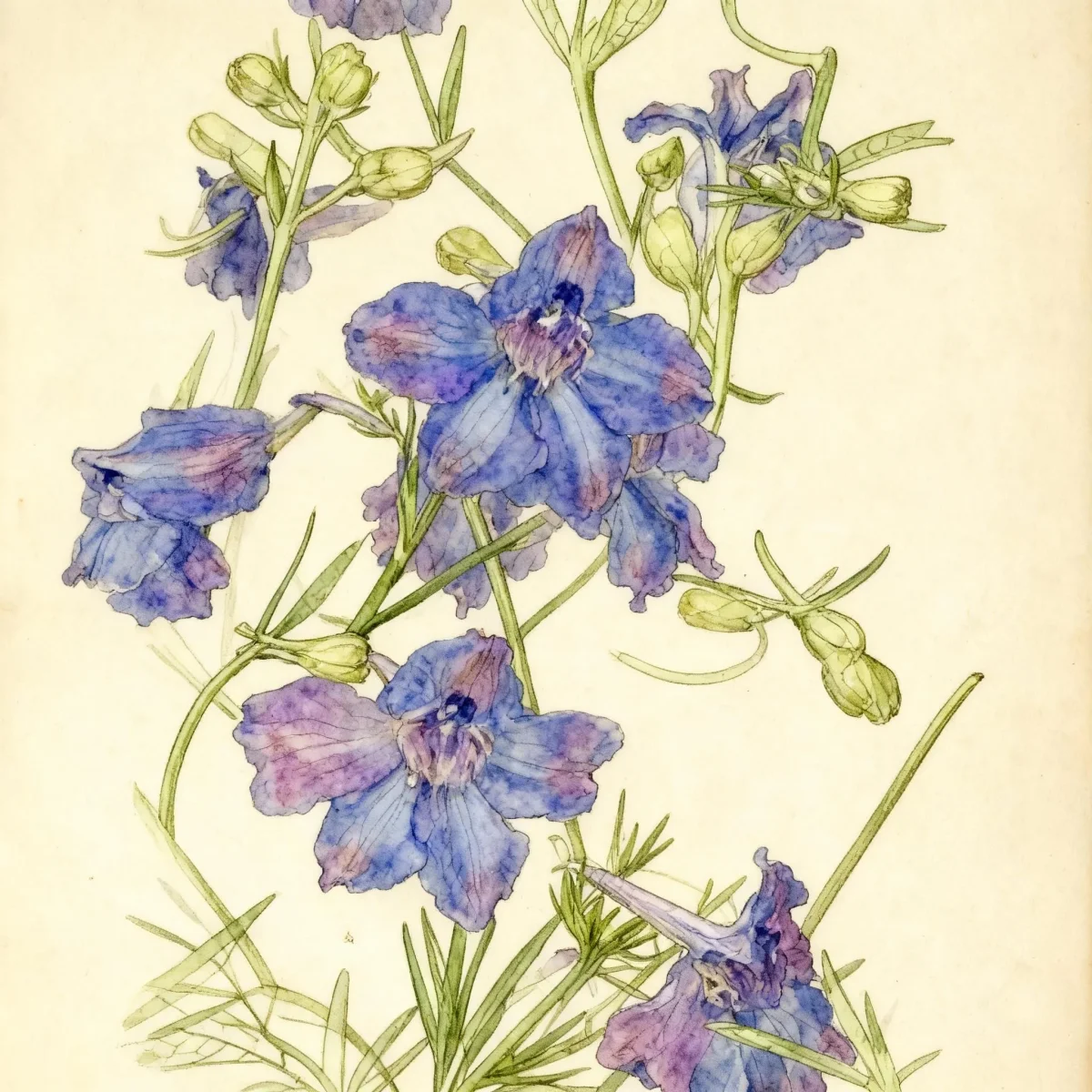
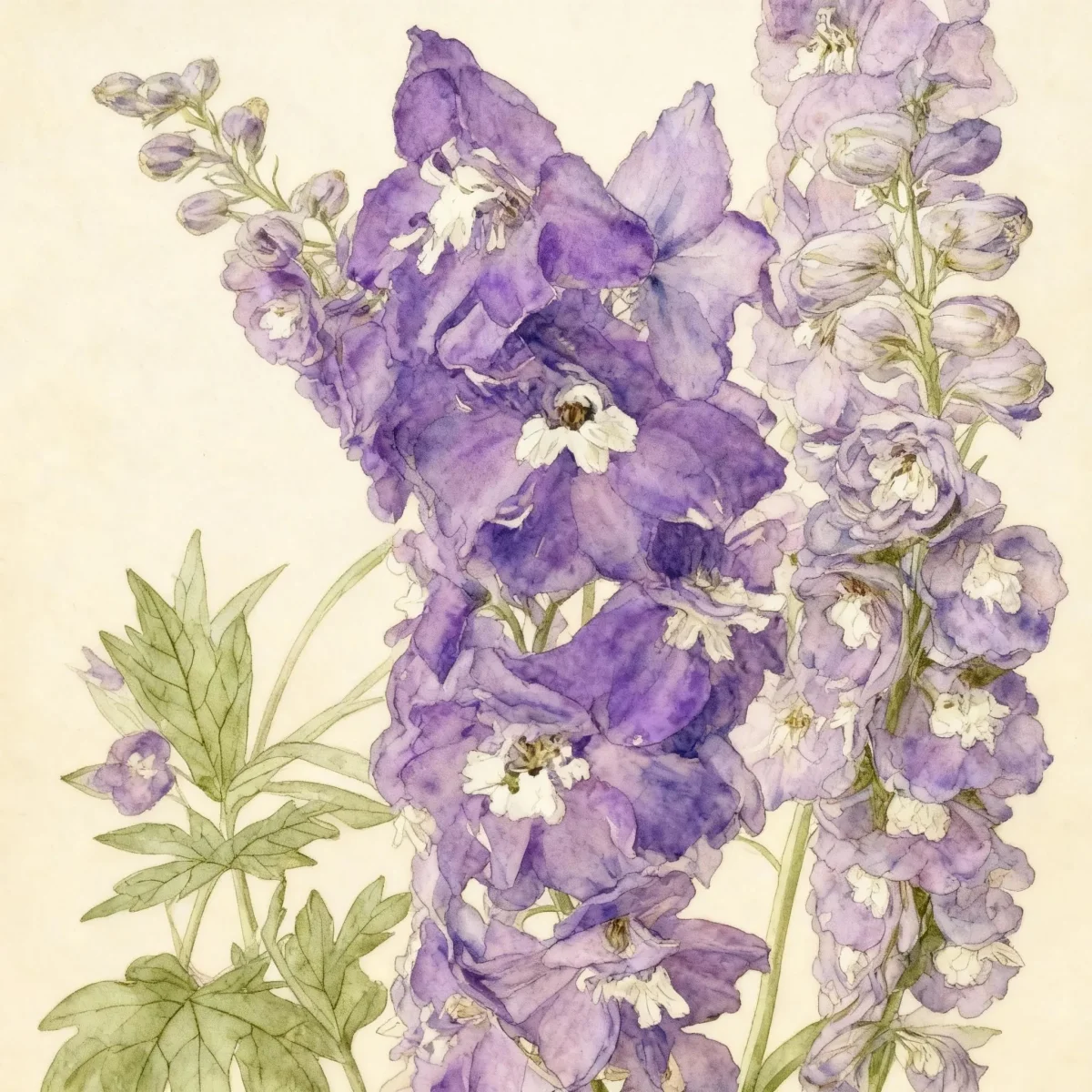
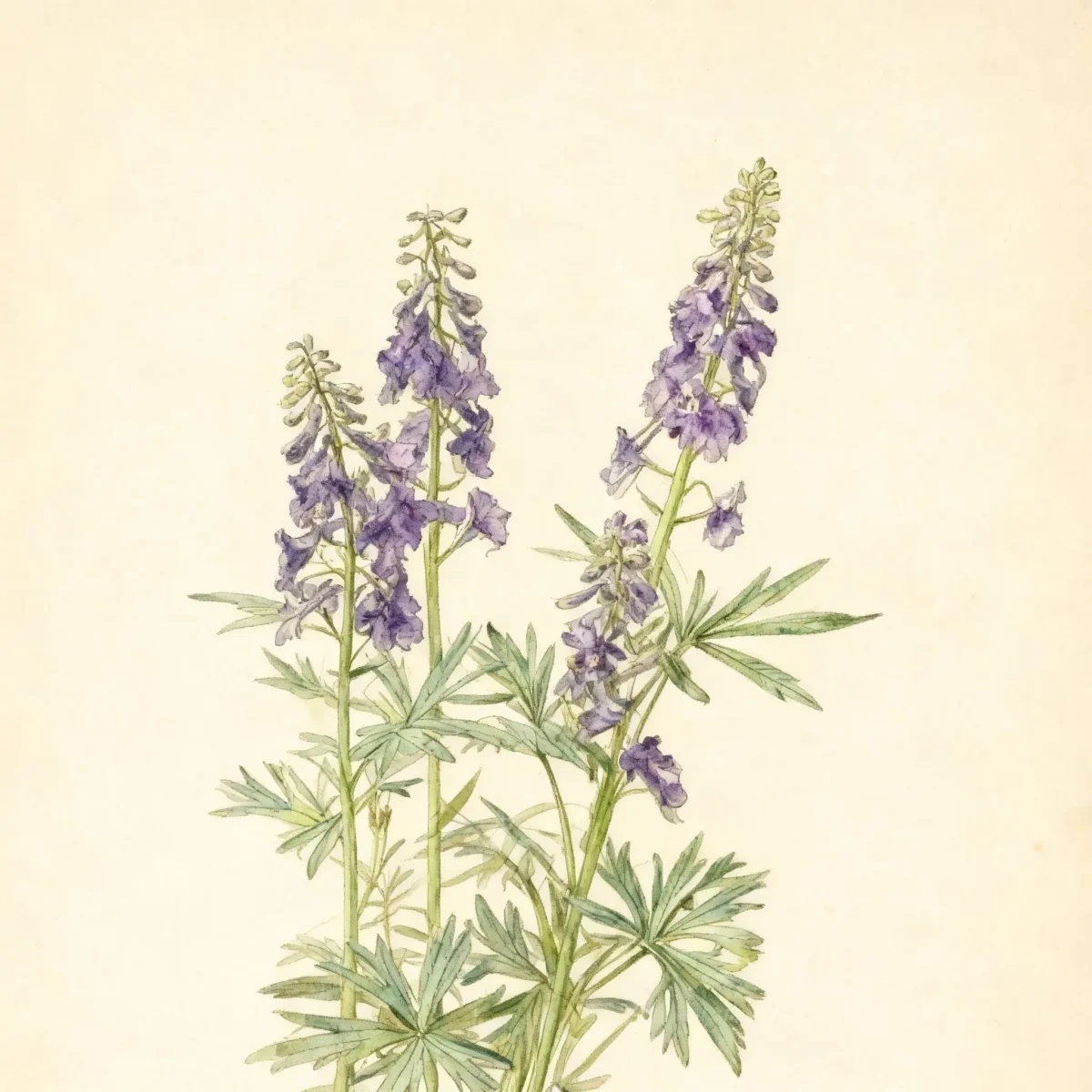
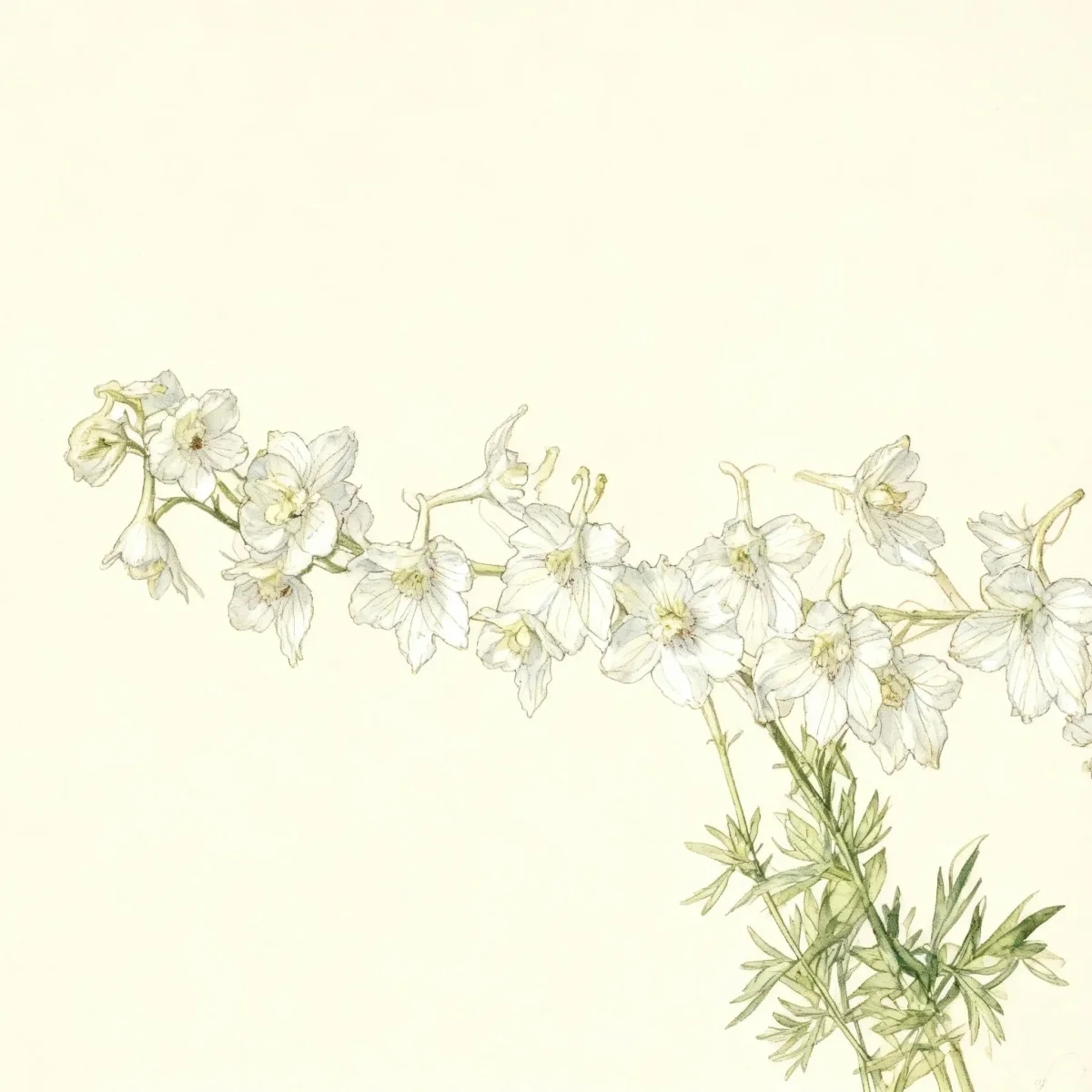
Candle larkspur (Delphinium elatum AURORA DEEP PURPLE)
Grow stunning vertical accents with Candle larkspur (Delphinium elatum AURORA DEEP PURPLE). Herbaceous perennial, Zones 3-7, perfect for cottage gardens.
Scroll down to discover growing tips, care requirements, companion plants, and more
Complete Plant Information
Overview
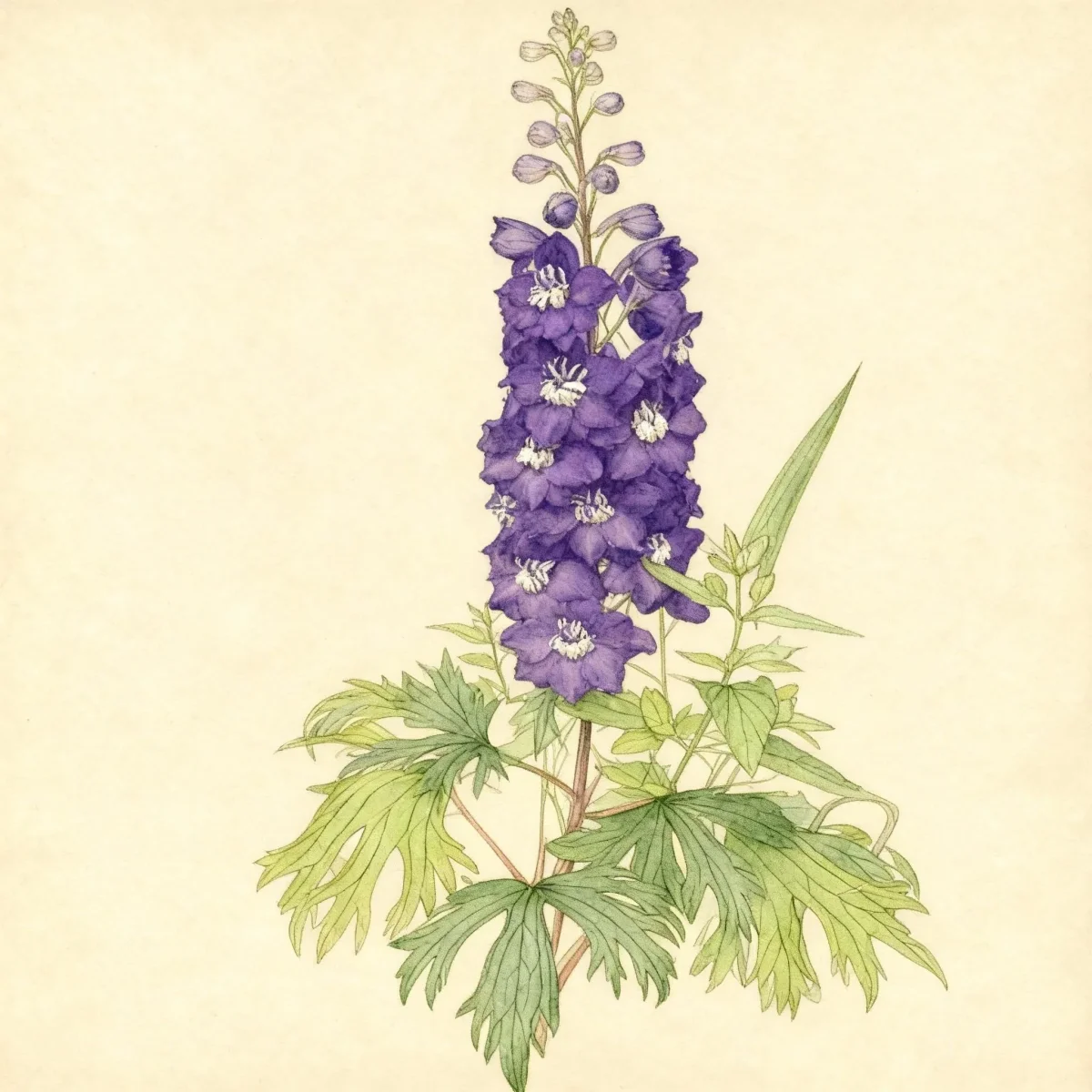
Delphinium elatum AURORA DEEP PURPLE, known commonly as Candle larkspur, delivers spectacular vertical color, featuring imposing spires of deep purple blooms accented by a bright white center. This cultivar belongs to the Aurora series, specifically bred for gardeners seeking sturdy stems and superior form, making it a standout in perennial borders. Candle larkspur thrives as a cool-season performer, originating from species native to European and Siberian woodlands and clearings.
As a reliable herbaceous perennial in suitable climates, this plant offers substantial aesthetic value through its dense, formal flower spikes which are highly desirable for cutting gardens. Successful cultivation of Delphinium elatum AURORA DEEP PURPLE relies on providing full sun and well-drained, fertile soil, coupled with necessary structural support against wind and rain. Gardeners must be prepared for the medium maintenance required to manage its height and ensure continuous summer bloom.
Fast Facts
- Plant Family: Ranunculaceae
- Plant Type: Herbaceous perennial
- Hardiness Zones: USDA Zones 3-7
- Size at Maturity:
- Height: 3-4 ft
- Spread: 2-3 ft
- Bloom Time: June to July
- Bloom Description: Purple with a white center
- Sun Exposure: Full sun
- Water Needs: Medium
- Maintenance Level: Medium
How to Grow
Plant Delphinium elatum AURORA DEEP PURPLE in the spring after the danger of hard frost has passed, if starting with purchased plants. This Candle larkspur prefers rich, humus-laden, well-drained soils, and it performs admirably even in alkaline soil conditions. While it needs full sun for best flowering, gardeners in the hottest regions (south of Zone 7) should appreciate afternoon shade to prevent performance decline.
Watering should be consistent to maintain medium soil moisture, always ensuring drainage is excellent to prevent crown rot. It is crucial to water at the base to keep foliage dry, which helps deter common fungal issues like powdery mildew. Due to their impressive height, all stems of Delphinium elatum AURORA DEEP PURPLE require staking to prevent damage from strong winds and heavy rainstorms.
Maintenance includes prompt deadheading; after the initial June to July bloom fades, cut the spent flower spikes completely back to the basal foliage. This diligent cleanup often triggers a secondary, though usually smaller, flush of blooms later in late summer or fall. Protect these stately plants by siting them in naturally sheltered garden areas whenever possible.
Landscape Uses
Delphinium elatum AURORA DEEP PURPLE excels as a vertical accent, making it superb in cottage gardens where height and drama are valued. Its stature positions it perfectly toward the back of mixed perennial beds and borders, creating a stunning screen or backdrop for shorter plantings. Since it is an excellent cut flower, mass plantings or groupings situated near the house enhance accessibility for harvesting.
These stately spires look magnificent when positioned against a sturdy structure, such as a stockade fence, which inherently offers protection from wind damage—a frequent requirement for these tall plants. While deer generally leave this plant alone, ensure companion plants share similar needs for full sun and medium moisture to create thriving, cohesive displays. Consider planting them near structural evergreens that provide winter interest when the Candle larkspur is dormant.
Standout Features
Flower Qualities
- Showy
- Good Cut
Noteworthy Characteristics
Delphinium elatum originated in Europe and Siberia, with species known in cultivation since the 16th century. The Aurora™ series, including Delphinium elatum AURORA DEEP PURPLE, was specifically bred for uniform sturdiness, featuring deep green, deeply lobed foliage and semi-double flowers densely packed along the spires. The name Delphinium references dolphins due to the bud shape, while the specific epithet elatus means tall.
Tolerances
- Deer
Potential Problems
Delphiniums necessitate proactive maintenance to look their best, requiring staking, deadheading, and diligent disease management. The primary disease concerns include powdery mildew, botrytis blight, and leaf spots, which are best managed by planting in full sun and avoiding overhead watering; always water at the crown. Crown rot is a fatal risk if the soil remains poorly drained or if plants are set too deeply.
Pests such as slugs and snails can cause significant damage, requiring vigilant monitoring, especially early in the season. Larger aphids, stem borers, and mites are also potential threats that gardeners must watch for. Remember that all parts of the plant are considered toxic if ingested by humans, necessitating caution where children or pets are present.
Frequently Asked Questions
What hardiness zones is Candle larkspur suitable for?
Delphinium elatum AURORA DEEP PURPLE is hardy across USDA Zones 3-7, making it a long-lived perennial in most temperate regions.
How large does Candle larkspur grow?
This herbaceous perennial typically reaches a mature height between 3 to 4 feet tall, with a spread generally ranging from 2 to 3 feet wide.
What sun exposure does Delphinium elatum AURORA DEEP PURPLE need?
This variety requires full sun exposure for the best performance and disease resistance, though it benefits from a little afternoon relief in the hottest parts of its range.
When does Candle larkspur bloom?
Candle larkspur blooms primarily from June to July, displaying its striking purple flowers with a distinct white center.
Conclusion
The addition of Delphinium elatum AURORA DEEP PURPLE brings sought-after vertical structure and rich color to the summer garden, particularly valued for its hardiness in cooler zones and its proven quality as a cut flower. While it demands staked support and attention to watering practices, the reward is a spectacular display of blooms. Before planting, verify your growing zone falls within USDA 3-7 and ensure you have a spot offering full sun and well-drained soil.
Companion Planting
Selecting appropriate neighbors is key for successful Delphinium elatum AURORA DEEP PURPLE establishment, focusing on plants that appreciate similar sunlight and soil drainage. Pair Candle larkspur with medium-height perennials like Shasta Daisies, Nepeta (Catmint), or oriental Poppies, which bloom concurrently or sequentially. Companions should be robust enough to handle the staking requirements or, better yet, offer physical protection to the larkspur stems from strong drafts.
Avoid planting immediately next to extremely thirsty plants, as consistent medium moisture is preferred, but standing water is detrimental. Grouping Delphinium elatum AURORA DEEP PURPLE near structural, low-maintenance shrubs can also help anchor the border visually when the larkspur is not in bloom.
Propagation Tips
While straight species delphiniums can readily self-seed, established hybrid cultivars like Delphinium elatum AURORA DEEP PURPLE are generally propagated vegetatively to maintain their superior characteristics. Division of the basal clumps should be performed in early spring or fall when the plant is dormant or just beginning to sprout. Ensure each divided section has several healthy growth buds to successfully reestablish itself in the garden.
Growing from seed is possible, though this method often reverts slightly toward the characteristics of the parent species rather than producing exact F1 uniformity. If experimenting with seed, sowing should occur in fall for stratification or using cold/moist treatments indoors early in spring, followed by transplanting once hardening off is complete.