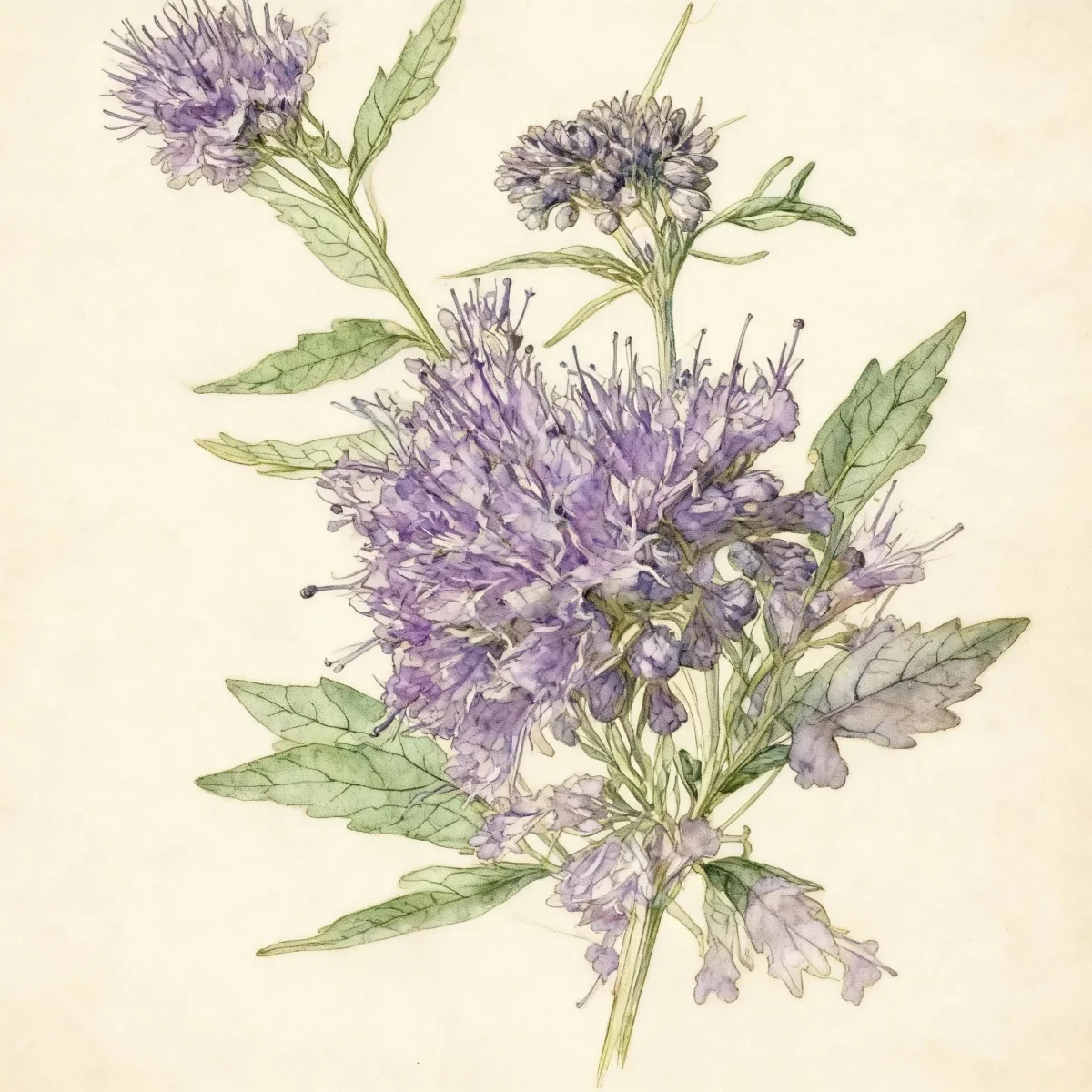
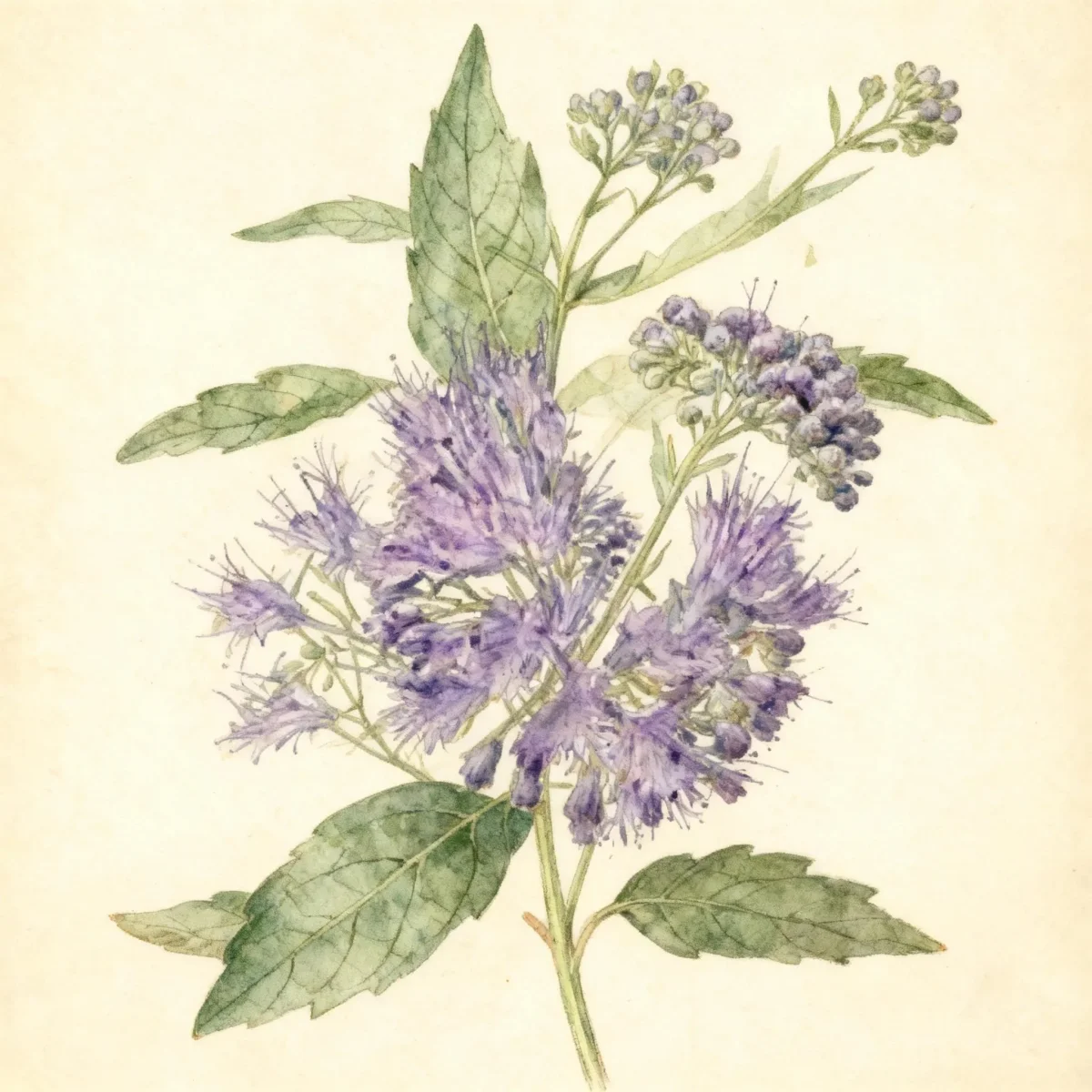
Bluebeard (Caryopteris × clandonensis 'Blauer Splatz' SAPPHIRE SURF)
Caryopteris × clandonensis 'Blauer Splatz' SAPPHIRE SURF, or Bluebeard, is a compact deciduous shrub offering late-season blue flowers and aromatic foliage.
Scroll down to discover growing tips, care requirements, companion plants, and more
Complete Plant Information
Overview
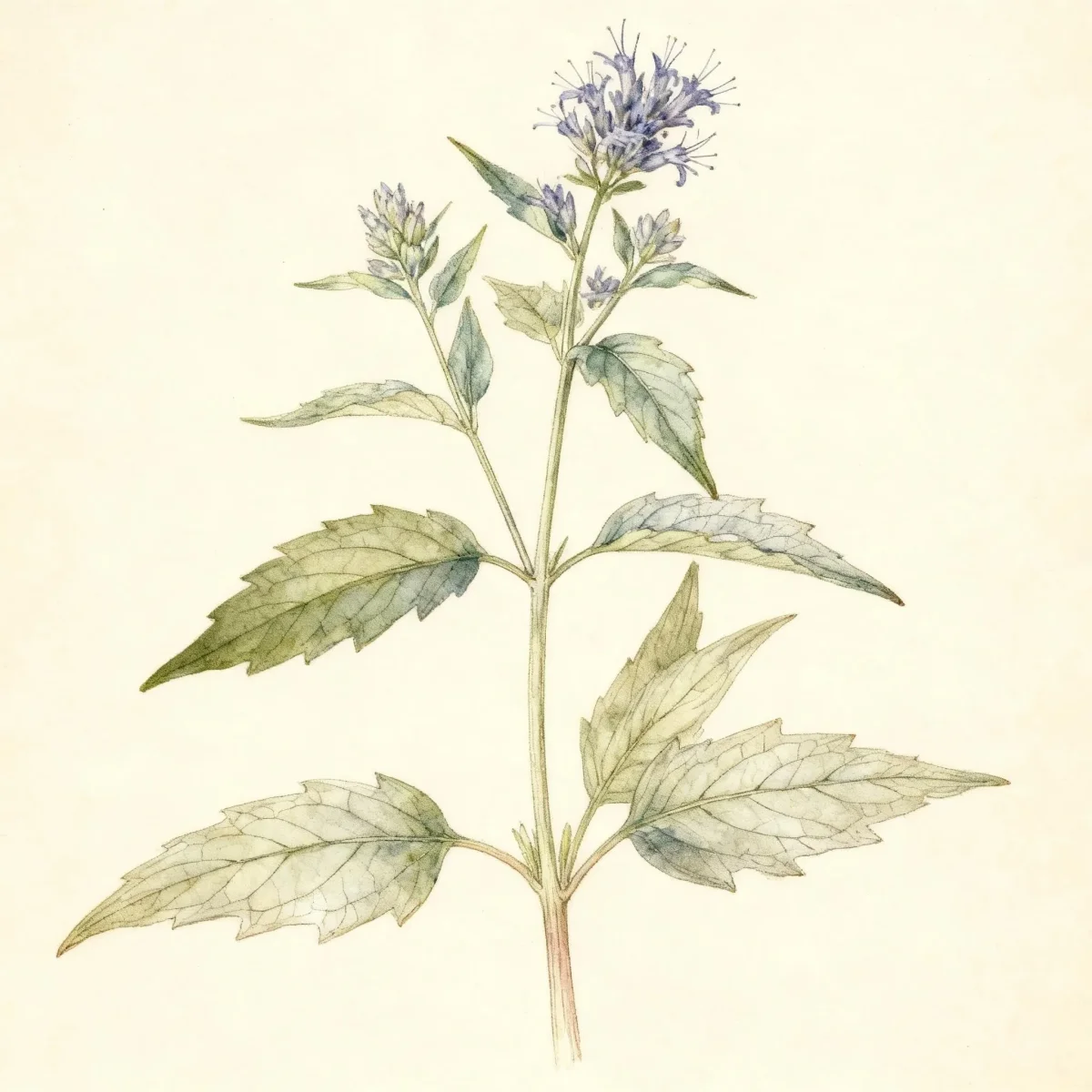
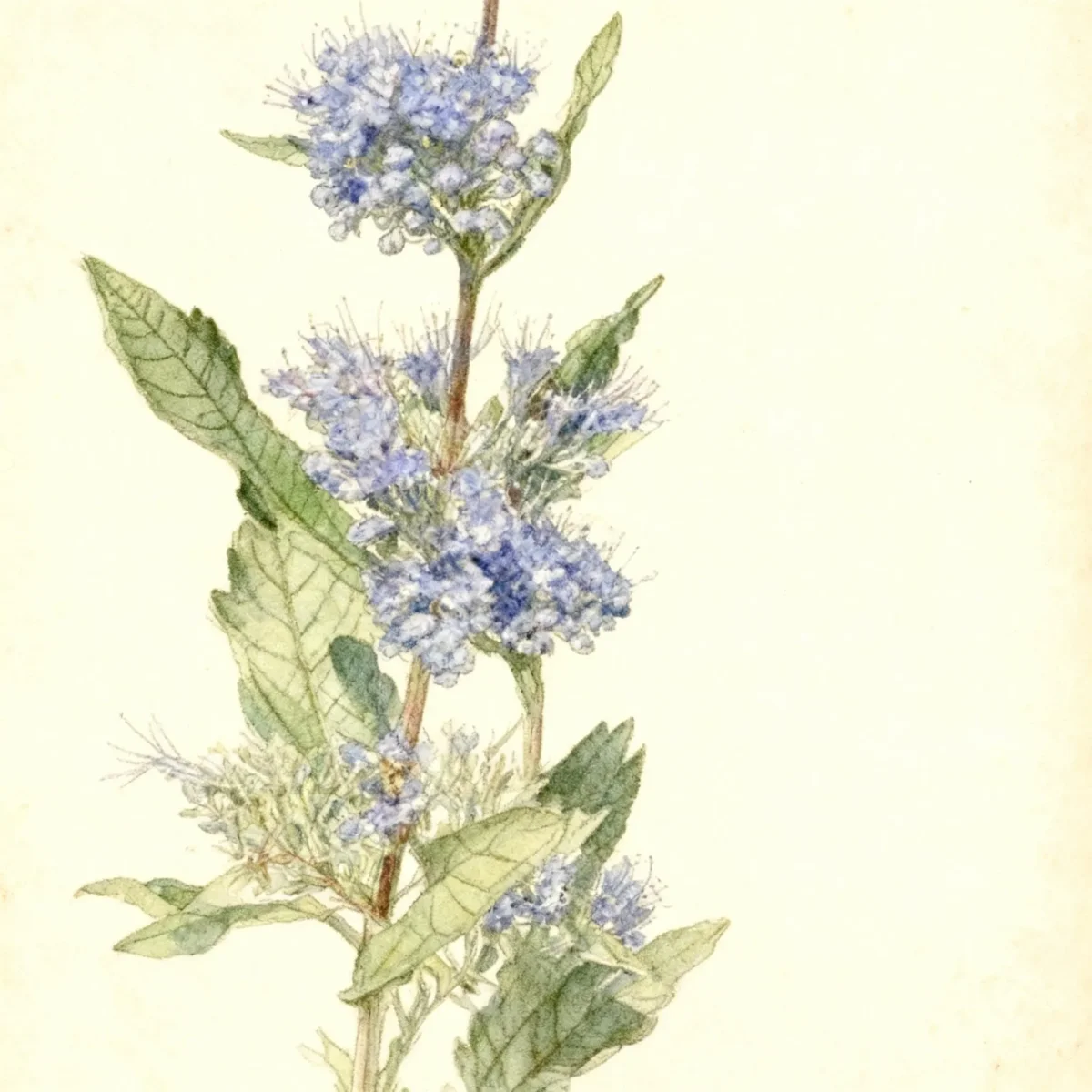
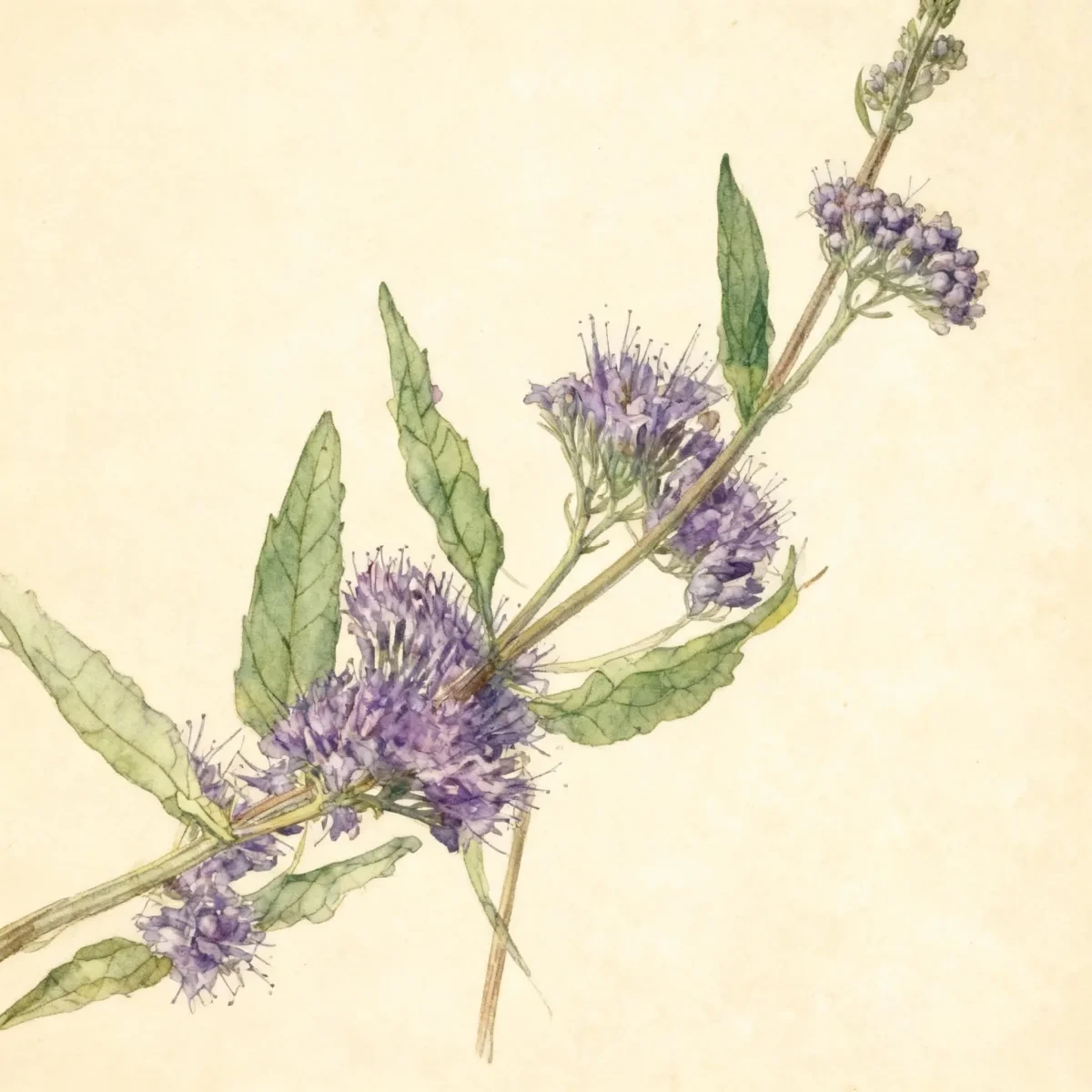
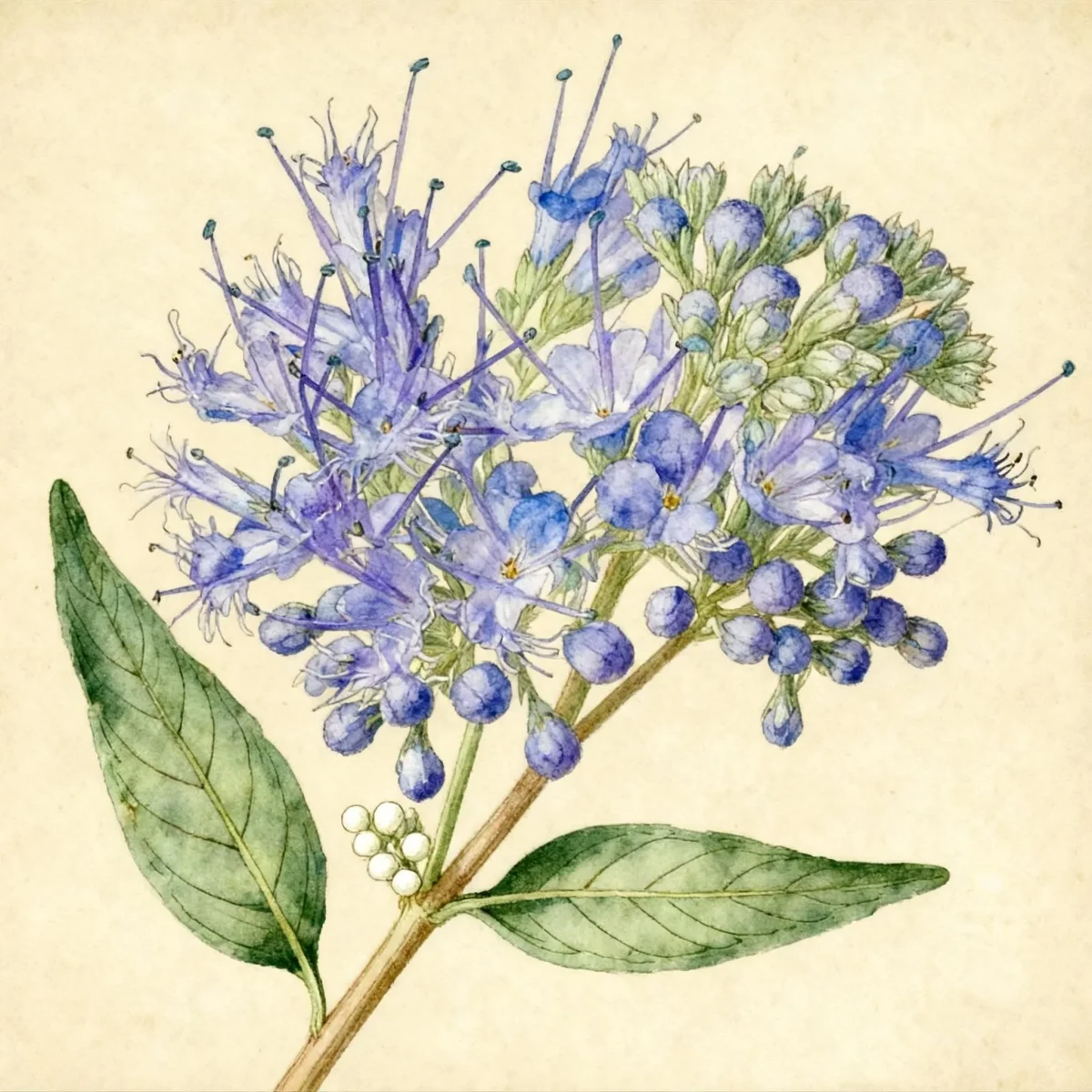
Caryopteris × clandonensis ‘Blauer Splatz’ SAPPHIRE SURF, commonly known as Bluebeard, is a highly valued, low-mounded deciduous shrub celebrated for its vibrant late-season color. This compact cultivar provides terminal clusters of bright blue flowers that appear just as many summer shrubs are fading, often resembling clouds of blue mist. Its aromatic foliage adds another layer of sensory appeal, particularly when brushed by hand, making it a multi-season garden asset.
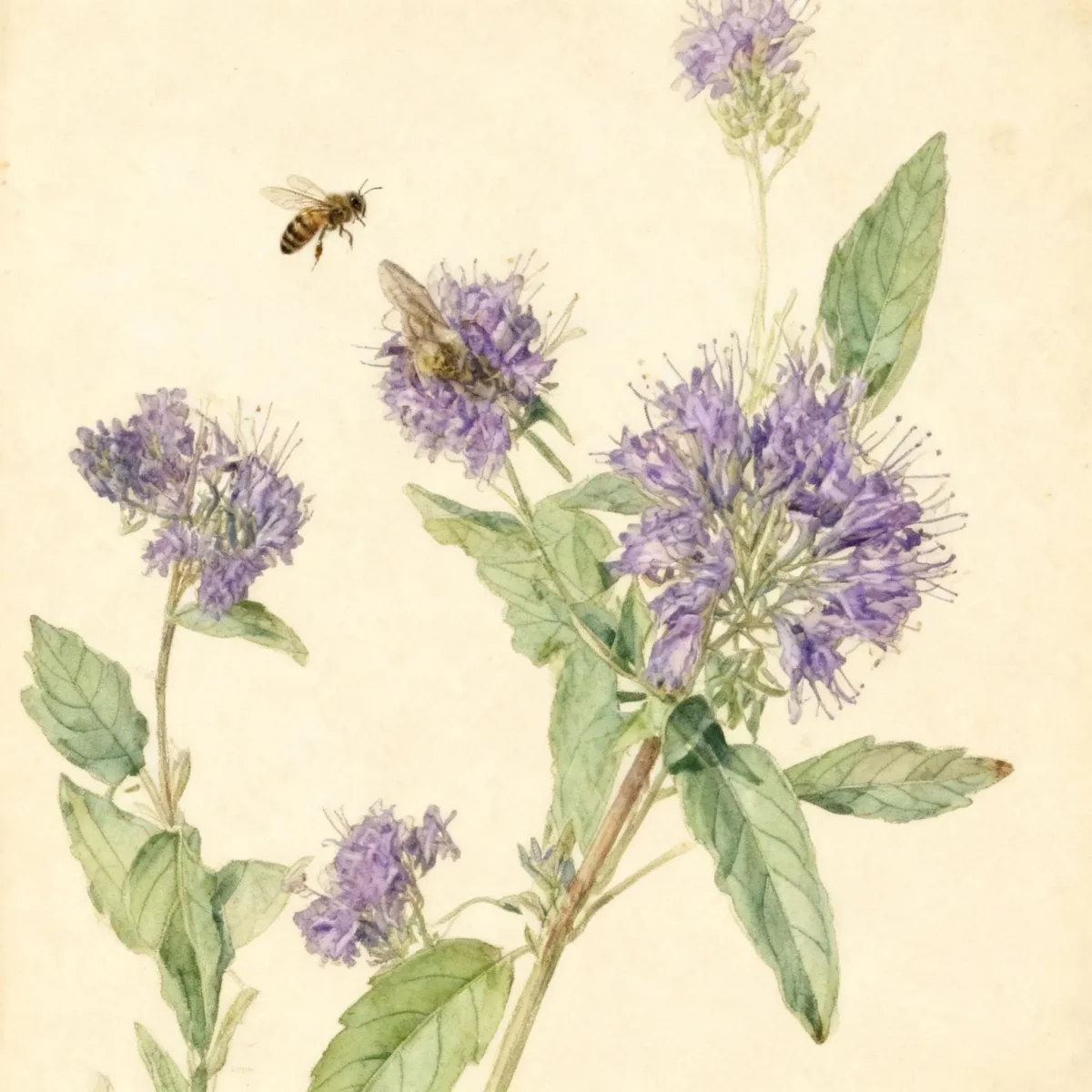
This hybrid Bluebeard thrives in bright conditions, needing full sun to produce its best blooms while demanding relatively little from the gardener. It is valued for its low maintenance requirements and its effectiveness in providing structure in borders or as a low hedge. Furthermore, the flowers are highly attractive to important pollinators like butterflies and bees.
The Caryopteris × clandonensis ‘Blauer Splatz’ SAPPHIRE SURF offers a tidy, manageable presence in the landscape, rarely needing extensive intervention. Gardeners value this Bluebeard for its ability to bring late summer interest to perennial borders and shrub groupings without demanding constant attention regarding pests or diseases.
Fast Facts
- Plant Family: Lamiaceae
- Plant Type: Deciduous shrub
- Hardiness Zones: USDA Zones 5-9
- Size at Maturity:
- Height: 1.5-2 ft
- Spread: 2-3 ft
- Bloom Time: July to September
- Bloom Description: Blue
- Sun Exposure: Full sun
- Water Needs: Medium
- Maintenance Level: Low
How to Grow
Caryopteris × clandonensis ‘Blauer Splatz’ SAPPHIRE SURF prefers to be planted where it receives full sun exposure for the best flowering performance. It establishes well in average, medium-moisture, well-drained soils, ideally loose loams. Avoid planting this Bluebeard where drainage is poor or soils remain constantly wet, as this can lead to crown rot.
Watering should be consistent while establishing; once mature, it handles medium moisture levels well and tolerates some drought conditions thanks to its established roots. Fertilization is rarely necessary for this vigorous grower. The key aspect of care involves pruning management, especially in cooler zones.
Roots are reliably hardy into Zone 5, but top growth often suffers dieback down to Zone 7. Gardeners in Zones 5 and 6 should anticipate hard pruning every early spring, cutting stems back significantly. Interestingly, even in warmer zones where stems may survive winter, a hard spring pruning is often performed to encourage vigorous new stem growth, since flowering occurs only on new wood.
Landscape Uses
The compact habit and late bloom period of Caryopteris × clandonensis ‘Blauer Splatz’ SAPPHIRE SURF ensure its versatility in various landscape designs. It functions beautifully when used in perennial borders to bridge the gap between mid-summer perennials and fall bloomers, offering reliable blue color. Its low profile makes it an excellent choice for the front of a shrub border where taller plants might overwhelm it throughout the season.
This Bluebeard is particularly effective when massed or planted in large groups, creating a cohesive sweep of blue during its bloom time. It also serves well as a low hedge, providing a neat, informal boundary that requires minimal trimming outside of the annual spring cutback. For the best visual appeal, site it where its late blooms can contrast against dark green foliage or warmer-toned flowers.
Standout Features
Flower Qualities
- Showy
Noteworthy Characteristics
Caryopteris × clandonensis, commonly called bluebeard, blue spirea or blue mist, is a low-mounded, deciduous shrub that is valued for its aromatic foliage and late summer flowers which are said to resemble clouds of blue smoke or mist. This hybrid was discovered in cultivation as an accidental cross between C. Incana and C. Mongholica. Clandonensis hybrids typically produce about 18-30” of growth per year, so total shrub height (usually from 2-3’) depends in large part upon the extent of winter dieback and/or the annual spring pruning. Flowers are very attractive to butterflies, bees and other beneficial insects. Foliage is aromatic when brushed with a hand. The hybrid name clandonensis honors Clandon Park estate near Guildford in Surrey, England, where this hybrid was first discovered. ‘Blauer Splatz’ is a compact selection of bluebeard that features terminal clusters of bright blue flowers and a low, mounding habit. Mature plants will reach around 2’ tall with a 3’ spread.
Tolerances
- Drought
Potential Problems
This Bluebeard generally avoids serious insect or disease issues, making it a sturdy addition to the garden. The primary concern revolves around environmental conditions, specifically soil moisture. Crowns are susceptible to rotting if the plant is situated in wet, poorly-drained soils. Proper site selection and ensuring excellent drainage are the best preventative measures against this issue.
Frequently Asked Questions
What hardiness zones is Caryopteris × clandonensis ‘Blauer Splatz’ SAPPHIRE SURF suitable for?
This Bluebeard is reliably hardy in USDA Zones 5 through 9, though top growth may require pruning back after harsh Zone 5 or 6 winters.
How large does Caryopteris × clandonensis ‘Blauer Splatz’ SAPPHIRE SURF grow?
This compact cultivar typically reaches a height between 1.5 to 2 feet and spreads to be 2 to 3 feet wide at maturity.
When does Bluebeard bloom?
This variety of Bluebeard produces its distinctive blue flowers late in the season, generally blooming from July through September.
What sun exposure does Caryopteris × clandonensis ‘Blauer Splatz’ SAPPHIRE SURF need?
For the most abundant display of blue flowers, this shrub should be planted in a location receiving full sun throughout the day.
Conclusion
The Caryopteris × clandonensis ‘Blauer Splatz’ SAPPHIRE SURF offers indispensable late-season color and pollinator appeal with minimal required tending, solidifying its status as a low-maintenance garden staple. This specific selection of Bluebeard provides a compact, tidy structure that shines when many other shrubs are fading. Before planting, verify that your site offers full sun and well-drained soil conditions ideal for this late-blooming beauty.
Wildlife Benefits
Because the bloom period of Caryopteris × clandonensis ‘Blauer Splatz’ SAPPHIRE SURF occurs from July into September, it fills a critical gap in the late-season nectar supply for pollinators. The blue flowers are particularly attractive to foraging bees and various species of butterflies seeking fuel before migration or winter dormancy. Planting this Bluebeard ensures your garden remains active and beneficial to local insect populations well into the fall.
Companion Planting Ideas
Due to its need for full sun and well-drained soil, Caryopteris × clandonensis ‘Blauer Splatz’ SAPPHIRE SURF pairs aesthetically and culturally well with plants that share similar preferences. Group it alongside late-flowering perennials like Sedum ‘Autumn Joy’ or Asters to create continuous fall color. Its moderate height and fine texture also complement plants with bolder leaves, such as ornamental grasses or late-blooming Coneflowers (Echinacea), for textural contrast in a shrub border setting.