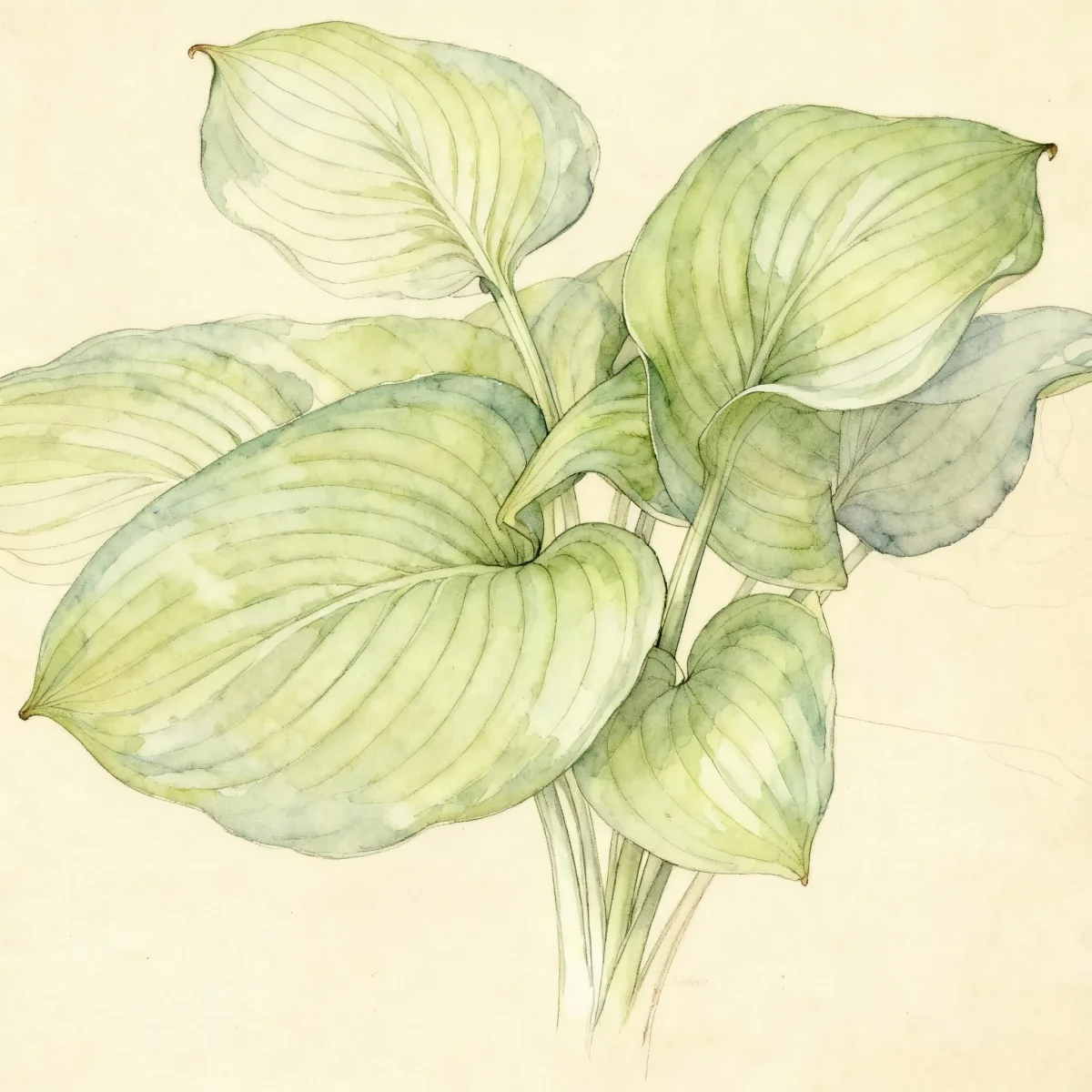
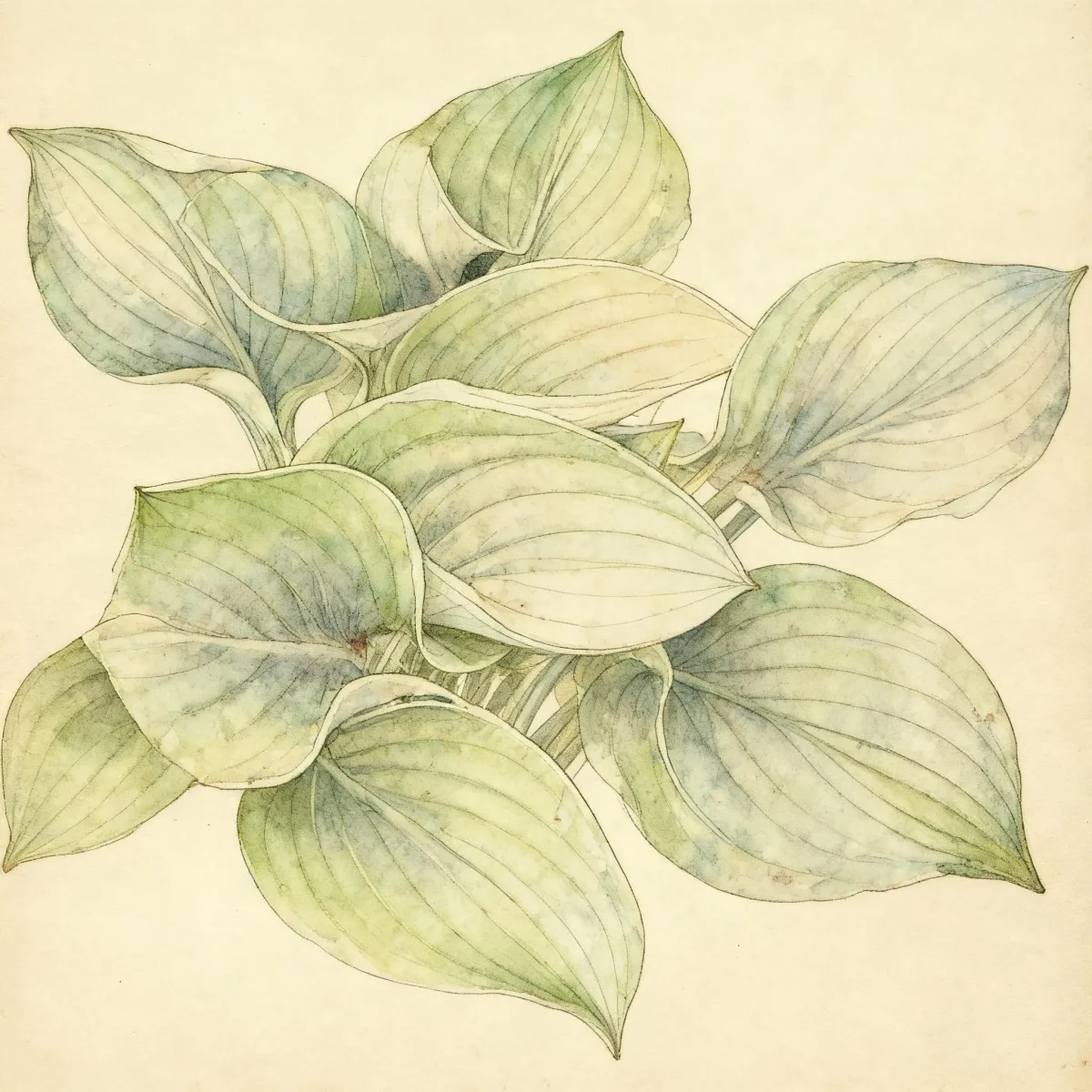
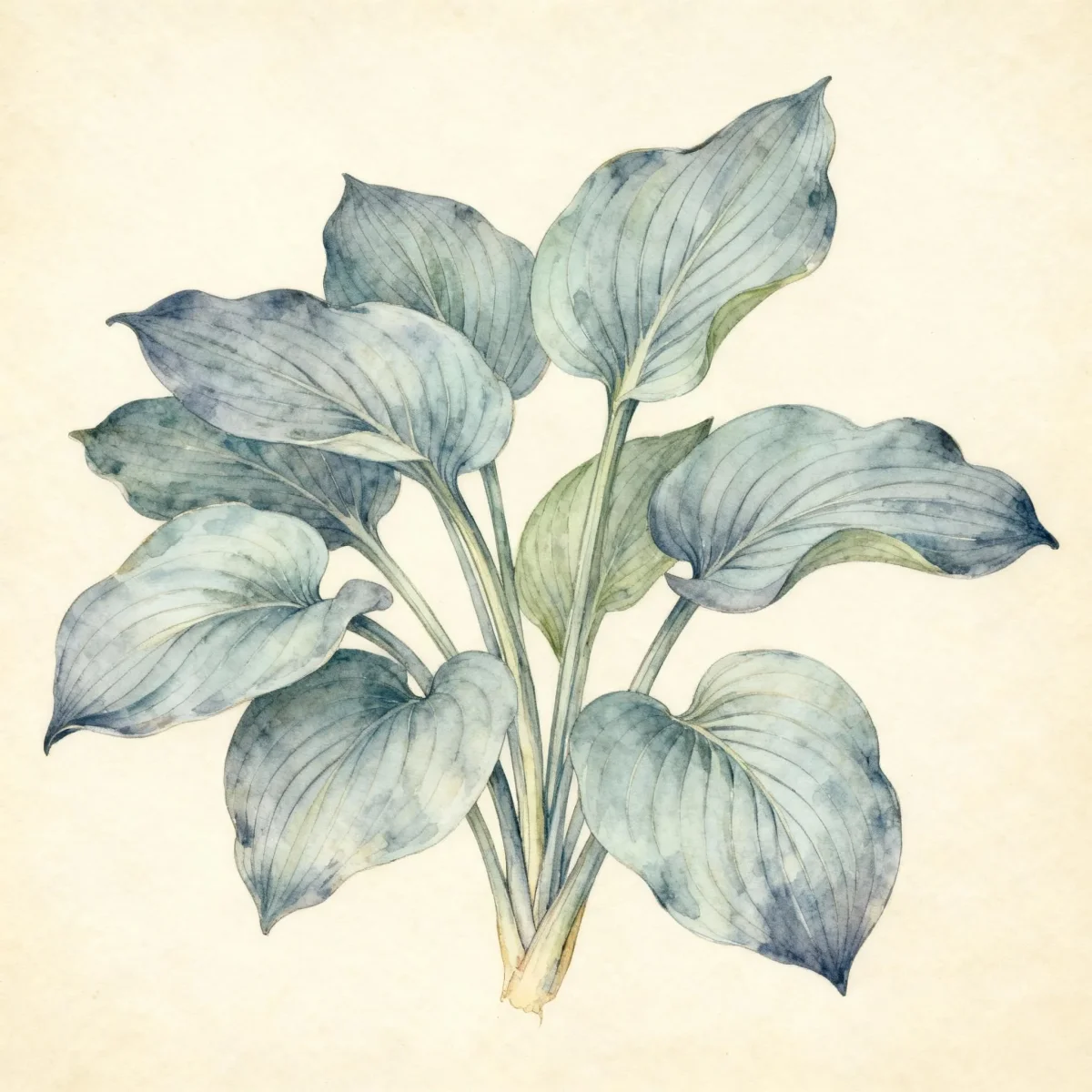
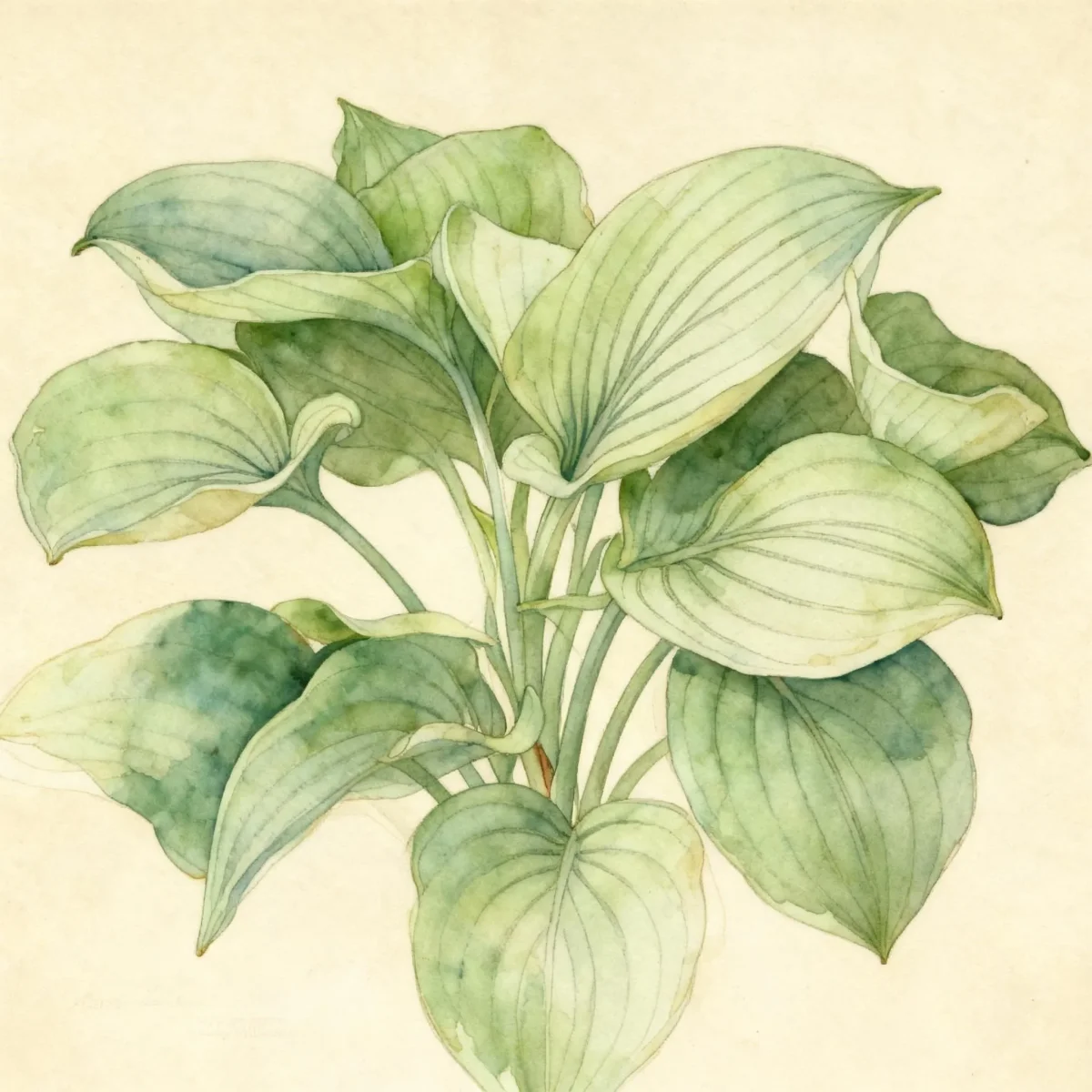
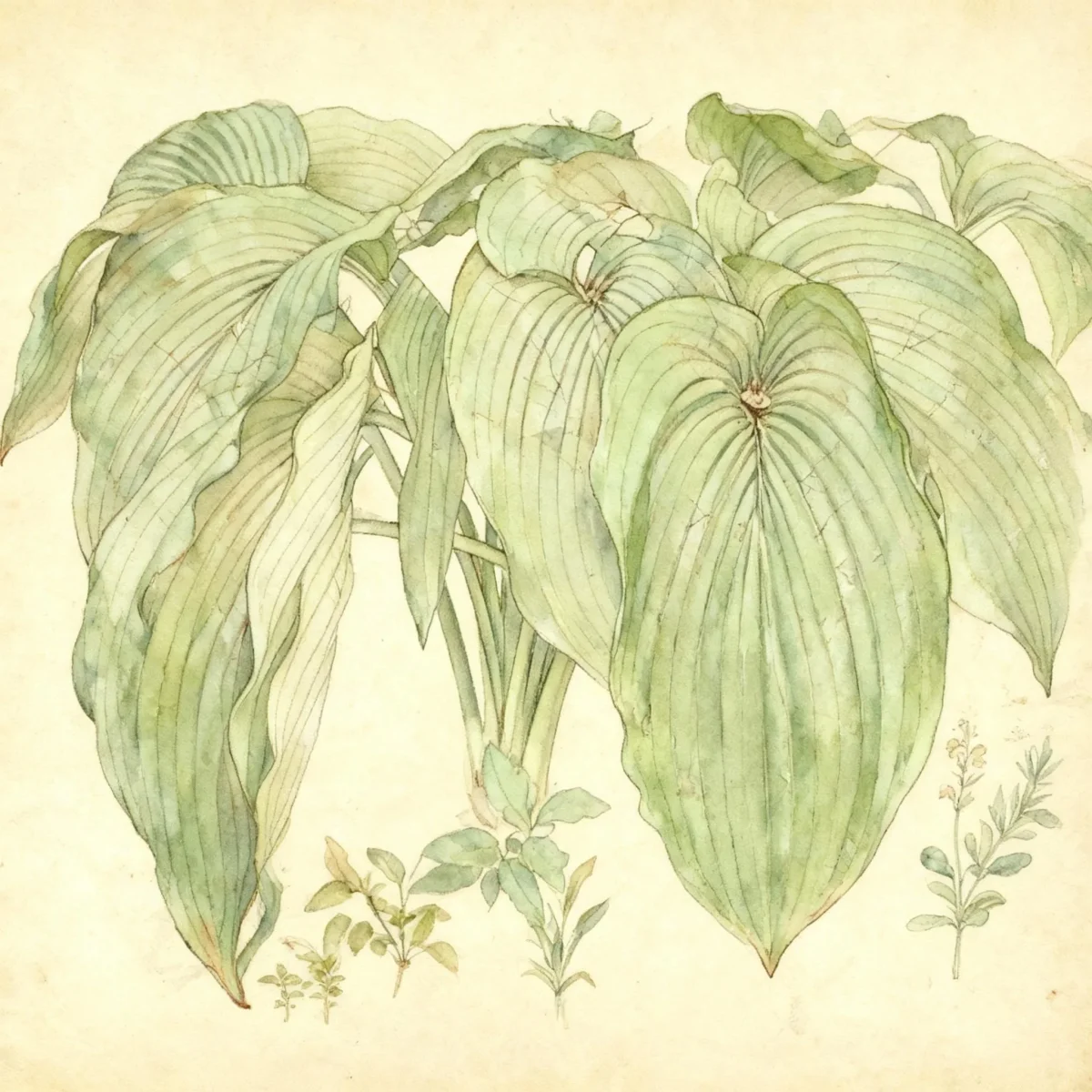
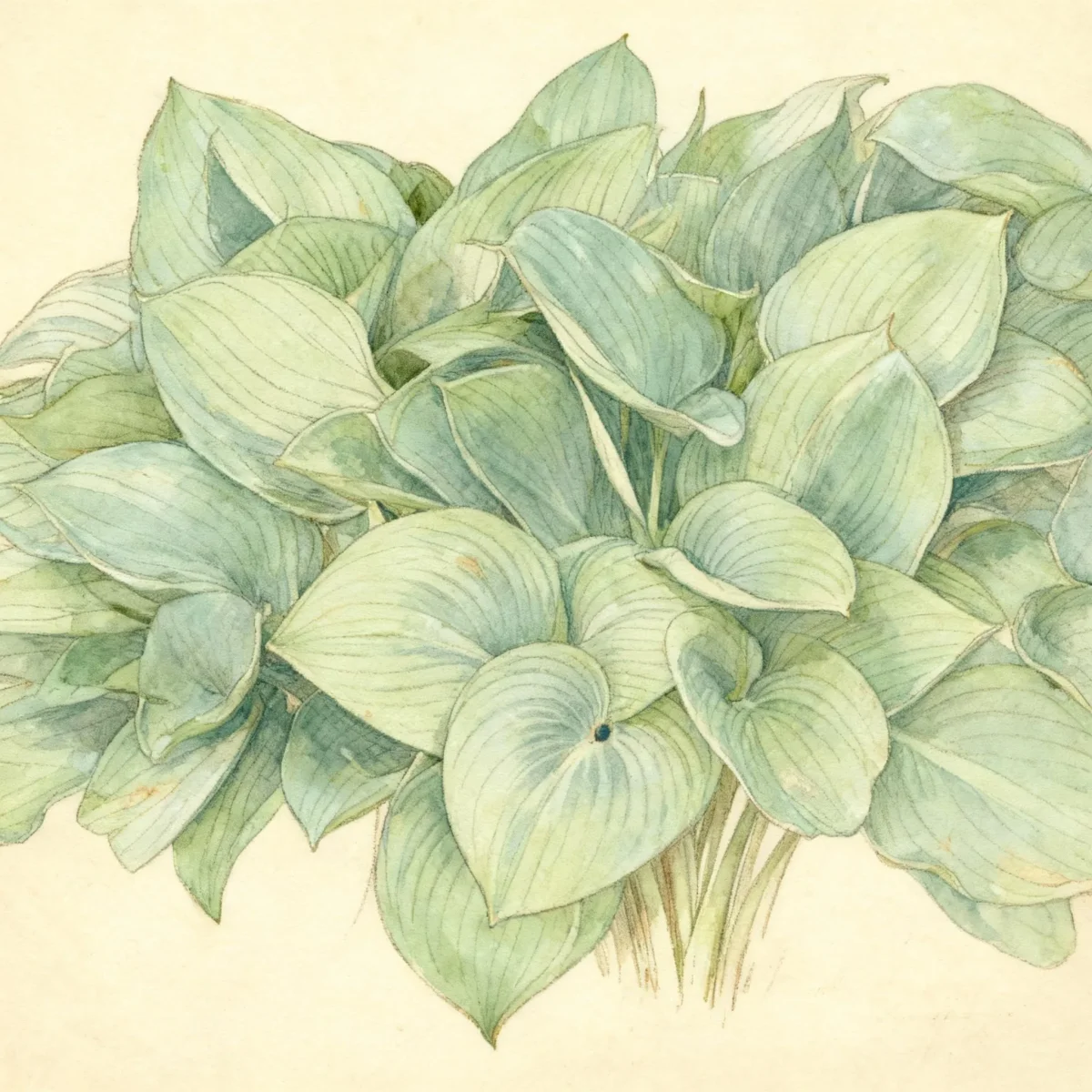
Hosta (Hosta 'Arc de Triomphe')
Hosta 'Arc de Triomphe' is a low-maintenance perennial offering heart-shaped leaves with creamy white margins and lavender summer blooms.
Scroll down to discover growing tips, care requirements, companion plants, and more
Complete Plant Information
Overview
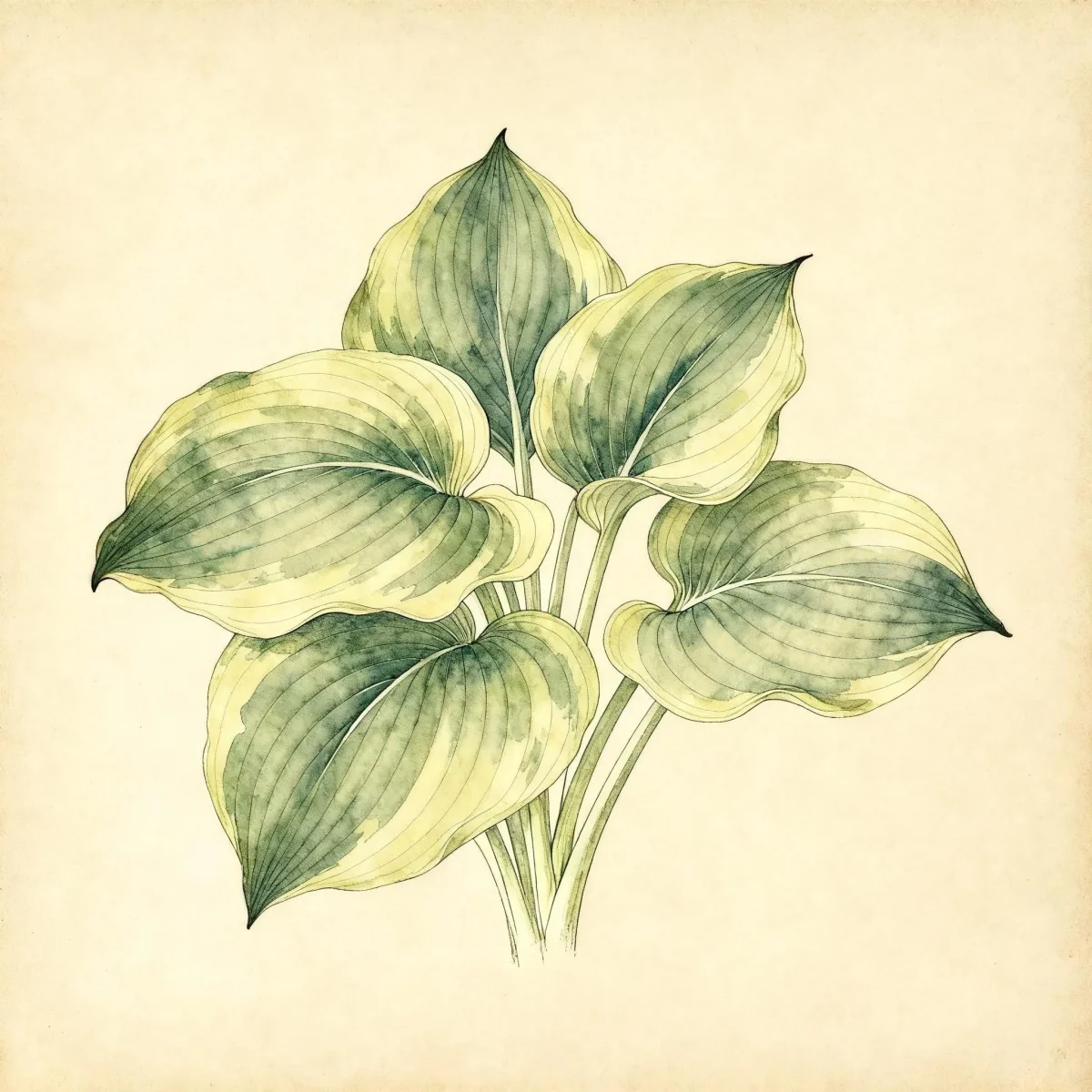
Hosta ‘Arc de Triomphe’ is a highly valued selection prized for its dense, ornamental foliage that significantly brightens deep shade areas. This herbaceous perennial creates a rounded mound, featuring distinctive heart-shaped leaves framed by wavy, creamy white variegated margins, providing long-season visual interest. As a classic Hosta, ‘Arc de Triomphe’ thrives in consistent moisture, offering an elegant, low-maintenance solution for shaded borders and woodland settings.
The beauty of Hosta ‘Arc de Triomphe’ extends beyond its foliage when its upright spikes of lavender blooms emerge in mid-summer, attracting attention above the leaf mass. Its robust nature allows it to perform reliably in tough conditions, including heavy shade and the challenging environment near Black Walnut trees. Gardeners seek out this variety for its ability to provide structure and texture where few other plants flourish.
Cultivating mature clumps of Hosta ‘Arc de Triomphe’ yields substantial ground cover, reaching up to 2 feet tall and 3 feet wide. Its resilience and aesthetic appeal confirm why the genus Hosta remains a cornerstone of shade gardening worldwide, easily providing year after year of trouble-free performance.
Fast Facts
- Plant Family: Asparagaceae
- Plant Type: Herbaceous perennial
- Hardiness Zones: USDA Zones 3-8
- Size at Maturity:
- Height: 1.5-2 ft
- Spread: 2.5-3 ft
- Bloom Time: July to August
- Bloom Description: Lavender
- Sun Exposure: Part shade to full shade
- Water Needs: Medium
- Maintenance Level: Low
How to Grow
Hosta ‘Arc de Triomphe’ should be planted in spring or autumn when conditions are cooler, ensuring the best establishment before summer heat or winter dormancy. Aim for a location receiving part shade, ideally with protection from intense afternoon sun, though this variety handles deep shade well. The ideal soil is organically rich, well-drained, and consistently moist.
Maintenance for Hosta ‘Arc de Triomphe’ is generally low. Consistency in watering is key; soils should never be allowed to dry out completely, although established plants develop some tolerance for dry shade, especially those with thick leaves. Apply water directly to the soil beneath the foliage to keep the leaves dry and minimize fungal issues. Hostas typically do not require heavy fertilization to thrive.
Divide clumps as necessary, usually in early spring before the leaves unfurl, or in the autumn. Planting the rhizomatous crowns at the appropriate depth ensures vigorous return each season. Always site your Hosta where it is protected from strong winds, which can damage the substantial leaves of the Hosta ‘Arc de Triomphe’.
Landscape Uses
Hostas are the quintessential anchor for shady garden designs, and Hosta ‘Arc de Triomphe’ excels in this role due to its striking, variegated foliage. They are exceptionally effective when used in mass plantings or groups to create a solid carpet of texture beneath taller deciduous trees or along the north side of structures.
This variety functions beautifully as an edging plant along shady borders or pathways, guiding the eye with its bright margins. Given its moderate size (up to 3 feet wide), it also makes an excellent background plant providing contrast to smaller, solid-green or blue hostas planted in front. Hosta ‘Arc de Triomphe’ brings reliable structure and light reflection to deep woodland garden settings.
Standout Features
Flower Qualities
- Showy
Noteworthy Characteristics
Hosta is primarily cultivated for its ornamental foliage, which rises from a central rhizomatous crown to form a mound of dense, conspicuously-veined basal leaves in various shapes and colors. ‘Arc de Triomphe’ is a specific hybrid known for its heart-shaped leaves accented by wavy, creamy white variegated margins. Upright spikes bearing tubular, lavender blooms appear reliably in mid-summer above this attractive foliage mass.
Tolerances
- Heavy Shade
- Black Walnut
Potential Problems
Slugs and snails represent the most common threat to Hosta ‘Arc de Triomphe’, leaving jagged holes in the foliage if populations are not managed. Inspect leaves regularly and employ organic controls like diatomaceous earth or baits at the base of the plant to prevent extensive damage. Look out for foliar nematodes, which cause interveinal browning; infected plants should receive prompt attention.
While leaf spots and crown rot are less frequent issues, they are often linked to poor drainage or excessive humidity. Proper planting in well-drained soil mitigates these risks significantly. Rabbits and deer also frequently consume Hosta foliage, so protection may be necessary in areas with high populations of these herbivores.
Frequently Asked Questions
What hardiness zones is Hosta suitable for?
Hosta ‘Arc de Triomphe’ is reliably hardy in USDA Zones 3 through 8.
How large does Hosta ‘Arc de Triomphe’ grow?
Mature clumps typically reach heights between 1.5 and 2 feet, spreading out to 2.5 to 3 feet wide.
What sun exposure does Hosta ‘Arc de Triomphe’ need?
This Hosta prefers part shade but tolerates full shade well; dappled morning sunlight often promotes the best color and form.
When does Hosta ‘Arc de Triomphe’ bloom?
This variety blooms during the mid-summer months, specifically from July into August, producing lavender flowers.
Conclusion
Hosta ‘Arc de Triomphe’ is an essential, low-maintenance perennial for shaded landscapes, offering superior foliage contrast with its creamy white margins against deep green centers. Its adaptability to heavy shade and tolerance for Black Walnut roots make it a workhorse in difficult garden spots. Assess your site conditions now to ensure adequate moisture before planting your Hosta.
Companion Planting
When integrating Hosta ‘Arc de Triomphe’ into a shade border, consider pairing it with plants that contrast in texture or flower color. Good companions include Astilbe, which offers airy, vertical plumes of summer color often complementary to the Hosta’s mounding form. Ferns, particularly Japanese Painted Ferns, create a delicate, fine texture that enhances the broad leaves of the Hosta.
For color contrast that lasts into the season, consider pairing ‘Arc de Triomphe’ with plants that offer deep purples or burgundy foliage, such as certain varieties of Coral Bells (Heuchera). Since both plants prefer consistent moisture, grouping them together simplifies irrigation needs in your shade garden design.
Propagation and Division
The primary method for multiplying Hosta ‘Arc de Triomphe’ is division, a process best performed when root disturbance is minimized. Wait until early spring before the new growth emerges, or divide in the fall after the main flush of summer growth has passed. Ensure that each section of the divided crown retains sufficient roots and a few healthy growth buds.
When dividing in the spring, the crown is often easier to lift and separate cleanly before the leaves obscure the crown structure. Plant the divisions immediately into prepared, rich soil, watering well. This robust propagation method ensures that your new Hosta ‘Arc de Triomphe’ specimens will retain the genetic characteristics of the parent plant.