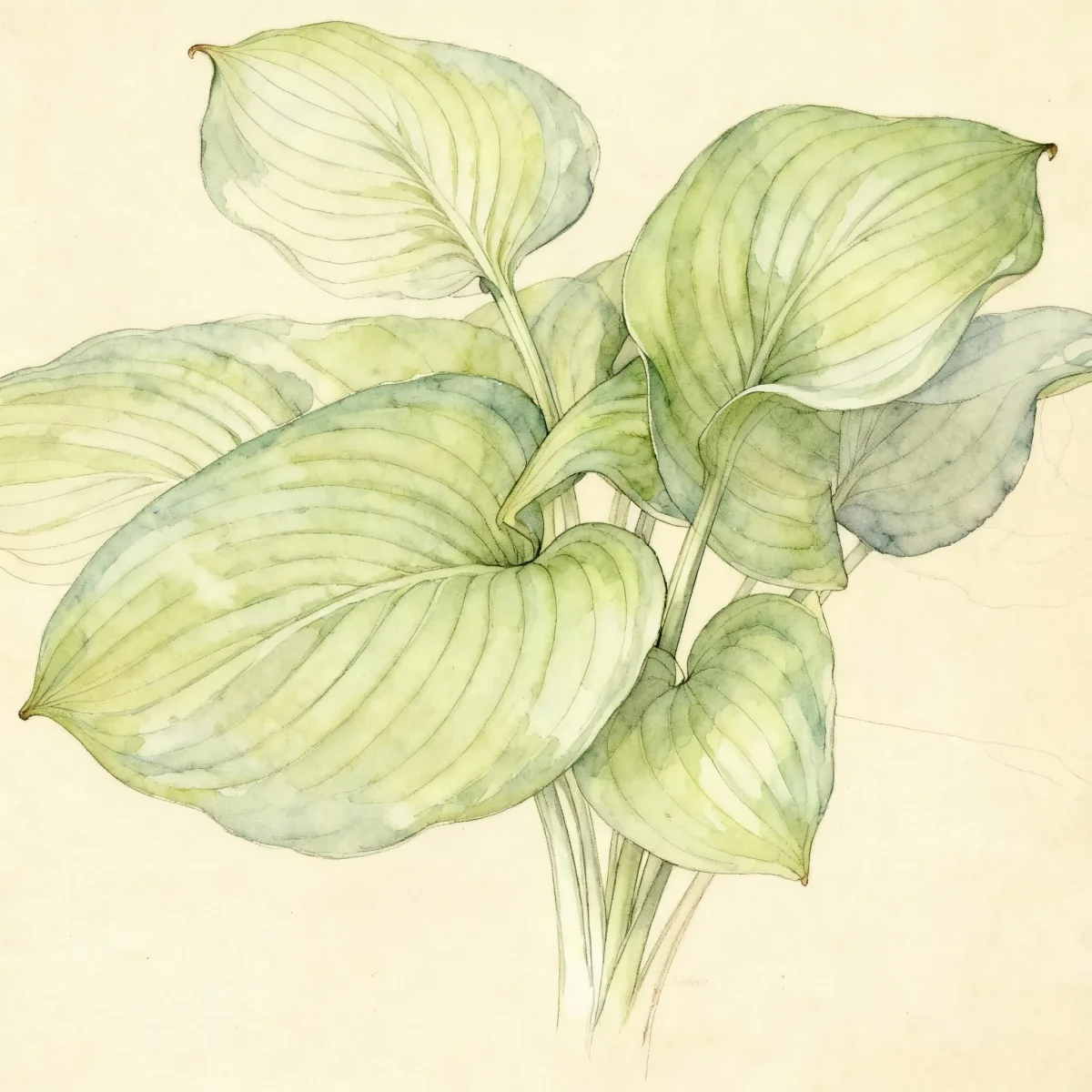
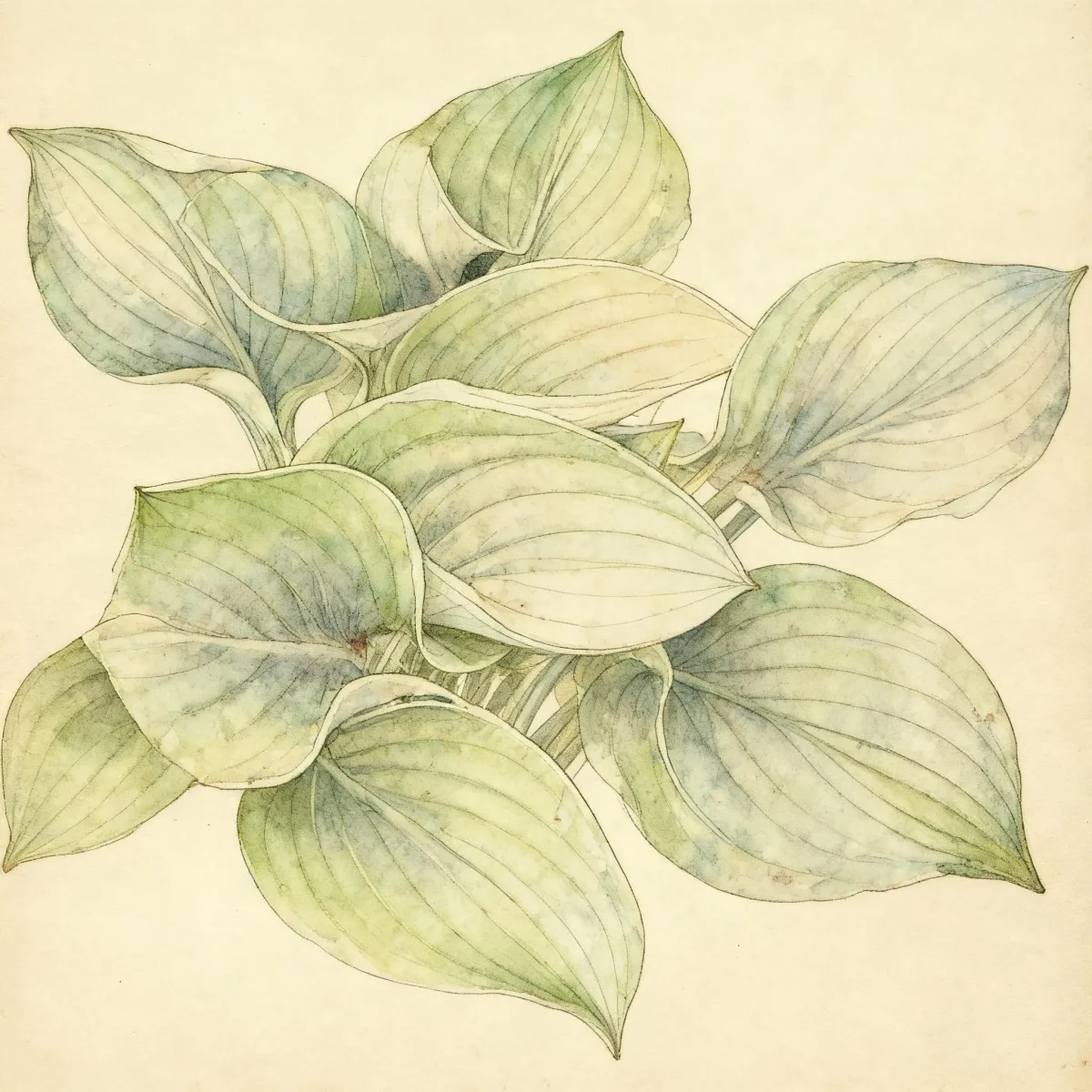
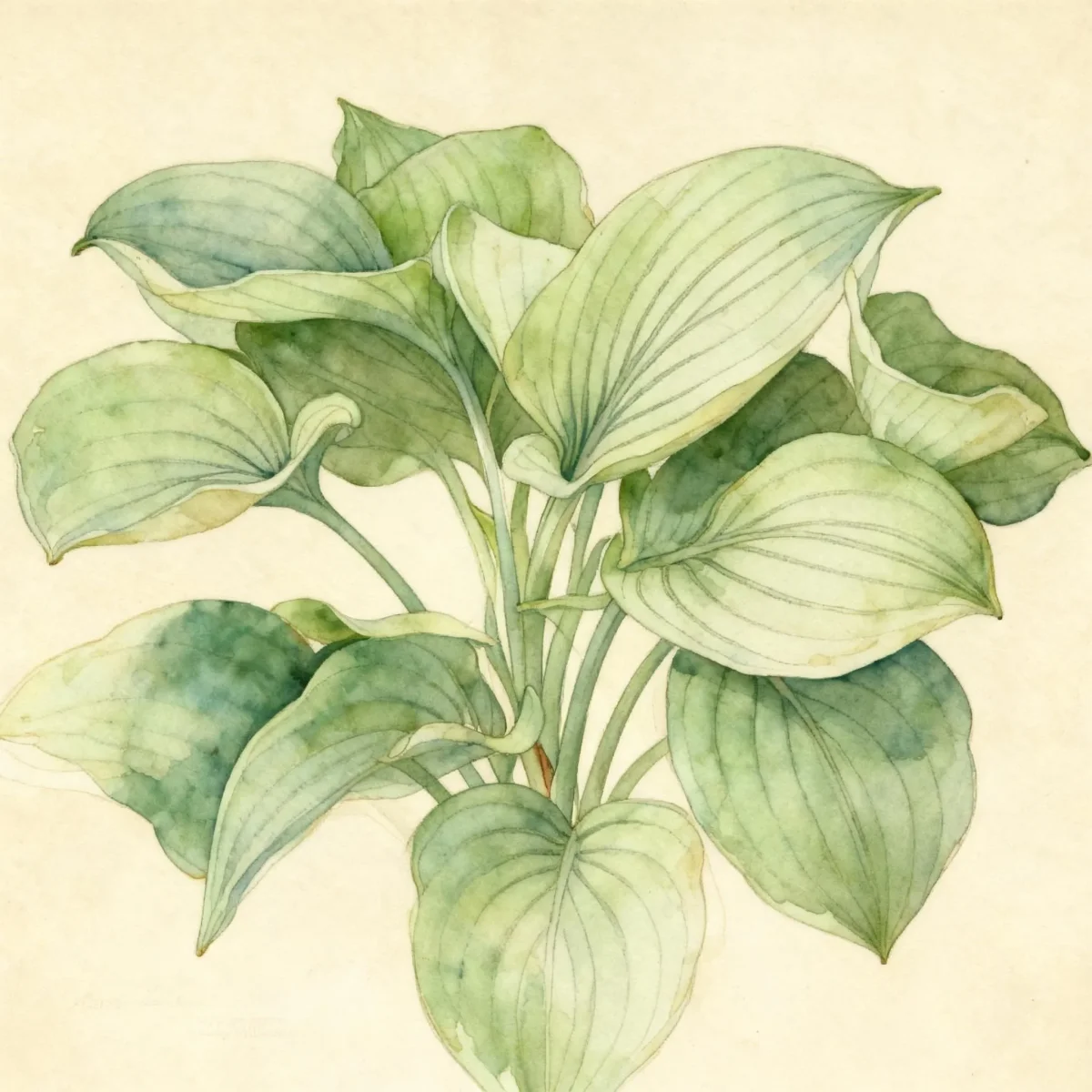
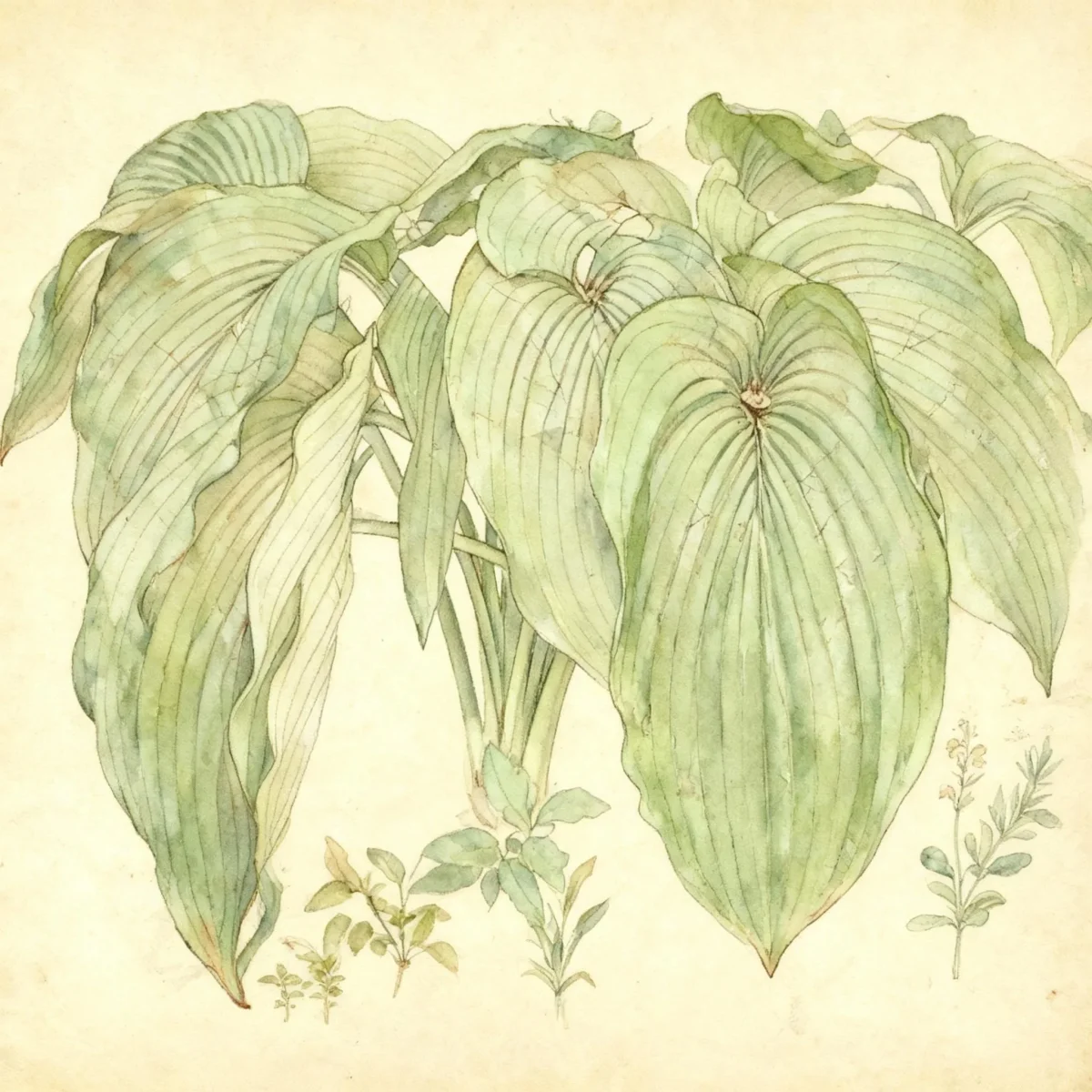
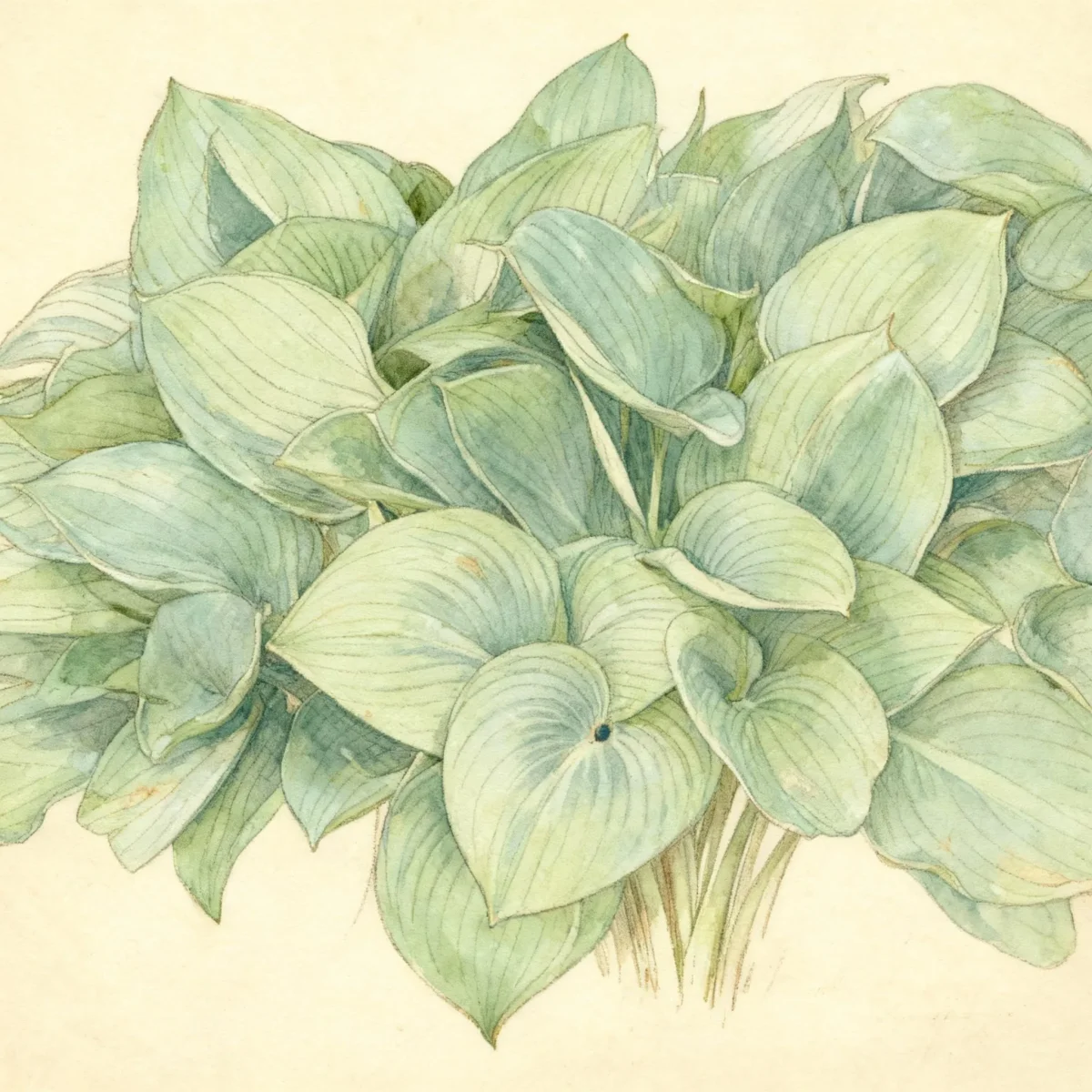
Hosta (Hosta 'White Feather')
Hosta 'White Feather' is a stunning herbaceous perennial prized for creamy white foliage turning green. Ideal for deep shade gardens.
Scroll down to discover growing tips, care requirements, companion plants, and more
Complete Plant Information
Overview
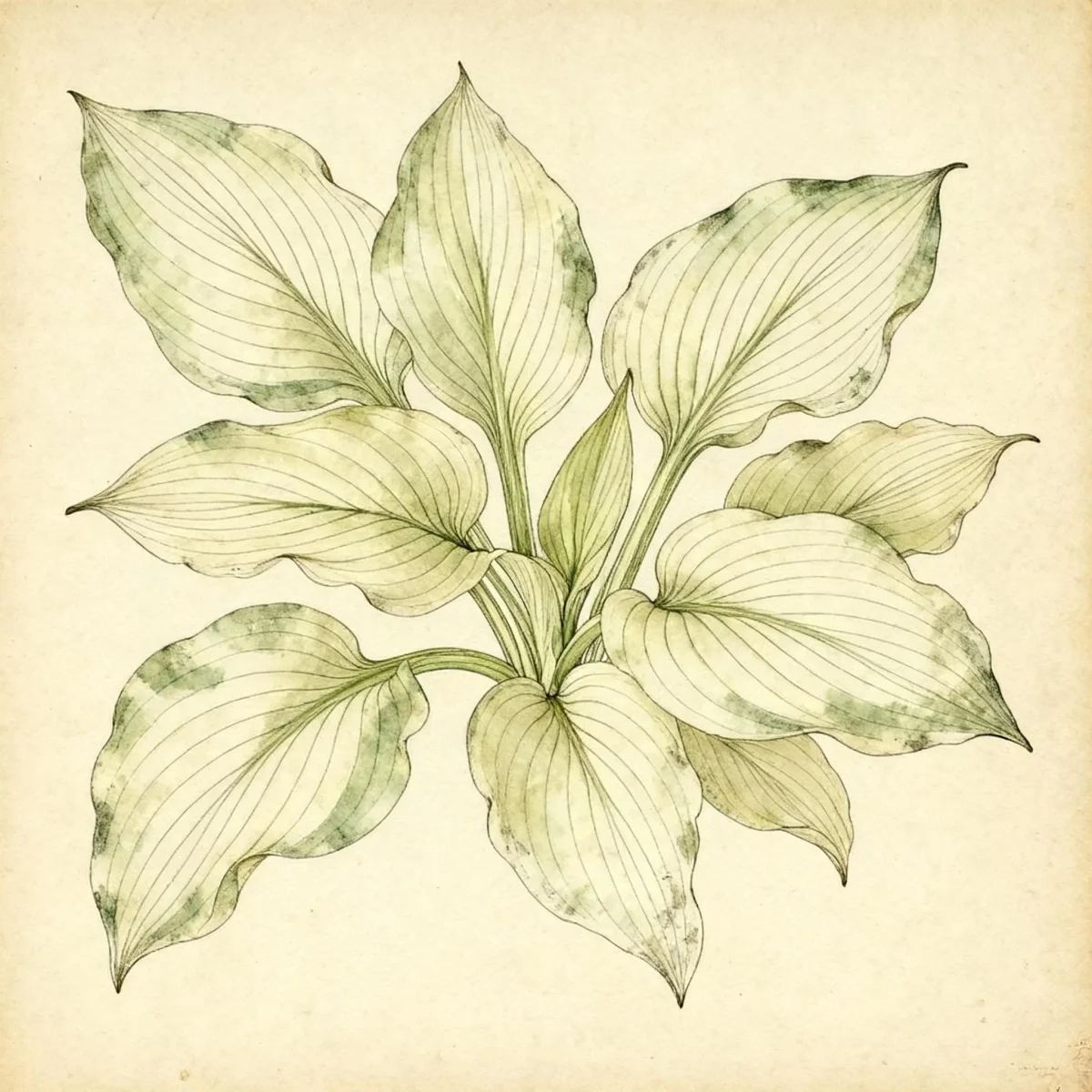
Hosta ‘White Feather’ is celebrated throughout the gardening world primarily for its striking, highly ornamental foliage that brightens the darkest corners of the garden. This cultivar emerges with captivating creamy white leaves in spring, which gradually mature, developing streaks of green as the season progresses, offering dynamic color contrast. As a small, clump-forming herbaceous perennial, it brings texture and light to deep shade settings where few other plants thrive.
This variety of Hosta is reliably hardy and relatively low-maintenance once established, making it a favorite for both novice and expert gardeners focused on creating woodland or shade borders. The fine texture of its lanceolate leaves distinguishes it from bolder-leafed types, adding an airy grace to the composition.
The primary value of Hosta ‘White Feather’, like most rhizomatous Hostas, lies in its visual impact at ground level, serving as foundational planting material. While it does produce delicate lavender blooms, the true show is the foliage mound, which offers consistent visual appeal throughout the growing season.
Fast Facts
- Plant Family: Asparagaceae
- Plant Type: Herbaceous perennial
- Hardiness Zones: USDA Zones 3-8
- Size at Maturity:
- Height: 0.5-0.75 ft
- Spread: 2-2.5 ft
- Bloom Time: June to July
- Bloom Description: Lavender
- Sun Exposure: Full Shade
- Water Needs: Medium
- Maintenance Level: Low
How to Grow
For optimal health and the best foliage color, plant Hosta ‘White Feather’ in spring or early autumn when soils are workable. Select a location that offers rich, well-drained soil amended generously with organic matter. While the species tolerates part shade, it is crucial to remember that Hosta ‘White Feather’ demands full shade, as its thin, light-colored leaves scorch easily in direct sun, destroying its ornamental value.
Maintain consistent moisture; these perennials thrive in evenly moist conditions. Avoid overhead watering when possible; instead, apply water directly to the soil beneath the leaf canopy to prevent leaf spot issues. While established plants can handle some dry shade, especially if protected from Black Walnut roots, allowing the soil to dry out completely will compromise the plant’s size and leaf quality.
Maintenance for this low-maintenance Hosta is minimal. Generally, feeding is unnecessary if the soil is organically rich. Divide clumps in early spring before the leaves unfurl if you wish to propagate or manage spread, though division is often easiest when the plant is actively growing. Protect the foliage from strong winds, which can cause physical tearing.
Landscape Uses
Hostas are the undisputed champions of the shade garden, and Hosta ‘White Feather’ excels at adding bright focal points where sunlight is scarce. They are exceptionally effective when massed together or planted in groups along shady borders, providing a solid ribbon of light foliage against darker background plantings.
Because this Hosta cultivar is smaller, reaching a modest height, it works excellently as a foreground element in layered shade plantings. Pair it with plants offering varied textures, such as ferns or groundcovers like epimediums, to enhance the visual interplay of the different leaf forms and colors. While grown primarily for foliage, the sporadic lavender blooms add a subtle vertical accent in mid-summer.
Consider using Hosta ‘White Feather’ in shaded woodland settings or along the north side of structures where light conditions cannot support typical flowering perennials. They perform well in protected beds or woodland margins, acting as reliable textural anchors near woodland paths.
Standout Features
Flower Qualities
- Showy
Noteworthy Characteristics
Hosta is a genus primarily grown for its ornamental foliage, featuring dense, basal leaves rising from a central crown in various shapes and textures. Hosta ‘White Feather’ is a small hybrid cultivar whose lanceolate leaves emerge creamy white in spring, taking on green streaks by maturity, all while maintaining wavy margins. The plant produces tubular, lavender flowers on scapes that rise above the foliage in early to mid-summer.
Tolerances
- Heavy Shade
- Black Walnut
Potential Problems
Slugs and snails represent the most significant ongoing threat to Hosta foliage, readily chewing jagged holes, which can rapidly diminish the appearance of Hosta ‘White Feather’. Inspect leaves regularly, especially after rain, and deploy bait (iron phosphate based for organic control) or use beer traps to manage populations before significant tissue damage occurs.
Foliar nematodes can cause interveinal browning, which is unsightly; proper pruning and ensuring good air circulation can help mitigate fungal issues like leaf spot and crown rot, though these are less common. Be vigilant for viral diseases such as Hosta Virus X (HVX); any infected plant must be immediately removed and destroyed as these pathogens are incurable. Additionally, note that deer and rabbits frequently consume Hosta leaves.
Frequently Asked Questions
What hardiness zones is Hosta ‘White Feather’ suitable for?
Hosta ‘White Feather’ is reliably hardy across USDA Zones 3 through 8, making it adaptable to a wide range of climates across North America.
How large does Hosta ‘White Feather’ grow?
This cultivar typically matures to a smaller size, reaching only 0.5 to 0.75 feet in height and spreading between 2 to 2.5 feet wide.
What sun exposure does Hosta ‘White Feather’ need?
Hosta ‘White Feather’ requires full shade for protection; direct sunlight will cause severe leaf scorching due to its thin, light-colored foliage.
When does Hosta ‘White Feather’ bloom?
This Hosta variety is expected to bloom between June and July, displaying appealing lavender-colored flowers atop its leafless scapes.
Conclusion
Hosta ‘White Feather’ offers exceptional value to any gardener looking to illuminate deep shade areas with vibrant, textural foliage that lasts throughout the summer season. Its low maintenance requirements and striking creamy-white leaves ensure it remains a prized specimen among shade lovers. Before planting, confirm your location falls within USDA Zones 3-8 and plan for consistent moisture management to achieve the best display from your new Hosta.
Companion Planting in Shade
When integrating Hosta ‘White Feather’ into a design, focus on companions that contrast nicely in texture and form while sharing the requirement for deep shade. Ferns are classic partners, particularly Japanese Painted Ferns or larger Matteuccia varieties, whose finely cut or architectural fronds beautifully offset the broad leaves of the Hosta. Consider planting low-growing woodland groundcovers beneath or alongside, such as Vinca minor or Waldsteinia, to suppress weeds and maintain cool soil temperatures beneficial for the Hosta roots.
Another excellent pairing involves plants that offer contrast in color, even in low light. White Bleeding Hearts (Dicentra spectabilis ‘Alba’) provide a spring floral display that complements the initial bright emergence of the Hosta leaves. For year-round structure in milder zones, dwarf evergreens that thrive in shade, like certain small hemlocks or low-growing yews, can serve as excellent architectural backdrops for this Hosta cultivar.
Seasonal Care Calendar
Spring is the critical season for preparing Hosta beds. As soon as the soil is workable, gently incorporate compost around the base of the plants to enrich the growing medium. This is also the ideal time for dividing overcrowded clumps of Hosta ‘White Feather’ if necessary, allowing the new divisions to establish before summer heat arrives.
During the summer growing season, focus strictly on diligent watering management, ensuring the soil remains uniformly moist, especially when temperatures spike. Avoid fertilizing heavily, as excessive nitrogen can dilute the variegation in the leaves. In autumn, allow the foliage to naturally die back; avoid cutting back the dead leaves until early spring, as this material protects the crown over winter.