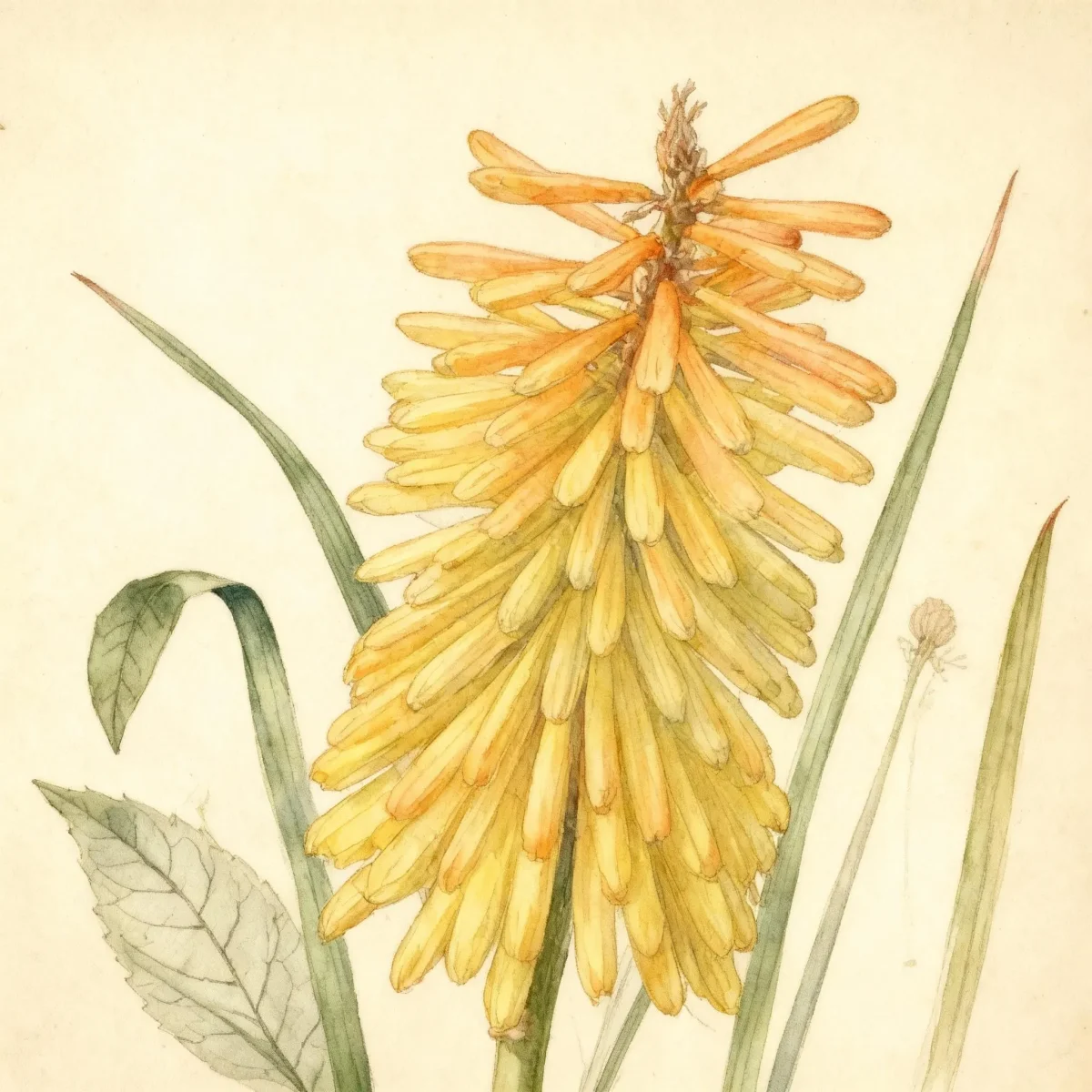
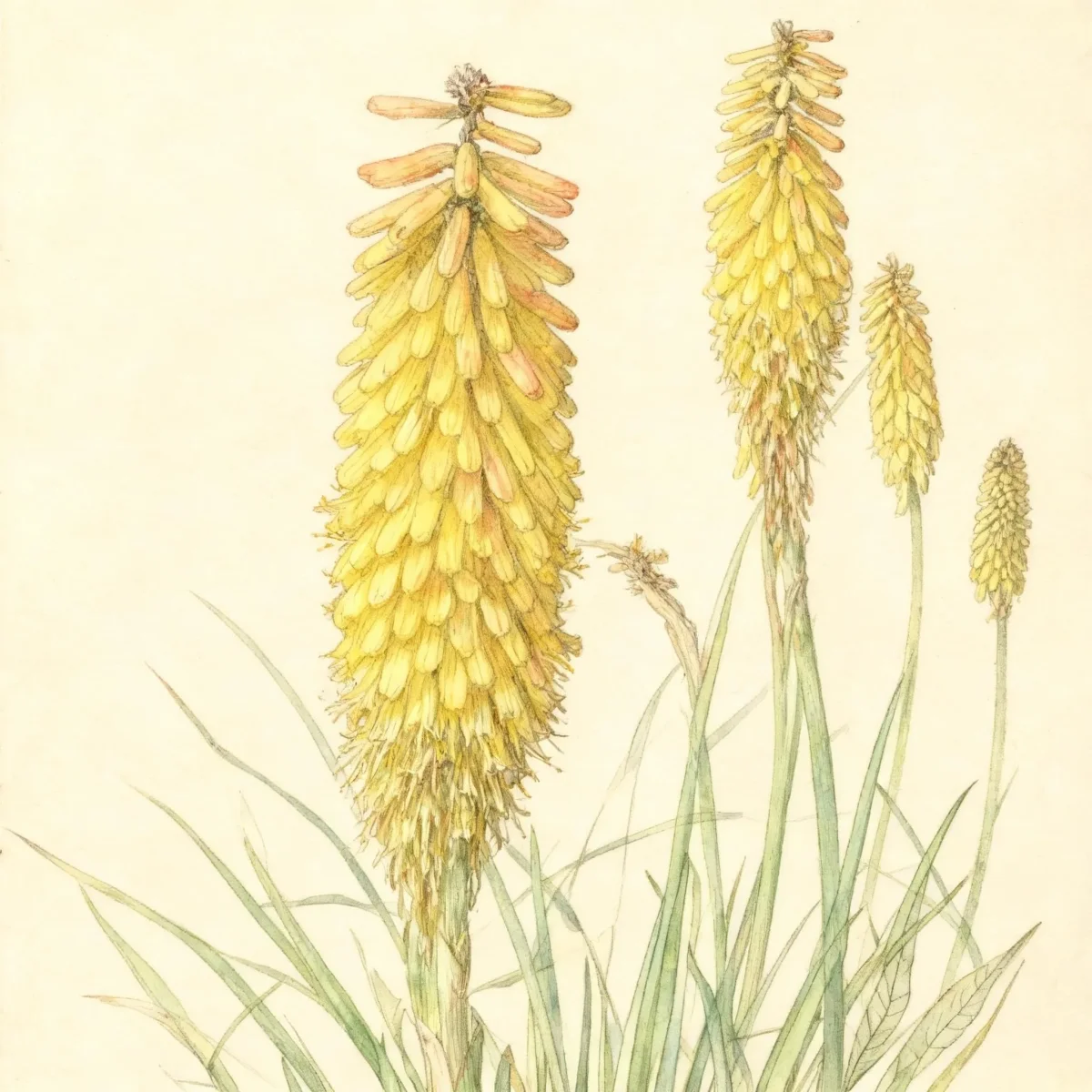
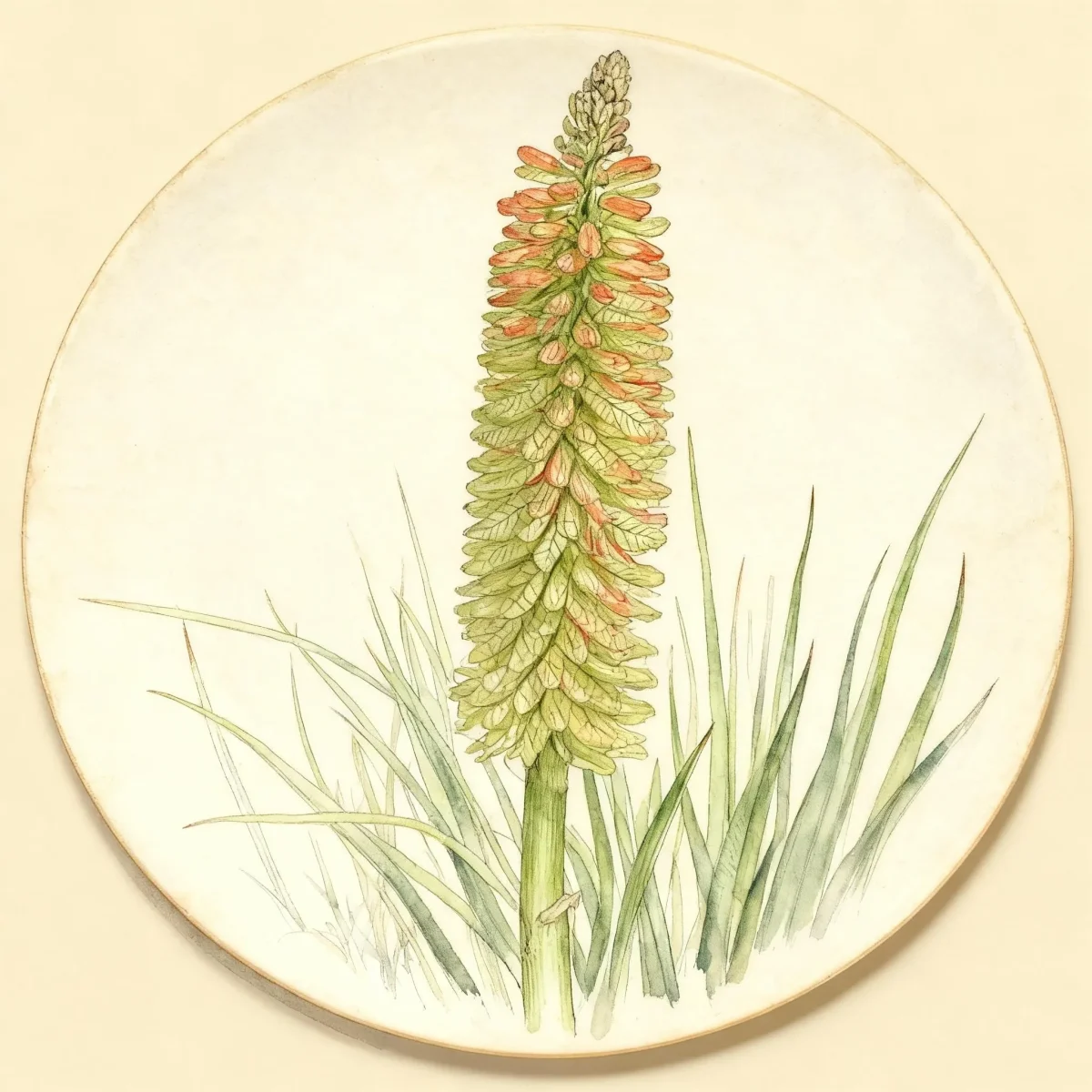
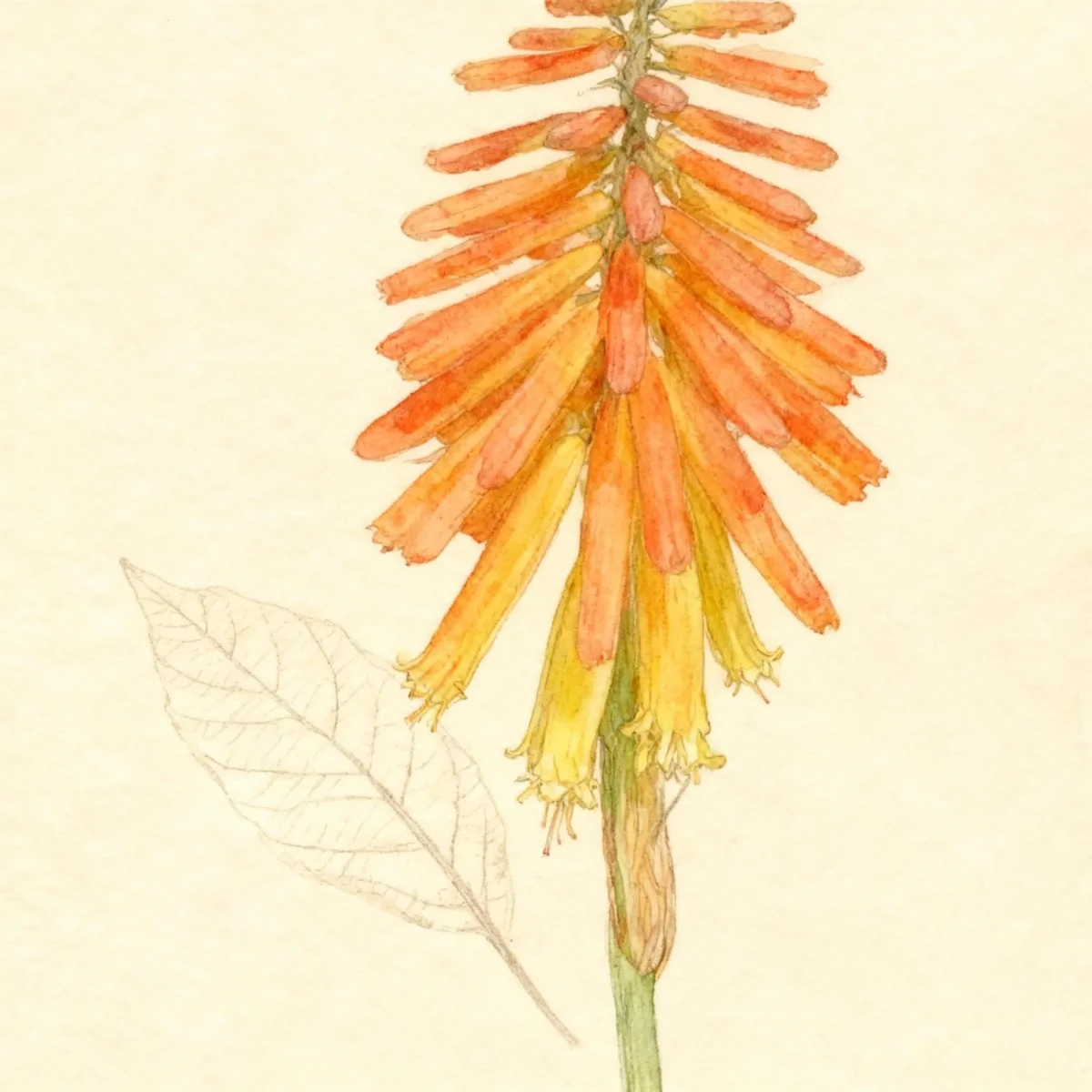
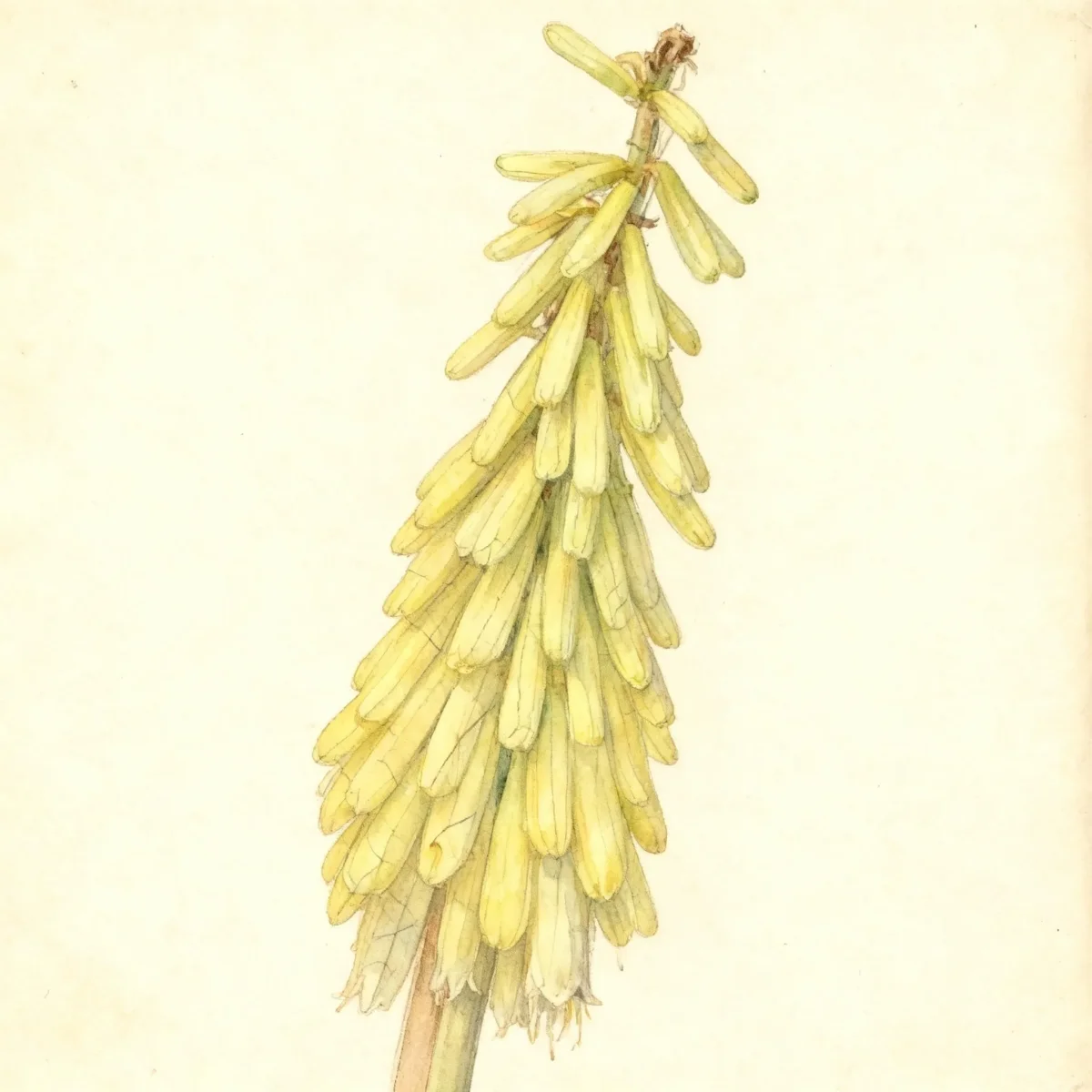
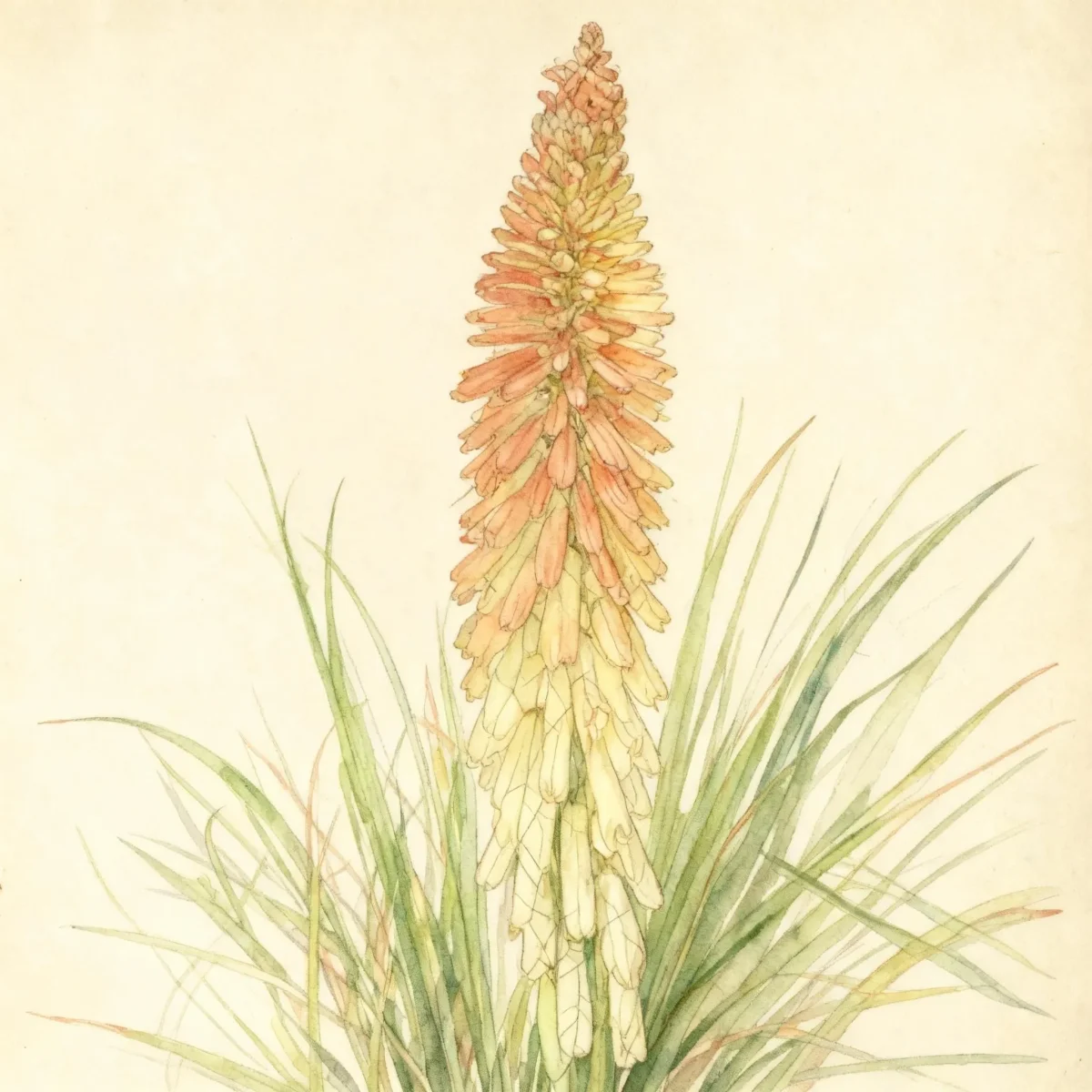
Red-hot poker (Kniphofia 'Lemon Popsicle')
Kniphofia 'Lemon Popsicle' offers showy yellow spikes from June to August, thriving in full sun in USDA Zones 6-9.
Scroll down to discover growing tips, care requirements, companion plants, and more
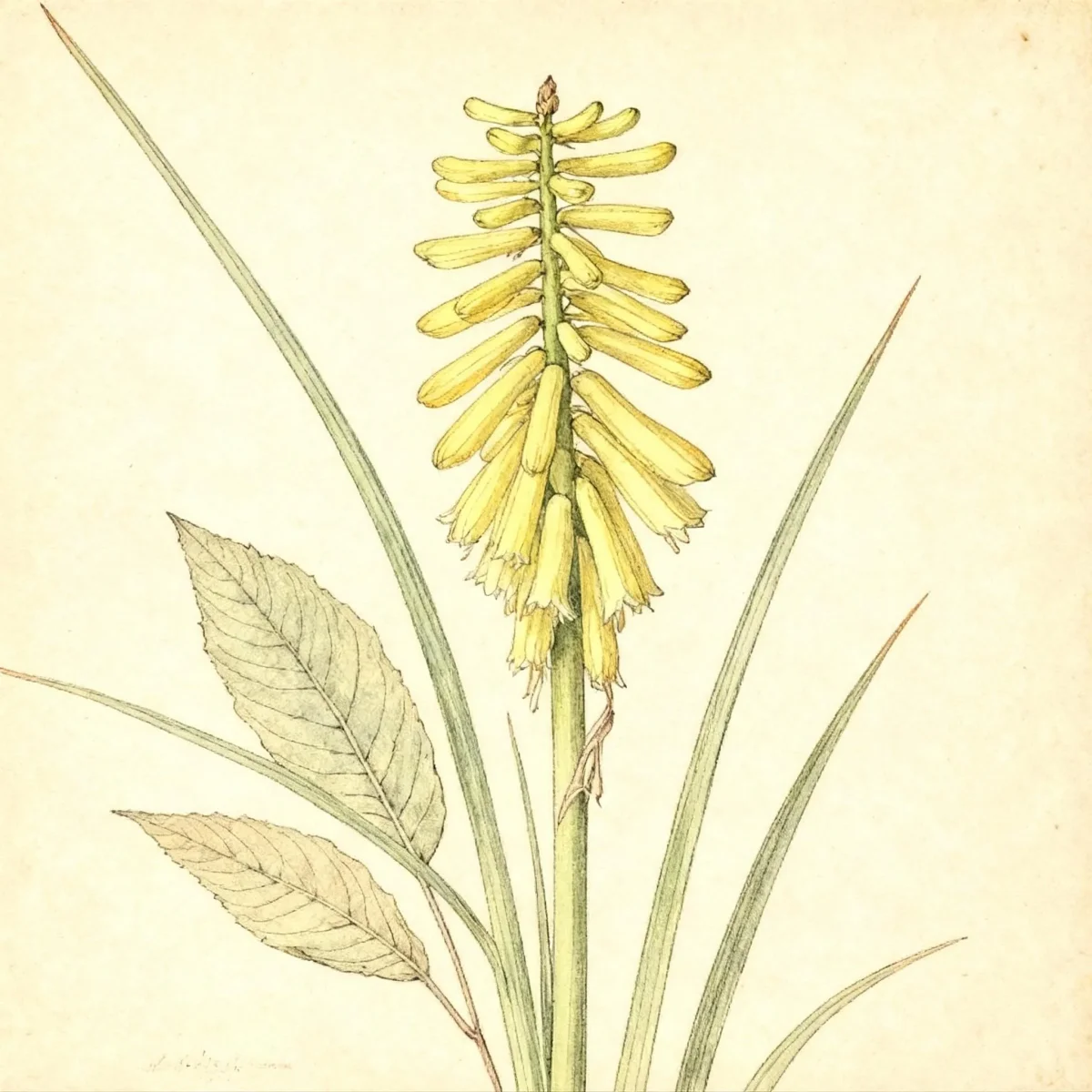
Complete Plant Information
Overview
The striking Kniphofia ‘Lemon Popsicle’ is a compact, dwarf hybrid cultivar that brings bright, consistent yellow color to the summer garden. As a vibrant cultivar of the Red-hot poker genus, it is prized for its upright, torch-like flower spikes, which add critical vertical interest to mixed plantings. This herbaceous perennial brings long-lasting performance, requiring moderate care while reliably attracting beneficial wildlife.
Gardeners appreciate this selection for its manageable size, reaching only about 1.5 feet tall and wide, making it suitable even for smaller landscapes or the front of borders. Its coarse, strap-like basal leaves form a dense clump, providing evergreen structure when not in bloom. Successfully growing Kniphofia ‘Lemon Popsicle’ involves careful attention to drainage, as these plants thrive best when conditions mimic their African mountainous origins.
The vivid yellow bloom time extends from early summer into late August, proving an excellent source of late-season nectar for pollinators. Whether used as a specimen or planted in groups, this cultivar earns its name as a true garden sparkler. Ensure you select a location with full sun to maximize the flower production of your Red-hot poker.
Fast Facts
- Plant Family: Asphodelaceae
- Plant Type: Herbaceous perennial
- Hardiness Zones: USDA Zones 6-9
- Size at Maturity:
- Height: 1-2 ft
- Spread: 1.25-1.5 ft
- Bloom Time: June to August
- Bloom Description: Yellow
- Sun Exposure: Full sun
- Water Needs: Dry to medium
- Maintenance Level: Medium
How to Grow
For optimal establishment, plant Kniphofia ‘Lemon Popsicle’ in humus-rich, evenly moist soil that drains exceptionally well. These plants are intolerant of wet, heavy soils, and sharp drainage is crucial, especially in winter to prevent root rot. While they demand full sun for the best performance, tolerate some light shade during the hottest parts of the summer, particularly in warmer zones.
Watering needs are dry to medium once established; avoid consistently saturated conditions. During the blooming season, promptly deadhead spent flower spikes to encourage repeat blooming. Cultivars like Kniphofia ‘Lemon Popsicle’ must be propagated by division, as seeds rarely produce true-to-color offspring.
Winter protection is wise in the colder reaches of its range (Zones 5/6). Late in the fall, tie the sword-like leaves together to form a protective canopy over the crown, preventing freezing water from settling in the center. Applying root mulch in winter is also recommended for insulation. In early spring, trim the old foliage back to about 3 inches above the ground to allow new growth to emerge cleanly.
Landscape Uses
The upright structure and vibrant yellow inflorescences make Kniphofia ‘Lemon Popsicle’ an outstanding vertical accent in landscape design. Its compact habit ensures it doesn’t overwhelm neighboring plants, making it effective as a specimen plant dotted throughout a garden bed or massed in small groups for high visual impact. Consider placing them where they receive morning sun but might benefit from slight afternoon relief in intensely hot climates.
This Red-hot poker works wonderfully in contemporary or architectural gardens due to its strong linear foliage and clear flower form. They pair well with silvery or fine-textured companions such as ornamental grasses, Russian Sage (Perovskia), or lower-growing Sedums that can tolerate similar dry, sunny conditions. Utilizing Kniphofia ‘Lemon Popsicle’ at the mid-layer of a border helps transition between groundcovers and taller shrubs.
Standout Features
Flower Qualities
- Showy
- Good Cut
Noteworthy Characteristics
Kniphofia is noted botanically for its 60-70 species of mostly clump-forming, rhizomatous perennials native to southern and tropical Africa, universally recognized by their bottlebrush-like flower spikes. The genus earns common names like red hot poker and torch lily based on these signature blooms. This specific hybrid, ‘Lemon Popsicle’, is known for its vigorous, compact habit, reaching about 1.5 feet tall, with numerous upright spikes of yellow, tubular flowers blooming from early summer into early fall.
Tolerances
- Rabbit
- Deer
- Drought
- Dry Soil
Potential Problems
Kniphofia ‘Lemon Popsicle’ generally exhibits excellent resistance to serious insect or disease issues, making it a relatively low-fuss choice. The most significant threat comes from cultural conditions: root rot is likely if the soil remains wet or poorly drained, especially during dormant winter periods. In some drier regions, thrips may occasionally appear on the flower heads. To deter potential nibblers, remember that deer and rabbits typically avoid grazing on Red-hot poker foliage.
Management focuses heavily on prevention. Planting in amended, fast-draining soil is the single best defense against fungal issues. Should thrips become visible, treatment with insecticidal soap or a strong jet of water may be necessary during active periods. Established clumps rarely need relocation, minimizing disturbance to the rhizomes.
Frequently Asked Questions
What hardiness zones is Red-hot poker suitable for?
Kniphofia ‘Lemon Popsicle’ is reliably hardy in USDA Zones 6 through 9.
How large does Kniphofia ‘Lemon Popsicle’ grow?
This dwarf cultivar typically reaches a height between 1 and 2 feet with a spread of 1.25 to 1.5 feet at maturity.
When does Red-hot poker bloom?
This variety displays its signature yellow flowers beginning in June and continuing reliably through August.
What sun exposure does Kniphofia ‘Lemon Popsicle’ need?
This plant requires full sun exposure to produce its maximum number of flower spikes throughout the summer season.
Conclusion
The Kniphofia ‘Lemon Popsicle’ offers unparalleled summer brightness through its refreshing yellow flower spikes and features excellent resilience against common garden pests. This dwarf Red-hot poker is a manageable choice for hot, dry conditions once the main requirement—superb drainage—is met. Check your local climate to confirm compatibility within USDA Zones 6-9 and plan to plant this summer interest perennial during the spring where soil conditions are favorable.
Companion Planting
When selecting neighboring plants for Kniphofia ‘Lemon Popsicle’, prioritize species that share a preference for full sun and dry to medium water needs. Associating them with silvery foliage plants dramatically enhances the yellow flower color. Consider pairing them with drought-tolerant perennials like Yarrow (Achillea), Gaura (Oenothera lindheimeri), or various ornamental Sedums which offer contrasting texture and bloom times.
The linear, upright form of the Red-hot poker contrasts beautifully with mounding or spreading companions. Grouping several Kniphofia plants together provides a strong linear element that draws the eye upward. Always ensure there is ample air circulation around the base of the plants, as overcrowding can exacerbate moisture retention near the crowns.
Wildlife Benefits
The dense, tubular flowers of Kniphofia ‘Lemon Popsicle’ are perfectly shaped to attract long-tongued pollinators. Hummingbirds are especially drawn to the vertical spikes, often feeding from them throughout the blooming period from June to August. Butterflies also readily visit the blooms for nectar throughout the summer months.
Because this plant is usually avoided by rabbits and deer, it helps maintain a stable aesthetic in areas where browsing pressure is high. Planting Kniphofia ‘Lemon Popsicle’ near a patio or window allows you to observe the frequent visits from these desirable garden visitors. Maximizing bloom time ensures sustained support for local wildlife populations.