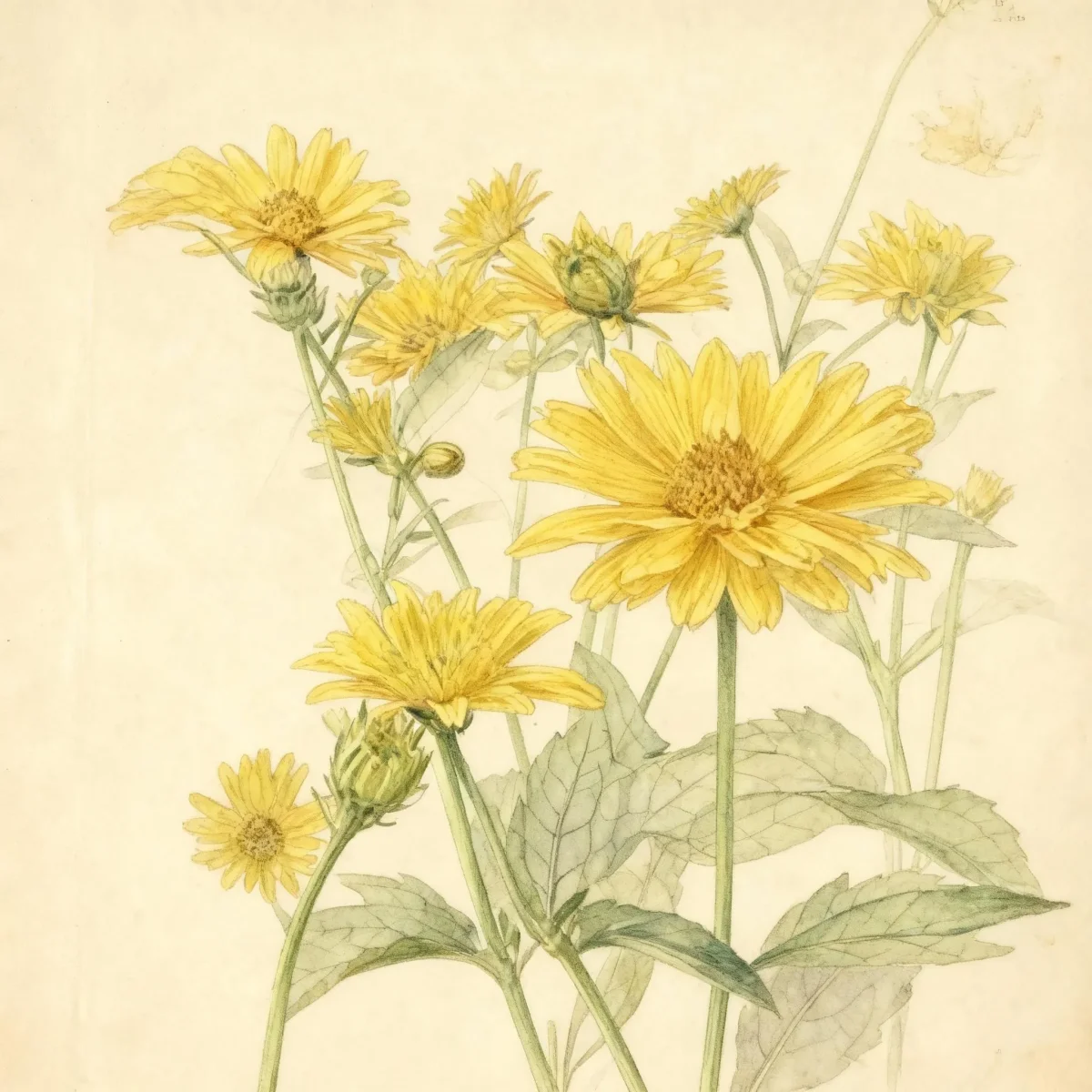
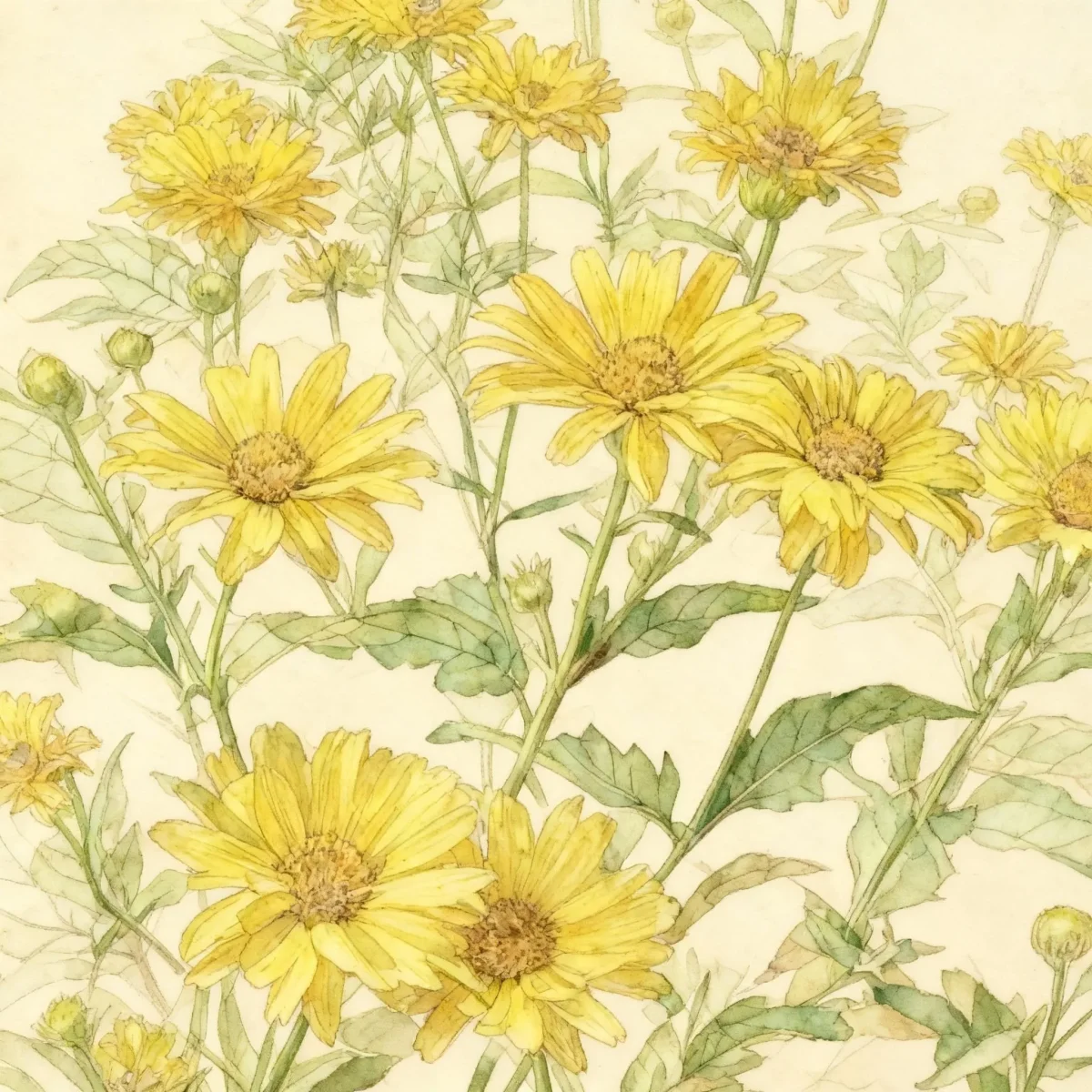
Ox eye (Heliopsis helianthoides var. scabra 'Burning Hearts')
Heliopsis helianthoides var. scabra 'Burning Hearts' (Ox eye) offers striking orange-red bicolored blooms for continuous summer color in low-maintenance settings.
Scroll down to discover growing tips, care requirements, companion plants, and more
Complete Plant Information
Overview
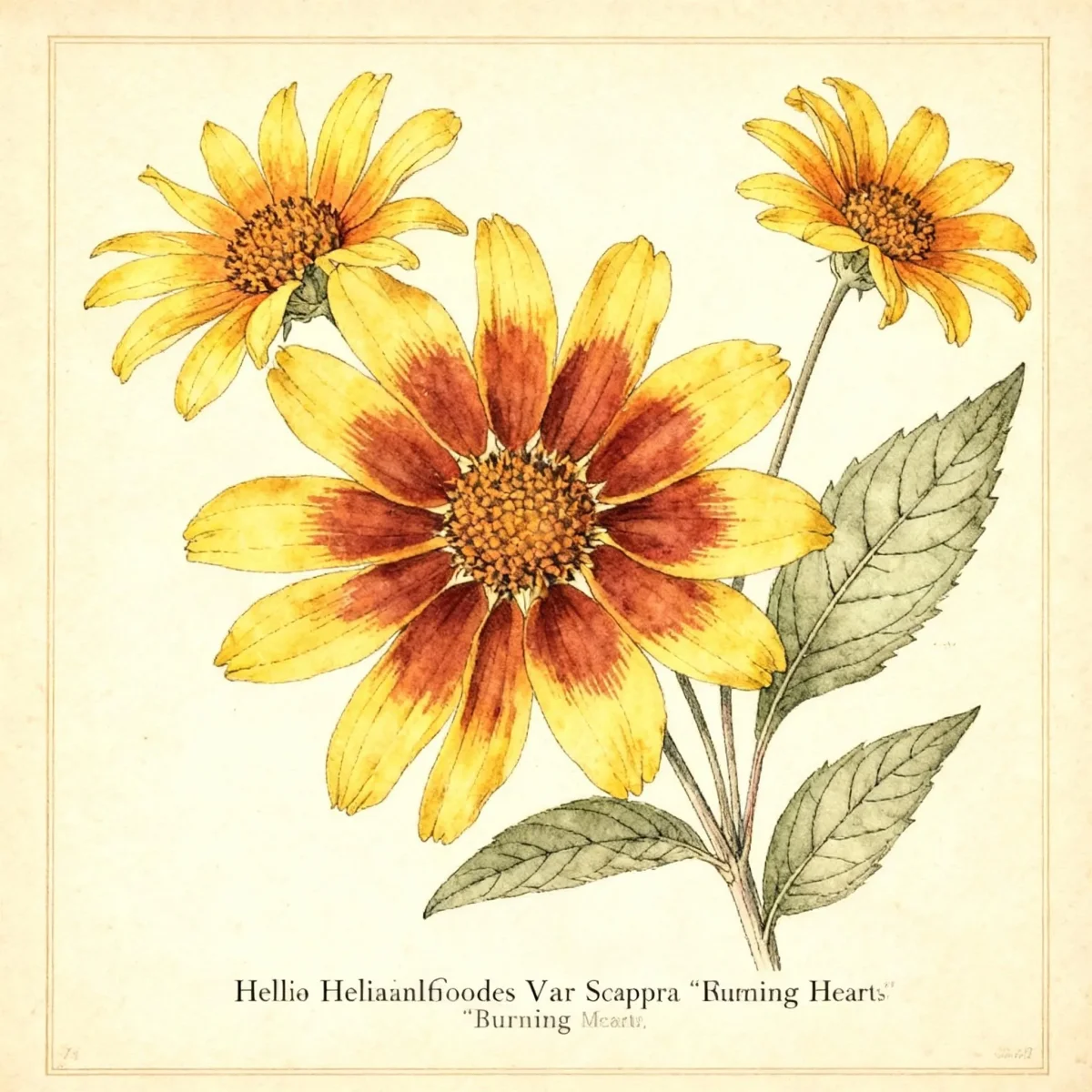
Heliopsis helianthoides var. scabra ‘Burning Hearts’ is a standout herbaceous perennial cherished for its exceptional visual impact and robust nature. Commonly known as Ox eye, this cultivar distinguishes itself with dark purple foliage that beautifully contrasts the bright, sunflower-like blossoms featuring yellow ray petals and deep red-orange centers. It provides reliable, long-lasting color from mid-summer well into the fall season.
This variety of Ox eye is exceptionally adaptable, thriving in challenging soil conditions where many other perennials struggle. Its upright, clump-forming habit makes it an excellent structural plant in the border. Gardeners appreciate Heliopsis helianthoides var. Scabra ‘Burning Hearts’ not only for its low maintenance but also for its strong attraction to vital insect pollinators, cementing its role in sustainable garden design.
As a false sunflower, its resemblance to true sunflowers (Helianthus) provides a familiar, cheerful aesthetic, but with superior drought tolerance once established. Growing the desirable ‘Burning Hearts’ ensures you have reliable vertical interest, attracting birds and butterflies with minimal input from the gardener.
Fast Facts
- Plant Family: Asteraceae
- Plant Type: Herbaceous perennial
- Hardiness Zones: USDA Zones 3-9
- Size at Maturity:
- Height: 3-4 ft
- Spread: 1-1.5 ft
- Bloom Time: July to September
- Bloom Description: Orange and yellow bicolor
- Sun Exposure: Full sun
- Water Needs: Dry to medium
- Maintenance Level: Low
How to Grow
Planting Heliopsis helianthoides var. scabra ‘Burning Hearts’ is best done in spring or fall once frost danger has passed, ensuring the establishment of a strong root system. This Ox eye variety demands full sun for the most vigorous blooming and best stem strength, though it tolerably handles some light shade. It is highly adaptable, flourishing in average, well-drained soil, but it readily accepts poor, dry, or clay soils.
Care for this perennial is wonderfully simple. Water deeply when first planted, but the established Heliopsis helianthoides var. Scabra ‘Burning Hearts’ exhibits excellent drought tolerance. Supplemental watering during extended dry spells improves performance, though it does not require rich soil amendments. Fertilizing is rarely necessary; excessive fertility can lead to floppier stems requiring support.
To maximize the display of color, routinely remove spent flowers throughout the bloom season. This deadheading encourages a fresh flush of blooms, significantly extending the flower power of your Ox eye planting until September. In late fall or early spring, cut the stems back close to the ground.
Landscape Uses
The upright stature and extended bloom time make Heliopsis helianthoides var. scabra ‘Burning Hearts’ an invaluable mid-to-back-of-the-border plant. Its strong vertical lines provide excellent structure amongst lower-growing perennials and shrubs in traditional beds and borders. The dark foliage of ‘Burning Hearts’ offers a superb foil for silver-leaved plants or blues and purples.
Consider integrating this tough perennial into mixed perennial plantings where reliability is key. Because of its excellent drought and soil tolerance, it performs well combined with other sun-loving, tough natives. Furthermore, Ox eye is an excellent specimen for use in large containers where its height can offer drama, provided the pot drains exceptionally well.
Standout Features
Flower Qualities
- Showy
- Good Cut
Noteworthy Characteristics
Heliopsis helianthoides, commonly called oxeye sunflower or ox-eye daisy, is an upright, clump-forming, nearly glabrous, sunflower-like, short-lived perennial that is native to eastern and central North America. It typically grows to 3-4’ tall and features daisy-like flowers (2-3” diameter) with yellow-orange rays surrounding brownish-yellow center cones. Flowers bloom throughout summer atop stiff stems clad with ovate, toothed leaves (to 6” long). ‘Burning Hearts’ features dark purple leaves and stems with contrasting sunflower-like flowers with yellow ray petals and red-orange centers.
Tolerances
- Deer
- Drought
- Clay Soil
- Dry Soil
Potential Problems
Heliopsis helianthoides var. scabra ‘Burning Hearts’ is generally pest and disease-free, requiring minimal intervention. Red aphids may occasionally appear, but they rarely cause significant damage. This cultivar reportedly shows some resistance to powdery mildew, a common issue for some Aster family members. Gardeners should note that deer tend to avoid browsing on this Ox eye variety, making it a reliable choice in areas with active deer populations.
Frequently Asked Questions
What hardiness zones is Ox eye suitable for?
Heliopsis helianthoides var. scabra ‘Burning Hearts’ is adaptable across a wide range, suitable for USDA Zones 3 through 9.
When does Ox eye bloom?
This perennial offers a long season of interest, blooming from July straight through to September with vibrant orange and yellow bicolor flowers.
How large does Heliopsis helianthoides var. scabra ‘Burning Hearts’ grow?
Mature plants typically reach heights between 3 and 4 feet tall, with a relatively narrow spread of 1 to 1.5 feet.
What sun exposure does Ox eye need?
For optimal performance and to maintain strong stems, Heliopsis helianthoides var. Scabra ‘Burning Hearts’ requires a location receiving full sun.
Conclusion
The adaptability, impressive bloom duration, and unique dark foliage make the Ox eye, specifically Heliopsis helianthoides var. scabra ‘Burning Hearts’, an essential, yet easy-to-manage component of any sunny perennial garden. Its tolerance for dry, tough soils ensures reliable color year after year. Check your local USDA hardiness zone compatibility before planting this summer-blooming star.
Wildlife Benefits
The abundant daisy-like flowers of the Ox eye are a significant resource for local ecosystems. The bright, open central cones and prominent ray petals are highly attractive to a broad spectrum of insect pollinators, including numerous species of butterflies. This excellent nectar source ensures regular visits throughout the mid to late summer when other blooms may be fading.
In the fall, after the flowering period concludes, the seed heads of Heliopsis helianthoides var. Scabra ‘Burning Hearts’ provide sustenance for seed-eating birds. Its role as a “two-season” provider—food for insects when blooming and for birds when dormant—makes it a valuable addition for gardeners aiming to support local wildlife populations in their beds and borders.
Propagation Tips
While Heliopsis is technically a short-lived perennial, its tendency to self-seed means that new plants are continually established. The easiest method of propagation for maintaining the parent plant’s characteristics is through division. Divide overcrowded clumps of Heliopsis helianthoides var. scabra ‘Burning Hearts’ in early spring before new growth fully emerges.
When dividing, ensure each section has several healthy roots and a few growing points. Replant the divisions promptly into prepared soil in their new location. Because the species can self-seed, if you wish to intentionally propagate numerous plants, allow some seed heads to mature fully on the plant for fall collection or natural dispersal.