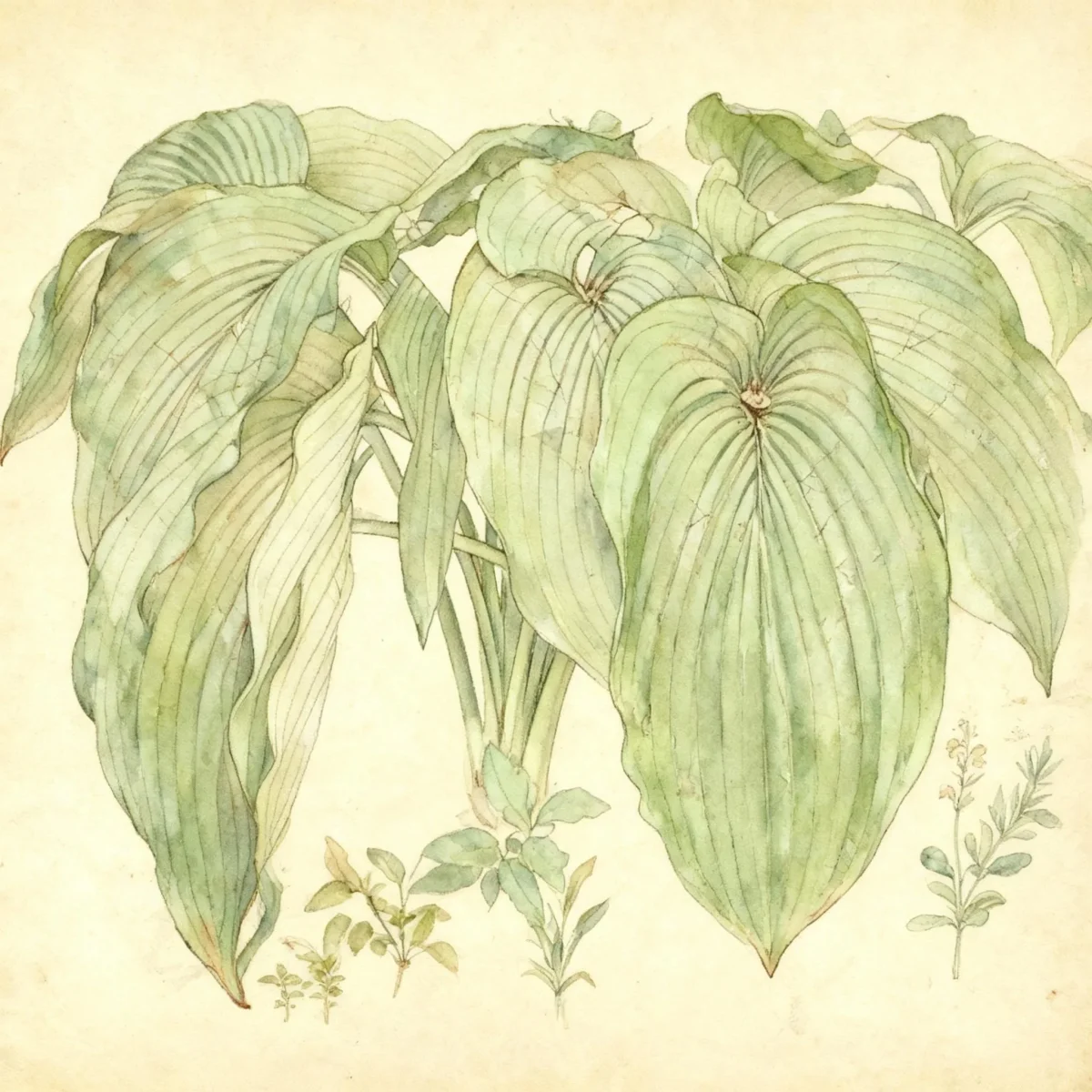
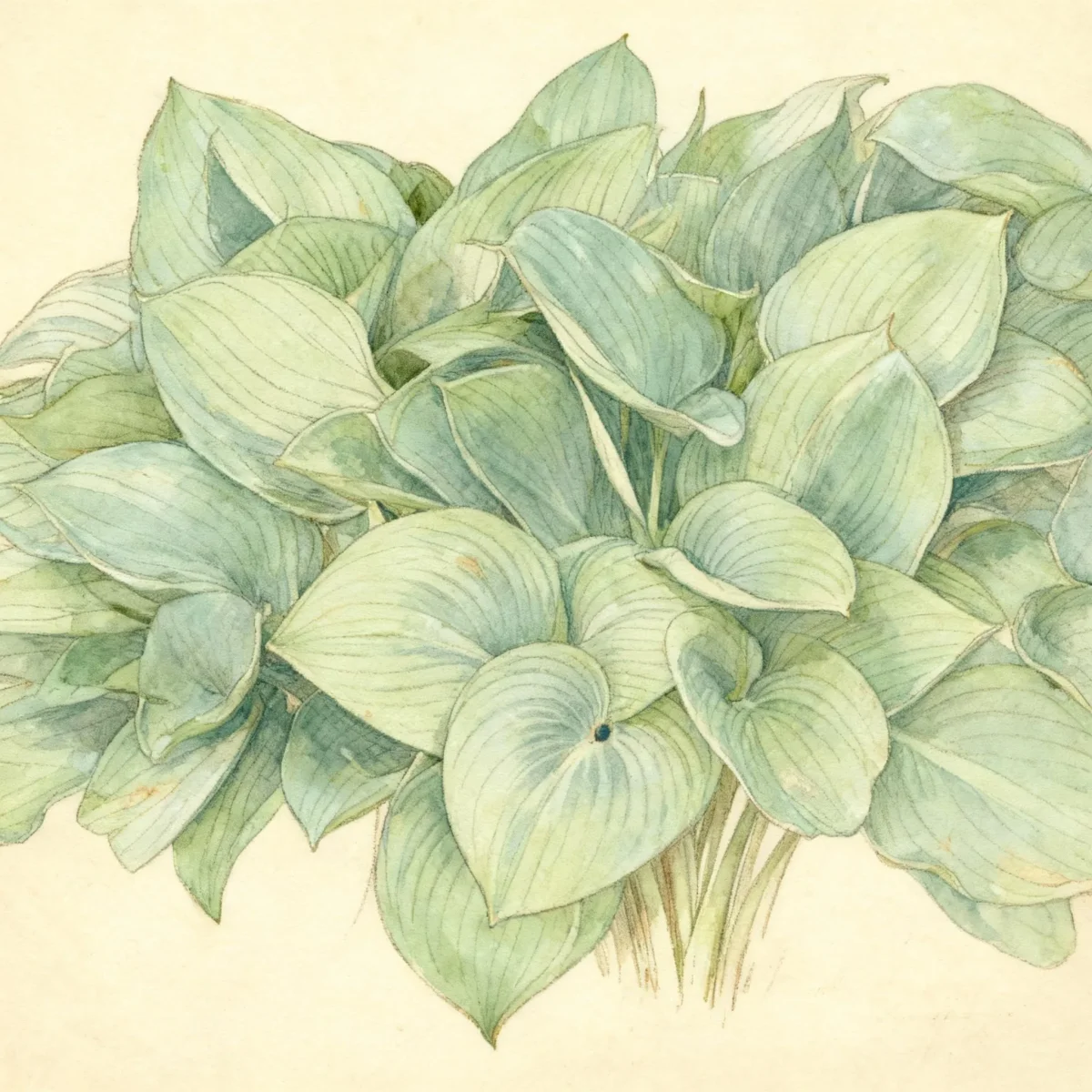
Hosta (Hosta 'Komodo Dragon')
Hosta 'Komodo Dragon' is a massive, shade-loving perennial renowned for its dark blue-green, wavy foliage and low maintenance needs, perfect for deep shade gardens.
Scroll down to discover growing tips, care requirements, companion plants, and more
Complete Plant Information
Overview
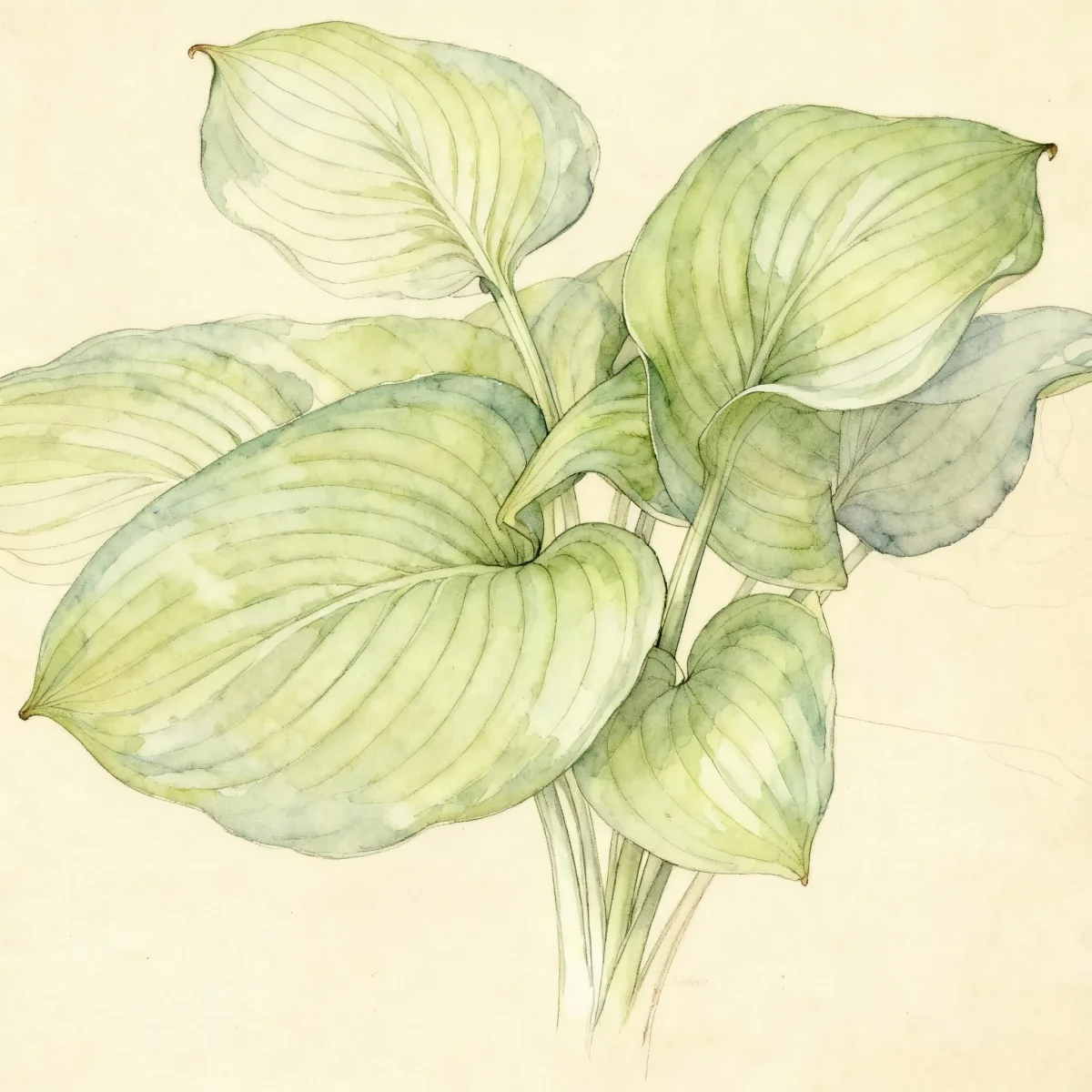
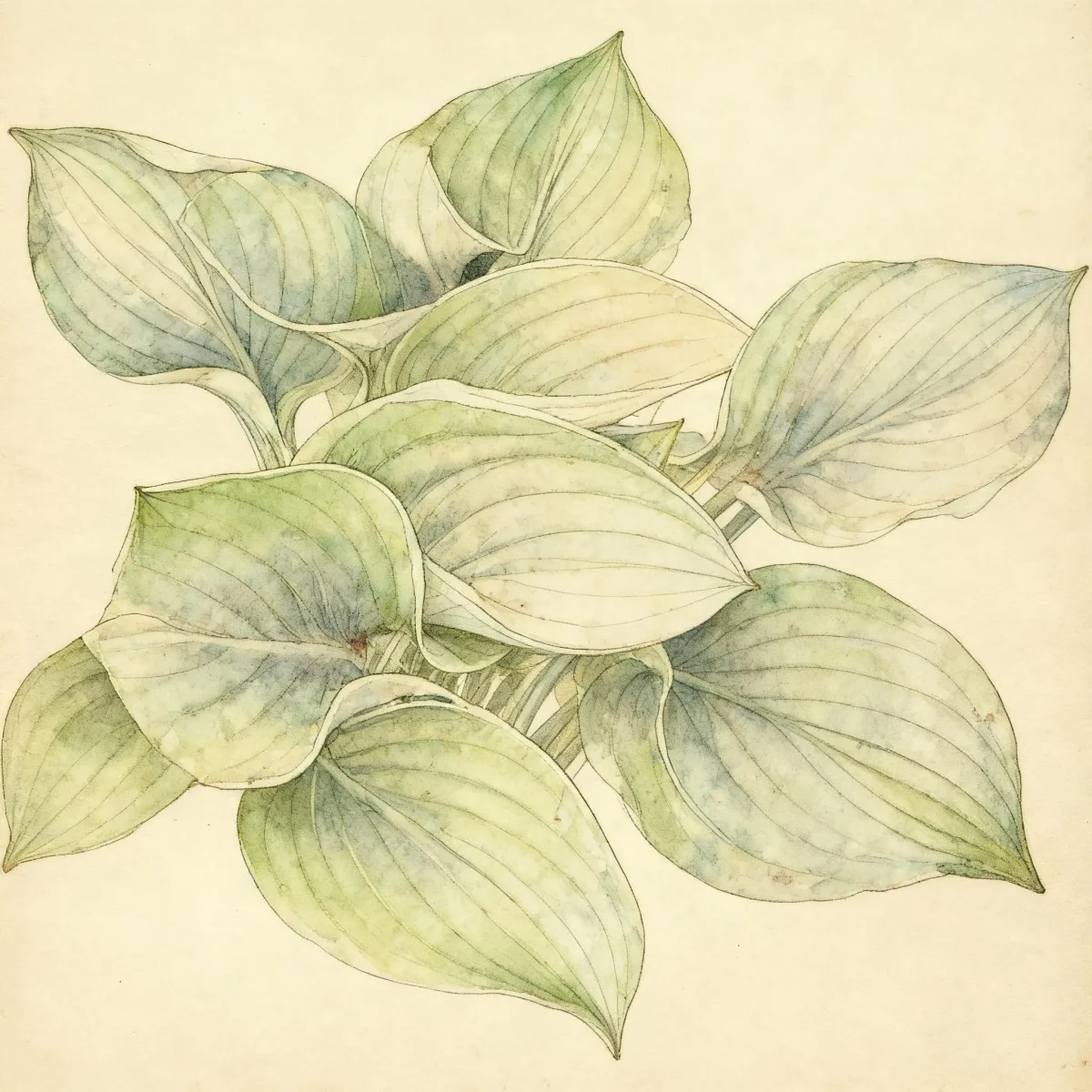
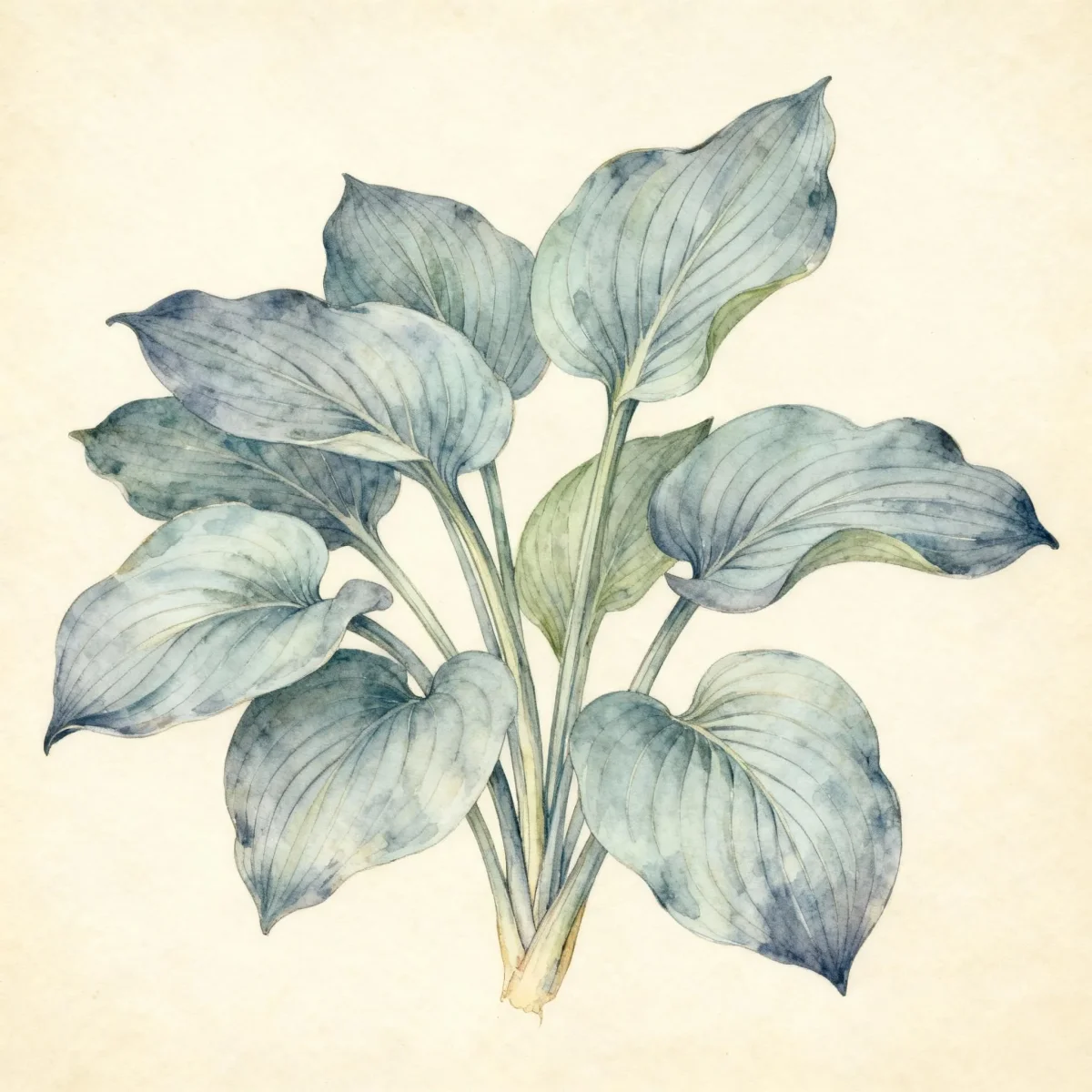
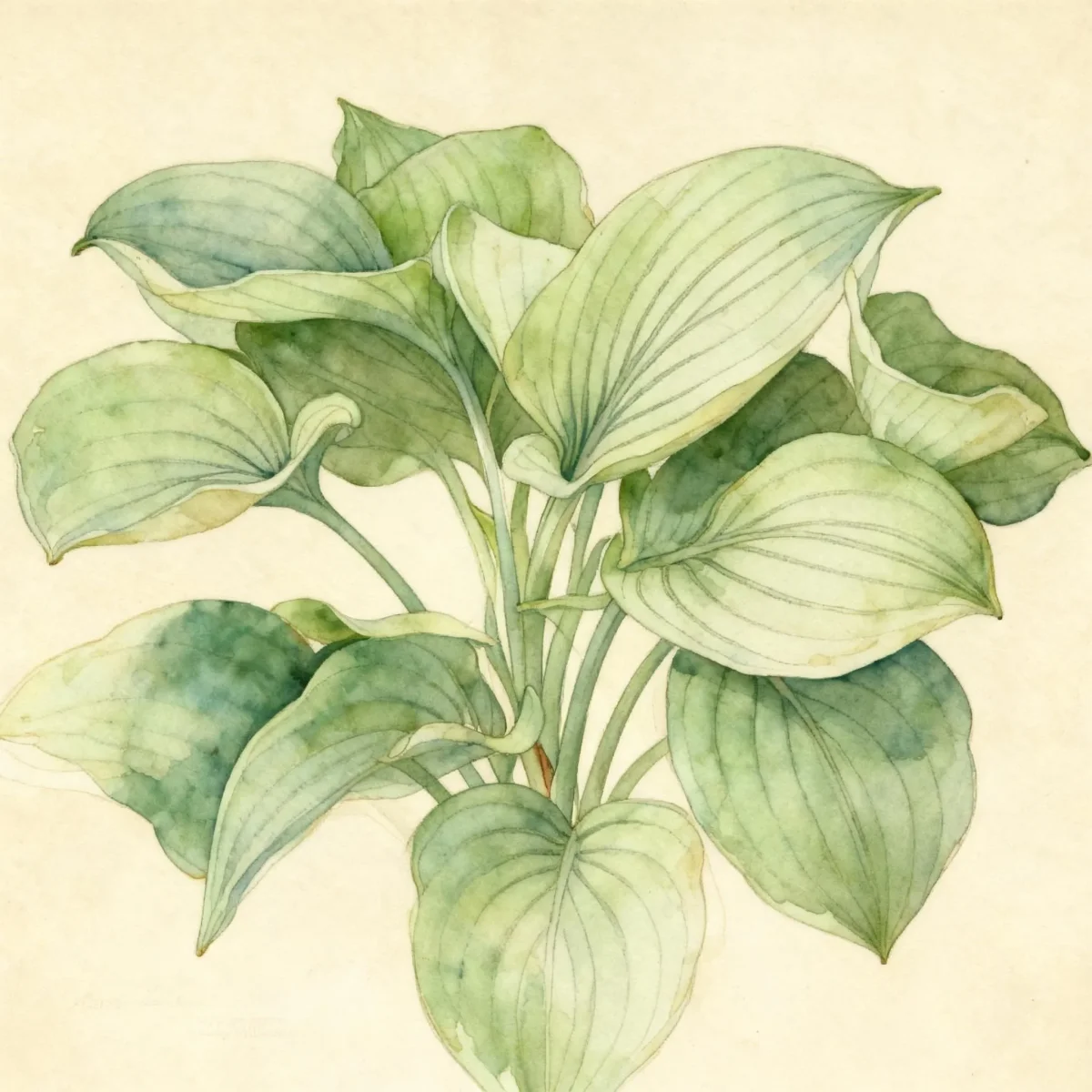
Hosta ‘Komodo Dragon’ is a magnificent specimen renowned for dominating the shade garden with its impressive size and rugged foliage texture. This selection stands out in the world of Hosta due to its large, dramatically mounding habit, creating a substantial focal point even where little else thrives. Gardeners prize this variety for its deep blue-green leaves which possess distinctively wavy margins, proving that foliage focus does not mean sacrificing visual impact.
As an herbaceous perennial, Hosta ‘Komodo Dragon’ provides years of reliable, low-maintenance performance once established in suitable conditions. It is fundamentally a shade plant, thriving where sunlight is dappled or indirect, allowing its substantial leaves to develop fully without scorching. The resulting structure and rich color of Hosta make it an indispensable architectural element in deep shade borders and woodland settings across USDA Zones 3 through 8.
The value of Hosta, in general, lies in its versatility to convert dark corners into lush landscapes, and ‘Komodo Dragon’ delivers this on a grand scale. Its sturdy structure offers a bold contrast to finer-textured shade companions, while the summer emergence of light lavender-purple blooms adds a brief, yet pleasant, floral note to the dense greenery.
Fast Facts
- Plant Family: Asparagaceae
- Plant Type: Herbaceous perennial
- Hardiness Zones: USDA Zones 3-8
- Size at Maturity:
- Height: 2.5-3 ft
- Spread: 6.5-7 ft
- Bloom Time: July to August
- Bloom Description: Light lavender-purple
- Sun Exposure: Part shade to full shade
- Water Needs: Medium
- Maintenance Level: Low
How to Grow
Plant Hosta ‘Komodo Dragon’ and other Hosta varieties in the spring or autumn, ensuring the location offers evenly moist, organically rich, and well-drained soil. While these plants are robust, achieving the full 7-foot spread and deep coloration requires attentive placement, preferably receiving morning sun or dappled light rather than relentless afternoon exposure. Consistent moisture is key; soils should never be allowed to dry out, especially during establishment, though mature plants with thick leaves show some tolerance for dry shade.
Watering should be directed straight to the soil beneath the large leaves to avoid moisture sitting on the foliage, which can sometimes encourage spotting. As Hosta are intrinsically low-maintenance perennials, heavy fertilization is rarely needed, but an annual spring application of compost benefits soil health overall. To maintain vigor, divide plant clumps if they become overcrowded, which is easiest to accomplish in early spring before the new eyes fully unfurl.
When siting, prioritize areas protected from strong winds, as powerful gusts can physically damage the large leaves of Hosta ‘Komodo Dragon’. Since maintenance is low, the primary seasonal task involves cleaning up the dying foliage in late autumn or early spring before new growth appears.
Landscape Uses
Hostas are the undisputed mainstay for crafting beautiful shade gardens. While their flowers are charming, the primary decorative power of Hosta ‘Komodo Dragon’ lies entirely in its massive, architectural foliage, making it incredibly effective as a background plant or as a structured anchor in woodland designs. Its sheer size allows it to define space effectively where vertical elements are lacking.
These bold mounds look spectacular when massed together or planted in deep groups along shady borders, providing a continuous sweep of texture and color. For compelling contrast, pair the dark blue-green leaves of Hosta ‘Komodo Dragon’ with fine-textured, light-colored shade lovers like Japanese Forest Grass (Hakonechloa) or white-flowering Astilbes. Its presence ensures that even the darkest parts of your landscape remain visually compelling throughout the growing season.
Standout Features
Flower Qualities
- Showy
Noteworthy Characteristics
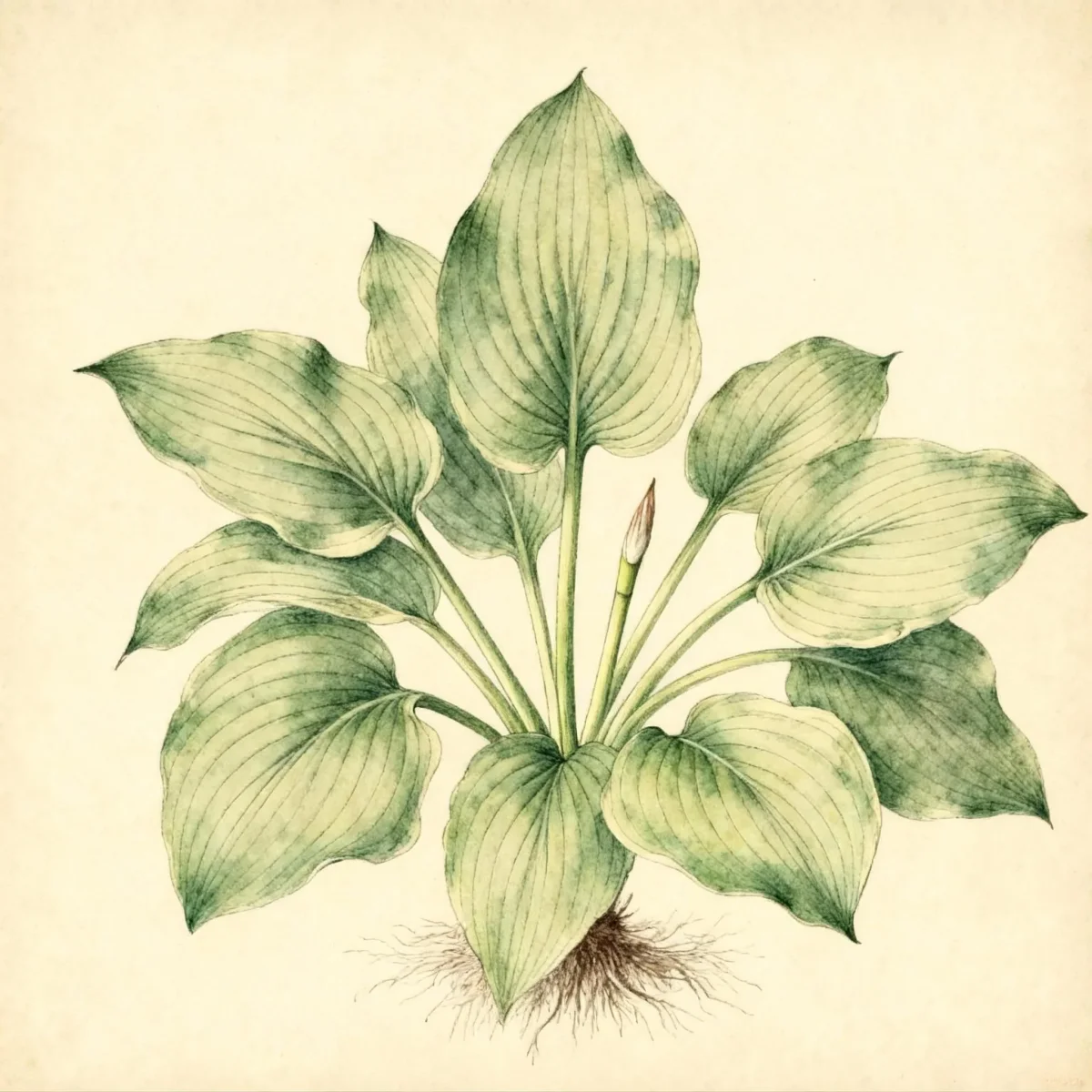
Hosta is a genus of about 70 species of shade-loving, rhizomatous, clump-forming, herbaceous perennials which are native to open woodlands, woodland margins and glades in Japan, Korea, China and eastern Russia. Hostas are primarily grown for their ornamental foliage. Stalked, conspicuously-veined, often dense, basal leaves in a variety of shapes, sizes, colors and textures rise up from a central rhizomatous crown to form a rounded to spreading mound of foliage. ‘Komodo Dragon’ is a large, mound-forming hosta selection that can reach up to 3’ tall with a 7’ spread; its leaves are dark blue-green in color with wavy margins and can reach up to 15” long. The genus name Hosta was reinstated in 1905 and honors Austrian botanist Nicholas Thomas Host.
Tolerances
- Heavy Shade
- Black Walnut
Potential Problems
The primary concern for any Hosta gardener involves controlling slugs and snails, which are highly attracted to the succulent foliage of plants like Hosta ‘Komodo Dragon’. Chewing results in jagged holes that can quickly deface leaves; proactive management using baits or manual removal is necessary to prevent serious damage.
Watch for foliar nematodes, which cause unattractive interveinal browning on the leaves, though less common issues include leaf spots and crown rot, usually stemming from overly saturated soil. If plants exhibit signs of viruses like HVX, they must be removed immediately to prevent spreading infection to other susceptible plants in the Hosta collection. Deer and rabbits often find this foliage delicious, so protection may be required in areas with high wildlife pressure.
Frequently Asked Questions
What hardiness zones is Hosta ‘Komodo Dragon’ suitable for?
Hosta ‘Komodo Dragon’ is generally hardy and suitable for cultivation in USDA Zones 3 through 8.
How large does Hosta ‘Komodo Dragon’ grow?
This selection matures into a very large mound, often reaching 2.5 to 3 feet in height with a substantial spread between 6.5 and 7 feet wide.
What sun exposure does Hosta ‘Komodo Dragon’ need?
This Hosta variety needs partial shade to full shade conditions; its quality and size are best maintained with consistent moisture in dappled light.
When does Hosta ‘Komodo Dragon’ bloom?
The blooms typically appear from July through August, presenting as light lavender-purple, funnel-shaped flowers atop tall scapes.
Conclusion
Hosta ‘Komodo Dragon’ is an exceptional choice for gardeners seeking dramatic texture and scale in deeply shaded areas without requiring intensive upkeep. Its formidable size and rich, blue-green foliage solidify its status as a heavyweight champion in the perennial garden. Before planting, confirm your soil consistently meets the medium water needs and select a spot protected from harsh winds to best showcase the magnificent leaves of this Hosta cultivar.
Companion Planting in the Shade
When designing a woodland border around your Hosta ‘Komodo Dragon’, focus on plants that thrive under similar conditions—part shade to full shade with medium water requirements. Fine-textured ferns, such as Japanese Painted Fern (Athyrium niponicum), offer a delicate counterpoint to the broad leaves of the Hosta. Consider softer perennials like Bleeding Heart (Dicentra spectabilis) or Brunnera (Brunnera macrophylla) for spring interest, ensuring that their foliage fades nicely before the Hosta reaches its peak size in mid-summer. Avoid planting aggressive spreaders near this large Hosta, as competition for moisture and nutrients can reduce its impressive mound structure.
Seasonal Care Calendar
Early spring is critical for preparing your Hosta garden for the season. As soon as the soil is workable, clean up any old leaf debris left from the previous autumn to reduce hiding places for slugs and snails. This time is also the ideal moment to divide overcrowded clumps of Hosta ‘Komodo Dragon’ if necessary. Late spring and early summer require diligent watching for emerging pests, initiating preventative measures against slugs when new shoots first appear. Throughout the summer, ensure consistent, deep watering during dry spells to maintain leaf quality. In autumn, allow the foliage to die back naturally before cutting down the spent stalks, minimizing disturbance to the plant crown before winter dormancy begins.