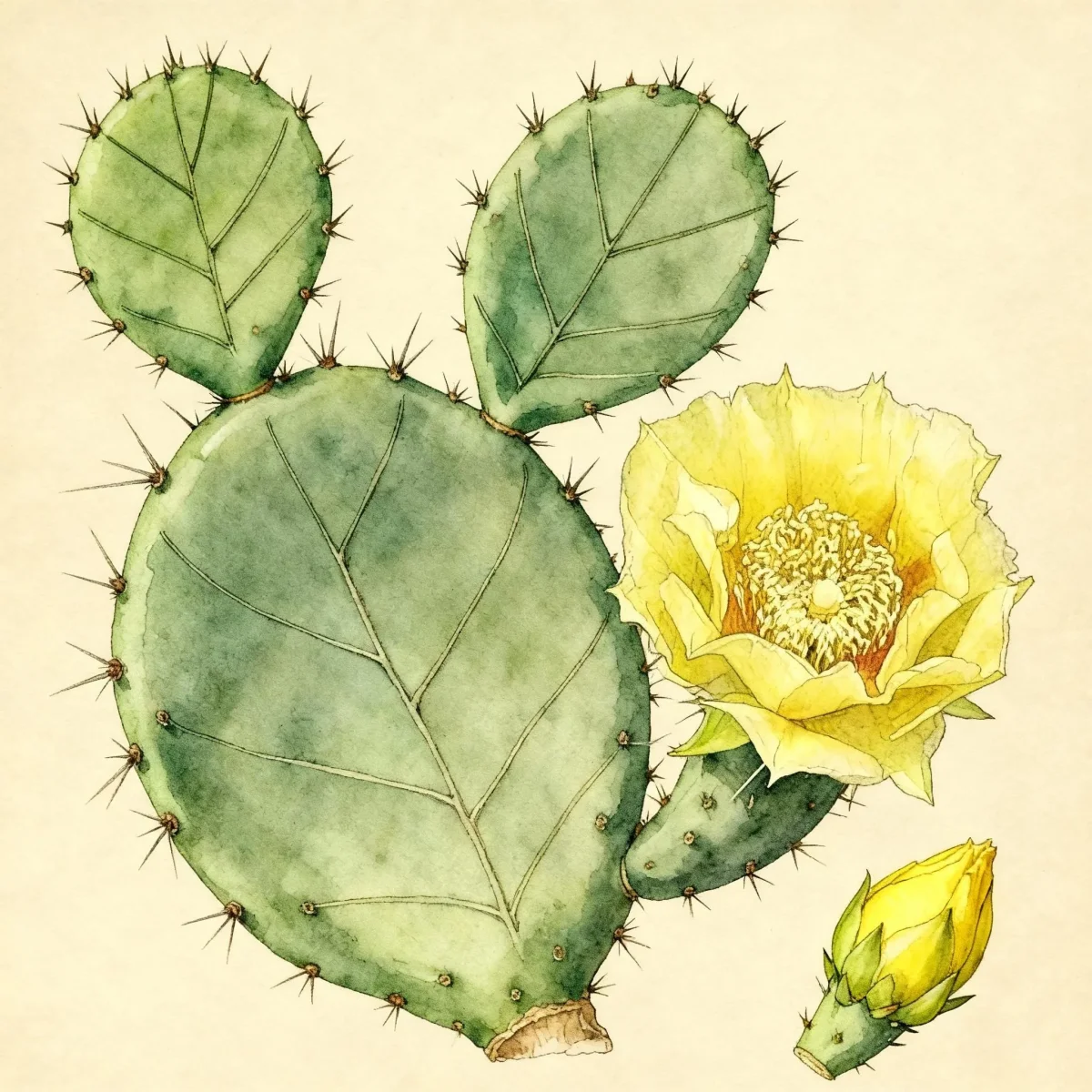
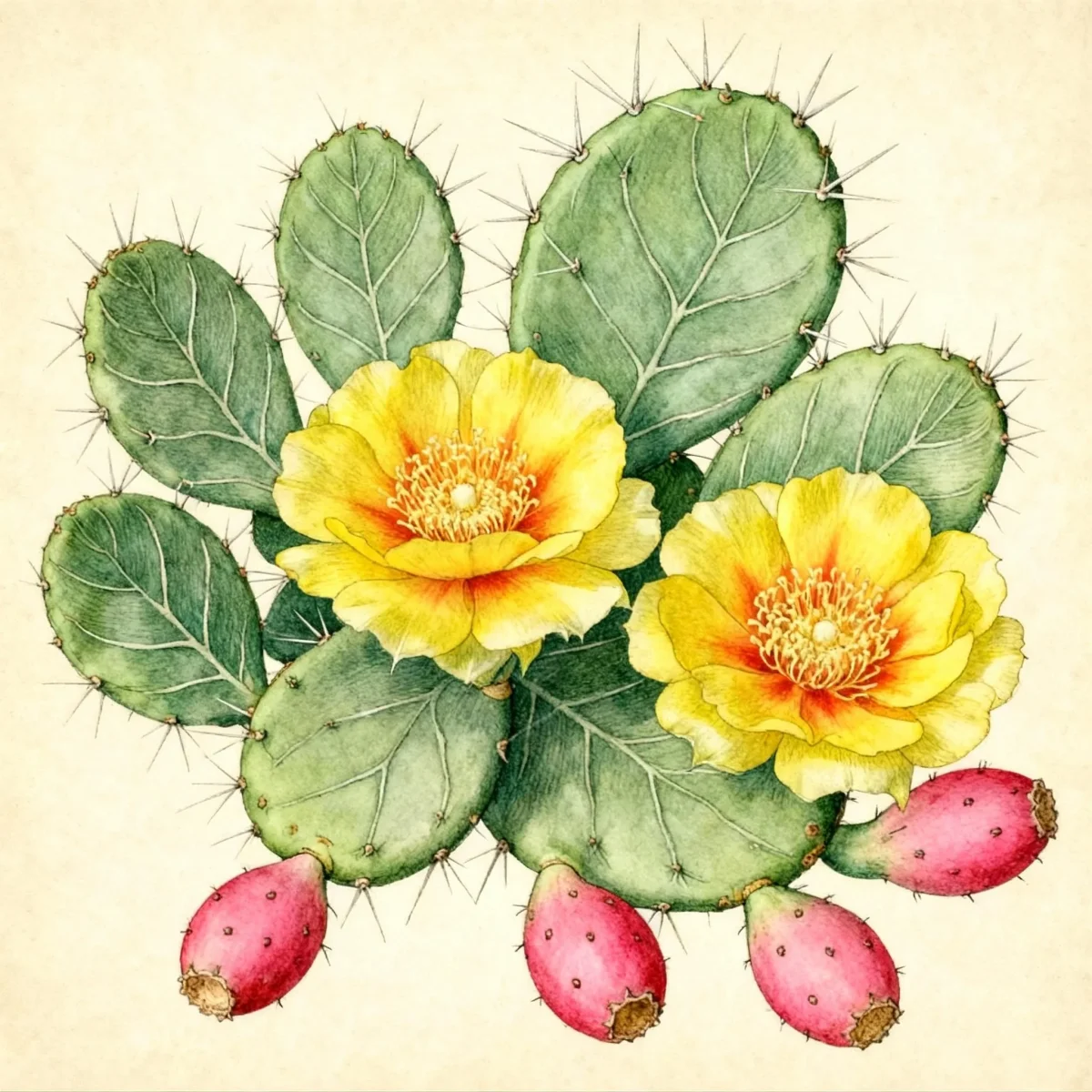
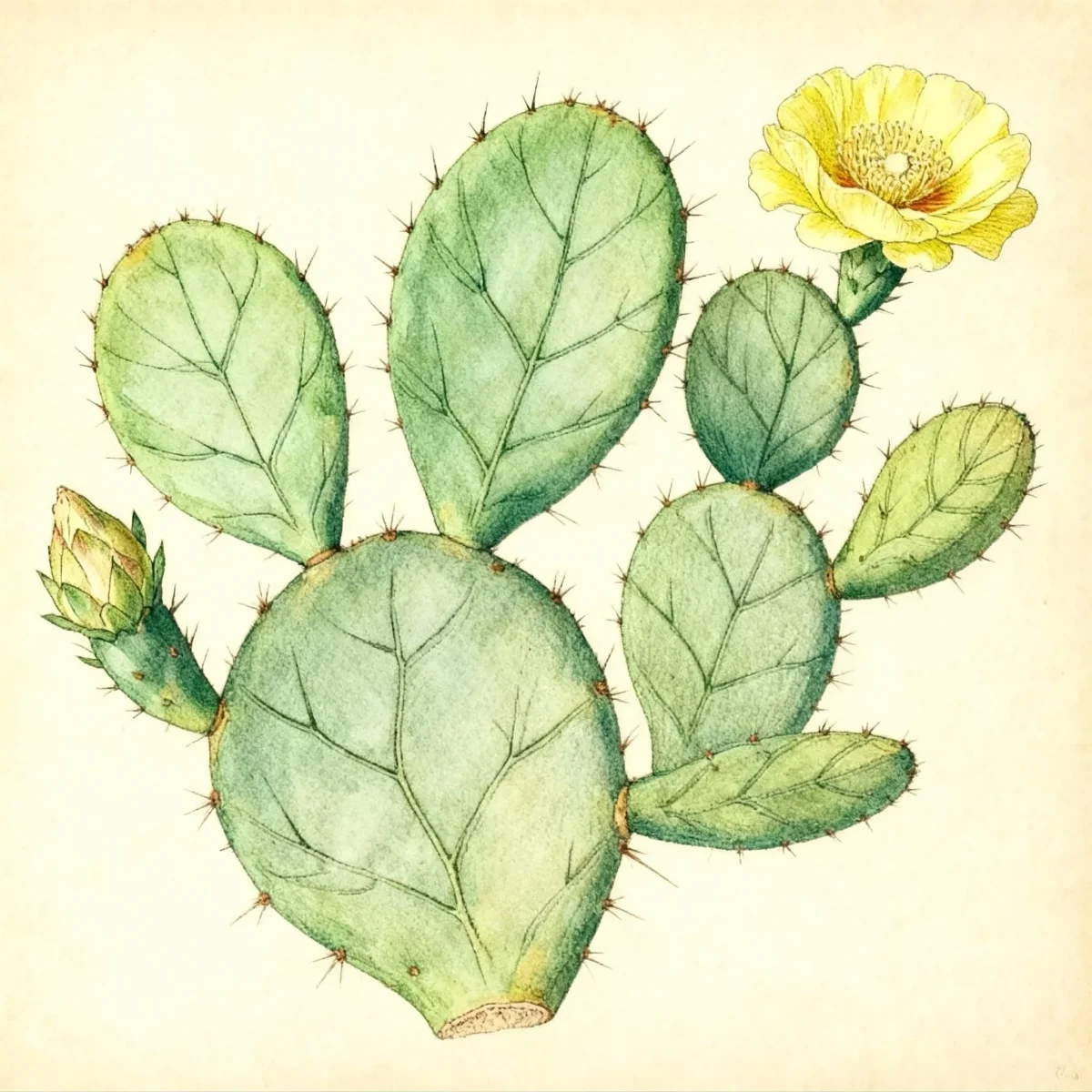
Prickly-pear (Opuntia aurea 'Coombe's Winter Glow')
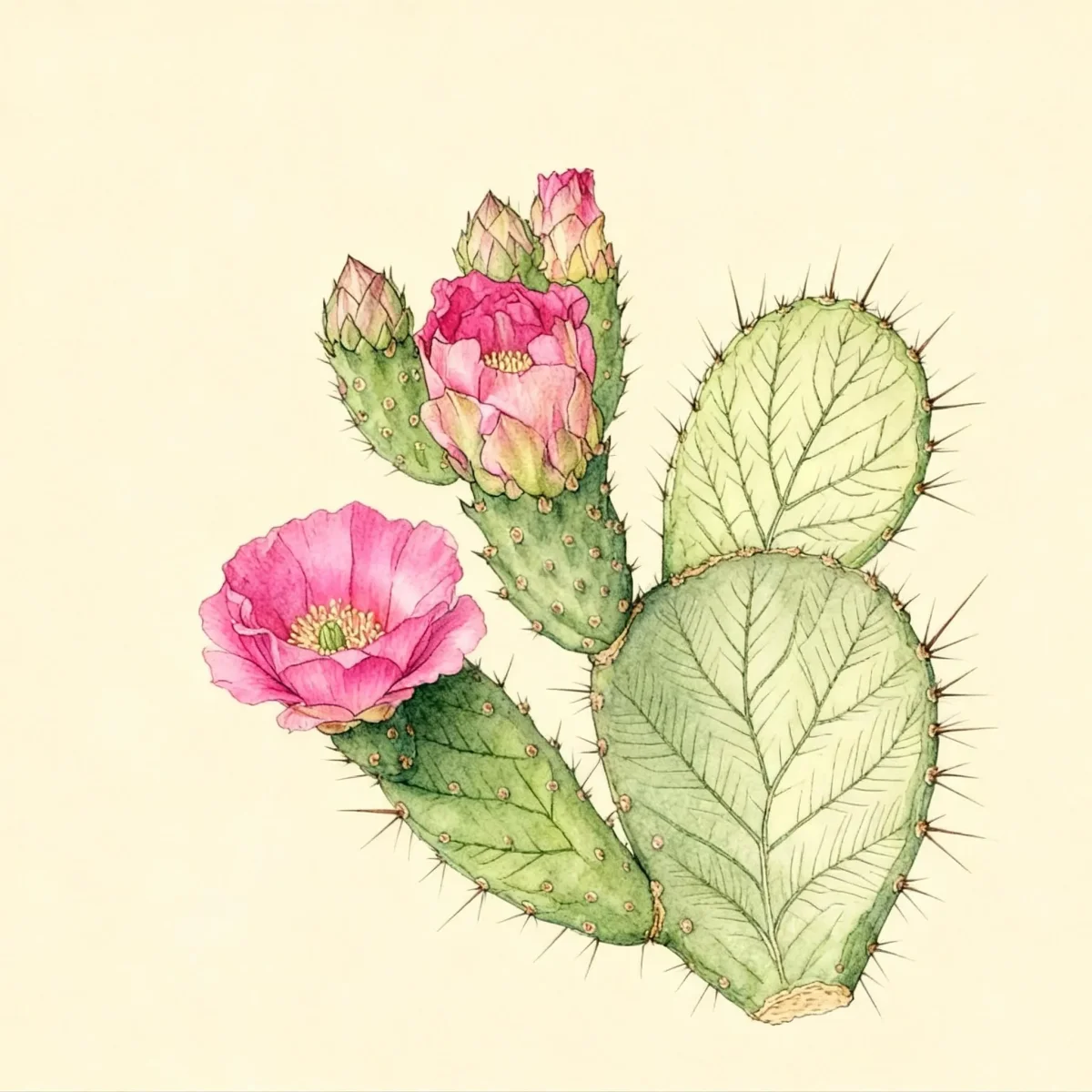
Opuntia aurea 'Coombe's Winter Glow' is a low-maintenance Prickly-pear known for its nearly spineless pads and brilliant magenta blooms.
Scroll down to discover growing tips, care requirements, companion plants, and more
Complete Plant Information
Overview
Opuntia aurea ‘Coombe’s Winter Glow’ is a standout herbaceous perennial valued for its unique texture and striking seasonal color contrast. This specific cultivar of Prickly-pear offers gardeners a nearly spineless planting option, distinguishing it from many of its spiny relatives. It brings rugged, Southwestern architectural appeal to even cooler climate xeriscapes.
This low-growing cactus is highly adaptable, thriving in conditions that stress other garden plants. Its thick, flattened, blue-green pads provide year-round interest, famously deepening to a dark purple-grey hue during winter months, creating the “Winter Glow” effect before flushing green again in spring. The bright, magenta pink flowers that appear late in spring ensure Opuntia aurea ‘Coombe’s Winter Glow’ is a vibrant focal point.
Gardeners seeking extremely low-maintenance, drought-tolerant specimens will appreciate this Prickly-pear. It excels in rock gardens and dry borders, requiring minimal intervention once established in appropriate, sunny, well-draining environments.
Fast Facts
- Plant Family: Cactaceae
- Plant Type: Herbaceous perennial
- Hardiness Zones: USDA Zones 5-9
- Size at Maturity:
- Height: 0.75-2 ft
- Spread: 2-4 ft
- Bloom Time: May to June
- Bloom Description: Magenta
- Sun Exposure: Full sun
- Water Needs: Dry
- Maintenance Level: Low
How to Grow
Planting this hardy Prickly-pear should occur in spring after the danger of hard frost has passed, allowing it maximum time to establish roots before winter dormancy. Location is critical: choose a spot that receives full, uninterrupted sun exposure throughout the day. Opuntia aurea ‘Coombe’s Winter Glow’ demands excellent drainage; plant it in dry, sandy, or gravelly soils. It performs exceptionally well in shallow, rocky soils where other plants fail.
Ongoing care for Opuntia aurea ‘Coombe’s Winter Glow’ is minimal. Overwatering is the greatest danger, as excessive moisture or poor drainage invites various rot issues, particularly in winter. Once established after the first season, this Prickly-pear rarely needs supplemental water, relying on natural rainfall in most climates within Zones 5 to 9. Fertilization is generally unnecessary; rich soil promotes weak growth not suited to its arid nature.
Seasonal maintenance focuses on siting and observation rather than active intervention. In spring, clear away any debris that may trap moisture around the base of the pads. Pruning is rarely required, but errant or damaged pads can be gently removed, ideally wearing heavy gloves. Treat this species as a permanent, tough installation that requires little attention beyond ensuring its site stays dry and sunny.
Landscape Uses
This Prickly-pear cultivar is ideally suited for architectural applications in dry landscapes. Its low, sprawling habit makes it superb for defining the edges of rock gardens or creating textured groundcover in desert garden designs. Opuntia aurea ‘Coombe’s Winter Glow’ is a cornerstone species for xeriscaping, offering sculptural form where lawns are unsustainable.
Consider using this variety along pathways or in raised beds where drainage can be unequivocally controlled. It pairs well aesthetically with low-growing, spiky companions like certain Sedums or Penstemons that share similar arid requirements. When placed near structures, the pads turn deep purple-grey, offering a beautiful contrast against stone or light-colored stucco during the winter months.
Standout Features
Flower Qualities
- Showy
Noteworthy Characteristics
Opuntia aurea, commonly called prickly-pear, golden prickly-pear or creeping beavertail, can be found growing in the sandy pinyon-juniper woodlands of southern Utah and northern Arizona in the southwestern United States at relatively high elevations (1500-1800’). This is a low-growing cactus with irregular, sprawling branches and thick, flattened, oval-shaped, blue-green pads. ‘Coombe’s Winter Glow’ is an essentially spineless cultivar with bright, magenta pink flowers, offering superior aesthetic appeal compared to traditional varieties whose blooms are bright yellow.
Tolerances
- Drought
- Dry Soil
- Shallow-Rocky Soil
Potential Problems
This Prickly-pear variety exhibits robust resistance; major pest or disease issues are uncommon when planted correctly. The most significant threat comes from excessively wet conditions. Various rots may occur, particularly if plants are grown in standard garden soils that retain too much moisture or if water pools around the crown during winter or extended rain periods. Prevent problems by ensuring the soil is gritty, sandy, and drains instantaneously; avoid planting in low-lying areas or heavy clay beds.
Frequently Asked Questions
What hardiness zones is Prickly-pear suitable for?
Opuntia aurea ‘Coombe’s Winter Glow’ is notably hardy, thriving across USDA Zones 5 through 9, making it suitable for a wide range of climates.
How large does Prickly-pear grow?
This tough landscape plant typically reaches a mature height between 0.75 and 2 feet tall, spreading outward from 2 to 4 feet wide, forming a low, dense mat.
What sun exposure does Opuntia aurea ‘Coombe’s Winter Glow’ need?
This cactus requires full sun exposure to maintain its compact form, vibrant pad color, and prolific magenta blooms.
When does Prickly-pear bloom?
The flowering period for Opuntia aurea ‘Coombe’s Winter Glow’ is generally from May into June, producing showy magenta flowers.
Conclusion
The Opuntia aurea ‘Coombe’s Winter Glow’ offers exceptional value through its extreme drought tolerance, low maintenance demands, and unique winter coloration. As a refined cultivar of Prickly-pear, it delivers architectural interest and late spring color without excessive spines. Before planting, confirm your site offers full sun and, most importantly, superior drainage to ensure its success in your garden.
Companion Planting
Selecting appropriate neighbors helps maintain the dry microclimate this cactus prefers. Pair Opuntia aurea ‘Coombe’s Winter Glow’ with other desert residents that demand zero supplemental water once established. Other Cactaceae or hardy succulents like Sempervivum or low-growing Agave varieties work well visually and ecologically. Avoid moisture-loving perennials near the base of the Prickly-pear to prevent fungal issues from spreading.
Propagation Tips
Propagation of this Opuntia cultivar is straightforward, usually achieved through stem (pad) cuttings. In spring or early summer, carefully twist or cut a healthy pad from the main body, ensuring the break is clean. Allow the cut end to dry and callus over in a shaded, dry location for several days to a week; this prevents rot when planting. Once callused, place the cutting vertically, base down, into a very gritty, lean potting mix or directly into the garden site prepared with sand and gravel. Keep the planting area dry until new roots form naturally.