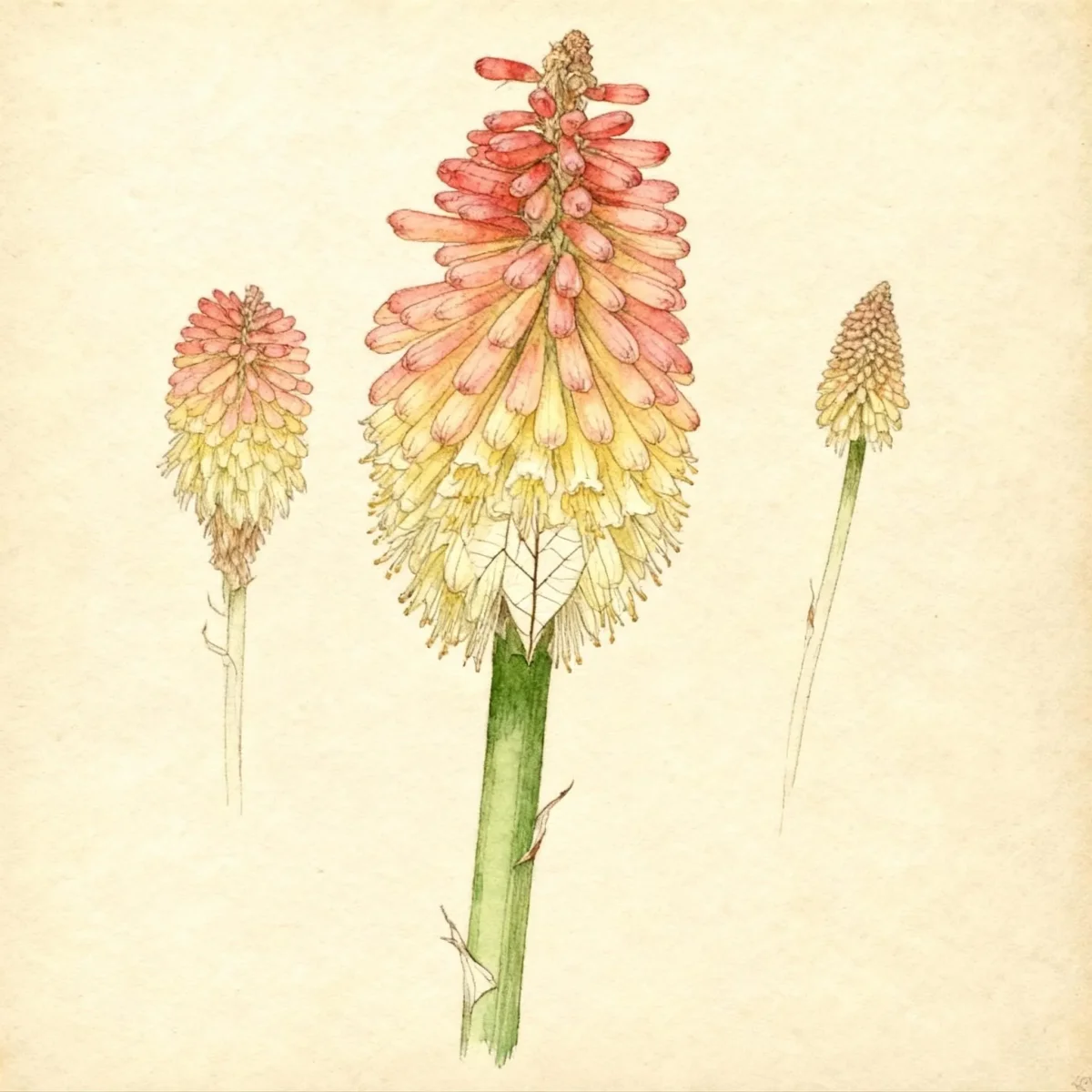
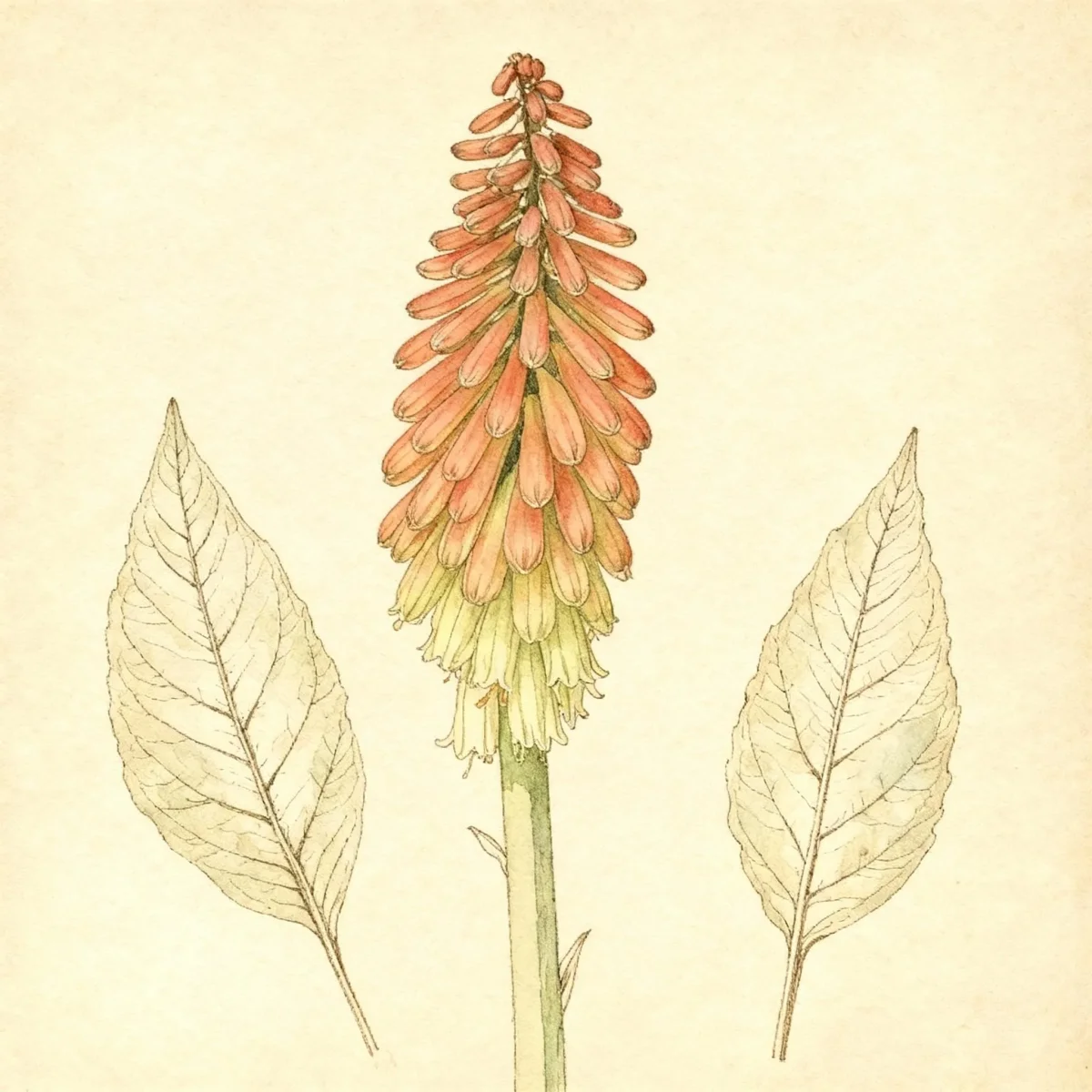
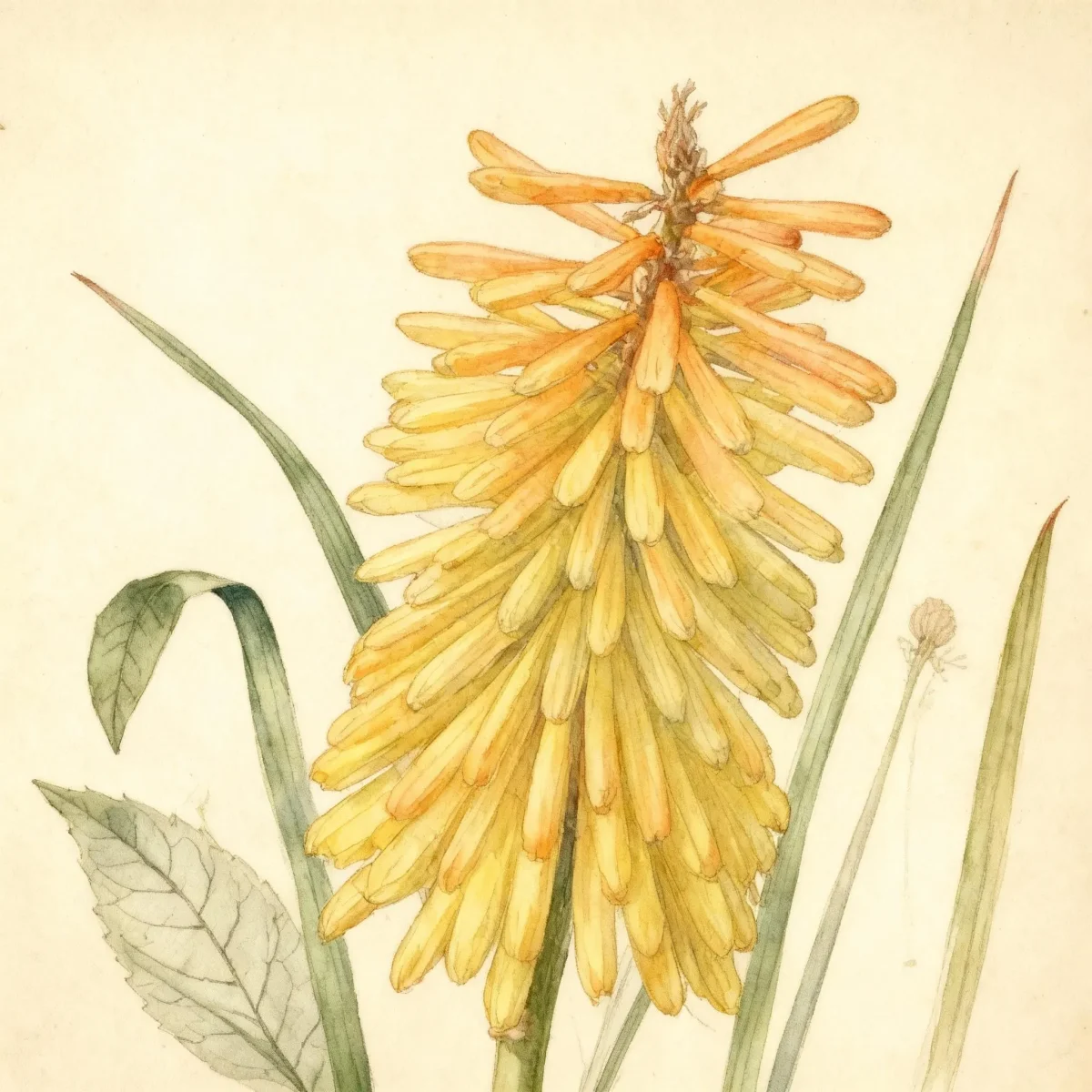
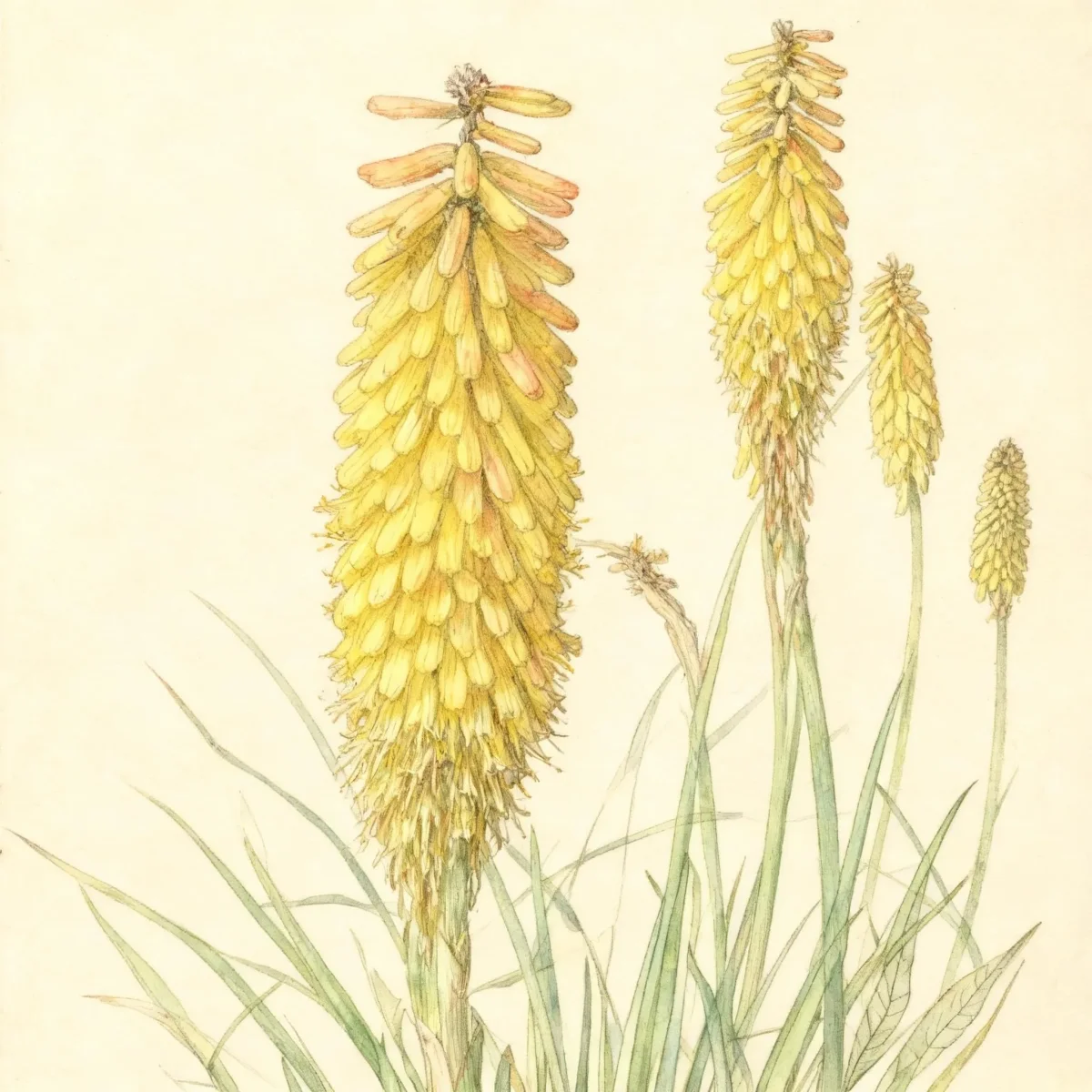
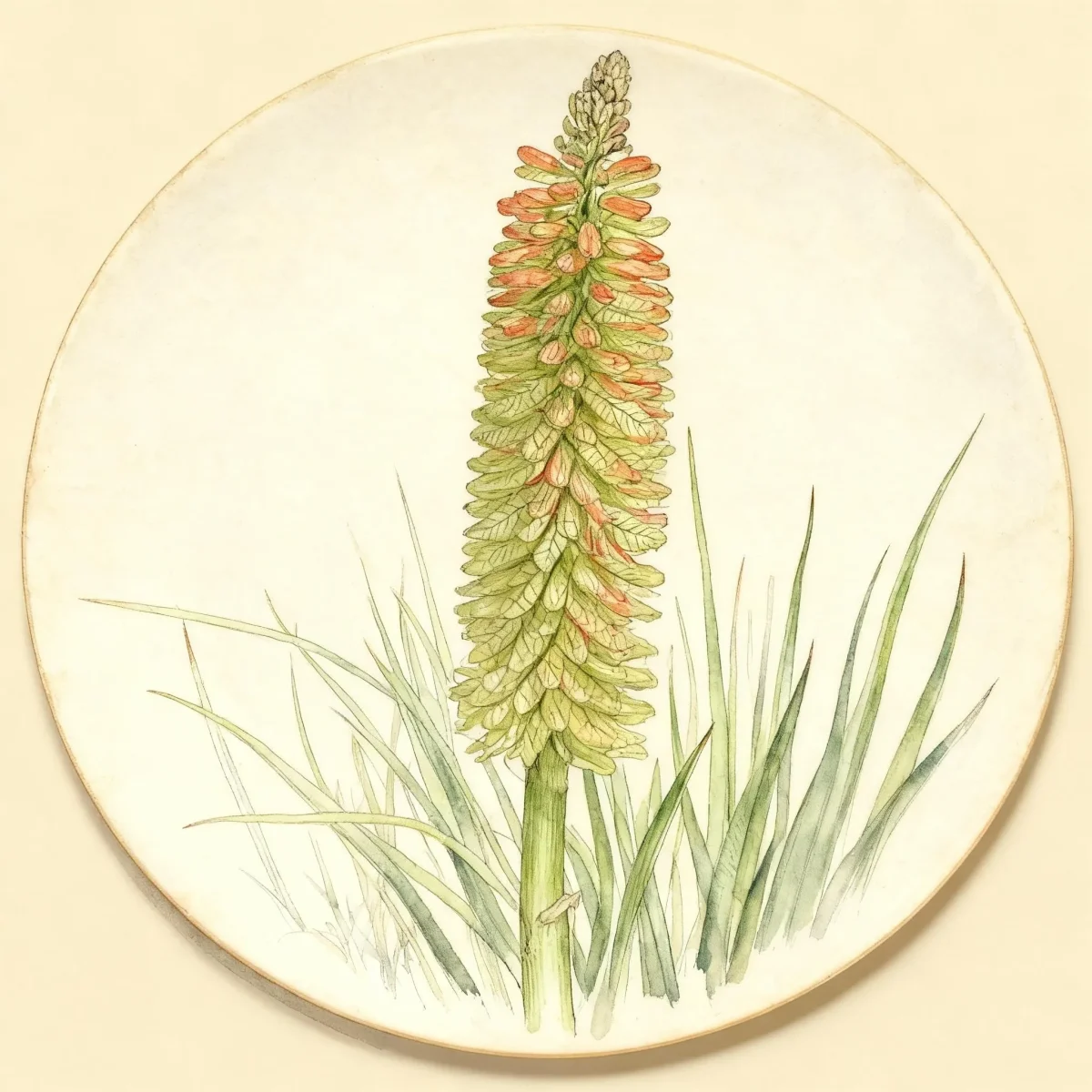
Red-hot poker (Kniphofia 'High Roller')
Kniphofia 'High Roller' offers striking coral-red spikes from July to September, thriving in full sun as a robust Red-hot poker.
Scroll down to discover growing tips, care requirements, companion plants, and more
Complete Plant Information
Overview
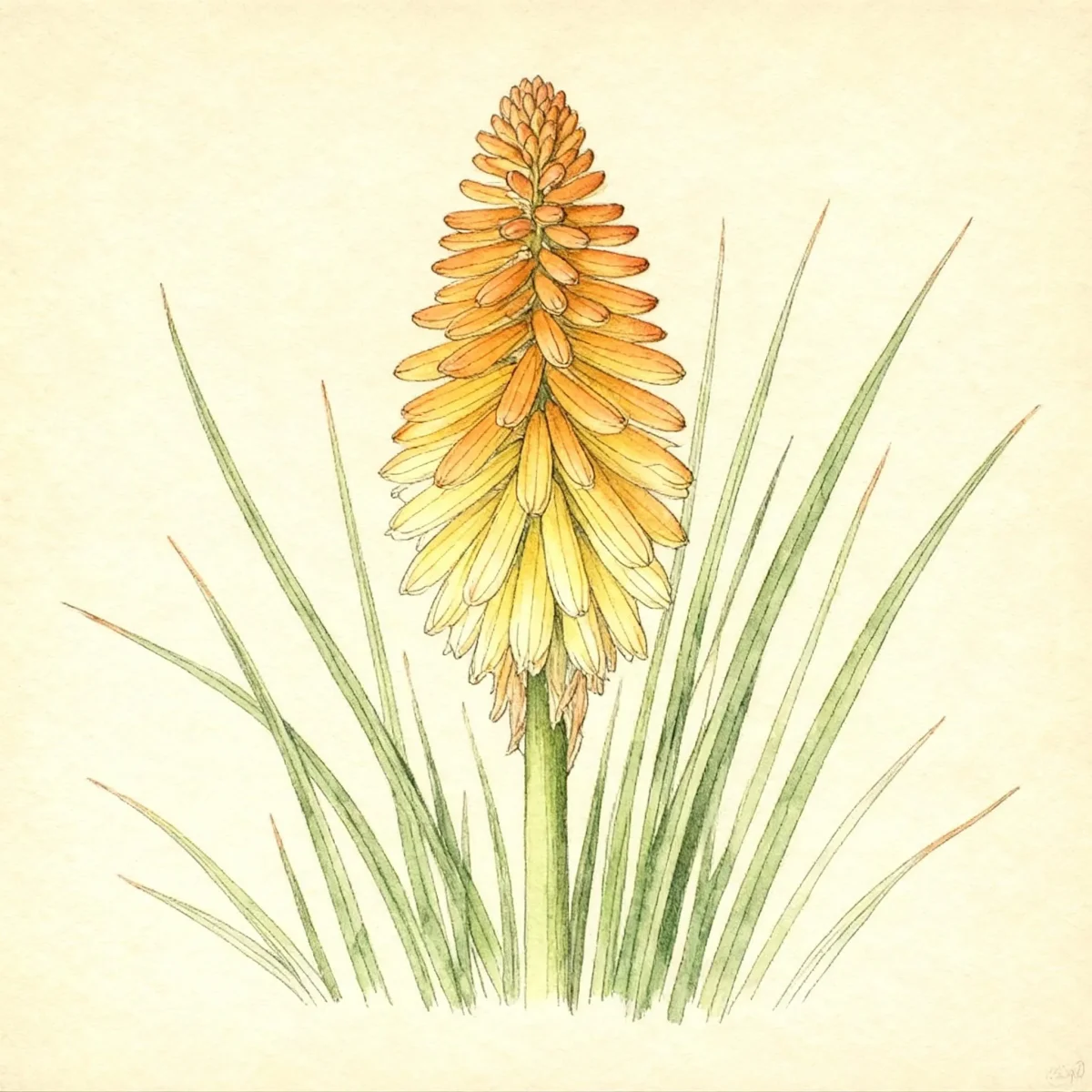
Kniphofia ‘High Roller’, commonly known as Red-hot poker, is valued for its dramatic, upright stature and vibrant bloom display, providing essential vertical accents in the garden. This herbaceous perennial sends up striking spikes featuring tubular florets that transition from coral to deep red, making it a signature summer performer. Adapted well to various conditions, the Kniphofia ‘High Roller’ variety is reliable, robust, and offers long-lasting color that attracts beneficial wildlife.
This cultivar generally matures between 3 and 4 feet tall, forming dense clumps of linear, strap-shaped leaves from which the flower scapes emerge. To achieve the best performance from your Red-hot poker, ensure it receives ample direct sunlight, which encourages prolific flowering and helps maintain plant vigor. While relatively tough once established, attention to drainage is crucial for the long-term health of this African native import.
Gardeners appreciate the Kniphofia ‘High Roller’ not only for its visual impact but also for its relatively low demands regarding intense pest or disease management. Its torch-like flowers create striking contrasts against looser, softer perennials in a mixed border. Planting Kniphofia ‘High Roller’ ensures continuous fiery color from mid-summer well into early autumn.
Fast Facts
- Plant Family: Asphodelaceae
- Plant Type: Herbaceous perennial
- Hardiness Zones: USDA Zones 5-9
- Size at Maturity:
- Height: 3-4 ft
- Spread: 2-2.5 ft
- Bloom Time: July to September
- Bloom Description: Coral to red
- Sun Exposure: Full sun
- Water Needs: Medium
- Maintenance Level: Medium
How to Grow
Planting Red-hot poker should ideally occur in humus-rich soil, ensuring it is evenly moist but supremely well-drained. Kniphofia ‘High Roller’ thrives in full sun but can tolerate light afternoon shade in very hot summer climates. Sharp soil drainage is non-negotiable, as these plants are intolerant of wet, heavy soils, which can quickly lead to fatal root rot, especially during winter dormancy.
Water established plants according to medium needs, focusing on consistent moisture during the active growing season rather than frequent deluge. Deadheading spent flower spikes promptly encourages subsequent bloom cycles throughout the summer until early September. Do not fertilize heavily; rich soil conditions can sometimes favor foliage growth over flowering.
Preparing Kniphofia ‘High Roller’ for winter is important, particularly in the cooler edges of its range (Zones 5 and 6). In late fall, tie the strap-like leaves together to create a protective canopy over the crown, preventing freezing water accumulation. Applying a root mulch in winter also offers extra insulation. In early spring, cut back the dormant foliage to about 3 inches above the ground before new growth emerges.
Established clumps of Red-hot poker generally prefer to be left undisturbed. If division is necessary due to overcrowding, focus on carefully severing offsets from the periphery to minimize disturbance to the main rhizome mass.
Landscape Uses
Kniphofia ‘High Roller’ excels as a strong architectural element within landscape design due to its upright habit and dramatic flower spikes. It functions perfectly as an outstanding vertical accent, drawing the eye upward in a space that might otherwise feel flat. Use individual plants as bold specimens near entrances or paths where their structure can be fully appreciated during the bloom season.
For maximum impact, group small clusters of Kniphofia ‘High Roller’ within a mixed perennial border. They pair beautifully with plants that offer contrasting foliage texture or form, such as silvery artemisias or broad-leaved hostas, positioned slightly in front. The fiery coral-red blooms of the Red-hot poker supply necessary heat and contrast against cool blue or purple flowering companions like Russian Sage or Nepeta.
Consider planting Kniphofia in contemporary settings where clean lines are desired, or use them to punctuate the edges of a sunny mixed border that requires bright, late-summer color saturation. Their tolerance for drier conditions also makes them suitable for inclusion in transitional zones near xeric or drought-tolerant plantings once fully established.
Standout Features
Flower Qualities
- Showy
Noteworthy Characteristics
Kniphofia is a genus known for its impressive, clump-forming rhizomatous perennials, easily recognized by their bottlebrush-like flower spikes—hence the common names Red-hot poker and torch lily. The species are primarily native to southern and tropical Africa, though hybrids like Kniphofia ‘High Roller’ have expanded their appeal dramatically. Expect dense, terminal racemes of drooping, tubular flowers that bloom sequentially from the base upwards, providing extended visual interest. This specific compact selection, ‘High Roller’, features brilliant coral-red florets and is noted for attracting hummingbirds and butterflies.
Tolerances
- Rabbit
- Drought
Potential Problems
This plant generally exhibits strong disease and insect resistance, making it a low-drama addition to the garden when properly sited. The single most significant threat to Kniphofia ‘High Roller’ is root rot, which occurs if soil drainage is inadequate, especially during winter months when the plant is less actively growing. Ensure your planting site avoids low spots where water pools after rain or snowmelt.
Thrips can occasionally be an issue in certain regions, sometimes causing stippling or discoloration on the emerging flower buds or foliage. Regular inspection, especially during hot, dry spells, can help catch infestations early. Deer and rabbits typically leave this tough Red-hot poker alone, adding to its appeal in wildlife-friendly gardens.
Frequently Asked Questions
What hardiness zones is Kniphofia ‘High Roller’ suitable for?
This Red-hot poker variety is hardy across USDA Zones 5 through 9, offering reliable perennial performance across wide climatic variations.
How large does Kniphofia ‘High Roller’ grow?
Mature clumps of Kniphofia ‘High Roller’ generally achieve heights between 3 and 4 feet tall, with a consistent spread of about 2 to 2.5 feet wide.
When does Red-hot poker bloom?
The striking bloom time for Kniphofia ‘High Roller’ spans from July through September, offering clear, late-season color described as coral to red.
What sun exposure does Kniphofia ‘High Roller’ need?
This plant performs best and flowers most profusely when situated in full sun locations, although it can handle some light afternoon shade in extremely hot summer climates.
Conclusion
The Kniphofia ‘High Roller’ is an indispensable perennial for gardeners seeking reliable, intense vertical color spanning the mid-to-late summer season. Its architectural form and firework-like blooms define the striking appearance of the Red-hot poker genus. Before planting, confirm your garden site offers sharp drainage and full sun exposure to ensure this fantastic cultivar thrives for years to come.
Companion Planting and Design
Selecting appropriate companions helps the bold structure of Kniphofia ‘High Roller’ shine without being overwhelmed. Plants with fine, airy textures work beautifully against the broad, strap-like leaves of the Red-hot poker. Consider pairing it with ornamental grasses like Calamagrostis ‘Karl Foerster’ or softer perennials such as Salvia nemorosa or Perovskia atriplicifolia (Russian Sage). These companions offer textural contrast while sharing a similar love for hot, sunny conditions and well-drained soils.
Integrating Kniphofia ‘High Roller’ into perennial borders serves to break up horizontal lines, providing necessary focal points. Use them judiciously as recurring vertical anchors rather than planting them densely. In contemporary landscapes, their linear, architectural forms lend themselves well to groupings contrasted against low-growing groundcovers or modern hardscaping elements like gravel beds, where their color really pops against neutral backgrounds.
Wildlife Benefits
The distinctive, tubular flowers of the Red-hot poker are perfectly shaped for hummingbirds, which hover to access the nectar held deep within the florets. This makes Kniphofia ‘High Roller’ an excellent plant for attracting and supporting vital pollinators throughout the late summer months when many spring-blooming options have faded.
Beyond hummingbirds, the dense flower spikes attract various butterflies seeking high-quality nectar sources. By incorporating these vibrant, dependable bloomers into your garden design, you are actively supporting local insect populations during the peak heat of the season. The plant’s overall low maintenance also means fewer chemical interventions that might harm the beneficial insects it attracts.