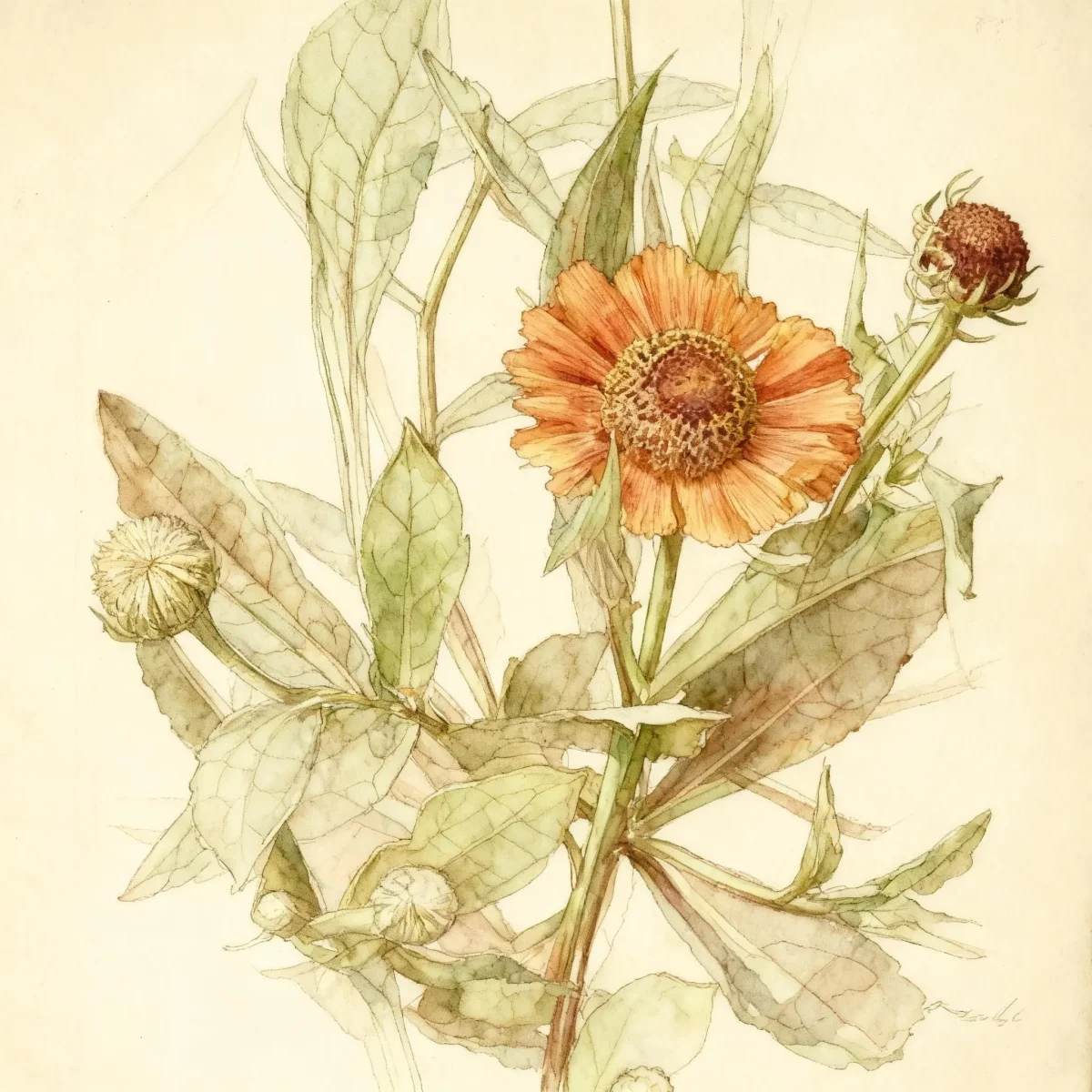
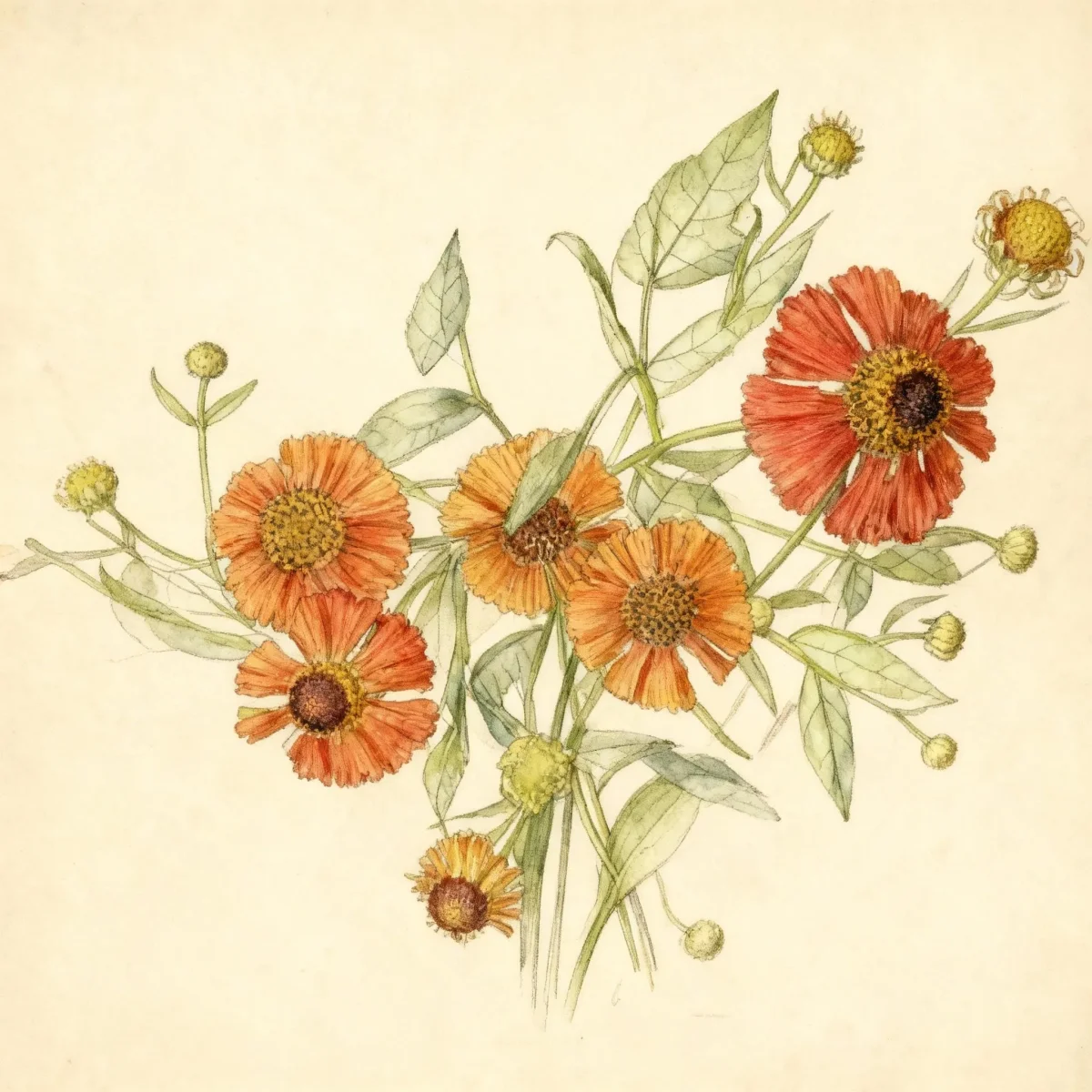
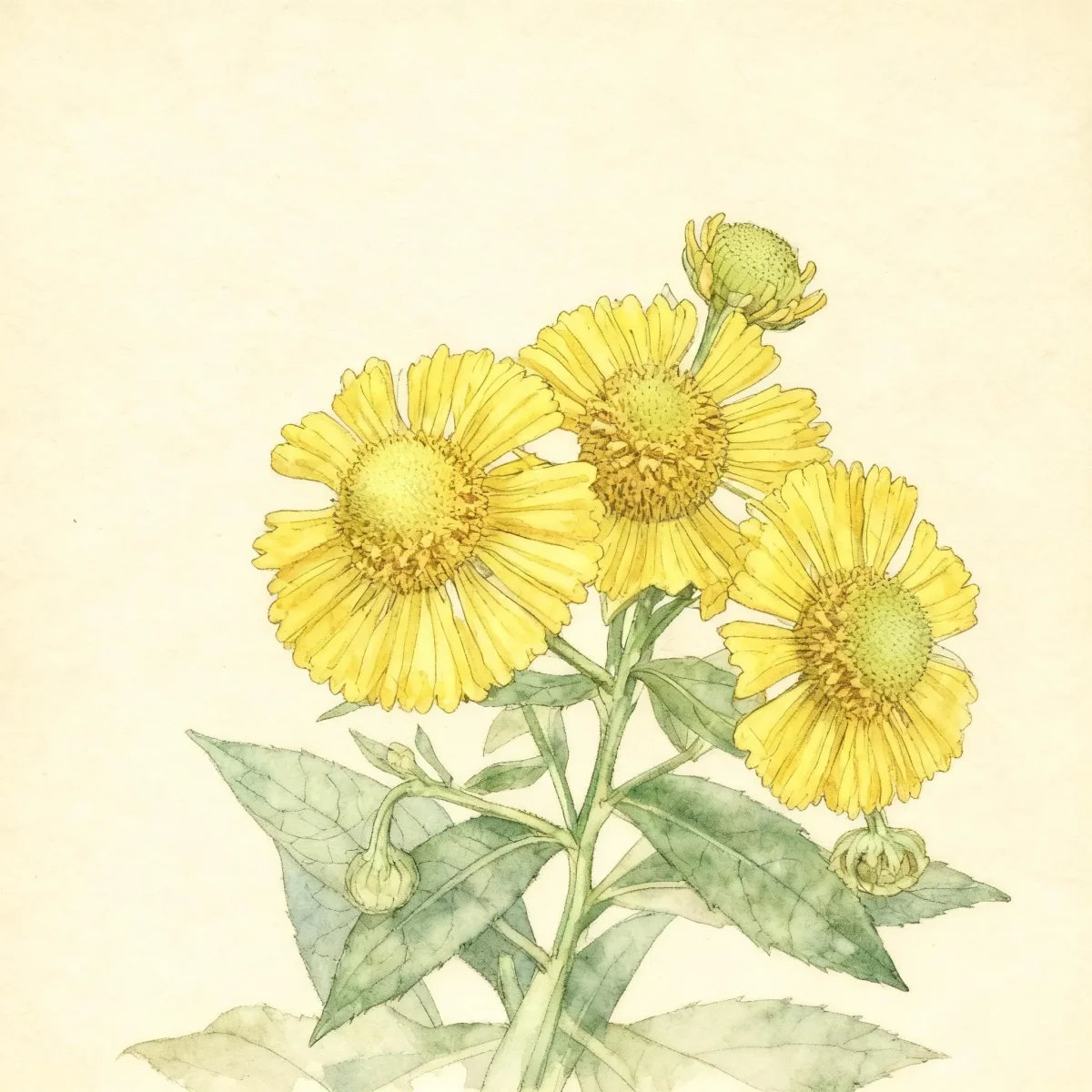
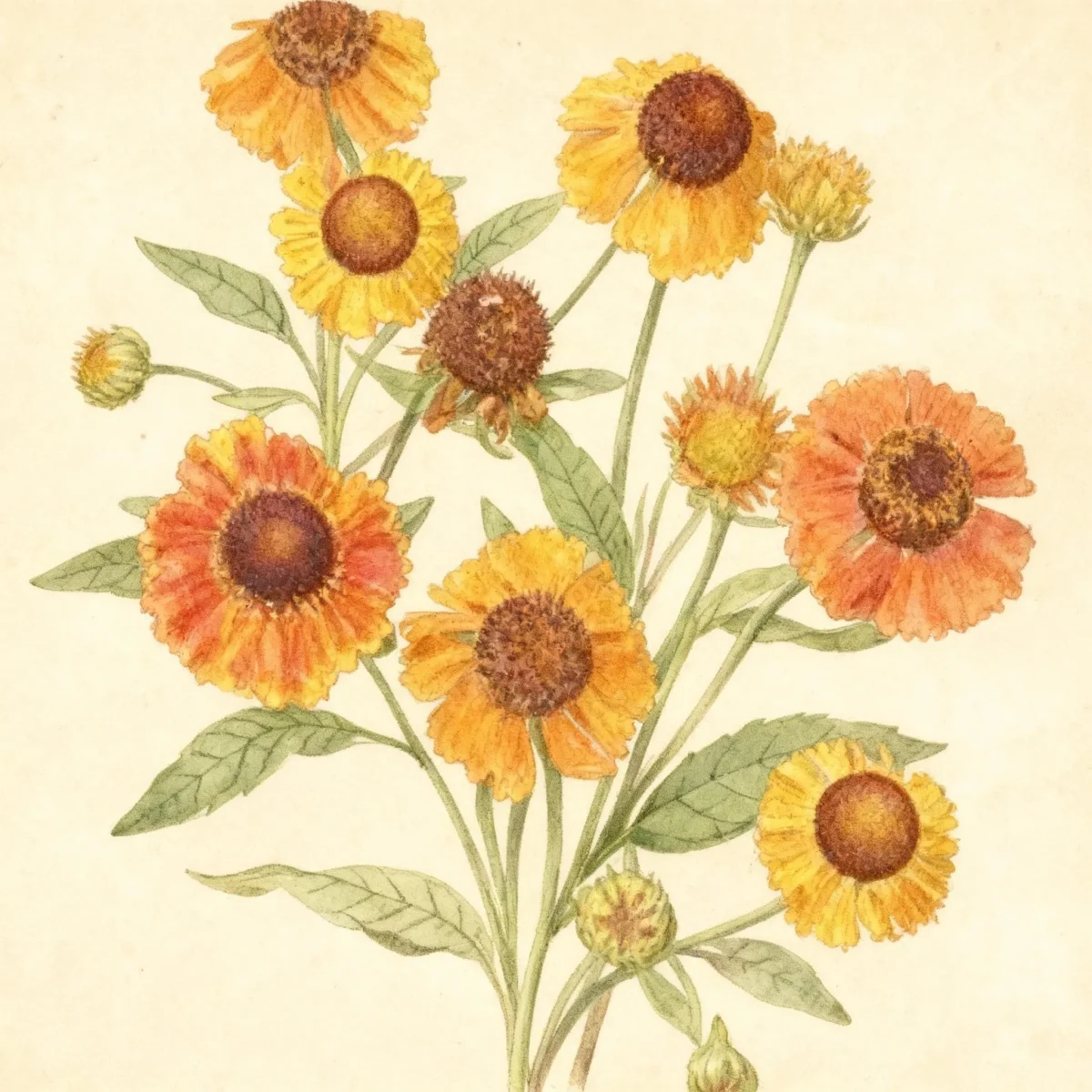
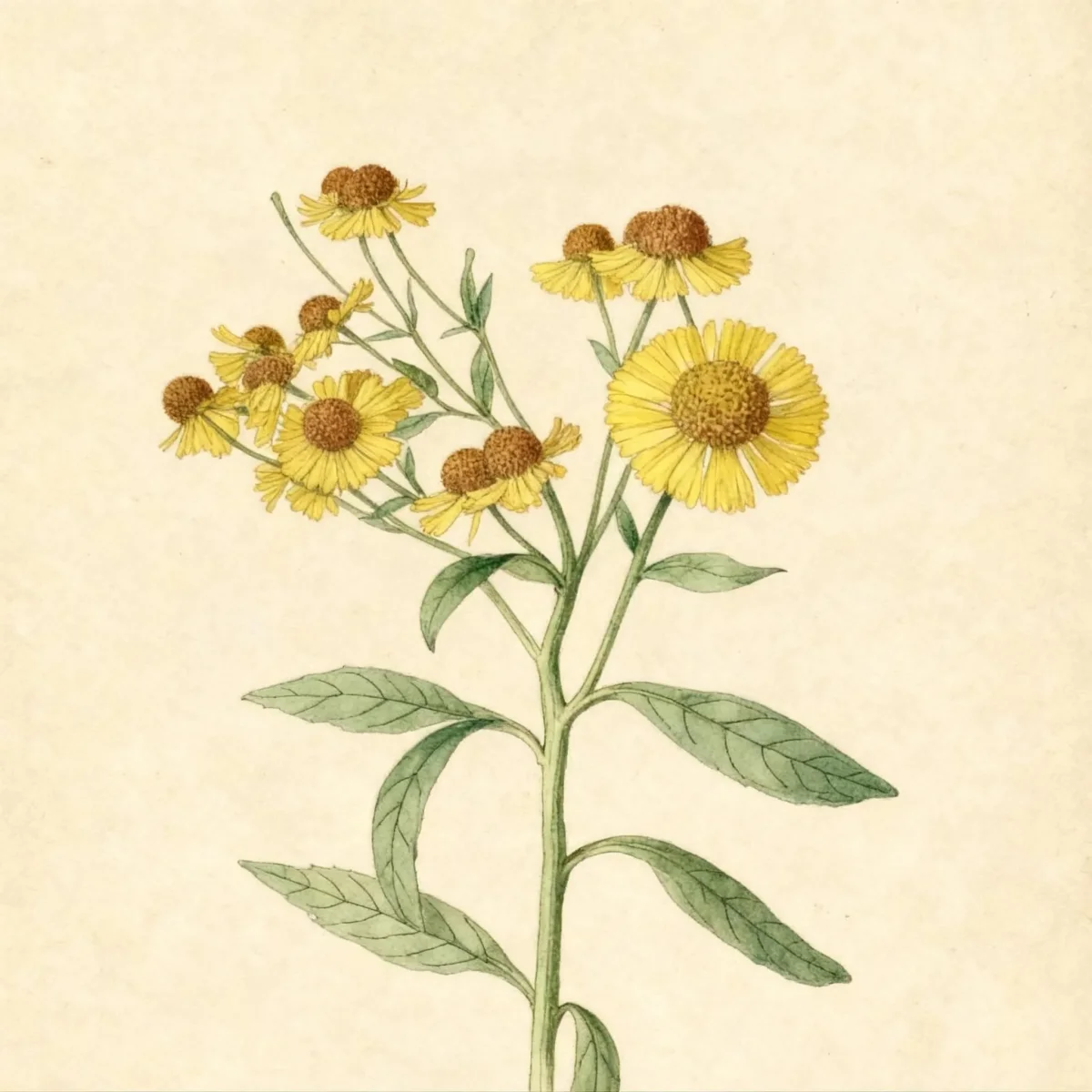
Sneezeweed (Helenium autumnale 'Balsaluemb' SALUD EMBERS)
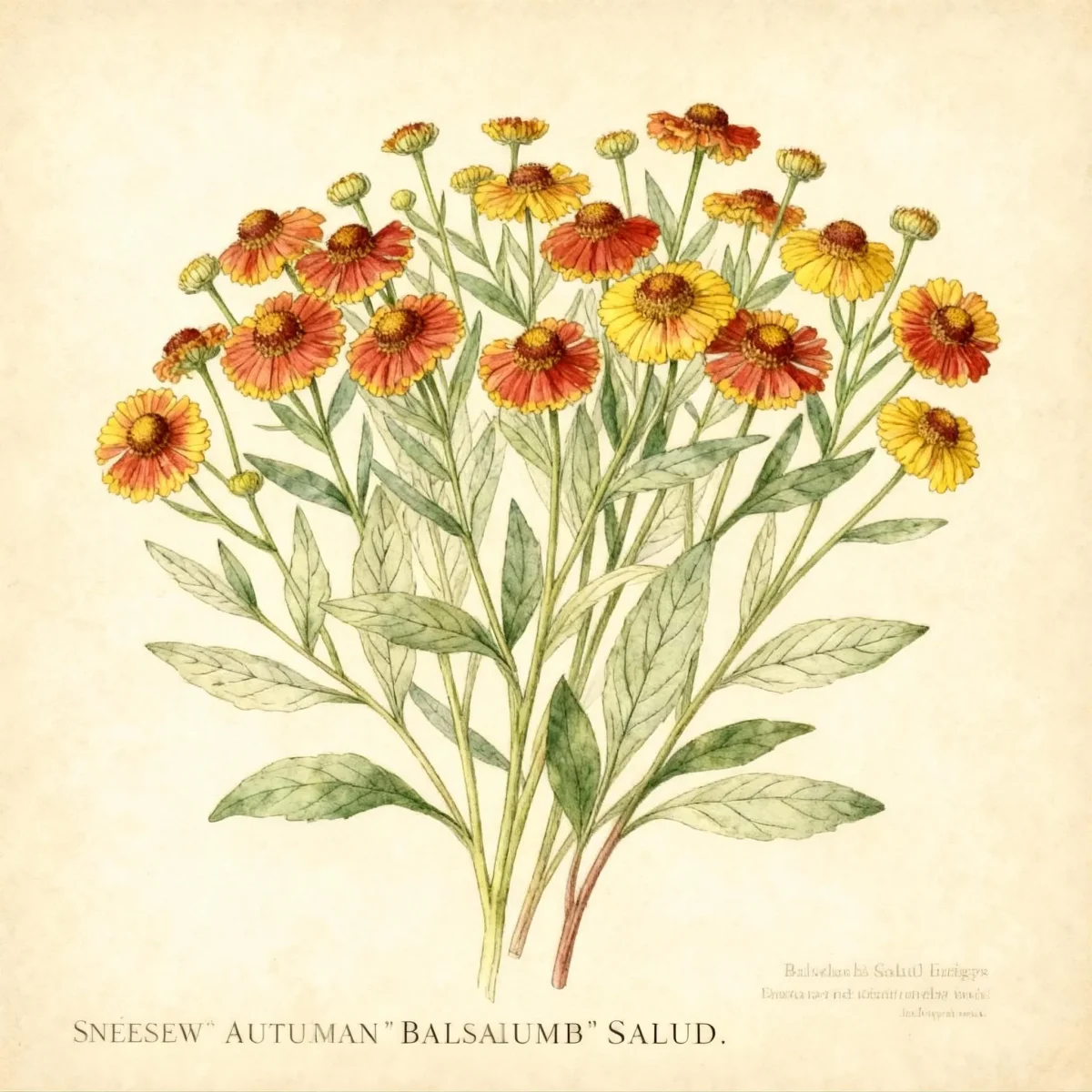
Helenium autumnale 'Balsaluemb' SALUD EMBERS Sneezeweed provides stunning late-season red/yellow bicolor blooms. A compact perennial for sun and wet soils.
Scroll down to discover growing tips, care requirements, companion plants, and more
Complete Plant Information
Overview
Helenium autumnale ‘Balsaluemb’ SALUD EMBERS, commonly known as Sneezeweed, offers vibrant, late-season color when many other perennials fade. This compact cultivar is prized for its upright habit and striking daisy-like flowers featuring rich red and yellow bicolor patterns. As an herbaceous perennial, it provides reliable structure and attracts vital pollinators like butterflies throughout summer and into the beginning of fall.
This specific selection, often sold under the nursery name SALUD EMBERS, maintains a neat, manageable size of around 1.5 feet tall and wide. It thrives where moisture is plentiful, making it an excellent choice for challenging damp spots in the garden. While relatively straightforward to grow, the Helenium autumnale ‘Balsaluemb’ SALUD EMBERS requires attention to soil moisture and occasional mid-season management to ensure robust blooms.
Gardeners seeking reliable autumn interest and welcome visitors such as butterflies should incorporate this Sneezeweed variety into their landscape plans. Its robust nature and intolerance for dry conditions guide ideal placement, often near water features or in rain gardens where consistent moisture is guaranteed.
Fast Facts
- Plant Family: Asteraceae
- Plant Type: Herbaceous perennial
- Hardiness Zones: USDA Zones 4-9
- Size at Maturity:
- Height: 1.25-1.5 ft
- Spread: 1.25-1.5 ft
- Bloom Time: July to September
- Bloom Description: Red and yellow bicolor
- Sun Exposure: Full sun
- Water Needs: Medium to wet
- Maintenance Level: Medium
How to Grow
Plant Sneezeweed in the spring or fall, selecting a location that receives full sun exposure throughout the day. Helenium autumnale ‘Balsaluemb’ SALUD EMBERS thrives in average to rich soils, provided they remain medium to wet; it absolutely cannot tolerate dry conditions. Ensure heavy clay soils are amended slightly for drainage, although this variety is surprisingly tolerant of clay once established.
Watering is crucial for this plant, especially during dry spells, as it requires consistent moisture to perform well. Avoid over-fertilizing, particularly with high-nitrogen formulas, as this encourages excessive, weak top growth prone to flopping. Divide clumps every three to four years in the spring to rejuvenate the plant and maintain vigor.
A key aspect of maintenance involves height management. Although not mandatory, you can cut back plants by half in early June. This pruning technique reduces the final height, promotes bushier branching, and results in more floriferous blooms with less need for external staking. Deadhead spent flowers to encourage a secondary flush of blooms later in the season.
Landscape Uses
The compact structure of Helenium autumnale ‘Balsaluemb’ SALUD EMBERS makes it highly versatile for defined garden spaces. It excels when used near the front or middle of borders where its late-season color provides a necessary punctuation mark as summer transitions to fall. Given its love for moisture, it is an outstanding candidate for designated rain gardens, acting as a structural anchor alongside sedges or astilbes. It also integrates beautifully into informal settings, such as prairies, naturalized areas, or along the edges of ponds or streams where the soil naturally stays wetter.
Standout Features
Flower Qualities
- Showy
Noteworthy Characteristics
Helenium autumnale, commonly called sneezeweed, is an erect, clump-forming, Missouri native perennial which occurs in moist soils along streams, ponds or ditches and in spring-fed meadows, prairie and wet open ground throughout most of the State (Steyermark). Typically grows 3-5’ tall on rigid, distinctively winged stems which branch near the top. Features clusters of daisy-like flowers (2” diameter) with distinctive wedge-shaped, bright yellow rays (three-lobed at the tips) and prominent, dome-like, dull yellow center disks. Flowers appear over a lengthy late summer to autumn (sometimes to first frost) bloom as indicated by species name. Alternate, lance-shaped, dark green leaves (to 6” long).Genus name comes from the Greek name helenion which is the name of a Greek plant which honors Helen of Troy. It is unclear as to the relevance of Helen of Troy to the within genus of plants which are exclusively native to North and South America. The specific epithet autumnale refers to the plant’s autumn flowering. Powdered disk flowers and leaves of this species have in the past been dried and used as snuff, thus giving rise to the common name of sneezeweed. ‘Balsaluemb’ is a compact, upright selection of sneezeweed that features red and yellow bicolor flowers. The flowers are attractive to butterflies and other insect pollinators. Mature plants will reach 1.5’ tall with an equal spread. Commonly found in the nursery sold under the name SALUD EMBERS. Plant patent number PP30617 applies to this cultivar.
Tolerances
- Deer
- Clay Soil
- Wet Soil
Potential Problems
This species generally exhibits good pest resistance, with no serious insect or disease problems noted in typical garden settings. However, vigilance is required regarding foliar fungal issues; the foliage of this Sneezeweed is susceptible to powdery mildew, leaf spot, and rust, especially in areas with poor air circulation or high ambient humidity. Prevention involves ensuring adequate spacing during planting to allow air movement around the leaves. If fungal issues appear, promptly remove affected foliage, and ensure strict adherence to the cultural requirement for full sun. Because the species naturally tends toward taller growth, some staking or the recommended pinching/July-cutback is usually necessary to support the stems and keep the plant tidy through its bloom period. Deer tend to avoid this plant, offering a bonus for wildlife planners.
Frequently Asked Questions
What hardiness zones is Sneezeweed suitable for?
Helenium autumnale ‘Balsaluemb’ SALUD EMBERS is well-suited for USDA Zones 4 through 9, allowing for reliable perennial performance across a broad geographic range.
How large does Helenium autumnale ‘Balsaluemb’ SALUD EMBERS grow?
When mature, this specific cultivar generally reaches a height between 1.25 and 1.5 feet, with a similar spread of 1.25 to 1.5 feet, offering a compact footprint.
When does Sneezeweed bloom?
This vibrant plant offers a reliable period of color beginning in July and continuing through September, showcasing its signature red and yellow bicolor flowers.
What sun exposure does Helenium autumnale ‘Balsaluemb’ SALUD EMBERS need?
For the best health and most prolific flowering of this bright Sneezeweed, ensure it receives full sun daily.
Conclusion
The compact Helenium autumnale ‘Balsaluemb’ SALUD EMBERS provides essential late-season structure and brilliant red and yellow hues, making it an indispensable choice for wet, sunny borders. Incorporating this robust Sneezeweed ensures garden color when it matters most, but remember to plan for its medium maintenance needs, particularly moisture consistency. Check your local USDA hardiness zone compatibility before planting this reliable perennial in the upcoming season.
Wildlife Benefits
The late bloom time of Helenium autumnale ‘Balsaluemb’ SALUD EMBERS is incredibly valuable, providing critical nectar and pollen resources during the late summer and early autumn transition when many other floral sources have diminished. The species is noted specifically for being attractive to butterflies and various other insect pollinators seeking sustenance before winter migration or dormancy. Planting this Sneezeweed variety directly supports local pollinator health and activity in the garden ecosystem.
Companion Planting
Due to the requirement of consistent moisture for Helenium autumnale ‘Balsaluemb’ SALUD EMBERS, look for companions that share a similar preference for medium to wet soils and full sun exposure. Excellent pairings include moisture-loving ornamental grasses like Miscanthus or tall meadow phlox (Phlox paniculata), which can handle the slightly damp roots. Plants like Japanese Iris or native cardinal flower (Lobelia cardinalis) thrive in near-identical conditions, creating layered interest around the 1.5-foot stature defining this compact Sneezeweed.