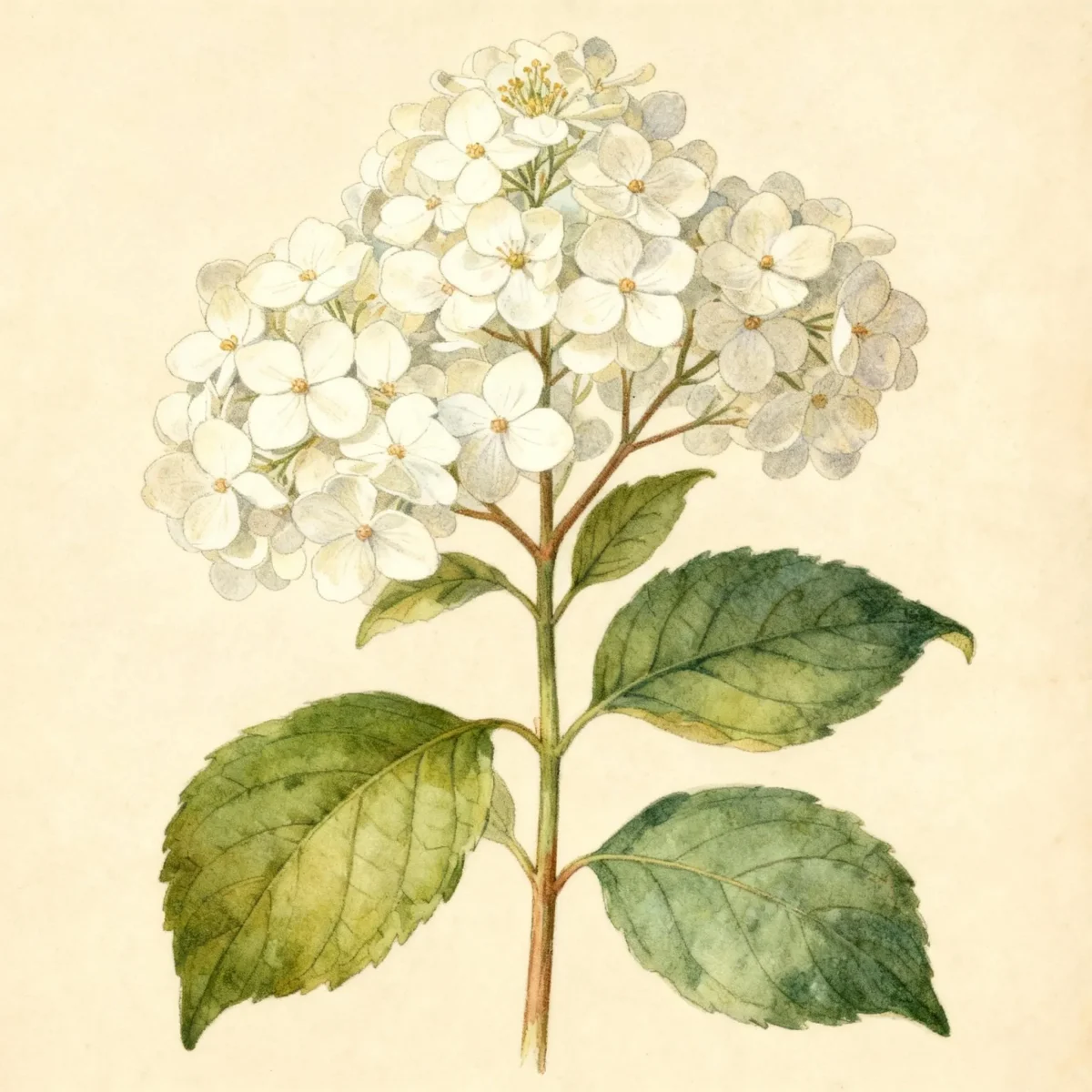
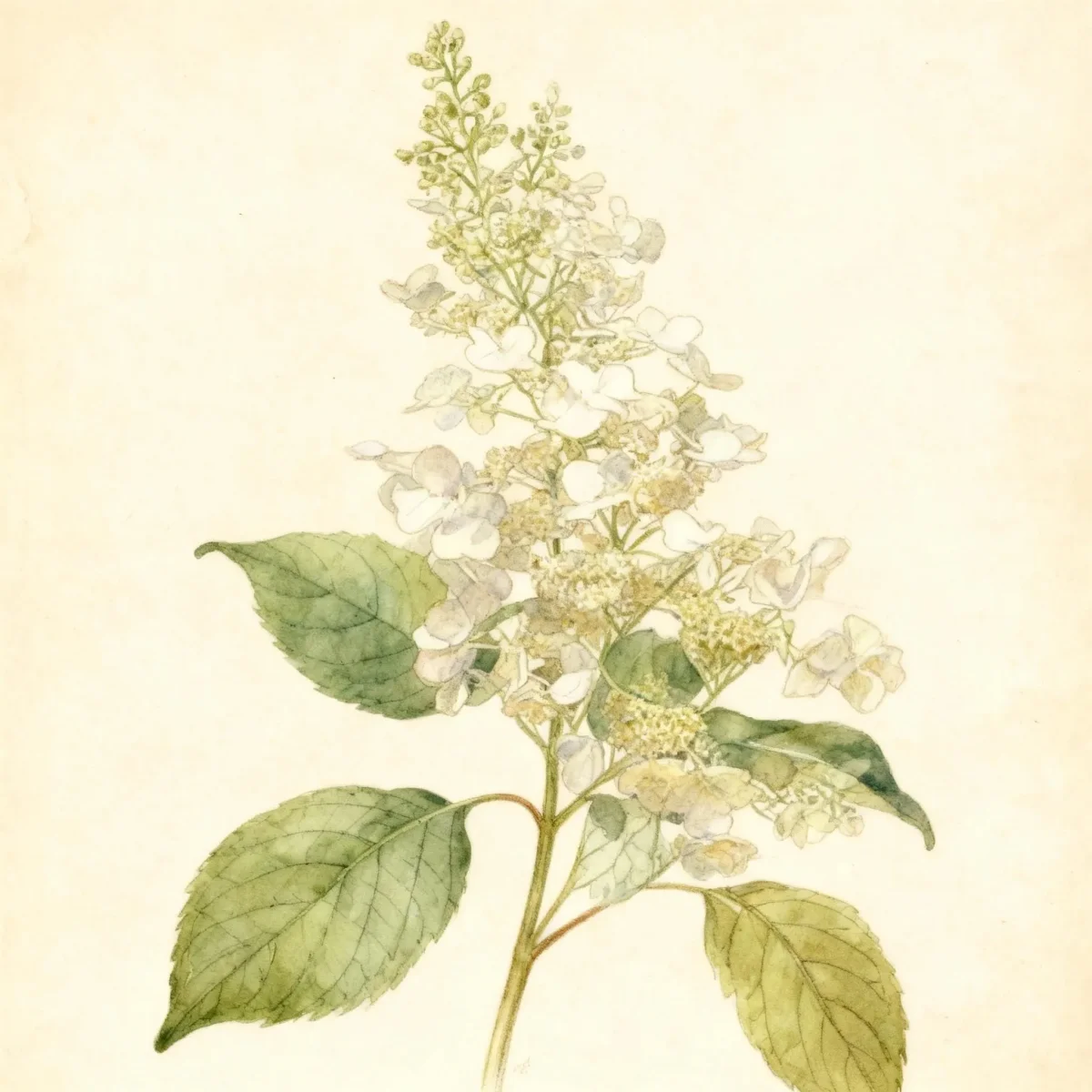
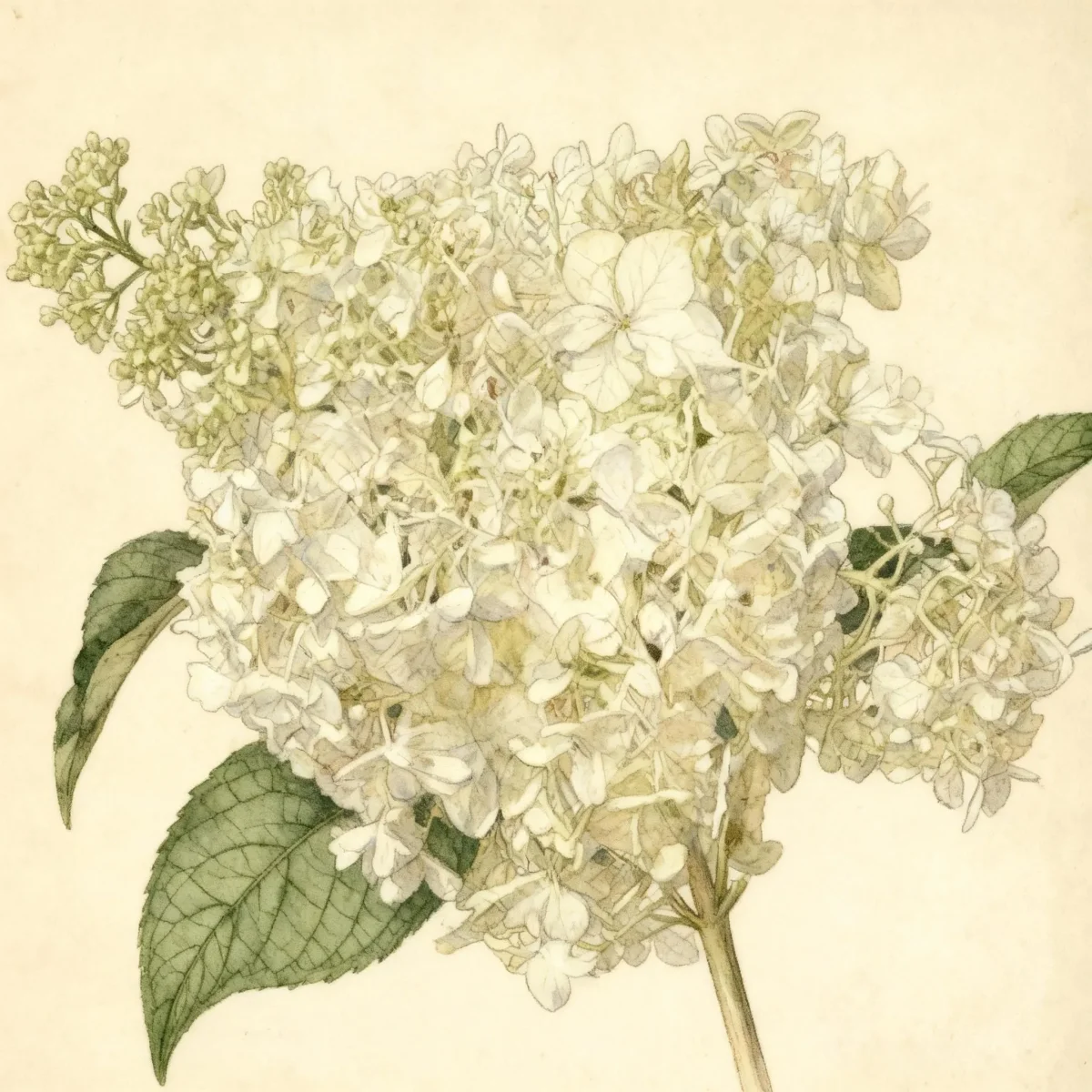
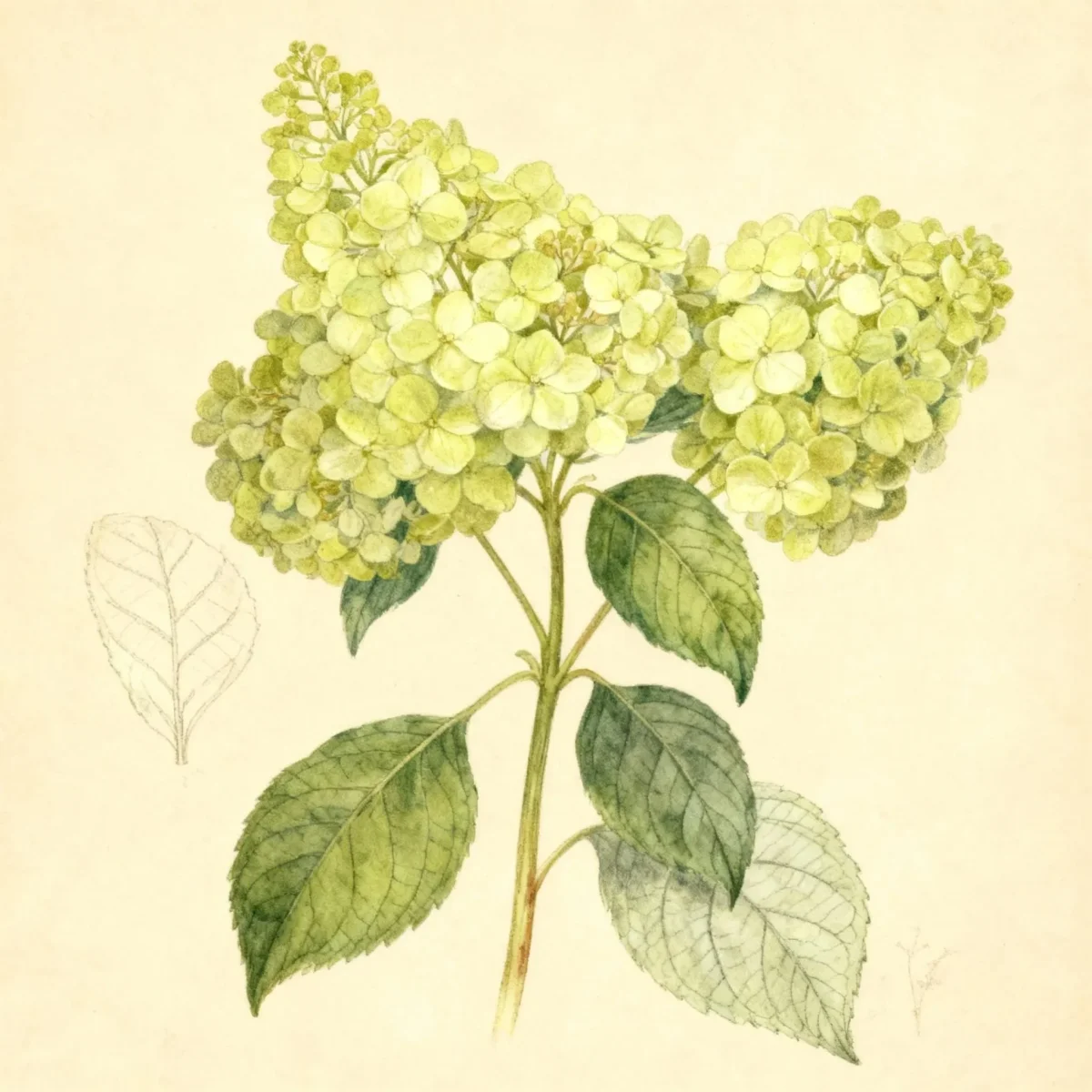
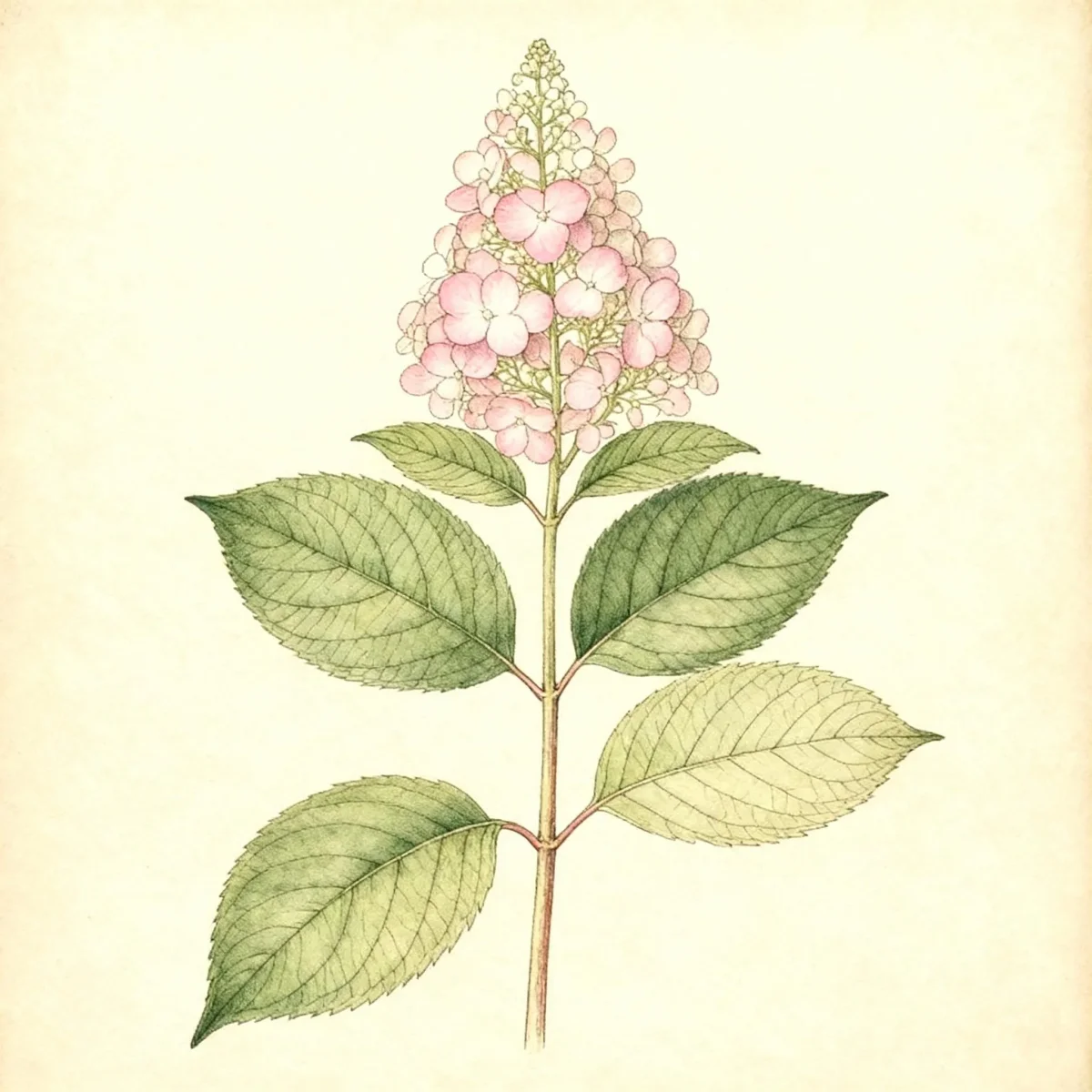
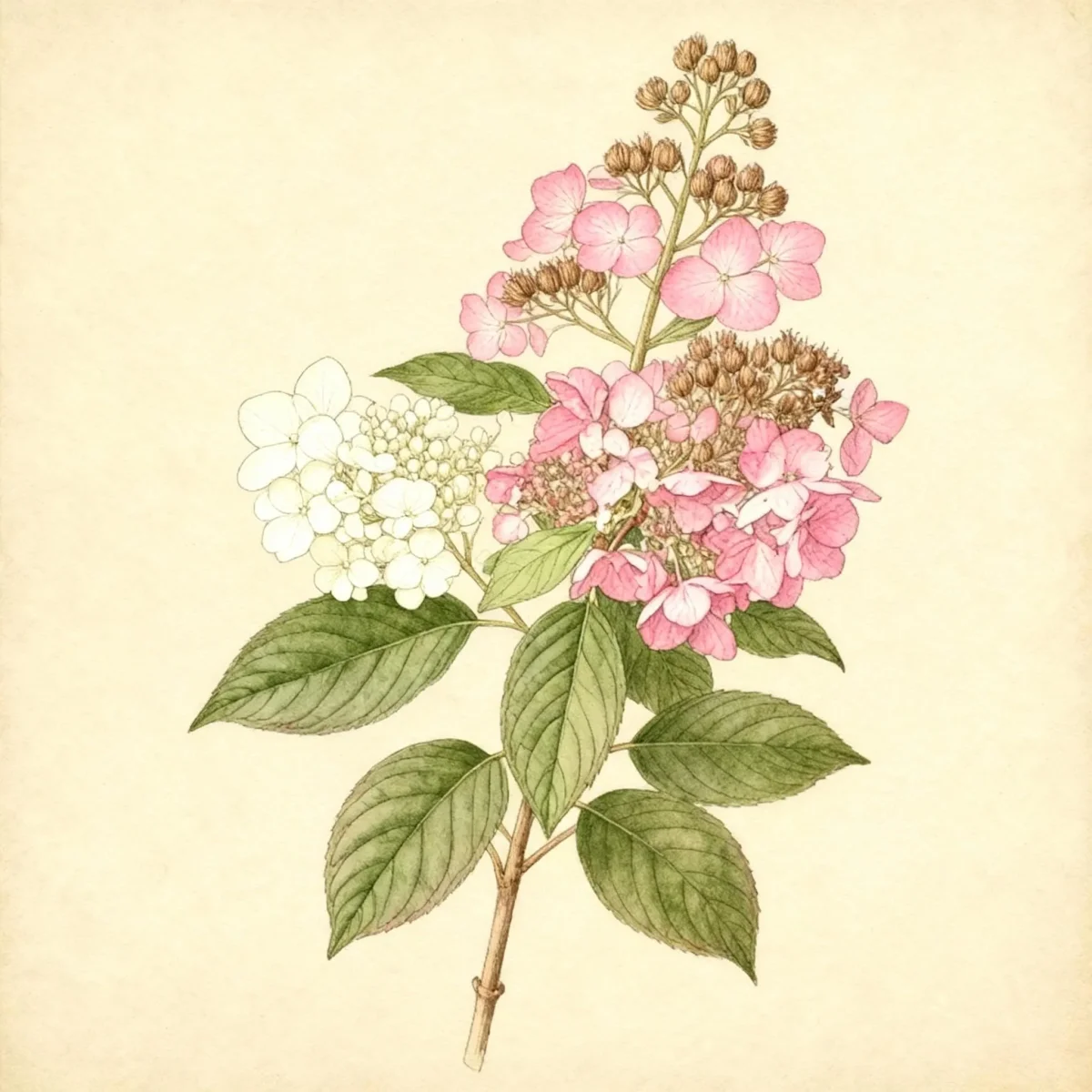
Panicle hydrangea (Hydrangea paniculata 'Hpopr013' CANDELABRA)
Discover Hydrangea paniculata 'Hpopr013' CANDELABRA, a hardy Panicle hydrangea producing showy pink-maturing blooms ideal for hedges and cut flowers.
Scroll down to discover growing tips, care requirements, companion plants, and more
Complete Plant Information
Overview
The Hydrangea paniculata ‘Hpopr013’ CANDELABRA, commonly known as Panicle hydrangea, is highly valued by gardeners for its robust nature and long-lasting, distinctive summer blooms. This cultivar offers strongly tapered, cone-shaped inflorescences that transition appealingly from greenish-white to a lovely pink hue as the season progresses. As one of the most winter-hardy hydrangeas available, Hydrangea paniculata ‘Hpopr013’ CANDELABRA significantly extends the flowering season well into autumn.
This vigorous, deciduous shrub thrives in a range from USDA Zones 3 through 8, making it a highly adaptable choice for diverse climates. It is inherently upright and rapid-growing, capable of forming a substantial, multi-stemmed presence in the landscape. Gardeners appreciate its ability to thrive even under urban conditions, confirming its suitability for modern landscapes needing resilient and beautiful flowering plants.
Functionally, the Panicle hydrangea provides excellent structure and color when many other shrubs have ceased blooming. Whether used as a formal hedge or a specimen plant, the sturdy stalks of the Hydrangea paniculata ‘Hpopr013’ CANDELABRA support its nearly 7-inch long panicles well, though heavy blooms can cause attractive arching.
Fast Facts
- Plant Family: Hydrangeaceae
- Plant Type: Deciduous shrub
- Hardiness Zones: USDA Zones 3-8
- Size at Maturity:
- Height: 4-6 ft
- Spread: 4-6 ft
- Bloom Time: July to September
- Bloom Description: Green-white maturing to pink
- Sun Exposure: Full sun to part shade
- Water Needs: Medium
- Maintenance Level: Medium
How to Grow
Planting Hydrangea paniculata ‘Hpopr013’ CANDELABRA is best achieved in the spring or fall, ensuring the plant has time to establish before facing extreme temperatures. Select a location that offers organically rich, medium moisture, well-drained soils. While it performs reliably in full sun, providing some afternoon shade is beneficial in the hottest climates.
Establish a consistent watering routine, aiming for medium moisture levels—never let the soil become overly dry, especially during establishment. Maintenance is categorized as medium; prune as needed in late winter to early spring, as flowering occurs on current season’s growth. For optimal shrub form, consider pruning it back to 6-10 feet tall annually.
To encourage larger, more dramatic flower panicles on your Panicle hydrangea, thin the plant during pruning time, leaving only 5 to 10 sturdy primary shoots. Be aware that when the branches are heavily loaded with blooms, the weight naturally causes them to arch, which can be a desired aesthetic feature in the garden design. Because this plant is exceptionally winter-hardy, significant freeze protection is usually unnecessary.
Landscape Uses
The Hydrangea paniculata ‘Hpopr013’ CANDELABRA brings significant structural value and late-season interest to virtually any garden design. Its manageable size of 4 to 6 feet tall and wide makes it an excellent candidate for use as a formal hedge, providing consistent seasonal screening. It also works beautifully massed or grouped within a mixed shrub border where its mid-summer bloom can bridge the gap between early and late flowering perennials.
As a lawn specimen or accent plant, the Panicle hydrangea showcases its upright habit and bold floral display effectively. Consider planting it near structures or pathways where its eventual arching habit can soften hard lines. Its resilience to urban stresses means it integrates well into front-yard plantings or near paved areas where some other shrubs might struggle.
This shrub also serves wonderfully in open woodland garden settings, contrasting nicely with evergreens or finer-textured deciduous trees. The consistent flowering time between July and September ensures you have reliable color when many other flowering shrubs have faded, offering excellent continuous visual appeal throughout the late summer.
Standout Features
Flower Qualities
- Showy
- Good Cut
- Good Dried
Noteworthy Characteristics
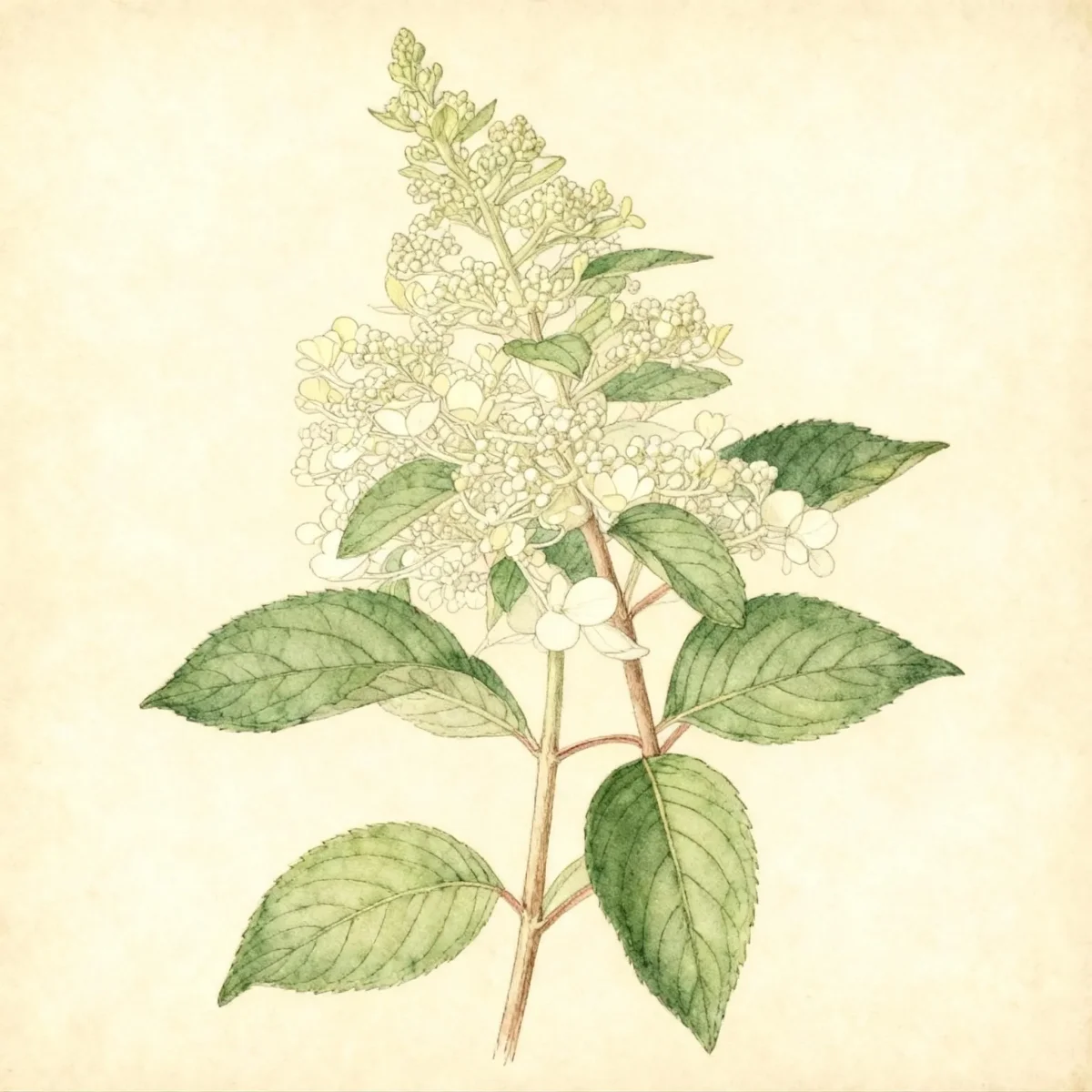
Hydrangea paniculata, commonly called panicle hydrangea, is a vigorous, upright, rapid-growing, somewhat coarsely textured, deciduous shrub that is native to China and Japan. It typically grows to 8-15’ (less frequently to 25’) tall, and features oval to ovate dark green leaves and upright, sharply-pointed, conical, terminal flower panicles (to 6-8” long) containing both fertile and sterile flowers (mostly non-showy fertile flowers) that bloom from mid-summer into fall. The specific epithet paniculata refers to the arrangement of the flowers in panicles. ‘Hpopr013’ is an upright selection of panicle hydrangea that features strongly tapered, cone-shaped inflorescences with greenish-white sterile flowers that mature to pink.
Tolerances
- Air Pollution
Potential Problems
This reliable Panicle hydrangea does show some susceptibility to fungal issues such as leaf spot, rust, and mildew, which can usually be managed by ensuring good air circulation during planting and avoiding late-day overhead watering. Over time, some gardeners report occasional issues with bacterial wilt. Garden pests like aphids and mites are occasional visitors but rarely cause serious or lasting damage to a healthy Hydrangea paniculata ‘Hpopr013’ CANDELABRA. Proactive monitoring, particularly under the leaves, allows for prompt treatment if infestation occurs.
Frequently Asked Questions
What hardiness zones is Panicle hydrangea suitable for?
This resilient Panicle hydrangea is suitable for USDA Hardiness Zones 3 through 8, making it very adaptable across much of the country.
How large does Hydrangea paniculata ‘Hpopr013’ CANDELABRA grow?
At maturity, Hydrangea paniculata ‘Hpopr013’ CANDELABRA typically reaches a height between 4 and 6 feet, with a similar spread of 4 to 6 feet wide.
When does Panicle hydrangea bloom and what color are the flowers?
This shrub blooms reliably from July through September, beginning with greenish-white flowers that develop into attractive pink tones as they age.
What sun exposure does Hydrangea paniculata ‘Hpopr013’ CANDELABRA need?
For best performance, plant this cultivar where it receives full sun or partial shade; it handles the intense heat of full sun quite well due to its superior hardiness.
Conclusion
The Hydrangea paniculata ‘Hpopr013’ CANDELABRA offers unparalleled reliability, boasting strong winter hardiness, manageable size, and blooms that last all summer long. This robust Panicle hydrangea is a dependable choice for adding texture and seasonal color, even in challenging urban settings. Before planting, confirm your garden falls within USDA Zones 3 to 8 and ensure you are prepared for its medium water needs.
Companion Planting
When planning a border featuring Hydrangea paniculata ‘Hpopr013’ CANDELABRA, focus on integrating materials that complement its strong vertical lines and late-season bloom. Consider pairing it with early or mid-summer blooming perennials like Coneflowers (Echinacea) or Black-Eyed Susans (Rudbeckia) to ensure continuous color well before the hydrangea peaks. Its need for medium moisture and well-drained soil makes plants like ornamental grasses that prefer similar conditions excellent companions.
For an effective textural contrast, place the coarse foliage of the Panicle hydrangea near finer-textured plants such as various Baptisia species or delicate Russian Sage. This interplay of textures highlights the large bloom heads of the Hydrangea paniculata ‘Hpopr013’ CANDELABRA, creating dynamic visual interest throughout the growing season.
Design Ideas for Hydrangeas
The upright habit of this specific Panicle hydrangea makes it an outstanding formal element within landscape design. Use multiple plants spaced evenly to create a substantial, repeating hedge that offers reliable privacy and continuous late-summer interest. Because Hydrangea paniculata ‘Hpopr013’ CANDELABRA responds well to pruning, it can be formally sheared or allowed to assume a more natural, slightly arching habit.
If space permits, training a specimen to a single trunk, as suggested in its care notes, produces a small specimen tree effect perfect for framing an entry point or defining a transition space. The sturdy flower stalks mean the dried blooms can be cut in the late fall and still look attractive standing in the winter garden framework, offering multi-season appeal.