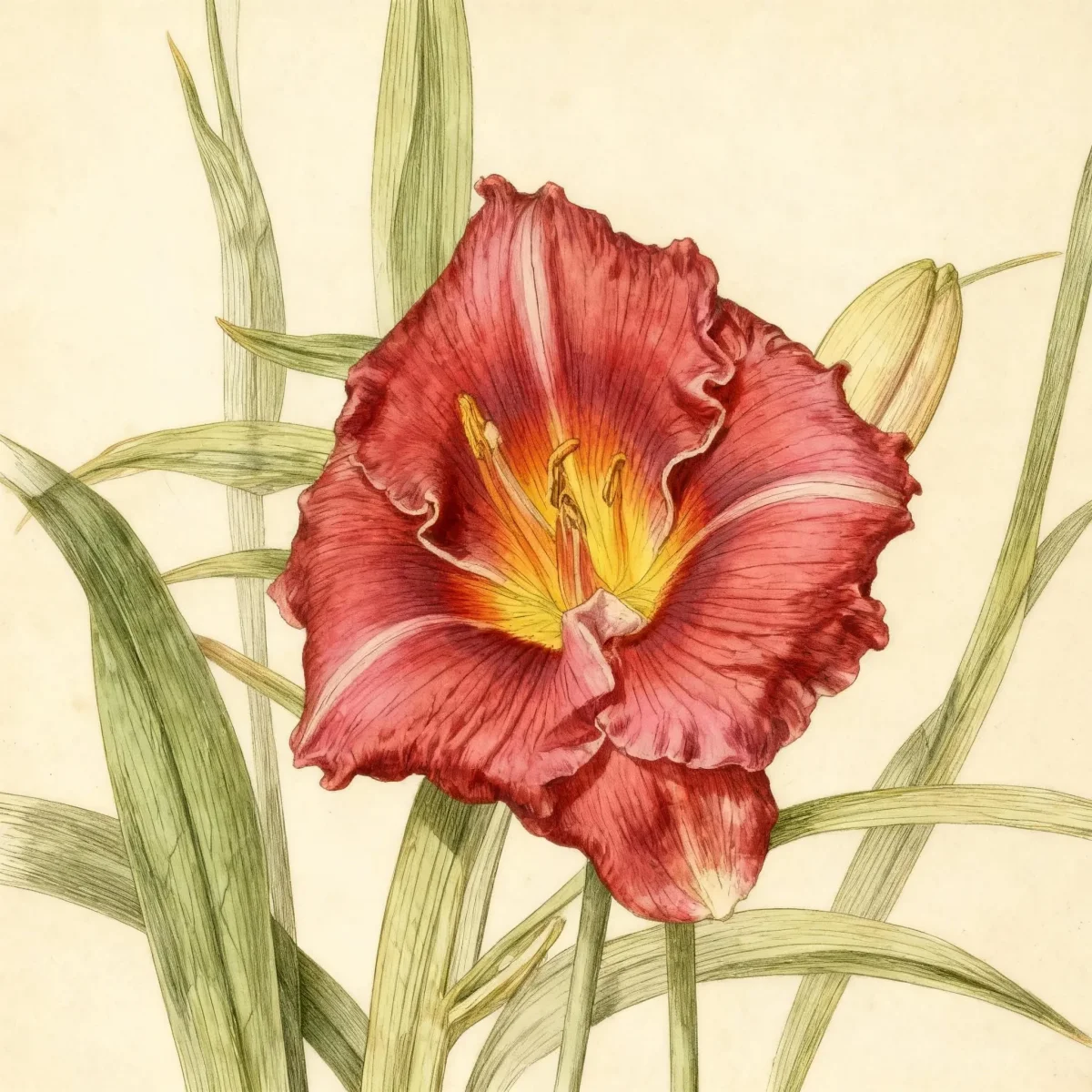
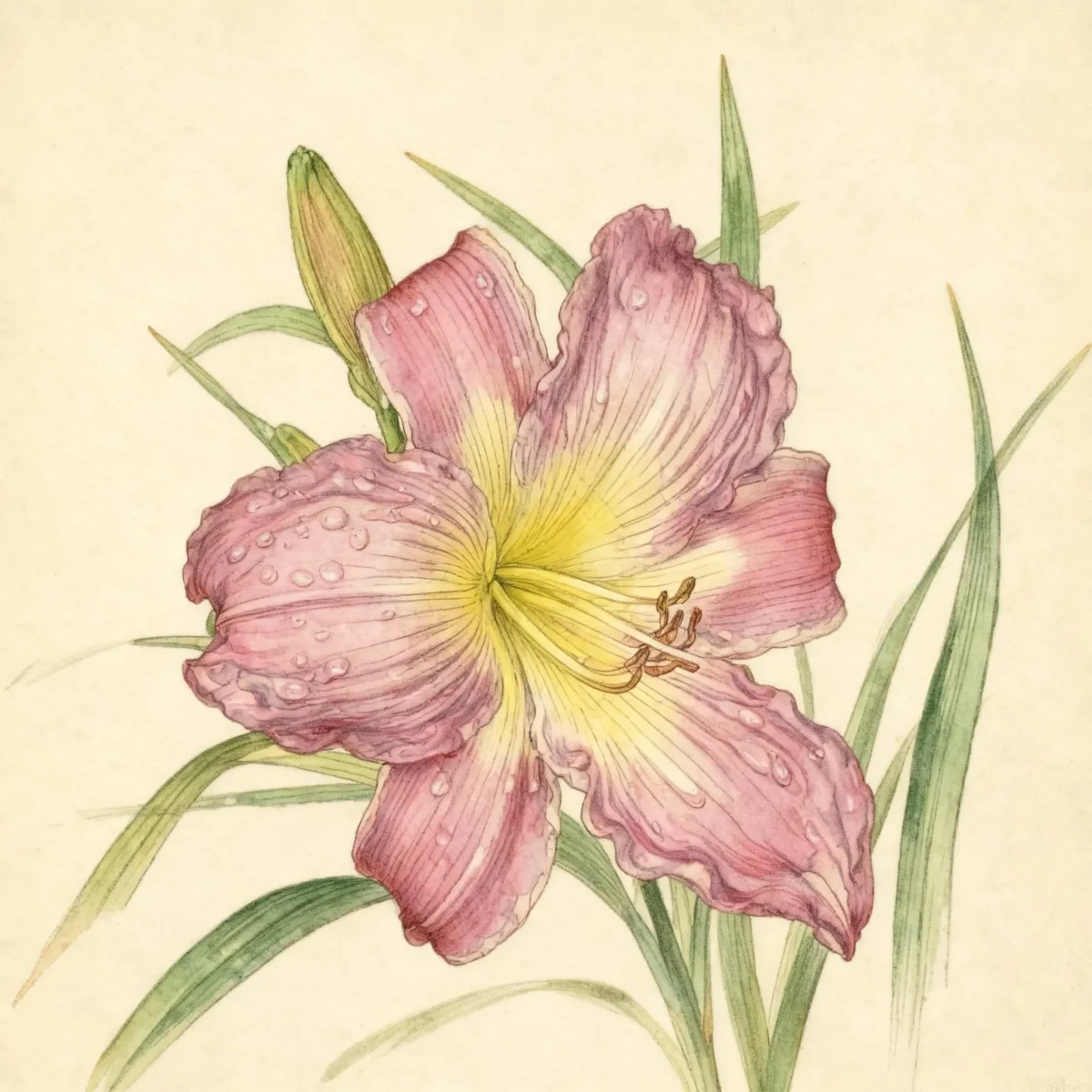
Daylily (Hemerocallis 'Fortune Berry')
Hemerocallis 'Fortune Berry' is a low-maintenance, tetraploid Daylily blooming maroon in summer, ideal for Zones 3-9.
Scroll down to discover growing tips, care requirements, companion plants, and more
Complete Plant Information
Overview
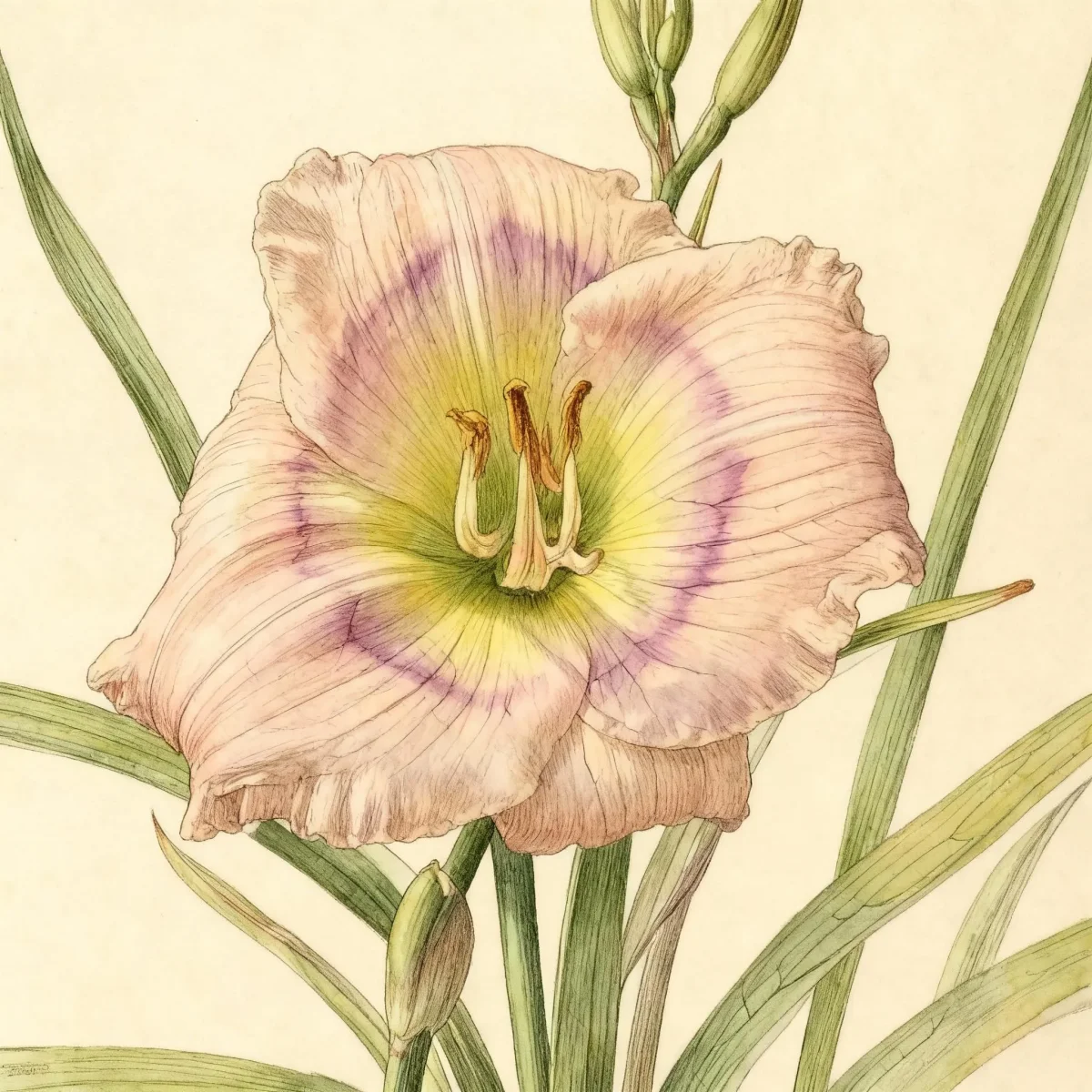
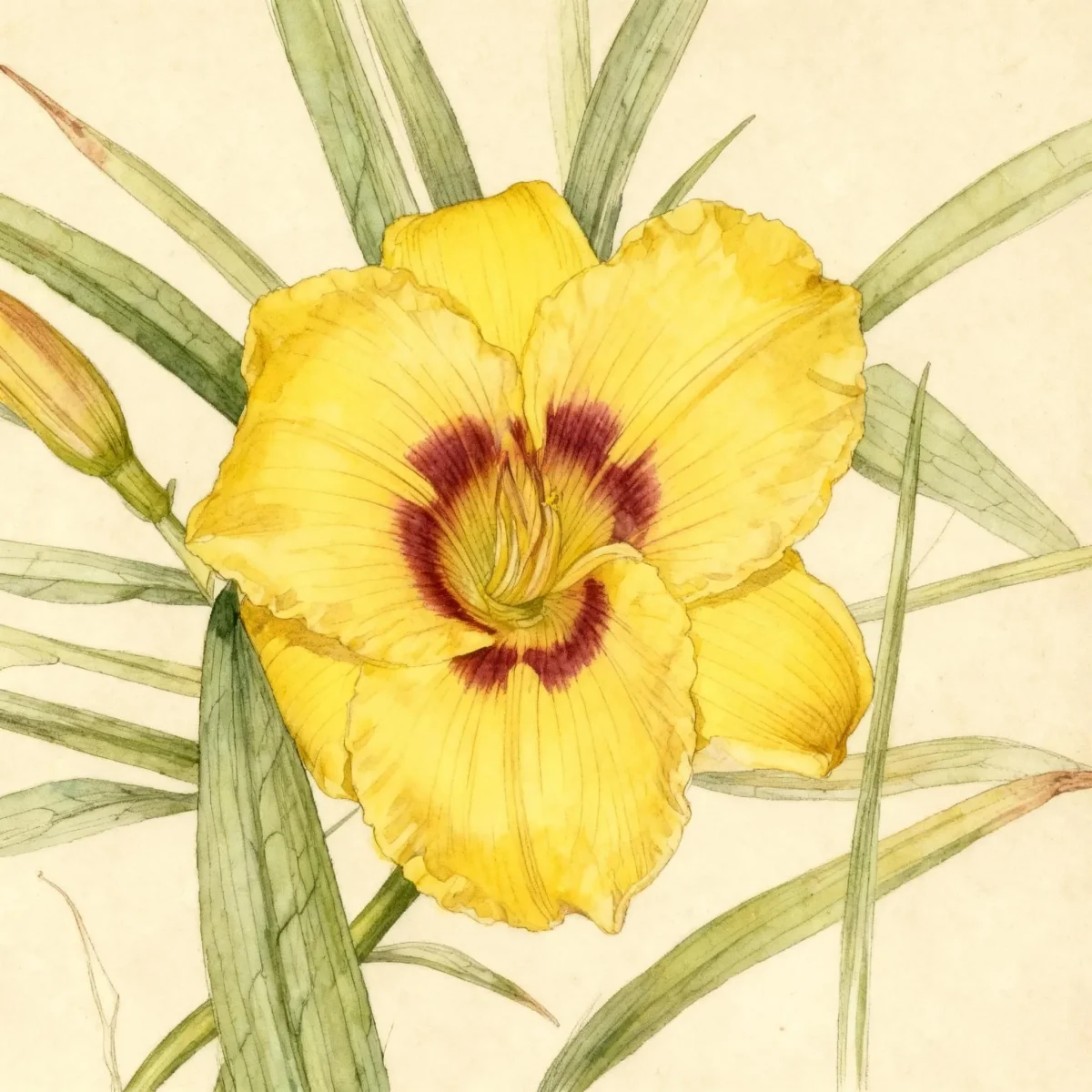
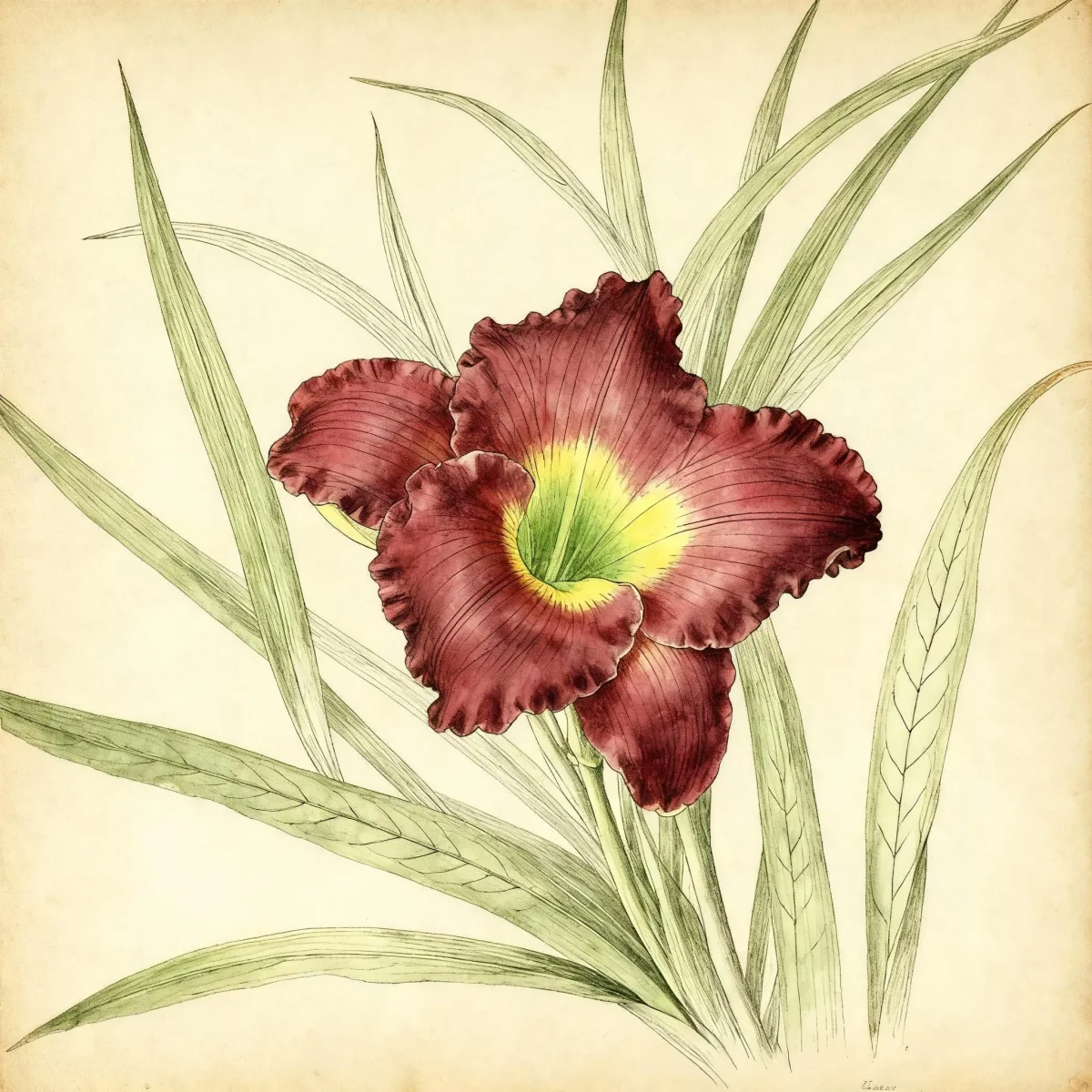
Hemerocallis ‘Fortune Berry’ is a stunning evergreen, reblooming Daylily treasured by gardeners for its reliable summer color and robust constitution. This specific cultivar produces deeply pigmented, maroon flowers accented by a contrasting yellow to green throat, appearing continuously from early to mid-season well into the summer months. As a tetraploid Daylily, ‘Fortune Berry’ often exhibits greater vigor and superior flower performance compared to older diploid varieties.
This herbaceous perennial thrives across a wide spectrum of climates, specifically suited for USDA Hardiness Zones 3 through 9. Its attractive, grass-like foliage provides structure even when not in bloom, making Hemerocallis ‘Fortune Berry’ an excellent backbone plant in perennial borders where low maintenance is desired.
Gardeners appreciate the low demands of this Daylily; it tolerates heat and humidity well, though consistent moisture during dry spells keeps the foliage looking its best. The prolific blooming habit ensures a long season of interest, cementing the Daylily’s reputation as one of the most versatile and popular flowering perennials available today.
Fast Facts
- Plant Family: Asphodelaceae
- Plant Type: Herbaceous perennial
- Hardiness Zones: USDA Zones 3-9
- Size at Maturity:
- Height: 1.5-2 ft
- Spread: 1.5-2 ft
- Bloom Time: June to August
- Bloom Description: Maroon with yellow to green throat
- Sun Exposure: Full sun to part shade
- Water Needs: Medium
- Maintenance Level: Low
How to Grow
Planting Hemerocallis ‘Fortune Berry’ should ideally occur in the spring or fall when temperatures are moderate, allowing the roots to establish before summer heat or deep winter freezes. These Daylilies perform best when planted in the garden with the crown (where the leaves meet the roots) sitting just at the soil surface. They thrive in average, well-drained soils, though deep, fertile loams encourage the best growth.
Consistent moisture is crucial, especially during dry periods, although Daylilies are quite adaptable. Water deeply rather than frequently once established. Maintenance is minimal; promptly deadhead spent flowers daily for neatness, and remove the entire flower stalk (scape) once blooming ceases. This cultivar is tolerant of summer heat, but adequate water helps keep the dark foliage vibrant.
For optimal performance, especially in colder regions, plan to divide mature clumps of Hemerocallis ‘Fortune Berry’ every three to four years, preferably in the spring. Note that this is a winter-dormant type; while the foliage might semi-evergreen in warmer zones, significant winter cold requires dormancy for the best season of bloom.
Landscape Uses
Daylilies are workhorses in the landscape, and Hemerocallis ‘Fortune Berry’ is no exception, offering rich color in reliable structures. Their clumping habit makes them perfect for defining borders along walkways or driveways where year-round structure is valued. Consider planting them in sweeping masses across large areas to maximize the impact of the deep maroon blooms during the summer months.
Due to their sword-like foliage, they contrast beautifully with plants offering fine texture or mounding forms, such as ornamental grasses or Lamb’s Ears. Furthermore, because of their adaptability, Daylilies are excellent used for simple edging or planted beneath taller shrubs that require pruning to maintain their lower silhouettes without sacrificing seasonal flower appeal beneath them.
Standout Features
Flower Qualities
- Showy
- Fragrant
- Good for cut flowers
Noteworthy Characteristics
Hemerocallis is a genus famed for producing highly hybridized, colorful, funnel-shaped flowers that typically last only a single day, hence the “daylily” name. ‘Fortune Berry’ specifically is recognized as an evergreen, reblooming, tetraploid cultivar, meaning it offers repeated flowering interest throughout the season. Its mature clumps reach about 2 feet tall and wide, providing substantial color supported by neat, linear foliage.
Tolerances
- Rabbit
Potential Problems
Daylilies are exceptionally adaptable and generally pest-free perennials, making them reliable choices even for beginner gardeners. Occasional infestations of mites, aphids, or thrips can usually be managed with horticultural soap or careful observation. In humid climates, Daylily rust may become an issue, requiring preventative fungicide application if you notice rust-colored spores on the leaves. A positive benefit is that local rabbits typically avoid consuming the foliage of Hemerocallis ‘Fortune Berry’.
Frequently Asked Questions
What hardiness zones is Daylily suitable for?
The Hemerocallis ‘Fortune Berry’ Daylily is recommended for USDA Hardiness Zones 3 through 9.
How large does Hemerocallis ‘Fortune Berry’ grow?
Mature clumps of this Daylily typically reach 1.5 to 2 feet in height and spread 1.5 to 2 feet across.
What sun exposure does Daylily need?
This Daylily cultivar performs best when situated in locations receiving full sun to part shade.
When does Hemerocallis ‘Fortune Berry’ bloom?
Hemerocallis ‘Fortune Berry’ typically blooms from June into August, displaying rich maroon flowers with a yellow to green throat.
Conclusion
Hemerocallis ‘Fortune Berry’ offers gardeners a hardworking, low-maintenance option for consistent summer color, characterized by its deep maroon, reblooming flowers. This robust Daylily establishes quickly and provides excellent texture throughout the growing season in zones 3-9. Ensure you check your local hardiness zone compatibility before planting this beautiful Hemerocallis cultivar this spring or fall.
Companion Planting
When designing a border featuring this Daylily, consider pairing it with plants that offer contrasting foliage textures or bloom times to extend visual interest. Hostas planted alongside provide broad, contrasting leaves that thrive in similar partial shade conditions, though they will require slightly more moisture. For areas receiving full sun, Sedum groundcovers or shorter ornamental grasses make excellent companions, as they share the Daylily’s medium water needs and tolerance for heat.
Seasonal Care Calendar
Spring preparation involves removing any dead foliage from the previous year; since ‘Fortune Berry’ is evergreen in some areas, this cleanup should be done only when foliage is clearly damaged or brown. Summer is focused on deadheading spent flowers daily to encourage repeat blooming and ensuring deep watering during significant dry spells. In the fall or early spring (depending on your microclimate), inspect established clumps and divide any that appear overcrowded to maintain vigor, ensuring the growing crown remains at soil level.