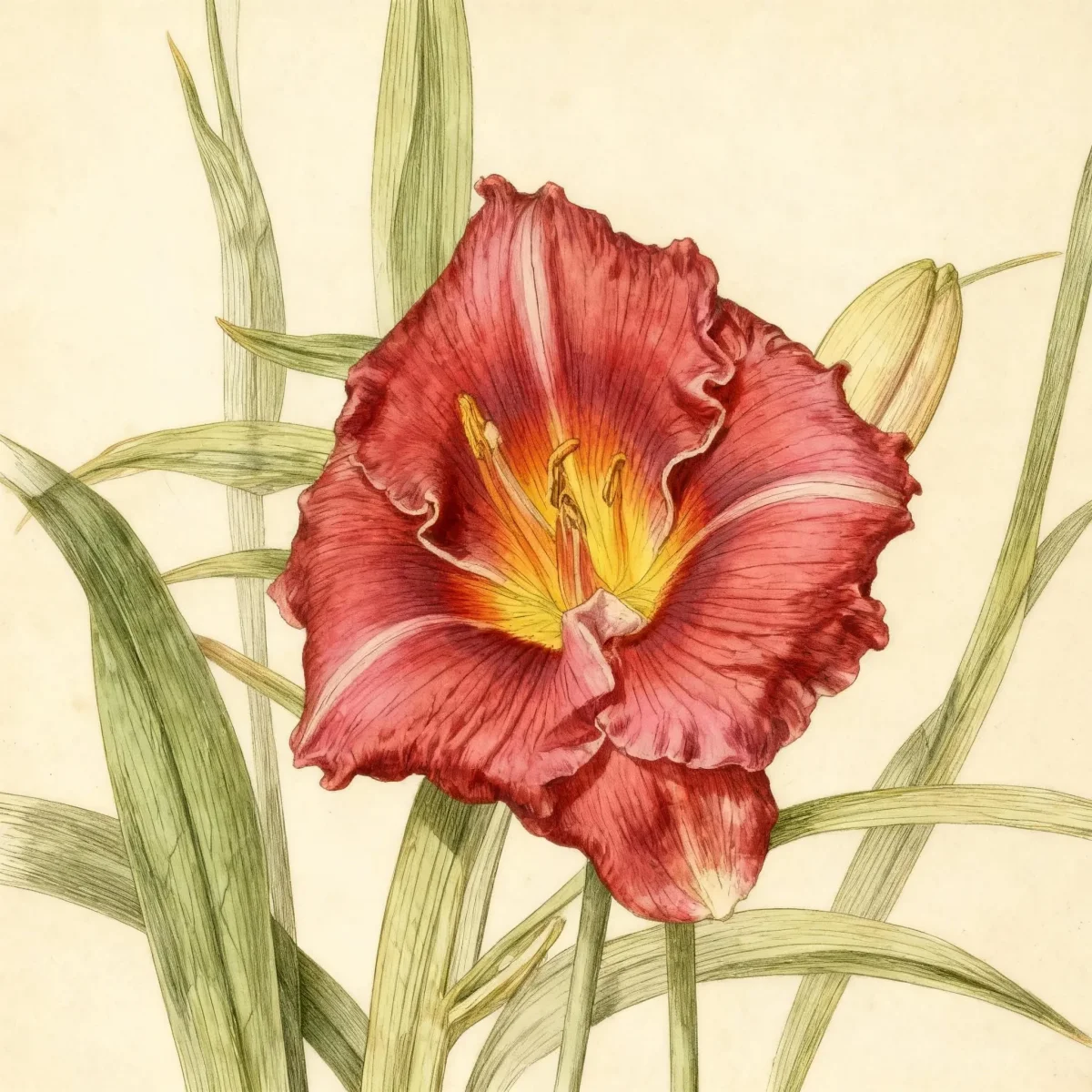
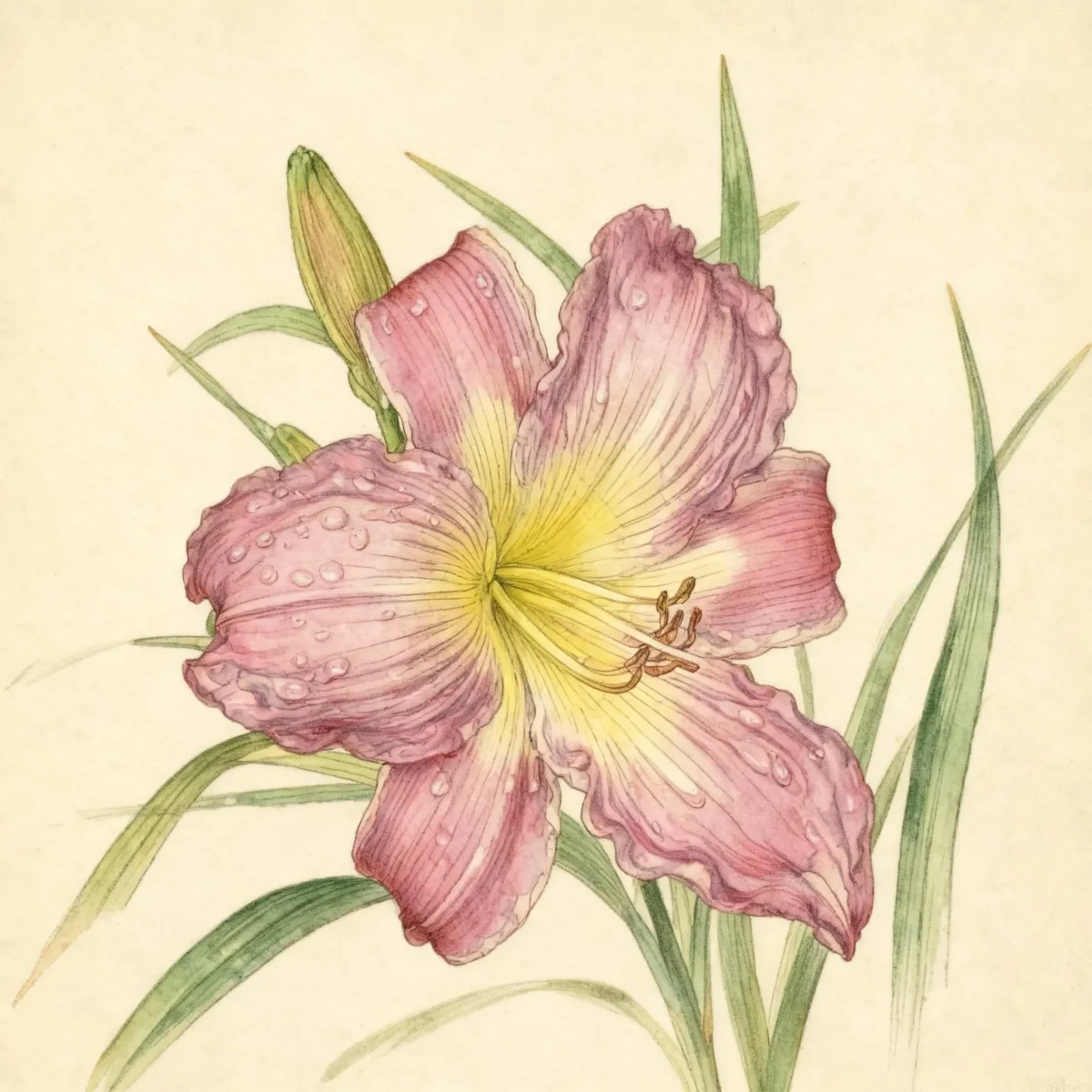
Daylily (Hemerocallis 'Mark Alan Carpenter')
The elegant Hemerocallis 'Mark Alan Carpenter' Daylily offers showy, fragrant orange blooms from July to August. Low maintenance and adaptable.
Scroll down to discover growing tips, care requirements, companion plants, and more

Complete Plant Information
Overview
The Hemerocallis ‘Mark Alan Carpenter’ is a robust, evergreen, reblooming tetraploid daylily highly valued for its exceptional floral display and ease of care. This cultivar produces large, showy, fragrant orange flowers, setting it apart in the perennial garden. As a modern hybrid, it represents the extensive breeding efforts within the Daylily genus, offering reliable mid-season color.
Growing to about two feet tall, this Daylily exhibits fibrous roots and flourishes in a wide range of conditions, though it prefers deep, fertile loam. Hemerocallis ‘Mark Alan Carpenter’ brings vibrant color from mid-summer well into the season due to its reblooming nature, making it an excellent anchor plant for borders and mass plantings. Its low maintenance requirements ensure gardeners can enjoy its beauty without extensive fuss.
These hardy herbaceous perennials offer significant aesthetic impact for minimal effort. Whether planted in groups or used as edging, the sword-shaped foliage combined with the vibrant orange blooms ensures that the garden remains attractive throughout the primary growing season. Plant Hemerocallis ‘Mark Alan Carpenter’ where you can enjoy its fragrance and mid-summer color saturation.
Fast Facts
- Plant Family: Asphodelaceae
- Plant Type: Herbaceous perennial
- Hardiness Zones: USDA Zones 3-9
- Size at Maturity:
- Height: 1.5-2 ft
- Spread: 1.5-2 ft
- Bloom Time: July to August
- Bloom Description: Orange with green throat
- Sun Exposure: Full sun to part shade
- Water Needs: Medium
- Maintenance Level: Low
How to Grow
Hemerocallis ‘Mark Alan Carpenter’ thrives when planted in average, medium moisture, well-drained soil. While they are highly adaptable, ensure the location receives either full sun or light afternoon shade; full sun exposure generally results in the heaviest bloom set. Spring is the best time for planting, especially in colder climates, allowing the plant to establish roots before winter dormancy sets in.
Watering should be consistent during dry spells, as Daylilies tolerate summer heat but appreciate deep watering to keep the foliage looking attractive. Maintenance is simple: deadhead spent flowers daily for neatness, and remove the entire scape once blooming has finished for the season. Fertilizing is rarely required if the soil is fertile, but a balanced feed in early spring can encourage vigorous new growth.
For optimal performance, plan to divide mature clumps of this Daylily every three to four years, ideally in early spring in cold zones. Since Hemerocallis ‘Mark Alan Carpenter’ is a winter dormant type, it requires a cold period; avoid planting it outside Zone 9 if you wish to maintain strong perennial performance. Prune back any damaged or dead foliage in late fall or early spring.
Landscape Uses
The reliable structure and vibrant color of the Hemerocallis ‘Mark Alan Carpenter’ make it an indispensable element in perennial borders. Its manageable height (up to 2 feet) positions it perfectly in the middle ground, backing shorter edging plants while sitting comfortably in front of taller shrubs or background screens. Use mass plantings of this Daylily to create dramatic sweeps of summer color across large areas of the landscape.
These herbaceous perennials integrate well into cottage garden designs, offering strong vertical lines with their grass-like foliage. They also function excellently as informal edging along pathways or driveways where a low-maintenance, low-growing specimen is preferred. While often used in masses, individual clumps of Hemerocallis ‘Mark Alan Carpenter’ provide excellent focal points near entryways where their fragrant qualities can be appreciated.
Standout Features
Flower Qualities
- Showy
- Fragrant
Noteworthy Characteristics
Hemerocallis is characterized by flowers that last only a single day, giving rise to the common name Daylily, though continuous blooming over a long period is achieved through successive flower production. The Hemerocallis ‘Mark Alan Carpenter’ cultivar is specifically noted as an evergreen, reblooming tetraploid with large, 7-inch orange flowers featuring wavy edges and a distinctive green throat. These plants showcase basal, linear foliage and bloom on sturdy, 2-foot scapes, offering reliable garden structure.
Tolerances
- Rabbit
Potential Problems
Daylilies, including the Hemerocallis ‘Mark Alan Carpenter’, are recognized as extremely adaptable and generally pest-free plants. Occasionally, common garden nuisances like aphids, mites, or thrips may appear, often on new growth or spent blooms. If Daylily rust becomes a concern in humid regions, ensure good air circulation and remove affected foliage promptly. It is worth noting that rabbits typically avoid consuming Daylily foliage, offering a measure of protection against browsing pests.
Frequently Asked Questions
What hardiness zones is Daylily suitable for?
Hemerocallis ‘Mark Alan Carpenter’ is suitable for USDA Hardiness Zones 3 through 9.
How large does Daylily grow?
This Daylily cultivar matures to a height between 1.5 and 2 feet, with a spread ranging from 1.5 to 2 feet.
When does Daylily bloom?
The primary bloom time for Hemerocallis ‘Mark Alan Carpenter’ is July to August, featuring orange flowers with a green throat.
What sun exposure does Daylily need?
This plant is adaptable and performs best in full sun to part shade conditions.
Conclusion
Hemerocallis ‘Mark Alan Carpenter’ stands out as a low-maintenance, high-impact garden performer, delivering reliable fragrance and vibrant orange color throughout the summer months. This adaptable Daylily is an excellent choice for gardeners seeking beauty without demanding deep cultivation practices. Check your local hardiness zone compatibility and plan to plant this superb specimen in spring for immediate enjoyment next season.
Companion Planting
Daylilies integrate seamlessly with many other summer bloomers due to their straightforward cultural needs. Consider pairing Hemerocallis ‘Mark Alan Carpenter’ with sturdy, upright perennials like ornamental grasses (e.g., Miscanthus or Calamagrostis) to complement the strap-like foliage. Plants that prefer similar sun and moisture levels, such as Coneflowers (Echinacea) or Black-Eyed Susans (Rudbeckia), create a classic, sun-drenched perennial border that maximizes the orange tones of the Daylily.
For contrast, use lower-growing foliage plants around the base where flowers fade. Hosta varieties with light green or variegated leaves offer texture and color contrast when the Daylily foliage is dormant or needs visual relief. Since Daylilies are rarely bothered by deer or rabbits, planting them near more susceptible species can create a natural barrier using the foliage of Hemerocallis as a shield.
Design Ideas
The tetraploid nature of Hemerocallis ‘Mark Alan Carpenter’ yields a strong, consistent clump of color, making it ideal for formal mass plantings where replication and uniformity are desired. Use these plants in drifts along the edge of a sweeping lawn area to delineate boundaries, relying on the evergreen nature to provide structure outside the main bloom season in warmer climates. Containers are also an excellent option, particularly when combined with trailing annuals that spill over the edges, contrasting the Daylily’s upright form.
Because this Daylily reblooms sporadically through summer, it helps bridge gaps between spring-blooming perennials and late-season bloomers like Asters. Place it slightly forward in a mixed border so that the large, showy blooms are accessible for cutting, though remember that individual flowers on the Daylily last only a day. The strong orange hue works well in warm color schemes featuring yellows, reds, and deep purples.