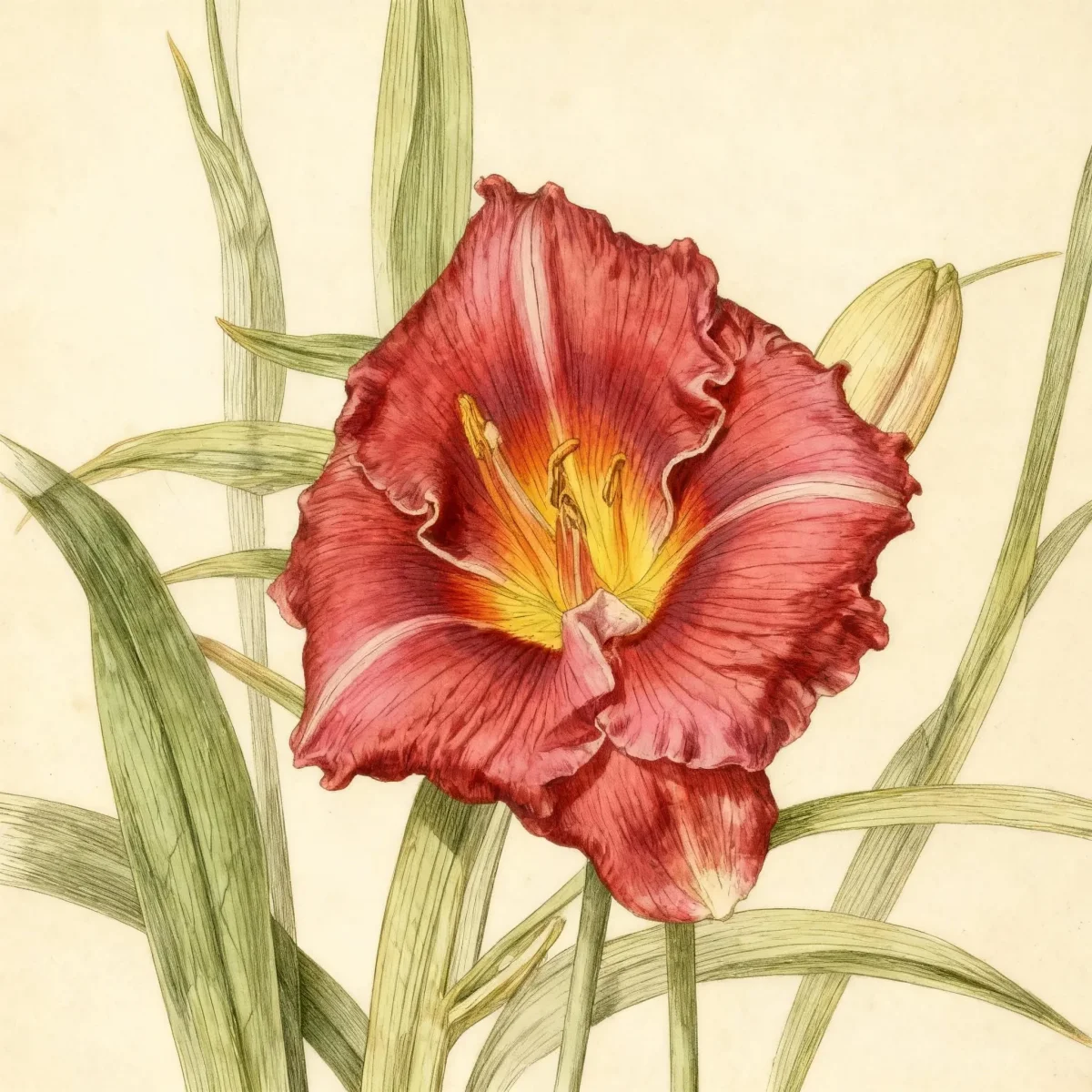
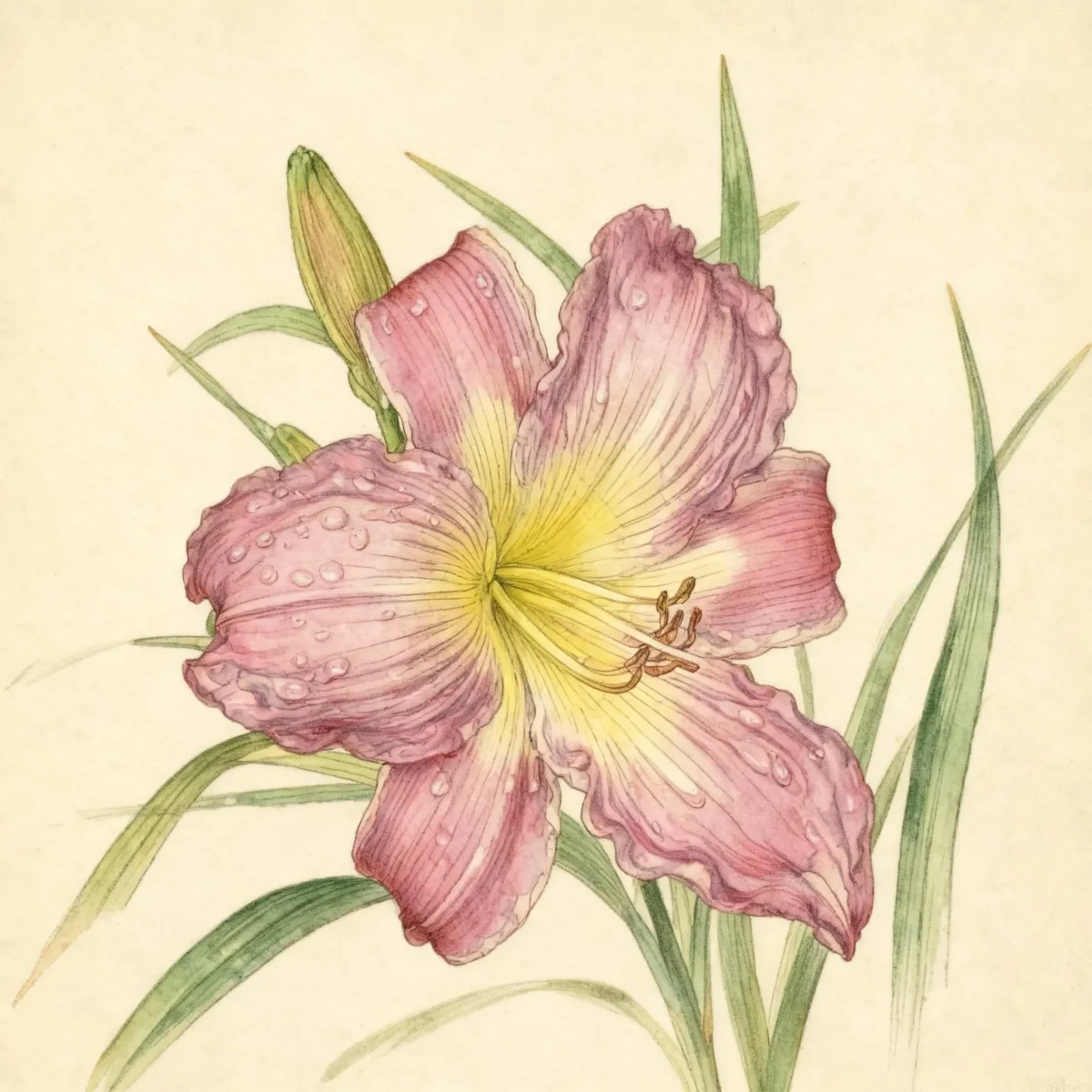
Daylily (Hemerocallis 'Sherri Eisner')
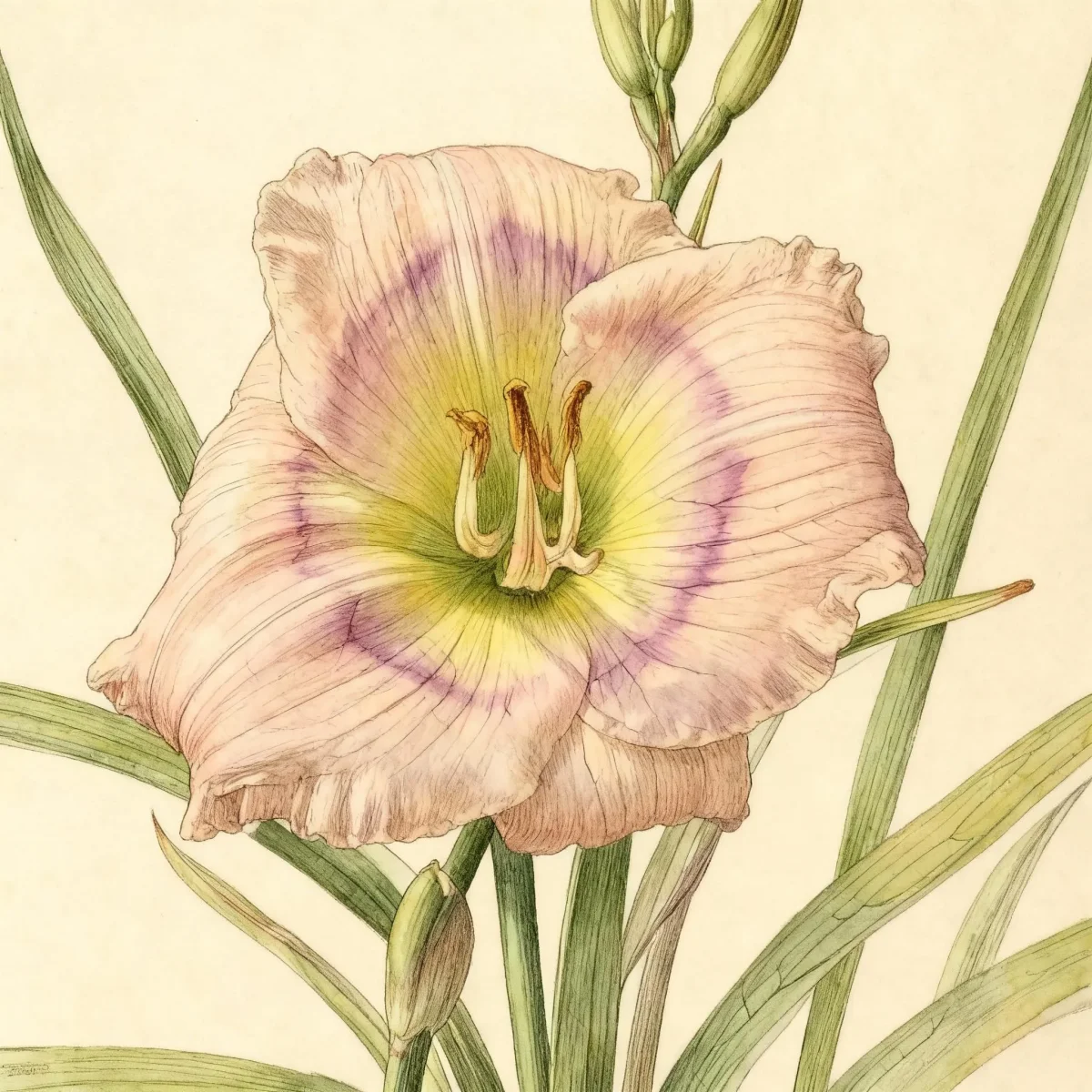
Hemerocallis 'Sherri Eisner' is a low-maintenance Daylily, blooming mid-summer with stunning light pink and blue-violet bicolor flowers.
Scroll down to discover growing tips, care requirements, companion plants, and more
Complete Plant Information
Overview
Hemerocallis ‘Sherri Eisner’ is a celebrated cultivar belonging to the genus famous for its resilient and vibrant Daylily blooms. This variety is valued by gardeners for its semi-evergreen nature and dependable reblooming habit, offering extended color through the season. As a tetraploid daylily, ‘Sherri Eisner’ exhibits robust performance and impressive flower substance.
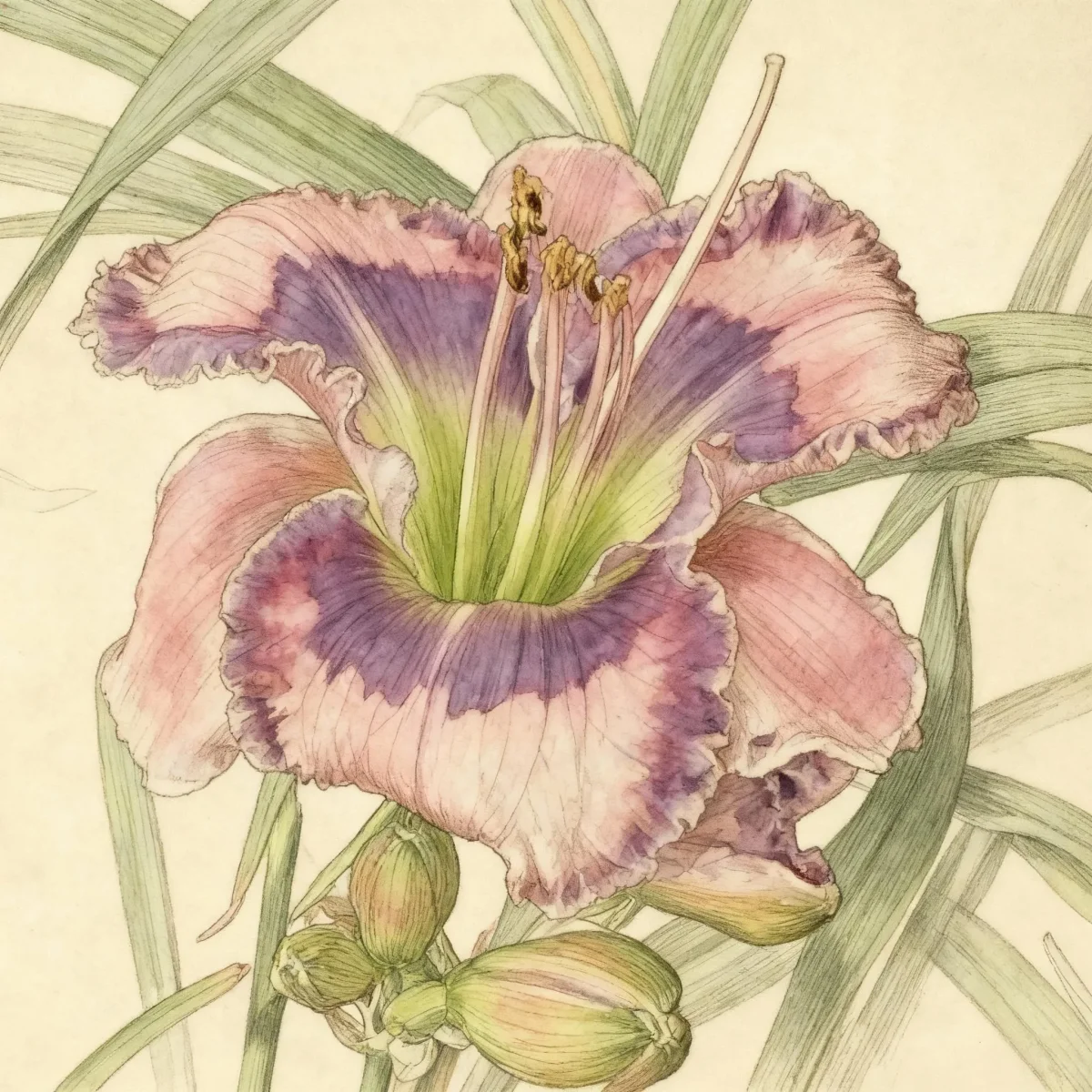
This herbaceous perennial thrives across a wide temperature range, succeeding in USDA Hardiness Zones 3 to 9. It is prized for its striking bi-color blooms—light pink set against a distinct violet-blue eye and bright green throat—making it an excellent focal point in mixed garden borders. Hemerocallis ‘Sherri Eisner’ is generally low maintenance, easily managed once established in suitable conditions.
Daylilies, in general, provide excellent texture with their grass-like foliage, offering structure even when not in flower. Hemerocallis ‘Sherri Eisner’ fits beautifully into nearly any landscape setting, requiring only average cultural conditions to deliver its stunning mid-season and sporadic summer displays.
Fast Facts
- Plant Family: Asphodelaceae
- Plant Type: Herbaceous perennial
- Hardiness Zones: USDA Zones 3-9
- Size at Maturity:
- Height: 1.5-2 ft
- Spread: 1.5-2 ft
- Bloom Time: July to August
- Bloom Description: Light pink and blue-violet bicolor with green throat
- Sun Exposure: Full sun to part shade
- Water Needs: Medium
- Maintenance Level: Low
How to Grow
Hemerocallis ‘Sherri Eisner’ should be planted when dormant, typically in spring or fall, allowing the root system time to establish before summer heat or deep winter cold. These daylilies perform best when situated in full sun, although they tolerate part shade, which may slightly reduce bloom quantity. They thrive in average, well-drained soils, though they particularly prefer deep, fertile loams for optimal vigor.
Maintenance for this robust Daylily is generally low. Deadheading spent flowers daily keeps the clump neat and encourages the continuous production of new scapes throughout the blooming season. Once the main flowering is complete, remove the entire flower stalk. Although tolerant of heat and humidity, provide deep watering during extended dry periods to keep the foliage looking fresh and actively growing.
For plants in colder zones (winter dormant types), the required cold period ensures strong reblooming; avoid planting true dormant types above Zone 9 where they might fail to enter dormancy. When clumps become overcrowded, typically every 3-4 years, divide them. Spring division is safest in regions with harsh winters, such as the cooler end of the suitable hardiness range for Hemerocallis ‘Sherri Eisner’.
Landscape Uses
Daylilies are indispensable, easy-to-grow herbaceous perennials perfect for adding long-lasting structure and vibrant color to the garden. Hemerocallis ‘Sherri Eisner’ acts as superb edging material along walkways or drives due to its manageable height of 1.5 to 2 feet. Their clumping habit makes them ideal for defining borders or creating sweeping drifts when mass-planted over large areas.
When designing beds, consider pairing this Daylily with plants that offer contrasting foliage texture, such as hostas or ornamental grasses, or late-season bloomers to extend the visual interest after the main flush of Hemerocallis ‘Sherri Eisner’ has passed. Because they establish quickly and tolerate various cultural conditions, they serve as excellent fill-ins while slower perennials mature.
For a classic cottage garden look, plant them alongside traditional border staples like peonies or rudbeckia. Their resilience under heat and humidity ensures that the Hemerocallis ‘Sherri Eisner’ remains attractive throughout the humid summer months when many other perennials may struggle.
Standout Features
Flower Qualities
- Showy
Noteworthy Characteristics
The genus Hemerocallis comprises adaptable herbaceous perennials native primarily to Asia and Europe, though modern cultivars like ‘Sherri Eisner’ are the result of extensive hybridization efforts. Each individual bloom lasts only a single day, yet the prolific succession guarantees a long display period, especially notable in reblooming cultivars. Hemerocallis ‘Sherri Eisner’ is specifically a tetraploid known for its 4.5-inch light pink flowers contrasted by a violet-blue eye and vibrant green throat, held high on sturdy 2.5-foot scapes.
Tolerances
- Rabbit
Potential Problems
Daylilies are remarkably adaptable and generally resist pests and diseases, often described as extremely adaptable perennials. The most common issues involve minor pests such as mites, aphids, or thrips, which can usually be managed with horticultural soap or careful monitoring. A more serious, though geographically dependent, concern is Daylily rust, requiring diligence in keeping foliage dry and ensuring good air circulation. Rabbits typically leave this Daylily untouched due to its undesirable taste.
To prevent issues, always ensure well-drained soil, as standing water invites root problems. For pest management, inspect new growth regularly; healthy plants are far less susceptible. Pruning out visibly damaged or diseased foliage promptly can prevent the spread of any minor fungal issues that might arise.
Frequently Asked Questions
What hardiness zones is Daylily suitable for?
Hemerocallis ‘Sherri Eisner’ is highly adaptable, suitable for gardeners in USDA Zones 3 through 9.
How large does the Daylily grow?
This cultivar typically reaches a height between 1.5 and 2 feet tall, spreading to match its height at maturity.
When does Hemerocallis ‘Sherri Eisner’ bloom?
The primary bloom time for this Daylily is from July to August, featuring its signature light pink and blue-violet bicolor flowers with a green throat.
What sun exposure does the Daylily need?
For the best performance and maximum blooms, plant Hemerocallis ‘Sherri Eisner’ where it receives full sun, though it tolerates light afternoon shade.
Conclusion
Hemerocallis ‘Sherri Eisner’ offers exceptional value to the home gardener, providing low-maintenance structure complemented by unique, colorful blooms across a long season. This dependable Daylily cultivar is tough enough for mass planting yet attractive enough for close inspection. Before planting, confirm your local USDA zone compatibility and prepare average, well-drained soil to ensure your Hemerocallis ‘Sherri Eisner’ provides years of beauty.
Companion Planting
Selecting the right companions enhances the overall garden composition, especially considering the foliage architecture of the Daylily. Since this plant prefers medium moisture and full sun to part shade, pair it with plants having similar needs for a low-stress environment. Consider using early-blooming bulbs like spring-flowering alliums, whose foliage fades just as the Daylilies begin to ramp up their summer display.
For contrast in texture and color throughout the summer, consider planting drifts of upright ornamental grasses alongside the Hemerocallis ‘Sherri Eisner’. Hostas planted nearby can offer broad, contrasting leaf shapes beneath taller specimens, though ensure the Hosta receives adequate light if placing it near the edge of the Daylily’s shade tolerance.
Propagation Tips
Since the vast majority of commercially available plants, including Hemerocallis ‘Sherri Eisner’, are complex hybrids, they will not grow true to type from seed. The primary method for increasing your stock of this Daylily is division. Plants should be divided every three to four years to maintain vigor and bloom quality, ideally in the spring in cold climates, or in early fall elsewhere.
To divide, carefully lift the entire clump using a spading fork. You can then use a sharp spade or large knife to separate the fans of foliage into smaller sections, ensuring each division has healthy roots and several growing points (eyes). Replant the separated divisions immediately at the same depth they were previously growing.