Pomegranate (Punica granatum 'SMNPGMF' PEPPY LE POM)
Discover Punica granatum 'SMNPGMF' PEPPY LE POM, a dwarf Pomegranate shrub offering striking orange blooms perfect for containers in Zones 7-10.
Scroll down to discover growing tips, care requirements, companion plants, and more
Complete Plant Information
Overview
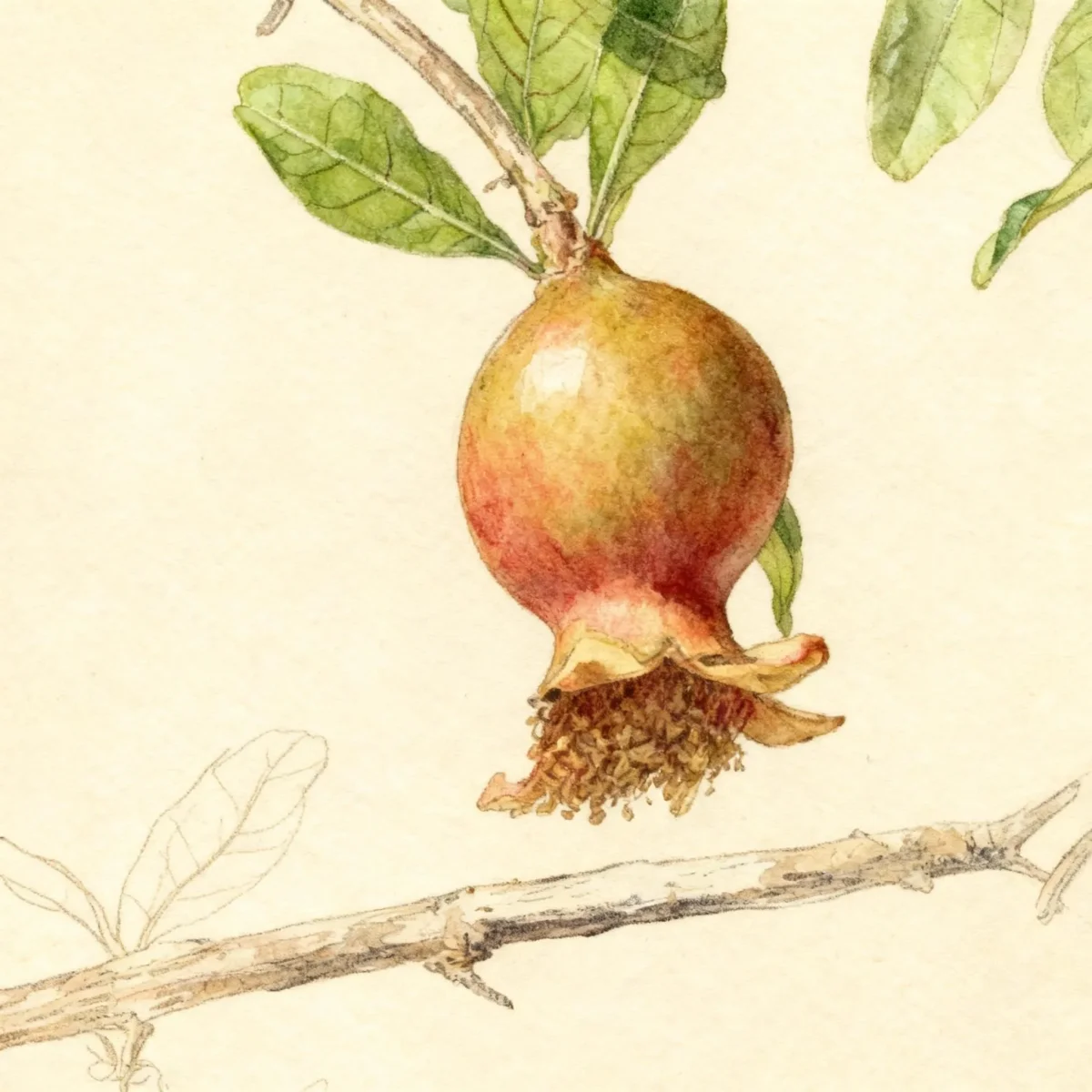
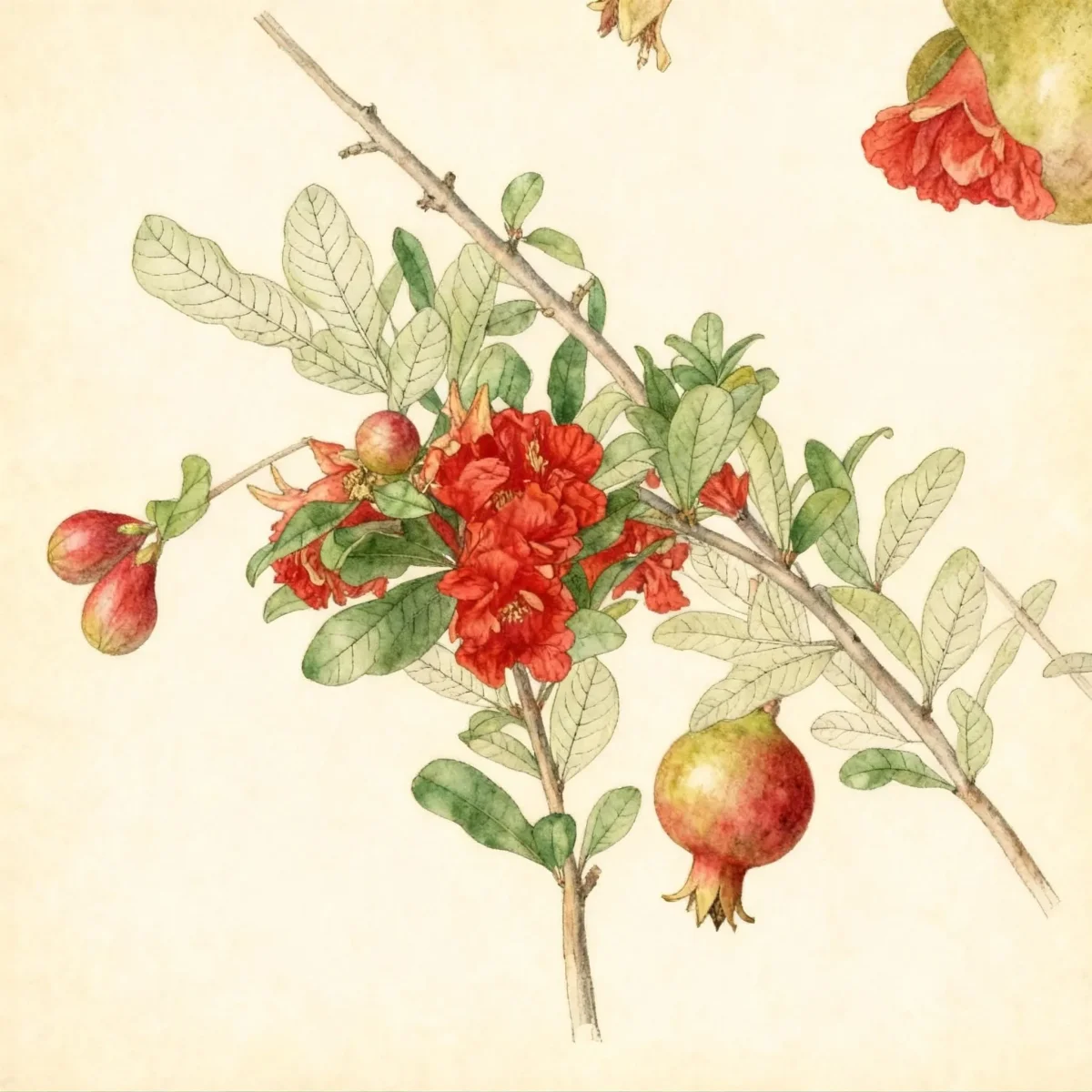
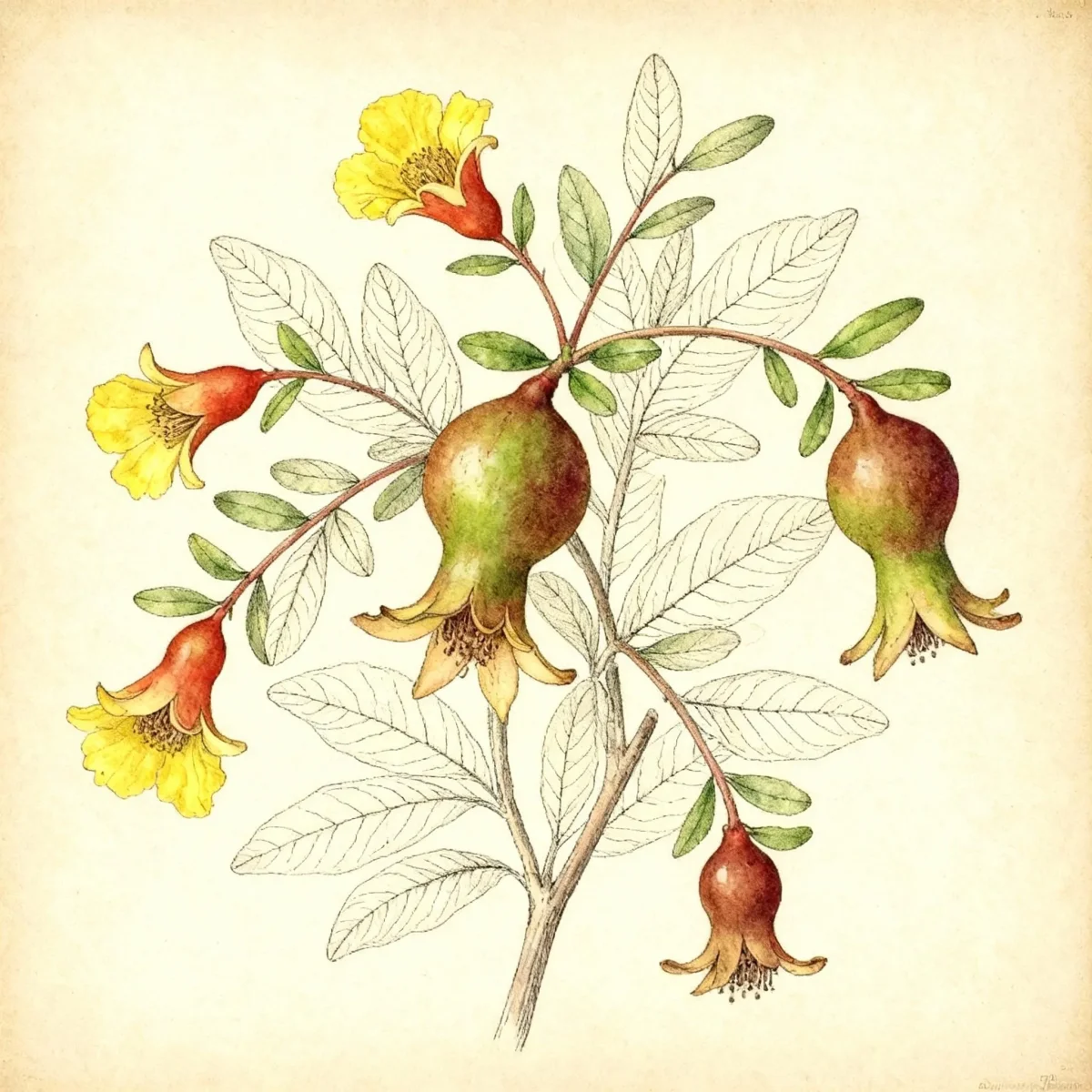
Punica granatum ‘SMNPGMF’ PEPPY LE POM, known commonly as the dwarf Pomegranate, is an exceptional cultivar prized for its manageable size and vibrant ornamental display. This plant offers bright orange, pendulous flowers throughout the summer, making it a stunning focal point in smaller gardens or container settings. While the species Pomegranate is known for large edible fruit, this cultivar results in small, unpalatable fruits, focusing its value instead on year-round aesthetic appeal.
This deciduous shrub thrives best where summers are long, hot, and dry, though the ‘SMNPGMF’ PEPPY LE POM variety exhibits improved cold tolerance, reaching hardiness down to USDA Zone 7. Gardeners can enjoy the glossy green foliage that turns yellow in the autumn, complemented by the bright summer blossoms. Its naturally semi-dwarf stature, maxing out around 4 feet tall, defines it as a perfect specimen for patios or front borders.
As a Mediterranean native, the Pomegranate requires specific attention to drainage and water stress to perform optimally. Successful cultivation of Punica granatum ‘SMNPGMF’ PEPPY LE POM relies on providing it with full sun and avoiding consistently wet roots. Its moderate maintenance level is justified by the rewarding display of color it brings from mid-summer until early fall.
Fast Facts
- Plant Family: Lythraceae
- Plant Type: Deciduous shrub
- Hardiness Zones: USDA Zones 7-10
- Size at Maturity:
- Height: 3-4 ft
- Spread: 2-3 ft
- Bloom Time: July to August
- Bloom Description: Orange
- Sun Exposure: Full sun
- Water Needs: Dry to medium
- Maintenance Level: Medium
How to Grow
For optimal establishment, plant Punica granatum ‘SMNPGMF’ PEPPY LE POM in late winter or early spring, ensuring the soil is organically rich and extremely well-drained. This shrub requires full sun exposure to support its best ornamental quality and flowering. While it tolerates dry conditions once established, ensure the planting site is prepared with fertile loam to encourage robust growth in its juvenile stage.
Water deeply but infrequently, allowing the soil to nearly dry out completely between waterings, mimicking the arid conditions preferred by the species. Pruning should be performed selectively in late winter to shape the plant and remove any weak wood. A critical maintenance task is the prompt removal of any soil suckers that emerge around the base of the plant to maintain its upright, multi-stemmed habit.
For gardeners in or near its hardiness limit (Zone 7), or those growing this container-friendly Pomegranate variety, overwintering becomes essential. Plants grown in containers must be moved indoors to a bright, cool location, reducing water significantly during dormancy. This preparation protects the plant from hard freezes while ensuring the dwarf Punica granatum ‘SMNPGMF’ PEPPY LE POM remains healthy for the next growing season.
Landscape Uses
The compact nature of the Punica granatum ‘SMNPGMF’ PEPPY LE POM makes it an outstanding choice for container plantings where its vivid orange blooms can be appreciated up close. Its manageable size, only reaching about 4 feet high and 3 feet wide, allows it to serve perfectly as an eye-catching thriller in mixed summer patio displays. Furthermore, its drought tolerance after establishment makes it suitable for sunny border edges where more demanding plants might struggle.
When incorporating this dwarf Pomegranate into landscape designs, consider pairing it with plants that appreciate excellent drainage and similar full-sun requirements, perhaps low-growing sedums or drought-tolerant ornamental grasses. In temperate climates, the plant’s defined vertical shape can be used to add structure without overwhelming smaller garden beds. Its formal, upright habit also lends itself well to being trained as a standalone specimen or even as a charming subject for bonsai culture.
Standout Features
Flower Qualities
- Showy
Fruit Qualities
- Showy
Noteworthy Characteristics
Punica granatum, commonly called pomegranate, develops into a multi-stemmed deciduous shrub or small tree known for its attractive ornamental features and historically, edible fruit. This cultivar, ‘SMNPGMF’ or PEPPY LE POM, is specifically a dwarf variety featuring pendulous, bright orange flowers that bloom throughout summer. Mature plants typically only reach up to 4 feet tall with a 3-foot spread, offering a controlled footprint perfect for modern gardening spaces.
Tolerances
- Deer
- Dry Soil
Potential Problems
While Punica granatum ‘SMNPGMF’ PEPPY LE POM offers improved cold tolerance, understanding its inherent cultural needs is crucial for preventing common issues. The species naturally prefers dry, arid conditions with significant summer heat (above 90°F) to properly set fruit, though this dwarf cultivar prioritizes bloom and form. Deer generally avoid this plant, which is a benefit in many residential settings.
Gardeners should scout regularly for potential insect pests typical of the species, including scale insects, stem borers, caterpillars, whitefly, and mealybugs; early identification and appropriate treatment are key to healthy foliage. Fungal issues such as leaf spots, fruit blotch, and various rots can occur, particularly if the plant is kept too moist or drainage is poor, emphasizing the need for that well-drained loam.
Frequently Asked Questions
What hardiness zones is Pomegranate suitable for?
This specific cultivar, Punica granatum ‘SMNPGMF’ PEPPY LE POM, is winter hardy in USDA Zones 7-10.
How large does Pomegranate grow?
At maturity, this dwarf variety reaches a compact height of 3 to 4 feet and a spread of 2 to 3 feet.
What sun exposure does Pomegranate need?
The Pomegranate requires full sun exposure to flower profusely and maintain its dense, attractive structure.
When does Pomegranate bloom?
The attractive orange flowers of the Punica granatum ‘SMNPGMF’ PEPPY LE POM typically appear from July through August.
Conclusion
Punica granatum ‘SMNPGMF’ PEPPY LE POM is a distinctive, low-growing shrub that brings undeniable summer vibrancy to any landscape through its showy orange blooms. Its manageable size and enhanced cold tolerance make this Pomegranate an excellent choice for container gardening or defined border placements. Before planting, always confirm your local hardiness zone and ensure you can provide the full sun and dry-to-medium water conditions this beautiful shrub demands.
Companion Planting
When selecting companions for your Punica granatum ‘SMNPGMF’ PEPPY LE POM, focus on drought-tolerant perennials and shrubs that complement its love for high heat and excellent drainage. Plants native to Mediterranean or arid climates often share similar cultural requirements, ensuring all residents of the planting bed thrive without excess moisture. Pairing it with silvery-leaved plants, like certain varieties of Artemisia or Stachys byzantina (Lamb’s Ears), can create a beautiful textural contrast against the glossy green leaves of the Pomegranate.
Consider using low-profile companions that won’t compete for sunlight at the base of this 3-4 foot shrub. Lavender (Lavandula spp.) is an excellent partner, offering complementary purple-blue flowers and aromatic foliage that thrives in similar sunny, dry conditions. This strategic grouping enhances the visual interest while simplifying your watering schedule to accommodate the collective preference for soil that dries out between thorough waterings.
Container Growing
The compact stature of Punica granatum ‘SMNPGMF’ PEPPY LE POM makes container gardening one of its ideal applications, especially for overwintering indoors in colder climates. Select a heavy decorative container that will stabilize the plant as it grows and one featuring ample drainage holes. Use a fertile, well-drained potting mix, avoiding standard garden soil which compacts too easily in containers.
During the active summer growing season, container-grown plants will require more consistent moisture than those planted in the ground, though you must still adhere to the dry-to-medium watering prescription—never allow the pot to sit in standing water. In regions where winter temperatures dip below Zone 7, plan to move the container indoors before the first hard frost, placing it in a bright, cool space for dormancy, reducing water drastically until spring returns.