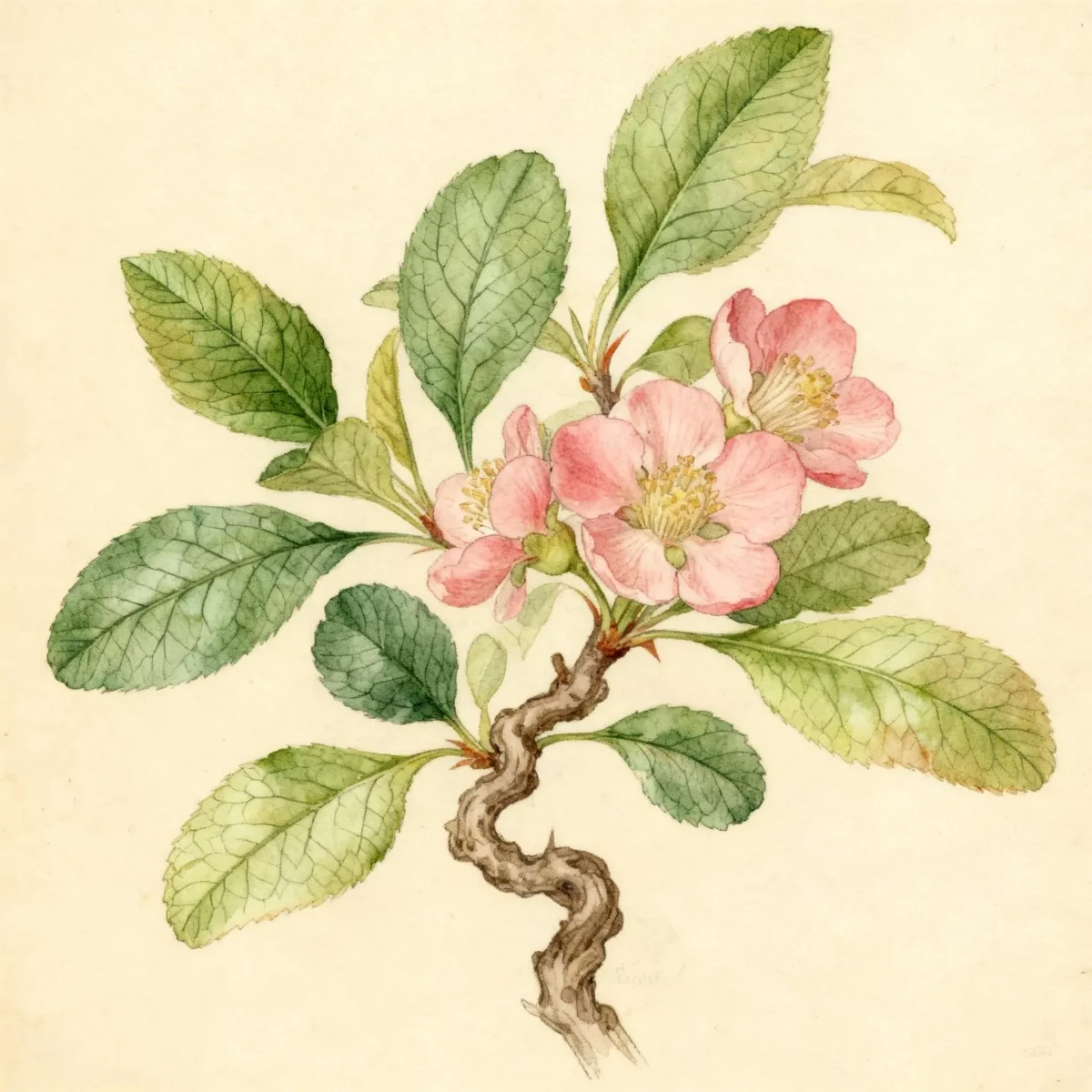
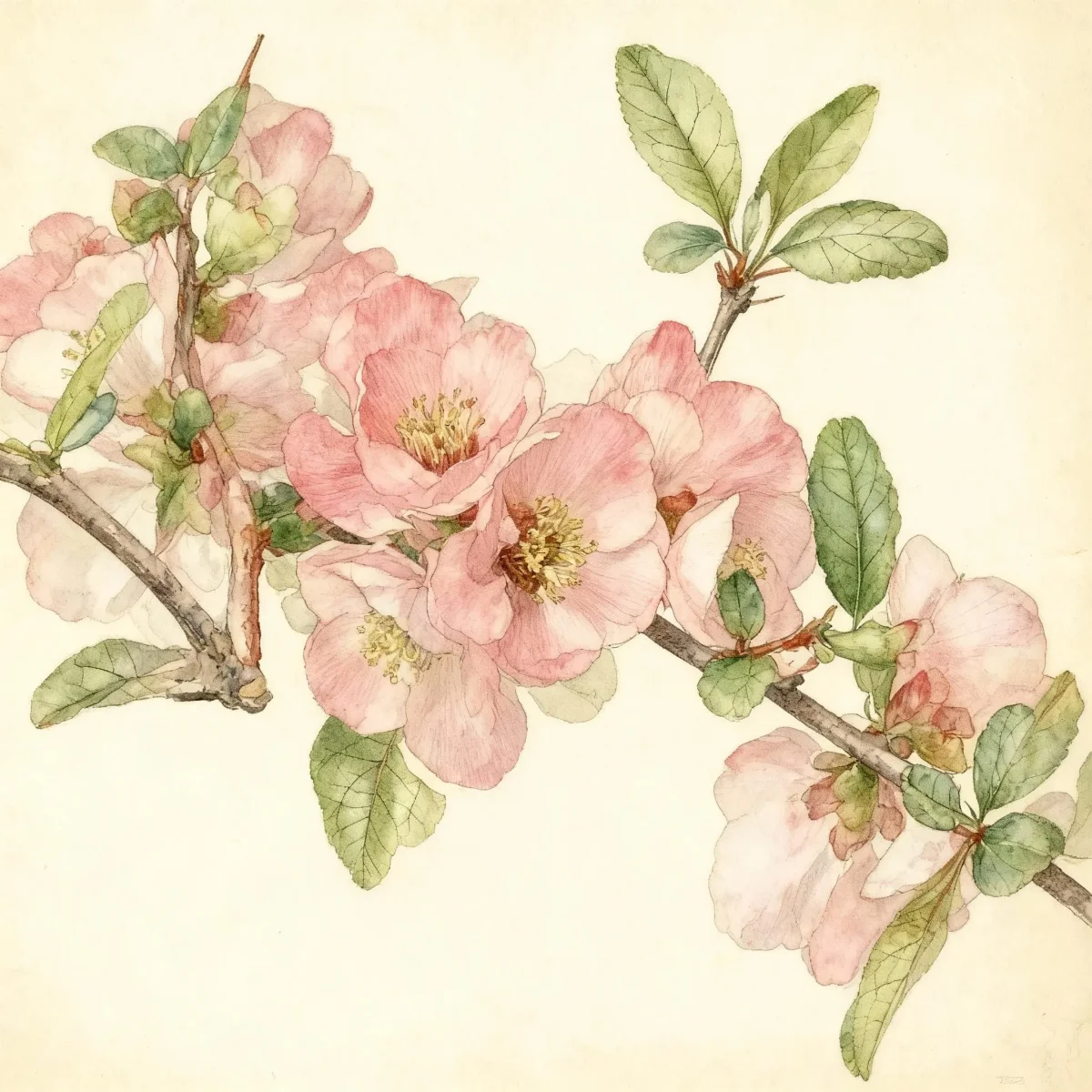
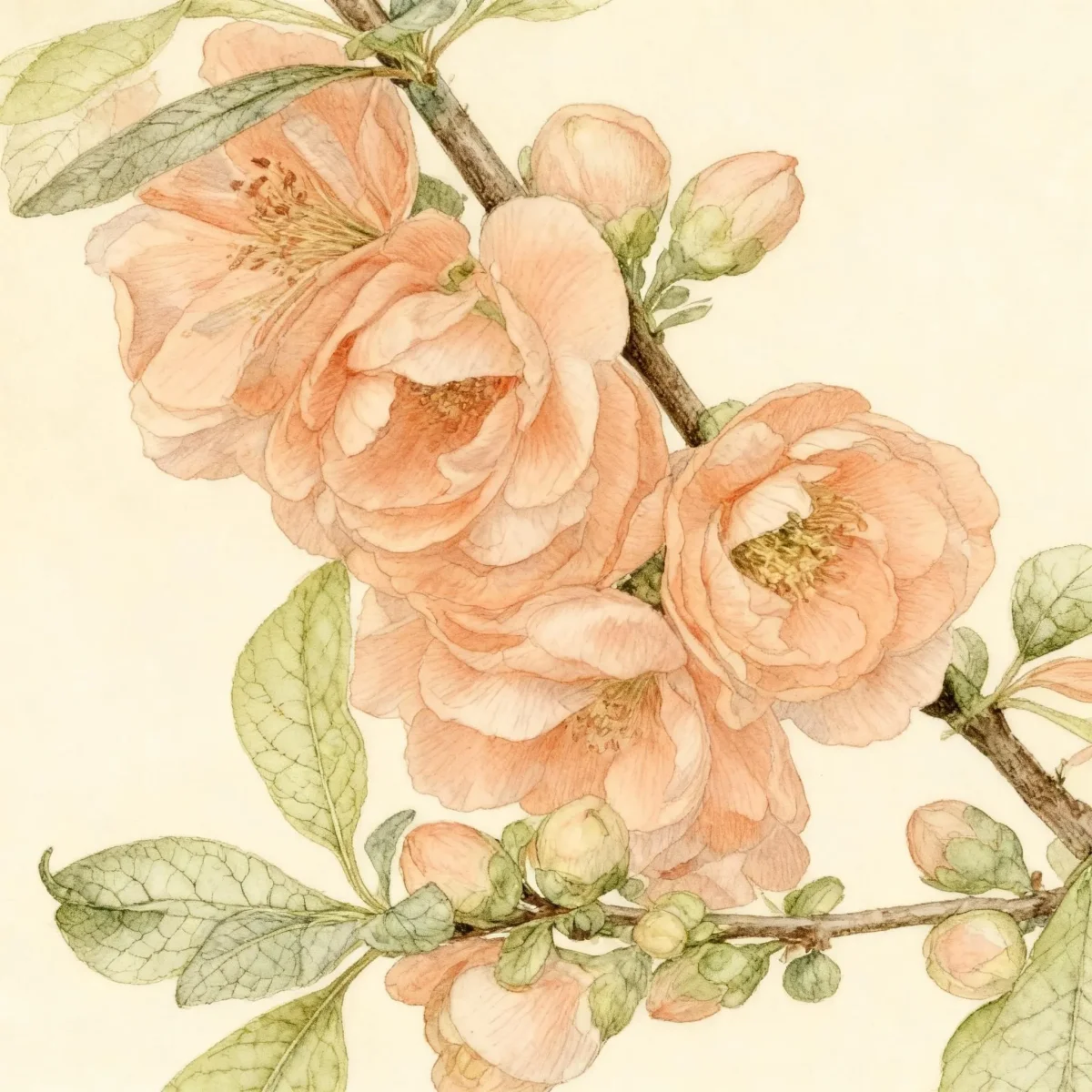
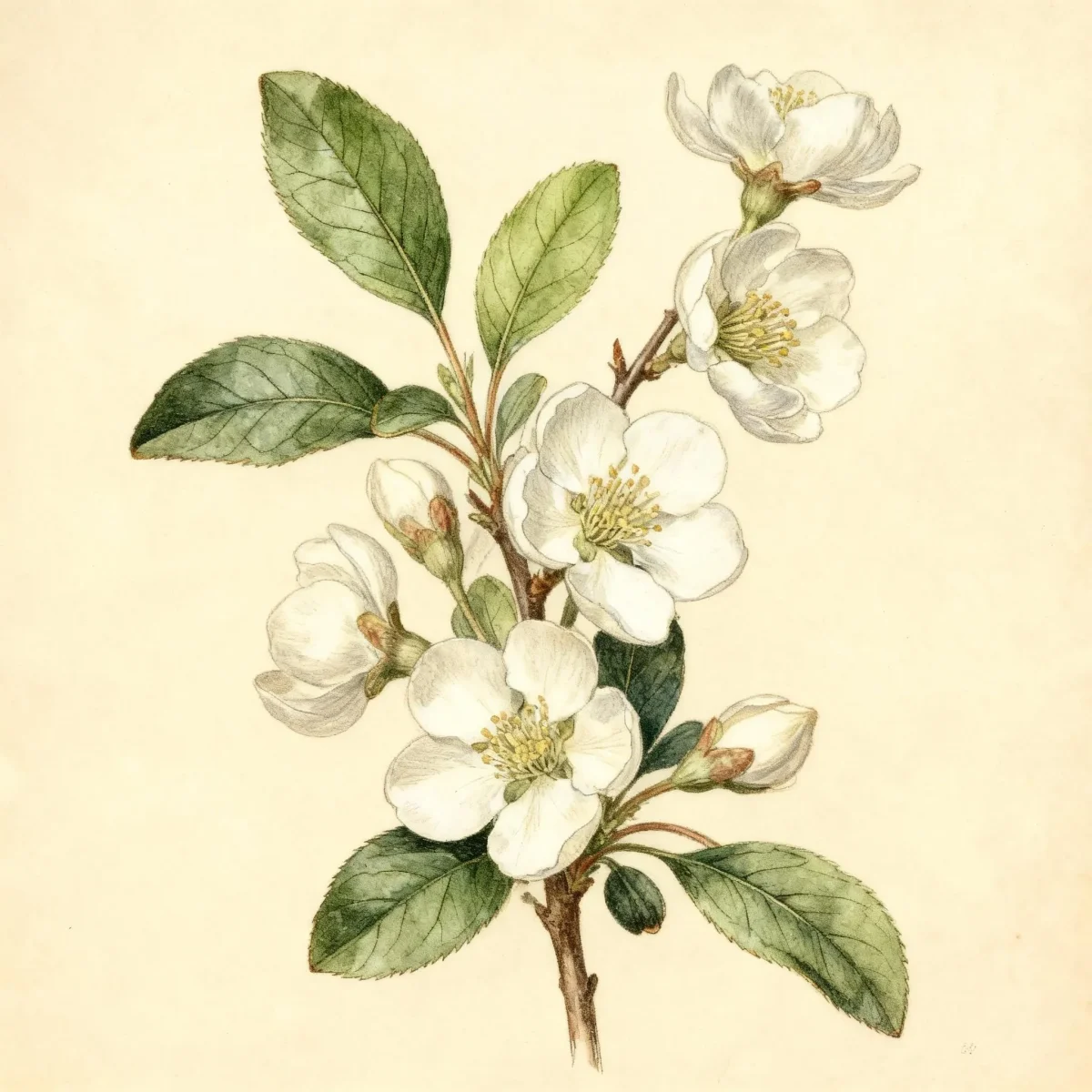
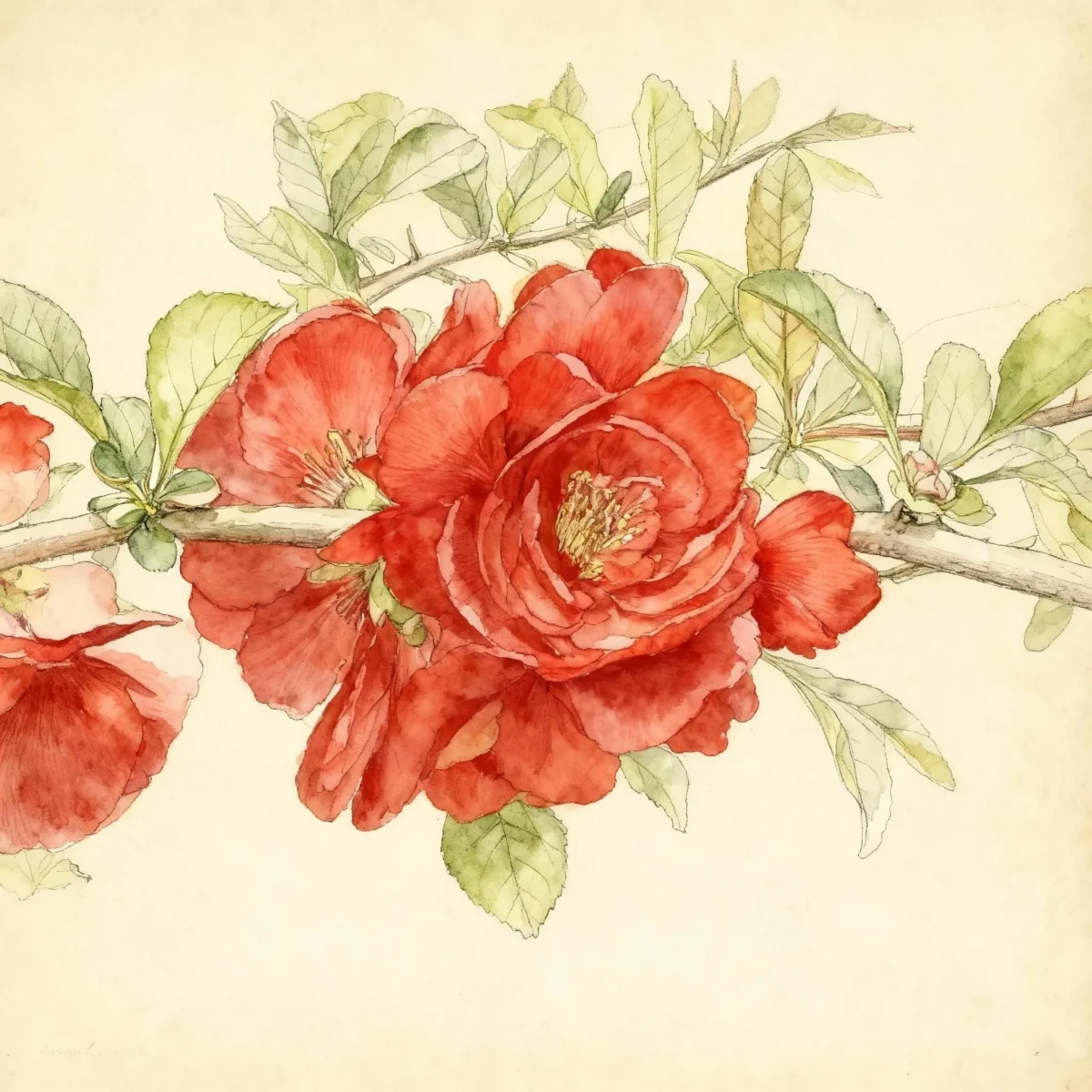
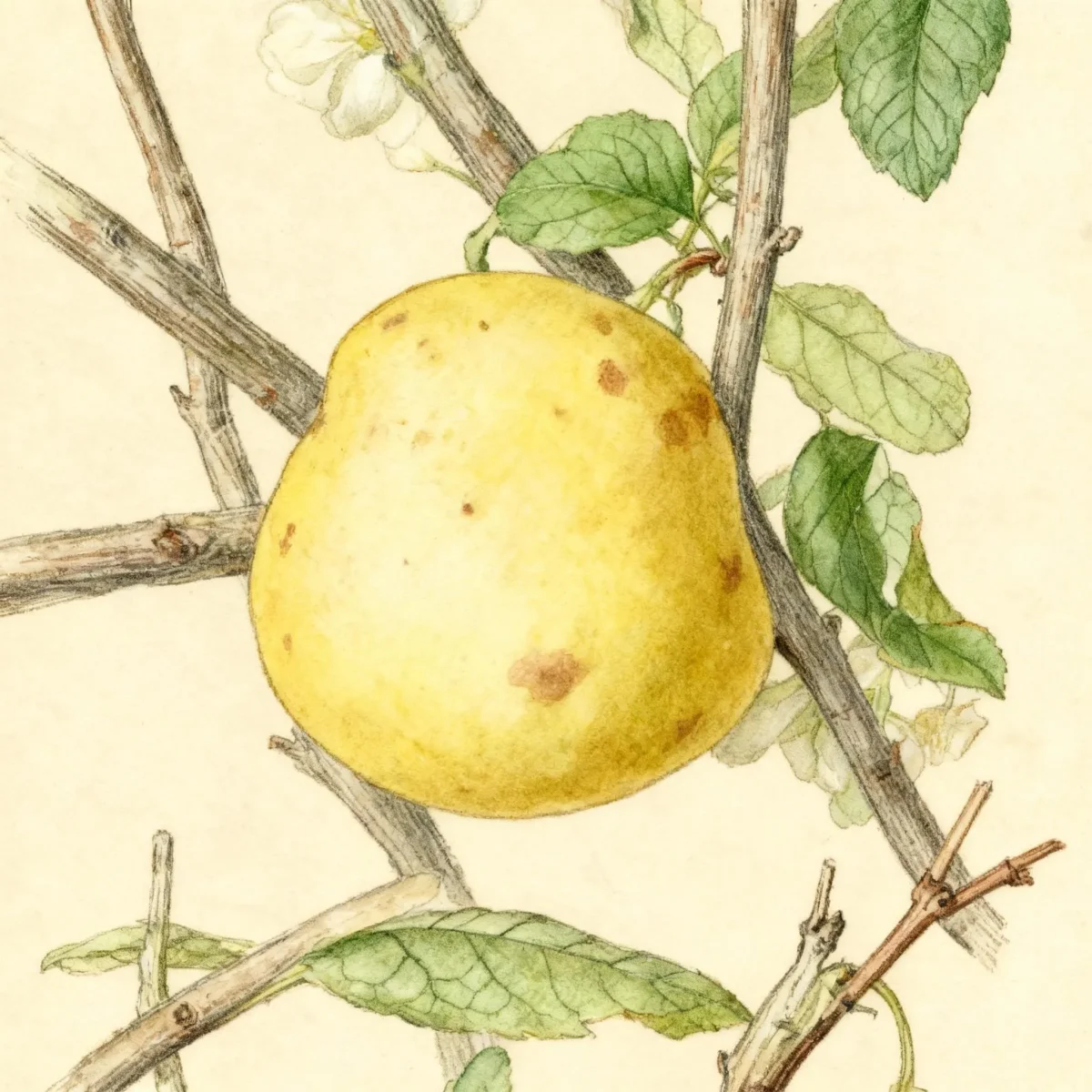
Flowering quince (Chaenomeles speciosa 'NCCS4' DOUBLE TAKE PEACH)
Discover Chaenomeles speciosa 'NCCS4' DOUBLE TAKE PEACH, a low-maintenance Flowering quince known for its peachy-orange double blooms.
Scroll down to discover growing tips, care requirements, companion plants, and more
Complete Plant Information
Overview
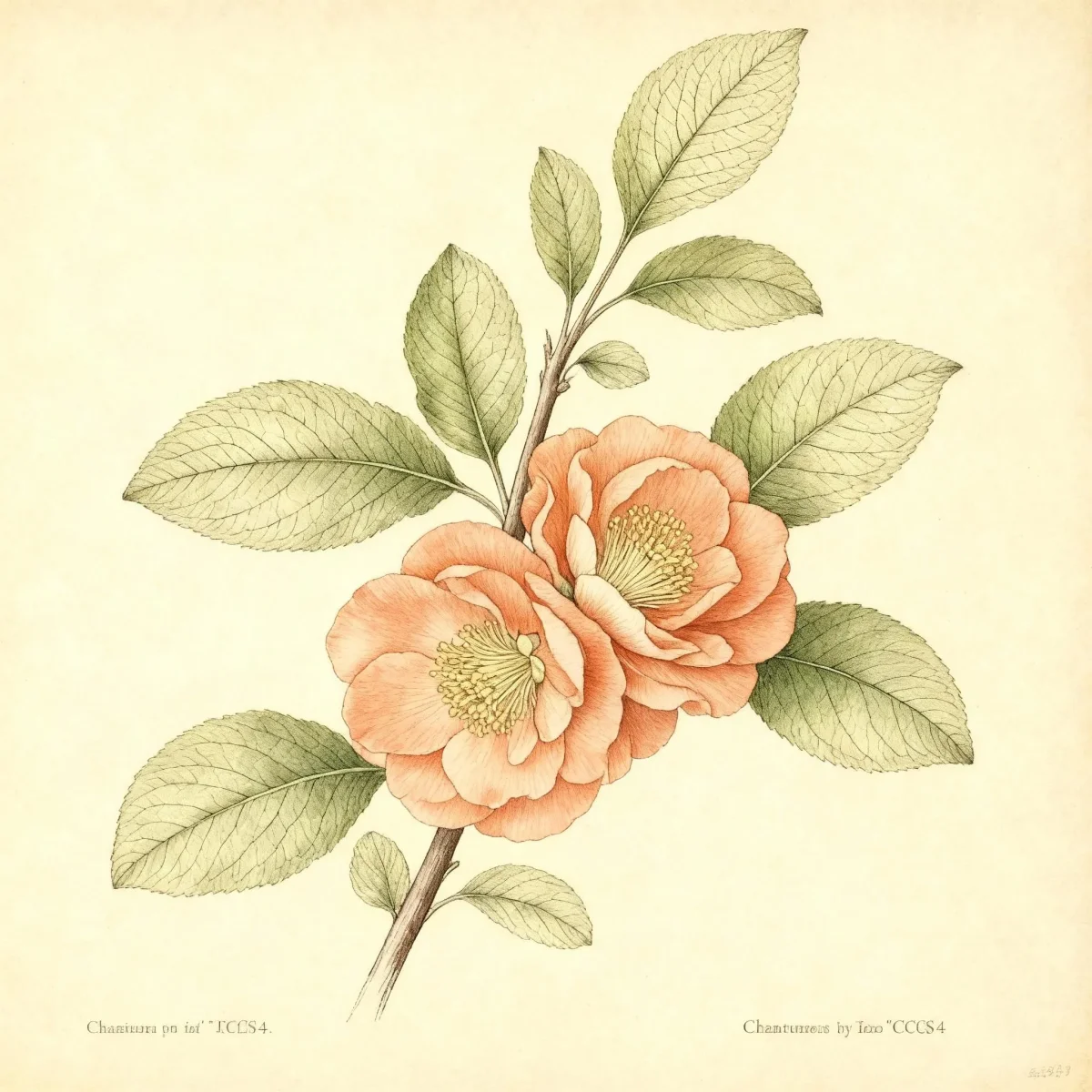
Chaenomeles speciosa ‘NCCS4’ DOUBLE TAKE PEACH is a celebrated deciduous shrub prized for its spectacular early spring floral display. Unlike many traditional varieties, this selection offers semi-double, peachy-orange blooms, which provide a warm contrast to the late winter landscape. Gardeners appreciate this flowering quince for its reliability and its relatively low maintenance needs once established.
This cultivar, commonly sold as DOUBLE TAKE PEACH, maintains a manageable, broad-rounded stature, typically reaching 4 to 5 feet tall and wide. It is an excellent choice for adding structure and vibrant color to the garden well before most other woody plants begin to flower. The dense, somewhat tangled branching habit of the flowering quince also offers excellent skeletal interest during winter.
While the species itself can be thorny, the Chaenomeles speciosa ‘NCCS4’ DOUBLE TAKE PEACH cultivar is noted for its thornless stems, making it safer and more pleasant for use in high-traffic areas or as a landscape border. Its hardiness across multiple zones and adaptability to varying soil conditions make it a robust addition to many gardens.
Fast Facts
- Plant Family: Rosaceae
- Plant Type: Deciduous shrub
- Hardiness Zones: USDA Zones 5-9
- Size at Maturity:
- Height: 4-5 ft
- Spread: 4-5 ft
- Bloom Time: March to April
- Bloom Description: Peachy-orange
- Sun Exposure: Full sun to part shade
- Water Needs: Medium
- Maintenance Level: Low
How to Grow
Plant Chaenomeles speciosa ‘NCCS4’ DOUBLE TAKE PEACH in the fall or early spring when dormant for best establishment results. It thrives in average, medium moisture, well-drained soil. While it adapts to a wide range of conditions, including clay soil, ensure drainage is adequate to prevent root issues. Maximum flowering is achieved when placed in a location receiving full sun, though it tolerates partial shade.
Water established plants consistently to maintain medium soil moisture, especially during prolonged dry spells, as established plants tolerate occasional drought. Fertilizing is rarely necessary if the plant is sited correctly in decent native soil. Since Chaenomeles speciosa ‘NCCS4’ DOUBLE TAKE PEACH blooms on old wood, heavy pruning must be avoided.
Pruning should be minimal and limited only to shaping or removing dead wood. If shaping is necessary, perform this task in the spring immediately after the flowers fade. This timing minimizes the removal of current year’s flower spurs. Be diligent about promptly removing any root suckers that try to emerge to maintain the desired compact, rounded form of your main shrub.
Landscape Uses
The dense, floriferous nature of the flowering quince makes it highly valuable for structured plantings. Its mature size of 4 to 5 feet makes it an ideal choice for formal or informal hedges where a medium-height screen is desired. It also works perfectly as a sturdy specimen plant placed strategically within a shrub border to highlight its spring display.
For a classic cottage garden feel, plant it in groups, allowing the tangled branches to create textural interest. Branches from Chaenomeles speciosa ‘NCCS4’ DOUBLE TAKE PEACH can also be clipped and forced indoors. Bringing these indoors provides a spectacular, long-lasting display of peachy-orange color during late winter when few other plants are blooming.
Consider pairing this robust shrub with early spring bulbs like daffodils or tulips which will emerge as the quince begins to drop its petals, ensuring continuous seasonal interest. Because of its low maintenance and structural presence, it serves well as a year-round backdrop for more delicate perennials.
Standout Features
Flower Qualities
- Showy
Noteworthy Characteristics
Chaenomeles speciosa, commonly called flowering quince, is a dense, broad-rounded, deciduous shrub with often-tangled, spiny, gray-brown twigs. This specific selection, ‘NCCS4’ DOUBLE TAKE PEACH, is a medium-sized, floriferous cultivar featuring a stunning display of peachy-orange, semi-double blooms atop thornless stems. Flowers typically bloom before the leaves fully unfold in an early spring show, followed occasionally by sporadic reblooming in the fall.
Tolerances
- Drought
- Clay Soil
Potential Problems
Flowering quince plants are generally robust, but susceptible to a few common issues, primarily fungal diseases. In wet springs, you may observe fungal leaf spot, which can cause significant leaf drop; ensuring good air circulation through proper spacing can help mitigate this. Fireblight and scab are also potential concerns depending on your specific region and weather patterns.
Pest pressure is usually low, but watch new growth for damage caused by aphids, which can be messy and distort developing shoots. Scale insects and mites can also occasionally infest the plant, requiring spot treatment if populations become severe. A common cultural issue observed is chlorosis—yellowing foliage—which almost exclusively occurs when the plant is situated in soils with a high pH level.
Spring frosts pose a threat to the flower buds, as early warm spells can trick the plant into blooming, only for a subsequent hard freeze to damage the open flowers, reducing the spring show. Managing care for your Chaenomeles speciosa ‘NCCS4’ DOUBLE TAKE PEACH involves monitoring for these specific issues rather than routine intensive care.
Frequently Asked Questions
What hardiness zones is Flowering quince suitable for?
Chaenomeles speciosa ‘NCCS4’ DOUBLE TAKE PEACH is suitable for USDA Hardiness Zones 5 through 9.
How large does Flowering quince grow?
This shrub typically matures to a size of 4 to 5 feet in height and spreads between 4 to 5 feet wide, maintaining a rounded habit.
What sun exposure does Chaenomeles speciosa ‘NCCS4’ DOUBLE TAKE PEACH need?
For the best performance and most abundant blooms, Chaenomeles speciosa ‘NCCS4’ DOUBLE TAKE PEACH requires full sun, though it will tolerate part shade.
When does Flowering quince bloom?
The main bloom time for this flowering quince is early spring, generally spanning from March into April, featuring notable peachy-orange flowers.
Conclusion
The Chaenomeles speciosa ‘NCCS4’ DOUBLE TAKE PEACH offers exceptional value as a low-maintenance, thornless shrub delivering one of the earliest and most vibrant spring color splashes. Its peachy-orange semi-double flowers set it apart from standard flowering quince varieties. Plan your spring garden additions now, ensuring you site this robust flowering quince in a full sun location compatible with Zones 5-9 for years of reliable, low-effort beauty.
Companion Planting
When planning your planting scheme around your Flowering quince, focus on companions that share either similar sun and water needs or provide a visual contrast post-bloom. Consider planting early-flowering bulbs like Muscari (Grape Hyacinth) or Narcissus directly beneath the canopy; their blue and yellow flowers create a stunning contrast against the peachy-orange blossoms of the Chaenomeles speciosa ‘NCCS4’ DOUBLE TAKE PEACH.
For summer structure, plants that enjoy well-drained soil but can handle drought once established work well, such as Russian Sage (Perovskia atriplicifolia) or certain ornamental grasses. These choices ensure that the area maintains visual interest long after the potent spring display of the flowering quince has concluded.
Seasonal Care Calendar
Spring is the critical time for this shrub. Plan to prune any necessary shaping immediately after the initial show ends in April or May, as removing wood later will eliminate next year’s flowers. Monitor for early frosts which can damage the developing flower buds, but little intervention is usually possible beyond selecting a slightly sheltered planting site for future specimens.
Summer care centers mostly on observational tasks. Ensure medium water needs are met during extreme heat, though established drought tolerance helps reduce your workload. If you notice signs of leaf spot or pests like aphids, treat promptly and ensure air circulation remains adequate to minimize fungal spread on your Chaenomeles speciosa ‘NCCS4’ DOUBLE TAKE PEACH.
Winter preparation is straightforward; routine cleanup of fallen leaves is less crucial than for some broadleaf evergreens, though clearing debris can reduce overwintering fungal spores. The best winter contribution of your flowering quince is its often-tangled structure providing winter texture before the next annual bloom cycle begins.